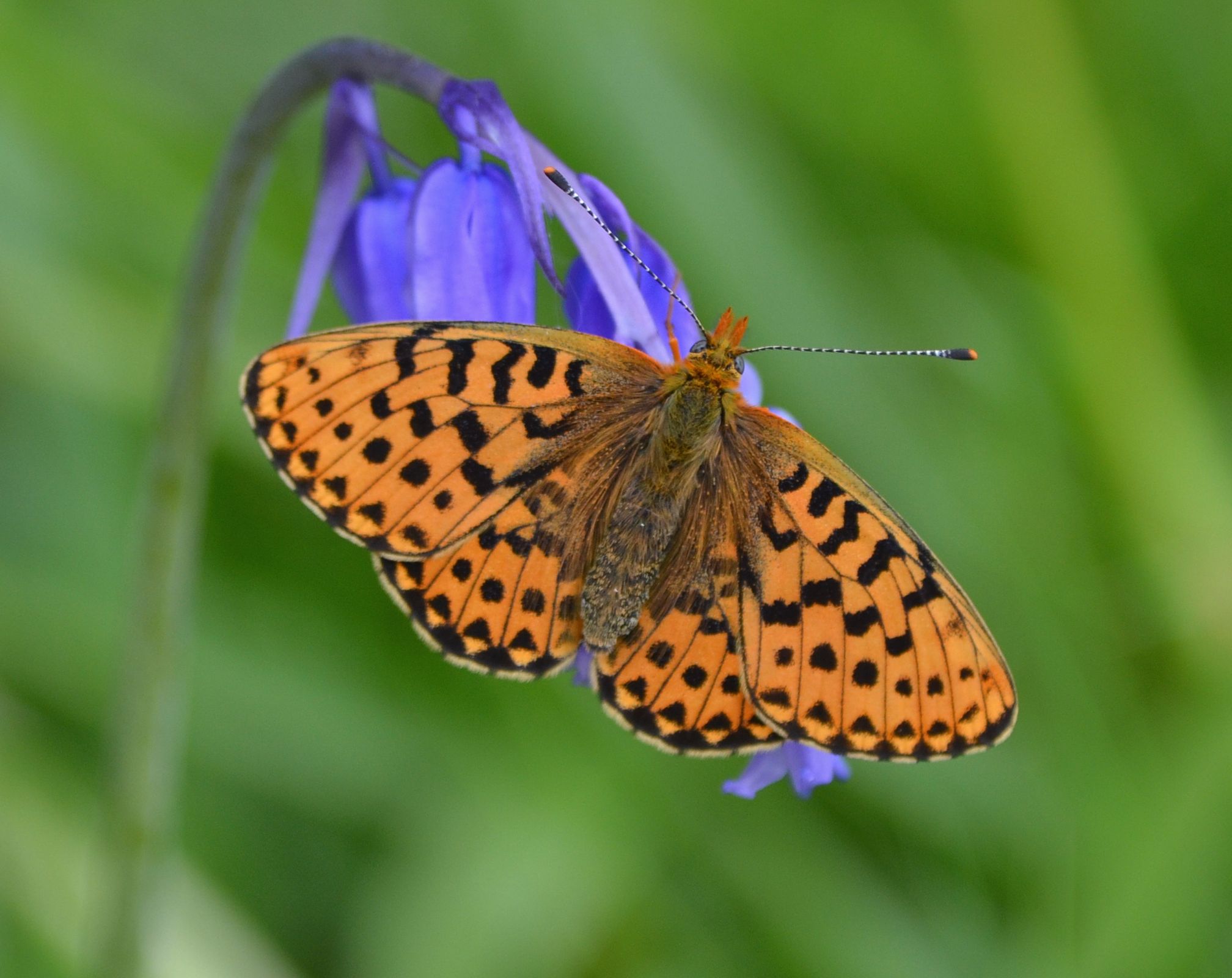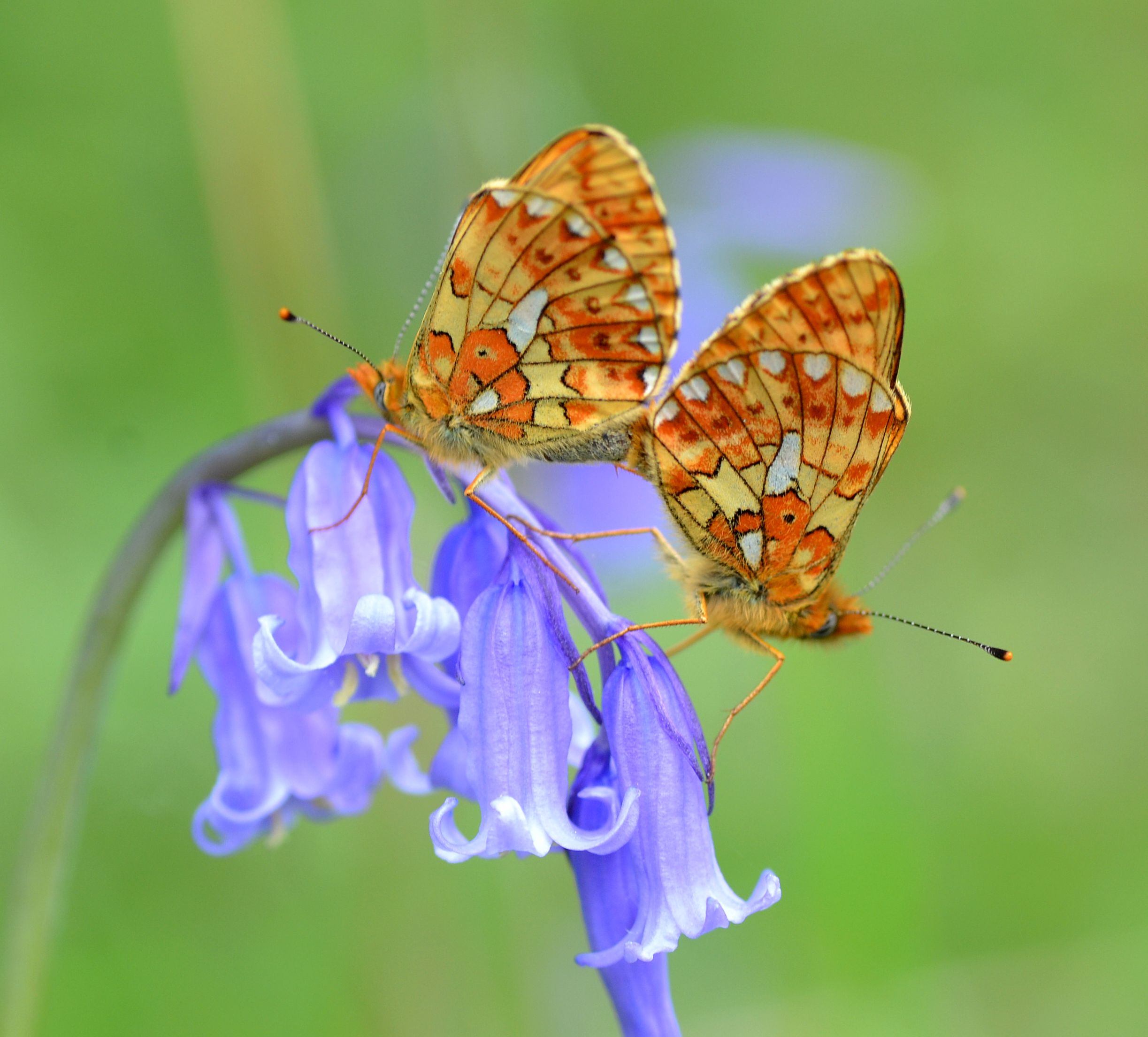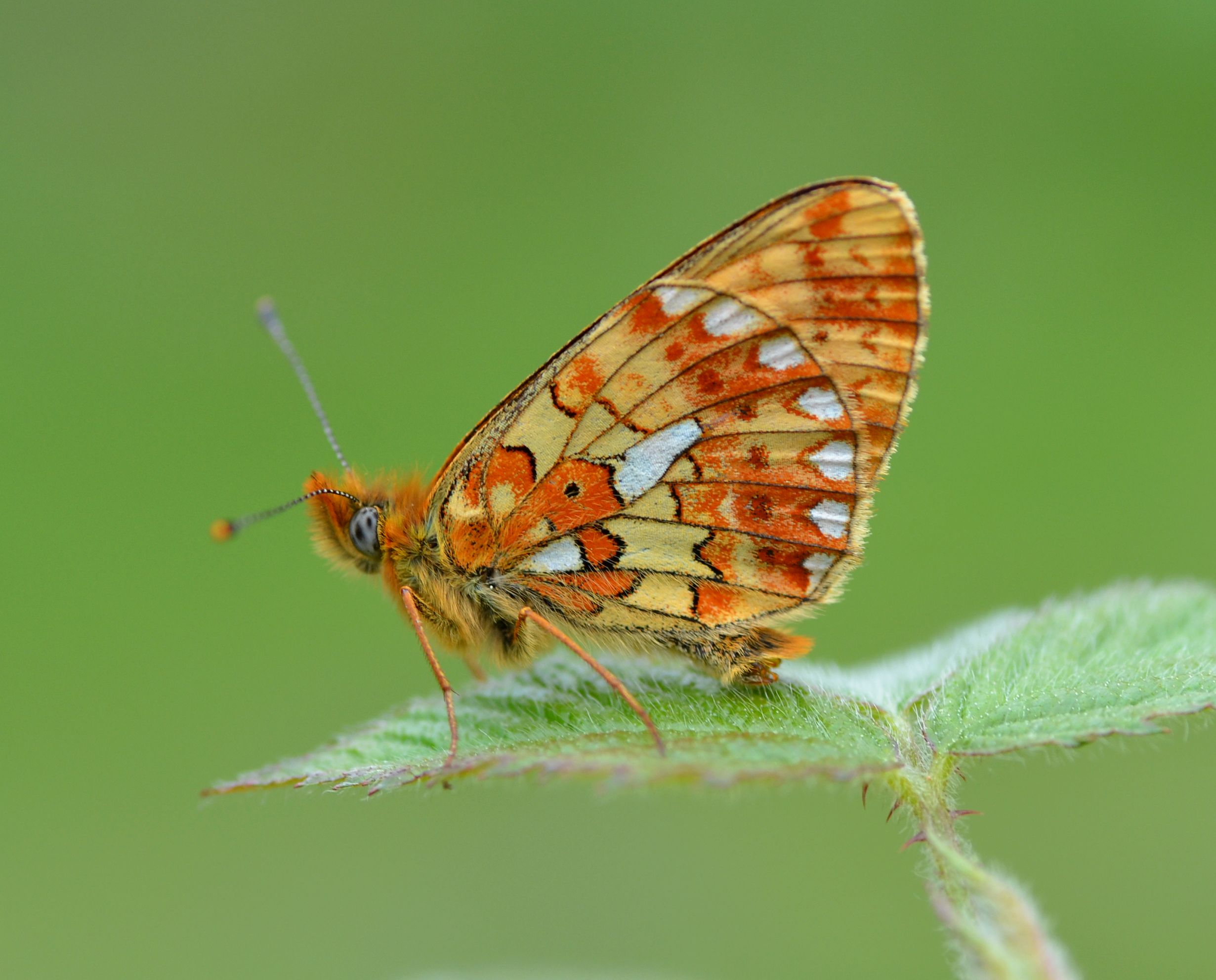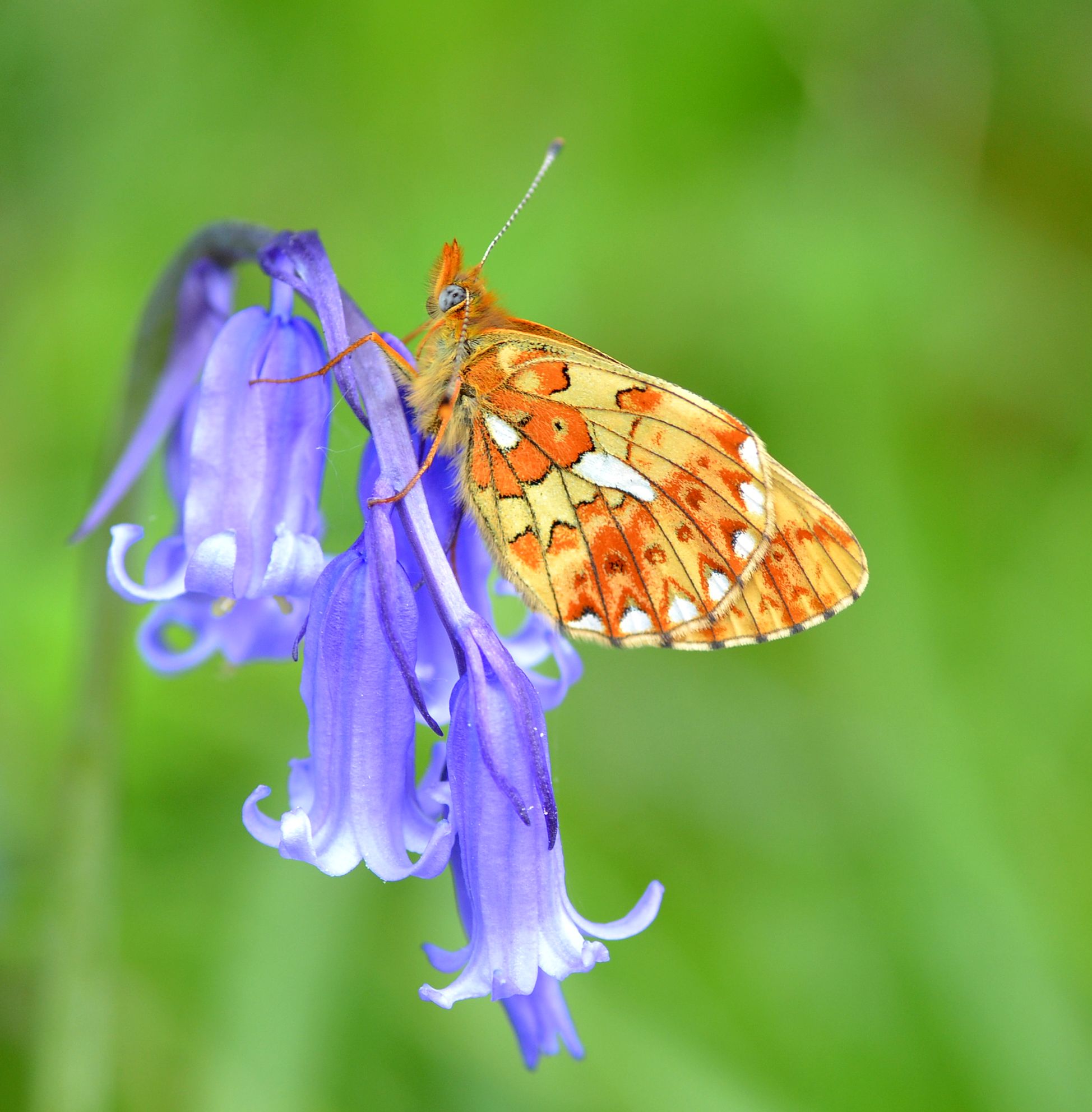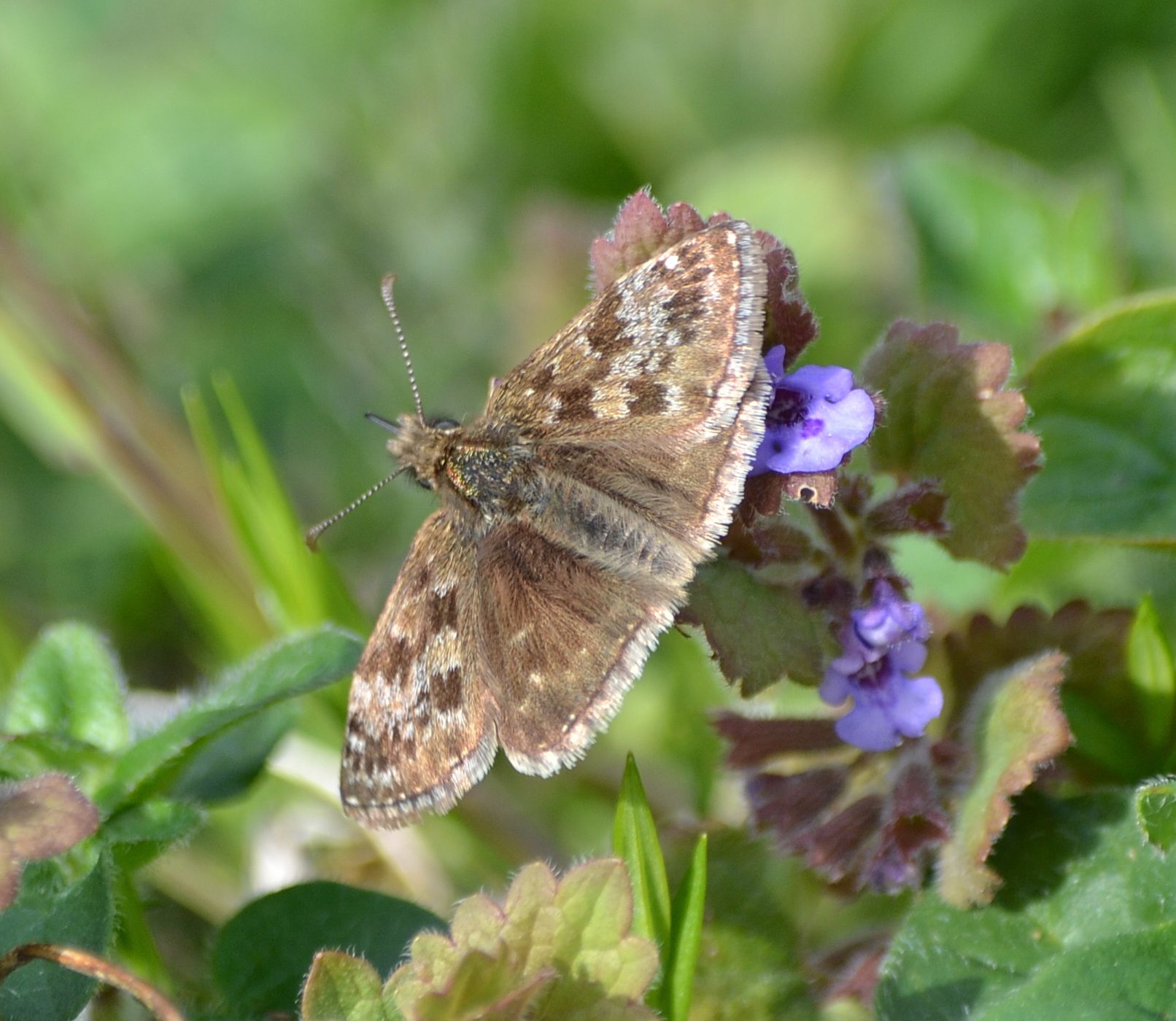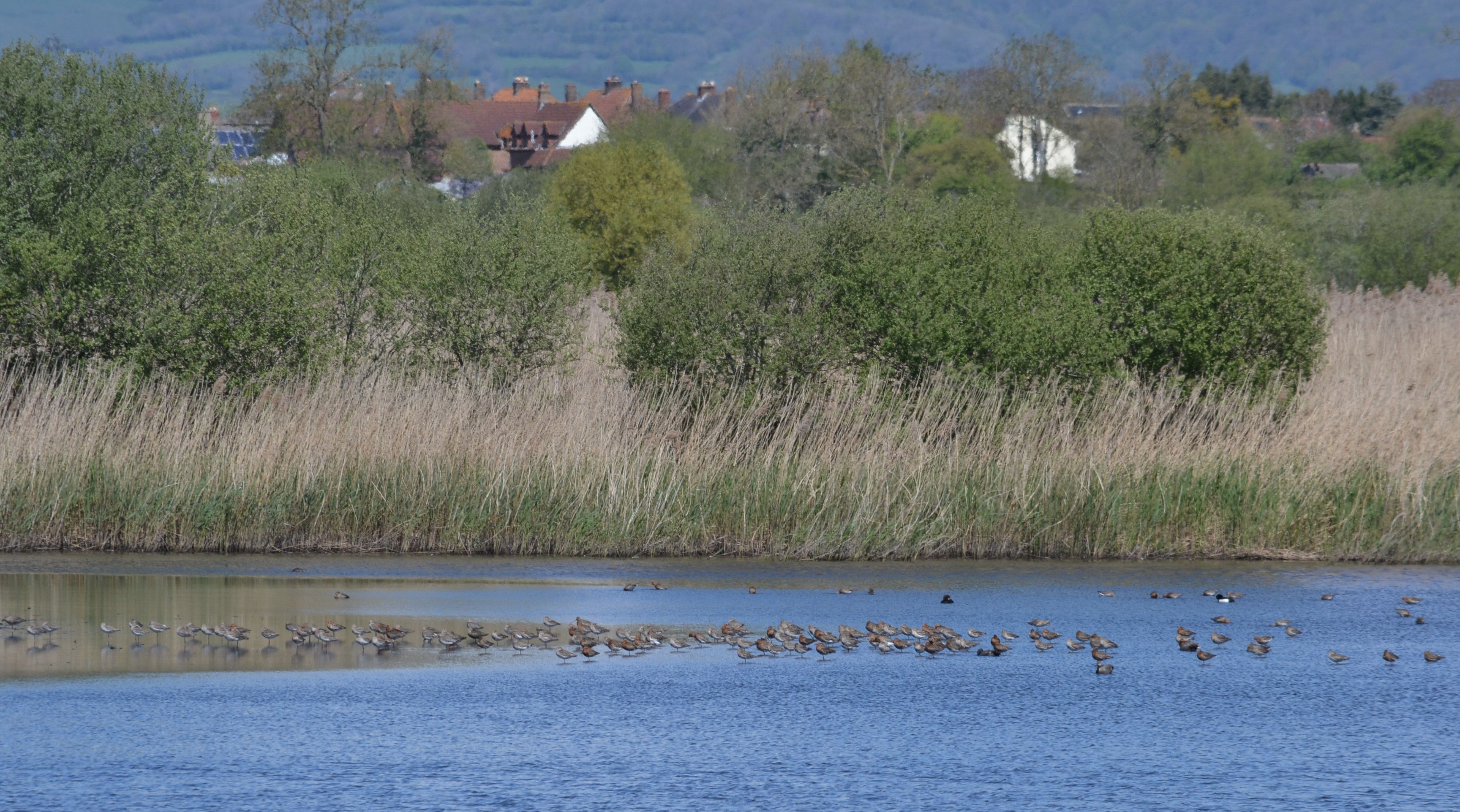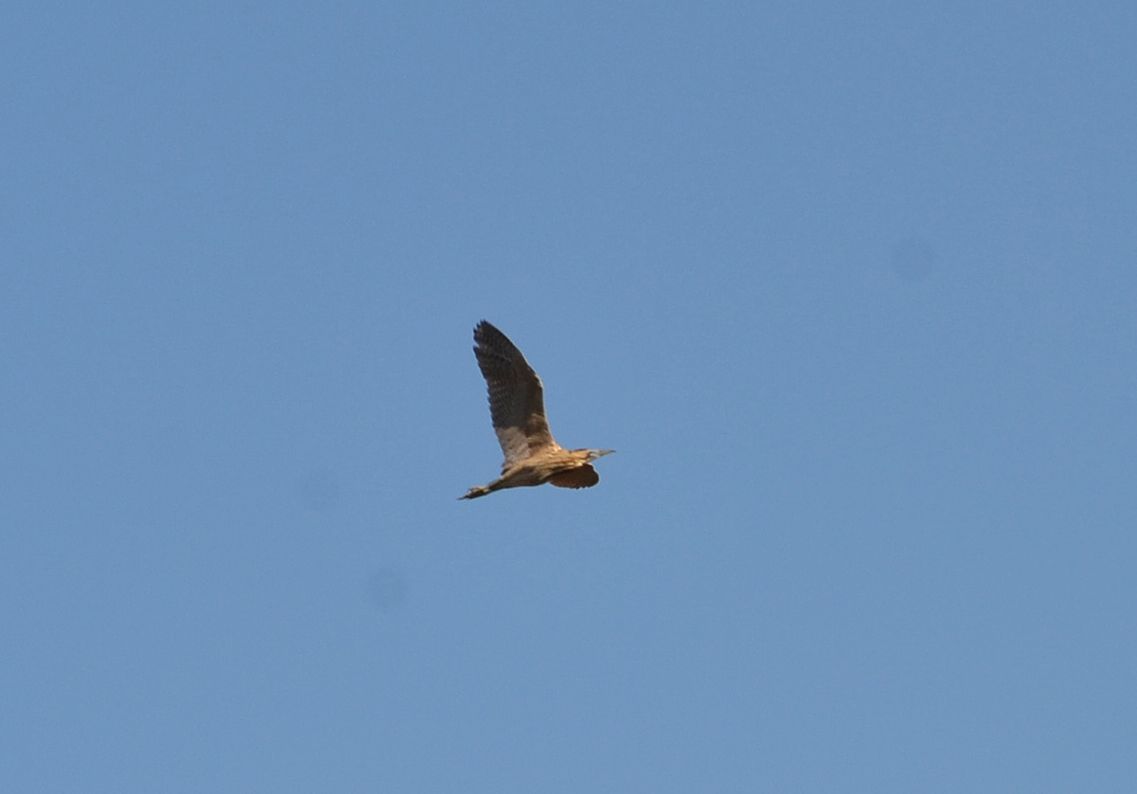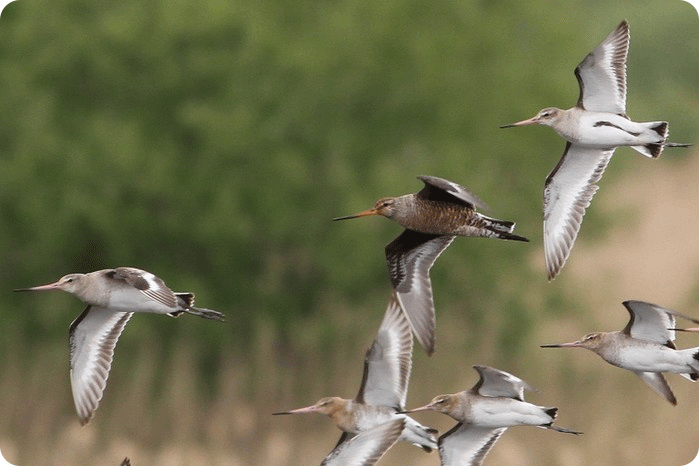
Duke of Burgundy at Noar Hill & Grizzled Skipper at Butser Hill, Hants – 20th Apr

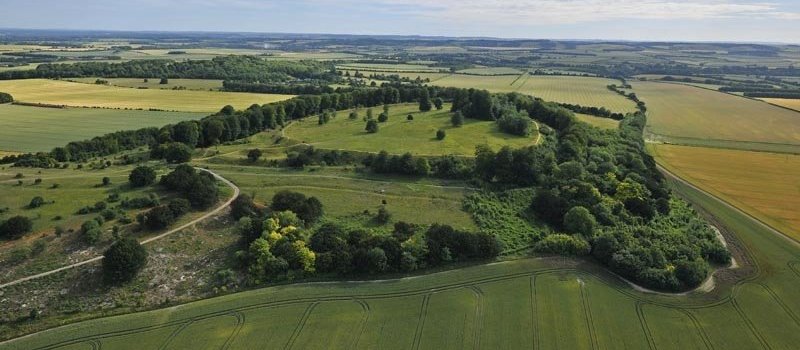
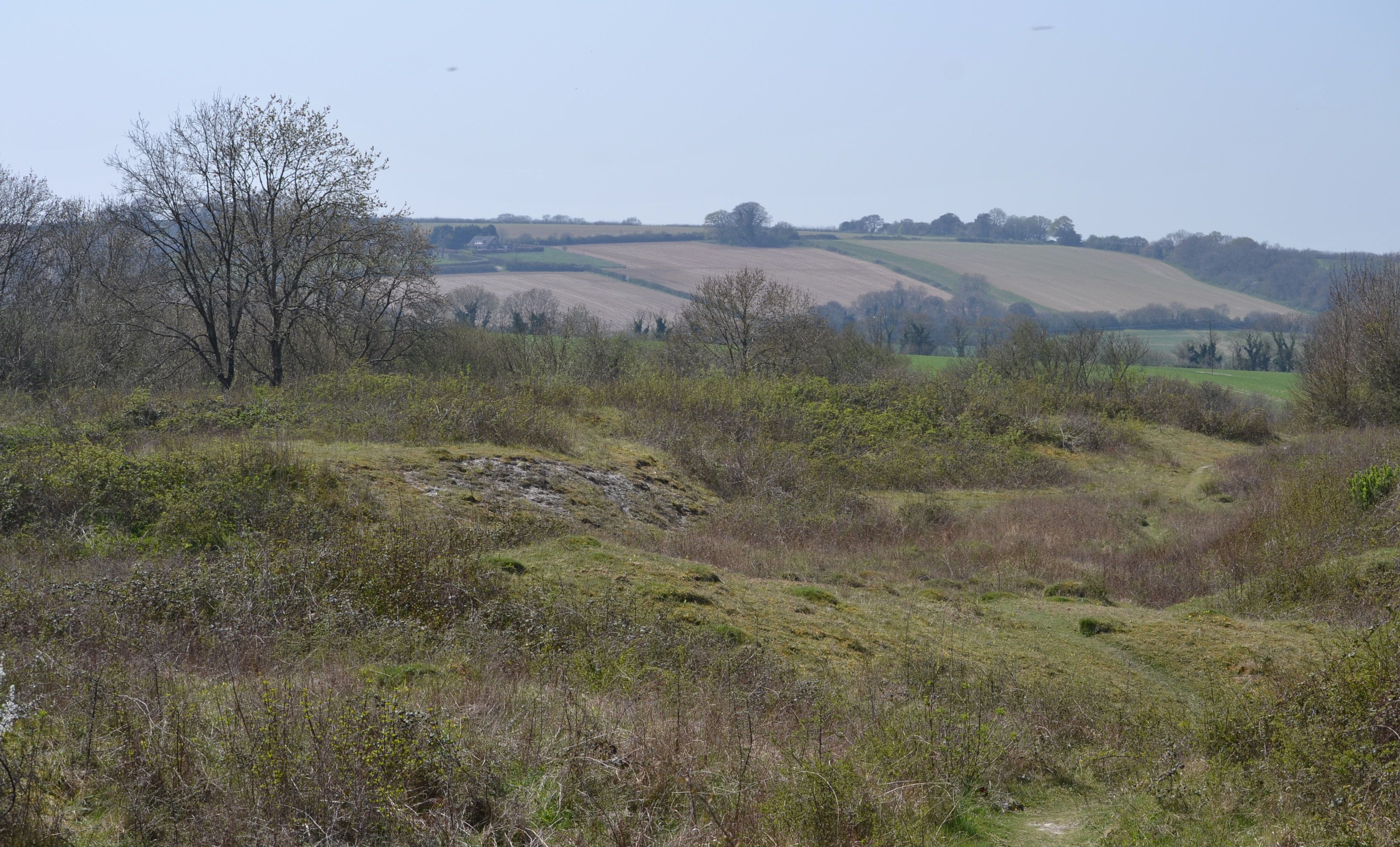
Noar Hill is a Hampshire & Isle of White Wildlife Trust reserve where I previously observed Duke of Burgundy in  the 2011 and 2013 seasons. The hilltop (SU744319), just south of the village of Selborne, is characterised by former medieval chalk workings that created a patchwork of sheltered hollows and rich chalk scrub habitat (pictured below) ideal for chalk downland butterflies. This year the Dukes, one of Britain’s most vulnerable species, began flying on 15 April and should continue until late May.

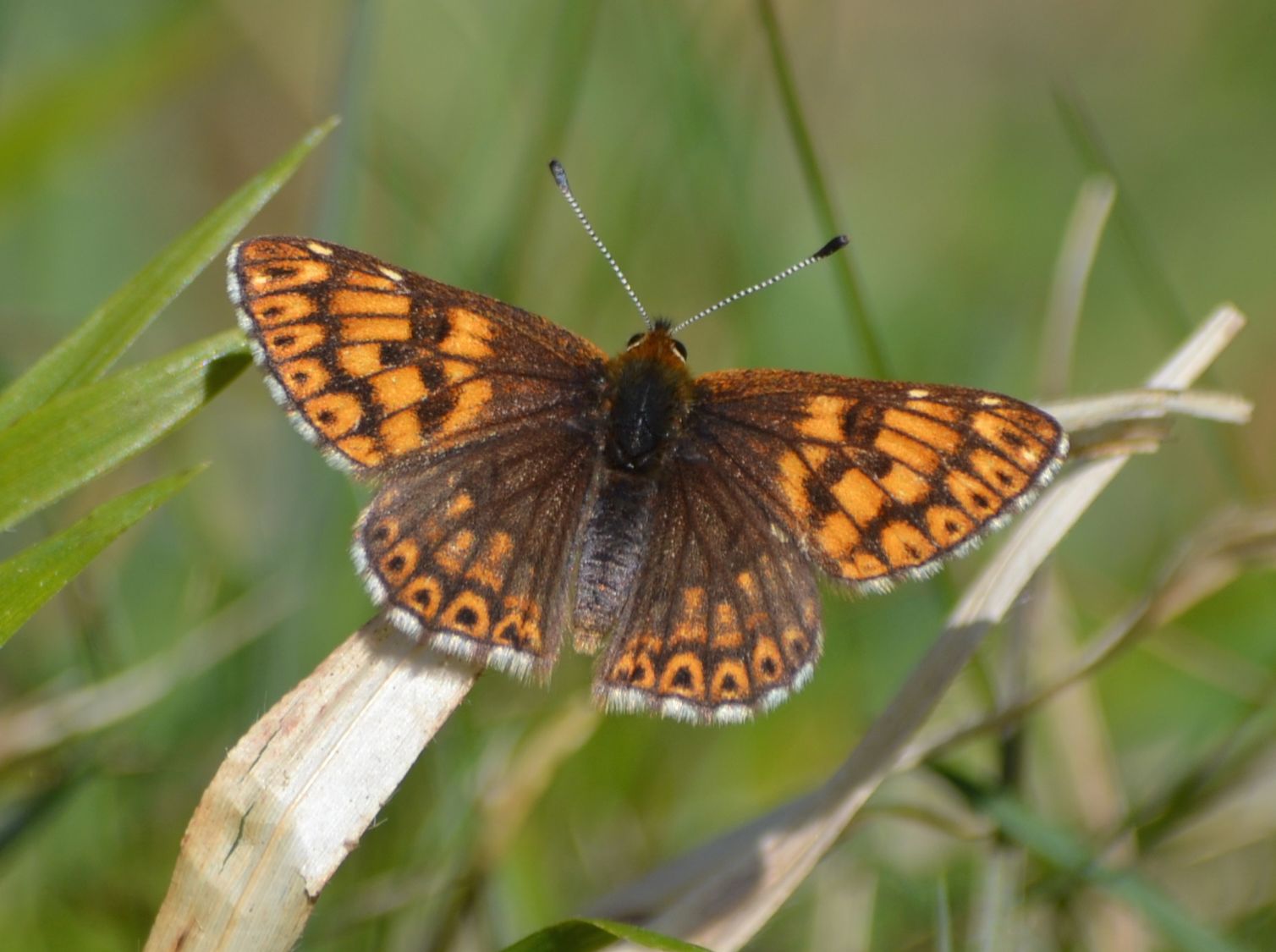
DSC_0108 Arriving on site mid-morning I searched those areas with which I was familiar but could find no Dukes. Then I was fortunate to meet Butterfly Conservation’s Hants and IoW co-ordinator Ashley Whitlock who directed me to the new (for myself) location of his one sighting so far on this day. When I reached that spot Ashley and a companion arrived behind me and re-found the butterfly, a male (pictured below).

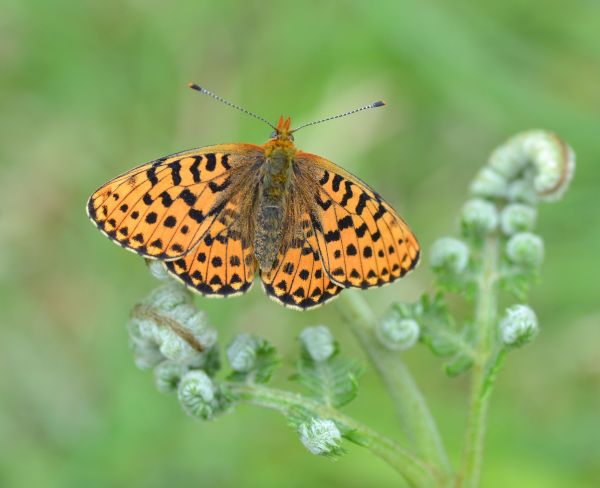
Duke of Burgundy (male)

Duke of Burgundy (male)

Duke of Burgundy are very territorial, so if an observer stays in the place where one is first seen that butterfly will keep coming back. Eventually a second male appeared, challenging the first one. It was now midday and warm sunshine prevailed. I moved on to a chalk pit where I had seen and photographed Dukes two years ago, finding two butterflies in exactly the same spot as then. I believe these were a male and female, the latter being the slightly larger and paler of the genders. Once again these insects kept returning to the same place.

In all I saw five Duke of Burgundy at this site and was told of one other. According to the British butterfly bible Thomas and Lewington this is a typical day’s haul for a downland colony, since adults emerge progressively from mid-April to late May and their average life span is five to seven days.

Female Duke (above) and on Cowslip food plant (below)

Female Duke of Burgundy (above) and on Cowslip food plant (below)

DSC_0077

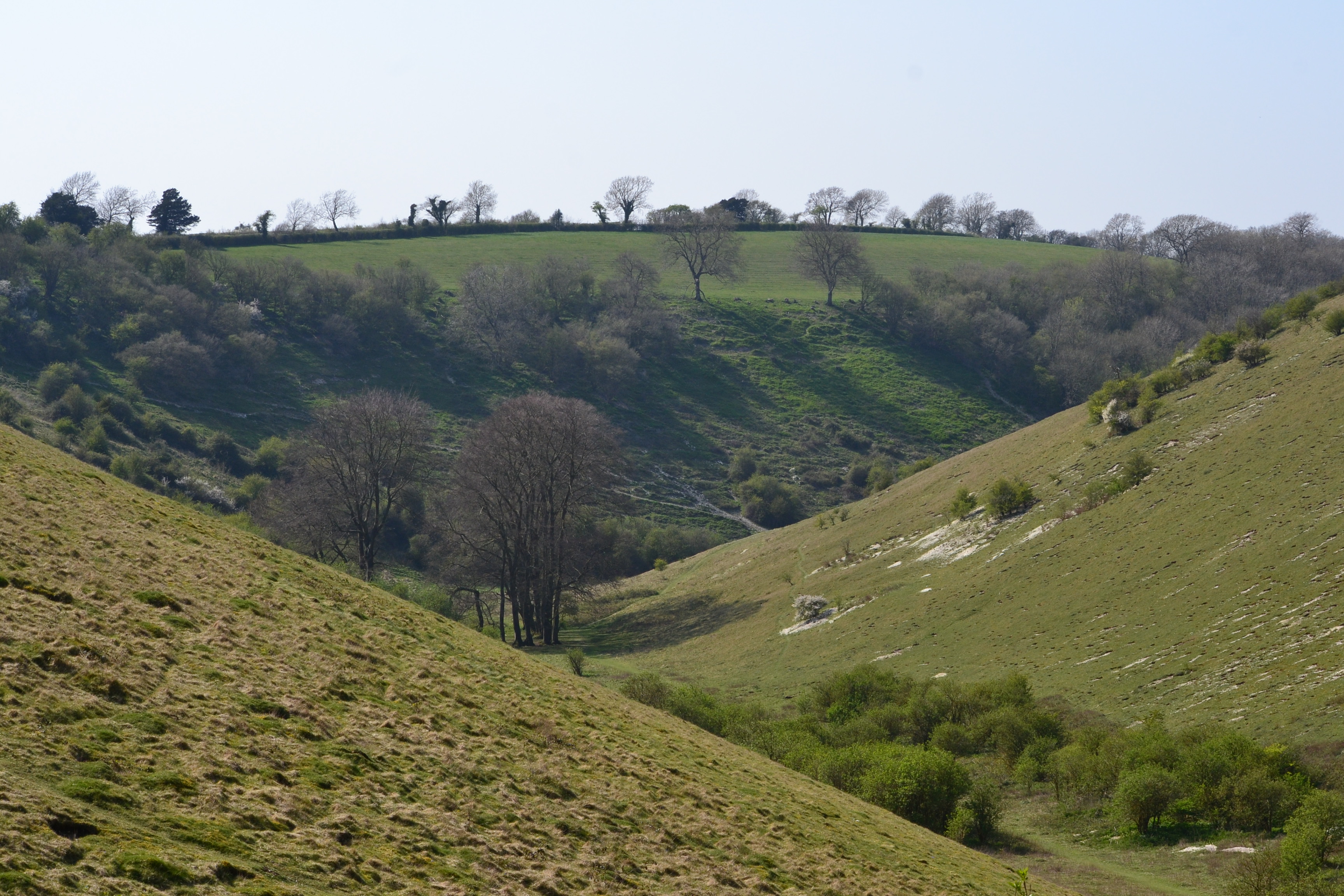
In the afternoon I moved on another 14 miles or so to Butser Hill NNR (SU716203), the highest point on the chalk ridge of the South Downs. From the reserve car park I walked to the top end of Rake Bottom, a deep dry valley on the western flank of the hill that is a hotspot for Grizzled Skipper. I would guess this spectacular natural feature dwarves the fabled Devil’s Punchbowl on the Oxfordshire Downs by a third as much again in depth (pictured below).

Rake Bottom, Butser Hill NNR

Rake Bottom, Butser Hill NNR

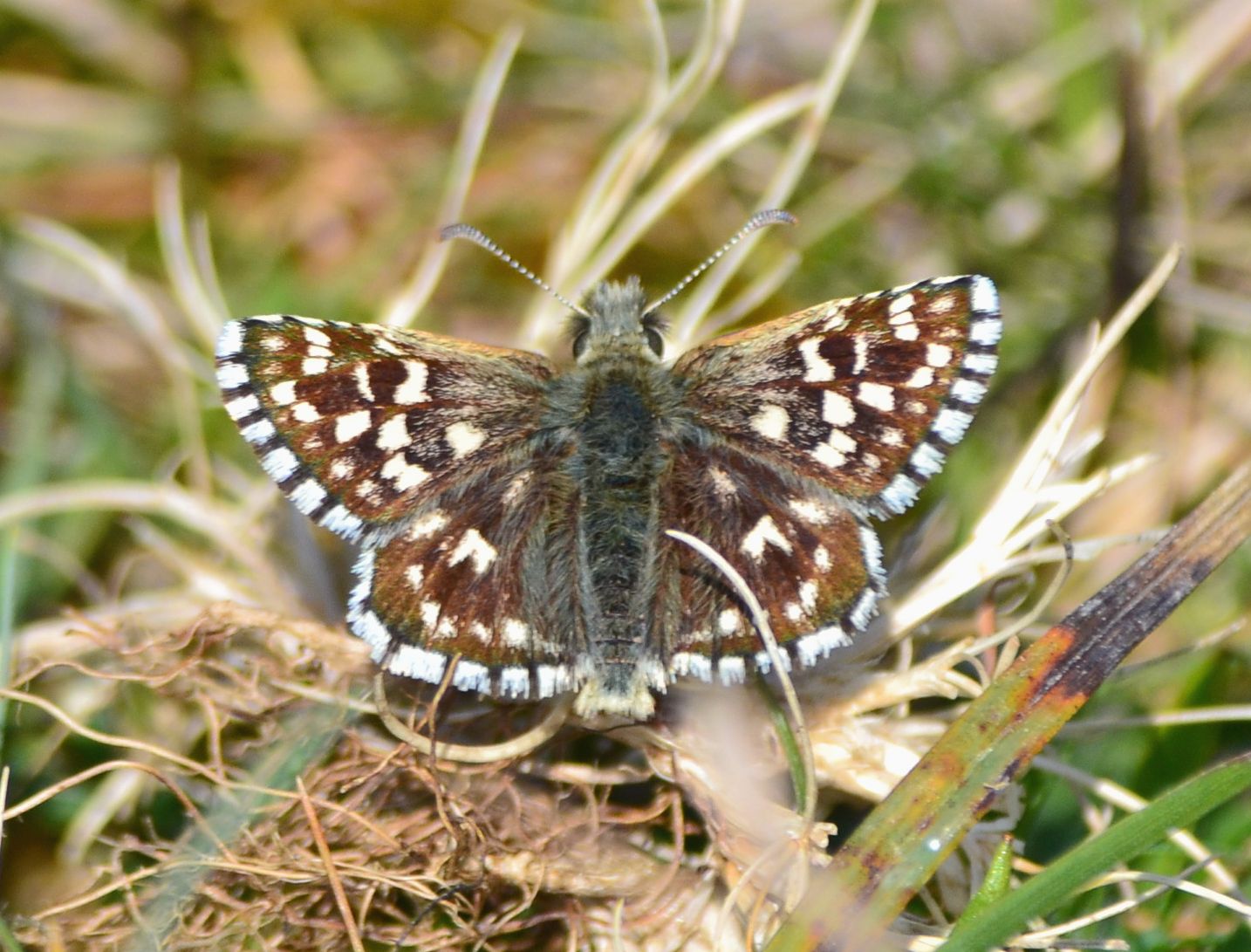
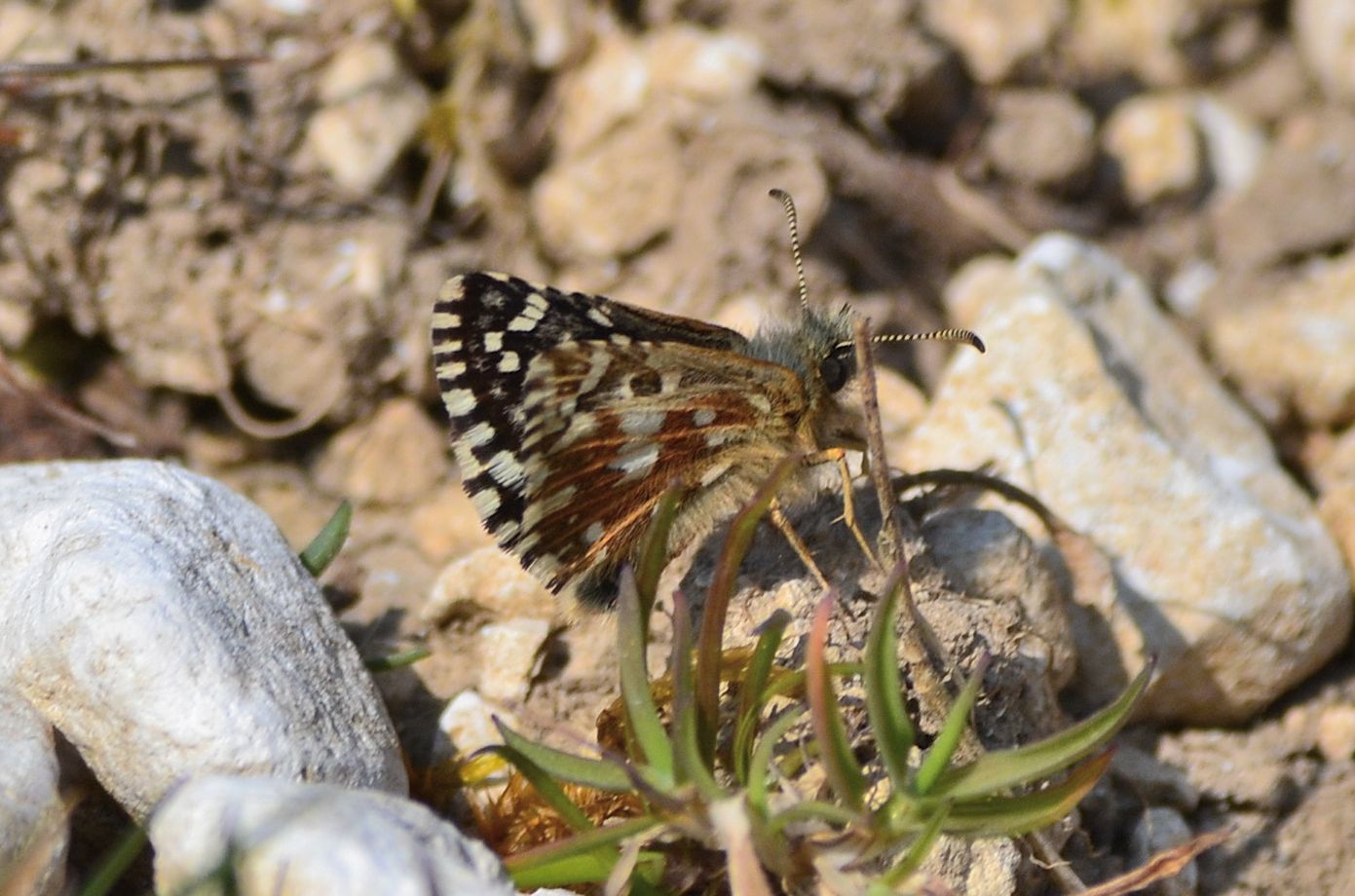
I met a couple here who had walked up the valley from the lower end. They confirmed that the “Grizzles” were the most numerous species present and before long I began to see them as well. Being so tiny they are quite difficult to relocate after they jump out of the way in typical Skipper fashion. But I do not recall seeing so many of this butterfly in one location before. The afternoon was drawing on and I had bought just an hour’s parking time, so resolving to return to this site at some time in the future to see what else might be here, I left.

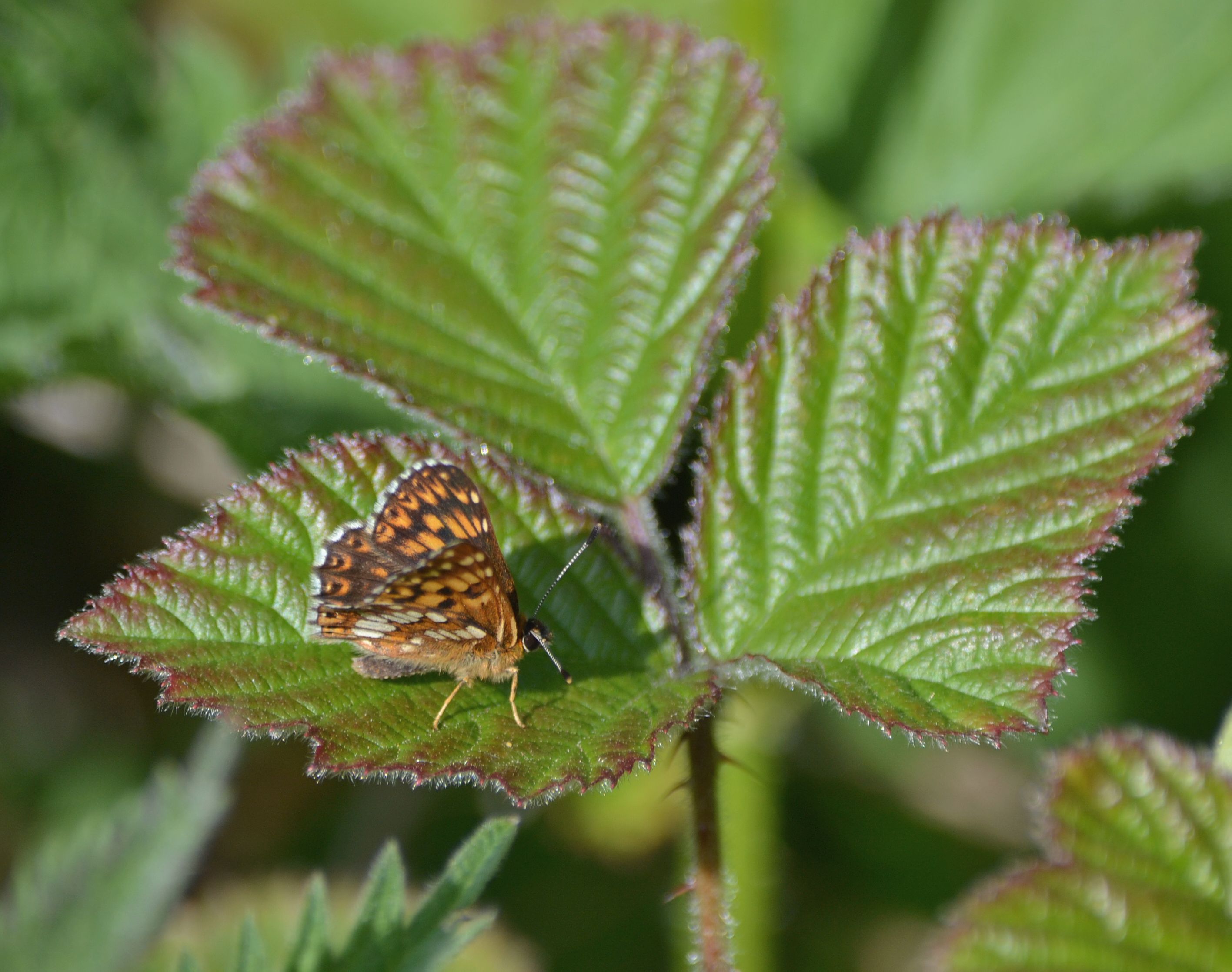
Grizzled Skipper

Grizzled Skipper

grizzled skepper.1502 rake bottom

Dinant Wallcreeper update

I have had an email from Robin Gailly, the Belgian birder who guided me to observing the long-staying Wallcreeper in Dinant on 22nd March. The bird last roosted in that town on 7th April and is now assumed to have departed. I am interested to learn that it was first found (on 30th December 2014) due to a group of local birders prospecting suitable sites for the species that they thought occurred more in south-east Belgium than was previously assumed. Robin tells me a second Wallcreeper wintered in a quarry near Liège.

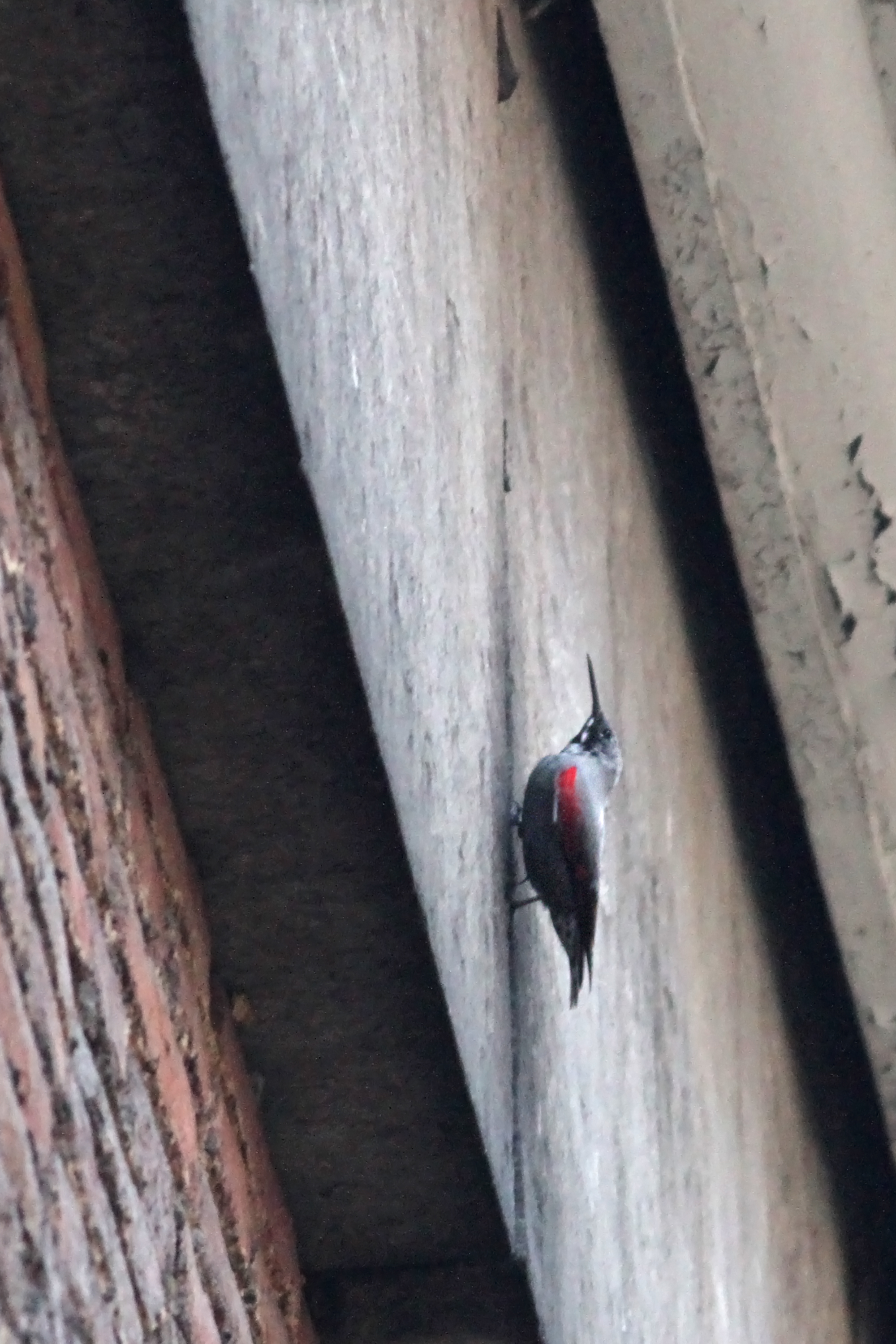
I like this picture of the bird on the Palais de Justice wall just before disappearing into the dark cavity above it’s head for the night.

Wallcreeper (in failing light) (c) Robin Gailly

Wallcreeper (in failing light)
© Robin Gailly

Greater Yellowlegs at Titchfield Haven, Hants – 11th Apr

Today was the second time in 2015 that a particular north American wader passed through Hampshire County Council’s reserve at Titchfield Haven on The Solent. One Sunday back in January I had missed Greater Yellowlegs through not seeing the news in time to get down there. By the following day the bird, a lifer had gone. This time I picked up the news within an hour of it appearing on RBA and so got straight into my car and went.

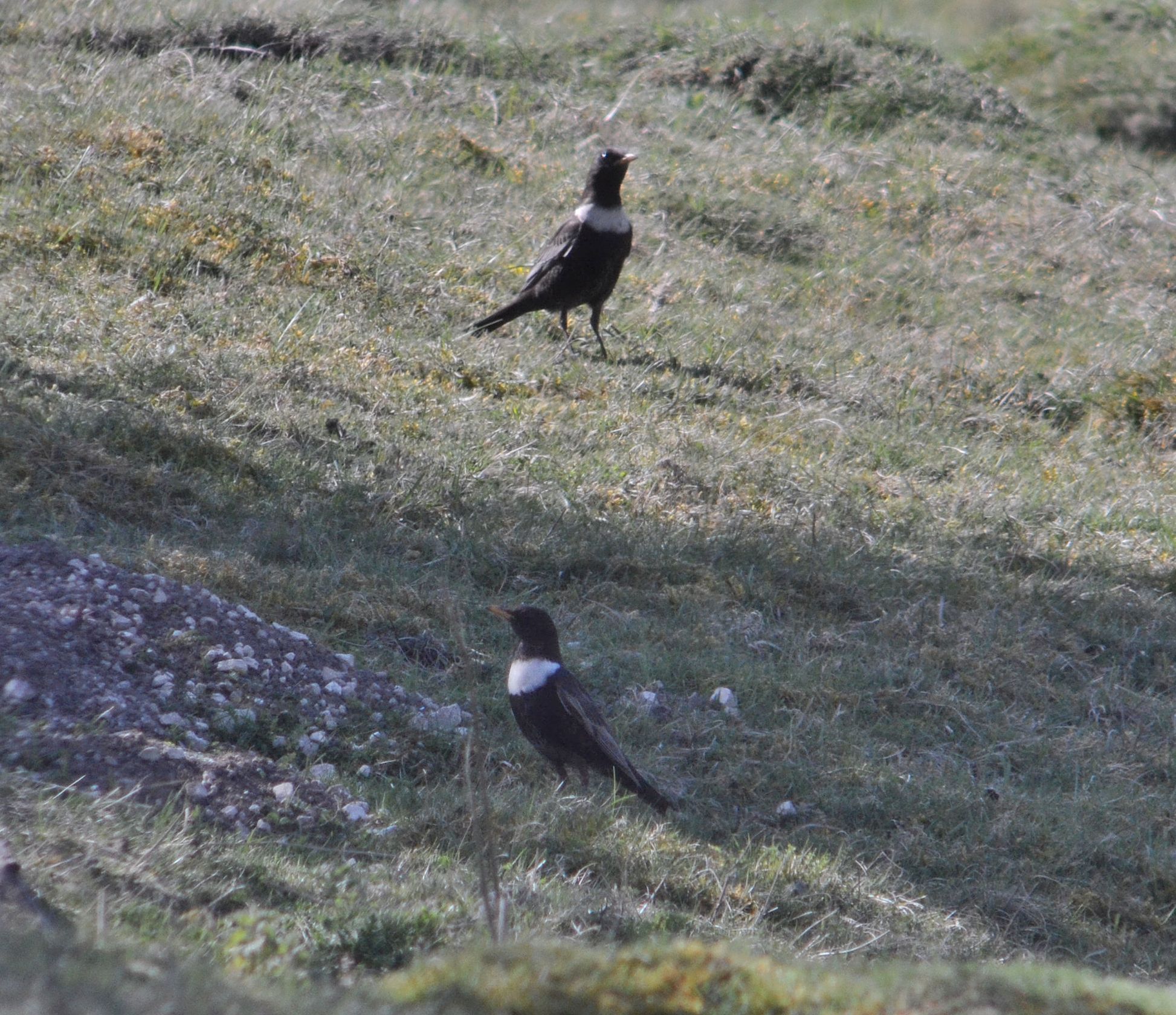
My day had begun locally at Farmoor Reservoir where I met up with Tezzer and Mark. Some site passage specialities are passing through there at the moment but not while we were present. So we relocated to Linkey Down on the Chiltern escarpment where this spring’s first reported Ring Ouzel for that location had been seen earlier in the day. There we met several other Oxonbirders and thanks to the most sharp-eyed amongst the group I saw this species in our county for a fourth consecutive year *. I bowed out at that point, fortunately so given events a little further afield.

* I have since self-found  Ring Ouzel at another Oxfordshire location

* I have since self-found Ring Ouzel at another Oxfordshire location

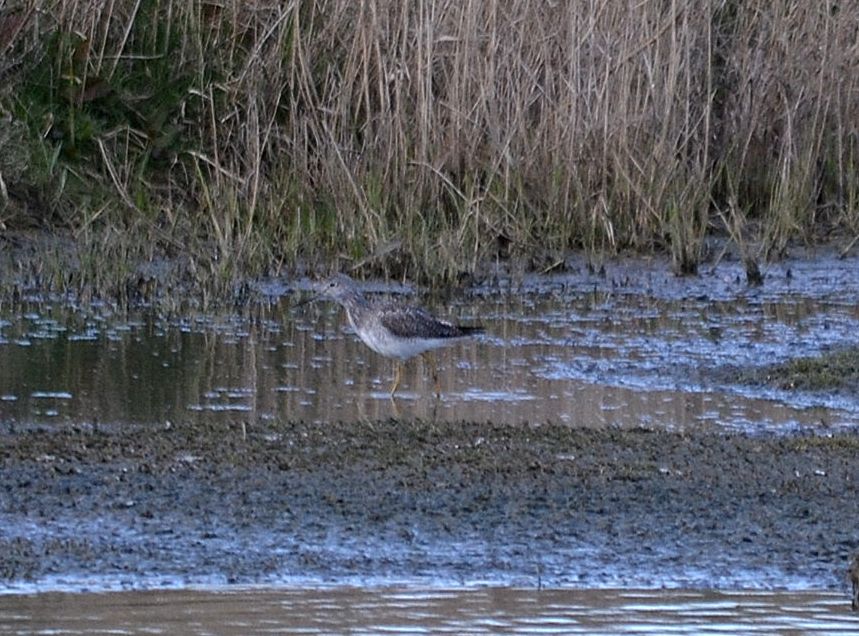
When I arrived on site just before 4pm, the Greater Yellowlegs was sleeping to one side of Titchfield Haven’s Meon Shore Hide that was bulging with birders. Fairly soon the bird began to move around, being a lot smaller and greyer in appearance than the Black-tailed Godwits with which it was associating. The GY had a quick and delicate action and the diagnostic, slightly upturned bill was noticeable. But it was too distant to obtain clear pictures, this one (below) being as good as things got for me today.

Greater Yellowlegs

Greater Yellowlegs

Various other birds seemed to object to the visitor’s presence however, until the “Yank” fled exclaiming onto the River Meon nearer the coastal road. But it didn’t stay there for long before going inland again. When I got back to the Meon Shore Hide the Yellowlegs was not on view, though it had apparently dropped back in before flying off for good (see here).

DSC_0058

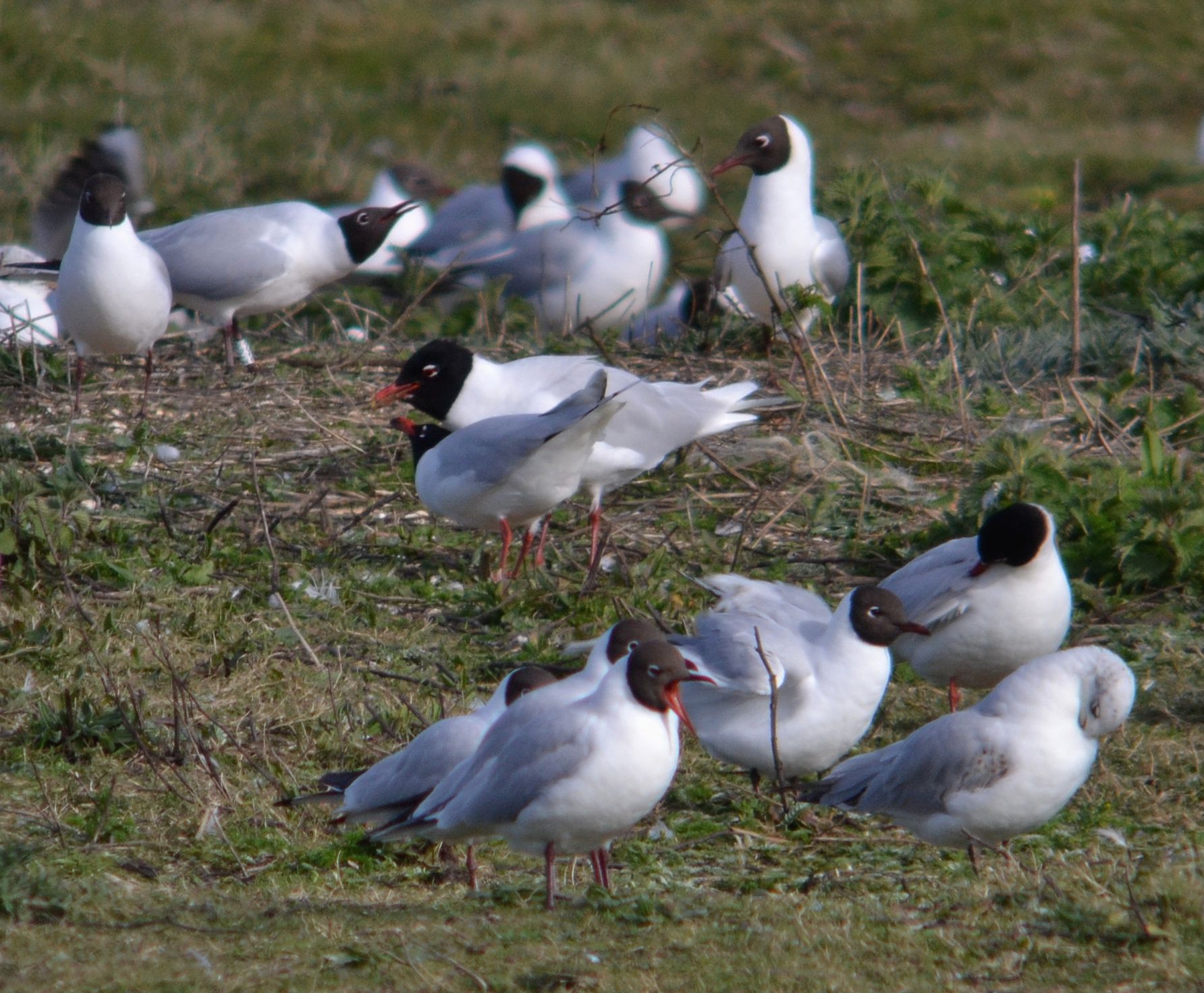
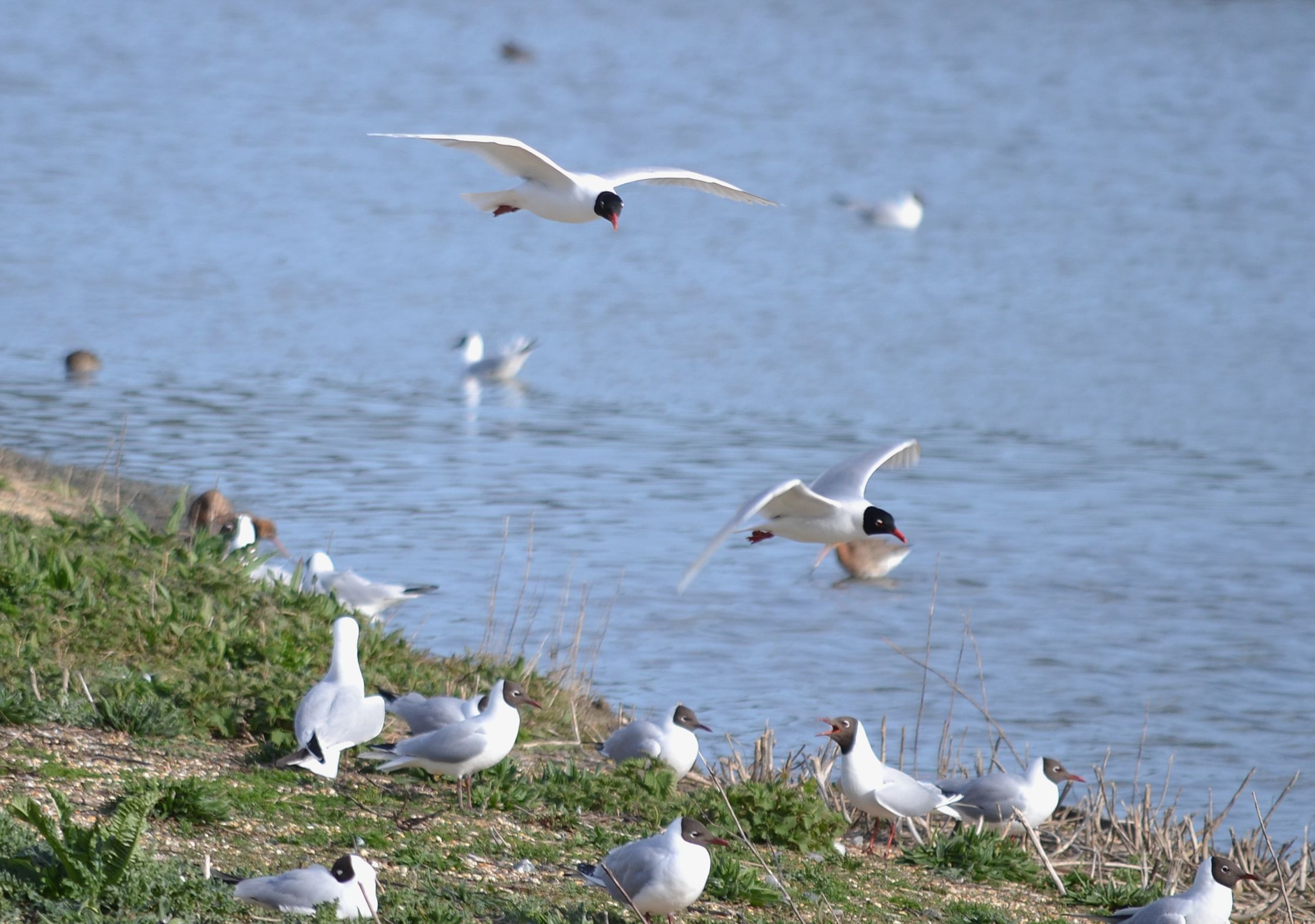
The scrapes at Titchfield Haven (pictured above) hold large numbers of breeding Black-headed and some Mediterranean Gull. This reserve was the first place, in March 2010 where I saw the latter species. Having picked out a nice group of them on the northern scrape, once the star visitor had been lost I walked round to the Pumfrett Hide to observe the gulls. These pictures (below) show how Med Gulls stand out amongst their Black-headed counterparts, with jet black masks, bright red beaks and legs, white wing tips and a different character. They are to my mind very striking and attractive birds.

Mediterranean (centre) and Black-headed Gulls

Mediterranean (centre) and Black-headed Gulls

DSC_0052

I looked in at the Meon Shore Hide again after 5:30pm but there had been no further sign of the Greater Yellowlegs and the crowd of visiting birders had largely dispersed. I was pleased to have had a second bite at this cherry and to gain another north American addition to my life list, and so headed home mindful of this day’s narrow window of opportunity.

Bonaparte’s Gull in Weymouth, Dorset – 31st Mar

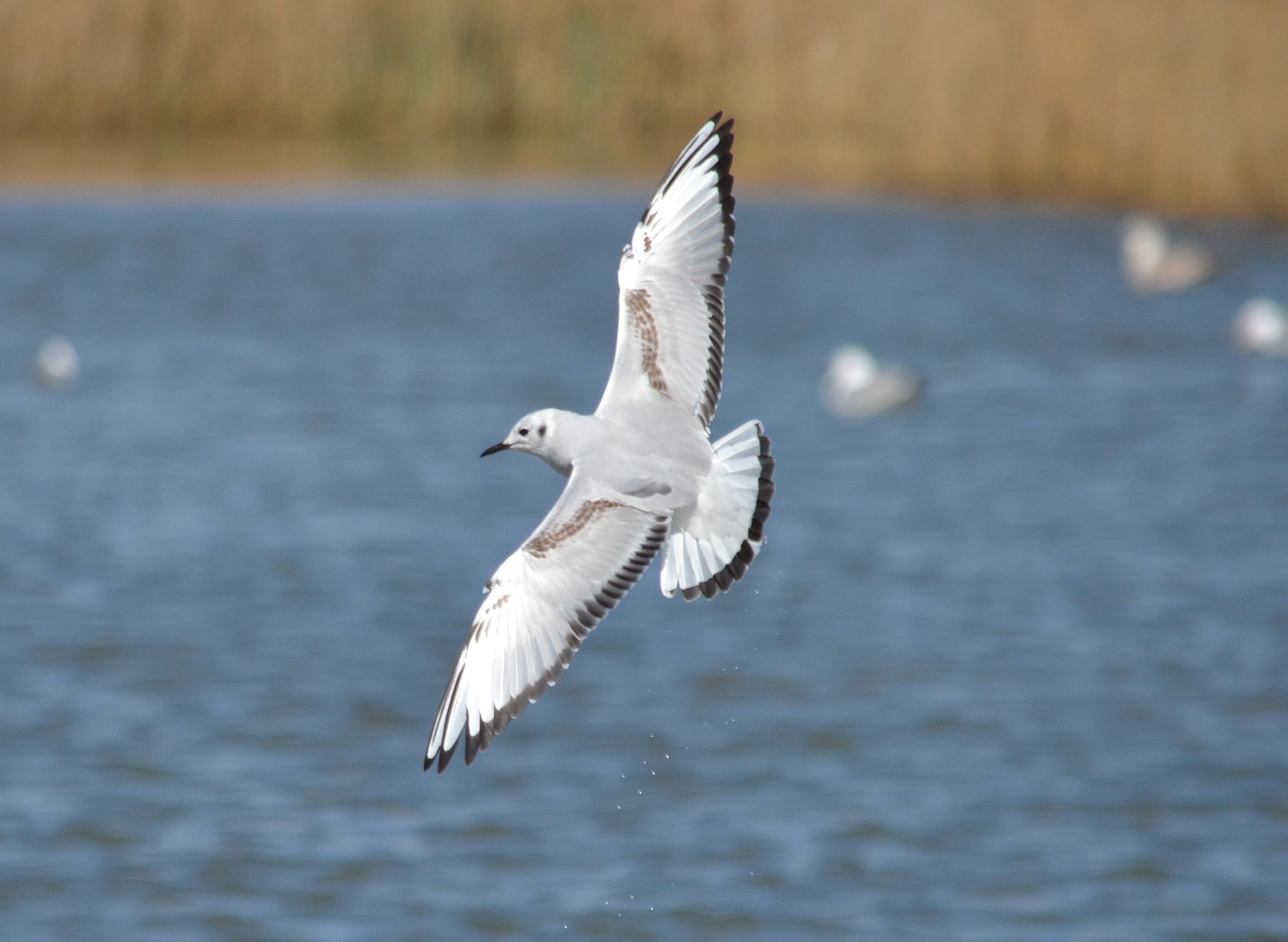
New Birds in England are becoming more difficult to find as my life list grows. The outstanding candidate in the six days since my Belgium trip has been a north American rarity Bonaparte’s Gull. These have been present in Cardiff, South Wales; and Weymouth, Dorset. Today I went for the latter bird as it involved the more pleasant drive (120 miles) and location. This proved a wise choice as the Cardiff equivalent was elusive until late afternoon.

Present weather patterns appear to be holding up the spring passage, making local birding tedious so I made a snap decision to hit the road again. After leaving home at 8:30am, to avoid the rush hour around Winchester and Southampton, bright sunshine came to prevail when I reached the M27 but very strong, cold wind persisted throughout the day. I arrived at the RSPB’s Radipole Lake reserve in Weymouth shortly after 11am to be told the star visitor was showing well.

Bonaparte's Gull Radipole Lake RSPB

Bonaparte’s Gull at Radipole Lake RSPB

The Bonaparte’s Gull (pictured above) was viewable from a path known as the Buddleia Loop. There was a shelter there containing a jolly band of locals but I needed no assistance in identifying my bird. This first-winter individual stood out at once from the other species it was associating with: a very small gull with a busy, almost delicate flight pattern. A number of people in the visitor centre and shelter all described this gull as being “tern-like” in it’s behaviour and that description was quite apt.

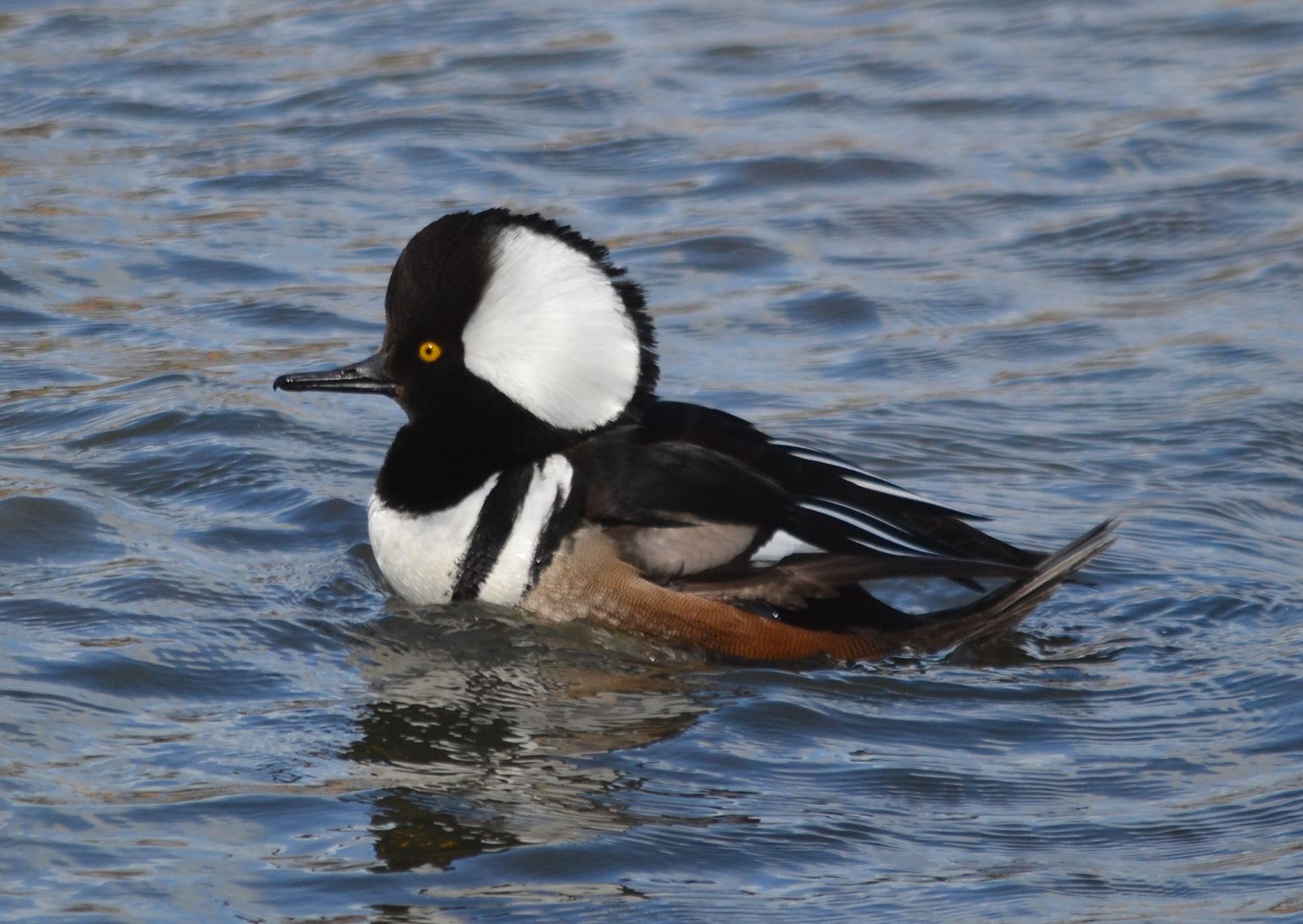
I watched the “Boney” for some time in the freezing wind and then returned to the visitor centre. Outside I caught up with the reserve’s more famous north American resident, the drake Hooded Merganser. He had apparently just returned from four weeks’ holiday, or possibly a search for a mate, and was looking as dapper as ever (below).

DSC_0165

Hooded Merganser (male)

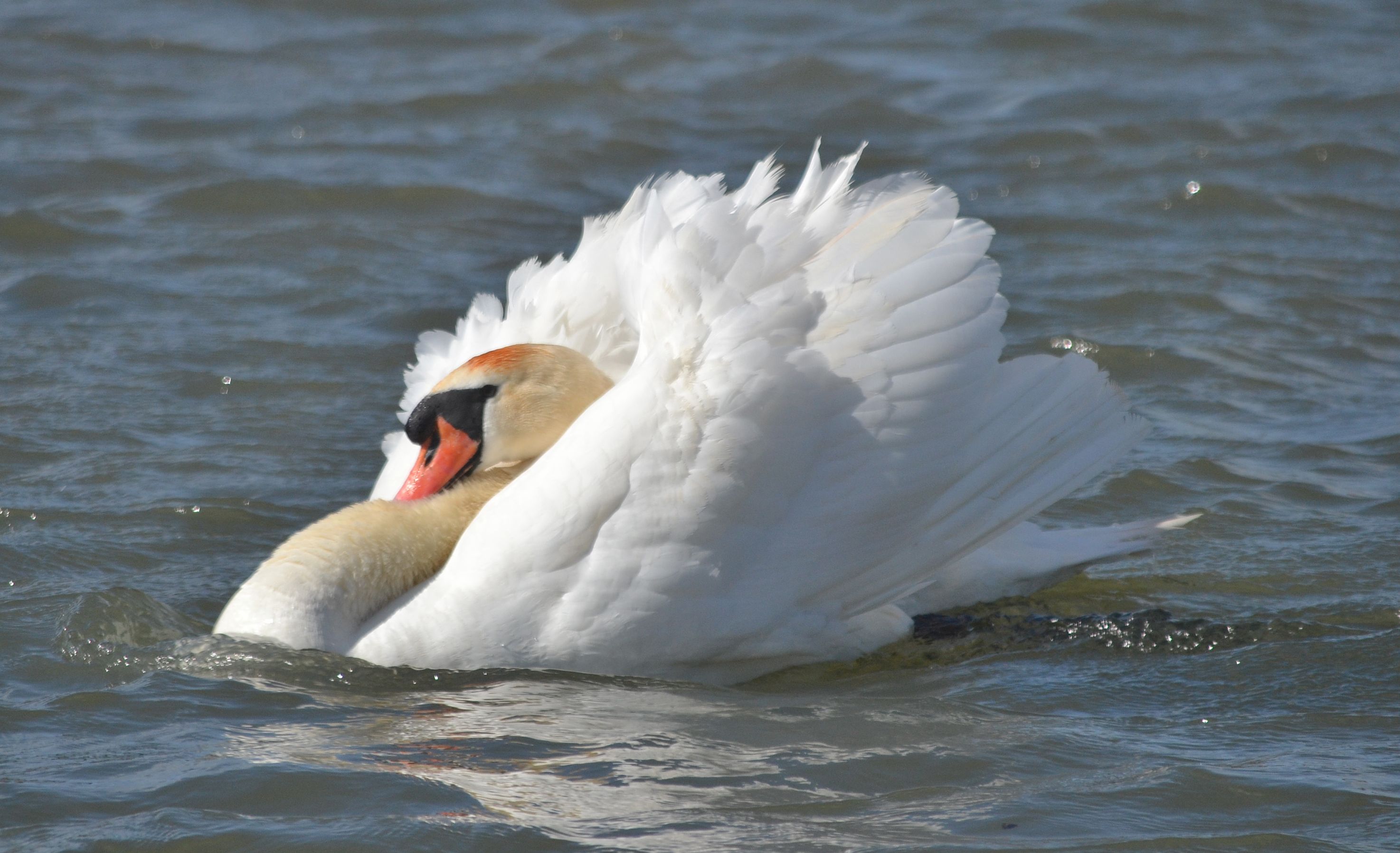
Mute Swan

Mute Swan

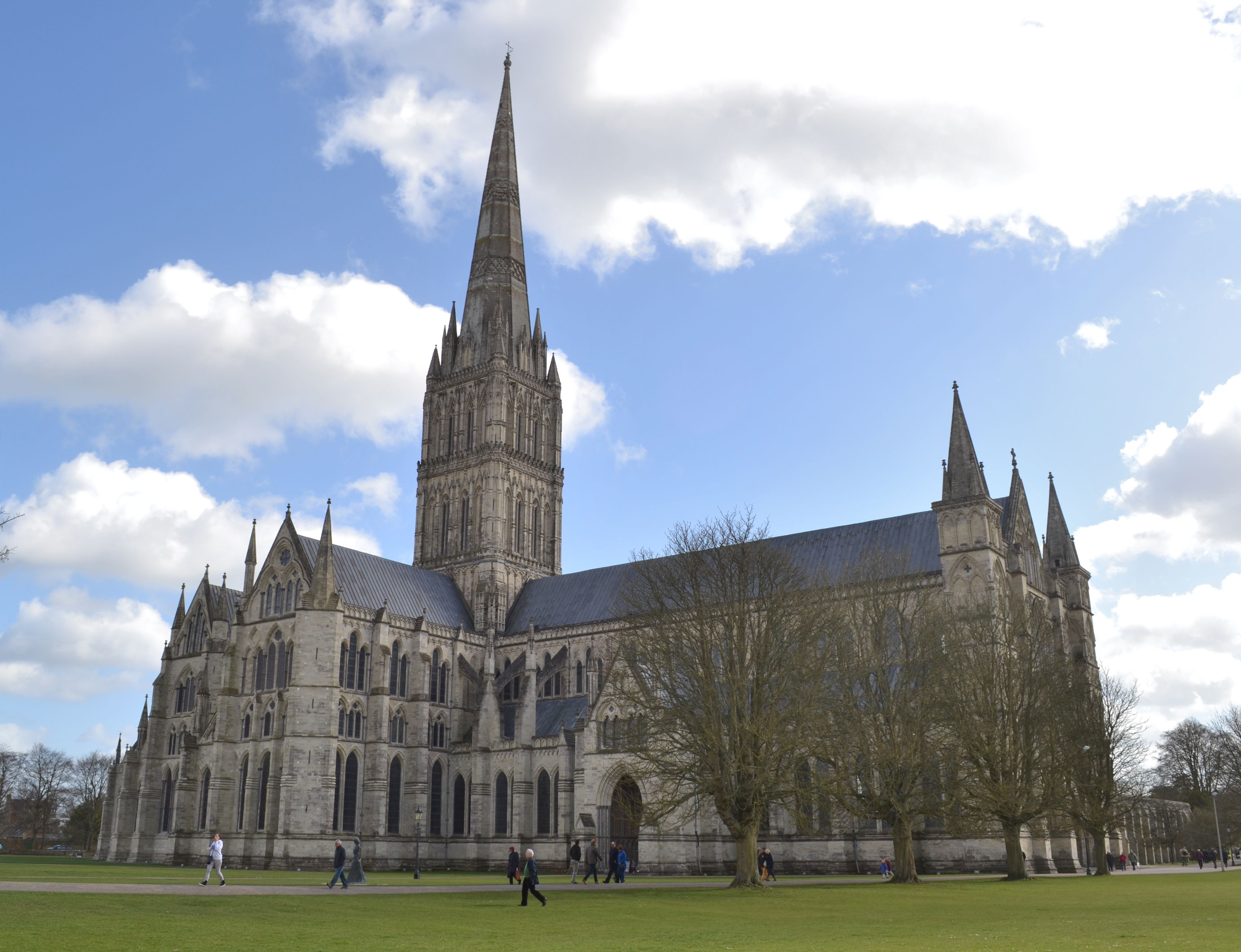
I have retained a soft spot for Dorset since first visiting as a teenager and relish any reason for going there again. So I travelled back to Oxford via Dorchester then Blandford Forum to reacquaint myself with the green and rolling landscape of this lovely county. There was more scope for nostalgia when I reached Salisbury in neighbouring Wiltshire and found a free two-hour parking space close to the city’s cathedral close, a beautiful and historic location with fond past associations. Eventually I reached home, pleased with my day out, its birding result and most of all my flight study of the Bonaparte’s Gull.

Salisbury Cathedral ... surely England's finest

Salisbury Cathedral … surely England’s finest

Black Woodpecker at Zoom – Kalmthoutse Heide, Belgium – 23rd & 24th Mar

Black Woodpecker being one of the few birds that are resident in Belgium but not Britain, I have for years wanted to visit the area north and east of Antwerp where they are found. My attempts at researching this trip also produced references to Middle Spotted and Grey-headed Woodpecker, though I suspected these were real scarcities. My base for the two days was the excellent Klokkenhof Hotel in Brasschaat, where I secured a last minute rate.

The most promising looking site was the cross-border (with Holland) nature reserve of Zoom – Kalmthoutse Heide. It’s page on Holland.com says all Belgium’s Woodpeckers may be found here, but on enquiring at the on-site education centre I was told the only new one I was likely to see was Black. This was no surprise: had the tourist site authors heard of the other two on my wish list I wondered?

DSC_0102

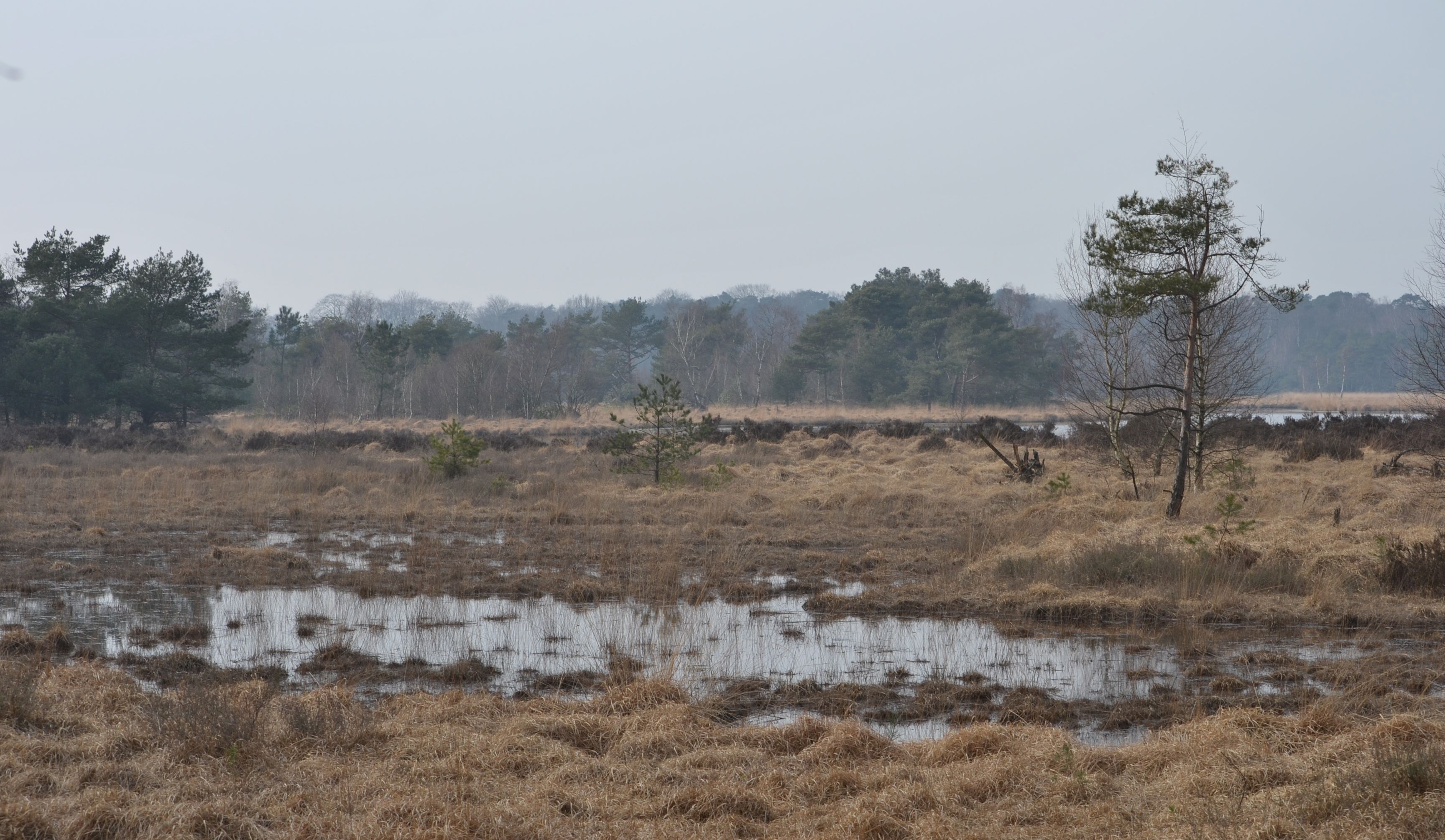
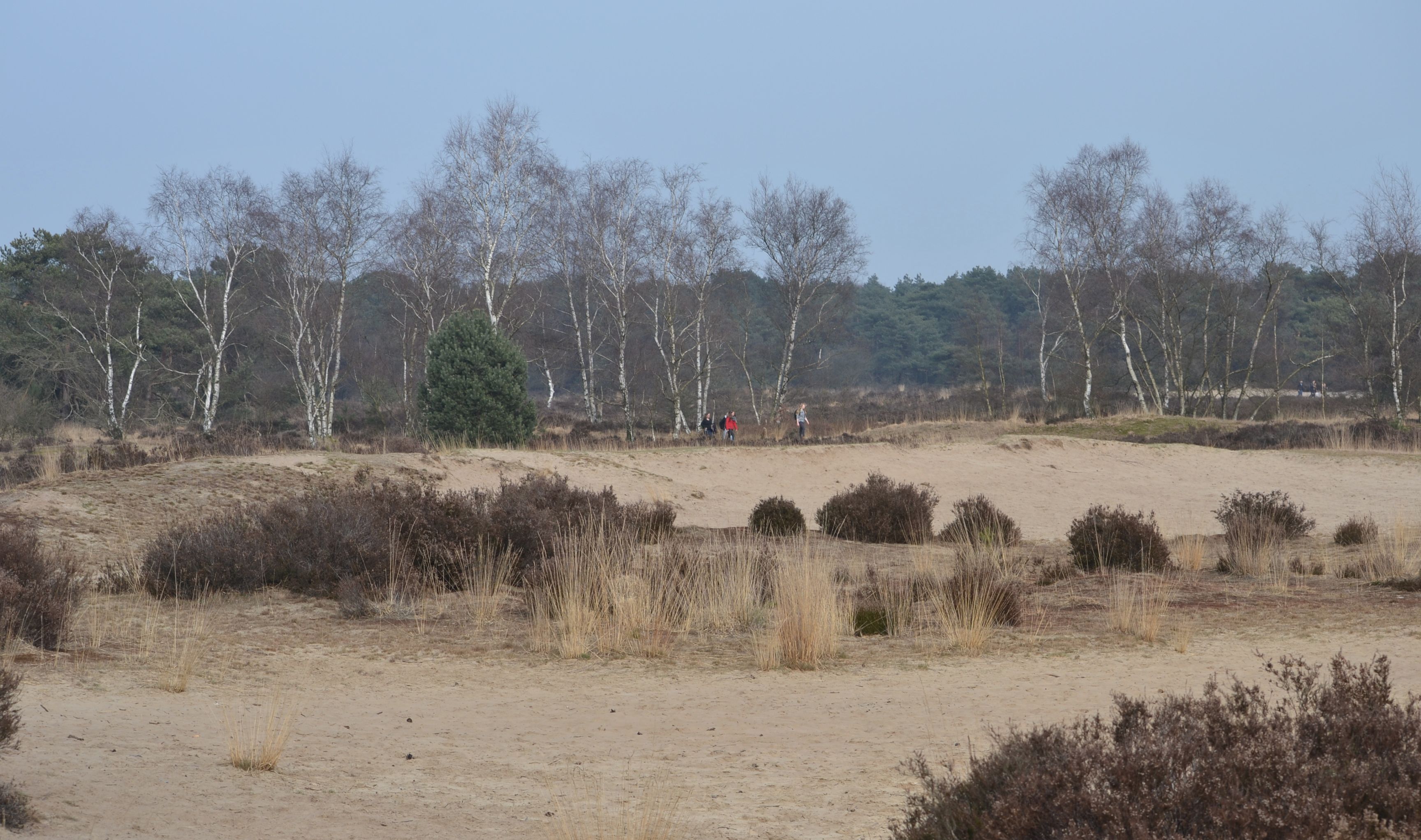
Z-KH is a 10,000 acre area of dry and wet heathland, inland dunes, pools and coniferous forests (pictured above), lying north-west of the town of Kalmthout. The education centre staff recommended two “hot spots” where Black Woodpecker might be found, stressing that the birds favour areas with burned and fallen trees. I checked out both of these on Monday morning without success.

Then I recognised a loud call that had been mimicked to me coming from a wooded area about 500 metres from the centre. As I walked towards the sound my first Black Woodpecker flew out of those woods and towards the place where I had just been. A little later I heard probably the same bird drumming from that location. So I had gained a flight view and now had two more half days in which to find a perched bird.

Here’s what I hoped to see © rights of owners reserved. The middle bird is a female.

Crested Tit and Treecreeper are also resident here. My best view of the former was actually in the car park. I wasn’t able to catch one of the latter to measure the hind claw, but hoped I might have seen Short-toed Treecreeper since both varieties are found in Belgium. Later on Monday afternoon I heard another Black Woodpecker drumming from some distance away, the sound continuing for considerably longer than a Great Spot and having a larger more resonant tone. Both the drumming and call are audible at up to 4km distance.

Having covered only a very small area of the reserve on these two visits, I walked for some way further in when I returned on Tuesday morning. The more open areas held large numbers of Larks and Pipits, and in particular the liquid song of Woodlark was a frequent back drop. Every so often one of the last-named would proclaim itself from an exposed song perch, in what Collins Bird Guide describes as “sweet but melancholy notes”. But I was not to see another Black Woodpecker either perched or in flight, though I did hear what must have been another one calling on Tuesday morning.

DSC_0098

The weather was cool and sunny throughout the two days of my visit, enabling me to fully appreciate the subtle beauty of this place. So yes there are Black Woodpecker here though I suspect not large numbers, and there is a vast amount of habitat in which to search for them. Discovering a nest site then staking it out in the breeding season would probably be the best strategy for observing and photographing these birds. If I can find a Belgian photographers’ network then perhaps I might come back here one day.

I returned to blighty thinking it would be worth spending more time in both the locations of this trip. The two additions took my European life list to 390 birds.

Wallcreeper in Dinant: a Belgian epic – 22nd Mar

If the most satisfying bird life list additions are those that require a bit of working at then this was a minor classic. I had failed previously to find Wallcreeper on both my spring trips to Provence in 2012 and 2013. This Alpine species winters on rocky inland cliff faces such as that region of France abounds with before returning to higher altitude usually in April. And the presence of one as far north as Dinant in south-east Belgium struck me as a rare opportunity being conveniently much nearer. This bird was discovered here on 30 December and is the first reported in Belgium since 1988.

From the blogs of those Oxonbirders who travel regularly to see birds it is plain that we share a common motivation. Every so often we just have to get away again. Hence, with the same birds appearing day after day on British RBA and the spring passage in its earliest phase, I decided to indulge in a trip a little further afield. Dinant lies in a spectacular gorge through which the River Meuse flows in the Ardennes region. Like many people perhaps, I have travelled through Belgium more often than stopping there, and this was an area I had for some years wanted to experience more closely.

DSC_0038

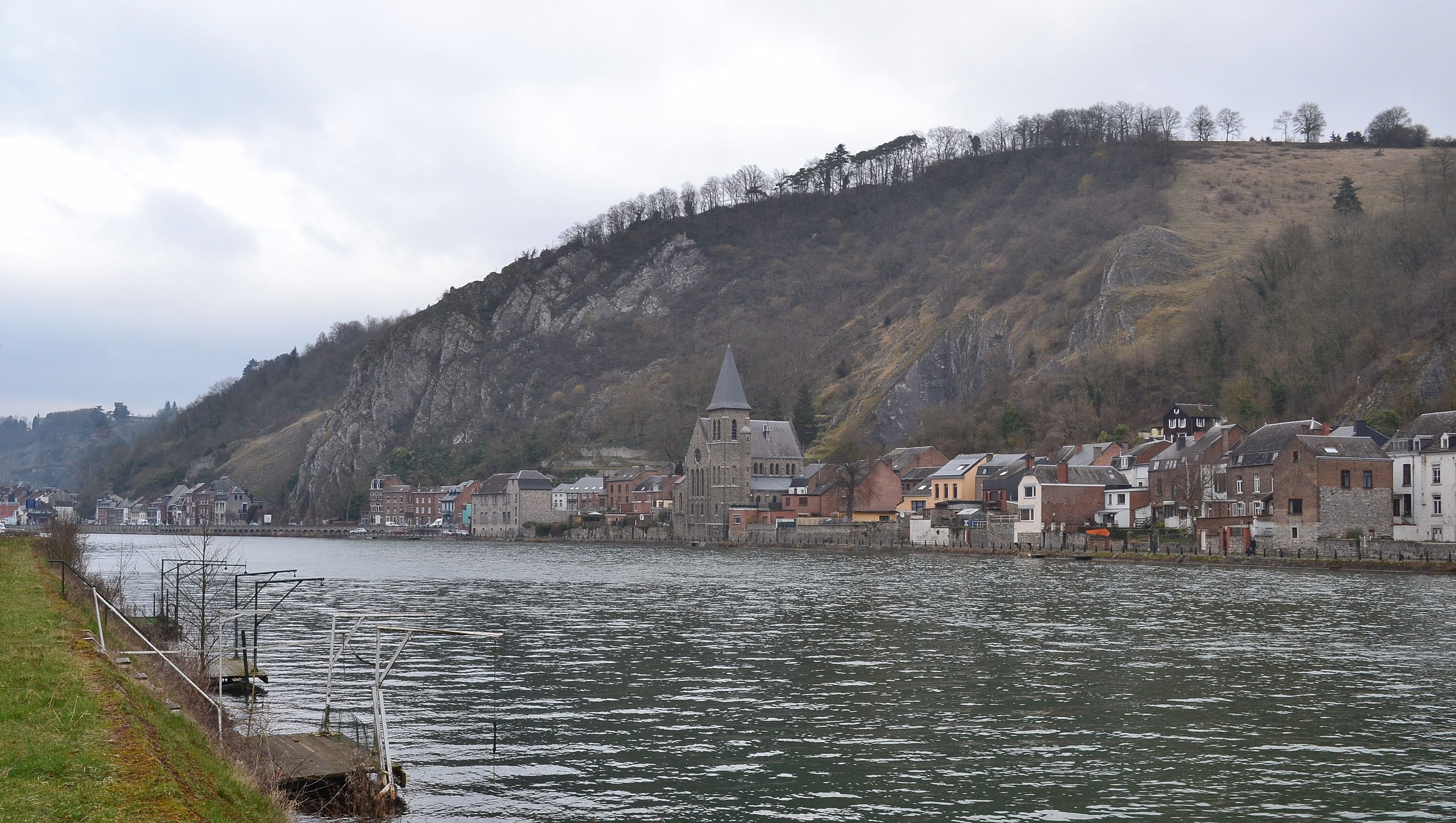
Meuse gorge, Dinant

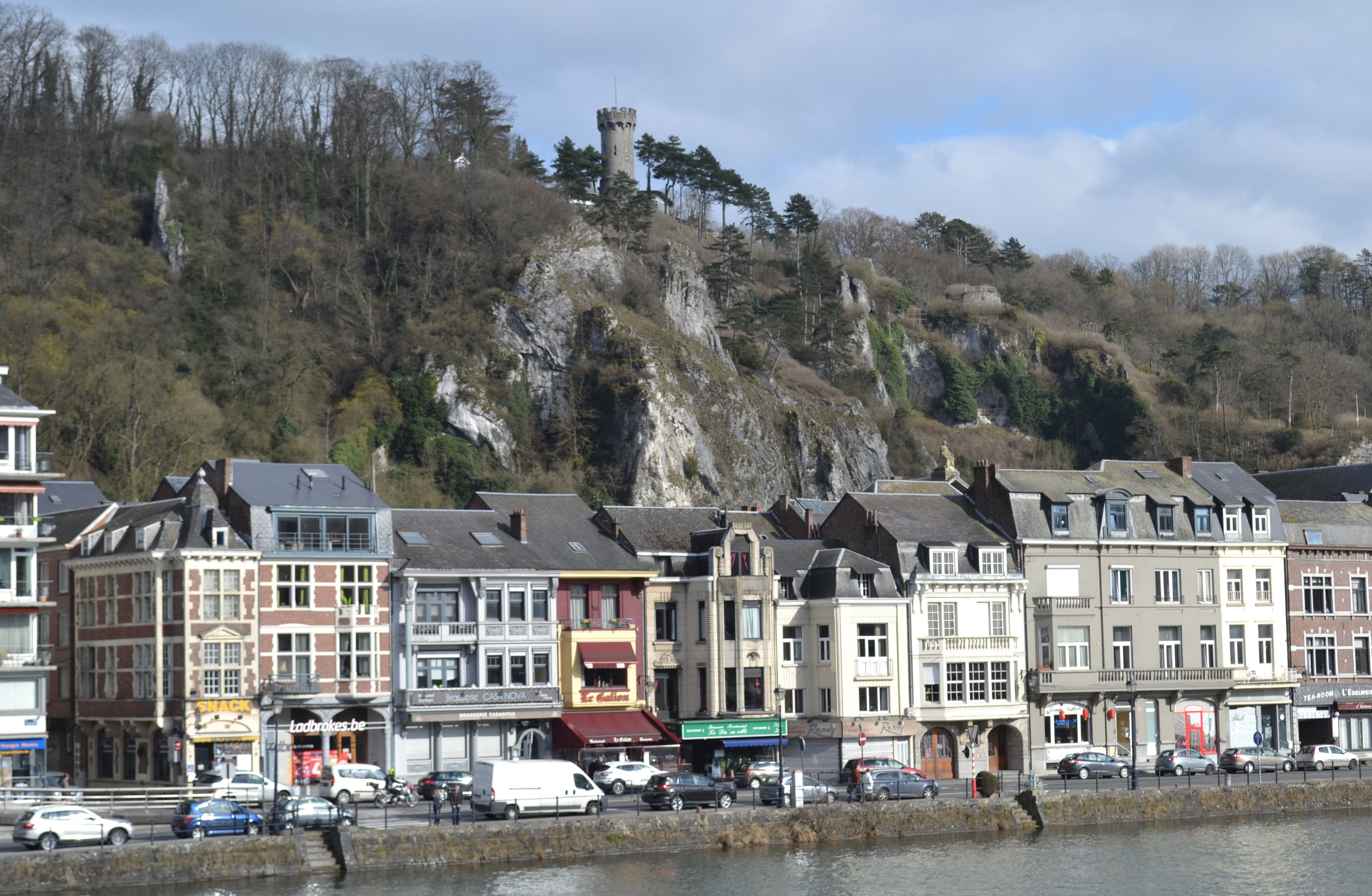
I arrived in the town late on Saturday afternoon amidst the kind of overcast murk that had been sapping my spirits at home. The recent directions on RBA had said merely ‘Montagne de la Croix’ or ‘Meuse’ and the bird had last been reported on 14 March. From the picture (above) it can be seen there is a vast amount of habitat in which a Wallcreeper might lose itself. MdlC was the name of a steep road leading out of Dinant, but there was only one small rock face there that was suitable. I checked some other cliffs nearby to get bearings before a Sunday visit, then headed for my overnight stay in nearby Falaën.

The choice of stopover proved to be a distraction since in the morning I elected to explore briefly the picturesque ‘Haute-Meuse’ in which my hotel lay before resuming the quest. This scenic area of winding roads through deep river valleys, abbeys, fortresses and chateaux is a playground for outdoor activities of the man-made kind, and is also very popular with bikers. Hence I was pleased to be here out of season, even though overcast skies remained from the previous day.

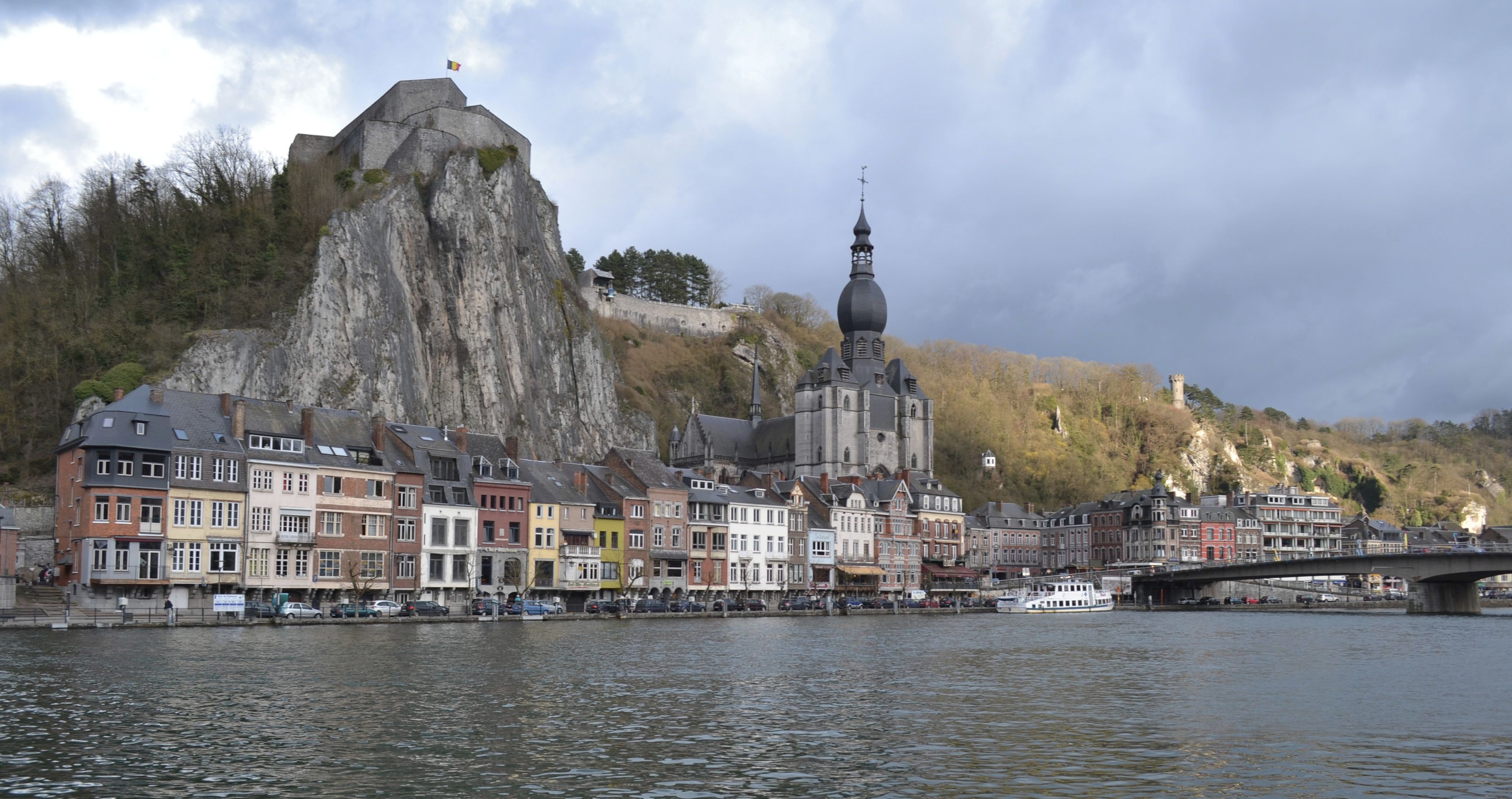
Dinant: citadel and Montagne de la Croix (to right on skyline)

Dinant: citadel and Montagne de la Croix (to right on skyline either side of church)

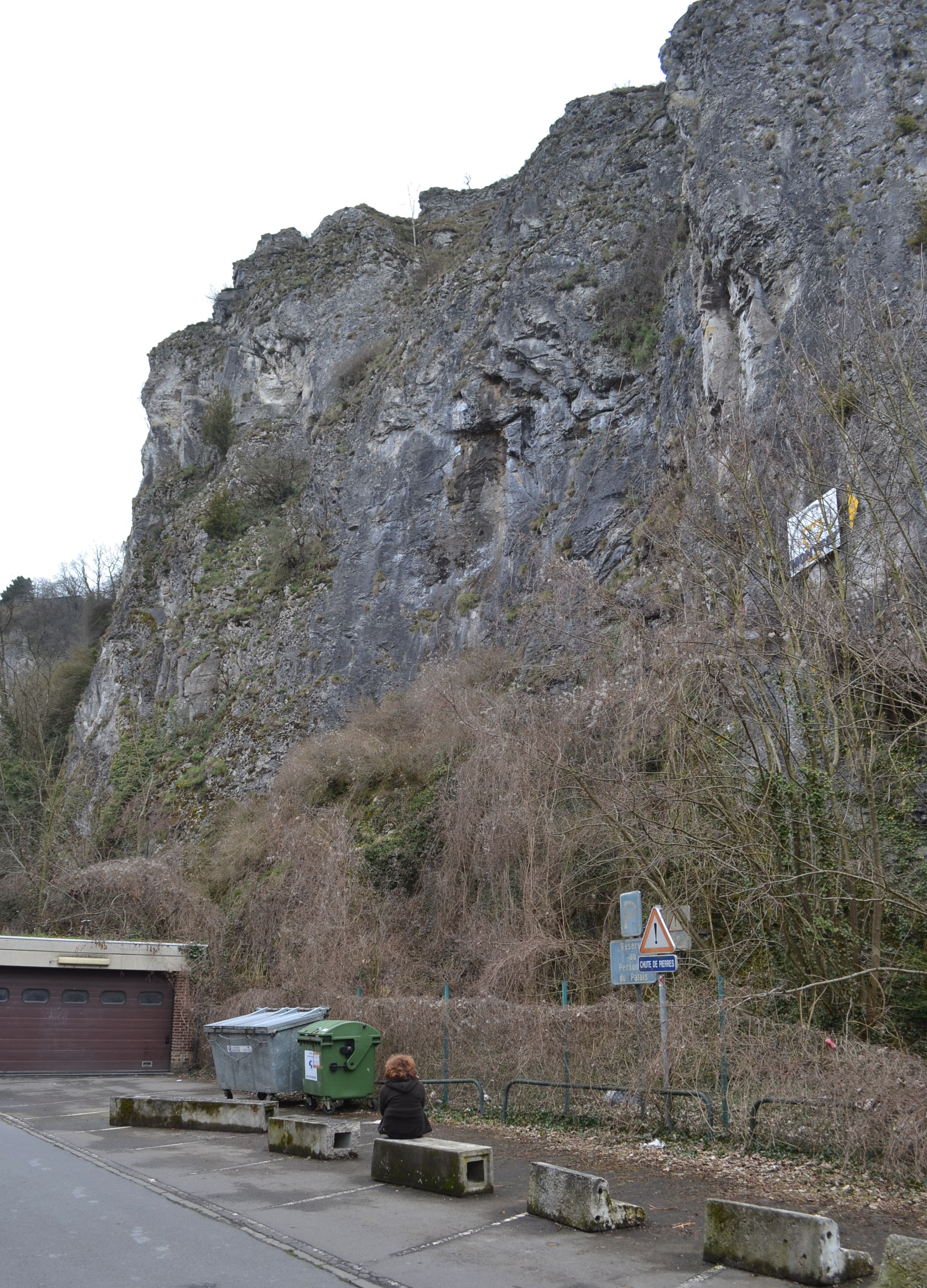
Returning to Dinant at around 11am I scanned all the rock faces for the Wallcreeper between Montagne de la Croix and the citadel, without success. Walking back again I ran into the first Belgian birders of the weekend who were watching a cliff behind the Palais de Justice and Police station (pictured below). This was on the corner of Place de Palais Justice and Rue en Rhee. The two ladies, who had the Belgian equivalent of RBA on their iPhones, said the bird had last been seen here at 6:30pm on Saturday and goes to roost under the eaves of the Palais building, but it has been seen earlier on some afternoons. I had of course been nearby shortly before that time without knowing exactly where to look.

DSC_0077

Part of Montagne de la Croix

It was now just after 1pm and the rest of my day was therefore mapped out. I could move on to my next destination, not see the bird and accept a frustrating dip (which was unthinkable having travelled so far) or stay here until roost time but hope the bird might show itself earlier. The two ladies soon left, then a resident walked through and showed me another nearby spot that the Wallcreeper frequents. At 2:45pm the sun came out but things were becoming a lonely vigil. After two breaks, one to take better pictures around town and the other for a welcome beer, I came back just before 5pm and more locals then began to appear.

This was clearly the business end of the day. The first birder to arrive, Robin Gailly pointed out the gap under the eaves on the back wall of the Palais de Justice where the bird goes to roost, and said it had been active on the cliff face for an hour before doing so on Saturday. The significance of that timing was of course not lost on me, and my companion explained that the whole cliff face in this part of Dinant is known as Montagne de la Croix. As more birders joined us further local knowledge flowed. I learned all the Wallcreeper’s favoured haunts, some of which different people went off to check while I stayed put.

The Wallcreeper roosts under the eaves above the circular window

The Wallcreeper roosts under the eaves above the circular window of the Palais de Justice

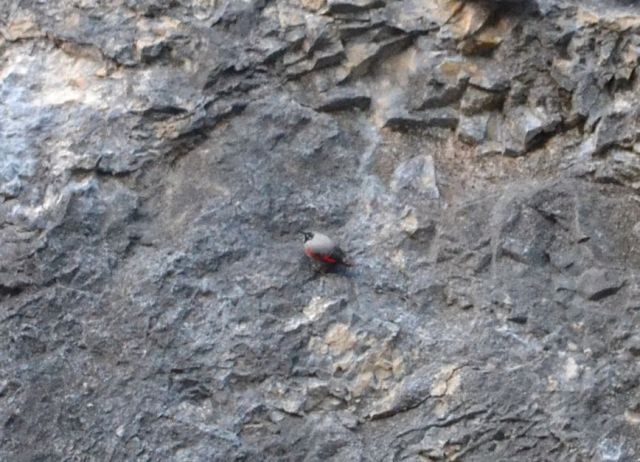
At just after 6:30pm Robin located the bird distantly on the walls of the citadel (pictured above). We watched it busying itself for about 10 minutes then it flew our way. Eventually the object of my quest arrived on the cliff face above us foraging for insects, flashing it’s colours and offering superb views. What a beauty, with a character and charm all of its own: slate grey with deep magenta fluffy bits, almost mouse-like and in perpetual motion. Had the six hour wait been worth it? Of course it had. Lastly the Wallcreeper transferred to the Palais wall before disappearing in an instant into its’ chosen dark hiding place. Bed time.

Blurry Wallcreeper Well they move so fast!

Wallcreeper in failing light

Here are some better images of the same bird (in winter plumage)

© rights of owners reserved

My day in Dinant had been a truly memorable one. After success with Egyptian Vulture in Fuerteventura last month, another straggler had been struck off my southern Europe wish list and I moved on to Belgium’s northern heaths to seek out another lifer, Black Woodpecker.

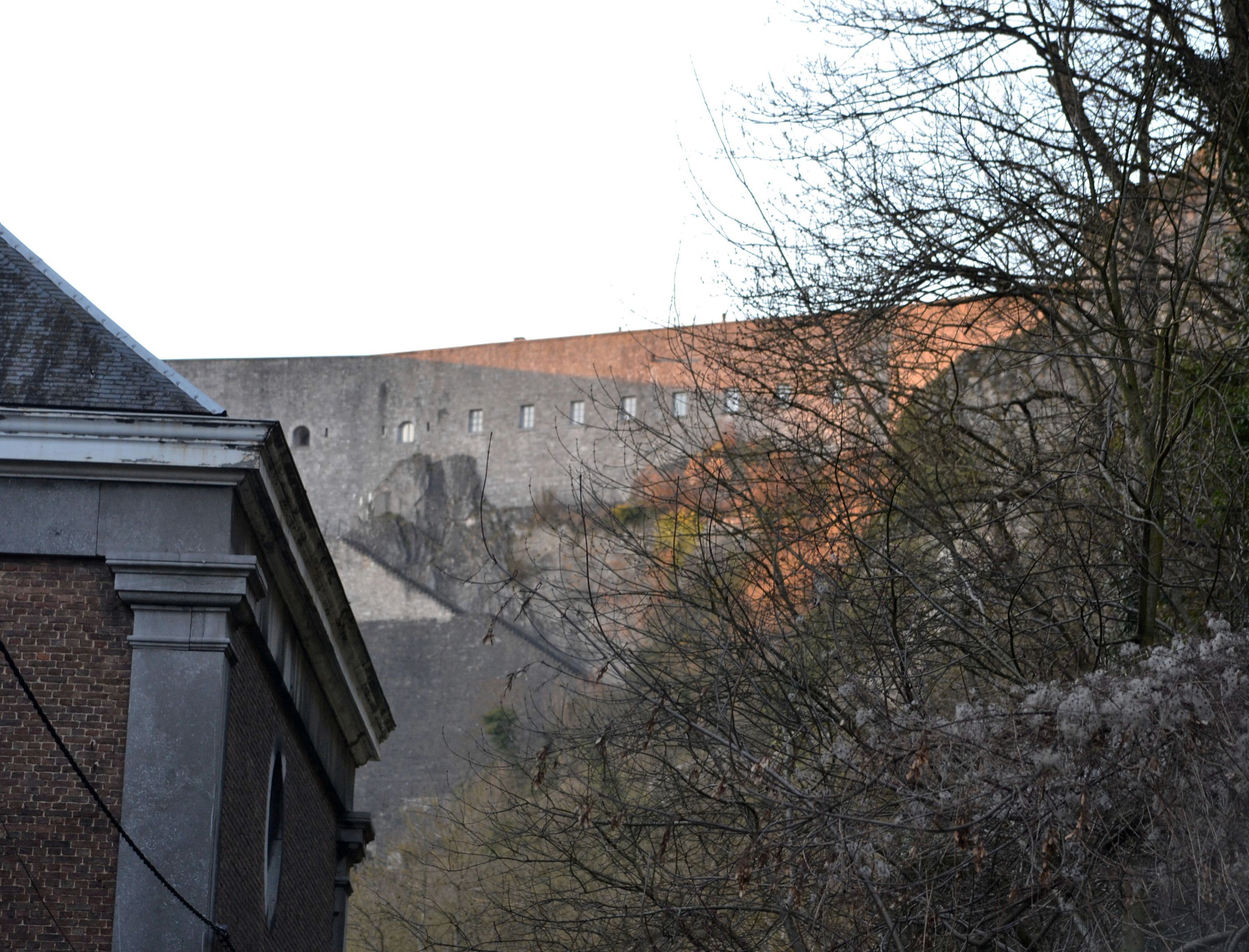
Montagne de la Croix (above buildings)

Montagne de la Croix (above buildings)

Lesser Pecker at Rickmansworth, Herts – 8th & 10th Mar

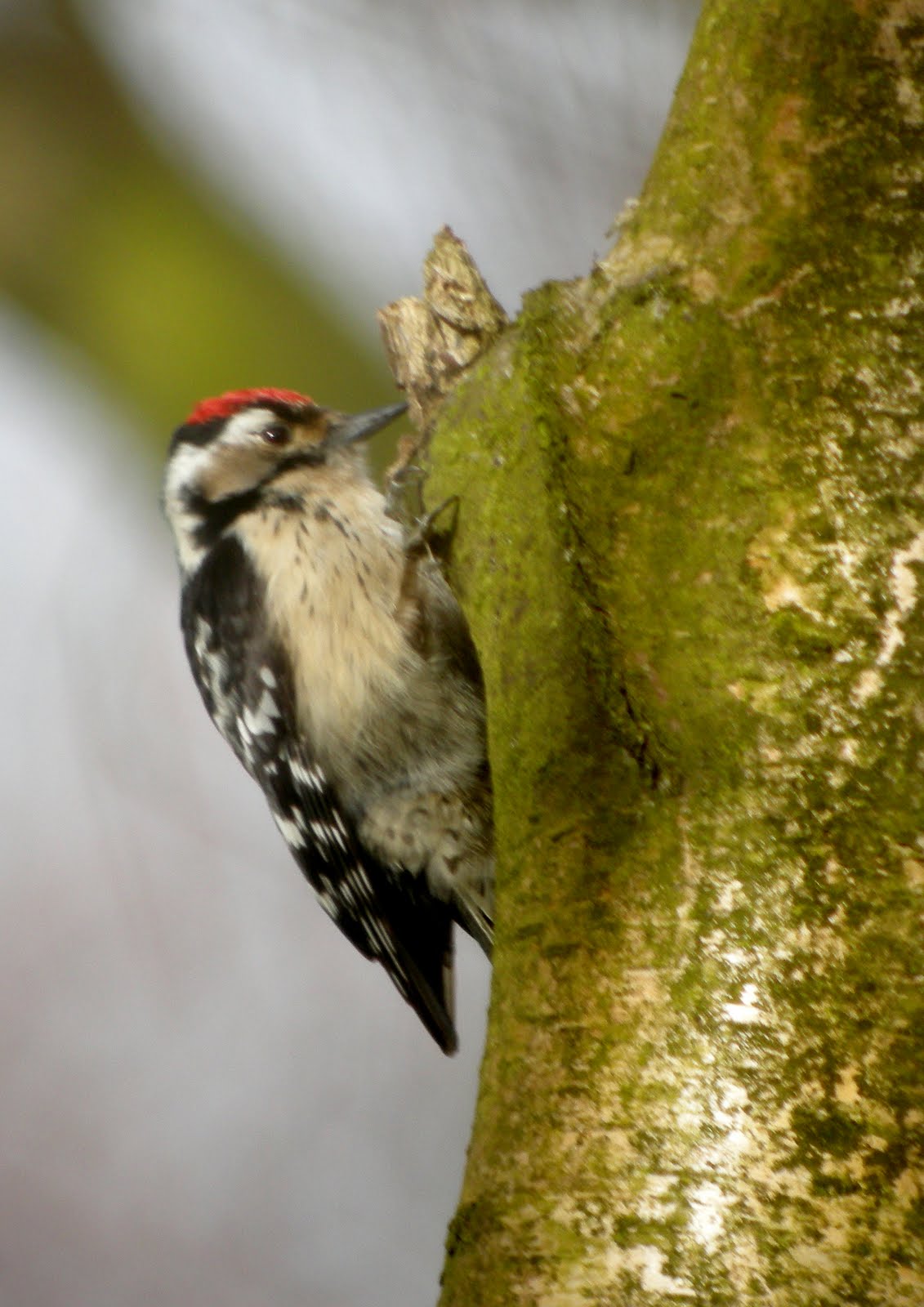
Lesser Spotted Woodpecker is a bird I have seen just twice before. So reports of a pair in recent days at Rickmansworth Aquadrome in Hertfordshire tempted me out for a 44 mile Sunday drive along the M40 and M25. On my arrival at 07:45 it was the kind of calm, sunny morning I understand to be best for sightings of this difficult to locate species. The directions on RBA were “at the sailing club end of the causeway”.

There are two LNRs on the former gravel workings here: the Aquadrome and neighbouring Stocker’s Lake. The former is more like a public park, the latter is wilder and the “causeway” runs between them. As I approached two birders were clearly on a LSW and one of them showed me the bird, a male in his scope. It was in a large Oak tree on an island in Stocker’s Lake but soon moved as they do. In trying to relocate it for myself I had a couple of glimpses as the LSW moved around but no more, and it drummed a number of times. Though I have heard this in the past I gained a better impression here of the sound being lighter and lasting longer than a Great Spotted Woodpecker, one of which was drumming nearby for comparison.

Lesser Spotted Woodpecker (c) rights of owner reserved

Lesser Spotted Woodpecker
© rights of owner reserved

Six birders had now gathered. The Oak was also being favoured by a pair of Stock Dove, Ring-necked Parakeet came and went, and various small birds confused the issue. Irritating Canada Geese on the lake kept up a cacophony of honking and passers by asked the inevitable questions. The Lesser Peckers’ presence in the area seemed to be common knowledge amongst dog walkers though.

At 9am a bird returned to the Oak tree and began drumming again but I managed just another brief glimpse before the Great Spot saw it off. At least I now knew which “dead branch” was being referred to by those around me, since there were various of them to select from. I watched that place where the LSW came back to for the next hour, during which the other birders all drifted off and the forecast cloud set in, but without success.

DSC_0005

The location for these Herts birds is by the “you are here” label at the bottom left of this site plan (above). I had gained a third Lesser Pecker sighting but not satisfying or self-found views. My previous experiences of this species at Church Wood, Bucks (Feb 2012) and Cothill, Oxon (Apr 2013) were much better. Hence I decided to come back here earlier on another calm, sunny morning if possible. On Monday I received a call from Oxonbirder Ewan Urquhart who was interested in seeing the LSW himself, and we revisited this Tuesday morning.

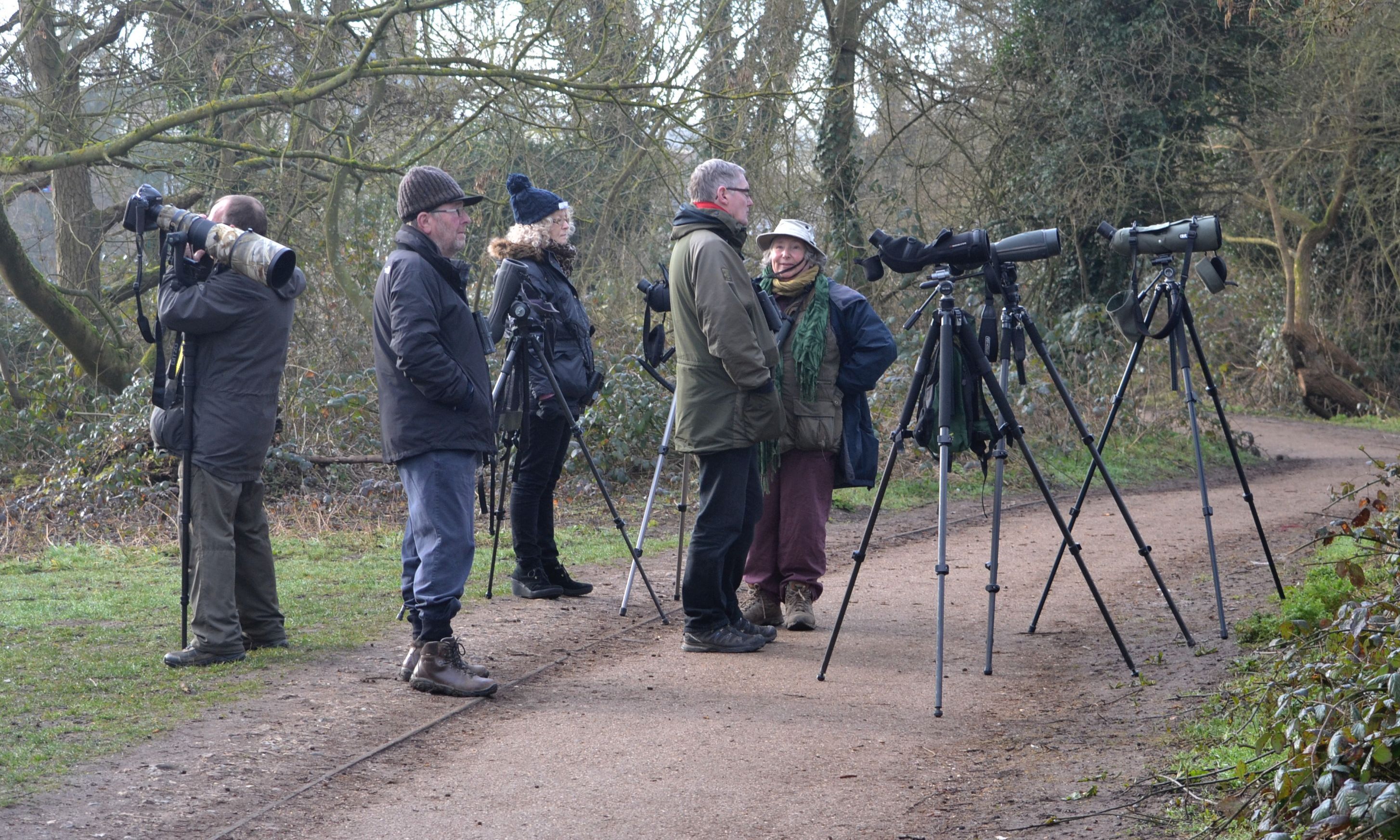
Within minutes of our arrival just before 7am, the sound of drumming commenced from a little further back than the Stocker’s Lake island, but we could not locate the bird at once. I trained my scope onto the same spot as Sunday, that was said to be the LSW’s favoured drumming post, and waited. Then at 07:20 the drumming was clearly coming from the large Oak tree, and there in my scope was the male bird. We watched for a few minutes as it drummed, then preened and eventually flew off to one side; and that was both a satisfying and self-found view. Mission accomplished. More birders (pictured below) came and went in the next three hours but the LSW was not seen by anyone again before Ewan (second from right) and I left at 10:30.

DSC_0016

Little Bunting and Lesser Scaup in Cardiff – 8th Feb

In my newly leisured situation any sunny winter weather forecast is very attractive, and the prospect of a two-lifer trip to South Wales today was a suitable draw. Little Bunting is a taiga-breeding winter visitor that was absent from my British list, so one frequenting a LNR (local nature reserve) feeding station in Cardiff sounded like an easy spot. If this bird was seen quickly there would be plenty of time to look for a wintering Lesser Scaup in Cardiff Bay, and lay that particular bogey to rest having dipped on the species twice previously.

The Glamorganshire Canal LNR in the north-west suburbs of Cardiff is pretty much a public park. The outward journey was 110 miles. After stopping at the first entrance I came to it was unclear how to locate the exact place cited on RBA where the Little Bunting had been performing for the last few days. Through various and conflicting directions I eventually found the hide in question at a time when relatively few birders were inside. This was at the end of Forest Farm Road past some rugby pitches, or a walk through the reserve always bearing left.

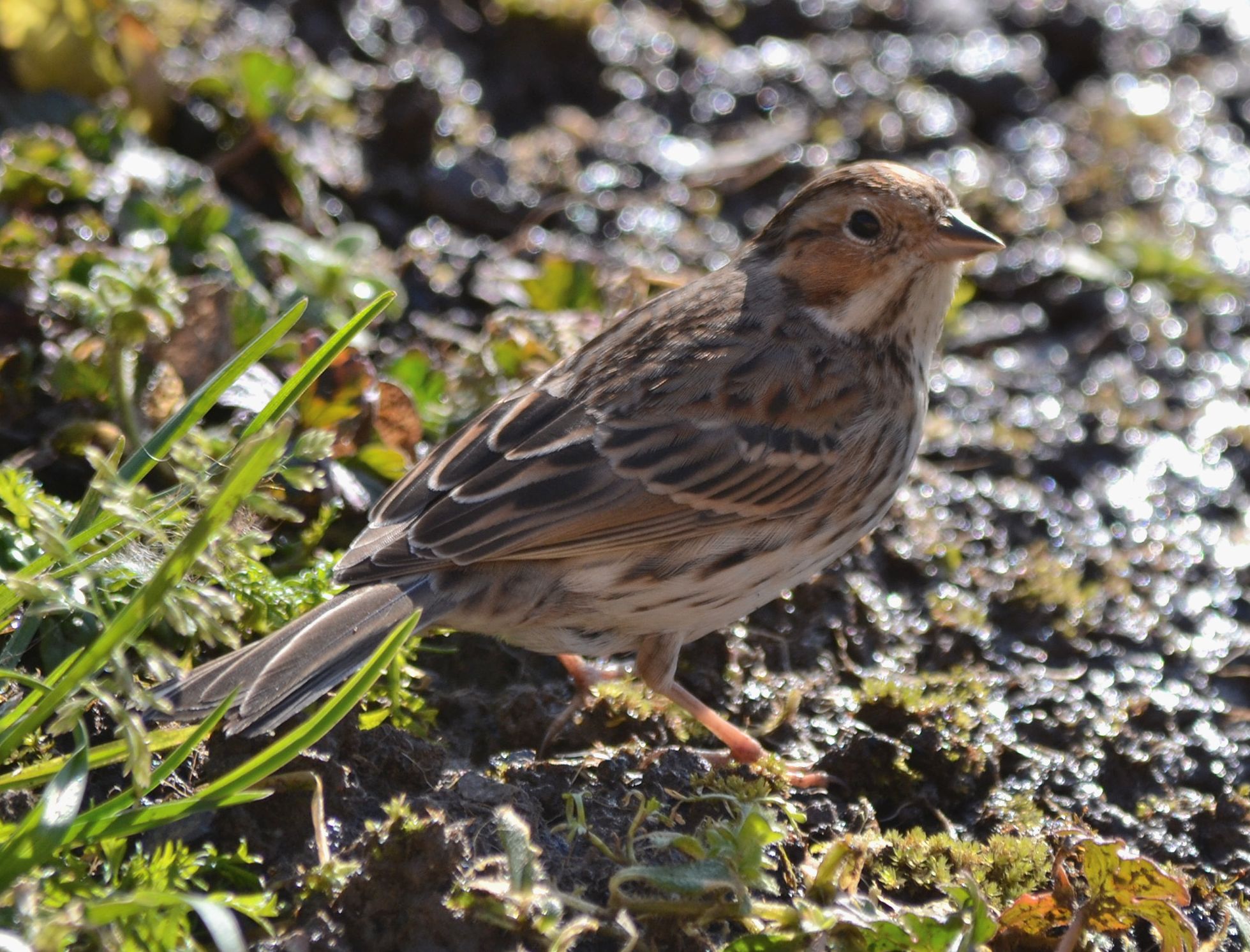
Little Bunting

Little Bunting

Shortly after my arrival the Little Bunting flew in very close, seed having been put down for it. Reasonable images (above and below) were not difficult to obtain at that range, though always looking into the sun. Resident Reed Bunting were present for comparison and the visitor was clearly smaller with chestnut cheeks, pale eye ring and noticeable wing bars. Gaining this important life list addition seemed a bit too easy really, but preferable to going to the Outer Hebrides or Scillies to see one which was the point of being here. The early afternoon was becoming pleasantly mild and when the hide began to fill up again I moved on.
Little Bunting

Little Bunting

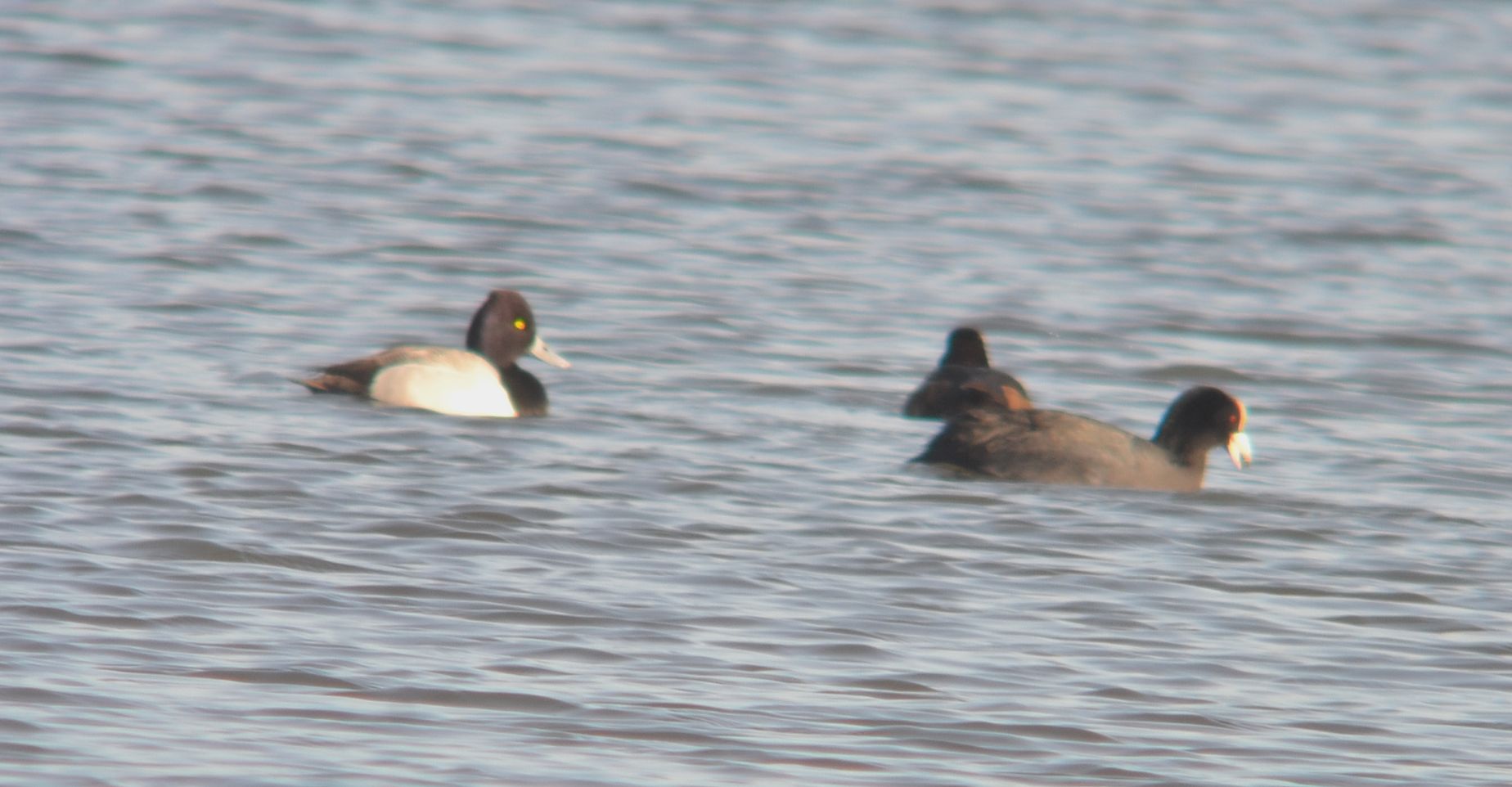
I envisaged the Lesser Scaup as likely to be a dot on the far side of an expanse of water. But when I relocated to Cardiff Bay Wetlands NR, local birders said the north American vagrant was showing well from a boardwalk. That location was at the far end of the reserve from a public car park between the Techniquest Museum and St David’s Hotel. I was told to locate the Scaup amongst the Tufted Duck, but there were a lot of the latter to scan. So having invested in just one hour’s parking time, I first took the easy option of asking another birder to put me on this adult drake. Then at my leisure I relocated it several times myself, and obtained a record shot of more usual quality (below).
Lesser Scaup (left)

Lesser Scaup (left)

When in view the Lesser Scaup stood out clearly from the Tufties with which it was associating due to its compact appearance and grey back. Most importantly the distinctive head shape was plain to see. This individual has apparently wintered here for a number of years. It was now 2pm and the afternoon had become positively spring like. The reserve itself (pictured below) was a pleasant oasis in what is a vibrant built-up area. I could only imagine the days when more of the waterfront here must have been in the same natural state.

The Lesser Scaup location

The Lesser Scaup location

My two lifers had been gained and after an uninspiring motorway journey out I took a “scenic route” home via Chepstow and Gloucester. The words warm, twitch, successful and glow were rearranged in my mind as I went and the feeling savoured. This had been an outstanding day.

Isabelline Shrike at Hengistbury Head, Dorset; and Franklin’s Gull at Blashford Lake, Hants- 16th Nov

Yesterday should have been an uplifting experience but when I got home a communication from Kent Police was lying on my doormat. Having tried really hard to be careful since my last SP30 it depressed me to have been caught out for a minor lapse in concentration again. So it was some consolation to read on RBA that an Isabelline Shrike had been in east Dorset all day, a mere two-hour drive from Oxford. That was a must see after missing this lifer in Norfolk just recently. And if I didn’t set off too early I would be ideally placed to catch up with the Franklin’s Gull that had been coming in to roost at Blashford Lakes near Ringwood, Hants.

Still feeling down this morning whilst waiting for news of the Shrike’s continued presence, the alternative of paying attention to my Oxon year list held no appeal. I needed to be out on the road for a second day, whatever the risks. The “Izzy” was favouring an area just north of the approach to Hengistbury Head on the seaward side of Christchurch Harbour. When I arrived there at just before midday several observers were already on the bird, so I saw it immediately. Once more there are no prizes for the record shot, attempted in dull and drizzly conditions that persisted throughout my stay.

Isabelline Shrike

Isabelline Shrike

Isabelline Shrike belongs to an Asian group that are closely related to Red-backed Shrike. Whenever one is reported on RBA there is a discussion as to which of three very similar species it is most likely to be. The cinnamon coloured tail of today’s first winter bird is diagnostic, and there are other plumage details that I will not pretend to be familiar with. After a coffee break at a nearby café I retrieved my digiscope collar, but the bird did not care to show itself again before I moved on to Blashford Lakes nature reserve.

It was raining heavily when I got to Ibsley Water in the Blashford Lakes complex at 2:50pm. Other birders told me the hide here has been very crowded of late at gull roost time, but it was dry inside and I gained the advantage of a seat. There was a good natured ambience as all present waited for the star north American gull to make it’s daily, late afternoon appearance. After 30 minutes or so I turned round to find Oxonbirder Adam Hartley (aka Gnome) standing behind me, and I was also keeping in contact with Andy Last who had seen the gull previously. Not much chance of missing it then! Just before 3:30pm a murmur went up at one end of the hide and I immediately picked up the Franklin’s Gull in my own scope. This adult winter bird was very distinctive as the digiscoped image below shows, and it was apparently much closer to the hide than usual.

DSC_0028

Franklin’s (nearest bird) and Black-headed Gulls

So this was a two-lifer day and a good antidote to having fallen foul of the Exchequer whilst trying to enjoy another nice day out a week earlier. Picking out the gull for myself in a hide full of birders was the more satisfying of the two experiences, but I have a good record on Shrikes and so appreciated the latest addition to their kind as well. The warm glow of a successful twitch has a medicinal value, so I felt in much better spirits on my drive home than on the way out this morning.

Desert Wheatear at Reculver, Kent – 9th Nov

To begin with a preamble, the reason for an apparent pause in the adventures related here has been dipping once more on Lesser Scaup. I first missed this troublesome (at least for me) north American duck near Hereford in April 2013. The species eluded me again last weekend (1 Nov) at Wraysbury gravel pits in Berkshire, having been flushed by an inconsiderate fishery worker an hour before my arrival. After being logged there on Thursday morning (6 Nov), this bird wasn’t seen either by myself or others in the afternoon and hasn’t been reported since.

Another 2013 dip was Desert Wheatear, a usually confiding little number that really ought to be in north Africa at this time of year. Last autumn on the Severn estuary a ridiculously tame individual actually walked around the feet of some travelling Oxonbirders one Saturday afternoon. When I visited the following day, on a break from searching for Two-barred Crossbill in the Forest of Dean, the lost waif had disappeared. There is always something wrong if a bird is that fearless, and my guess was that a cat got it during the night.

And so to the present. Over the last few days three separate Desert Wheatear had been posted on RBA in Kent, Suffolk and Norfolk. Checking the distance, the Kent bird at Reculver (134 miles) was just eight miles further than my last twitch to Beachy Head. It’s a slippery slope, isn’t it! The location held two further attractions for me. Firstly other east coast autumn specialities, Horned (or Shore) Lark and Snow Bunting were also present. Secondly I like to combine a twitch with a bit of history and revisiting early-life memories. Reculver, the site of a Roman fort of the Saxon shore, holds recollections of a school trip when I was about 14 years old, my only previous visit. Game on!

Reculver marsh and towers

Reculver marsh and towers

I arrived at Reculver Country Park at 7:50am, hoping the Wheatear would have been located in the interval since first light. On the far side of the Towers from the car park several birders were looking over a sea wall and there was my bird. I at once recognised the setting captured in some superb pictures on RBA by a Kent photographer. My image isn’t too sharp but still better than I could have expected: the bird didn’t come that close again while I was on site.

Desert Wheatear

Desert Wheatear

Mission having been accomplished so easily and early I walked east along the sea wall in search of two recorded Snow Bunting and my first Horned Lark since 1993. A recent Norfolk weekend had made me want to see more of these two species, and Kent was after all a lot nearer. With many birders around for assistance, all three birds were seen well before 10am by which time the general public was intervening. Lots more birders were still arriving too, but with dogs running around on the beach I headed back the way I had come.

The Desert Wheatear, a first winter male was now entertaining a largish audience from within a shell fishery just east of Reculver Towers, making for some interesting location pictures (above). Clearly in good health, it was flying up and catching insects from one perch or another inside the untidy compound (below). A Black Redstart was also attracting attention here.

All this was much to the chagrin of one after another kamikaze cyclist who would zip through without warning, berating any pedestrian who might have the temerity to be in their way. It doesn’t happen in Belgium or Holland where there is a proper cycling infrastructure, only in blighty. And still more birders came, but I had gained a lifer and seen what else I wanted and so went on my way.

The bird is on the fence (centre) in the foreground

The bird is on the fence (centre) in the foreground