I have until now felt a little underwhelmed when encountering the undeniably delicate beauty of Fly Orchids, the plants being so skinny and the flowers so tiny, but what I will now describe has rather altered that. Twice in the course of four days a week ago I was fortunate enough to gain two quite exceptional records (pictured below).
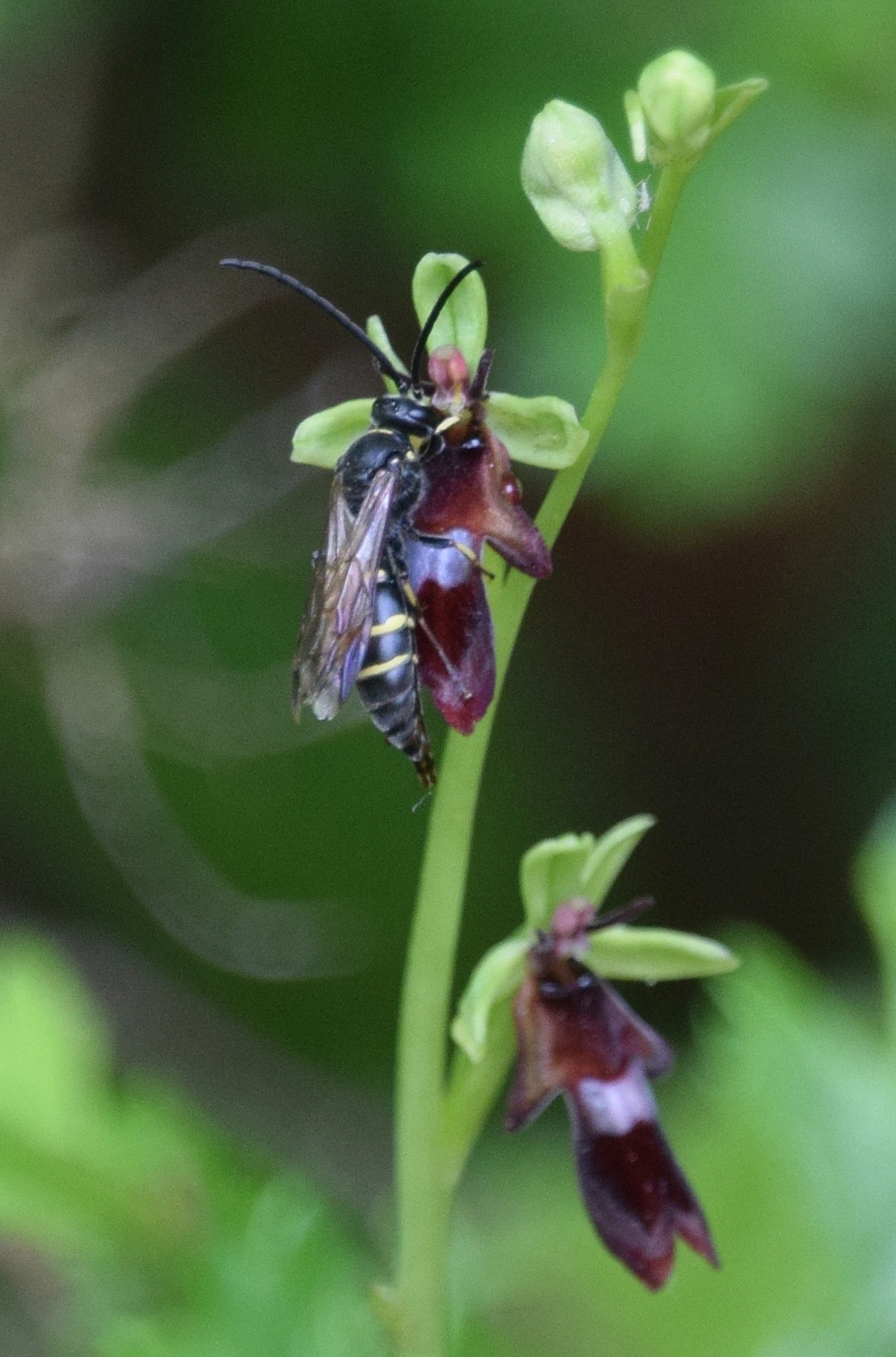

As the Mariposa tour group I joined was leaving Bonsai Bank on 1st an excited shout went up from one guide Richard Bate to the other, Jon Dunn. Richard had found a Wasp attempting to mate with a Fly Orchid flower, something that is rarely actually witnessed in the field. Indeed both guides had observed this just a couple of times each before. Richard called participants forward to take pictures under supervision, then when he judged the insect was not bothered by our attentions I moved a little closer. By now I was lying on the ground while others stood around me getting their own pictures using the back of camera technique. I always look through the viewfinder. I had no idea whether I was getting anything decent, given glare on the camera screen and since I wear varifocals, but was eventually pleased with the outcome.
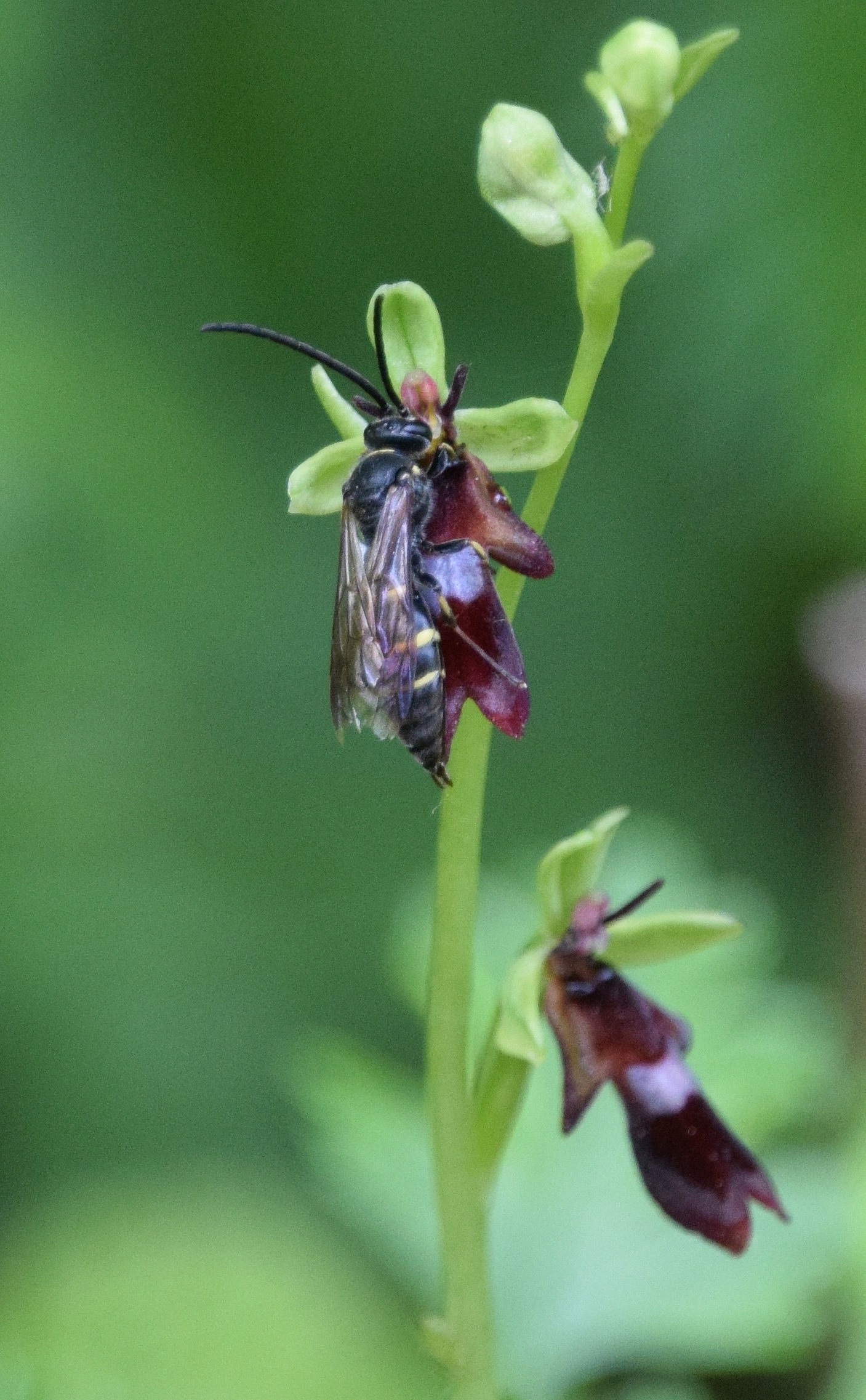
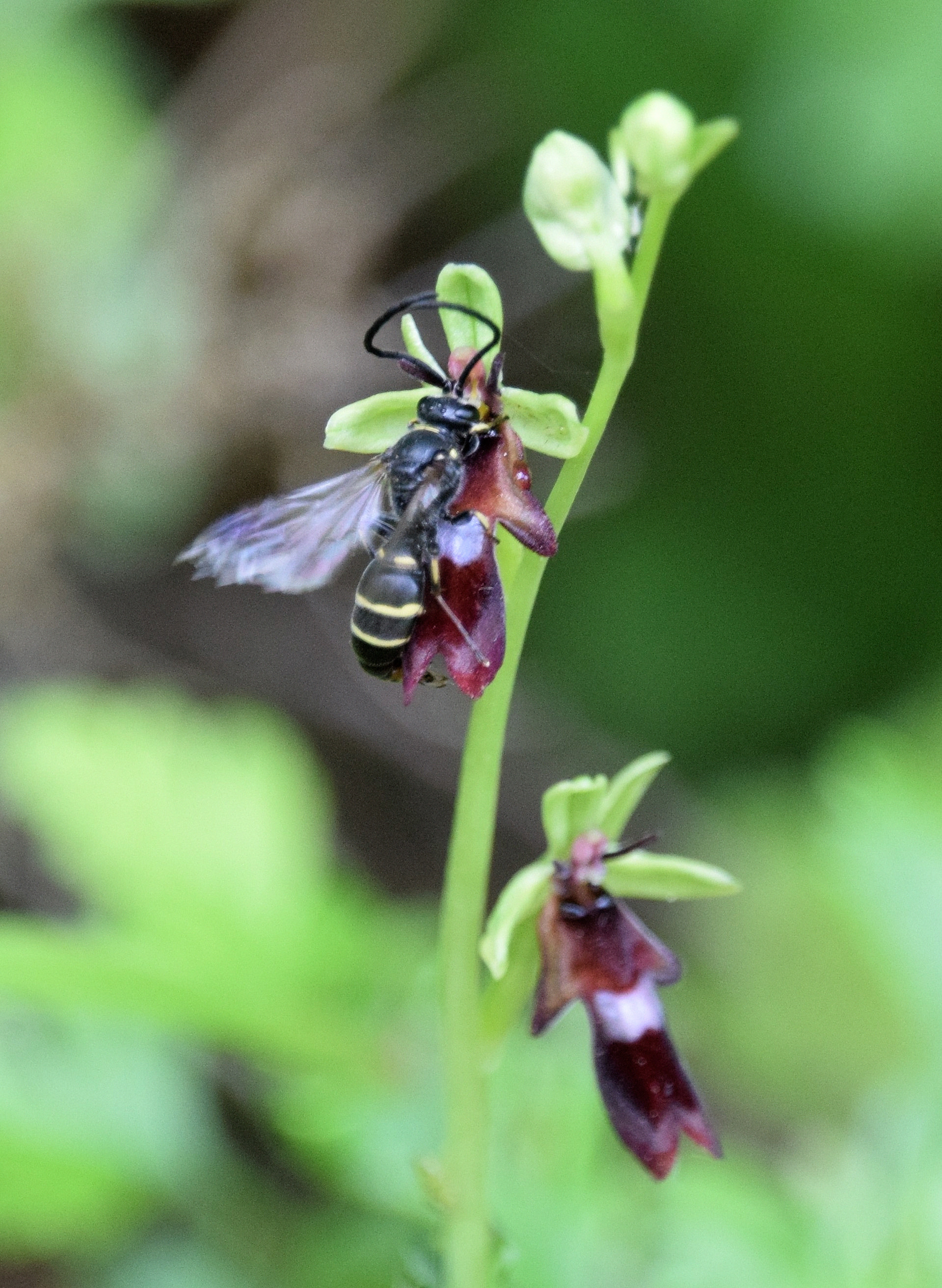
The process of pollination through sexual mimicry by Ophrys (Bee, Fly and Spider) Orchids is known as pseudocopulation. As well as the visual deception the plants also replicate the sexual pheromones (scent) of the pollinator species, which can be more attractive to male insects than that of females of their kind. In falling for the deception male wasps or bees contact the plants’ pollen sacs which attach to their bodies and are then transferred to the next flower they visit. To ensure reproductive isolation each Ophrys species, of which there are many abroad targets separate pollinators upon which they are completely dependent for their survival, though hybridisation of course does occur (see here). Pollination of around 10 per cent of an Ophrys population is sufficient to preserve it, since each plant can produce up to 12,000 minute seeds.
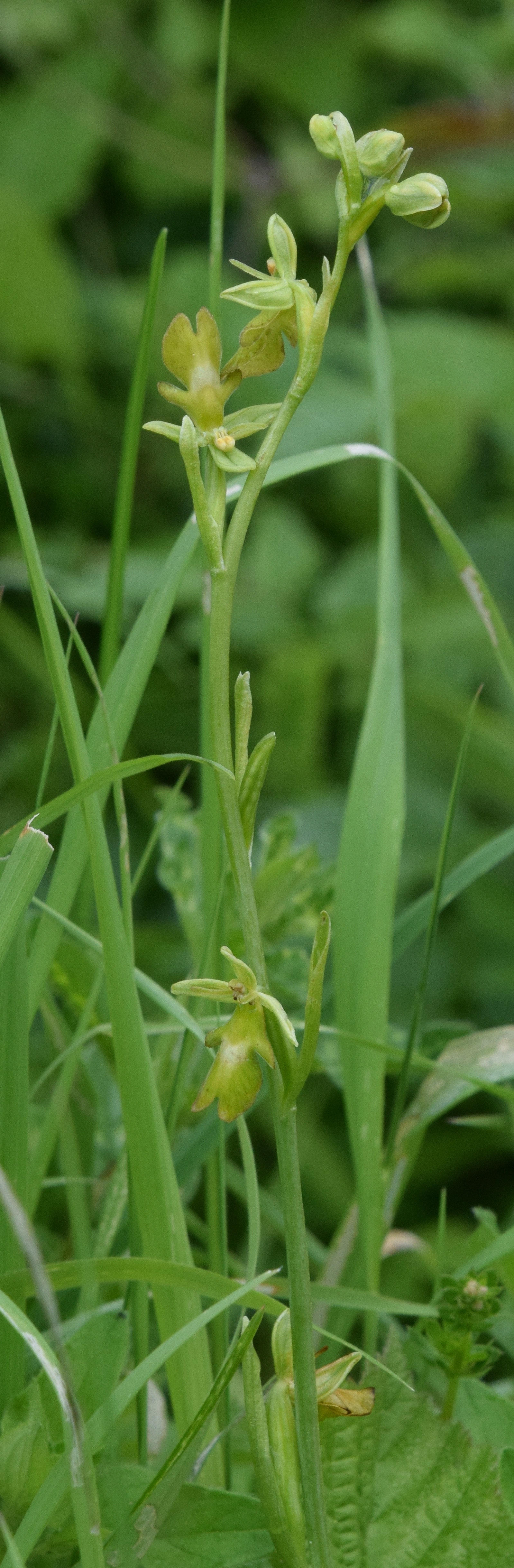

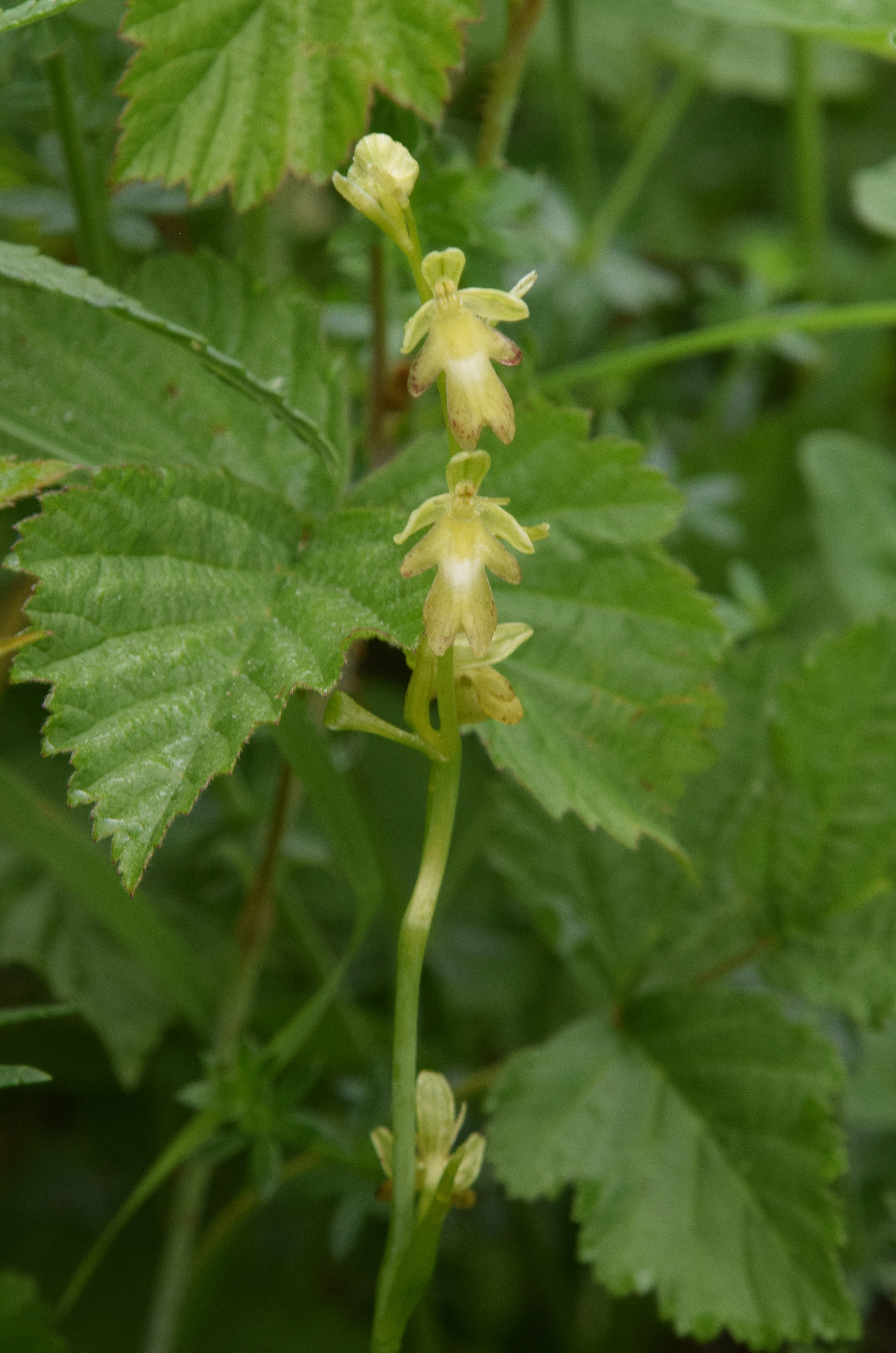
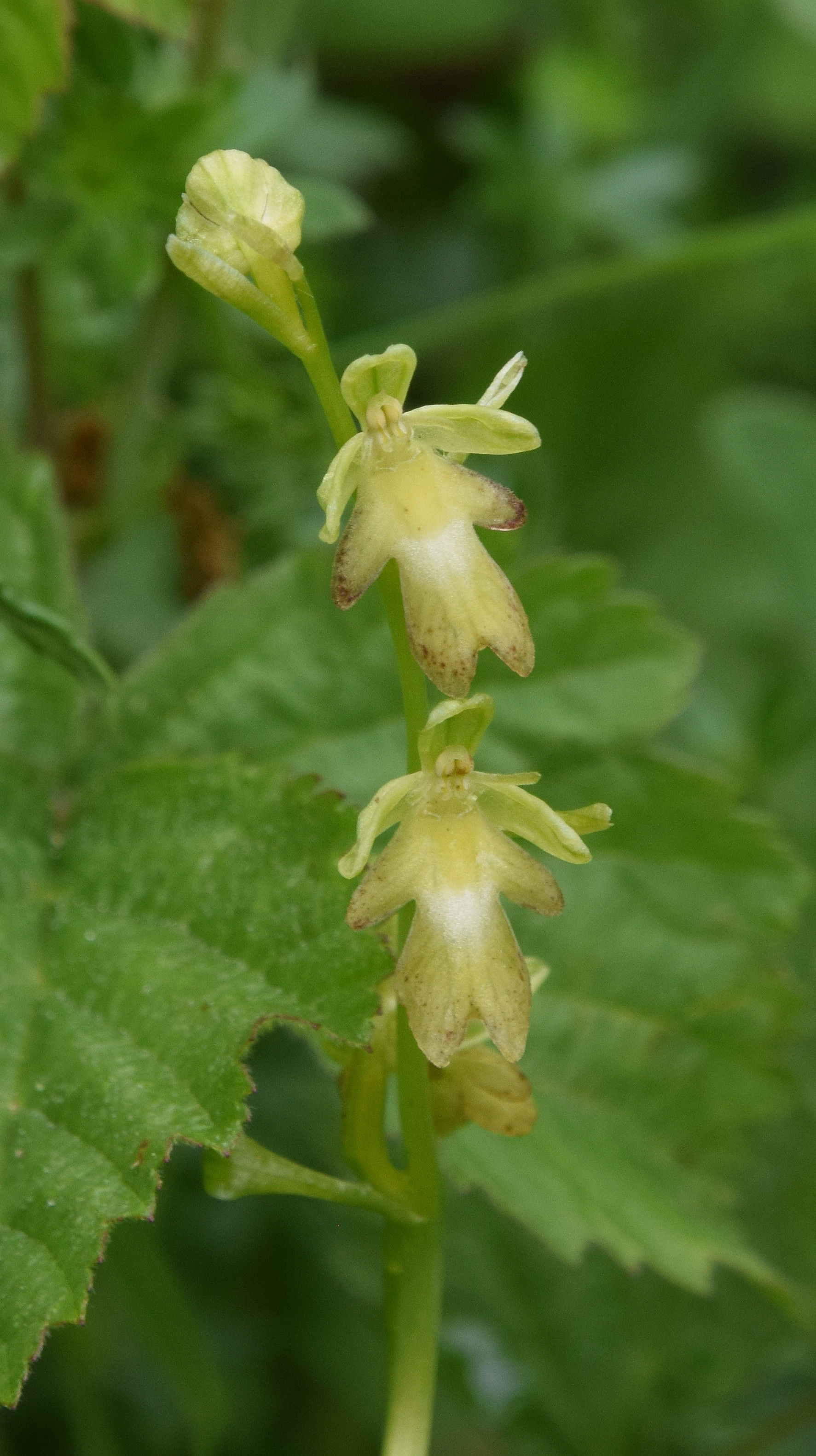
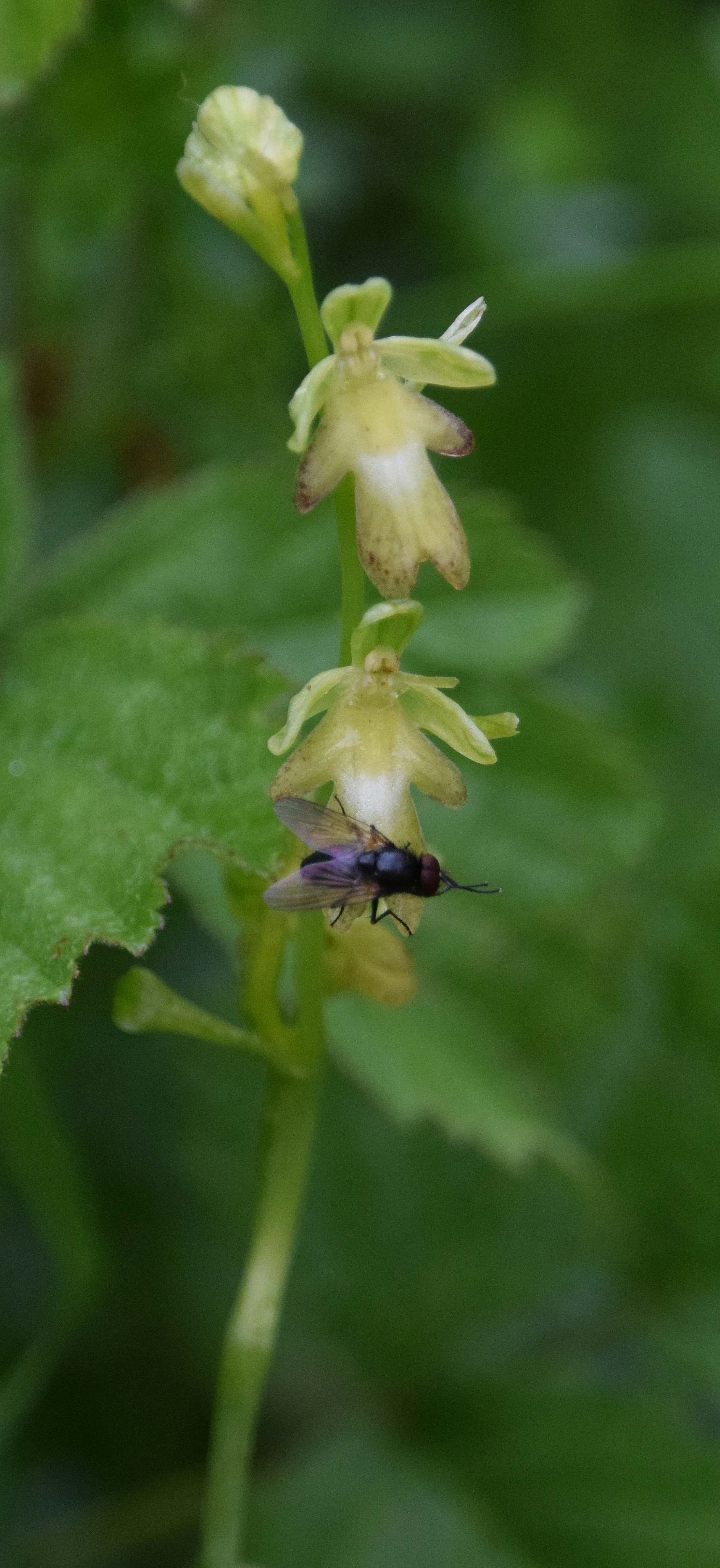

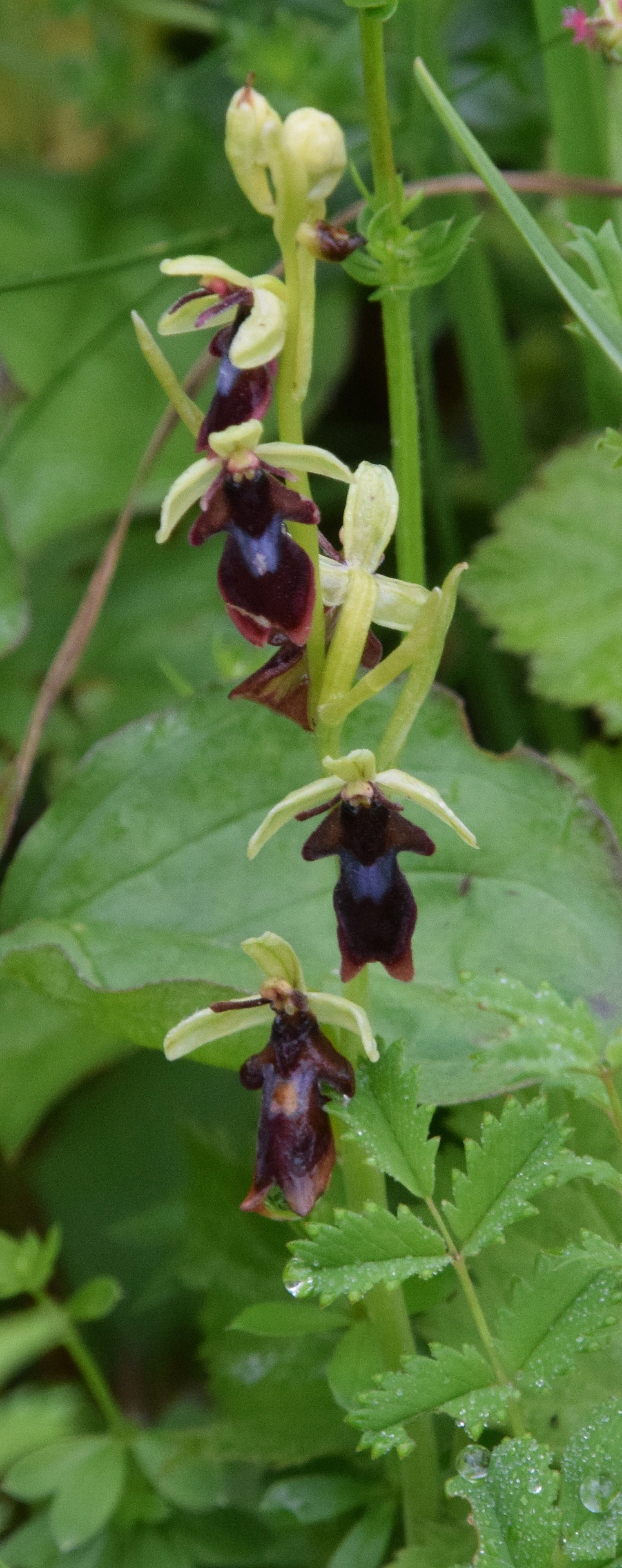
On the morning after that tour I was tipped off about a location in Hampshire for the rare green colour form of Fly Orchid, designated var ochroleuca. This seemed well worth going to see, Tuesday was a wet day, but I made an early start on 4th arriving on site at 9am. The two stems took some finding, as I paced up and down at the foot of a steep and densely vegetated former chalk pit side, trying to bring the cursor on my phone screen into my quest’s w3w square. Then all of a sudden there they were, a classic case of getting my eye in. The term ochroleuca refers to pale yellow or creamy-white forms of Orchids, that occur in some genera and are usually highly localised. I had previously encountered this in Marsh Helleborine (see here), while a form of Early Marsh Orchid occurs at just two sites in Suffolk and Cambs.
Though I often state that self-found things are the best, I am of course indebted to others for locating the twin subjects of this post. My thanks are due to Ian Lewington who spent hours searching for the second item, then very kindly gave me the precise location. As is customary when reporting on rare and vulnerable variant Orchids I cannot disclose that detail herein.
 Ramblings and Scribblings
Superb pictures of the insect on the flower. How lucky to see this happening. For bee orchids, long horned bees are supposed to be the pollinators but there are so few of these insects now in the UK that I believe it doesnt happen here. In continetal Europe it does apparently still happen.
LikeLike