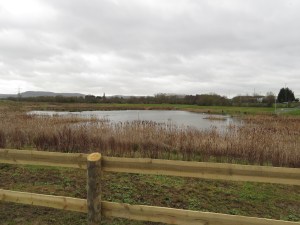
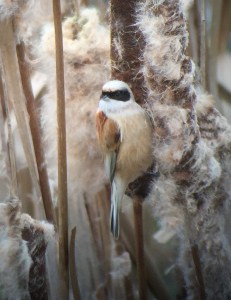
Slender-billed Gulls at la Palissade and more in la Camargue – 11th May

There was a rain interval today so I spent the wet morning blogging then shopping for provisions, then in the merely grey and dismal afternoon paid a visit to the Slender-billed Gulls at the mouth of the Rhone. Two sites here at They de Roustan to the east of the Grand Rhone channel, and la Palissade on the west side are reputed to be the best places in the Parc Naturel Regional de Camargue for observing this gull.

I visited both locations in March 2013 during three days here that were blighted by the Mistral, finding my first ever SBGs at la Palissade and witnessing them flying backwards in the wind. Up until then this had been a jinx bird on my southern European travels. Then in January this year I looked for them again at They de Roustan without success, but didn’t have time to cross over to the western site. Hence my interest in checking out la Palissade now.

Getting there meant a potentially nice and birdy drive through la Camargue, along the D36 road south from Arles. On the way out the top head turners were a quartet of roadside European Roller, Gull-billed Tern over some rice paddies, and a group of several summer plumaged Curlew Sandpiper on the approach to la Palissade itself. Then there were Cattle Egrets sometimes almost matching the numbers of livestock in roadside fields, summer plumaged Sanderling and Kentish Plover, those common Oxon residents Marsh Harrier, large numbers of Avocet, and of course oodles and oodles of Greater Flamingo. It’s a pretty bad holiday interruption when all that’s left to do is bird la Camargue!

Blue skies prevailed when I reached journey’s end (N43°21.079′ E4° 46.922′) and the first thing I saw was a good sized flock of Slender-billed Gull (pictured above). They must be a fixture here and this is the only place where I have found them in any numbers. I watched for about half an hour. To me they have a slightly comical, droopy-nosed appearance reminiscent of Concorde, and a character of their own amongst other Gulls. I was pleased to have had this second encounter here, after the foul conditions of that original experience.

Driving back the stand-out bird sightings were a Blue-headed Wagtail, Little and Sandwich Terns, my first Caspian Tern for France, and a Squacco Heron. And all this in a few hours spent casually in la Camargue without leaving the car. Eventually I was ticked-off by a pair of passing gendarmes for stopping at the roadside taking pictures. They seemed unimpressed by my explanation that I was observing birds as people come here from all over the world to do.

Butterflying in Provence: Le Luberon – 9 & 10th May

The vast limestone plateau of Le Luberon fills the horizon east of les Alpilles. Today I revisited two sites at the western end of this range, around the village of Mérindol, that I discovered during my first Provence trip in May 2012. It must have been references in the Helm birding guide to France that brought me here then, but the memory I took away was of butterflies.

Mérindol is tucked in under the limestone escarpment. Here at the top of rue du Vallon Bernard is what looks like a disused quarry from where hiking trails lead along the face of and into the upland. At this spot in 2012 I found Provençal, Glanville  and Knapweed Fritillaries and Southern White Admiral. Today I wanted to repeat the exercise if possible and see if anything else could be found here.

Overcast conditions persisted throughout the day, but purely by chance my arrival at this spot coincided with the one sunny window of opportunity. An initial reconnoitre around midday had produced nothing, but after returning to my car for a sandwich the sun came out and so of course did the butterflies. Singles of Painted Lady, Red Admiral and Swallowtail were the first to appear. Then while tracking the last named I came across a Fritillary attempting to warm itself on a mossy patch with wings spread flat and wide.
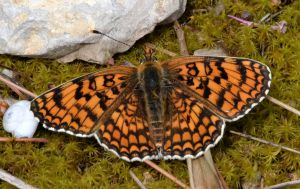
provençal fritillary.1601 merindol

Provençal Fritillary

This was the first of a few Provençal Fritillary (pictured above) seen here today and it was soon joined by Knapweed Fritillary, a quite common south European species. The latter is very variable in form between the Iberian peninsula and France, regionally within France and even at the same site. The left hand individual (below) for instance has brighter orange hind wings compared to the possibly female butterfly in the right hand picture. Both these specimens were observed at Mérindol today.

The sunny interval lasted for no more than 45 minutes after which I followed the hiking trail east along the escarpment’s face. But conditions quickly became cool and windy and the only butterflies to show themselves were frequent Wall Brown. Back in the relative shelter of the quarry, Common and Adonis Blue were flying but the Fritillaries had all gone to cover.
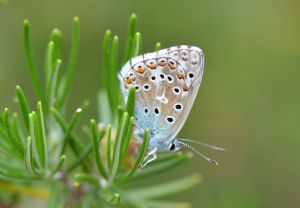
adonis blue.1605 luberon

Adonis Blue

It was now mid-afternoon and I set off to find a location where in 2012 there were plentiful Berger’s Clouded Yellow and Provence Orange Tip. But in bright sunlight those colourful subjects had been impossible to photograph since they would not settle. This roadside spot lies along the very scenic Route Forestiere de Fonte de l’Orme that penetrates le Luberon to the north-west of Mérindol. Today the only co-operative butterflies were Adonis Blue, until a very pale and ghostly Wood White also allowed some point blank macro work.
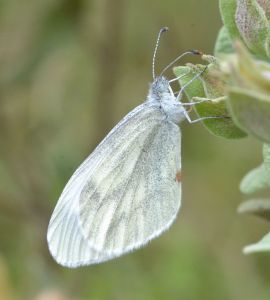
wood white.1601 luberon

Wood White

Tuesday morning dawned with blue skies at last so I decided to revisit both Mérindol sites seeking in particular 2012’s two bright yellow stars Berger’s and Provence Orange Tip. The massive inland cliffs of le Luberon loomed large in a pleasing light as I approached. But once on site a contest between sun and cloud began that continued throughout the morning. The forest route was still in shade on my arrival at 9:15 and so I went to check out the quarry.

There it was just like butterflying on the Chilterns escarpment at home: watching the grey stuff edging ever closer then waiting, waiting for the sun to break through again. At first only Blues were active but then up popped a photo opportunity that made all the hanging around worthwhile: a Glanville Fritillary nectaring on Red Valerian (pictured below).

I had previously photographed a re-introduced Glanville in grass at Hutchinson’s Bank, Surrey (see here) but this today was much more satisfying being both truly kosher and self-found. I have waited some time to gain such results, via finding my camera battery was flat at another re-introduction site Wrecclesham, Surrey; then having that single immobile GF pointed out to me at Hutchinson’s Bank. After today’s experience I doubt very much whether I’ll bother to go after this species in blighty this year.

I stayed at the Mérindol quarry (N43°45.585′ E5° 12.375′) for around 90 minutes. Brown Argus, the southern European race of Speckled Wood, and Mallow Skipper all put themselves onto the trip list here, while Red-billed Chough called and flew out from the cliffs overhead. By 11am the sun when out was high enough in the sky to be illuminating the roadside spot (N43° 45.700′ E5° 11.932′) along the Route Forestiere de Fonte de l’Orme, so I went back.

As soon as I got out of the car a male Provence Orange Tip flew powerfully past and kept on going. That was enough to tantalise me into searching the site repeatedly for over an hour during which the POT was not seen again. Bath and Large Whites, a tiny blue, regular Orange Tip, Brimsone and Cleopatra all put in appearances. More of the orange-toned Knappers (below left) seen at the quarry a day earlier were also active here. I believe the right hand butterfly (below) is another very variable species Spotted Fritillary.

But the standout butterfly was a briefly encountered Southern White Admiral. That last splendid species (pictured below, left) is almost like a hybrid with Purple Emperor, having the latter’s purple sheen though Collins calls it steely blue. There is also a slightly different top wing pattern to the browner White Admiral that occurs in Great Britain.

Eventually I walked back along the lane towards Mérindol, encountering the male Provence Orange Tip repeatedly for the next hour. What I assumed to be the same individual seemed to be patrolling a circuit over and over again, always disappearing up one rock face at the same spot before I would relocate it back along the lane somewhere. This reminded me of certain dragonflies such as Moorland (or Common) Hawker and Brilliant Emerald that behave in exactly the same way and rarely settle.

This POT was a very fast flyer for it’s size and shared the regular Orange Tip’s habits of mostly keeping ahead of the observer, never settling for long and hence being difficult usually to photograph. But the distant record shot (below right) shows what I am writing about. Eventually my little yellow and orange quest made it all the way back to where I had parked. There a female of the same species (below left) was rather more obliging.

It had been later in May when I came here in 2012. So I assumed it is still early in the flight season for Provence Orange Tip while 2016 Berger’s Clouded Yellow have yet to emerge.
Butterflying in Provence: Les Alpilles – 8 & 10th May

Le Parc Naturel Regionel des Alpilles is a limestone upland lying immediately east of Les Baux (see here). The hiking here is as excellent as the scenery and I enjoyed three good walks of varying length through the first day of this trip. I have returned to Provence largely un-researched and with no agenda of what to look for. As in Portugal’s Algarve hills two years ago (see trip reports tab) the intention is to lose myself in wild places and see what can be found, with the greater emphasis on butterflies.

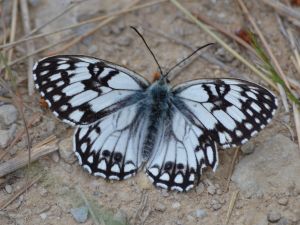
This Sunday provided a modest start with just seven species recorded. Conditions in the morning were lightly overcast, turning greyer as the day progressed, so not ideal for butterflies. Hence an early season reminder of how so much time observing insects is spent waiting for the sun. The most frequent and widespread butterfly was Western Marbled White that is in the middle of it’s April to June flight period, and hence at peak numbers if not in peak condition.

western marbled white.1601 alpilles

Western Marbled White

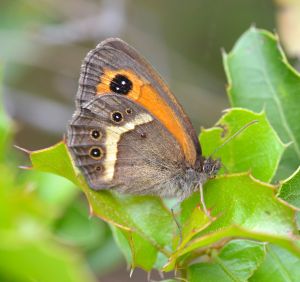
This species (above) occurs on much of the Iberian peninsula, in Morocco, Algeria, Sicily and Mediterranean France. It is generally paler in appearance than the Marbled White seen in Great Britain with light blue dots on the lower hindwings. Two more regional equivalents of British butterflies that fly later in the season were also encountered. Like WMW, the range of Spanish Gatekeeper (below) extends into north Africa and southernmost France. It has two black dots on each hindwing and a bolder underwing pattern than the late summer British species. And like their Portuguese cousins these Provence Gatekeepers liked to settle in dappled shade.

spanish gatekeeper.1601 alpilles

Spanish Gatekeeper

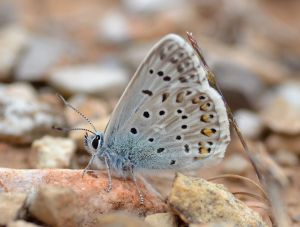
Provence Chalkhill Blue falls into the category of understated little beauty. It occurs only in the western Mediterranean from eastern Spain to north Italy. Greyer and more subtly toned than the butterflies found from July in southern English chalk lands, this CHB is in all respects a joy to behold. Just three individuals were seen today, as well as one Adonis Blue. Occasional interesting looking smaller blues escaped identification.

provence chalkhill blue.1603 alpilles

Provence Chalkhill Blue

In the overcast conditions, butterflies resting on the ground would typically fly up on my approach before settling again out of range. But eventually and as the temperature cooled later in the day I managed close-ups of all the above. Other species seen were many and often faded Wall Brown, a few Clouded Yellow and Small White.

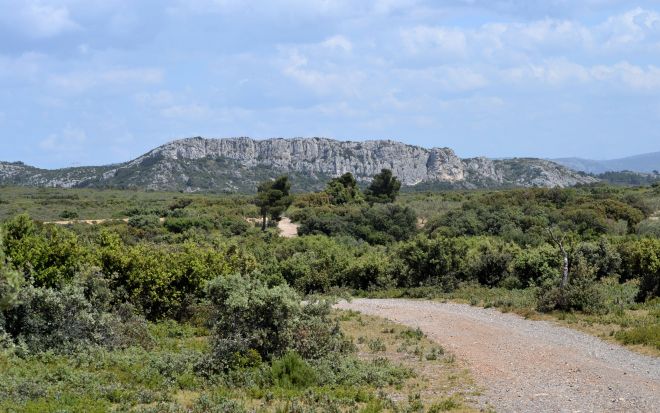
alpilles.1601I made an afternoon revisit to one location (pictured above) two days later in bright sunlight, to see what else could be found in more butterfly friendly conditions. This is a flat area of scrub land north of the D17 road between Eyguieres and Aureille. If anything there seemed to be less on the wing than on day one. I recalled how in Portugal the Gatekeepers in particular liked to keep in shady cover in hot weather. Everything was now that much flightier and the wind made photographing perched subjects difficult.

The Western Marbled White were showing their undersides to good effect as they nectared on thistles (above left) and other wild plants, revealing the diagnostic blue hindwing dots. New species for the site included singles of Swallowtail and Spanish Festoon, and I also came across a small colony of Provencal Fritillary (above right). But I was disappointed not to have found more here, or indeed any lifers.

Two days in Llangollen, north Wales ft lekking Black Grouse – 29 & 30th April

At last something to write about! My national birding has run out of momentum completely in the last two calendar months. But observing lekking Black Grouse in north Wales has been a must do this spring, and a couple of clear days at home afforded the opportunity. So off I set for a two-night stay in the characterful though faded town of Llangollen in the Dee Valley west of Wrexham.

After returning to blighty from my winter break in January I was disheartened by the prospect of working through the same county birding and national insect lists for another season. So I have found a part-time retail job to swell the semi-retirement pot. But the main reason for the recent scarcity of content in this journal has been simply a lack of anything new to go for within my preferred 150-mile range.

Adding to my life list those gallinaceous birds that occur in Wales is one current priority. A number of Oxon birding colleagues have experienced the Black Grouse leks in this part of Wales in recent years so I was able to obtain precise guidance on where to look. These birds may be seen close to moorland roads here, so this is a relatively easy option for Black Grouse so long as observers stay inside their vehicles.

I drove up on Thursday afternoon to make a thorough reconnoitre of the location and that proved a wise measure. We are talking very minor roads here and on setting out at 4:30 am on Friday my satnav kept trying to take me off the route to the high ground. Half way up in the darkness snow began to fall. At the top a moderate covering had settled on the landscape and more particularly the road.

DSC_0026

Snowfall in late April

Things got a bit scary as on the last part of the ascent my “Japanese tin can” began to slide around. Decision time – was it safe to continue? Well the road was too narrow to turn round and I reasoned that attempting to do so might increase the likelihood of ending up “off road”. The descent would also be gentler on the far side of this moor. So a bit of high revving in low gear got me to the lekking area, then onward. Fairly soon I picked out a cock Black Grouse displaying close to one side of the road, but my presence spooked the bird that with three others flew away. Sorry chaps, didn’t mean to!

Success, with greater care came a little further along the route. Here another eight cocks were lekking at a safe distance and I drew my mobile hide to a halt. As I watched from within more and more birds ran in to join the lek from all sides until more than 20 of them were competing for local superiority. What a sight and experience, and one that was definitely enhanced by observing these large game birds in a snow-scape. Cloud then began to settle on parts of the moor, so conscious of the risk of a further snow fall I decided to quit while ahead. There would still be the next morning to attempt better pictures.

DSC_0017

Black Grouse in a white-out

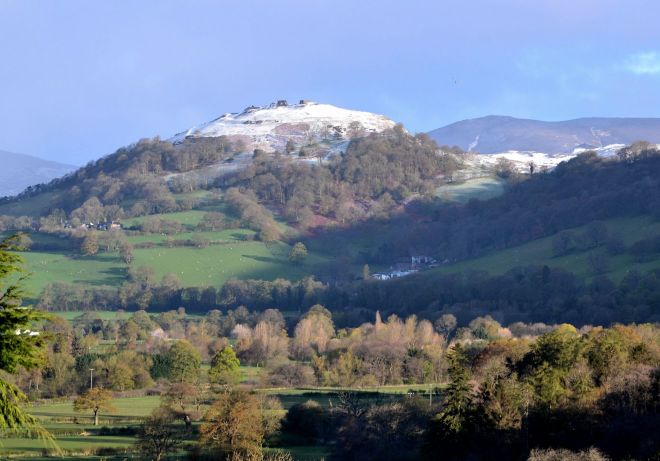
The descent was indeed less treacherous than the drive up, then I returned to Llangollen by lowland roads. On arriving back there was a fairly pleasing light so I took the opportunity to photograph Castell Dinas Bran hill with a dusting of snow on the top. This landscape (below) is a significant early-life memory for me, from family holidays in north Wales and I would like to capture it in as many moods as possible.

llangollen.1611 castell dinas bran hill

Castell Dinas Bran hill, Llangollen

After breakfast the snow had mostly melted on the hills around Llangollen. Sunny conditions prevailed for much of the morning. The day was available for exploring a part of Wales I have wanted to visit for some time. Sightseeing took in Castell Dinas Bran hilltop (or as close as it’s possible to get in a car), the medieval Valle Crucis Abbey, the scenically outstanding Horseshoe Pass, and all of the lanes between this town and the grouse moor.

In the afternoon I revisited the last-named to see what other birds might be found there. The answer was mainly Northern Wheatear, while Common Redstart were encountered in the local lanes as I suppose is likely in Wales. I also dropped in very briefly to look at Llandegla Forest where the RSPB conducts Black Grouse jollies for the general public. The visitor emphasis at this large forestry site appeared to be on mountain biking and laser combat, making a second reason for not going there. How much better to have self-found Black Grouse in a totally remote landscape and in such evocative circumstances.

DSC_0171

The big lek on day two

Saturday morning was much drier with some light in the sky as I made my way back up to the grouse moor, and this time there was company. Things began to happen as soon as dawn broke. First I drew alongside a lone cock Black Grouse that went through the full range of display postures without other birds coming up to challenge it. But the light was still too poor to take pictures. A little further along the road the group of four from a day earlier were strutting their stuff again close to a bend in the road.

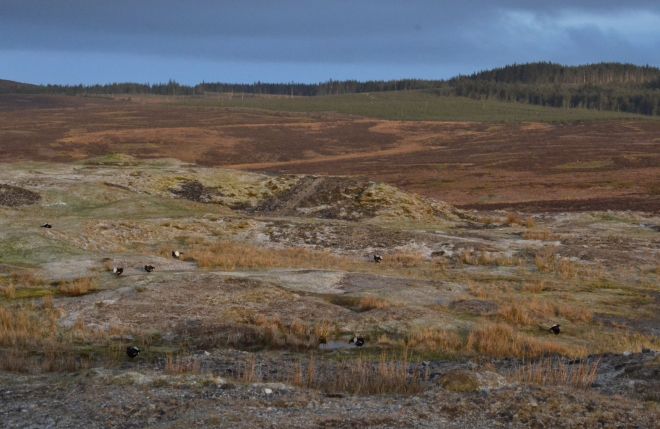
A Land Rover with a big lens protruding from the driver’s window was already in position. So respecting that he had got here first I stopped a considerate distance away to watch, then edged forward very gradually. No matter, when I drew alongside this lek the birds went back into cover. And so I drove on to look for the 20 plus lek (pictured above) that was not difficult to locate in exactly the same place as on Friday morning.

I joined two more cars that were already parked here to witness for 30 – 45 minutes a wildlife spectacle par excellence. The air was full of the cocks’ bubbling, cooing and hissing display calls as they fought with one another in twos and threes across a large area of ground about 100 metres from the road (pictured below). Several more cars joined the audience while I was there and everyone remained inside their vehicles.

This slideshow requires JavaScript.

Eventually I decided to go back and try for closer pictures at the smaller lek. The Land Rover was still there but as this photographer had had things to himself for more than an hour I felt no compunction about joining him. Once again the birds dispersed soon after I stopped my car. After returning home I learned from an Oxon photographer this spot is a prime location for close-ups of lekking Black Grouse. So the strategy must be to get there before anyone else then stay in place whatever the disturbance, since the birds seem to come back out again

A third car soon entered the scene obtrusively and one of it’s occupants got out with a super zoom camera. Then another driver stopped to talk to that person right next to where the lek had been. So the road was now blocked and a mountain biker in the next vehicle showed some forbearance before parping. Things were degenerating fast and so I called time on my first experience of Black Grouse and departed. If day one had been exciting and evocative, day two was just superb and a birding encounter up there with the best of them.

Long-billed Dowitcher at Egleton Bay, Rutland Water, Leics – 22nd Mar

My third Long-billed Dowitcher provided the best experience yet of this Nearctic wader. After three weeks of checking out the same birds over and again on RBA, and trawling through another same old Oxon year list for 2016, I just needed to go somewhere today. The attraction was that published photography suggested the Rutland bird was showing rather more closely than another LBD I observed recently at Keyhaven, Hants (see here).

Leicestershire and Rutland Wildlife Trust’s extensive and superb Rutland Water Nature Reserve must have the most hides, 36 and all named after different birds, of any showcase reserve I have visited. The Dowitcher has been watchable from the Shoveler hide that overlooks Lagoon 3 for most of the interval referred to above. On my arrival there mid-afternoon I learned the bird favours two islands about 300 metres out.

Fairly soon the Long-billed Dowitcher emerged from behind the right hand island and began to work its way along the nearer shore feeding all the while. This continued for between 10 and 15 minutes. Maybe I’m suffering from over familiarity with the more common European waders, but at the start of another local passage season it just seemed so attractive to be observing something a little different, not too many miles from home. Then the object of my admiration went out of view again from whence it had come.

DSC_0016

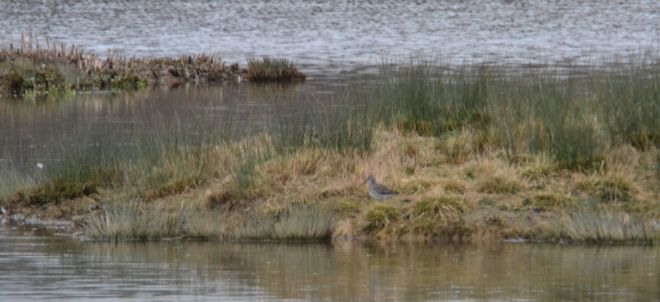
Long-billed Dowitcher at Rutland Water, Lagoon 3

It should go without saying that I will not be submitting the above image for any awards, but it does show I am not making all this up. To pick out some more decent stuff see here. After another 30 minutes the consensus in the hide was that the LBD must be sleeping on the far side of the island. One local birder said he had watched it, mainly sleeping for two hours on the previous afternoon. So after 10 more minutes I went off to explore the reserve a little.

Smew, Slavonian, Red and Black-necked Grebes, and Great Northern Diver had all been recorded at this reserve in recent days. But the conversation in the Shoveler hide had suggested sightings of those birds were mostly distant. I did observe one red-headed Smew on lagoon 4 during a brief look around.

Green-winged Teal at Ashleworth Ham, Glos – 28th Feb

Another north American wildfowl provided the past week’s second mini-trip today. There are several Green-winged Teal around the country at present and though I would not travel too far to observe what after all isn’t a rarity, the presence of a drake in the Severn valley just north of Gloucester was a suitable temptation.

This was my second record of what is a regular vagrant, the first having been three years ago to this day at Brandon Marsh in Warwickshire. A distinct early-spring peak is thought to be caused by southern European birds heading north (per Helm guide to bird ID).

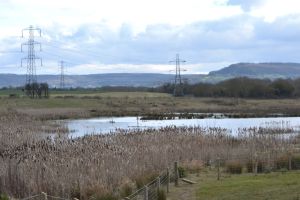
Ashleworth Ham (SO830265) is a flood plain area managed for wintering wildfowl by Gloucester Wildlife Trust. To prevent disturbance there is no access to the reserve itself but a hide sited on a bank above the adjacent road offers fine viewing over what to me is an attractive site (pictured below). GWT was recorded here last winter as well.

This slideshow requires JavaScript.

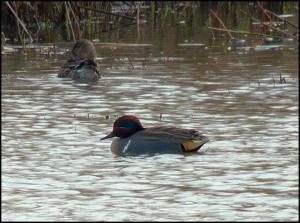
When I entered the hide three birders inside immediately put me onto the drake that was sleeping amongst other Teal, Wigeon and Pintail in the middle distance. We all chatted for a while as I checked my scope regularly, then I spotted our bird starting to move around. The vertical white stripe down its breast side, replacing Eurasian Teal’s horizontal white scapular stripe was now plain to see, as an image (below) taken from The Gloster Birder shows.

GWTeal%20270216

Green-winged Teal at Ashleworth Ham (c) rights of owner reserved

I stayed on site for around 90 minutes and at all times knew exactly which bird the GWT was, whether the diagnostic stripe and deeper pink breast were showing or not. That could have been because, rather obligingly he only seemed to relocate when in my scope. For most of the time this bird was content just to doze the time away.

One of the birders who had been at Corsham Park on my arrival last Wednesday came into the hide. Indeed everyone I met today had checked out that female Hooded Merganser, and all were keeping an open mind as to her provenance. This bird had enhanced her credentials further by moving on overnight, and I learned she had also passed a “bread test” in the interim. Apparently truly wild ducks are said not to take bread thrown at them, though gulls do. I didn’t know that till now.

DSC_0016

Horsbere Flood Alleviation Pool, Gloucester

I moved on soon after 1pm to re-visit the two male Penduline Tit that are still present wintering immediately outside Gloucester (see here) at the site pictured above. Once again these charming birds provided excellent views at times. I just love ’em!

Hooded Merganser at Corsham Park, Wilts – 24th Feb

This north American duck offered a nice short-range outing on a perfect sunny winter’s day after being found yesterday. Having encountered the Radipole, Dorset “escaped” drake a number of times in the past (click here) I thought it would be fun to see a female as well, whatever her provenance might turn out to be.

The ancient market town of Corsham is 60 miles from Oxford along the old Great West Road (A4) between Chippenham and Bath. From the High Street car park I entered Corsham Park (pictured below), the estate of the country house Corsham Court that till Tudor times was a royal residence but now houses an art school and collection. This location bore a distinct resemblance to Oxfordshire’s Blenheim Park but without the latter’s grander edifices. On referral I found that Corsham too was designed by Capability Brown.

corsham.1604 park and lake

Corsham Park and lake

Crossing rather muddy ground (wellies recommended) to the park’s lake (ST878706) I met two other birders who said the Hooded Merganser had just been close inshore in front of them before diving and disappearing. “Must have seen me coming,” I thought. But before long she approached again from a reed edge to our left. A check of my north American field guide before departure had indicated a dapper brownish number with a high rufous crest, yellow bill and bright red eyes. Now here was one in all her finery (below) – what a cracker!

My companions said this bird had been watched and photographed out of water earlier in the day, she was un-ringed (see here) and on flapping her wings revealed they had not been clipped. As if to further increase her credentials, when the number of observers grew she swam off to conceal herself in the most inaccessible corner of the lake. After 45 minutes or so she re-emerged and crossed my line of sight again, but further away than previously (pictured below).

This slideshow requires JavaScript.

I now await the decision of the appropriate rarities committees. But whatever that might be this duck provided great value on a sunny afternoon out in the park. The great yellow orb has been much more in evidence just recently and I drove home having seen something a little different with spring seeming suddenly just around the corner.

Long-billed Dowitcher, Ring-billed Gull and more in New Forest district, Hants – 21st Feb

Today’s headline birds were both second ever sightings. Going after two Hampshire long stayers arose from Mike inviting me on a day out in that county where he birds regularly. Weather conditions ruled out meaningful photography on my part, so in this post I have outsourced or provided links to pictures on RBA instead.

Three Nearctic vagrant Long-billed Dowitcher are currently wintering in England, respectively in Northumberland, just outside Leicester and at Hampshire County Council’s Keyhaven Marshes reserve. I went for the Leicester bird earlier this month but it wasn’t seen on that day. The site offered a distant sighting that might have to be waited a long time for, so today seemed an easier option. I know Keyhaven well having recorded other scarce North American waders there: my first Pectoral Sandpiper (Aug 1997) and Semipalmated Sandpiper (Sep 2013). My previous LBD sighting was in Nov 2010 at RSPB Lodmoor in Dorset, where I also saw the rarer Short-billed Dowitcher in Sep 2012.

Back to the present, we parked mid morning at the end of a lane south-west of Lymington (SZ318927) then walked a track between Keyhaven and neighbouring Pennington marshes to the sea wall. Two water bodies lie between that point and Keyhaven village, Fishtail Lagoon and Keyhaven Lagoon, and the wader action is usually on the latter. There we met a small assembly of birders who were scrutinising a group of Redshank on the lagoon’s far side. Amongst them was a similar-sized sleeping wader with green legs that all agreed must be the Dowitcher. Three Spoonbill were also present here.

RedBreastedMerganser_135606[1]

Red-breasted Merganser (above) and Dartford Warbler © Mike Kosniowski

DartfordWarbler_135637[1]

Another birder reported a nearby Long-tailed Duck, also a long stayer for the site. So we walked along the sea wall to Keyhaven harbour but there was no sign of it, though we did locate two rather splendid pairs of Red-breasted Merganser. Mike knew of a Dartford Warbler territory en route and called up the birds using the Bird Guides app. Then on our way back two other birders pointed out the Long-tailed Duck offshore (see here). I was having a lazy day but it was too windy for much self finding anyway.

36003

Wintering Long-billed Dowitcher (centre) at Keyhaven marshes © rights of owner reserved

Back at Keyhaven lagoon the Long-billed Dowitcher was by this time moving about and feeding. The bird’s longish, grey-green, slightly decurved bill was now clearly visible and for me that clinched the ID. This picture (above) on RBA shows how we too saw the LBD, if rather more distantly. Mission accomplished and with a good supporting cast also observed we then moved on to Ibsley Water, north of Ringwood to await the incoming gull roost there.

In that site’s Tern Hide (SZ154086) what by the conversation was clearly a RSPB local group outing was in occupancy. There was a certain amount of misleading chatter on the part of those trying to guide the beginners, then at the crucial stage of the afternoon the bless ’ems all repaired to the comfort of their coach. I hoped the more seasoned types at the other end of the hide would call the Ring-billed Gull, but when it came in the only guidance forthcoming was: “It’s in the middle of the flock”. “What’s around it?” and “Any landmarks?” we enquired politely. “A Lesser Black-back,” came the reply then muttered put downs.

Well thank’s matey, we bow to your all too apparent superiority. There’s enough of these people in the field after all but thankfully many times more helpful and mannerly birders. Soon our end of the hide refilled with some obliging gull experts who quickly picked out the RBG. But this was the most difficult scarce gull to identify I have ever encountered. Now I am absolutely no larophile and take little interest in large gull roosts as a rule. But there’s been no difficulty in self locating Glaucous, Iceland, Sabine’s, Franklin’s, Bonaparte’s, Audouin’s and Slender-billed Gulls in recent years.

29627

The famous Gosport Gull © rights of owner reserved

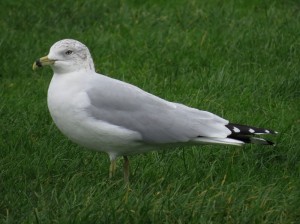
So why was today’s bird so difficult? For the uninitiated RBG looks very similar to Common Gull, of which many were present here, but is slightly larger and paler on the upperparts, with a thicker bill. When in Dec 2012 I saw the Ring-billed Gull that wintered in Walpole Park, Gosport for several years the bill shape was obvious. And to my marginally analytical mind that bird just seemed to have its own facial expression and “personality”. This time in a roost at medium range things were an entirely different proposition, as an image (here) from RBA illustrates.

One very patient birder put it in my scope several times before this gull turned its head to such an angle that I could clearly make out the bill shape that for me is the clincher. I left the hide feeling like a total idiot and suffering a little from overload, but had seen the species for a second time in a different circumstance. Our last call for the day was at Rhinefield Arboretum (SZ272028) where I had enjoyed a good experience of the Hawfinch roost in Feb 2012, but today we didn’t see any.

Purple Sandpiper at Southsea Castle, Hants – 7th Feb

These are birds I have wanted to catch up with for a little while now. The season’s settled mild Atlantic weather pattern is producing few rarities to go after, so I have instead been beefing up my records of some of the “uncommon” birds that winter around our shores. Twite and Horned Lark (see here) were two examples, while Purple Sandpiper is another species I wanted to get to know better.

I haven’t experienced too many of the last named small wader over the years. Indeed three of my five previous sightings were at Oxford’s Farmoor Reservoir, and I have only ever seen single birds. But small flocks of PS are reported in mid-winter from regular locations around England’s south and east coasts, typically roosting at high tide on sea or harbour walls and breakwaters where they are often very approachable. Southsea Castle in Portsmouth is one classic site and that was where I headed today.

purple sandpiper.1614 southsea castle

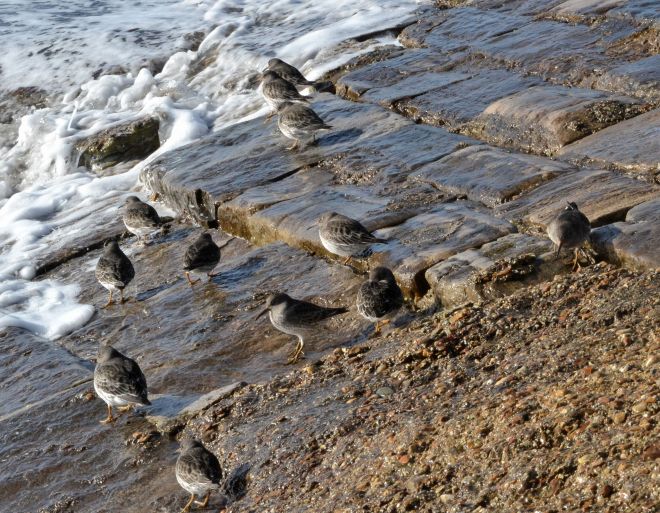
12 Purple Sandpiper at high tide on the sea wall

On my arrival just after 10am waves were already lashing the sea wall a little ahead of the time stated in the tide tables, and a very cold gale was blowing. A brief reconnoitre in both directions from the castle soon located a flock of 12 Purple Sandpiper (pictured above). Then for the next 30 – 45 minutes these rather dumpy looking birds set about being as difficult to photograph as they could. With the low sun directly behind them they seemed to delight in keeping to the glariest, most reflective patches of the structure while keeping their backs to the camera.

Eventually the flock stopped feeding and put on an amusing display of cat napping. Each time the sea splashed them they would all jump and move around a bit before quickly tucking their heads in again, but not for long. Eventually a large wave struck and they all flew off west towards Portsmouth harbour. But there had only been 11 of them.

I relocated the 12th Purple Sand going it alone a short distance to the east, then observed and photographed this bird for the next hour. A few local birders stopped to talk but if any of them had thought: “Look at this photographer getting too close,” they didn’t say so. Out of 400 frames taken of the flock and this individual I managed the following reasonable results.

purple sandpiper.1613 southsea castle

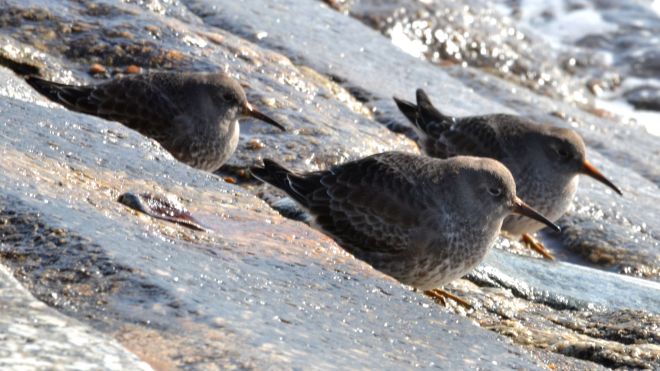
Subtly-toned, plump Purple Sands in the winter sun

These Scandinavian breeders display generally dark and subtle tones that blend very well with the stony, man-made places they like to frequent. Some of the pictures show the purplish hues that give the species its name, and I also find the orange bill and legs very attractive.

Just before midday a dog came running along the sea wall and saw off this last Purple Sand. Were the owners concerned at having spoiled what I was clearly doing? Not a bit, they just threw a ball into the sea for their pet to retrieve and walked on. My car parking time was in any case running out and so, pleased with the morning’s work I headed away and then home.

Gloucester Pendulines with Badger and Andy – 31st Jan

In the week since returning from my winter break abroad there hasn’t been much that was new and different on RBA to tempt me out from home. But today I found myself unwittingly part of a covert Oxonbirder sortie into neighbouring Gloucestershire to track down that county’s wintering Penduline Tits.

Two groups of this attractive and fascinating bird had remained in England throughout my time away. I had already devoted a whole day to a threesome in Hampshire in December last year, eventually being rewarded with distant views of a male at Titchfield Haven. Two more males at a site by the A417 / A40 Gloucester bypass (pictured below) seemed like an easier task, and so on this grey and drizzly morning I decided the 50-mile trip west would break up the day nicely.

003

Penduline Tit site outside Gloucester

Andy being an occasional travelling companion, I sounded him out but after an hour there was no reply. “Probably not up yet,” I thought and so headed off. Then half way along the road to Gloucester a text came in from Badger saying they were heading back from the Forest of Dean and would meet me on site. On arrival at the intriguingly named Horsbere Flood Alleviation Pool I could see my two Oxon birding friends mingling incognito with a small number of locals, and this group clearly were all watching the birds.

image-5

Male Penduline Tit © Andrew Last

From a layby opposite a Premier Inn motel a muddy track led down to a reed fringed pond that looked ideal habitat. Andy immediately put me onto one of the Penduline Tit (pictured above) that were both moving around nimbly in the reeds at fairly close range. The views today were as good as at a Bedford site 13 months ago (see here).

This was my fourth sighting of a species that is resident in southern Europe but migratory further north. All those seen have been wintering birds in England. The two males were sharing the Gloucester site with several Long-tailed Tit, Goldfinches and two Chiffchaff. The three of us stood around chatting and observing these birds for around an hour, then headed back east and home. And so my afternoon was filled most congenially.

Video courtesy of Megabrock