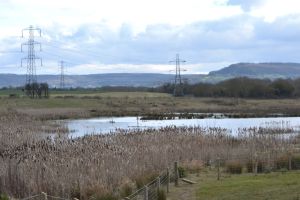
Two days in Llangollen, north Wales ft lekking Black Grouse – 29 & 30th April

At last something to write about! My national birding has run out of momentum completely in the last two calendar months. But observing lekking Black Grouse in north Wales has been a must do this spring, and a couple of clear days at home afforded the opportunity. So off I set for a two-night stay in the characterful though faded town of Llangollen in the Dee Valley west of Wrexham.

After returning to blighty from my winter break in January I was disheartened by the prospect of working through the same county birding and national insect lists for another season. So I have found a part-time retail job to swell the semi-retirement pot. But the main reason for the recent scarcity of content in this journal has been simply a lack of anything new to go for within my preferred 150-mile range.

Adding to my life list those gallinaceous birds that occur in Wales is one current priority. A number of Oxon birding colleagues have experienced the Black Grouse leks in this part of Wales in recent years so I was able to obtain precise guidance on where to look. These birds may be seen close to moorland roads here, so this is a relatively easy option for Black Grouse so long as observers stay inside their vehicles.

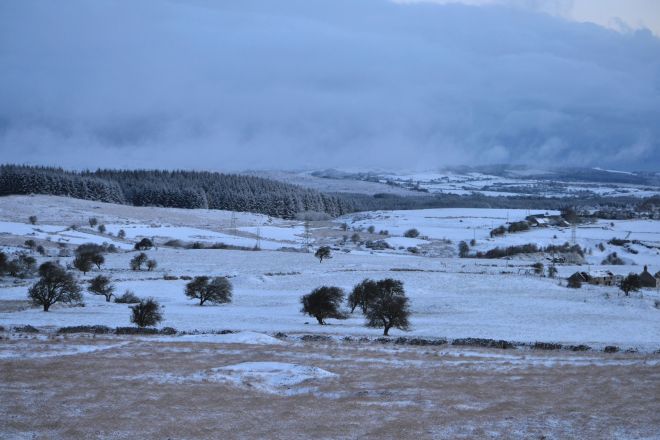
I drove up on Thursday afternoon to make a thorough reconnoitre of the location and that proved a wise measure. We are talking very minor roads here and on setting out at 4:30 am on Friday my satnav kept trying to take me off the route to the high ground. Half way up in the darkness snow began to fall. At the top a moderate covering had settled on the landscape and more particularly the road.
DSC_0026

Snowfall in late April

Things got a bit scary as on the last part of the ascent my “Japanese tin can” began to slide around. Decision time – was it safe to continue? Well the road was too narrow to turn round and I reasoned that attempting to do so might increase the likelihood of ending up “off road”. The descent would also be gentler on the far side of this moor. So a bit of high revving in low gear got me to the lekking area, then onward. Fairly soon I picked out a cock Black Grouse displaying close to one side of the road, but my presence spooked the bird that with three others flew away. Sorry chaps, didn’t mean to!

Success, with greater care came a little further along the route. Here another eight cocks were lekking at a safe distance and I drew my mobile hide to a halt. As I watched from within more and more birds ran in to join the lek from all sides until more than 20 of them were competing for local superiority. What a sight and experience, and one that was definitely enhanced by observing these large game birds in a snow-scape. Cloud then began to settle on parts of the moor, so conscious of the risk of a further snow fall I decided to quit while ahead. There would still be the next morning to attempt better pictures.

DSC_0017

Black Grouse in a white-out

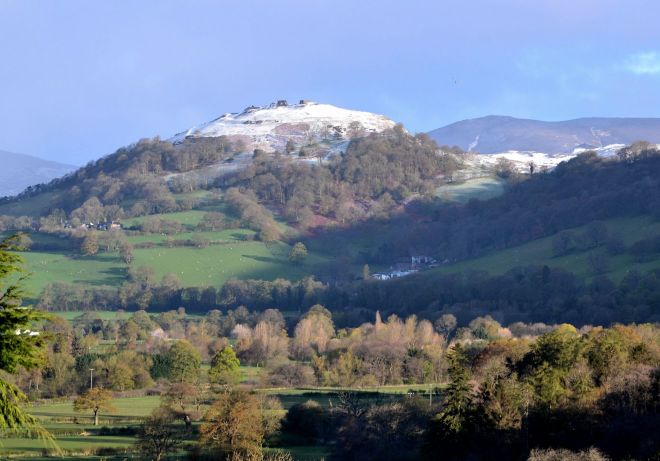
The descent was indeed less treacherous than the drive up, then I returned to Llangollen by lowland roads. On arriving back there was a fairly pleasing light so I took the opportunity to photograph Castell Dinas Bran hill with a dusting of snow on the top. This landscape (below) is a significant early-life memory for me, from family holidays in north Wales and I would like to capture it in as many moods as possible.
llangollen.1611 castell dinas bran hill

Castell Dinas Bran hill, Llangollen

After breakfast the snow had mostly melted on the hills around Llangollen. Sunny conditions prevailed for much of the morning. The day was available for exploring a part of Wales I have wanted to visit for some time. Sightseeing took in Castell Dinas Bran hilltop (or as close as it’s possible to get in a car), the medieval Valle Crucis Abbey, the scenically outstanding Horseshoe Pass, and all of the lanes between this town and the grouse moor.

In the afternoon I revisited the last-named to see what other birds might be found there. The answer was mainly Northern Wheatear, while Common Redstart were encountered in the local lanes as I suppose is likely in Wales. I also dropped in very briefly to look at Llandegla Forest where the RSPB conducts Black Grouse jollies for the general public. The visitor emphasis at this large forestry site appeared to be on mountain biking and laser combat, making a second reason for not going there. How much better to have self-found Black Grouse in a totally remote landscape and in such evocative circumstances.
DSC_0171

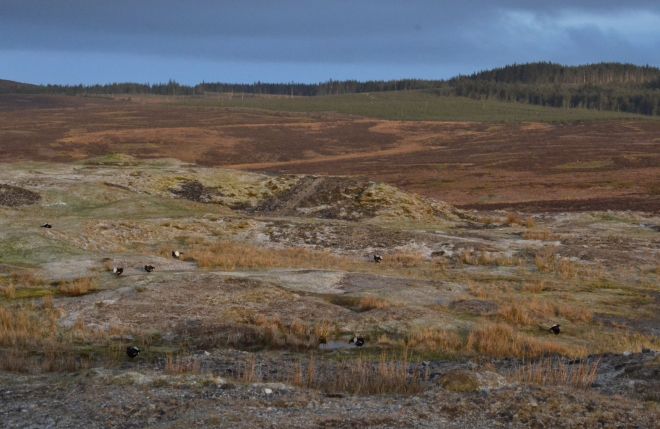
The big lek on day two

Saturday morning was much drier with some light in the sky as I made my way back up to the grouse moor, and this time there was company. Things began to happen as soon as dawn broke. First I drew alongside a lone cock Black Grouse that went through the full range of display postures without other birds coming up to challenge it. But the light was still too poor to take pictures. A little further along the road the group of four from a day earlier were strutting their stuff again close to a bend in the road.

A Land Rover with a big lens protruding from the driver’s window was already in position. So respecting that he had got here first I stopped a considerate distance away to watch, then edged forward very gradually. No matter, when I drew alongside this lek the birds went back into cover. And so I drove on to look for the 20 plus lek (pictured above) that was not difficult to locate in exactly the same place as on Friday morning.

I joined two more cars that were already parked here to witness for 30 – 45 minutes a wildlife spectacle par excellence. The air was full of the cocks’ bubbling, cooing and hissing display calls as they fought with one another in twos and threes across a large area of ground about 100 metres from the road (pictured below). Several more cars joined the audience while I was there and everyone remained inside their vehicles.

This slideshow requires JavaScript.

Eventually I decided to go back and try for closer pictures at the smaller lek. The Land Rover was still there but as this photographer had had things to himself for more than an hour I felt no compunction about joining him. Once again the birds dispersed soon after I stopped my car. After returning home I learned from an Oxon photographer this spot is a prime location for close-ups of lekking Black Grouse. So the strategy must be to get there before anyone else then stay in place whatever the disturbance, since the birds seem to come back out again

A third car soon entered the scene obtrusively and one of it’s occupants got out with a super zoom camera. Then another driver stopped to talk to that person right next to where the lek had been. So the road was now blocked and a mountain biker in the next vehicle showed some forbearance before parping. Things were degenerating fast and so I called time on my first experience of Black Grouse and departed. If day one had been exciting and evocative, day two was just superb and a birding encounter up there with the best of them.
Long-billed Dowitcher at Egleton Bay, Rutland Water, Leics – 22nd Mar

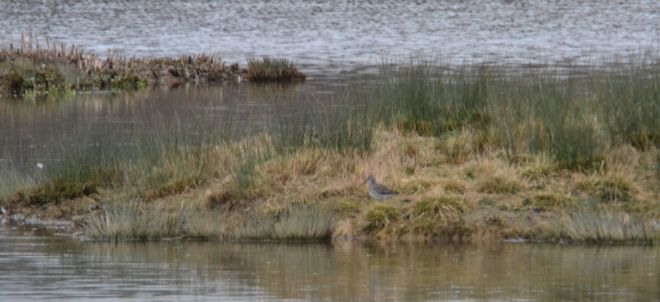
My third Long-billed Dowitcher provided the best experience yet of this Nearctic wader. After three weeks of checking out the same birds over and again on RBA, and trawling through another same old Oxon year list for 2016, I just needed to go somewhere today. The attraction was that published photography suggested the Rutland bird was showing rather more closely than another LBD I observed recently at Keyhaven, Hants (see here).

Leicestershire and Rutland Wildlife Trust’s extensive and superb Rutland Water Nature Reserve must have the most hides, 36 and all named after different birds, of any showcase reserve I have visited. The Dowitcher has been watchable from the Shoveler hide that overlooks Lagoon 3 for most of the interval referred to above. On my arrival there mid-afternoon I learned the bird favours two islands about 300 metres out.

Fairly soon the Long-billed Dowitcher emerged from behind the right hand island and began to work its way along the nearer shore feeding all the while. This continued for between 10 and 15 minutes. Maybe I’m suffering from over familiarity with the more common European waders, but at the start of another local passage season it just seemed so attractive to be observing something a little different, not too many miles from home. Then the object of my admiration went out of view again from whence it had come.

DSC_0016

Long-billed Dowitcher at Rutland Water, Lagoon 3

It should go without saying that I will not be submitting the above image for any awards, but it does show I am not making all this up. To pick out some more decent stuff see here. After another 30 minutes the consensus in the hide was that the LBD must be sleeping on the far side of the island. One local birder said he had watched it, mainly sleeping for two hours on the previous afternoon. So after 10 more minutes I went off to explore the reserve a little.

Smew, Slavonian, Red and Black-necked Grebes, and Great Northern Diver had all been recorded at this reserve in recent days. But the conversation in the Shoveler hide had suggested sightings of those birds were mostly distant. I did observe one red-headed Smew on lagoon 4 during a brief look around.

Green-winged Teal at Ashleworth Ham, Glos – 28th Feb

Another north American wildfowl provided the past week’s second mini-trip today. There are several Green-winged Teal around the country at present and though I would not travel too far to observe what after all isn’t a rarity, the presence of a drake in the Severn valley just north of Gloucester was a suitable temptation.

This was my second record of what is a regular vagrant, the first having been three years ago to this day at Brandon Marsh in Warwickshire. A distinct early-spring peak is thought to be caused by southern European birds heading north (per Helm guide to bird ID).

Ashleworth Ham (SO830265) is a flood plain area managed for wintering wildfowl by Gloucester Wildlife Trust. To prevent disturbance there is no access to the reserve itself but a hide sited on a bank above the adjacent road offers fine viewing over what to me is an attractive site (pictured below). GWT was recorded here last winter as well.

This slideshow requires JavaScript.

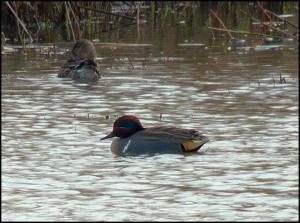
When I entered the hide three birders inside immediately put me onto the drake that was sleeping amongst other Teal, Wigeon and Pintail in the middle distance. We all chatted for a while as I checked my scope regularly, then I spotted our bird starting to move around. The vertical white stripe down its breast side, replacing Eurasian Teal’s horizontal white scapular stripe was now plain to see, as an image (below) taken from The Gloster Birder shows.

GWTeal%20270216

Green-winged Teal at Ashleworth Ham (c) rights of owner reserved

I stayed on site for around 90 minutes and at all times knew exactly which bird the GWT was, whether the diagnostic stripe and deeper pink breast were showing or not. That could have been because, rather obligingly he only seemed to relocate when in my scope. For most of the time this bird was content just to doze the time away.

One of the birders who had been at Corsham Park on my arrival last Wednesday came into the hide. Indeed everyone I met today had checked out that female Hooded Merganser, and all were keeping an open mind as to her provenance. This bird had enhanced her credentials further by moving on overnight, and I learned she had also passed a “bread test” in the interim. Apparently truly wild ducks are said not to take bread thrown at them, though gulls do. I didn’t know that till now.

DSC_0016

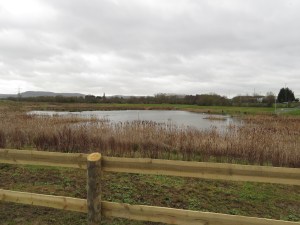
Horsbere Flood Alleviation Pool, Gloucester

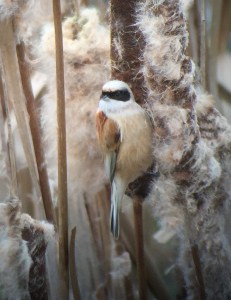
I moved on soon after 1pm to re-visit the two male Penduline Tit that are still present wintering immediately outside Gloucester (see here) at the site pictured above. Once again these charming birds provided excellent views at times. I just love ’em!

Hooded Merganser at Corsham Park, Wilts – 24th Feb

This north American duck offered a nice short-range outing on a perfect sunny winter’s day after being found yesterday. Having encountered the Radipole, Dorset “escaped” drake a number of times in the past (click here) I thought it would be fun to see a female as well, whatever her provenance might turn out to be.

The ancient market town of Corsham is 60 miles from Oxford along the old Great West Road (A4) between Chippenham and Bath. From the High Street car park I entered Corsham Park (pictured below), the estate of the country house Corsham Court that till Tudor times was a royal residence but now houses an art school and collection. This location bore a distinct resemblance to Oxfordshire’s Blenheim Park but without the latter’s grander edifices. On referral I found that Corsham too was designed by Capability Brown.

corsham.1604 park and lake

Corsham Park and lake

Crossing rather muddy ground (wellies recommended) to the park’s lake (ST878706) I met two other birders who said the Hooded Merganser had just been close inshore in front of them before diving and disappearing. “Must have seen me coming,” I thought. But before long she approached again from a reed edge to our left. A check of my north American field guide before departure had indicated a dapper brownish number with a high rufous crest, yellow bill and bright red eyes. Now here was one in all her finery (below) – what a cracker!

My companions said this bird had been watched and photographed out of water earlier in the day, she was un-ringed (see here) and on flapping her wings revealed they had not been clipped. As if to further increase her credentials, when the number of observers grew she swam off to conceal herself in the most inaccessible corner of the lake. After 45 minutes or so she re-emerged and crossed my line of sight again, but further away than previously (pictured below).

This slideshow requires JavaScript.

I now await the decision of the appropriate rarities committees. But whatever that might be this duck provided great value on a sunny afternoon out in the park. The great yellow orb has been much more in evidence just recently and I drove home having seen something a little different with spring seeming suddenly just around the corner.

Long-billed Dowitcher, Ring-billed Gull and more in New Forest district, Hants – 21st Feb

Today’s headline birds were both second ever sightings. Going after two Hampshire long stayers arose from Mike inviting me on a day out in that county where he birds regularly. Weather conditions ruled out meaningful photography on my part, so in this post I have outsourced or provided links to pictures on RBA instead.

Three Nearctic vagrant Long-billed Dowitcher are currently wintering in England, respectively in Northumberland, just outside Leicester and at Hampshire County Council’s Keyhaven Marshes reserve. I went for the Leicester bird earlier this month but it wasn’t seen on that day. The site offered a distant sighting that might have to be waited a long time for, so today seemed an easier option. I know Keyhaven well having recorded other scarce North American waders there: my first Pectoral Sandpiper (Aug 1997) and Semipalmated Sandpiper (Sep 2013). My previous LBD sighting was in Nov 2010 at RSPB Lodmoor in Dorset, where I also saw the rarer Short-billed Dowitcher in Sep 2012.

Back to the present, we parked mid morning at the end of a lane south-west of Lymington (SZ318927) then walked a track between Keyhaven and neighbouring Pennington marshes to the sea wall. Two water bodies lie between that point and Keyhaven village, Fishtail Lagoon and Keyhaven Lagoon, and the wader action is usually on the latter. There we met a small assembly of birders who were scrutinising a group of Redshank on the lagoon’s far side. Amongst them was a similar-sized sleeping wader with green legs that all agreed must be the Dowitcher. Three Spoonbill were also present here.

RedBreastedMerganser_135606[1]

Red-breasted Merganser (above) and Dartford Warbler © Mike Kosniowski

DartfordWarbler_135637[1]

Another birder reported a nearby Long-tailed Duck, also a long stayer for the site. So we walked along the sea wall to Keyhaven harbour but there was no sign of it, though we did locate two rather splendid pairs of Red-breasted Merganser. Mike knew of a Dartford Warbler territory en route and called up the birds using the Bird Guides app. Then on our way back two other birders pointed out the Long-tailed Duck offshore (see here). I was having a lazy day but it was too windy for much self finding anyway.

36003

Wintering Long-billed Dowitcher (centre) at Keyhaven marshes © rights of owner reserved

Back at Keyhaven lagoon the Long-billed Dowitcher was by this time moving about and feeding. The bird’s longish, grey-green, slightly decurved bill was now clearly visible and for me that clinched the ID. This picture (above) on RBA shows how we too saw the LBD, if rather more distantly. Mission accomplished and with a good supporting cast also observed we then moved on to Ibsley Water, north of Ringwood to await the incoming gull roost there.

In that site’s Tern Hide (SZ154086) what by the conversation was clearly a RSPB local group outing was in occupancy. There was a certain amount of misleading chatter on the part of those trying to guide the beginners, then at the crucial stage of the afternoon the bless ’ems all repaired to the comfort of their coach. I hoped the more seasoned types at the other end of the hide would call the Ring-billed Gull, but when it came in the only guidance forthcoming was: “It’s in the middle of the flock”. “What’s around it?” and “Any landmarks?” we enquired politely. “A Lesser Black-back,” came the reply then muttered put downs.

Well thank’s matey, we bow to your all too apparent superiority. There’s enough of these people in the field after all but thankfully many times more helpful and mannerly birders. Soon our end of the hide refilled with some obliging gull experts who quickly picked out the RBG. But this was the most difficult scarce gull to identify I have ever encountered. Now I am absolutely no larophile and take little interest in large gull roosts as a rule. But there’s been no difficulty in self locating Glaucous, Iceland, Sabine’s, Franklin’s, Bonaparte’s, Audouin’s and Slender-billed Gulls in recent years.

29627

The famous Gosport Gull © rights of owner reserved

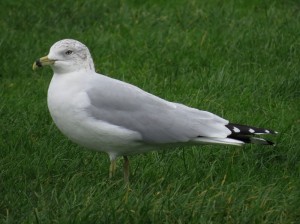
So why was today’s bird so difficult? For the uninitiated RBG looks very similar to Common Gull, of which many were present here, but is slightly larger and paler on the upperparts, with a thicker bill. When in Dec 2012 I saw the Ring-billed Gull that wintered in Walpole Park, Gosport for several years the bill shape was obvious. And to my marginally analytical mind that bird just seemed to have its own facial expression and “personality”. This time in a roost at medium range things were an entirely different proposition, as an image (here) from RBA illustrates.

One very patient birder put it in my scope several times before this gull turned its head to such an angle that I could clearly make out the bill shape that for me is the clincher. I left the hide feeling like a total idiot and suffering a little from overload, but had seen the species for a second time in a different circumstance. Our last call for the day was at Rhinefield Arboretum (SZ272028) where I had enjoyed a good experience of the Hawfinch roost in Feb 2012, but today we didn’t see any.

Purple Sandpiper at Southsea Castle, Hants – 7th Feb

These are birds I have wanted to catch up with for a little while now. The season’s settled mild Atlantic weather pattern is producing few rarities to go after, so I have instead been beefing up my records of some of the “uncommon” birds that winter around our shores. Twite and Horned Lark (see here) were two examples, while Purple Sandpiper is another species I wanted to get to know better.

I haven’t experienced too many of the last named small wader over the years. Indeed three of my five previous sightings were at Oxford’s Farmoor Reservoir, and I have only ever seen single birds. But small flocks of PS are reported in mid-winter from regular locations around England’s south and east coasts, typically roosting at high tide on sea or harbour walls and breakwaters where they are often very approachable. Southsea Castle in Portsmouth is one classic site and that was where I headed today.

purple sandpiper.1614 southsea castle

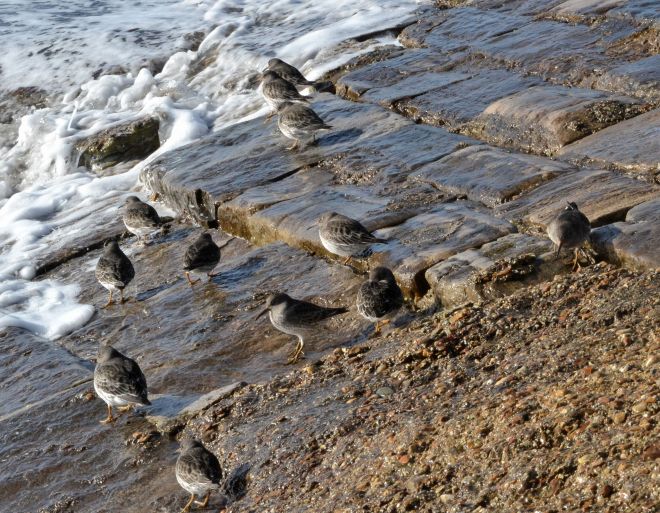
12 Purple Sandpiper at high tide on the sea wall

On my arrival just after 10am waves were already lashing the sea wall a little ahead of the time stated in the tide tables, and a very cold gale was blowing. A brief reconnoitre in both directions from the castle soon located a flock of 12 Purple Sandpiper (pictured above). Then for the next 30 – 45 minutes these rather dumpy looking birds set about being as difficult to photograph as they could. With the low sun directly behind them they seemed to delight in keeping to the glariest, most reflective patches of the structure while keeping their backs to the camera.

Eventually the flock stopped feeding and put on an amusing display of cat napping. Each time the sea splashed them they would all jump and move around a bit before quickly tucking their heads in again, but not for long. Eventually a large wave struck and they all flew off west towards Portsmouth harbour. But there had only been 11 of them.

I relocated the 12th Purple Sand going it alone a short distance to the east, then observed and photographed this bird for the next hour. A few local birders stopped to talk but if any of them had thought: “Look at this photographer getting too close,” they didn’t say so. Out of 400 frames taken of the flock and this individual I managed the following reasonable results.

purple sandpiper.1613 southsea castle

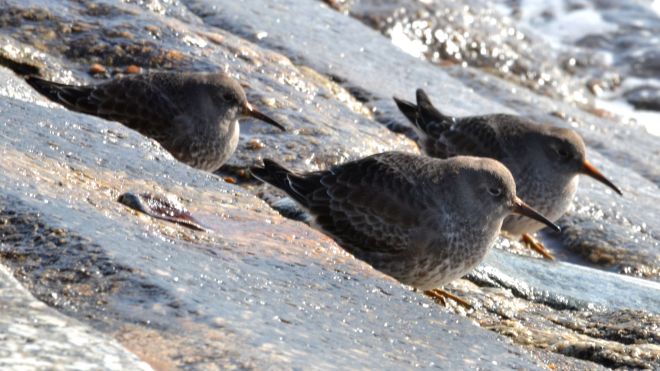
Subtly-toned, plump Purple Sands in the winter sun

These Scandinavian breeders display generally dark and subtle tones that blend very well with the stony, man-made places they like to frequent. Some of the pictures show the purplish hues that give the species its name, and I also find the orange bill and legs very attractive.

Just before midday a dog came running along the sea wall and saw off this last Purple Sand. Were the owners concerned at having spoiled what I was clearly doing? Not a bit, they just threw a ball into the sea for their pet to retrieve and walked on. My car parking time was in any case running out and so, pleased with the morning’s work I headed away and then home.

Gloucester Pendulines with Badger and Andy – 31st Jan

In the week since returning from my winter break abroad there hasn’t been much that was new and different on RBA to tempt me out from home. But today I found myself unwittingly part of a covert Oxonbirder sortie into neighbouring Gloucestershire to track down that county’s wintering Penduline Tits.

Two groups of this attractive and fascinating bird had remained in England throughout my time away. I had already devoted a whole day to a threesome in Hampshire in December last year, eventually being rewarded with distant views of a male at Titchfield Haven. Two more males at a site by the A417 / A40 Gloucester bypass (pictured below) seemed like an easier task, and so on this grey and drizzly morning I decided the 50-mile trip west would break up the day nicely.

003

Penduline Tit site outside Gloucester

Andy being an occasional travelling companion, I sounded him out but after an hour there was no reply. “Probably not up yet,” I thought and so headed off. Then half way along the road to Gloucester a text came in from Badger saying they were heading back from the Forest of Dean and would meet me on site. On arrival at the intriguingly named Horsbere Flood Alleviation Pool I could see my two Oxon birding friends mingling incognito with a small number of locals, and this group clearly were all watching the birds.

image-5

Male Penduline Tit © Andrew Last

From a layby opposite a Premier Inn motel a muddy track led down to a reed fringed pond that looked ideal habitat. Andy immediately put me onto one of the Penduline Tit (pictured above) that were both moving around nimbly in the reeds at fairly close range. The views today were as good as at a Bedford site 13 months ago (see here).

This was my fourth sighting of a species that is resident in southern Europe but migratory further north. All those seen have been wintering birds in England. The two males were sharing the Gloucester site with several Long-tailed Tit, Goldfinches and two Chiffchaff. The three of us stood around chatting and observing these birds for around an hour, then headed back east and home. And so my afternoon was filled most congenially.

Video courtesy of Megabrock

Alpine Accentor, Wallcreeper and Euro Eagle Owl at Les Baux de Provence + Spotted Eagle – 22nd & 23rd Jan

No trip to Provence would be complete without visiting the cliff-top fortress village of Les Baux. Here in winter it is reported that confiding Alpine Accentor may be encountered in the streets, while the south facing inland cliff on which the seriously spectacular heritage site sits is a reliable place to view Wallcreeper. I had been here on both of my previous Provence trips but not found either bird in March 2013.

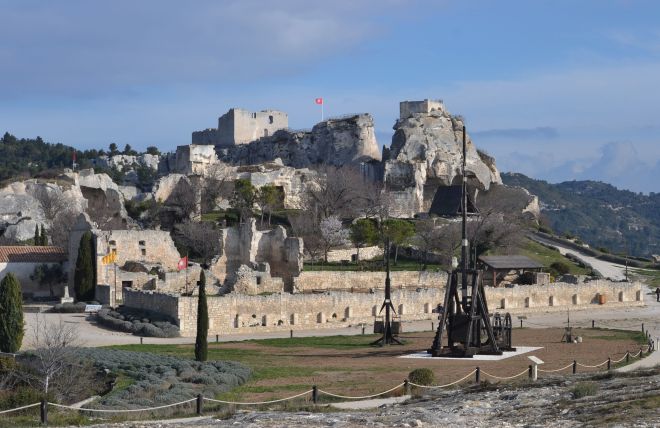
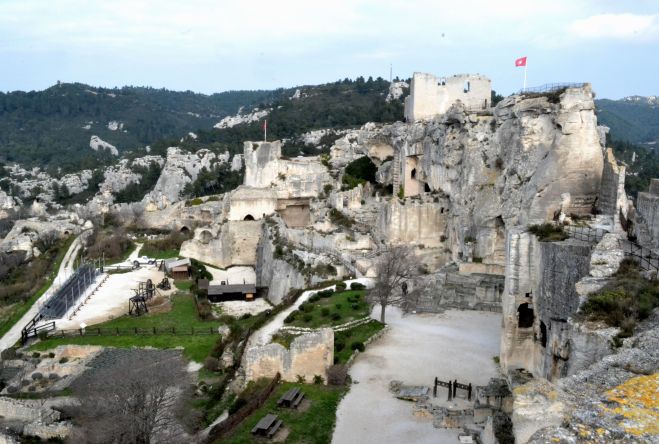
Having had such a good experience of Wallcreeper a day earlier, I focussed on the Alpine Accentors this time. Arriving at around 11am I walked the narrow cobbled streets for a while but decided the most likely place to find them would be within the castle (pictured below). I hadn’t been inside here before for fear of either the crowds or the Mistral, but now in January with few visitors the superbly landscaped tourist attraction impressed me. The entry fee is 8 euros. I met an English birding couple who had seen an AA and a few Cirl Bunting mixed in with a Serin flock 45 minutes earlier before the whole lot were flushed over the edge of the cliff.

DSC_0104

Medieval castle of Les Baux

Searching around the place and concentrating on the more open areas, there were only Black Redstarts, Sardinian Warblers and a Crested Tit. After two hours I started to feel despondent, deciding I might as well do the history and explore the castle ruins. Then around the foot of a stairway up to the highest tower, la Tour Sarrasine a first Alpine Accentor appeared, buzzing about around me and perching on various walls and ledges. I kept still and this bird came lower and lower as my camera went into overdrive. Before long it was joined by two others and I observed all three birds down to five metres at times.

These birds seemed to have no fear of my presence, flitting from perch to perch in between feeding busily on the ground. Eventually they seemed to have gone and I climbed up to the top of the tallest castle tower from where the vistas in all directions were stunning. When I came down again the AA experience got even better. There were now five birds feeding on the ground and totally unconcerned by my interest in them. I started to see just how close I could get, walking amongst them and getting better if not sharper pictures than I could have dreamed of. Excuse me if I indulge this a little.

alpine accentor.1602 les baux

Five Alpine Accentor seen down to 5 metres

alpine accentor.1620 les baux

Occasionally other visitors would approach and as quickly go on their way, totally unaware of these treasures in their midst. I left at around 3pm, stopping to tell the belle mademoiselle in the entrance hall that I had found the birds I told her about earlier. She took an interest so I explained that some people do come to the castle just to see the Alpine Accentors.

Time still remained for a quick walk along the path below the southern cliff face to try to spot a Wallcreeper. In the event this proved to be easy but then I am on a roll this week. A short distance along the path I picked up the now familiar pink and grey shape below the tallest tower. In 2013 I had sat and scanned the rock faces here with my scope for a long time while sheltering from the Mistral. Now I could see this bird with the naked eye. A young French couple stopped to ask what was there and were delighted by the bird too.

DSC_0225

The Alpine Accentors were most active around the flat area with the stocks

It was very satisfying to have located a Wallcreeper at this classic site. After all, some English birders come down to Les Baux especially to see them. It now remained to try for the locality’s famous pair of European Eagle Owl and I moved on to the site 3km to the south west of Les Baux behind the Hotel Mas de l’Oulivie, that is visited by all the birding tour companies. Setting up here an hour before dusk I was joined by the English couple from the castle, and so we watched, chatted and waited.

I have seen this species once before, in Portugal with a professional guide, and so knew what to listen for. At 5:45pm a male began to call behind one of the two cliff faces that these Owls favour. Soon the quieter call of the female could also be heard but these sounds seemed to be coming from some way off. Then my day’s birding colleague spotted the female sitting on a boulder atop the right hand cliff face. There she stayed for some minutes, ears pricked in the failing light and turning her head from side to side. She was facing away from us, presumably in the direction of the male, then she dropped down over the far side of the cliff and out of sight.

This slideshow requires JavaScript.

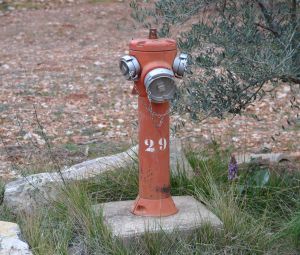
It would have been pointless trying to photograph the Eagle Owl at that distance in the gloom. But to prove I was there here’s a picture of the red hydrant of internet fame that marks the viewing place. To it’s right is a clump of orchids that my companion said were probably Giant Orchid. This is a very early flowering species but he had not seen them before in January.

DSC_0324

On my last day in Provence (23rd) I returned to the track north of Cacharel in la Camargue to seek the final trip target and third lifer, Spotted Eagle. Around midday I came across two French birders, one of whom confirmed this was the right location. For the next hour I sat in my hire car scanning to the horizon to the west of the track while keeping an eye on my companions’ body language. Then I engaged with the English speaker of the two to find out more about what I was looking for.

He said up to three Spotted Eagle or possibly greater / lesser hybrids are present here, as they were last winter too and that early afternoon is the best time to see them. While we talked the other birder was watching something intently in his scope that he then showed his colleague. When I too picked up these two distant raptors I was assured they were Spotted Eagle. Though usually reluctant to accept far off sightings on other birders’ assurance, in these circumstances it seemed rude not to. Being thus polite of course also meant a 100 per cent success rate with my trip targets. So that was everything!

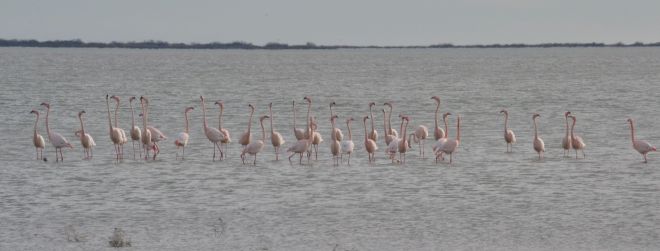
greater flamingo.1601 camargue

Yes I’ve been to the Camargue and seen the Flamingos

Goldcar eventually charged me 60 euros to clean up the Renault Captur. But it would have cost a lot more to have hired a 4X4 for the four days. As an extra cost of adding Provence’s difficult Pin-tailed Sandgrouse and Spotted Eagle to my life list it seems worth it though still irritating. This car was no dirtier than any other I’ve returned after a birding trip.

Pin-tailed Sandgrouse, Wallcreeper and Rock Sparrow in Provence – 20th and 21st Jan

Not many regularly occuring birds remain on my southern Europe wish list now but of the lingerers, three – Pin-tailed Sandgrouse, Rock Sparrow and (Greater) Spotted Eagle – all winter in Provence. Finding a £53 flight (luggage included) from Lisbon to Marseilles with the Portuguese airline TAP meant I could add a winter visit here to my Algarve break. And so the opportunity to find these birds has arisen.

My base is the cheap and cheerful, self catering Top Motel in Istres. I find this arrangement ideal because French breakfasts aren’t worth their cost and evening meals also become more affordable. Then there is the essential of tea and coffee whenever I want one, that isn’t possible in a budget chain hotel unless a kettle is smuggled in. Oh, and this establishment in a secure compound behind the 3-star Ariane Hotel is also hard by the Plaine de la Crau Sandgrouse site, and conveniently placed to visit birding sites in les Alpilles and la Camargue.

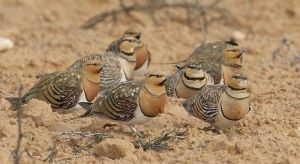
pin-tailed sandgrouse

Pin-tailed Sandgrouse © rights of owner reserved

The resident Pin-tailed Sandgrouse had huge lifer status for the usual reason that I had not found the species on two previous visits to Provence in May 2012 and March 2013. Doing so was my top priority this time. Trip research had revealed a hitherto untried access point to la Crau, at the north-western end near the town of St-Martin-de-Crau, that appeared to be a good PTS location. This is the reserve Peau de Meau, managed by a regional association for nature conservation, CEEP (Conservatoire Etudes des Ecosystemes de Provence). After getting a permit dutifully from CEEP’s Ecomusee de la Crau in Saint-Martin, I arrived on site late on Wednesday morning (20th), having first seen to buying provisions. Stomach again, call myself a birder?

After 2013’s visit I had concluded the best way to find PTS would be driving slowly around the flat, stoney “Coussoul” habitat of la Crau in a 4×4 seeing what goes up. This time my car hire company substituted a chunky, diesel-engined Renault Captur for the small car I had booked – almost a 4×4 then and at no extra cost. Their £12/day insurance package had no deposit and no excess, so if I wrecked the vehicle I’d be covered. “I won’t even look at it when you bring it back,” the lady said. Well, I needn’t be too squeamish about where I take it then!

Peau de Meau has a 5km waymarked trail around it’s perimeter, but first I set off in the car along a rough track for some distance beyond the reserve. After all I had been wanting to do that for the past three years and there was nobody there to stop me. Seeing only Pipits, Skylarks and corvids I returned to walk the full distance of the trail, but still no Sandgrouse. So I applied my usual solution to a no show, deciding to return early the next day. But first I took another drive through the rough roads of la Crau eventually reaching the N508 road that runs north-west between the Plaine and the neighbouring Camargue. Guess what? At track’s end was a roadside notice proclaiming access to this military land is prohibited. Oh well!

DSC_0027[1]

La Plaine de la Crau

Thursday 21st dawned cold and bright and I arrived back at Peau de Meau at 8am. For the sake of doing things differently I set off the other way around the trail, then took a track across the reserve towards the large barn in the picture. All that went up were Skylarks and frustration was setting in. Then continuing north-eastward along the main trail from the barn, two birdy events occured in quick succession. Buses!

First, away to my left four Little Bustard went up before seemingly vanishing into thin air. Quite an achievement for such a large bird but a not unusual experience for the species. That also maintained my 100% record for it at this site. Then away on my other side, five Pin-tailed Sandgrouse at last flew across the sunny morning expanse of the Coussoul. Mission accomplished! The middle distance flight view was pretty much what I had expected. I have seen some good birds in the past at la Crau: Little Bustard, Stone Curlew, Red-backed Shrike, Tawny Pipit, Melodious Warbler and a possible Spotted Eagle that I didn’t put on my life list. Now having gained the elusive top prize I felt very relieved not to have to re-visit this flat and otherwise dour landscape unless I choose to.

It was now mid-morning and my next target, Rock Sparrow was at a roost site. I felt little inclination to drive around the Plaine again illegally in the low sun, and so moved on to reconnoitre a previously unvisited area of la Camargue on the western edge of l’Etang’s de Malagroy and Vaccares. I found out about this location through an online trip report that said Greater and Lesser Spotted Eagle were both present in January 2014. From Cacheral on the D85A road I followed a rough track NNE all the way to the D37 that skirts the Etang de Vaccares’ northern side.

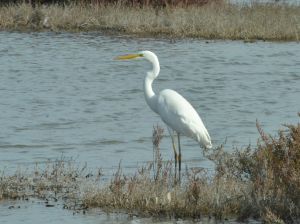
great white egret.1601 camargue

Great White Egret

It was now a perfect cold, sunny winter’s day and the abundant Greater Flamingo all looked very splendid in their finery. In places there were almost as many white Egrets: Cattle, Little and occasional Great White’s (pictured above), emphasising just what a concentration of large water birds dwell here. Where Eagles were concerned I came across a good candidate for Spotted and also observed two of the Buzzard-sized Booted species. There are extensive reed beds in this area and many hiking trail signs.

pont du gard.1601

Magnificent Pont du Gard at dusk

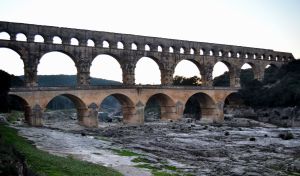
In the afternoon I drove north to the Roman aqueduct of Pont du Gard, a UNESCO world heritage site between Nimes and Avignon. This 360 metre long three tier structure is the tallest bridge in the Roman world at 50 metres. Straddling a gorge through which flows the River Gardon, it is a well developed tourist attraction and also a winter roost site for Rock Sparrow. I arrived early to get my bearings – there is a car park on either side – then after a sandwich break returned at 4pm

Stone staircases lead up to just below the top tier at both ends and the question was at which one to set up my scope. I decided the western one had the better views and watched and waited. At 4:45pm a Wallcreeper flew in three arches away that I watched foraging for food for the next 20 minutes. This delightful bird, my second ever proved quite a distraction but then I recalled what I was meant to be doing and scanned to the far end of the aqueduct.

DSC_0068

Slightly less blurry Wallcreeper than at Dinant

Small birds now appeared to be flying straight in to the structure but were actually entering cracks and cavities of any kind in the top tier. These were indeed the Rock Sparrow I had come to see. Some would fall out of their hiding places again, flying downwards while others perched on the parapets or clung Wallcreeper-like to the vertical surface. The head pattern was plain to see even at that range, then zooming in with my eyepiece on one bird I picked out clearly the yellow breast spot of a male.

There was still enough daylight time left to cross over to the eastern side but once I got there the activity had largely ceased. But the Wallcreeper was still busying itself, now on the upper tier as well. This experience was well worth the 12 euros admission money to the site and I felt very satisfied to have added Rock Sparrow to my life list at the first attempt.


Mount Foia re-visited – 12 & 13th Jan

With four days remaining of my stay in Lagos, the hitherto wintery weather turned sunny, cool and dry yesterday. So things were at last right for some walking in the Monchique mountains that was a high priority for this trip. I can see the twin summits of Foia and Picota from my apartment and the tops have not been cloud free until now.

The views from what is the Algarve’s highest land are said to be breath-taking when conditions are right. I had been up to reconnoitre anyway on Sunday to find things cold, grey and windy: the other side of the coin and true of mountain tops anywhere I suppose. But I had been very struck by this location in fair weather on my first visit three years ago and jumped at the chance to return now.

DSC_0045

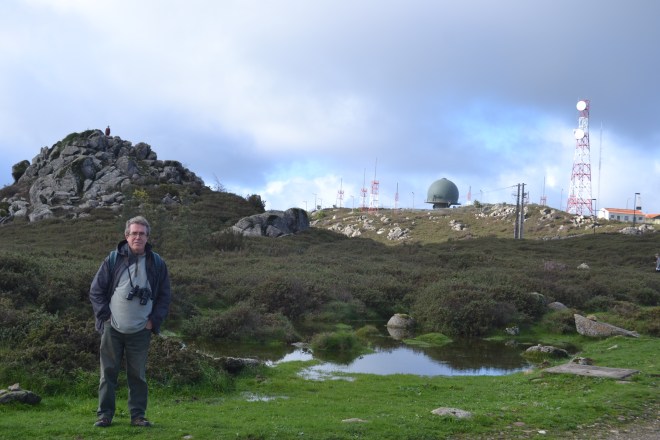
Me at the summit of Mount Foia

There are also some good birds up there of course. Call me a fair weather birder if you will but I did come here to escape the English winter. My satnav took me up to the summit of Foia by a minor road that joins the broader one from the town of Monchique near the top. Along this route I disturbed a small flock of Rock Bunting at the road side, the first time I have seen more than one of these.

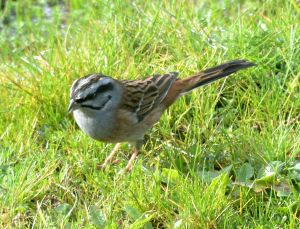
At what local birders call the “ugly coach stop and restaurant” small numbers of tourists were hanging about without venturing far from the car park. I walked around to scan the immediate vicinity, coming across another, rather approachable Rock Bunting (below) that was the morning’s highlight.

rock bunting.1601 mount foia

Rock Bunting

Then I walked along the metalled road across the summit where two English birders in a car stopped to talk to me. They had also had a close Rock Bunting encounter and seen some other good birds around the coach stop earlier. So I went back for another look, finding a Blue Rock Thrush on one roof and picking out a Dartford Warbler.

By midday the bird activity along the summit road seemed quieter. A lot of Wren and Dartford Warbler inhabit the scrub up here, the latter all intent on offering only glimpses of themselves. I heard more of them than I actually saw. The “oh no not another one” species was Stonechat of which there seemed to be almost as many as there are pictures of them on Oxon Birding.

As on my 2013 visit, southward towards the coast the outlook was very hazy. But tourists were still taking photographs with their phones directly into the sun. The views northward are altogether more pleasing and I fired off a lot of pictures as the light continually changed. This sequence (below) conveys the general impression.

This slideshow requires JavaScript.

Half way along the road I followed a way marked path downwards until it was blocked by a strategically placed dead tree. I could see where the continuation reached another road but opted for the easier climb back up and retraced my steps. That other accentor, Dunnock now provided this trip’s fifth Portugal list addition, yes really! The Alpine variety are said to favour the area around the car park. Indeed I have gained an impression that the best birding is to be had there and so today (13th) I returned early.

Tuesday was cut short by an allergy attack that in the afternoon turned into a real humdinger. When this chronic affliction strikes so badly the only thing to do is lie flat out and wait for it to see itself out. By morning the worst had passed and at dawn I could see that the mountain tops were clear. I set off a little reflectively after reading on my computer of another rock n’ roll death. They so often occur in threes and after Scott Weiland and Lemmy (Bless ’em both!) it was now the superstar David Bowie. Who would have thought it?

But I digress. Arriving on site at 8:30am I had the summit of Foia to myself, save for a person who I assumed to be the local herdsman. The first birds I saw were inevitably Stonechat. Then Dartford Warbler began to show themselves and I managed some shots (below) in which my camera’s autofocus clearly hadn’t fixed on the bird.

dartford warbler.1601 mount foia

Dartford Warbler

Though conditions were clear overhead, the vistas on all sides of the summit had a hazy blue uniformity with the sun still low in the sky. As I circled the ugly coach stop and its car park, the Blue Rock Thrush appeared in exactly the same place as a day earlier and eventually I spotted another Rock Bunting. So that was all the site specialties seen over again except for Alpine Accentor, though not necessarily better views than on my first visit.

Where the last named is concerned there’s a lot of habitat here in which they can conceal themselves. So if it had been difficult to locate them at Cabo de São Vicente it could be many more times so here. Hence I didn’t search too thoroughly. Feeling I had done Mount Foia justice both in birding terms and scenically, I left at 10:15 and returned to Lagos for the fun of a boat trip and just to relax in the winter sun.

DSC_0081

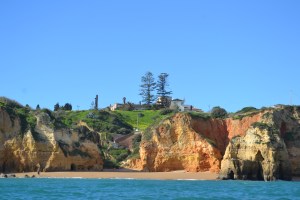
My location at Lagos