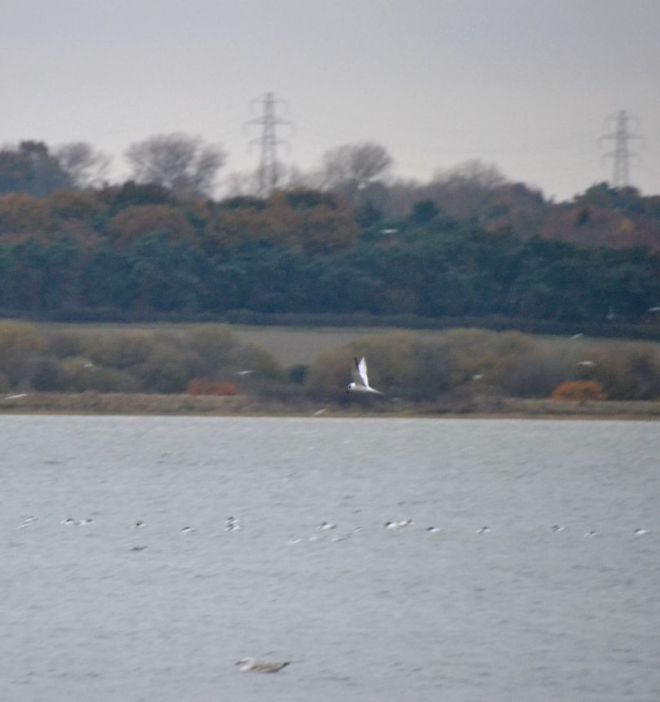
Playing catch up around the Humber: mega Sibe and Swamphen + Isabelline Wheatear – 19 & 20th October

In the end I had to go. Having negotiated favourable (I hope) part-time working arrangements with my latest employer, these two days would be free. So I decided to travel beyond 200 miles for the second time this month and see the East Yorkshire Siberian Accentor at Easington.

When Wednesday morning came I searched for overnight accommodation on-line, finding a single en-suite room in a well-reviewed Hull B&B for £40. The first SA sighting appeared on RBA just before 8am and I made the booking immediately. Next I fired off a few texts to Oxon birding colleagues and some quick replies came back. “Well worth it” (Badger) … “It’s gotta be done!” (Andy) and … “Welcome to the dark side” (Clackers). Then, fortified for the journey by the usual selection of CDs with oomph – The Cult, Aerosmith and the top hatted one, of course – I headed up north.

It didn’t take long to hit the first snag, a road closure on the A43 at Towcester that necessitated the same diversion via Buckingham that Mike and myself had made four days earlier. Soon after joining the M1 I experienced the 50mph variable speed limit stretch, through road works with no work actually going on, that I had read about in some of Ewan’s blog posts. But once past the M6 interchange, with my Japanese tin can’s cruise control set to 70 mph, the miles sped past until I reached the port city of Kingston-upon-Hull. After that, as I had been warned it’s another 40 minutes or so mostly through low speed limits to the village of Easington.
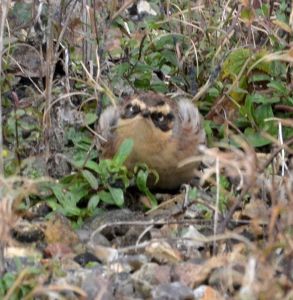
siberian-accentor-1605-easington

“Are you lot all looking at me?”

I arrived on-site at around 2pm, and there in a weedy strip of land between the outer and inner security fences of the natural gas terminal was the prize (above) I’d seen a few trillion pictures of over the previous four days. Collins describes Siberian Accentor as a shy bird that keeps mostly in cover, and that’s exactly what this extreme vagrant did for the two hours that I stayed here. 50 metres or so away was the private garden in which many of these pictures (see here) must have been taken last Friday. I must assume that the preference then for feeding openly amongst the moss there may be less typical behaviour.

As I say fairly often, I will not be submitting the images (below) for any awards, but they convey exactly how this bird was observed today and how well camouflaged it was in this habitat. In short it was an exceptional rarity in a quite unattractive place. As a spectacles wearer, the double line of security fencing (mesh then electric) through which I had to follow the bird’s movements was particularly distracting. But the bold head pattern, with broad and long buff supercilium and black cheeks, always stood out and the visitor was undeniably a cracker!

This was not the only mega at Easington yesterday. About a half-mile walk from the first spot an Isabelline Wheatear had been present all day in a ploughed field behind the coastline. A middle eastern breeder that should winter in sub-Saharan Africa, a record number of these have also turned up in the British Isles this week. As I walked down to the second location (TA407186), no parking signs were out in force. Local residents, having already experienced the year’s top mass twitch, were clearly wary of another invasion.
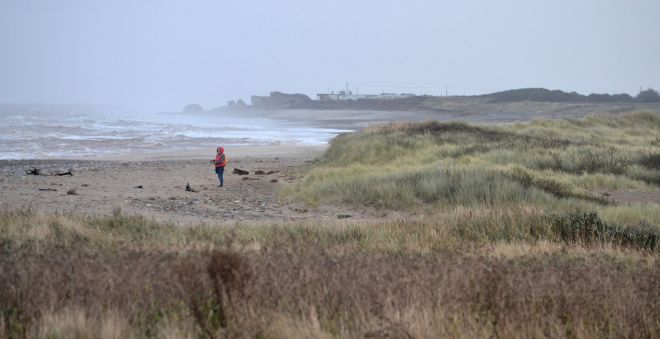
easington-1601

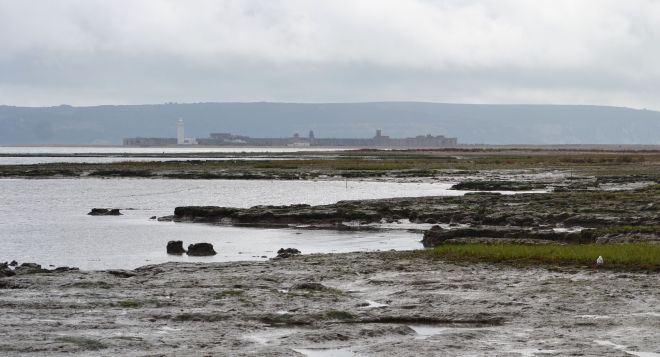
North Sea coast at Easington

Initially, tired from my day’s exertions, I could not locate this bird by myself. But as soon as more birders arrived … well they found it for me straight away. This is a pale-toned Wheatear, very similar to a female Northern Wheatear but slightly larger and with a more upright stance. One diagnostic of a shorter tail with broader black band was quite apparent as this individual moved around on the brown earth here. It is a species I added to my life list on Cyprus’ Akamas peninsula in April 2012, but have always wanted to remove all doubt about since that bird was self found. Comparing my pictures then to today’s first winter bird in the RBA gallery (see here) confirms that historic record.
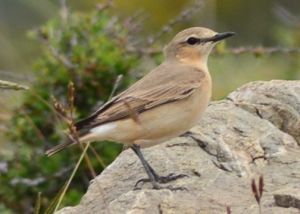
wheatear-isabelline-01

2012 adult Issy Wheatear in Cyprus

I slept very soundly overnight. This morning there was no sign of the Siberian Accentor that must have waited for me to drop in and then gone on it’s way. What a nice mega! Elsewhere a sixth bird for Britain turned up in the Hebrides. The Easington individual was the first ever on the mainland, hence the mass twitch that occurred after it’s arrival a week ago on the afternoon of 13th. Since then further SAs have occurred at Saltburn, Cleveland; in Sunderland and on Holy Island. And across north-eastern Europe an amazing 91 had been logged by 18th in Scandinavia, the Baltic countries, Germany and Poland. It is not yet understood what has caused this irruption, but prolonged easterly winds out of the western end of their breeding range is a factor and more birds are anticipated.

The plan for today (20th) was to visit the now resident Western Purple Swamphen across the Humber Bridge in north Lincolnshire. I have been asked by other Oxon birders why I went for the Least Sandpiper in Devon on 1 August instead of this bird when it first arrived on these shores. The answer is that the former was a lifer whilst WPS, also a national first if accepted, is a British list addition for me. But there’s nothing wrong with those given reason to be nearby, hence the double agenda for this week’s trip up north.
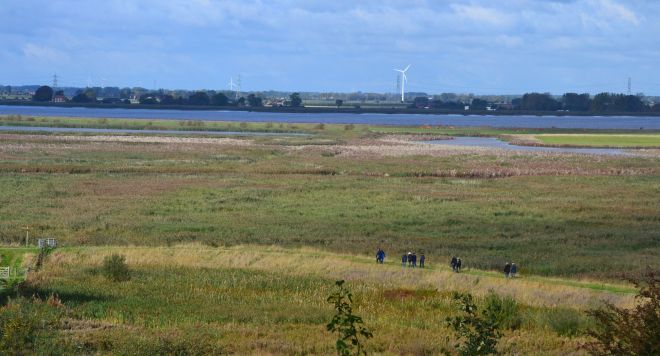
alkborough-flats-1601

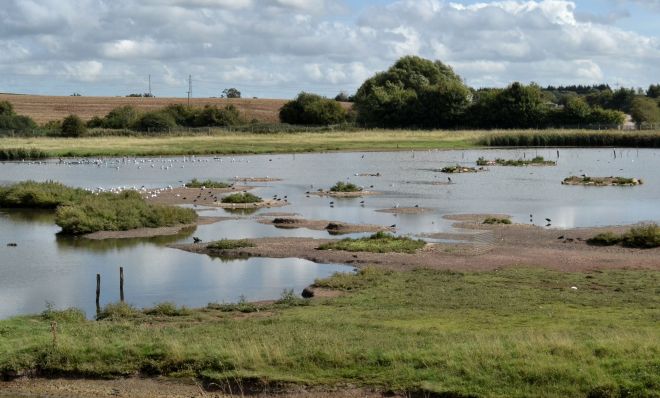
Lincs Wildlife Trust’s Alkborough Flats NR

I have observed Swamphen many times previously on the Iberian peninsula, where I knew the species by the alternative name of Purple Gallinule. Having experience of wetlands there I could see exactly why this individual should chose to make its home in the large expanse of Alkborough Flats at the confluence of the rivers Trent and Humber. I also wondered whether it might have considered there was a little too much going on at its initial stopping place, the one time birding mecca now family fun park of RSPB Minsmere in Suffolk. That would be a sentiment I share entirely and was another reason for not going there in August.

The on-site information boards explain that the present Alkborough Flats, formerly arable land has been created as part of the Environment Agency’s flood risk management strategy for the Humber estuary. A breach in the sea defences allows water to be stored over one-third of this 1000 acre site during extreme high tide events and so helps to reduce flooding in places such as Hull, Gainsborough and York. In the process new mud flat and saltmarsh habitats are developing naturally to the benefit of wildlife, and other areas are being turned into grasslands and reed beds.

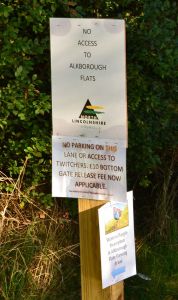
The Gallinule / Swamphen’s favoured location can be scanned from a signposted viewing area (SE883221) across a field from one reserve car park (pictured above). Many visiting birders have had to content themselves with distant sightings from this location on a low escarpment above the flats. But today the bird had been reported from the hide at the western end of the lagoon in the vista. I could see people inside and decided to go down, the question being what was the best route. Oops, definitely not this way (pictured below)! Oh dear, there must have been another clash of interests here between green clad optics carriers and the local property owning elite. Well. this is a private road.
dsc_0079

When I walked around by the permitted paths, I couldn’t see the cited access point anyway. There was a second car park about 300 metres from the hide and a hard track between the two. The plaintive pinging of Bearded Tits was issuing from the reed beds here as I went along. On reaching the hide I didn’t want to be the irritating (to me) type that walks straight in and asks: “Any sign of the whatever,” without even looking. So I sat down and scanned around until a lady to my right said: “It’s coming out again now.”

There on the far side of the lagoon the Purple Swamphen / Gallinule was moving from right to left along the reed edge in all it’s blue, red and white splendour; just as I had seen them do so often in the Algarve and Coto Donana. In the archive picture from 2014 included above, the pose is identical. I only needed to tick this bird for blighty and did not linger too long here. Marsh Harriers were quartering the reed beds and on the way back to my vehicle the habitat seemed to be alive with Bearded Tits that would burst out in groups and fly around to the delight of onlookers. They are always a nice bird to see.

With two British list additions in addition to the lifer, my agenda for this trip was now complete. The satnav took me back to God’s own county (Oxon) by the M69 / A46 / M40 route that was much better than the outward journey. And so I arrived back home in the late afternoon feeling as shattered as I had anticipated, but all this had been well worthwhile.
Radde’s and Barred Warblers on the north Norfolk coast – 15th Oct

Gaining another of the more regular autumn drift migrants was a very satisfying bird life list addition this weekend. There was a good sized fall of 22 Dusky and 11 Radde’s Warblers along England’s east coast through Friday and Saturday. So as Mike and myself drove up to Norfolk we picked out the first of four Radde’s to be reported in the county and headed for a spot just west of Wells-Next-the-Sea.

The previous two weeks had produced a birding purple patch in Blighty, due to high pressure settled on Scandinavia beneath which a strong easterly air flow deposited a veritable cornucopia of Siberian breeders at coastal sites from north Norfolk upwards. The trouble is most of this was so far from home, beyond my range. The outstanding areas were the Spurn peninsula, Flamborough Head and Bempton Cliffs in Yorkshire. But getting there entails a gruelling 200+ mile motorway trek that I just would not regard as enjoyment.

Instead I interested Mike in a weekend expedition to Norfolk, where two lifers Olive-backed Pipit and Radde’s Warbler had been logged all week. When Saturday came I would have loved to go for Britain’s first mainland Siberian Accentor in Yorkshire, but neither of us could face that journey. Around 9:30 am we arrived at a muddy farm track called Garden Drove, off the A149 near Wells (TF944434). There, at a spot about half way to the coastal salt marsh, upwards of 20 birders were staking out a hedge in which was said to be the Radde’s Warbler.

All pictures in this post © and courtesy of Mike Kosniowski

It took a few calls from those around me to get on to this constantly moving little bird, but eventually its quite attractive diagnostics were plain enough to identify. Radde’s has a rather large-headed and bull-necked appearance with pale legs and a thicker, more tit-like bill than either Willow or Dusky Warbler. It is more colourful than the drab brown and buff latter, with the upperparts typically olive green and the underparts dull yellow. Radde’s also has a long, clear-cut supercilium and eye-stripe and dark yellow or orange-toned under tail coverts. I found it difficult enough keeping my binoculars on this bird, but Mike’s long lens on a monopod managed some images (above) that show all this to reasonable effect.

Up until this point my heart had been in East Yorkshire but my head in Norfolk. Now having gained an important lifer I felt very content with the day’s work so far. My one previous attempt at Radde’s, a few year’s back near Alton in Hampshire, had involved staring at a mass of vegetation for around three hours without seeing anything. We next moved on to Wells Wood, in various parts of which another potential lifer, Olive-backed Pipit had been reported throughout the preceding week.

From the beach car park in Wells (TF914454) we walked westward along the Peddar’s Way trail in search of a spot known as the drinking pool. There a Pallas’ Warbler had also been seen as well as the OBP, but in more than an hour on site we couldn’t be sure of having ID’d either bird. Most of the birders who had been here through the morning had given up and dispersed by the time we arrived. Two more OBP sightings in the vicinity were posted on RBA while we were there but who knows? The species, like Tree Pipit is often found in or around trees, and this is an awfully big wood in which to find one. I consoled myself that there will be easier to observe individuals at other sites in the future, whenever that might be.

There was still time to fit in my fourth Barred Warbler (pictured above). This species is more frequent in Britain than Dusky or Radde’s, averaging around 170 records a year, the great majority of which are first winter birds in autumn. Today’s Barred was at Burnham Overy Staithe at one end of the quay (TF845443). The large, pale Warbler would emerge at intervals from a mass of vegetation close by some houses, before relocating once again. A Dusky Warbler had earlier been reported further east along the sea wall, but people here who had looked for that bird were saying it had flown off. So the day’s tally was now two lifers out of a possible four for Mike, and one out of two for myself.

I am coming to regard my British bird list, now at 326 as a little less modest considering the range that I operate within. Soon after starting this journal just over two years ago I gained my 300th, and despite that aversion to long distance twitching I keep on chipping away. Of the autumn drift migrants Dusky, Booted and now Radde’s Warbler have all been added in the last 10 months, and so further names beckon like Greenish, Arctic and Paddyfield.

Two more days in north Wales lands a Booted Warbler – 5 & 6th Oct

Since my end of April visit to Llangollen (see here) I have wanted to pay more attention to this part of the world. And the presence this week of Booted Warbler, a lifer at the Great Orme’s head, Llandudno afforded an opportunity to do so. My latest venture into part-time “living-wage” employment is proving erratic to say the least and I have had a certain amount of gardening time of late. But whilst finding some motivation for that necessity is welcome, the familiar urge to hit the road had been growing again in recent days. So although 205 miles is way beyond my usual birding range, on Wednesday I just upped and went anyway.

Never mind the M6 and A55, I took the more leisurely route through the scenic beauty of the Vales of Llangollen and Conwy, and along the winding, single carriageway A5 in between. It was a clear sunny day that had been another reason for doing this and the north Wales upland landscape did not disappoint. Managing the journey with just one short break and no cat naps, I arrived on site some time after 4:30 pm to find several birders observing the Booted Warbler.

The massive limestone headland of the Great Orme is a rather wild and empty landscape (above right). Earlier in my day Clackers, who had been here on Tuesday with Ewan (see here), described how the Booted Warbler was showing down to two metres. I suspect many of these images (here) on RBA were posted after that. The autumn drift migrant had not only chosen to be this obliging but was doing so right next to a car park. Now in strong wind the bird appeared quite hyperactive, moving around constantly between the various clumps of gorse.

A common and widespread breeder in central and eastern Eurasia, Booted Warbler tends to frequent low bushes and weedy fields. The normal wintering grounds are central and southern Asia. This is a small and strikingly plain warbler, the upper parts resembling the colour of milky tea and the underparts off-white.

booted-warbler-1601-great-orme

Booted Warbler

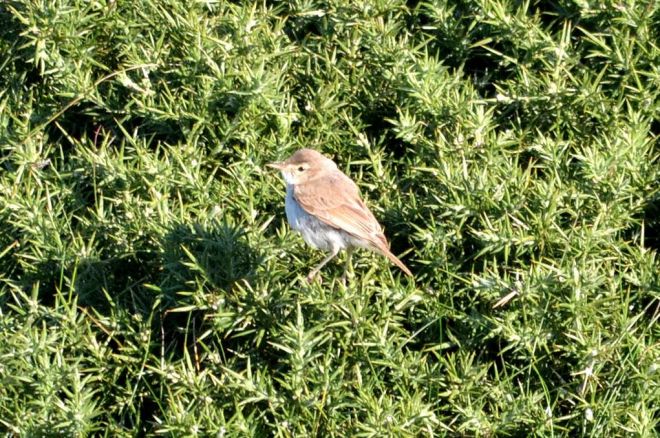
My own best picture (above) shows the rather domed head shape, short primary projection and short square ended tail. Other diagnostic features are a strong facial pattern, with beady eye and pale lateral crown stripe. The pale orange bill is longer and sturdier than a Chiffchaff’s with a dark tip, and appears slightly angled upwards. I watched the bird for around 90 minutes in the cold wind and fading light, then went to find my B&B.

On Thursday I returned at 7:30am to find the Booted Warbler frequenting a grassy area where the close encounters had occurred two days previously. Conditions were now much less windy and the bird was not so mobile, spending more time feeding on the ground. After a break for breakfast I came back again and stayed for a coupe of hours in company with several other birders, some of whom were Welsh speaking which was interesting to hear.

For much of the time this warbler remained foraging in one area of long grass and its diagnostic head pattern was very noticeable. It seemed settled in this location and all present were being considerate, standing in line a safe distance back and skirting the viewing area widely when coming and going. But eventually two later arriving people with cameras just had to try to get closer, put the bird up then chased after it. More new arrivals then joined in the pursuit. I decided the likelihood of a closer photo opportunity was fading fast and so left. It was in any case almost midday and time to go sight seeing and indulge some early life memories.

llandudno-1601-grand-hotel-and-pier

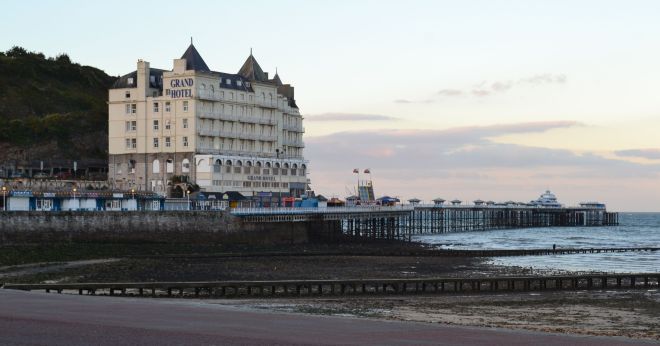
Llandudno: Grand Hotel and pier

This north Wales coast holds many such associations because until I was aged 12 family holidays were taken in Colwyn Bay where my grandparents were caretakers of a place of worship. So that was where I headed next today. I had re-visited once previously in 1993 to find that, other than the gargantuan trench of the A55 having been ploughed through the town, things had changed very little and the old seaside resort had acquired a faded air. This time much more “progress” was in evidence.
The streets around where my grandparents lived are now a conservation area. So the early 20th century red brick houses that I recall so well, with turrets at the corners of the biggest ones, are all being refurbished in their original style. But elsewhere the space of my childhood memories had been filled with various public leisure facilities. The formerly charming Eirias Park for instance now holds an events centre and 15,000 seat stadium. I didn’t look to see what the seafront structure pictured below right is, but it is just so ugly and in your face.
A little to the west the long derelict pier (pictured below) has yet to be either demolished or rebuilt. I left here thinking that too much has changed not necessarily for the better for me to want to re-visit again. I considered that Llandudno still has the genteel and affluent ambience of it’s Victorian heyday. But Colwyn Bay has the air of a town that was allowed to outdate too much before being partially redeveloped in a hurry.

colwyn-bay-1608-sea-front-looking-west

Colwyn Bay seafront looking west

A historic site that I wanted to see again was Conwy Castle on the other side of Llandudno. This has long been considered one of Wales’ most picturesque, but upon my arrival conditions had become overcast and the road bridge below the medieval ruin was a construction site. The yellow stone grandeur of my recollection, that is also portrayed in classic paintings and illustrations of the site, has assumed a duller, dirtier appearance with the passage of time. In short I was disappointed. Conwy is nonetheless an evocative place that I would like to experience again if time on a future excursion here allows.

And so my agenda in north Wales was complete. A birding lifer, an overnight stop, some history and lots of nostalgia. I just have a special feeling for the area, arising out of an age of childhood innocence, that has never left me in adult life. And it was so good to have enjoyed those sentiments again, courtesy of that little off course waif the Booted Warbler.

Six Spotted Redshank at Pennington Marsh, Hants – 27th Sep

When yesterday turned out to be work free I rather fancied going somewhere. The choice of location was the Keyhaven / Pennington nature reserve on the Solent where a White-rumped Sandpiper had been reported on four of the previous seven days. This is a Nearctic wader that I have observed once previously, but as the Hampshire site regularly holds things of interest a nice day out was in the offing.

I arrived at the end of Lower Pennington Lane (SZ318927) from Lymington some time after 11am in overcast, drizzly conditions and made my way out to the reserve’s Fishtail Lagoon that is often the spot for scarcer visiting waders. There a few local birders were already in place hoping the WRS would come in as it had previously from late morning onwards. But in three hours on-site here of this bird there was no sign. So what else was on offer?

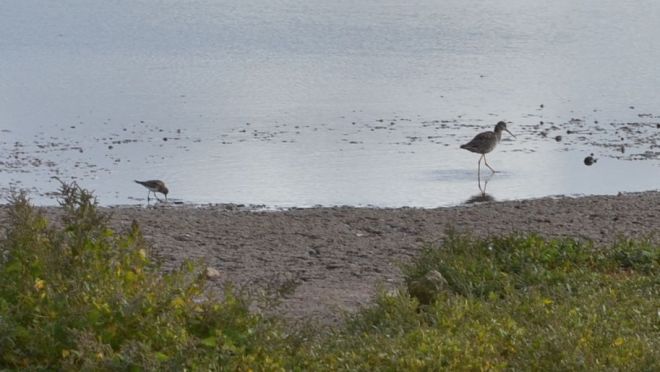
Well Bar-tailed Godwit, Grey Plover and Knot, the three regular British waders I have missed on passage through Oxfordshire this year, were all present on either side of the sea wall. But the stand-out encounter was with a delightful group of six Spotted Redshank (pictured below) that were present throughout my stay.

spotted-redshank-1601-pennington-marsh

Spotted Redshank on Fishtail Lagoon

The on-site information boards explain that just inside the sea wall here are a number of shallow, brackish lagoons that are connected to the sea through a system of sluices and tidal flaps. The salinity in these lagoons varies but is generally lower than sea water and so a specialised habitat has arisen. I do not know the precise detail but that seems like a reasonable explanation why so many scarcer passage waders occur here.

Most of my previous Spotted Redshank sightings have been of single post-breeding birds amongst large mixed flocks, as these Tundra breeders pass through Great Britain from late-June into the autumn. Today’s six birds were the most I have seen in one location, and being the main feature of interest on the lagoon it was a good long opportunity to gain a complete understanding of the species. In appearance, this can be summarised as being slimmer and more elegant than Common Redshank, longer legged and greyer toned with a longer, finer bill and striking combination of black eye stripe and white supercilium.

But what struck me most was the feeding action. Compared to the probing habits of Common Redshank these most attractive cousins reminded me of Avocet as they moved in a group (pictured above) sweeping their bills from side to side underwater. All this was enjoyed greatly through those three hours here until just before 3pm, when mindful of rush hour traffic around Southampton and Winchester I headed home.

hurst-castle-1601-from-pennington-marsh

Hurst Castle from Pennington Marsh

Baird’s Sandpiper at Upton Warren Flashes, Worcs – 11th Sep

Of that much waffled upon group of vagrant waders “accidental small Sandpipers” (see here) one north American breeder Baird’s Sandpiper has had a good British passage this autumn. Several and sometimes possibly the same individuals have been recorded over the last eight weeks but these have always been beyond my preferred range or involved tedious journeys, to Minsmere, Reculver and north Lincolnshire for instance. So when on Friday a Baird’s turned up a mere 78 miles from home, close by the M5 motorway near Bromsgrove in Worcestershire, it was game on.

Sunday morning dawned bright and sunny and I really needed to go somewhere to flush a certain amount of work related tedium out of the system. So the Baird’s being still present on RBA, off I set to the lengthily named Christopher Cadbury Wetland Reserve at Upton Warren. This Worcs Wildlife Trust site comprises a fresh water lake and the saline Flashes that arose out of historic salt extraction. Between the two lies a sailing lake created by material excavation for the nearby motorway. A west Midlands twitch the short run up the M40 is always agreeable, certainly more so than Suffolk or Kent.

I parked dutifully in the sailing club overflow car park, as instructed on RBA, then purchased a day permit from the club cafeteria. It soon became apparent that co-operation between the two interest groups extends no further, with clear lines of demarcation between (“are you a”) members and annoying, visiting green-clad optics carriers. Try asking to use a toilet here to find out what I mean. Things are so much more convivial at Oxford’s Farmoor Reservoir. As so often at these multi-use sites no-one was checking if birders were paying for permits anyway.

upton-warren-flashes-1601

Inland salt marsh at Upton Warren Flashes

I somehow expect to see other Oxon birders on these occasions, and today Justin Taylor was leaving the last of three hides that overlook the Flashes. It was quite crowded inside and he pointed me in the general direction of my quest. Then I played dumb with a Ruff and another birder put me onto the Baird’s Sandpiper. Quite soon this rarity relocated to the inner shore in the above picture and proceeded to give grandstand views. But it was still too far away to capture any more than distant blur images, and there was little chance of repeating my recent picture success with Least Sandpiper. Nothing decent from this site had appeared on RBA yet, but that didn’t stop the incessant hopeful chatter of camera shutters inside the hide. For some good quality images from today see here.

The very clean and tidy looking juvenile Baird’s was generally buff toned in appearance with neat and delicately patterned upperparts. Slightly smaller than a Dunlin, it had a shorter, straighter bill than the latter and noticeably long wings that reached beyond the tail (primary projection) when at rest. After displaying all this to good effect the bird returned to the middle distance from whence it had emerged. I remained in the hide for 90 minutes throughout which it kept coming in and out of view to endless muttered directions for the benefit of new arrivals.

upton-warren-flashes-1602

Baird’s Sandpiper (left) and Spotted Redshank

Job done it was very pleasing to have added this year’s third small Sandpiper to my life list, following Broad-billed (see here) and Least. The variety of other waders present at such a small site was impressive, with Common and Green Sandpiper, Common and Spotted Redshank, Ruff, Curlew, Lapwing and Avocet all in view at once today. The Flashes here are saline, receiving brine from underground seepage. The on-site information boards explain that in places the high salt levels prevent the growth of vegetation. In other areas salt tolerant or dependent plants create an inland salt marsh that is unique in the country. Hence Upton Warren has a reputation as one of Worcs’ best birding sites. Lack of a good photograph aside today was a very satisfying experience.

Scarce Emerald: the last English damsel – 11th August

As of 2015 I had observed every regularly occurring English damselfly but one, the exception being Scarce Emerald. So my top Odonata priority this season has been to complete the full set, and mid-August is the time to do it. One well-known site for the final species is RSPB Bowers Marsh on the Thames estuary in Essex, and with no birding lifers to take precedence this week that was where I headed yesterday.

My task was simplified because Adam visited here a week earlier having gained directions from an online contact as to the exact location to find these insects. Arriving late on a lightly overcast morning I met another naturalist, Mike Barnett from Basingstoke, in the car park (TQ755867) and he was on the same mission as myself. Setting off together and after a quick phone call to Adam to verify the correct place to look, we arrived at a small and shallow, reed-filled pool that is prime habitat for our target.

It didn’t take long to find three male Emerald sp damselflies mooching about and perching on stems, usually with wings half open. Two local patch watchers then joined in and assured us these were indeed Scarce Emerald. In the pictures below I have arranged three individuals in what I believe is ascending order of maturity, if that makes sense. The brown-toned left-hand insect is the least mature, while the right-hand one is I hope a fully mature male though I’m not entirely sure of which type.

Having read up on the species again in Brooks and Lewington, I feel confident enough to publish them. That odo bible quotes four diagnostics, since Scarce Emerald is very similar to Common Emerald, and for the key one we are talking anal appendages. The inferior AA’s, or the inner bits of his bits to you and I, are broader and more curved in Scarce than Common, and this is quite apparent in the left-hand picture.

Turned off completely? Well it gets less goolie-ish from now on. Brooks and Lewington lists more “subtle differences” that I believe are apparent in my none too sharp pictures:

  • squarer shape of the pterostigma (black wing tags)
  • less extensive blue colouration on abdominal segment 2, that is absent in the left-hand immature male but shows well in the right-hand image
  • brighter blue colour of the eyes, and aren’t they just!?

A return visit to this site next year could well be in order to remove all doubt. I am used to encountering a lot of colour variation in Emerald damselflies at different stages of their life cycle, and today was no exception. We found no female Scarce Emerald at Bowers Marsh, unfortunately.

bowers marsh.1601

Another part of Bowers Marsh

So now I have observed the complete sets of regularly occurring English dragonflies and damselflies, but still require both sightings and images of some females and immatures. Things will be largely about photography again next season, and believe me I have spent a certain amount of time attempting to improve on past results this summer, mostly without success. Three afternoons watching Brilliant Emerald dragonflies at Warren Heath, Hants was one un-blogged example.

But insect observation cannot be rushed, like zapping in and out on an adrenalin rush to twitch a rare bird. This is where I feel bored birders dabbling with insects in June and July sometimes get it wrong, with respect. A chair, my camera and solitude in wild places is the appeal of odonata for me, and continuous improvement in recording visually the experiences they offer remains the quest.

Least Sandpiper at Seaton Marshes, Devon – 4th Aug

“Accidental small sandpipers” to quote one field guide I use* is a genus that I attach some priority to at this stage of my birding life. Since various of these species occur almost annually in Great Britain, most seasoned birders may have seen each of them perhaps a few times. But given my modest British bird list of now 321 mostly within 150 miles of home, each passage period I aspire to gain one or two more of this group as lifers. Today was such an occasion.

Last week a Baird’s Sandpiper turned up at the populist playground of Minsmere in Suffolk but didn’t stay long enough for me to get there. Western Sandpiper has also been reported a bit further afield recently. Then two days ago a Least Sandpiper was found at Seaton Marshes in east Devon, that at a little over 150 miles was just within my preferred twitching range. I assume the last-named is the rarest of the three species since RBA accords it mega status. When this bird was reported again early Thursday morning on a work-free day, off I set.

For the outward journey I took the scenic route via Ringwood, Dorchester and Bridport to indulge my liking for the Dorset countryside. But as so often the beauty of that county’s scenery was spoiled by the volume of traffic on roads that are not designed to carry it. As a result almost an hour was added to my satnav’s estimated journey time, till at just before 1pm I drew up in a large and welcoming car park at Colyton cemetery (SY251916). From there a path leads down to Black Hole Marsh, one of four areas managed as local nature reserves in the lower Axe valley. Collectively these are known as Seaton Marshes.

DSC_0001

Black Hole Marsh and Island Hide

The bird was being observed from the Island Hide (pictured above). Not having recovered from the journey I asked other people to point it out as soon as I went inside, but at that range it could have been anything. At first a big lens photographer in a prime spot and the head next to him kept blocking my every attempt at picking off the diagnostics. But eventually those obstructions parted in opposite directions and I gained a full frontal view of the Least Sandpiper looking just like the pictures in it’s RBA gallery (see here).

I stayed in the Island Hide for the next hour during which this bird remained faithful to the water’s edge near the start of the boardwalk that leads out to the hide. For much of the time the rare visitor, a summer plumaged adult was associating with a Dunlin by which it was quite dwarfed, while Common and Wood Sandpiper were also in the vicinity. I believe this site has a reputation for attracting good passage waders. But the comparison species I would really liked to have seen here would have been Little Stint.

As its name suggests Least Sandpiper is the smallest of the stint species. It has a squat body, rather short greenish legs and long toes. The dark bill is down-curved, tapering to a fine point. To quote the Helm guide to confusion species the key diagnostics that separate this bird from Little Stint are the leg colour and a very short primary projection. This was mostly fairly plain to decipher during my time in the hide, as other birders came and went and I got into the best viewing position. But to my mind the stand-out feature was the subtly attractive breast pattern that had stood out in the RBA photographs, as it did now in my scope.

All the while I hoped the Least Sand would relocate closer so that I might capture some half decent images. Eventually it was flushed by other birds and landed on a grassy area beside the board walk. Most people inside then moved out to attempt to photograph the rarity through slats in the wooden screen structure. At this point I was joined by Oxonbirder Dave Lowe who was “on the way” (as we say locally) home from a business meeting in Tiverton. He pointed out the Least Sand again quite close to the screen and I happened to be in a good spot to get two lucky shots (above) as the bird crossed the grass back to the water’s edge. It being some time since I have returned from a British birding twitch with publishable pictures, I’m quite pleased with those two. What a little beauty!

Mission accomplished, Dave and myself both left after 3pm to make our way homeward. Not wanting to brave the Dorset lanes again then Poole’s outskirts in the rush hour, I chose the fast M5 / M4 motorway route which in the event was largely congestion free. With the warm glow of having acquired such a rare and attractive lifer, and the bonus of reasonable pictures, all was well in my world at least for one more day.

* Six (that is 50%) of the group I refer to here are now on my British list. The others are Semipalmated Sandpiper, White-rumped Sandpiper, Long-billed Dowitcher, Short-billed Dowitcher and Pectoral Sandpiper. Still to be added are Long-toed Stint, Western Sandpiper, Red-necked Stint, Baird’s Sandpiper, Stilt Sandpiper and Sharp-tailed Sandpiper. If the taxonomy here is inaccurate, the pocket field guide referred to at the beginning of this post is Bruun, Delin and Svensson’s excellent Hamlyn Guide that I keep in the car as a small, light alternative to Collins. This publication is also very dear to me having been carried in the field throughout my early birding years. The borrowed term “accidental small sandpipers” is merely a convenient way of denoting the above group of scarce or rare passage waders.

Goldenring dragons and a special damsel at Latchmore Brook, New Forest, Hants – 17 & 20th July

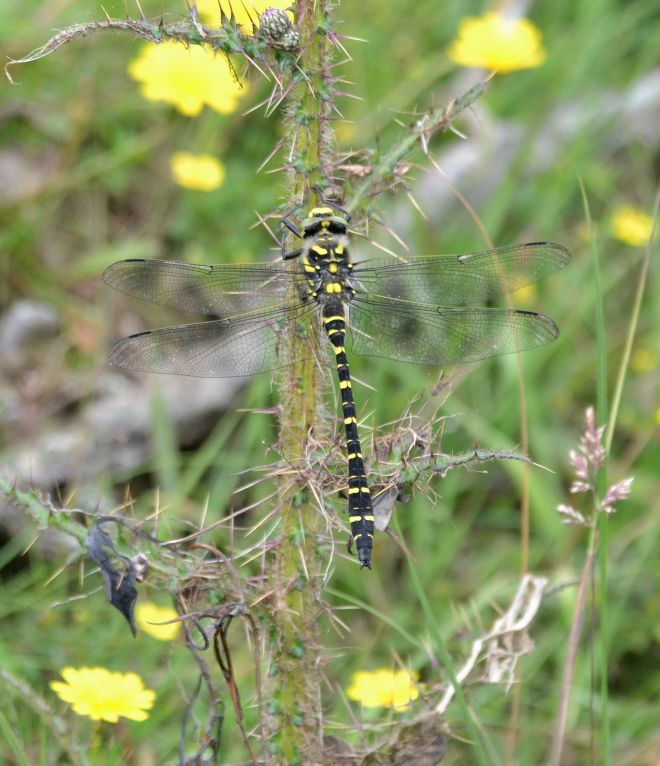
This was a season’s first visit to the English Odonata mecca of the New Forest. My quest was to acquire better images of Common Goldenring, in my view the most magnificent home dragonfly. My issue with this species is that in the past I have mostly captured them against over-busy backgrounds. Where insect picture taking is concerned my desire is always to cut out the clutter as much as possible.

A year ago (see here) I identified this site as one where that aim might be attainable if a little time is devoted to the task. On Sunday the weather forecast was for sustained sunshine after a cloudy start and hence it was game on, or so I thought. Upon arriving on site around 11am conditions were still steadfastly overcast, and thus largely it remained for the next five hours. But it still didn’t take long to come across Goldenrings as I walked east from Ogdens Forestry Commission car park at SU182124.

common goldenring.1602 latchmore brook

Common Goldenring (male)

This individual, a male (pictured above) was the first one encountered, and soon it settled against a colour co-ordinated if still cluttered backdrop. Goldenrings, of which there are eight variants across Europe, follow a fairly predictable routine of patrolling the same patch up and down and over again. After re-finding one spot that on the previous visit had struck me as being especially photogenic but which somehow didn’t grab me now, I retraced my steps and came across another Goldenring doing exactly what I have described above.

Feeling a little weary in spirit, I sat and watched this second male for some time, noting the locations where habitually he would come to rest. Insect watching should be about relaxing in remote places in communion with complex and fascinating joys of nature with the capacity to cleanse the system, just the dragonflies or butterflies and myself. Instead it more often involves the frustration of waiting for the sun to come out, then too limited intervals in which to record the renewing experience for posterity. Eventually my Goldenring perched perfectly right in front of me (below left). This was more like it.

The twig in the right hand picture (above) was another favoured stopping place, and so it went on. This is the first time in 2016 that I have converted an objective on the limited insect agenda set for this season, and that’s all due to poor weather. Better or any pictures of Hairy Hawker, Downy Emerald, Common Clubtail, and teneral or female Blue Chaser will all now have to wait until 2017; not to mention White Admiral butterflies.

Another speciality at Latchmore Brook is Scarce Blue-tailed Damselfly that I observed for the first time in this place a year ago (see also here). The lowland mire in which they occur, to the immediate north of the brook, was in excellent health today with a fascinating array of bog plants of which I have no knowledge. In mid-afternoon I returned to the car for a power nap then changed into wellies to seek out this species for a second time. The best part of an hour was then spent waiting for an approaching patch of blue sky to cover the key position.

As soon as the sun broke through, SBTD took to the wing, but these are very tricky little insects to capture. They have a finer more delicate appearance than regular Blue-tailed Damselfy and a knack of vanishing from view as imperceptibly as they appear in the first place. But once the three or four individuals encountered here settled the diagnostics of a blue tail band covering part of segment 8 and all of 9, and with a convex upper edge, were plain to behold (pictured above).

I have long since realised that much of the better odonata photography published on-line must be obtained by wading in. But usually I am far too squeamish about treading habitat to get really close to some insects. This particular bog is churned up by free ranging cattle and ponies anyway, and so I felt less guilt at doing what after all odo royalty does. The results were a little better than last year and I resolved to try again.

That opportunity wasn’t long in coming round since following a conversation with Adam we decided to go down together a few days later. He needed SBTD for his odonata life list and I would be able to take him to the right spot to find them. Avoiding the year’s hottest day we opted for Wednesday that in the event wasn’t much cooler. This time we found just one male (pictured above) that struck up some nice poses against reasonably subtle backgrounds. In retrospect Sunday’s capture of a female wasn’t that bad but these are better since they do not involve brown bog water and over-reflection.

In the afternoon we trekked across country, and for some of the way off-piste across Hampton Ridge and through the eastern edge of Pitts Wood Inclosure to Ashley Hole, and then back again. After a very wet summer up until this week lots of superb lowland mire habitat was encountered along our route with many odo-rich pools. But observing these beautiful insects is doomed to become repetitive in this country. If only there were more species to experience, though at least one rather special damselfly has been done justice now.

Collared Pratincole at Ham Wall RSPB, Somerset – 13th July

On my only completely free day of this week I wished, naturally enough to hit the road and go somewhere. And given a recent burst of enthusiasm for high summer butterflies I now rather fancied doing some dragonflies. So the presence since Sunday of a potential British bird list addition on the Somerset Levels offered a dual purpose day out: an Odonata-friendly location with insurance against poor weather.

Having left a bright and sunny Oxford I arrived at Ashcott corner car park (ST449397), between the Avalon Marshes reserves of Ham Wall and Shapwick Heath, with the grey stuff seemingly filling the length and breadth of the levels. This location has produced a number of lifers over the years: most recently Dusky Warbler (see here); and previously Hudsonian Godwit (here), Pied-billed Grebe (Feb 2013) and European Roller (Jun 1989).

To quote RBA: “The Somerset Levels are fast becoming a top rarity venue as well as Britain’s best rare herons and egrets breeding site”. Today’s attraction was a Collared Pratincole, renowned as a wader that feeds aerially. This is a bird I self-found and viewed well in Portugal (May 2014) and had also observed in la Camargue, France and Coto Donana, Spain two years earlier. A southern European breeder that winters in sub-Saharan Africa, it is the most widely distributed of the world’s eight Pratincoles and also one of the largest.

collared pratincole.01

Collared Pratincole  © rights of owner reserved

When I reached the second viewing platform at Ham Wall, from where the bird was being reported, rain began to fall. Most of the birders gathered there moved to shelter under trees a short distance back along the path. Then one called the Collared Pratincole and showed it to me in his scope, after which I quickly located the bird myself. It was sitting on the ground in the middle distance amongst Mallard and Lapwing, and I was able to put other birders on to what they acknowledged was a better view. The image (above) is outsourced but today’s bird was in more or less the same pose, if against a green backdrop.

At some time after 12pm fair weather set in from the west and the Pratincole took to the air. I then watched it for around 20 minutes or so hawking for insects over much of the landscape in the pictures below.  It had an elegant jizz suggesting a large Swift with the grace of a Tern. Though a very fast flier the white rump and long forked tail stood out clearly. But the name “collared” is misleading since the feature referred to is not a collar and is also present in other Pratincole species. Hence this one is also referred to as Common Pratincole or merely “Pratincole” in  different sources. For the RBA image gallery of the Ham Wall bird see here.

So I have now observed both of the Palearctic Pratincoles in Great Britain. But this was a hugely more satisfying experience than the very brief flight view obtained of a Black-winged Pratincole at the Ouse Washes, Cambs in August 2014. The word satisfying did not apply to my dragonfly watching efforts today. I spent the afternoon a little to the north of the RSPB “home for nature” at Somerset Wildlife Trust’s excellent Westhay Moor NNR (ST455436). A pleasant enough few hours were passed there but no better or even decent odo pictures were gained, and so nothing in the insect line will be blogged.

Purple Emperor at Oakley and Finemere Woods, Bucks – 5 & 7th July

My quest for better pictures of White Admiral found me back at the regular local location of Bernwood Forest, Bucks on Tuesday. With an overcast start to the day and a late shift awaiting in the shop at 3pm there wasn’t time to go “out of area” and so I arrived mid-morning at Oakley Wood Forestry Commision car park (SP612118) to tread a familiar route.

For my first hour on site conditions remained steadfastly grey with only fluttering Ringlet in the long grass and occasional Large Skipper to break the monotony. After one circuit to the central crossroads and back I reasoned that if I left the sun would be bound to come out, so I decided to sit in the car and wait. As things transpired that was only for a few minutes before fairer weather took over.

Then I walked part of the woods that in past experience is good for White Admiral. Four Silver-washed Fritillary were active at one spot though not close enough to photograph, and I also encountered Broad-bodied Chaser and Hairy Hawker dragonflies. Arriving back at the main track a group of dog walkers were gathered around something on the path and they beckoned me over. I get recognised in this place. This had to be a Purple Emperor and so it was.

The butterfly before long objected to being videoed with a phone and flew off. When the group dispersed I set off down the track to relocate it. At first it was very flighty moving restlessly back up the track ahead of me. Incredibly so I thought the next dog walkers through didn’t even notice as this wonder of nature flew past them at waist height. I gestured to point it out but concluding they probably thought I was a bit mad I let them be.

The Purple Emperor came to rest close to where it had first came down from the trees. Then it began the familiar routine either of probing the hard surface of the track for whatever it is they extract, or just sitting still looking magnificent. It allowed a very close approach now. Pristine was not the word as it glistened before me in all its freshness.

Eventually a Dalmation appeared at my elbow that I took by the collar to prevent the insect being put up. The owners were the couple I had passed further down the track. They had apparently thought I was some kind of dog poo vigilante but all was now explained and they were very appreciative of being shown such a beautiful butterfly. Having submitted the record to BC I believe this is the first Oakley Wood sighting of the season.

Today (7th) I met up with Ewan at another BBOWT reserve in the north of the Bernwood Forest complex, Finemere Wood (SP721215). The first thing I encountered after going through the entrance gate some time after 11am was another male Purple Emperor flopping around above the surface of the track, before disappearing from view. I then had to inform Ewan of this who had been on site for an hour already without seeing one. We split up to search different parts of the wood, and soon I got a call to say he had relocated the Emperor. Phew, tranquillity could now resume!

When I returned to the entrance gate this butterfly was still posing nicely for a small group of observers that had gathered. It was in a muddier and more grassy location than the Oakley Wood individual and so offered a little different composition (pictured above). These pictures demonstrate how this large butterfly’s appearance depends on how the light catches it, with often only one top wing in the male appearing to be purple.