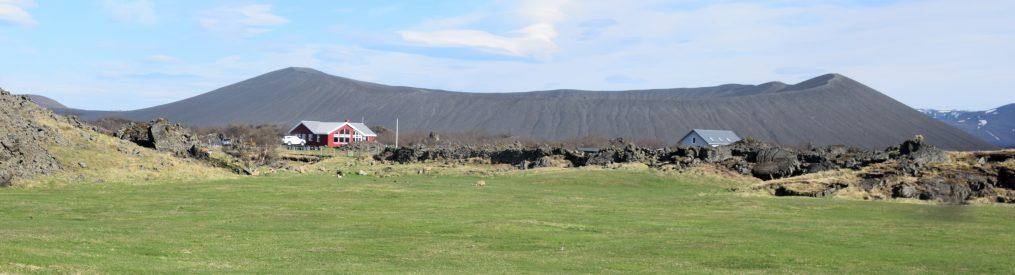
36 more Bald Ibis self-found at Cape Rhir, near Tamri – 8th Nov

Cape Rhir, just south of Tamri on the N1 coast road, is described as the best sea watching site in Atlantic Morocco. Cory’s Shearwater is said to be abundant past there on good days in November, so never having seen one I added the species to my trip wish list. But I have not sea watched previously at all so this was a kind of bonus bird if time allowed.

With only three raptors and Cory’s still to see I decided to give the last named a go today. The coast north of Agadir is characterised by small towns and unspoilt beaches and so is a popular day out from the city. It was only on the way back that I noticed all the hoardings announcing land earmarked for hotel and golf course development. Temperatures today reached 33 deg C and so the birdier places that I had noted last Monday had filled up with people instead.

I couldn’t be sure whether I picked out Cory’s or not, having no experience of Shearwaters to refer back to, but there were a lot of Northern Gannet out to sea and a flock of Common Scoter. I moved on to a lay by overlooking the Oued Tinkert estuary at Tamri and was immediately accosted by hustlers offering to locate Bald Ibis for money. One who was too pushy for my liking insisted on pointing out an Ibis perched on a roof on the far side of the estuary. I thanked him and said I had not asked him to do so, adding that I had already seen Ibis at 50 metres. No was taken for an answer.

I was actually more interested in trying to locate Slender-billed amongst the Gulls, without success though there were a lot of Audouin’s my favourite gull. It looked as if the playing public had seen off everything else and so I returned to the spot where I had been sea watching. It was now approaching 3pm and there seemed to be much less going on out at sea. Then in flew a flock of large black birds, landing just behind the beach where local fishermen were working. “Surely not,” I thought but a look through my scope confirmed that Tamri’s famous Bald Ibis colony had just found me.

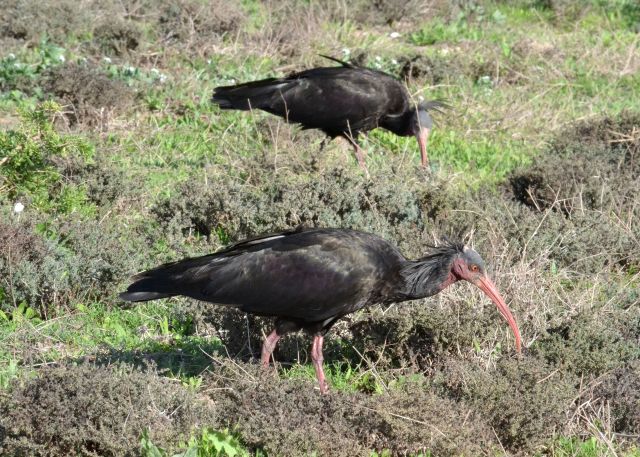
Well what does one do if 36 or so of Morocco’s most sought bird drop in unexpectedly like that? It would be rude not to say hello. A rough track ran down from where I was parked to the area the Ibis were grazing. “Well why not?” I thought, “There’s no-one to tell me off here.” I drove slowly towards the birds and stopped a safe distance short of them, hoping they would walk towards me as at the Souss-Massa park.

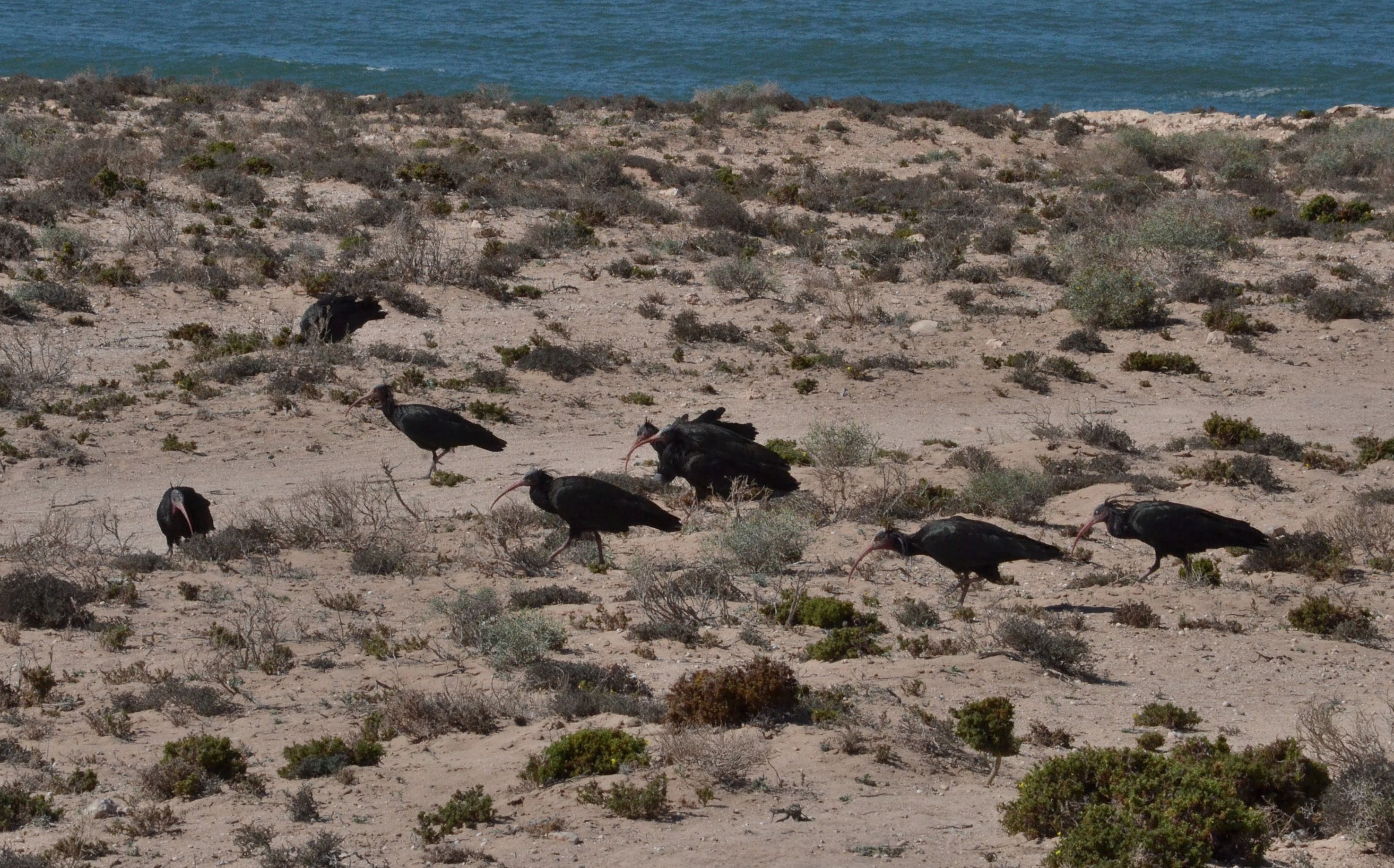
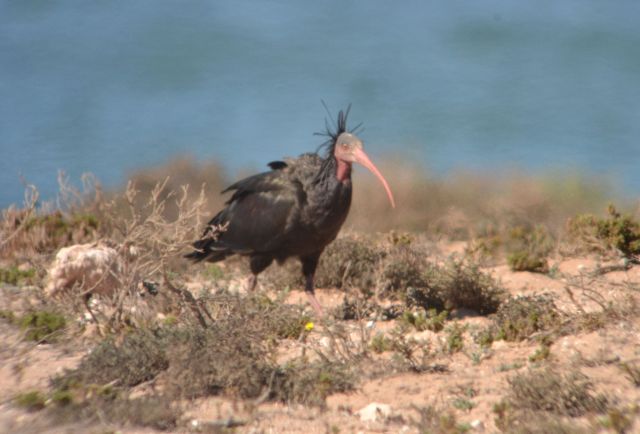
And did they? Oh boy they did! Before too long I was sitting in my mobile hide surrounded on three sides by iridescent, pink-faced and primitive looking Bald Ibis. These birds really are like grazing animals, moving around quite quickly while probing the whole time for whatever they eat. If it had been highly satisfying to observe them so closely at Souss-Massa, this was off the top of the scale and the self-found sightings are always the best. I couldn’t resist a text to both Ewan and Andy, and old ear basher replied that now I can call myself a birder.

The following are amongst my better pictures

Grazing Bald Ibis
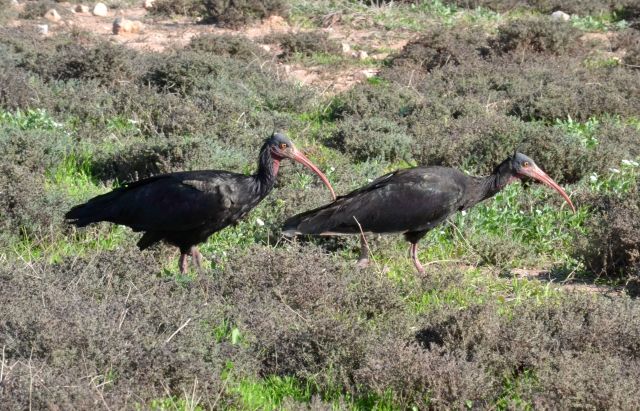
Grazing Bald Ibis

bald ibis_01.1520 cape rhir

“3 dirham on the price of a loaf, dear” …. “No!”
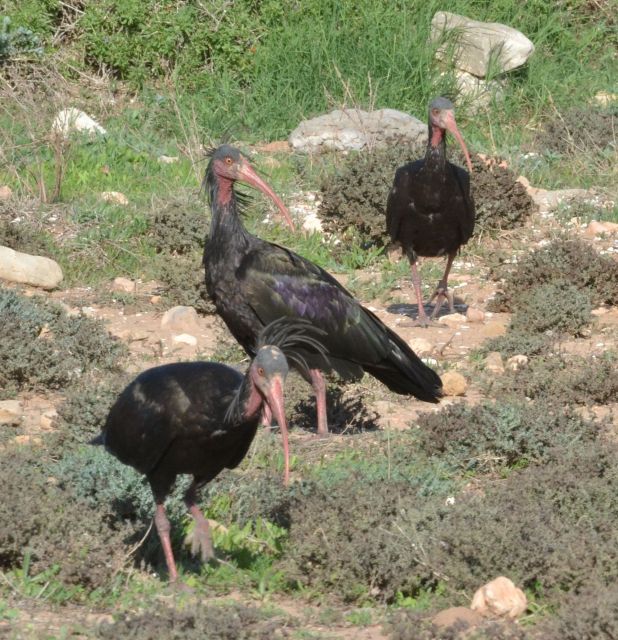
“Not such a good lizard year” …. “Can anyone see one”
“Chelsea lost again then” …. “Can’t be long for Jose now”

“33 degrees today” …. “Think we’re in for a hot winter”

Or whatever it is that Bald Ibis talk about

Though they seemed unconcerned by my vehicle for some time, eventually the Ibis began to become more skittish so I decided to leave them in peace. As I departed the site they were grazing close by the opposite side of the N1 where they had relocated. Here was one of the world’s rarest birds on public view, a bird tour leader’s dream scenario, but how many people in the cars speeding by even noticed the Ibis were there I wouldn’t like to say.
Souss Massa National Park, Morocco – 4, 6 & 7th Nov

There can be no doubt that this designated protection area is the outstanding birding location on the Atlantic coast of Morocco. 70 km from north to south and up to 15 km in width, it covers 33,800 ha of land and contains 23 villages. In a word it is huge and I was advised strongly by Ewan to engage an official guide, of which seven work on any day. The mouth of the Oued Massa, the park’s second major watercourse, is reached along a minor road from the N1 signposted Sidi Rabat. After turning right at a village Arhbalou a rough road leads down into the Massa valley and a nature reserve area.
DSC_0169

On Wednesday morning I was greeted there by a guide, English-speaking Rachid Baitar. He asked me which birds I wanted to see then recommended going for the Bald Ibis first since they can take some time to find. But all the guides have a good idea of where these most sought birds might be on any day in a higher area between the Massa valley and the coast. Rachid also took over all the driving duties leaving me free to relax in the passenger seat with my binoculars and camera scanning for birds myself and getting onto my guide’s sightings.

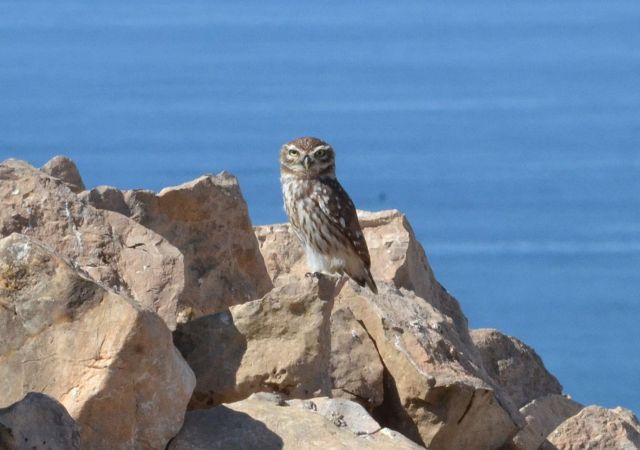
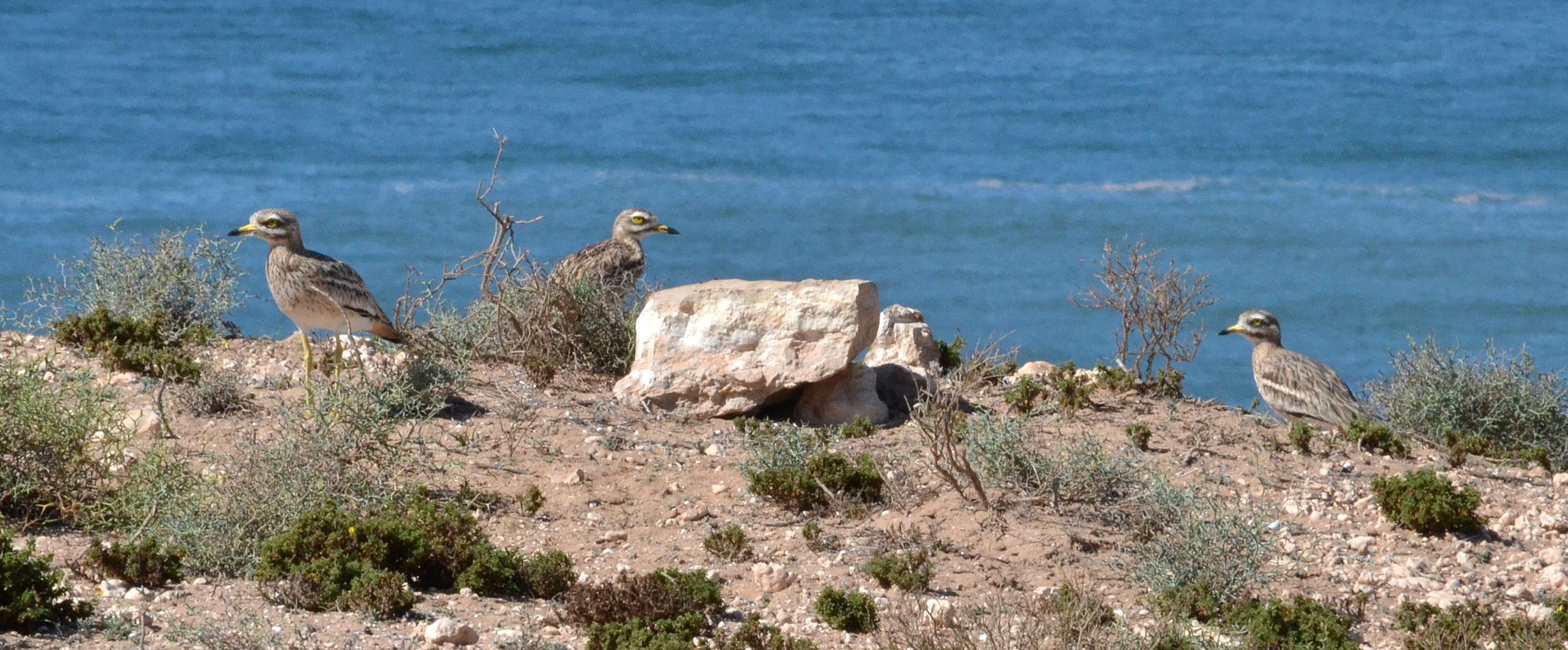
The car hire proprietor in Agadir had said I didn’t need a 4×4 to go off road here and Rachid clearly agreed, taking the Dacia along rough tracks that I wouldn’t have dared to attempt into all manner of off-piste places. It soon became clear that it would be extremely difficult to bird this vast expanse of habitat successfully without a guide. We tried several known Ibis locations without success but in the process saw Moussier’s Redstart, Laughing Dove, Southern Grey Shrike, three separate Little Owl and a group of several Stone Curlew.

Little Owl

Little Owl

Stone Curlew

Stone Curlew

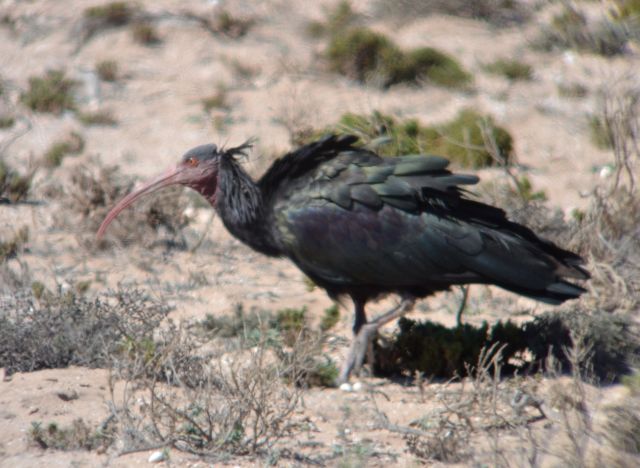
The national park owes its designation in part to the need to protect the Ibis, around which there is constant security against poaching. Eventually Rachid punched the air upon locating a group of more than 30 Bald Ibis grazing near a cliff top to one side of the road. My guide then left to buy cigarettes in the nearby village, warning me to approach very gradually and not get too close. There was no need because these birds soon began to walk towards me, grazing all the while and crossing within 50 metres. When Rachid returned at the same time as one of the security men we all three stood and delighted at being in such close proximity to these rare treasures. This (pictured below) is what is known as a result.

Bald Ibis

Bald Ibis

Take that one to heart!

Take that one to heart!

Who's a pretty boy then?

Who’s a pretty boy then?

We now turned our attention to finding Marbled Duck and Black-crowned Tchagara, searching several locations along the Oued Massa that here forms the most northerly wadi (oasis) of Morocco’s Sahara region. Driving around it really struck me how though this is a conservation area of huge biological importance, life in its villages and particularly small scale agriculture goes on as it always has done and in harmony with nature.

Life locally goes on as normal

Life locally goes on as normal

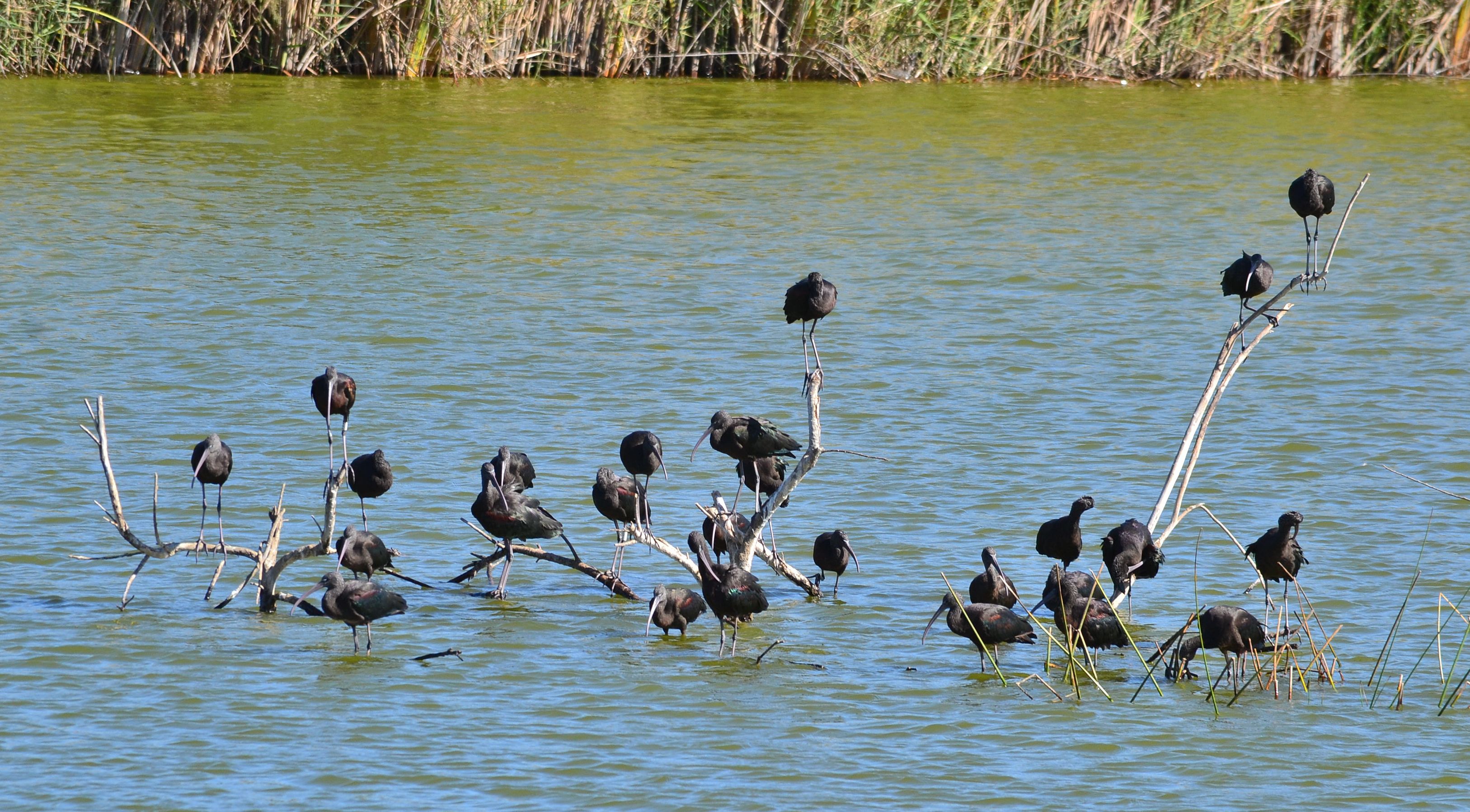
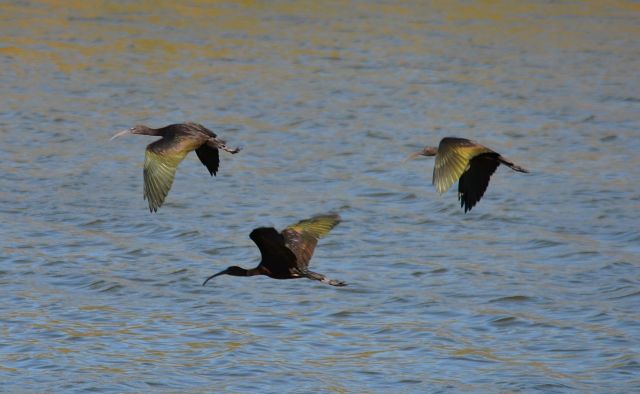
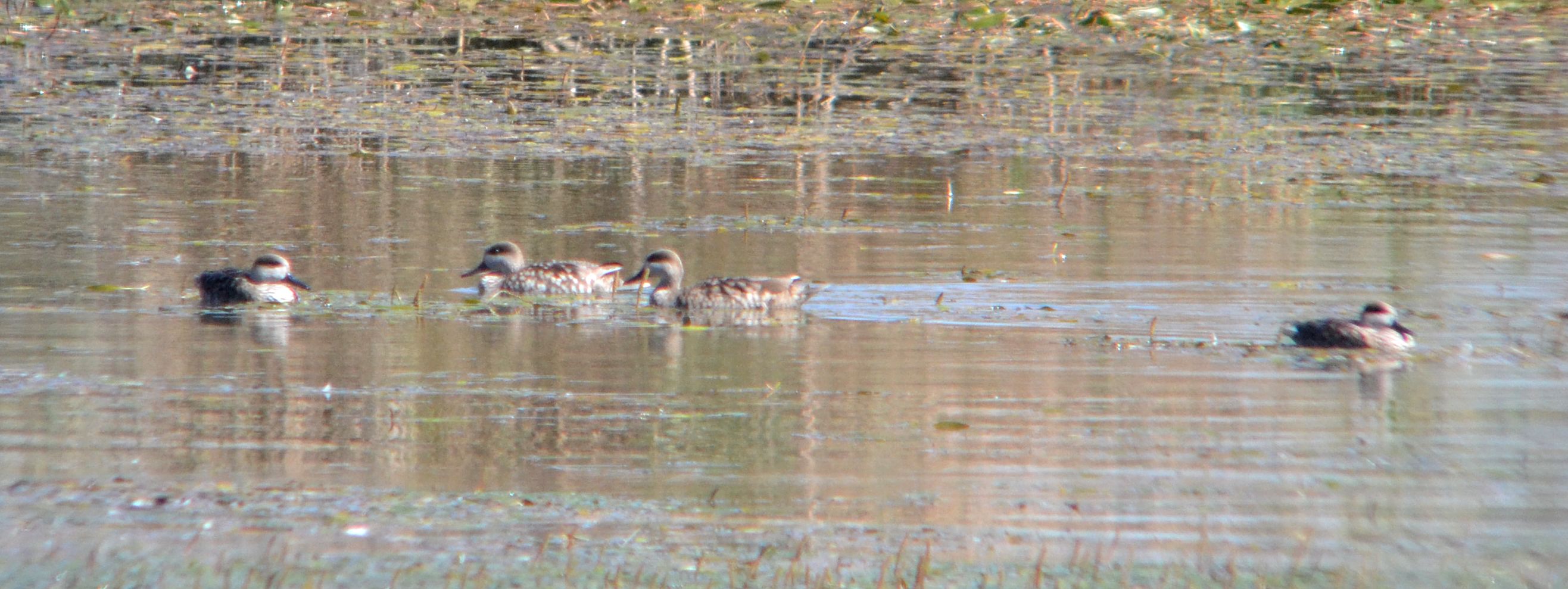
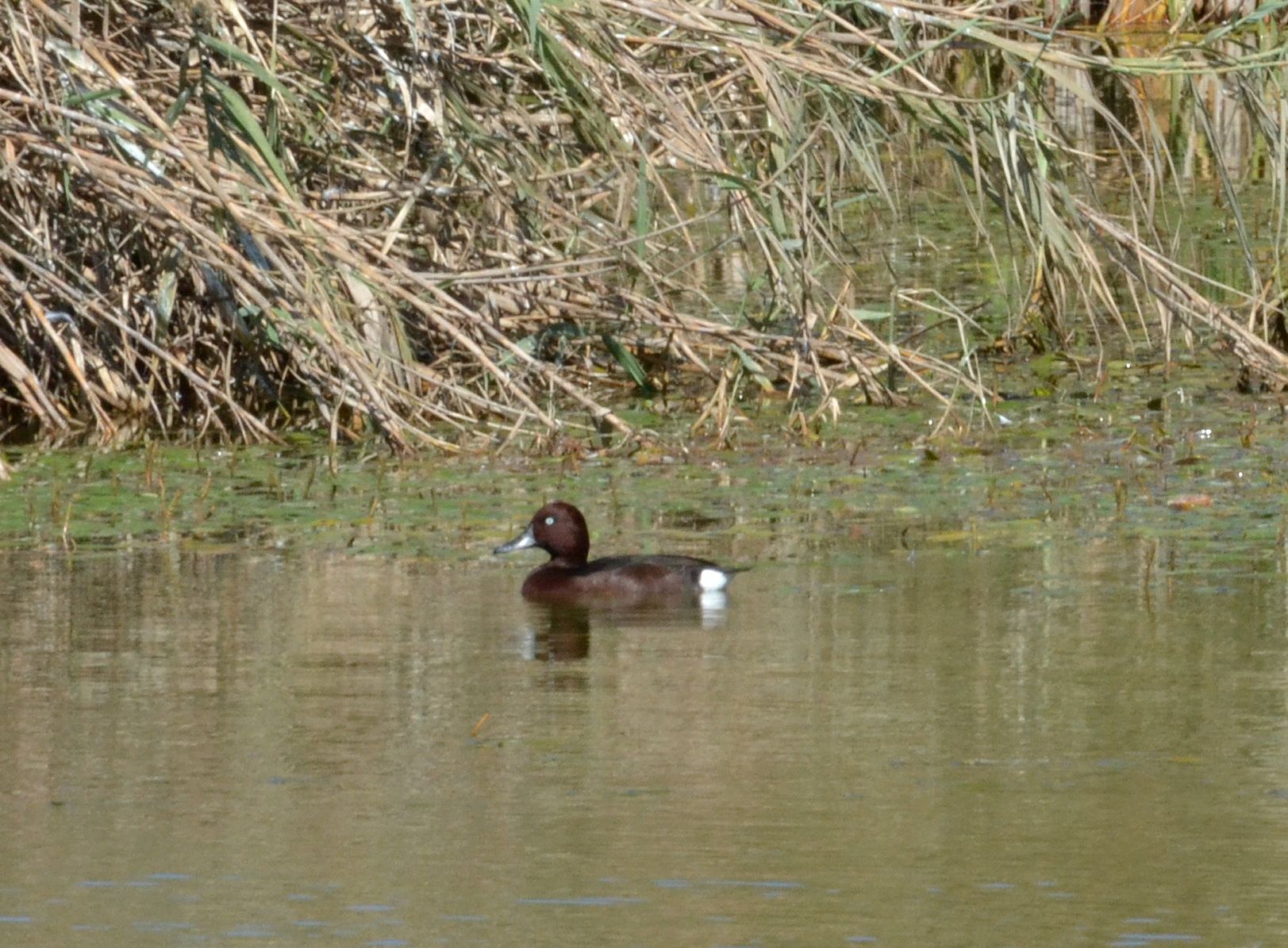
In one village Brown-throated Martin were active, a winter breeding hirundine found only in Morocco in this part of the world. And that was the 10th lifer for this trip. The Marbled Duck were as Rachid put it taking a holiday but we did find a pair of Ferruginous Duck, a rarity for Morocco; and most surprisingly of all a lone Barnacle Goose. The wardens didn’t seem to have an idea of plasticity, so I took their word this was only the second ever sighting in the park. Glossy Ibis were present in good numbers and artistic arrangements.

Glossy Ibis grand central

Glossy Ibis grand central

More Glossy Ibis

More Glossy Ibis

What's a nice goose like you doing in a place like this?

What’s a nice goose like you doing in a place like this?

The conclusion grew in me today that birding alone in Morocco would be difficult, due to the lack of a developed nature reserve or hiking infrastructure, and the largeness of the sites I have visited. There is always the question of just where to start looking and getting into seemingly birdy places invariably means going where the presence of a foreigner arouses curiosity. Far better to be with a Moroccan with a smart phone who knows what’s up every farm track and is acquanted with the locals. So I decided against any day trips further afield for fear of getting hot and bothered going a long way and not seeing very much.
This loss of confidence grew when returning to Agadir on Wednesday I became completely lost in the manic rush hour traffic and took a long time to find my hotel. I commented that driving during the day here was fun in its way, but now it was just plain scary. How I have yet to see or be involved in a road traffic accident I do not know. It was only today at the third attempt that I worked out the right way back to Agadir’s tourist district and I am also finding the heat here quite exhausting by late afternoon.

N1 bridge over the Oued Massa

N1 bridge over the Oued Massa

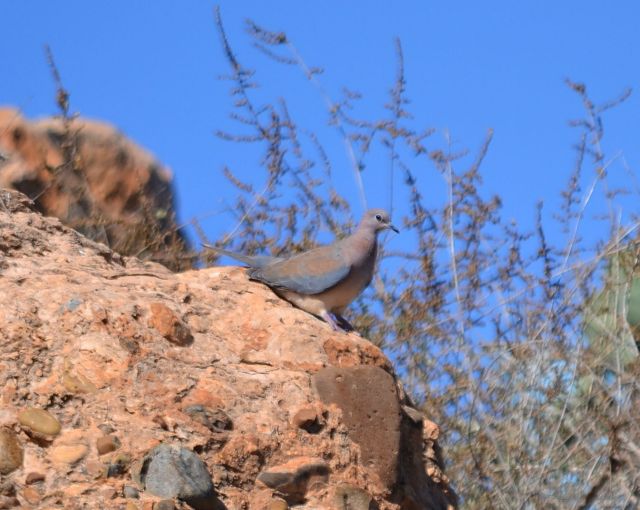
Yesterday (Friday) I visited a site furher south where the N1 crosses the Oued Massa (pictured above). The bridge here is currently a construction site but parking was possible on land to the east of the road. This overlooks a small dam behind which lies a rather birdy wadi. There were lots of Laughing Dove here, very beautiful doves that I am pleased to have caught up with on this trip. Also more Brown-throated Martin, as well as Barn Swallow, Spanish Sparrow and assorted small passerines. I also came across new dragonfly species, and saw a Plain Tiger butterfly flop over a wall and out of sight. And just who is this handsome boy or girl (pictured below), the biggest spider I’ve ever seen.

Pretty serious spiders out here!

Pretty serious spiders out here!

Then I heard a Black-crowned Tchagara calling, that I recognised from Rachid mimicking one. I traced it to some palm trees but then a boy came walking along and when the bird called again it was from nearer his village. The boy then seemed to be just behind me wherever I went, further demonstrating it is difficult to be alone in the wild for long in this country.

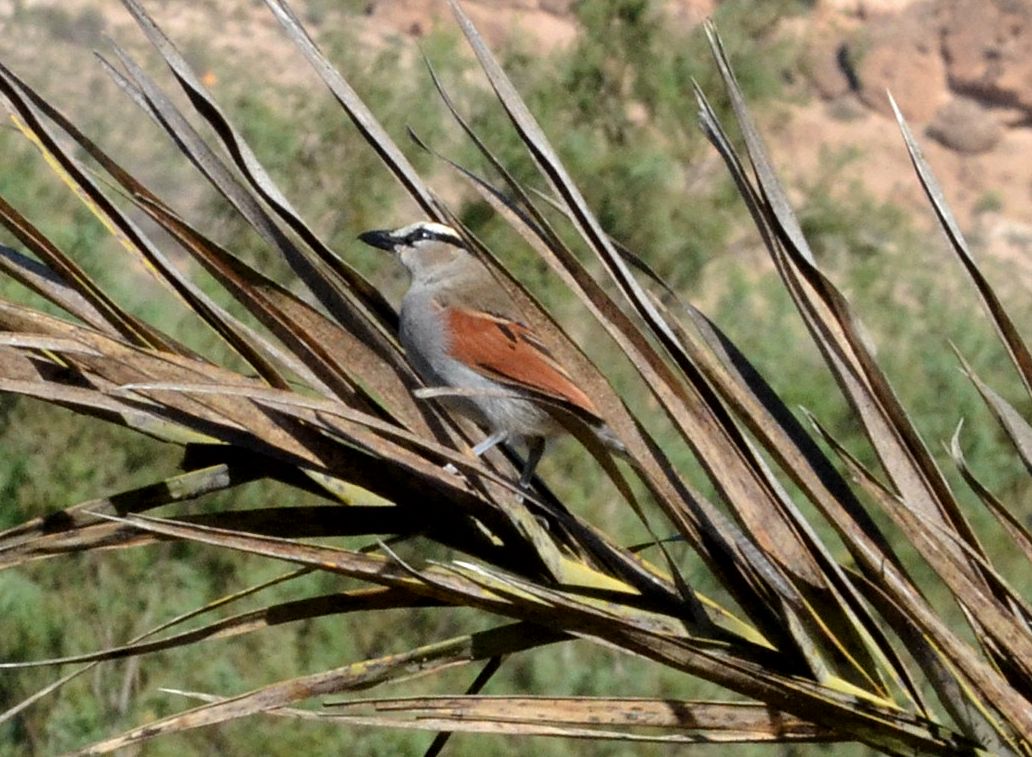
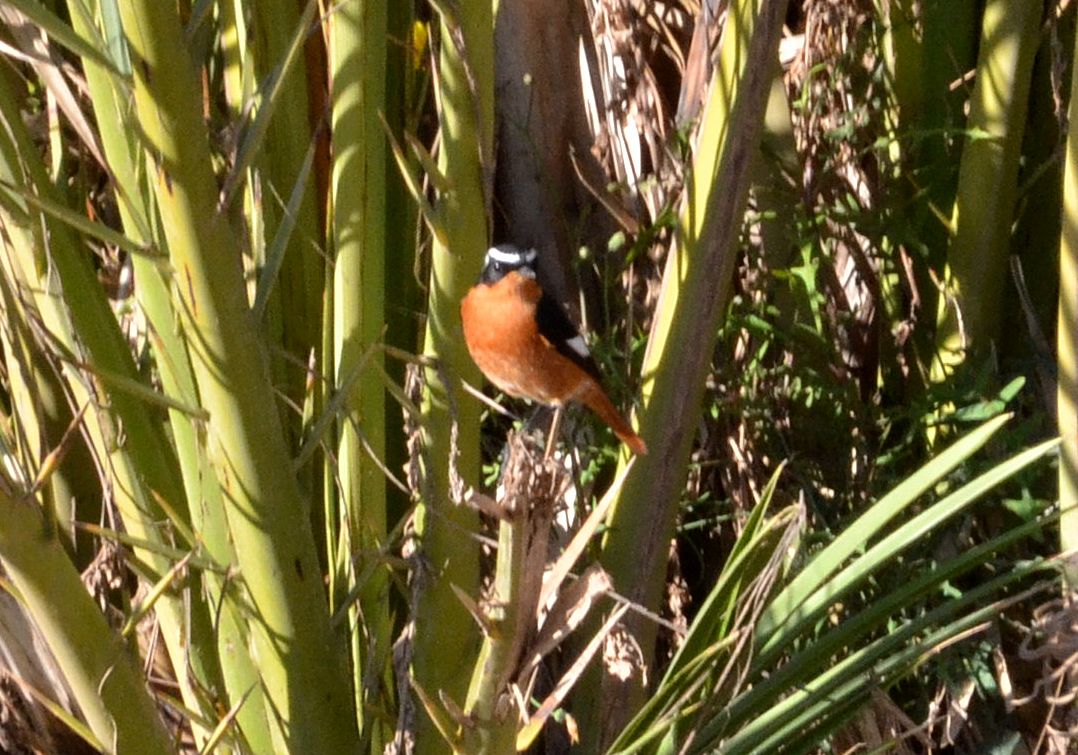
This morning (Saturday) I met Rachid again to resume our search for the birds missed first time around. The truth of my conviction that birding here is difficult alone was proven by ticking three more lifers off the trip wish list. At our first stop, while searching for Marbled Duck I picked up a Falcon that was clearly not a Kestrel. Rachid confirmed it was a Lanner. Then he grasped my arm and pointed to a nearby palm tree in which was perched a rather dashing Black-crowned Tchagara, a north-west African resident.

Black-crowned Tchagara

Black-crowned Tchagara

It now remained to find Marbled Duck. We revisited likely sites from Wednesday eventually finding four, and that was the 13th trip lifer. The Fudge Duck were still present and two more Black-crowned Tchagara put in an appearance while we were watching the wildfowl. Mission having been accomplished I opted for an afternoon of rest back at the hotel, but not before engaging Rachid again to take me to the nearest area of desert on my last day, Monday.

Marbled Ducks

Marbled Ducks

Fudge Duck

Fudge Duck

... and another Tchagara

… and another Tchagara

Rachid Baitar grew up in the village in which the Souss Massa National Park centre is located. He also organises and leads bird tours in other areas of Morocco. I get on well with him, am struck by his love of wildlife and concern for conservation, and find him an excellent guide. His contact details are – Tel: +212 671 184 137. Email: rachirard09@hotmail.fr

Royal and Lesser Crested Terns and more at Souss estuary, Agadir – 3rd Nov

This has been another successful day with four more lifers gained, taking the trip total to nine out of a potential 18 or so in the Atlantic coast region. I was a little concerned for my state of health yesterday evening but a huge night’s sleep has seen off my sense of exhaustion, and anti-inflammatory cream bought from a local pharmacy has kept my jarred shoulder in order.

The mouth of the Oued Souss lies just to the south of Agadir and my dated trip reference suggested it is hard by the royal summer palace here. So I took the first right turn past the palace that led to what looked like the king’s tradesman’s entrance. Thinking better of parking there I took another option and ended up in a run down housing district. Quite a juxtaposition that! There was no sign of an access track to the estuary so I went back to the palace car park where something serious was clearly going on .

Despite a significant security presence nobody challenged me when I parked, so conscious of carrying a lot of optics close to a heavily guarded secure compound I walked off into a dune area between there and a golf course. While searching for a way down to the estuary a first Moussier’s Redstart for the trip popped out of a hedge in front of me. This iconic Moroccan passerine was encountered in several more locations over the ensuing days.

Moussier's Redstart

Moussier’s Redstart

Eventually I reached the estuary and an empty parking area at the end of what was clearly the access road I should have come in by. Scanning around there were numbers of large water birds – Greater Flamingo, Grey Heron, Little Egret, Cormorant and Spoonbill – and an array of common waders that I didn’t study too closely. Then an English speaking camel walker appeared. On discovering I was English he said “lovely jubbly” as other Moroccans have this week, then he asked me to show his customers the birds. I pointed out the Flamingos assuming they would be a popular choice, then wandered off along a way marked trail.

The trouble was all the bird life was into the sun, but the highlight came with a fly past by a Royal Tern, first one way then the other. This large, orange-billed Tern is primarily a north American species but also breeds in Africa from Mauritania down to Guinea (per Collins). Wanderers further north are said to be a scarcity in Morocco so this felt like a good sighting.

Laughing Dove

Laughing Dove

On the return walk through the dunes I disturbed both Barbary Patridge and Laughing Dove, the latter being a lifer missed in Fuerteventura and the former one from that trip about which all doubt needed to be removed. This is the only Partridge in Morocco so I ticked it on that basis. I also PI’d some highly attractive African Blue Tit here, a species experienced only as a fly past in Fuerteventura. So that was a few loose ends tied up from this year’s other trip.

Back at the car park security finally caught up with me. The police inspected every image on my camera that fortunately they didn’t confiscate. Shouldn’t happen to a birder after all, and I have to say they were very decent about things. I left with a warning and went to find the right access road further south along the N1 that was signposted Embouchure du Souss. Then I returned to my hotel for lunch.

Blue-cheeked Moroccan Magpie

Blue-cheeked Moroccan Magpie

Driving the main N1 thoroughfare in Agadir is a fun experience in a dodgem circuit sort of way. Cars all jostle for position with each other and every kind of dated motor bike imaginable. Hesitation merely creates space for others to zip through on either side but no-one seems to hit one another. And as soon as traffic lights change, that can be difficult to spot if other vehicles haven’t stopped already, those a few cars back all start hooting. I was a little disappointed that donkey carts and camels weren’t also in the mix.

I returned to the Souss estuary just before dusk hoping to scope the far shore in a better light. But the sun was now very low in the sky making scanning quite difficult. The parking area had also filled up with Moroccan general public doing all sorts of unbirdy things. But I walked a short distance and sifted through what gulls and other birds I could. And there amongst the loafing Sandwich Terns was a similar sized and orange-billed Lesser Crested Tern. This is a Libyan breeder that winters on the north-west African coast (also per Collins). I suddenly felt an immense sense of satisfaction at having gained both the Tern trip targets at this location today. I was also relieved as it didn’t strike me as an especially good site to revisit.

Distant Lesser Crested Tern

Distant Lesser Crested Tern

While de-tooling back at my car a greeting rang out: “Hey England, how are you?” The camel train was returning as flocks of Cattle Egret flew in to roost overhead. “Lovely jubbly!” I replied.

Bald Ibis nailed at Tamri, though distantly – 2nd Nov

Bald Ibis is described as one of the world’s rarest birds and for that reason is also one of the most sought after species in Morocco, a must see. There are two locations for it on either side of Agadir. The first is the Souss-Massa national park to the south where they range over a wide area that is best accessed in a 4×4. The second is 60 km to the north around a small town Tamri at the western edge of the Atlas mountains on the N1 coast road. I had decided before coming here that the latter would probably be the easier option.

I have tried my best to find a Suzuki Jimny or similar vehicle for this trip, but have ended up with a rather battered and unvaleted Moroccan Dacia saloon. I prefer to deal with small local hire companies recommended by the hotel since they usually include all insurances in the day rate, are not too fussy about where I take the car, and do not require large returnable excesses up front. Today’s deal was typical at about £28 a day and took most of the morning to conclude, as things do in Morocco. But no matter since my guide book says Bald Ibis are best looked for at Tamri around the middle of the day.

Oued Tinkert estuary at Tamri

Oued Tinkert estuary at Tamri

My first experience of driving in Morocco seemed longer than the stated 60 km. Just before Tamri the road turns sharply inland along the Oued Tinkert estuary. On arriving in the town just after 1pm a souk (market) was in progress, so I saw some authentic Moroccan sights. But the question as so often abroad was where to start looking for the Ibis. I headed back to the river mouth on the coast that is said to be a reliable spot for them. Then on setting out off piste on foot a mishap befell me. Crossing some wet sandy soil I completely lost my footing and was unable to correct it, landing flat on my backside in the mud and jarring my right shoulder nastily attempting to break my fall. Returning across the same unavoidable ground and trying to be more careful, exactly the same thing happened again. The Dacia was about to become a little more unvaleted than previously.

This was only my second accident in four years of solo adventuring in wild places, but being already exhausted from my exertions on day one I felt quite shook up. I decided to stay with the car and scan over the estuary from the roadside, finding loitering groups of Audouin’s Gull and Sandwich Tern, and an Osprey. Eventually I was approached by a young Moroccan from a nearby village who said he knew where to find the Ibis. I had been led to expect this and so engaged him as a guide.

As we spoke my new companion pointed out a Bald Ibis flying in off the sea towards the area where he said we should look. We then drove around to the far side of the estuary and into an area of sand and scrub sloping down towards the beach. My guide found more groups of birds flying offshore saying they were Ibis though I couldn’t be sure he was always right. But eventually there was a second nailed-on sighting, also flying in off the sea. Now I could return home without fearing an ear bashing from Ewan for dipping this Moroccan must see, and the Souss-Massa was still to come.

Tamri and my local guide

Tamri, the Dacia and my local guide

Agadir Kasbah, Morocco – 1st Nov

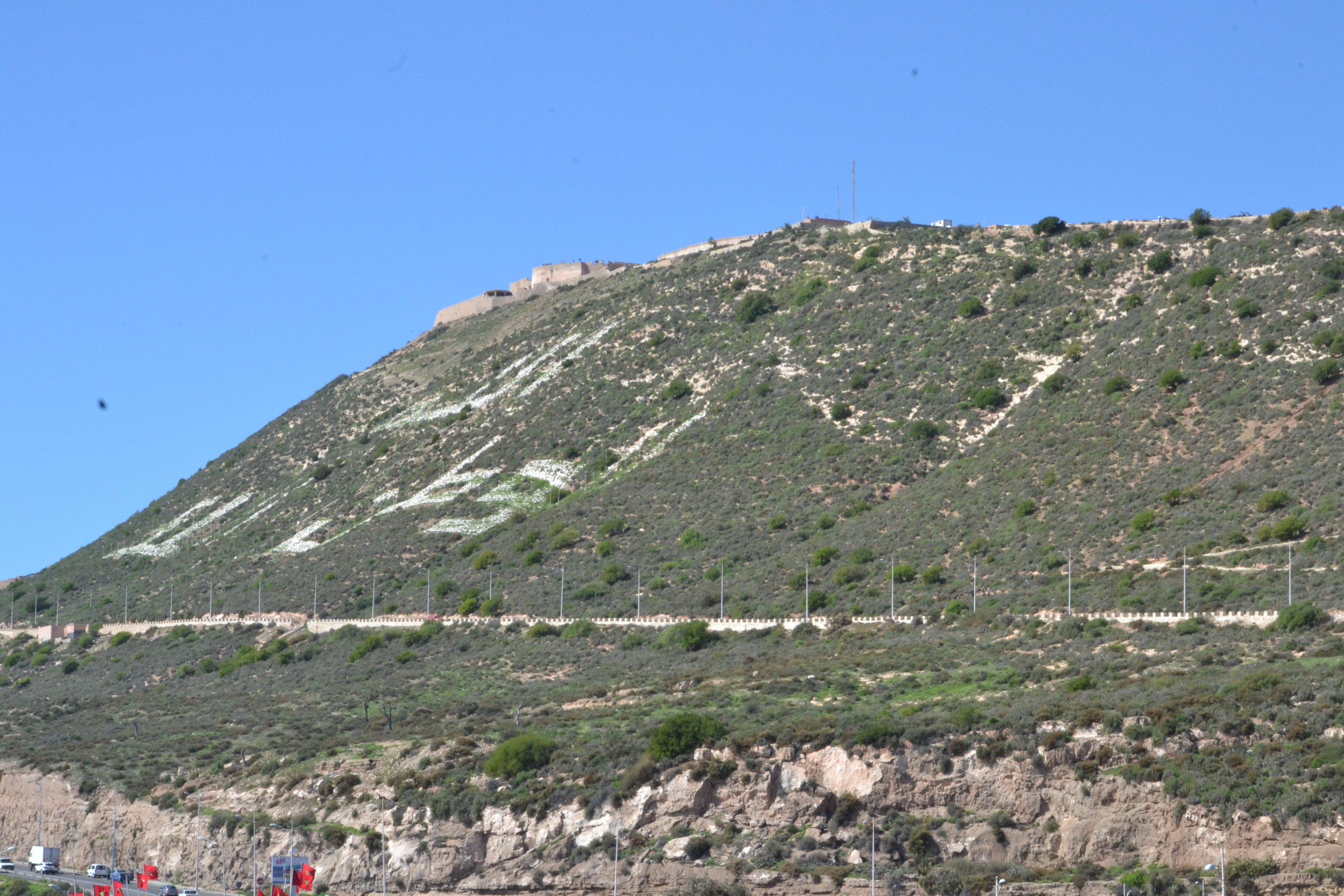
As I like to do with trips abroad day one stayed a walking day. The obvious focal point was the castle or kasbah on a high hill just to the north of Agadir’s tourist district, my base. Panoramic views over the city may be enjoyed from the top, and I had seen an Ornitholidays schedule that said good birds could be found there.

Agadir Kasbah - quite a climb

Agadir Kasbah – quite a climb

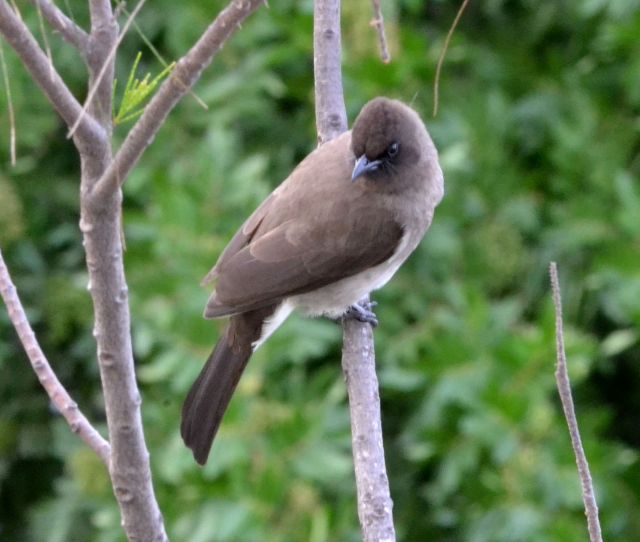
As dawn broke at 6:30am a definitely new (to me) bird sound was issuing from the garden trees below my hotel window. These loud songsters revealed themselves to be Common Bulbul, the first trip lifer. Almost thrush-sized, long-tailed and of rather plain appearence, it was clear by the afternoon this is a common resident all over the tourist district. They are noisy, flighty and to my mind rather chaotic in their behaviour, though also quite charming.

Common Bulbul from my balcony

Common Bulbul from my balcony

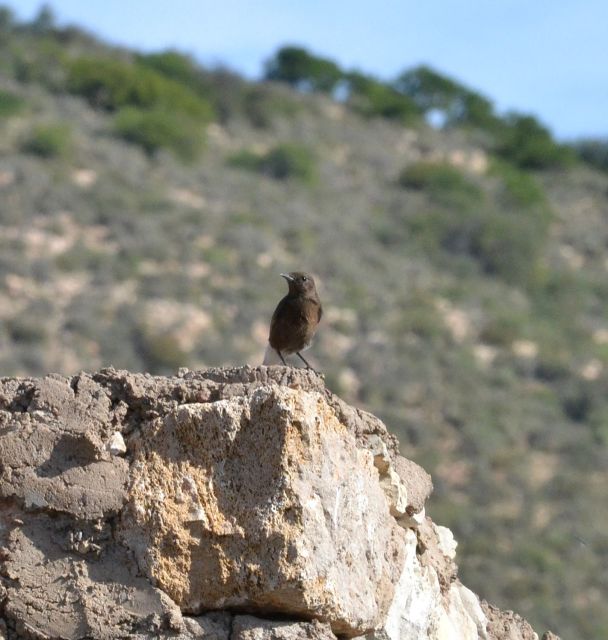
Below the kasbah hill is a complex road junction with two oval shaped islands containing structures that must be rainwater reservoirs after the wet season. I went to investigate some dark looking birds in one of them, finding them to be Black Wheatear the day’s second lifer. This was a welcome find as this species eluded me on all my trips to the Iberian peninsula. Then I began the zig-zag ascent of the rocky and scrubby slopes of what is a very imposing hill.

Black Wheatear (fem)

Black Wheatear (fem)

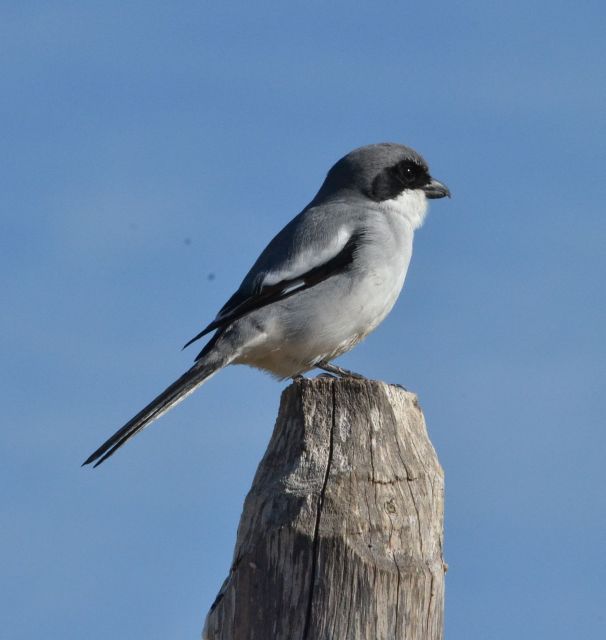
The next bird of note was a Southern Grey Shrike that on Africa’s north-west coast are of a larger sub-species algeriensis than those found in the Canary Islands. Near the top of the hill I heard another new and piping song and picked up three Fulvous Babbler buzzing about the slope just below the kasbah itself. These are very attractive birds of similar size to the Bulbuls and also long-tailed. “Were all my trip targets going to be this easy to find?” I thought at this point. Two Northern Wheatear were also active here,

Southern Grey Shrike

Southern Grey Shrike

Once at the top the kasbah itself had the air of a rather tired tourist trap, with a few weary camel owners, their disinterested beasts and irritating “fossil” sellers trying to eke a living out of the low season. Inside the ruins I found the trip’s first House Bunting, a common resident in Agadir. So that was four lifers on day one, taking my life list past the 400 land mark.

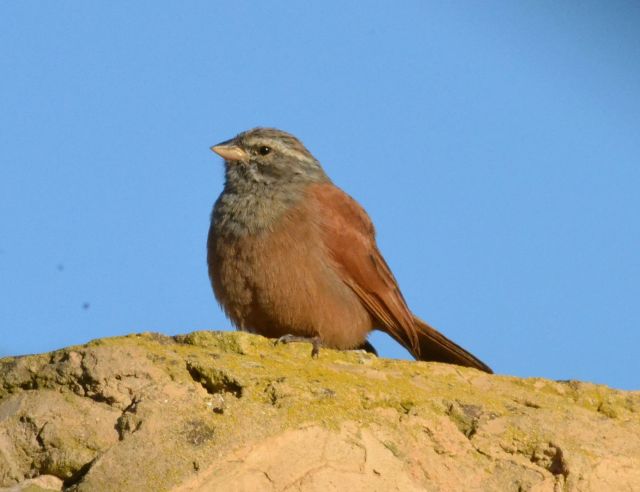
House Bunting

House Bunting

A Moroccan who had stopped me on the walk out said there was nothing to see at the kasbah and I should go to the market. He clearly wasn’t into wildlife because if you are there is always something to see and I knew exactly where I was going and why.

I’m not expecting much in the way of butterflies though. The most frequent species today was predictably Greenish Black-tip, a common winter species across north Africa. I also crossed paths with a few darter dragonflies and two larger species that I couldn’t PI. Grasshoppers were everywhere, escaping my footfall in their dozens in places. Walking back downhill again after midday, things had become much less birdy, though the Babblers put in another fly-past suggesting they could be a resident family group at the site.

The Kasbah from Agadir beach

The Kasbah from Agadir beach

That Rough-legged Buzzard time again – 27th Oct

Being free of work commitments this week I was pleased to accept an invite from Ewan and Clackers to go with them to see one of this autumn’s crop of Rough-legged Buzzard. Our bird was at Holland Haven Country Park just east of Clacton-on-Sea in Essex. So at just after 6am I was collected at home by the fabled black Audi and off we sped.

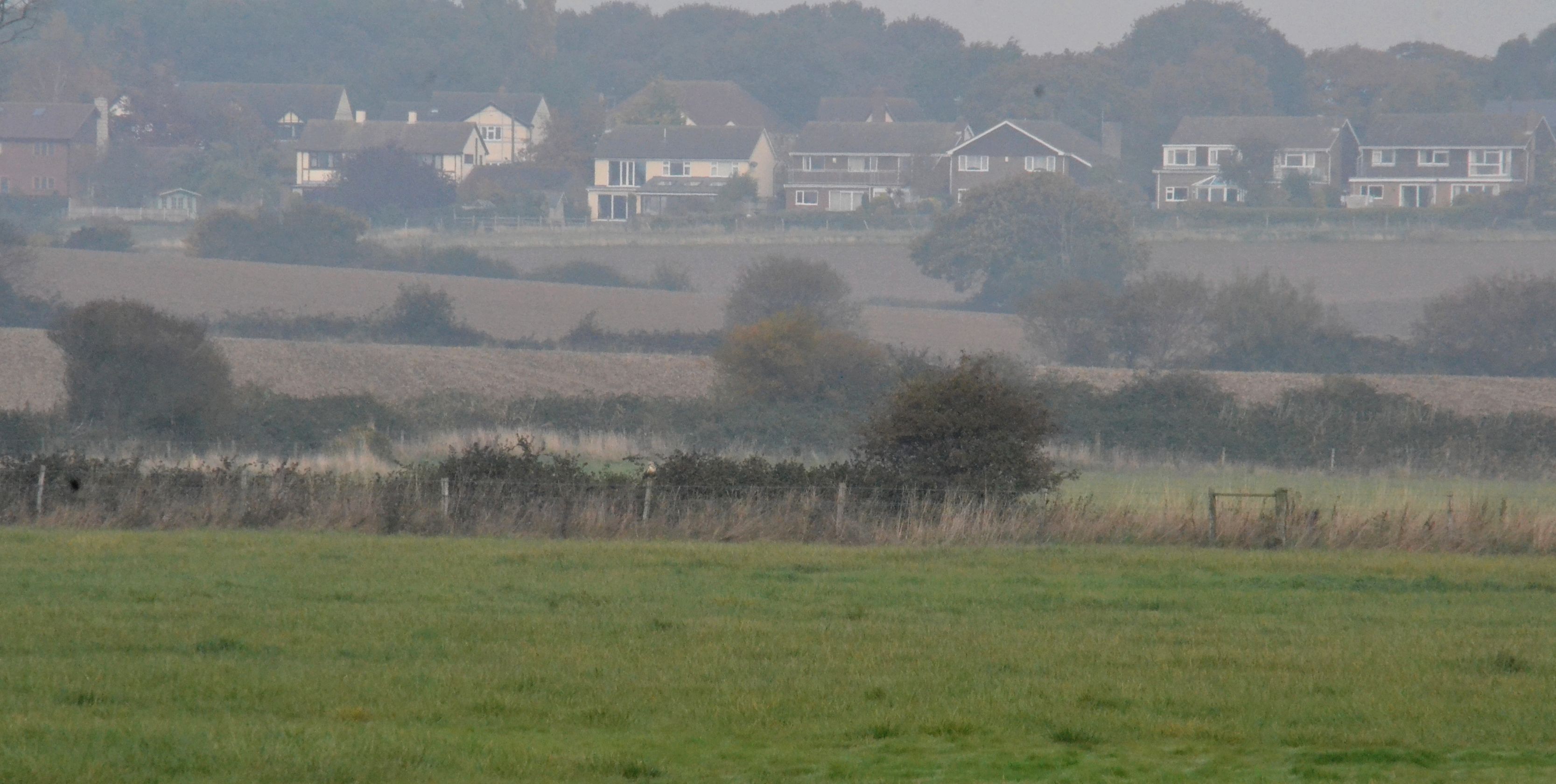
On arrival around three hours later we headed for a bird hide that is actually two shipping containers stacked on top of one another, to scan an area of coastal grazing marsh beyond which is a golf course. The Clackmeister quickly located the Rough-leg, an attractively pale and creamy-toned juvenile perched on a fence post between those two areas. Ewan at once rushed off to get closer but I lingered to scope the bird adequately at that range. It was already clear that we were in for much more satisfying views of this species than my last encounter at Braughing, Herts in November 2014.

Holland Haven: the RLB is perched on the third fence post from the left

Holland Haven Country Park: the RLB is perched on the third fence post from the left

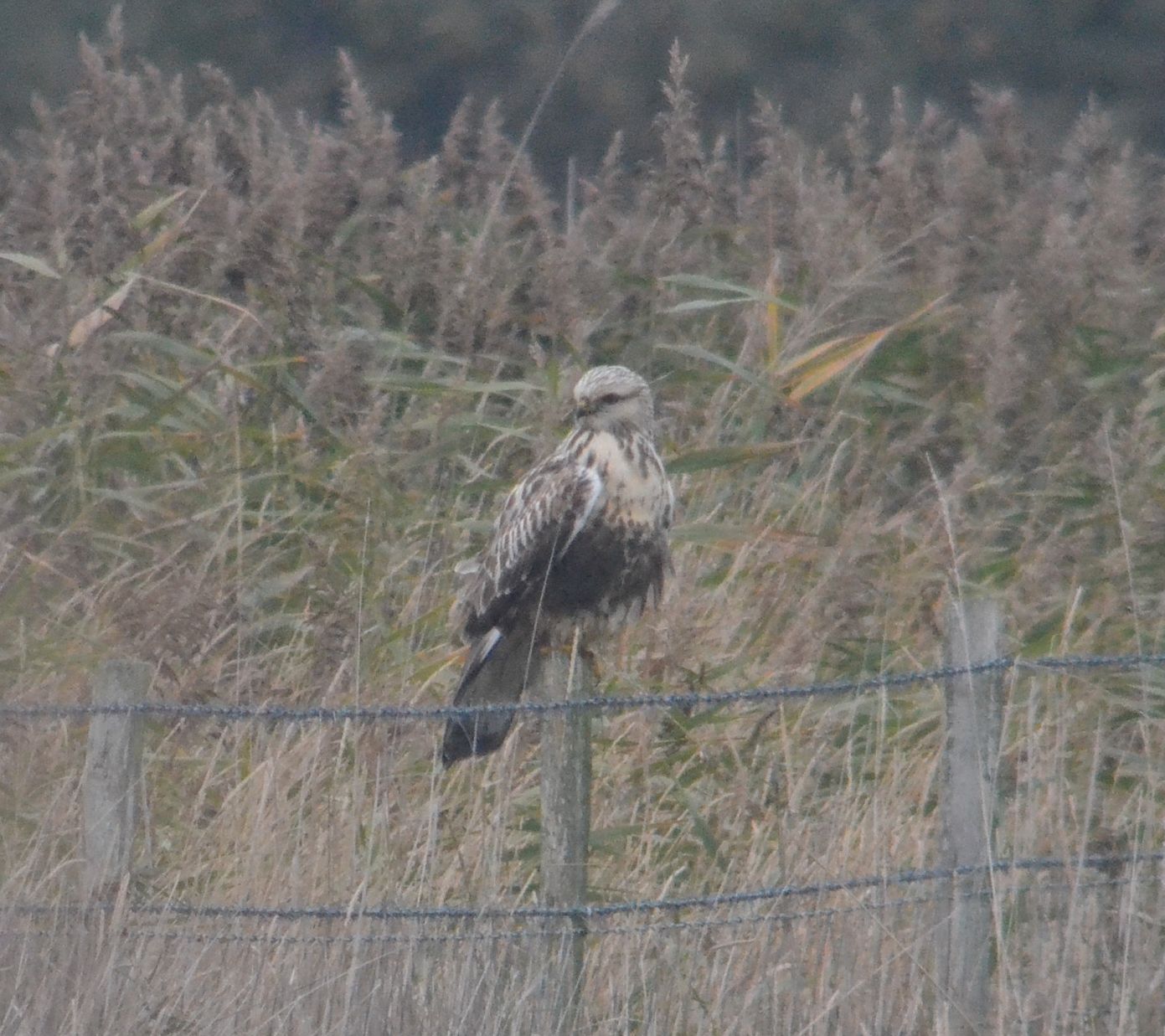
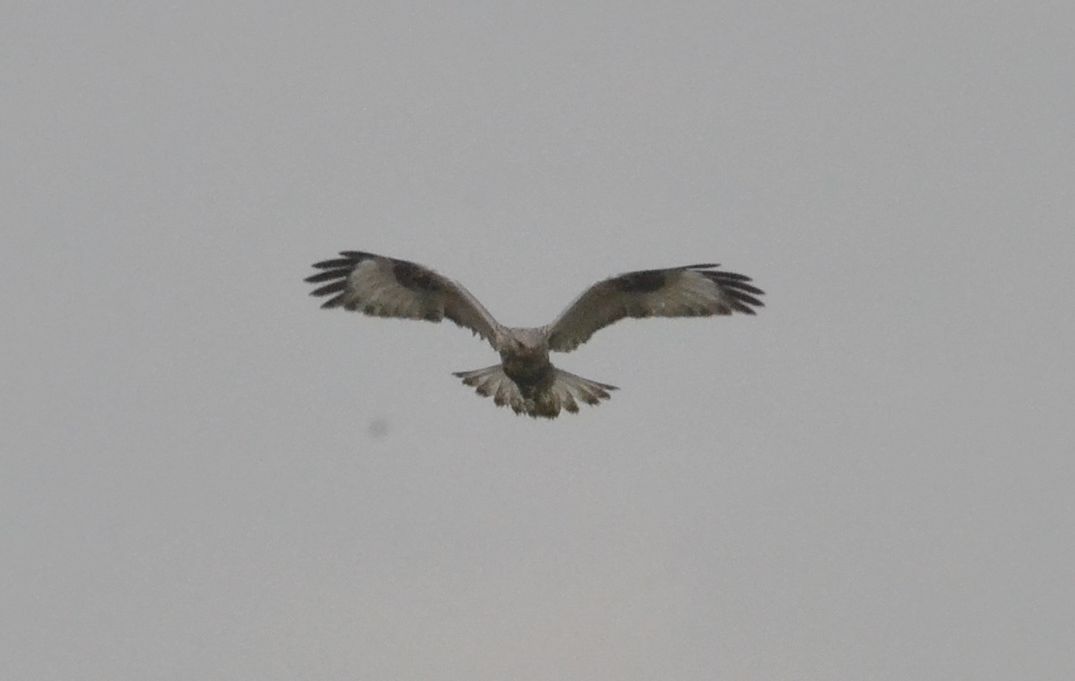
Eventually Clackers and I walked to join Ewan and several other birders and photographers who were watching this raptor and hoping it would fly across the marsh towards them. We learned that it moves around this site a lot offering close views at times. For the next couple of hours the Rough-legged Buzzard tantalised its audience by moving right a few or several posts at a time along a fence to the rear of the grazing marsh, always watching the ground before it intently and turning its head on a 180 degree axis like an owl. At one point it swooped onto and caught a large looking vole, then eventually it flew all the way left again to start anew. My digiscoped images (below) show how this bird was seen at that range.

rough-legged buzzard.1501 holland haven

At this point I left the group to walk a little closer, then the RLB seemingly tired of its ground searching and took to the air, flying towards the sea. I saw all the other birders follow at once then it hovered, as RLBs do right above two photographers who were stationed on the sea wall. “Some jammy sods have all the luck,” I thought, but when I got over there the RLB flew towards me and hovered again quite close. I had not witnessed this diagnostic behaviour before and the day’s experience was improving all the time. An excited jogger asked if the bird was a Buzzard or a Kestrel and was clearly impressed.

Hovering Rough-legged Buzzard

Hovering Rough-legged Buzzard

Ewan and I then walked back towards the container hide to which Clackers had already gone, locating the RLB again at closer range. First one then two Short-eared Owl suddenly appeared at this point quartering the marsh. Earlier a fly through ring-tailed Hen Harrier had enhanced the morning’s entertainment, and I also gained an unusually close view of a Woodcock upon first walking away from the hide. Purple Sandpiper were being reported on the beach but when we went to look the tide was in.

To quote the Helm Guide To Bird Identification, a typical view of RLB is of a large, pale buzzard hovering over coastal fields and marshes, with ponderous wing beats or hanging motionless, the tail twisted and turned like a Kite’s. The species is slightly larger, longer-winged and sturdier than a Common Buzzard; pale headed with a clear cut black and white tail and black belly patches. All these diagnostics were plain to see today and like the Lincs Red-footed Falcon that I observed at length in August, this Rough-legged Buzzard offered excellent value.

Semipalmated Sandpiper at Slimbridge WWT, Glos – 3rd Oct

This was my second record of another vagrant north-American wader. Today’s bird had been a high-tide visitor at the Wildfowl and Wetland Trust’s Slimbridge reserve for most of the past week. Semipalmated Sandpiper resembles Little Stint but is a shade larger with a slightly heavier bill and subtle plumage differences. I had observed one nicely at Keyhaven, Hants in September 2013, a bird that had flown when other Oxonbirders visited the next day.

Saturdays being my only available time for birding with present work commitments, I am reasoning that anything worth seeing is worth going for. On checking RBA at 7am my eye was caught by two rarities in north Norfolk: Blyth’s Pipit, a lifer; and Marsh Sandpiper, a potential British list addition. I fired off a couple of texts seeking company then eventually made it as far as the car inside which my satnav had been seeking a valid signal. 160 miles! No way: too far, too risky and as I was unlikely to get to Norfolk much before 1pm, too potentially hectic.

2013 Semipalmated Sandpiper at Keyhaven

2013 Semipalmated Sandpiper at Keyhaven

I resigned myself to a day spent locally but on reaching the car park at Otmoor received a reply from Andy. Both Norfolk birds were no longer there but he was tempted by the Slimbridge Semipal, having missed that Keyhaven bird. Here was an acceptable day out for both of us so we met and headed west, arriving on site shortly before midday.

Slimbridge is of course a zoo, but beyond the captive wildfowl pens, play areas and other visitor facilities lies the Zeiss Hide that overlooks marshes adjoining the Severn estuary. On our arrival this facility was bulging with birders three lines deep, all scanning a distant assemblage of wildfowl and waders amongst which somewhere was concealed the star visitor. My own experience of Slimbridge is that anything reported on RBA is invariably distant, and my distaste for observing birds at that range is well known in the Oxon birding community. This was clearly a bird to let others find for me.

View from the Zeiss Hide ... it's out there somewhere

View from the Zeiss Hide … it’s out there somewhere

Murmured directions were issuing from up and down the hide and I got onto the birds being discussed several times. But it was plain there was no true consensus as to which of many small waders the Semipal was, that question being confused by the presence of an adult and a juvenile Little Stint. Numbers inside the hide thinned nicely after quite a few people ticked what some who remained agreed had been a Dunlin moving left. Then the bird now thought to be the Semipal went out of view, prompting a frustrating wait. Things had been much easier than this at Keyhaven two years ago.

Andy muttered how this was a typical Slimbridge experience: distant bird, disagreement over ID and that he had sworn never to come here again after we had both dipped on an even more distant Buff-breasted Sandpiper a couple of years ago. If looks could kill from the reserve warden who was standing nearby, I would have had to drive home myself in my companion’s car! I also agreed entirely with his sentiments.

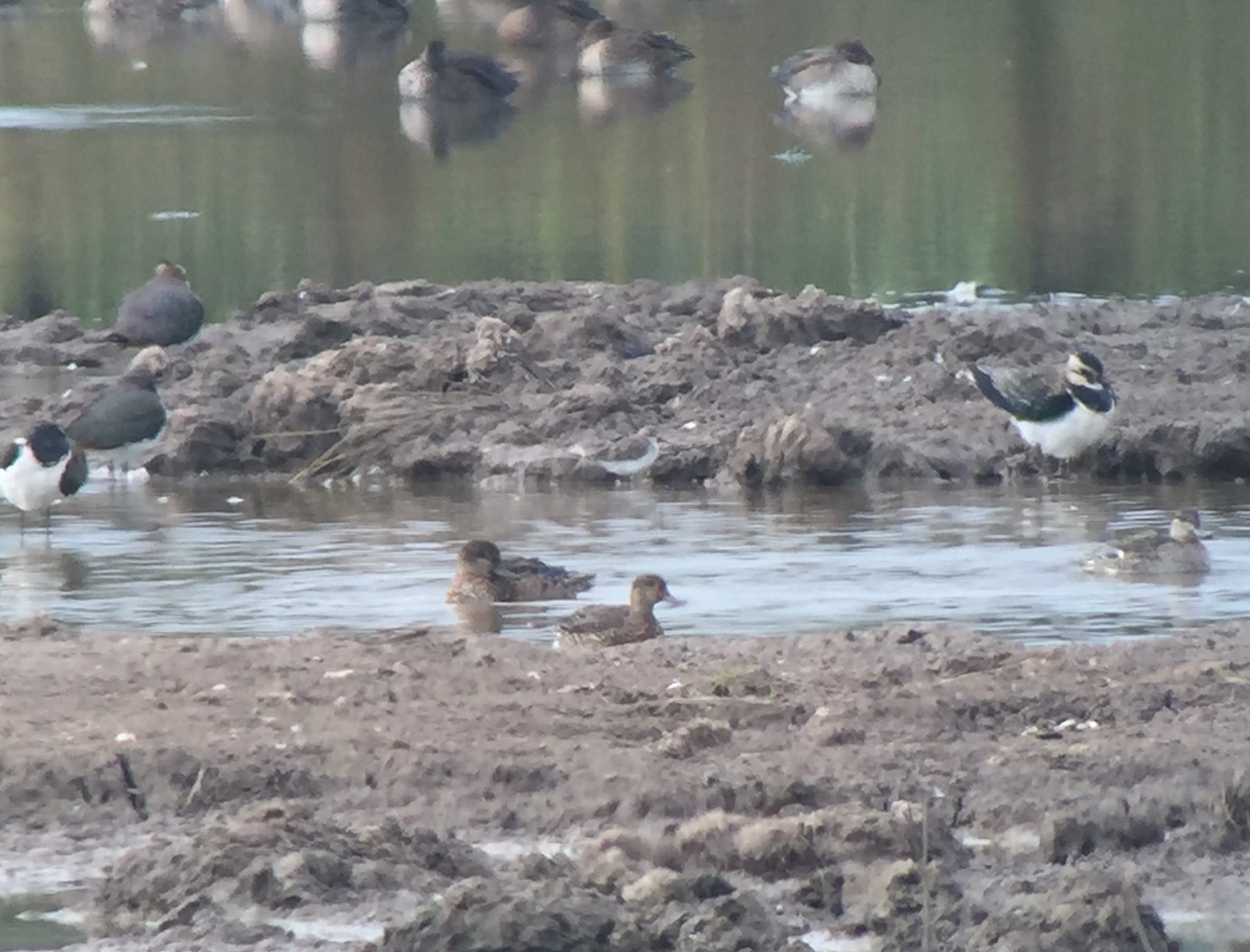
Slimbridge Semipalmated Sandpiper (centre) behind Teal and between Lapwings c Andrew Last

Slimbridge Semipalmated Sandpiper (centre) behind Teal and between Lapwings © Andrew Last

Eventually the Semipalmated Sandpiper emerged into full view, with far fewer birds present to pick it out from and much more manageable numbers of birders in the hide. Andy was now satisfied this was the same bird we had seen earlier before the Dunlin confusion, and that we were indeed observing the Nearctic wader we had come to see. Mission accomplished!

For a close-up image of today’s bird captured by one of the Slimbridge wardens see here

Wilson’s Phalarope at Vange Marsh, Essex – 23rd Sep

With Tuesday’s excitement passed there remained the matter of observing a juvenile Wilson’s Phalarope that was present for it’s third day beside the Thames estuary in Essex. That is another Nearctic wader I have just one old record for at Staines reservoir, Surrey in 1997. On that occasion the bird was on the opposite side of that huge water body to myself and I relied on someone else to point it out. Hence my interest in a better, current era sighting this week.

This largest of the three Phalaropes breeds in north America and there are a few British records annually of young passage birds, mostly in September. Very different in behaviour to its Grey and Red-necked cousins, Wilson’s is less inclined to swim and more at home on land. The Essex bird was reported early on RBA today and I set off mid-morning in clear, sunny weather conditions; such a contrast to the day before.

vange marsh.1501

Vange Marsh RSPB reserve

vange marsh.1502

Upon parking in RBA’s recommended side street just before 1pm, who should I meet but Oxonbirder Terry Sherlock (aka Tezzer), who was on his way home from Dungeness. There the Empidonax Flycatcher had unfortunately not been relocated today, disappointing the many birders who had travelled down hoping to see it. Myself, Terry and another birder walked out together to Vange Marsh (TQ730870), an RSPB reserve created in 2005 that has a large freshwater lagoon with islands, a smaller saltwater lagoon, reed beds and some grassland with patches of scrub.

We joined a small group who were scanning the freshwater lagoon, upon which the Wilson’s Phalarope was fairly easy to pick out due to its distinctive jizz and energetic feeding action. But the distant bird was directly into the sun and hence a mere silhouette observed from the north. After Terry left for home I walked around to where a few birders were watching the Phalarope from the eastern side of the lagoon. From that spot the plumage detail and slim black bill – as illustrated by the outsourced image (below) – were much easier to decipher. Spotted Redshank were also active on the lagoon, always a good wader to find.

Vange Marsh Wilson’s Phalarope (juv) © Steve Gantlett

I then watched the bird for around 30 minutes. Grey and Red-necked Phalaropes, each of which I have observed a few times, typically spin around on the water’s surface whilst feeding. But this third, fresh water species behaves much more like other waders. Wilson’s is said to resemble Wood Sandpiper by the Helm guide to confusion species, but I couldn’t really see that. To me it looked like what it is: a larger, longer-billed Phalarope that wades instead of swimming. I was able to thoroughly acquaint myself with this third north American wader of my autumn today on what was another very worthwhile day out.

Acadian Flycatcher at Dungeness, Kent: a first for Britain – 22nd Sep

National birding is starting to do the business for me again this autumn and yesterday, through a sequence of chance events I found myself present at a rather special occasion. That was, once the ID is confirmed the first ever record of a particular north American passerine at the famous migration land fall site of Dungeness in Kent. So how did this entirely unplanned little adventure come about?

On Monday evening my eye had been caught by reports of a Wilson’s Phalarope in Essex, and I invited Ewan to go with me to see it. But when a wet morning dawned his interest waned in a Nearctic wader he had seen several times before to my once, and I had to coax him back into going. We agreed to set off a little later than originally discussed, then just after 10:30am Ewan arrived at my door in the grip of an adrenalin rush. “Come on, we’re going to Dungeness to see a probable British first!”  He had been tipped off by a friend moments earlier.

Never mind that I had just waited 90 minutes: I was now holding things up and was harried out of my home and into the waiting car, only too willingly of course! Andy had also seen the news at work and fed us information throughout our outward journey. The first winter bird was being described on RBA as an Empidonax Flycatcher species, a group of which all but one would be a first for Great Britain. It had been found on a shingle beach at the eastern edge of Dungeness point. Early photographs (see here) that were already in circulation suggested it was allowing a very close approach and was possibly exhausted.

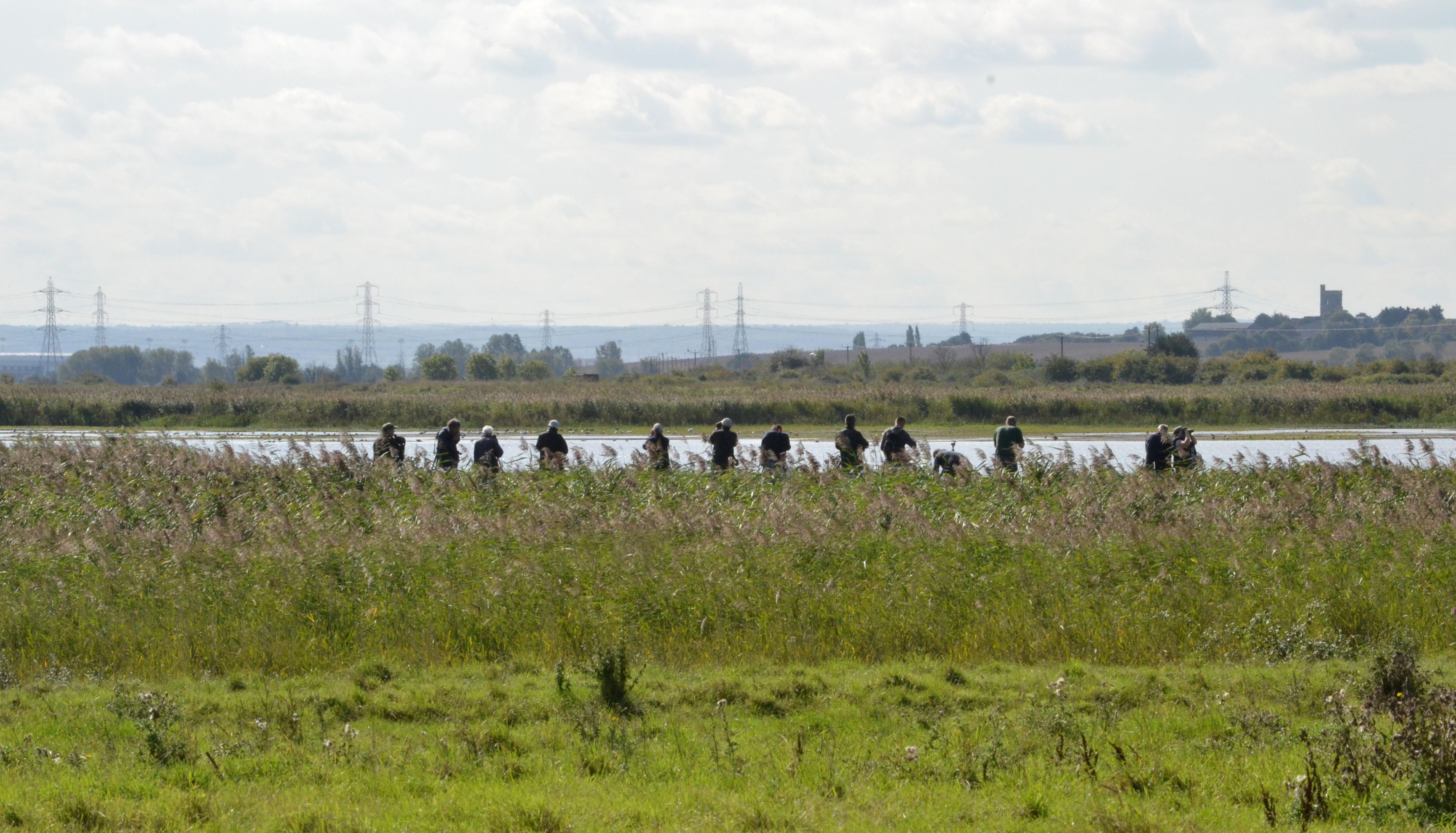
All the way round the M25 and through the Kent motorway system Ewan was like a taught spring, running on adrenalin. After all: “This is what we wait all year for,” as he explained. I had read of his birding exploits on many occasions. Now I was witnessing the legend in action and just trying to take things all in my stride while joking about stopping for a sandwich break. We arrived on site just before 1pm to find a large but not huge group of birders lined up outside a small white bungalow. The star visitor had relocated to the shelter of the garden there.

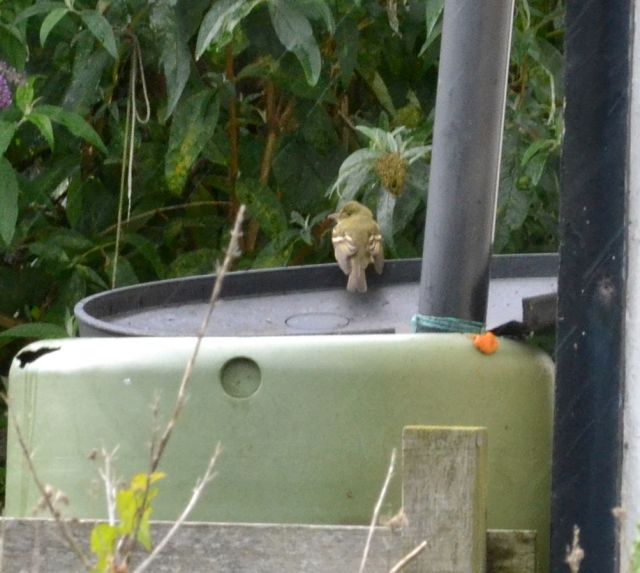
Probable Acadian Flycatcher

Probable Acadian Flycatcher

Within minutes the Flycatcher came onto the top of a water butt to one side of the dwelling (pictured above). Having seen it I went back to the car to retrieve my camera’s battery that in the rush I had left behind. On returning the bird posed twice more in a similar way and those were the best views we had of it. When the weather turned wet this bird kept a lower profile in the garden, but was seen briefly several more times over the next 90 minutes or so. And for many of the birders who arrived after ourselves that was as good as things got. Ewan being a man who enjoys a good drenching as part and partial of a high octane twitch, I tucked into his lee side and kept tolerably less wet than he did, without him really noticing until I told him!

The lady of the house could be seen inside taking photographs of all her surprise guests, then the man arrived home and went inside. Both people were watching the bird themselves at the window, which did little for the chances of it perching on the water butt again, but then they do live there so we couldn’t complain. By 3pm the number of birders outside had possibly tripled, with cars parked along both sides of the access road for some way back. Realising we were unlikely to get better views than earlier, and sensing a possible bun fight as the crowd swelled further, Ewan and I decided to leave. It had been quite a special outing. For a superior, big lens photograph of this bird in the garden see here.

“Dear, there’s a lot of people standing outside the house with telescopes and cameras”

The day’s final report on RBA said that at 7pm the Flycatcher species flew to scrub 250 yards south-west of the garden and was lost to view in fading light. It was thought to be an Acadian Flycatcher, indeed a first for Great Britain and only the second for the western Palearctic following one found dead in Ireland in 1967. The ID was confirmed on 2nd October after DNA analysis of droppings taken from the beach (see here).

Buff-breasted Sandpiper at Ringstead Bay, Dorset – 18th Sep

This is one of the more regular north American waders to make landfall in Great Britain during autumn passage. For me the species also carried “important lifer” status due to the usual sort of reason that I dipped my only previous attempt at it two years ago. On that occasion other Oxonbirders saw the bird briefly and distantly on Slimbridge’s estuary mud before my arrival. I consider that today’s Buff-breasted Sandpiper, in a ploughed field above the Purbeck Heritage Coast, offered better value.

This morning while enjoying a coffee ahead of a planned supermarket visit, I scanned RBA and there it was: news of a previously unseen Nearctic vagrant within my twitching range. Briefly I considered this day’s alternatives of gardening or what has become the onerous task of paying attention to my Oxon year list. It took about five minutes to shake off the lethargy those twin prospects had induced, then I upped and went.

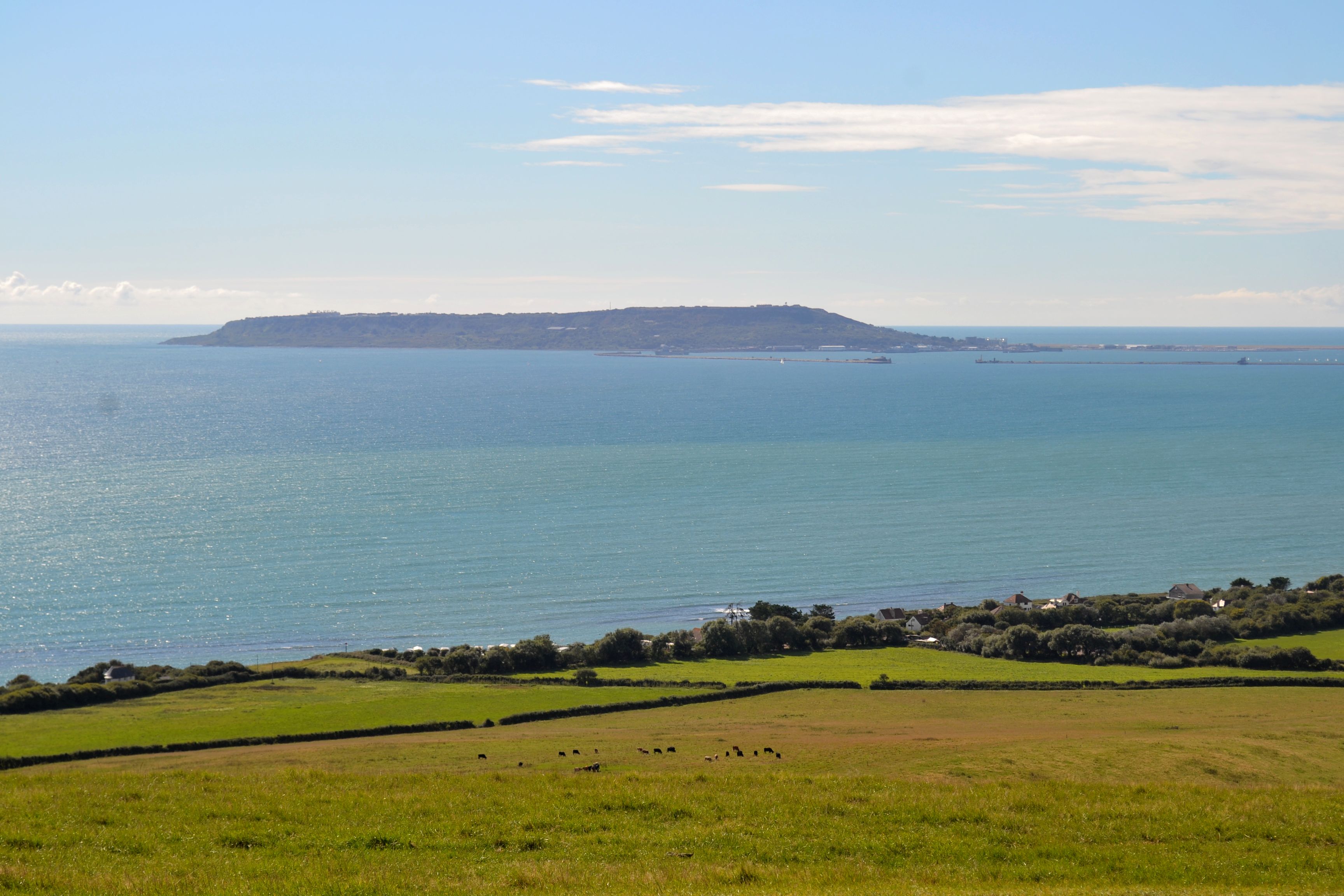
One way of knowing you're in Dorset

One way of knowing you’re in Dorset

Very soon my little white economy car was eating up the familiar miles southward on the A34. Reaching the M27 the weather became sunny to enhance the sense of re-motivation within me, and those fair conditions prevailed until I arrived on site at midday. From a National Trust car park at SY752814 a track led east and slightly inland to where I could see a group of birders at the spot described on RBA. The Isle of Portland (pictured above) shimmered as it does offshore in a hazy, deep blue light.

Returning birders all offered positive news and on approaching those who remained I saw the Buff-breasted Sandpiper crossing higher ground to my left. So this lifer was not only ticked easily but self-found. I was struck immediately by the Dunlin-sized juvenile bird’s distinctive appearance. In shape and jizz it resembles a small female Ruff but with a shorter, finer bill and very attractive sandy buff underparts. As it moved about I was also reminded of a Cream-coloured Courser observed in Fuerteventura last February.

Distant Buff-breasted Sandpiper (left)

Distant Buff-breasted Sandpiper (left)

Once I joined the group my efforts at keeping on this bird were less successful. Black rain cloud was approaching from the west and attempts at obtaining digiscoped images suffered from being rushed. Fearing a drenching, everyone beat a retreat to the car park but in the event the rain wasn’t too heavy. After a break of about an hour I returned to the same spot.

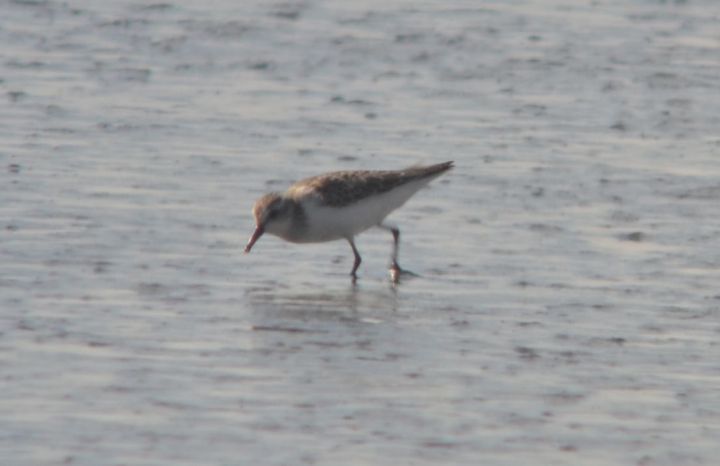
I was now the only person there. Quite a lot of Ringed Plover were in the field but at first there was no sign of the star visitor. Then I picked up the BBS again more distantly than before, moving around on the horizon of rising ground and removing all doubt as to its self-found status. I hope I am not mis-using that term, my meaning being birds not pointed out by other people. For about an hour I watched the BBS feeding in this field and was joined by more birders while doing so. The image (below) is the best I could obtain before leaving at 5pm.

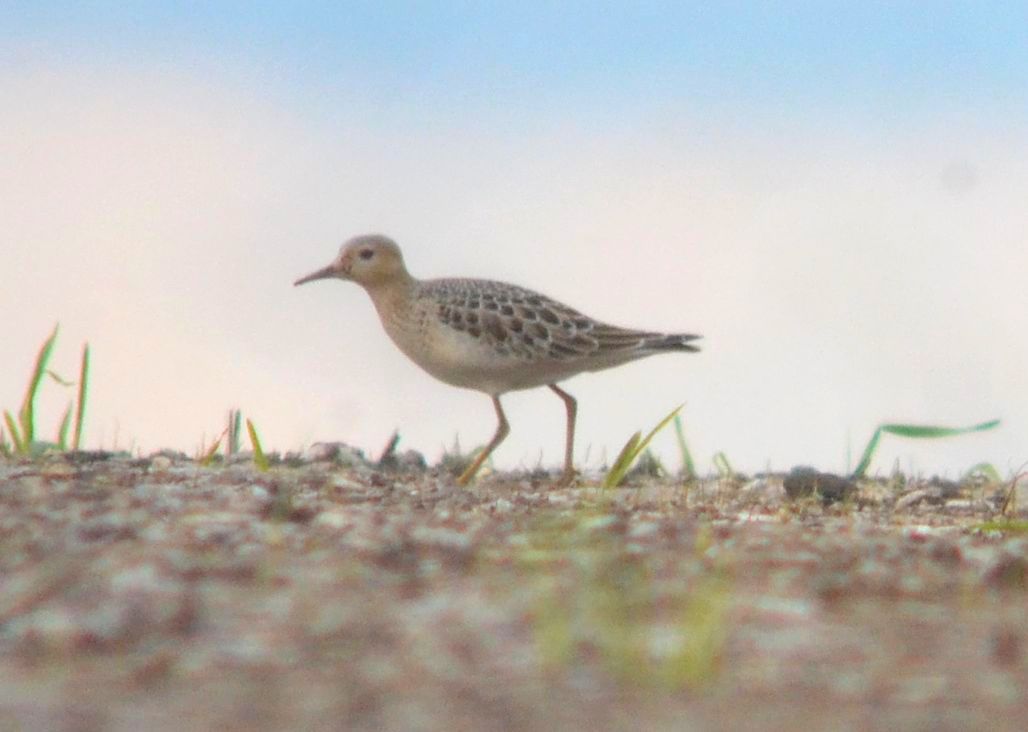
Buff-breasted Sandpiper

Buff-breasted Sandpiper (juv)

This was a very satisfying day with a much-sought life list addition of my fourth Nearctic wader of 2015.