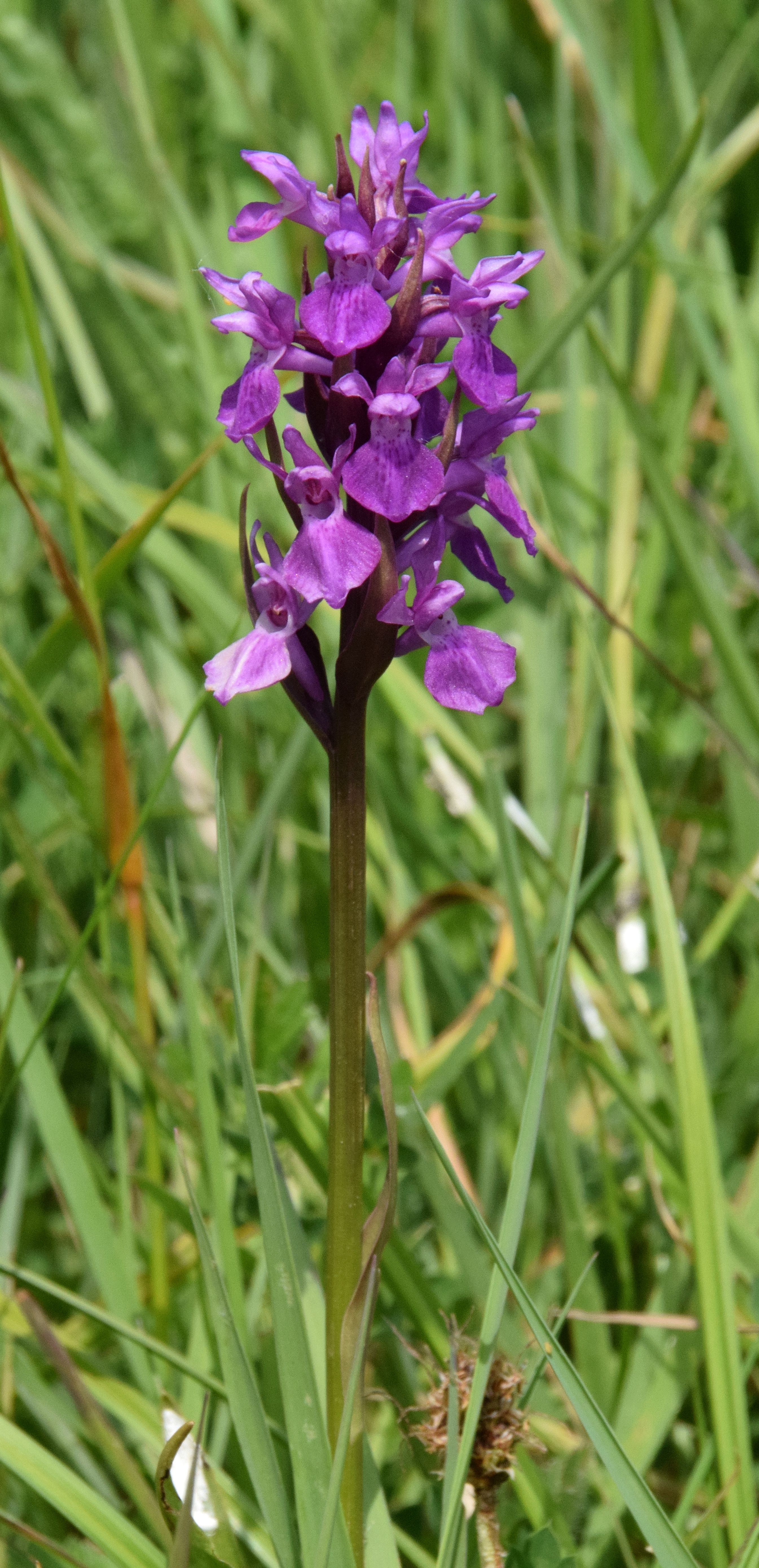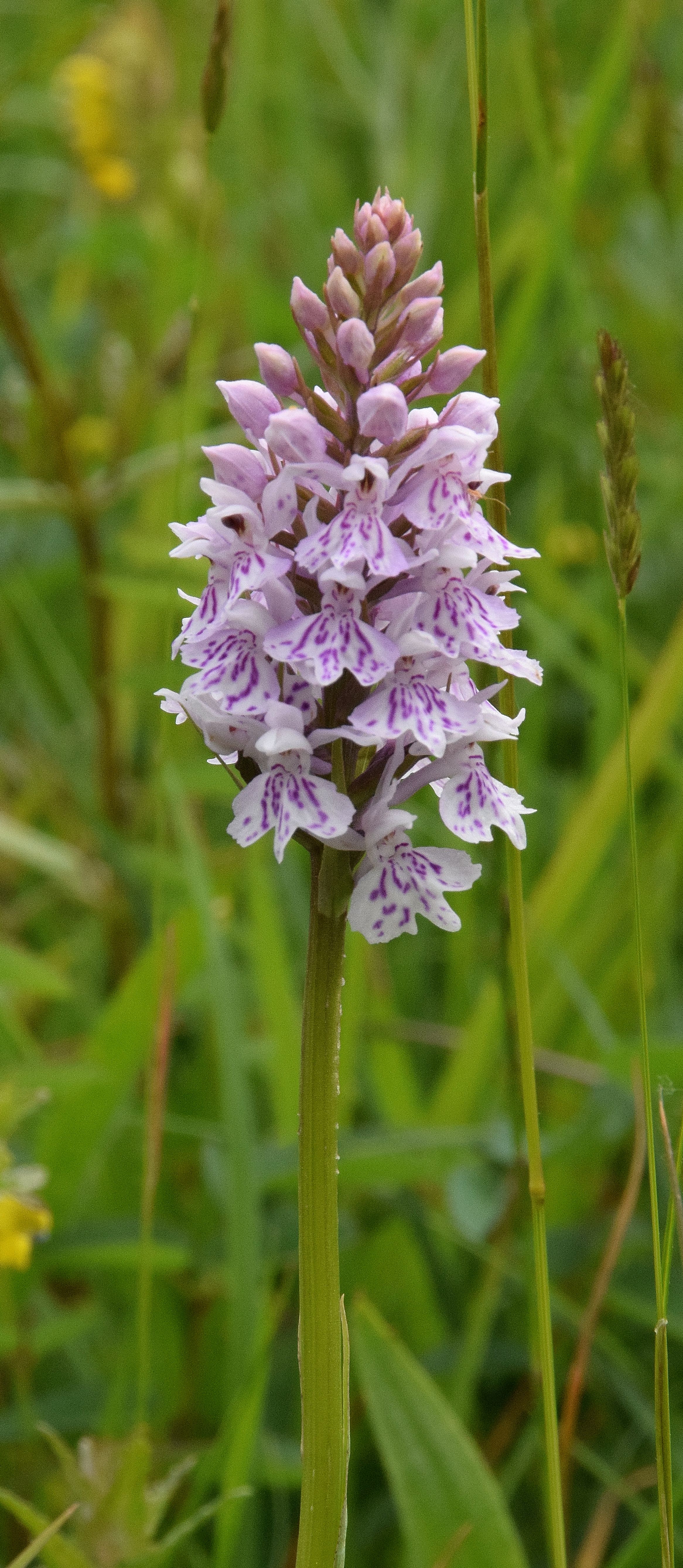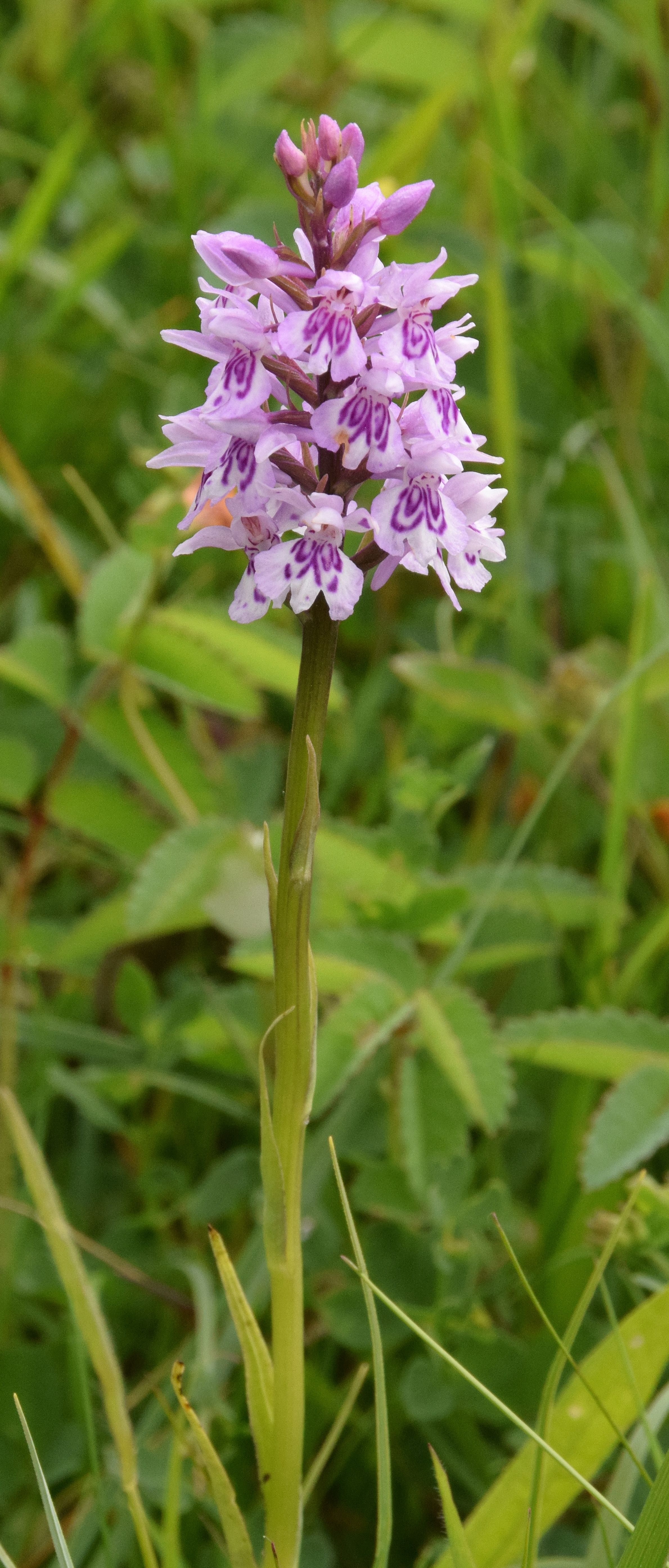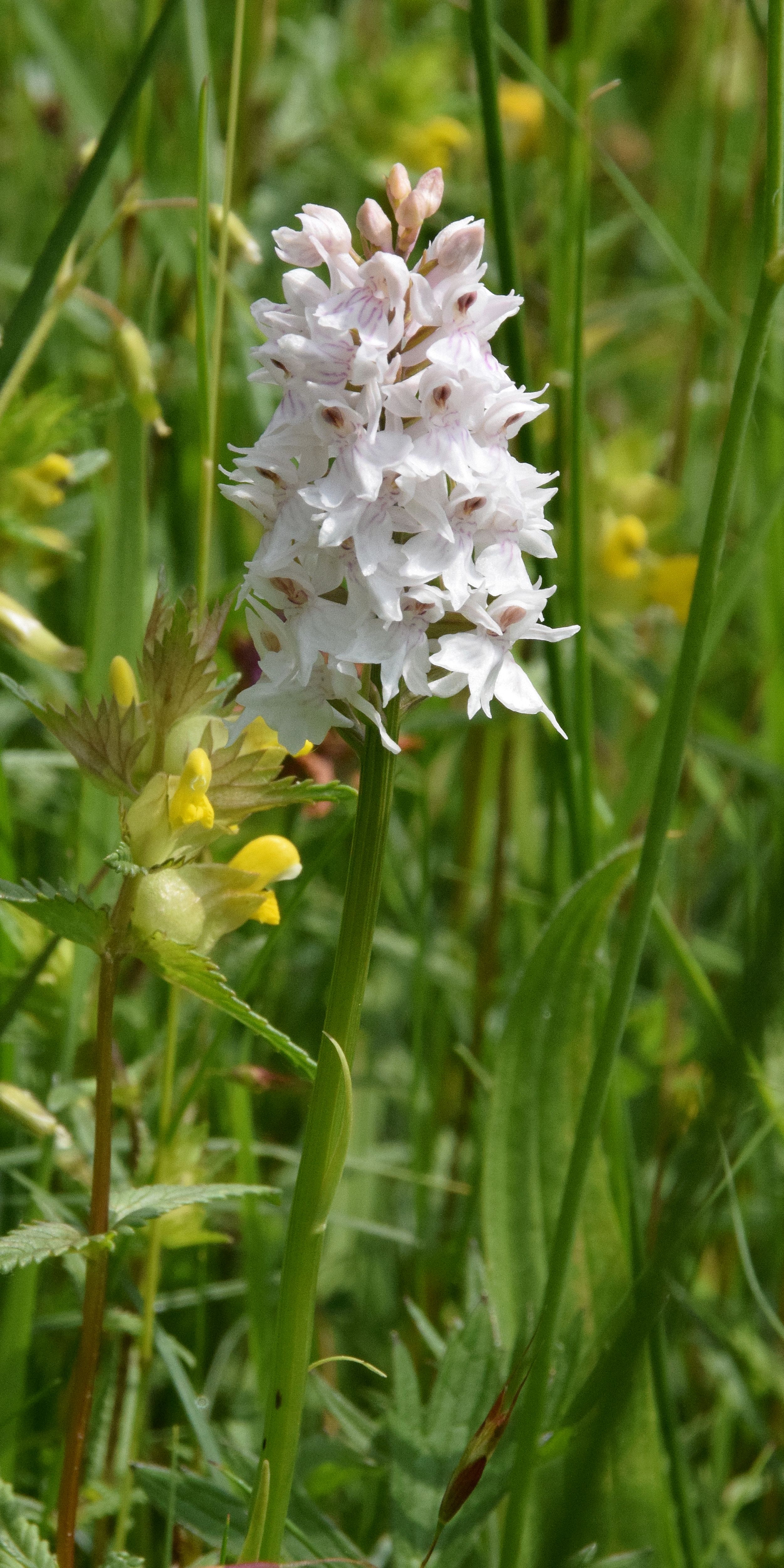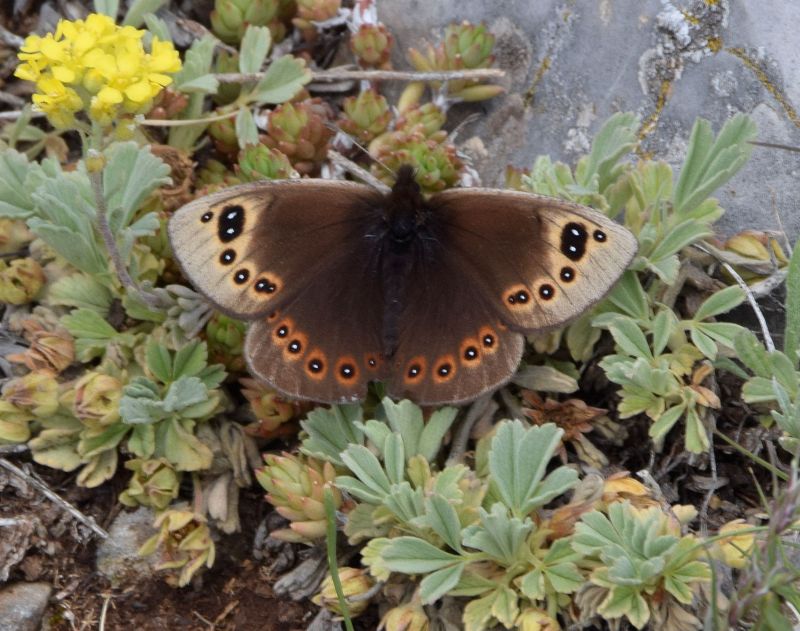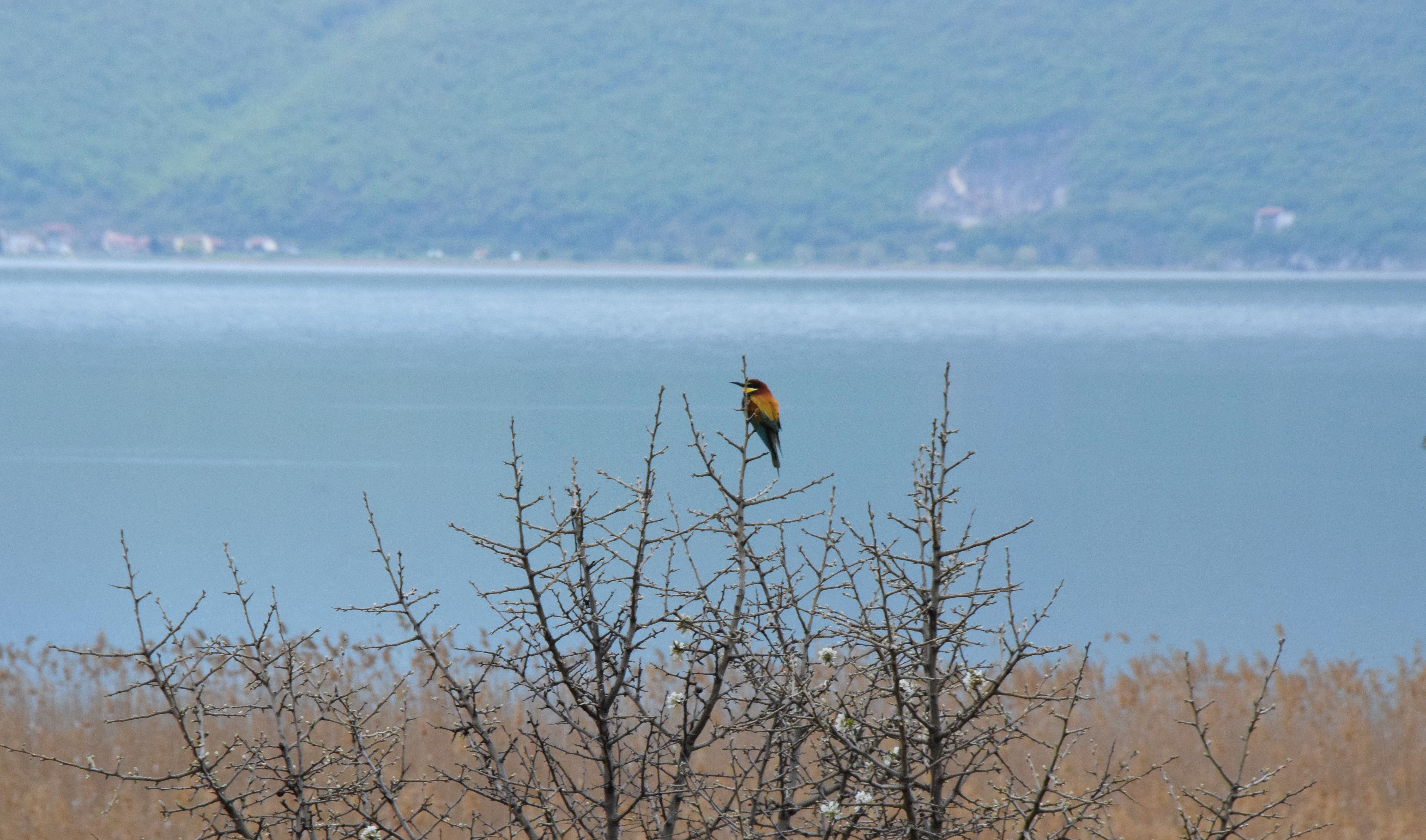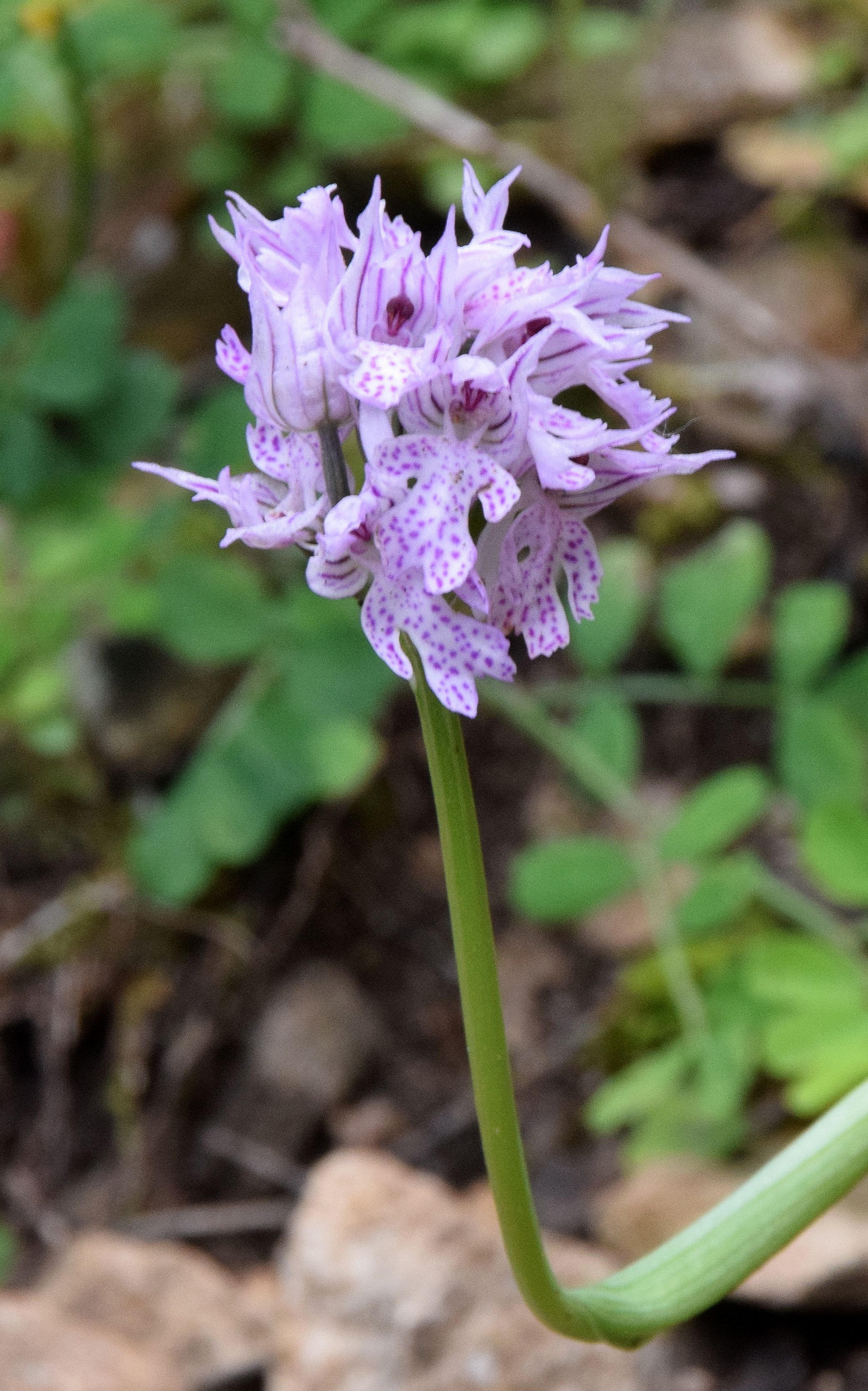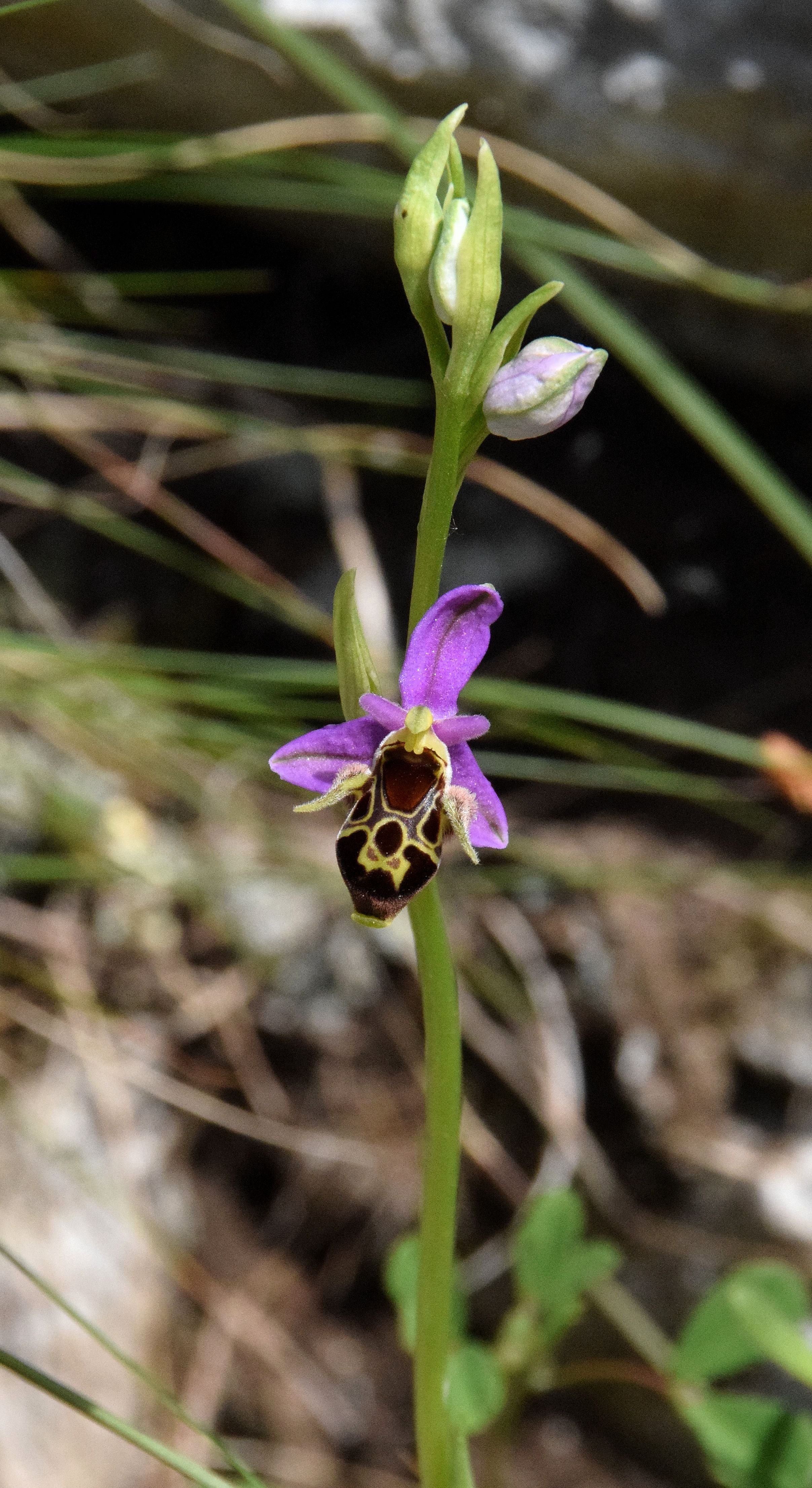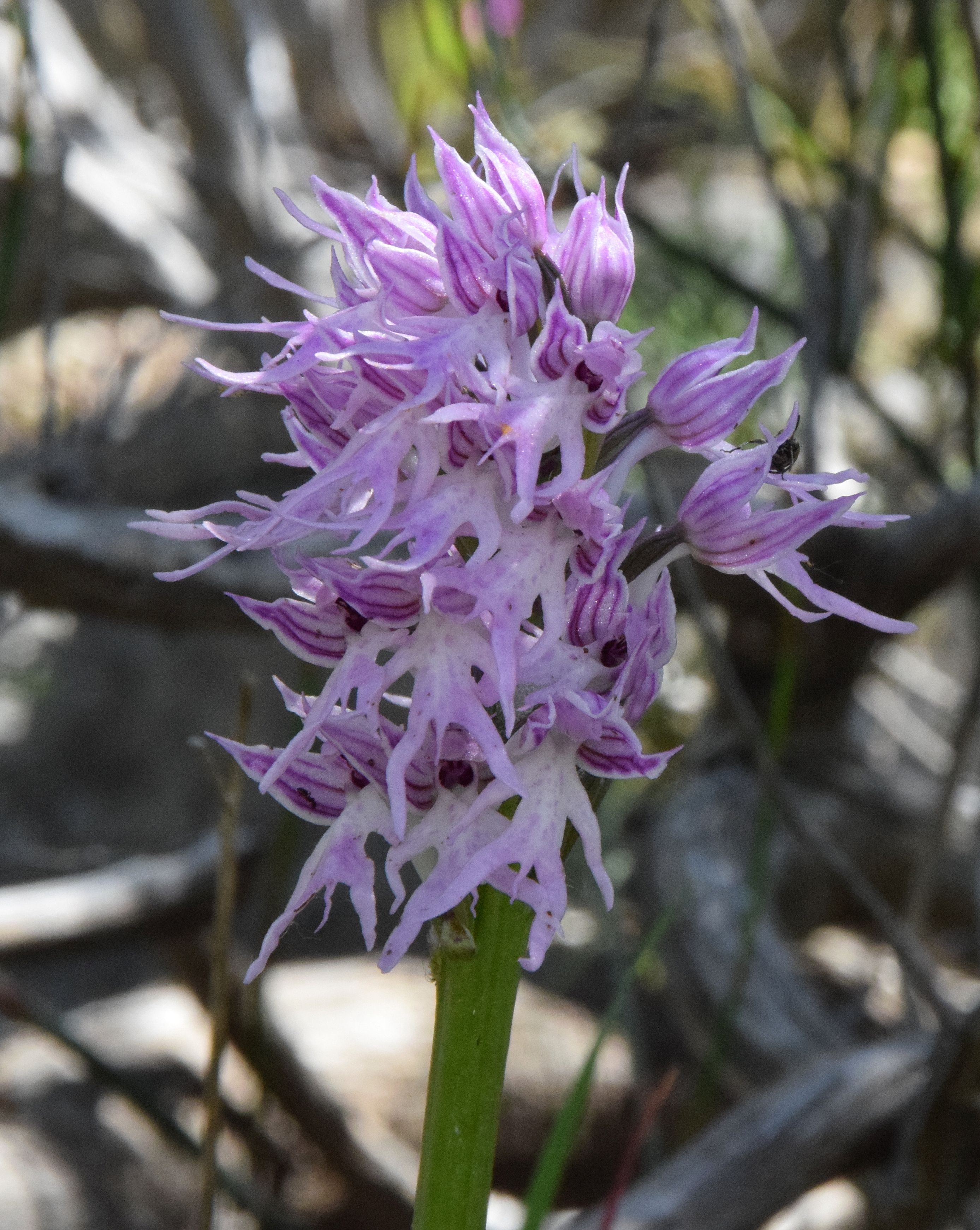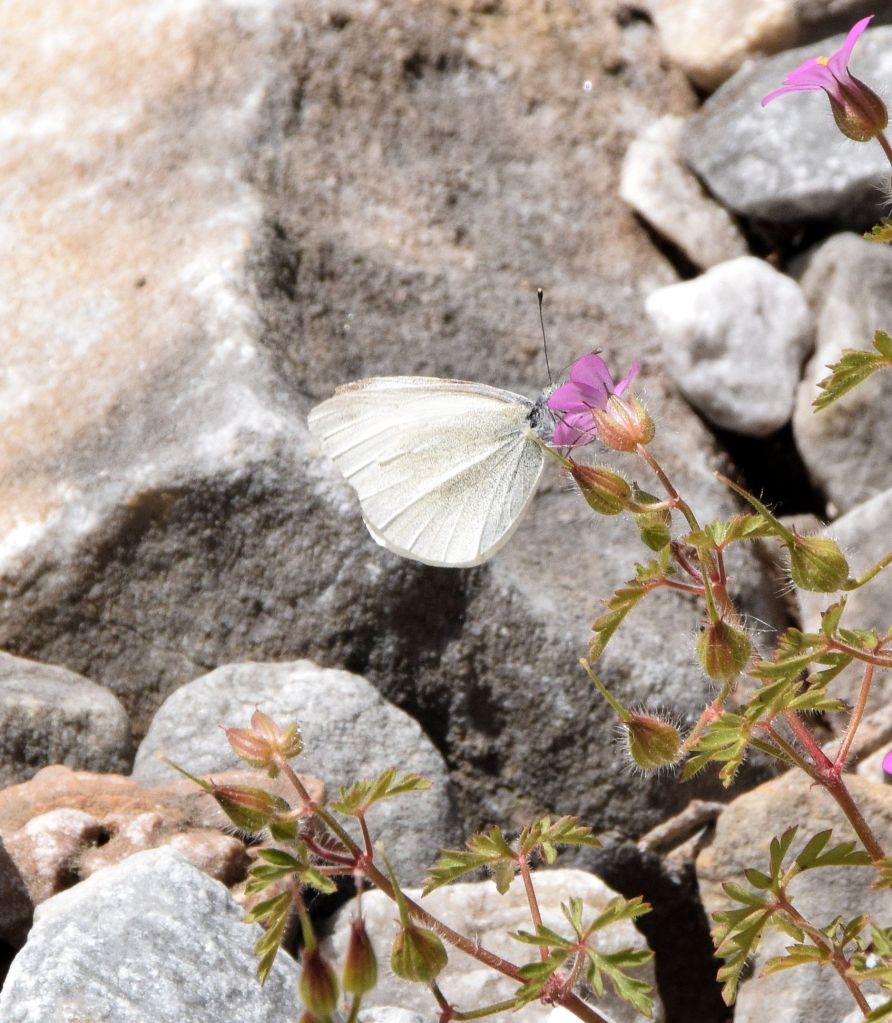
Two days with a rain break at Pinail NNR and la Brenne Parc Naturel, France: 21st – 23rd June

My interest in this region of France arose out of reading, at some time during the Covid years Naturetrek trip reports from an annual tour that comes here. Those quoted a plentiful range of Odonata being resident in the department of la Vienne and la Brenne Parc Naturel, lying broadly east of the city of Poitiers, a little over half-way between Paris and Bordeaux. Back then I decided I might relish the challenge of looking into it under my own steam.

Hence I included a three-day exploratory tripette in my agenda for 2023, subject to suitable weather conditions prompting another spontaneous departure. The expectation had been to travel by rail via Eurostar and Paris, that turned out to be worth almost £150. But finding that Poitiers has an airport to which conveniently timed Ryanairs from Stansted go for a walk on fare of £36, the whole thing seemed meant. And so I jumped on one of the latter.

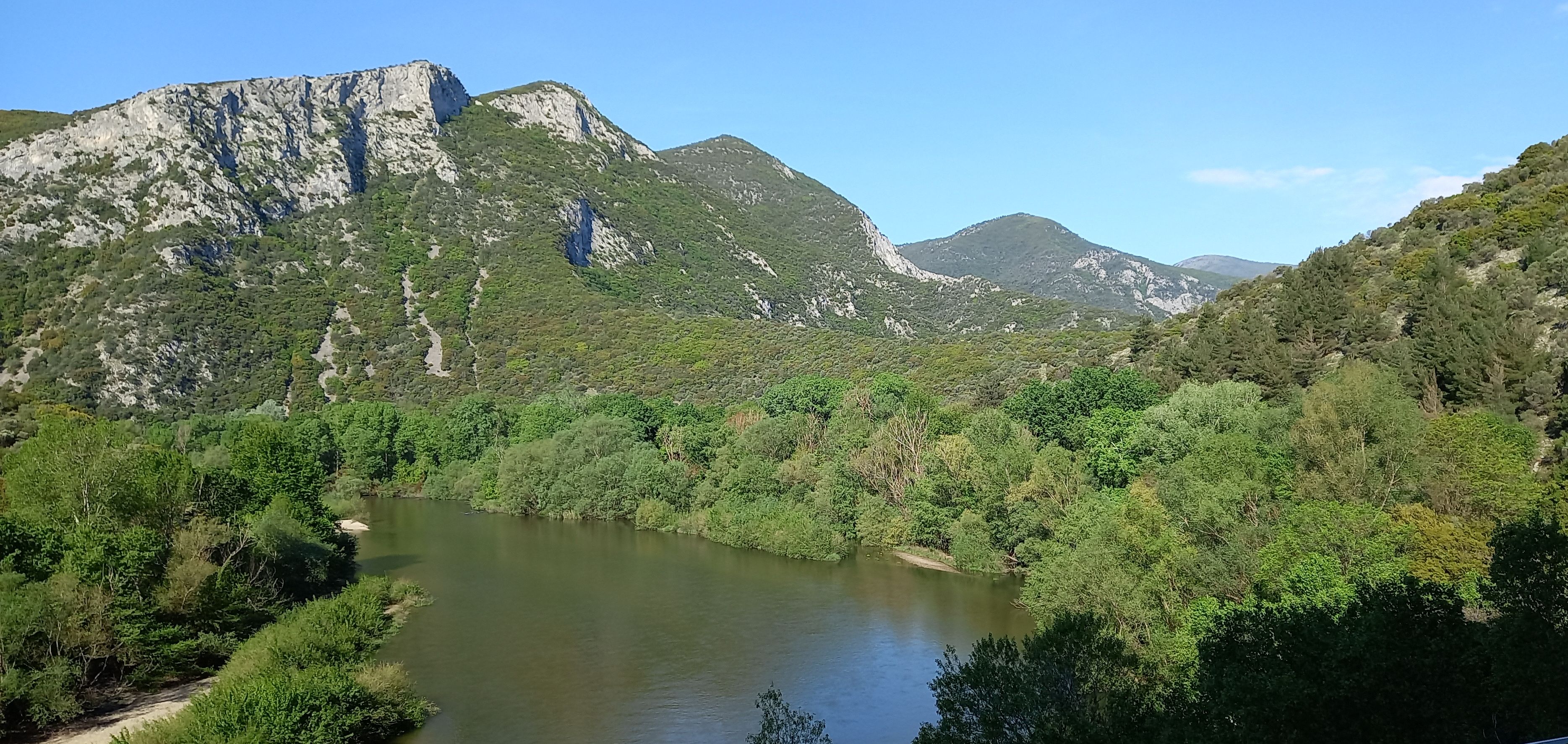
The logistics turned out to be just as favourable. A 3km walk from the airport, there being as things turned out no buses, brought me to Poitiers’ TGV station opposite which was my suitable stop-over hotel for £42; and the car hire offices are in the same boulevard. Hence on the summer solstice morning of Wednesday 21st I collected my vehicle and set out upon the 20 km drive north-east to the Réserve Naturelle Nationale du Pinail, a 142 ha (350 acre) peat bog containing more than 3000 water-filled hollows created by past millstone quarrying.

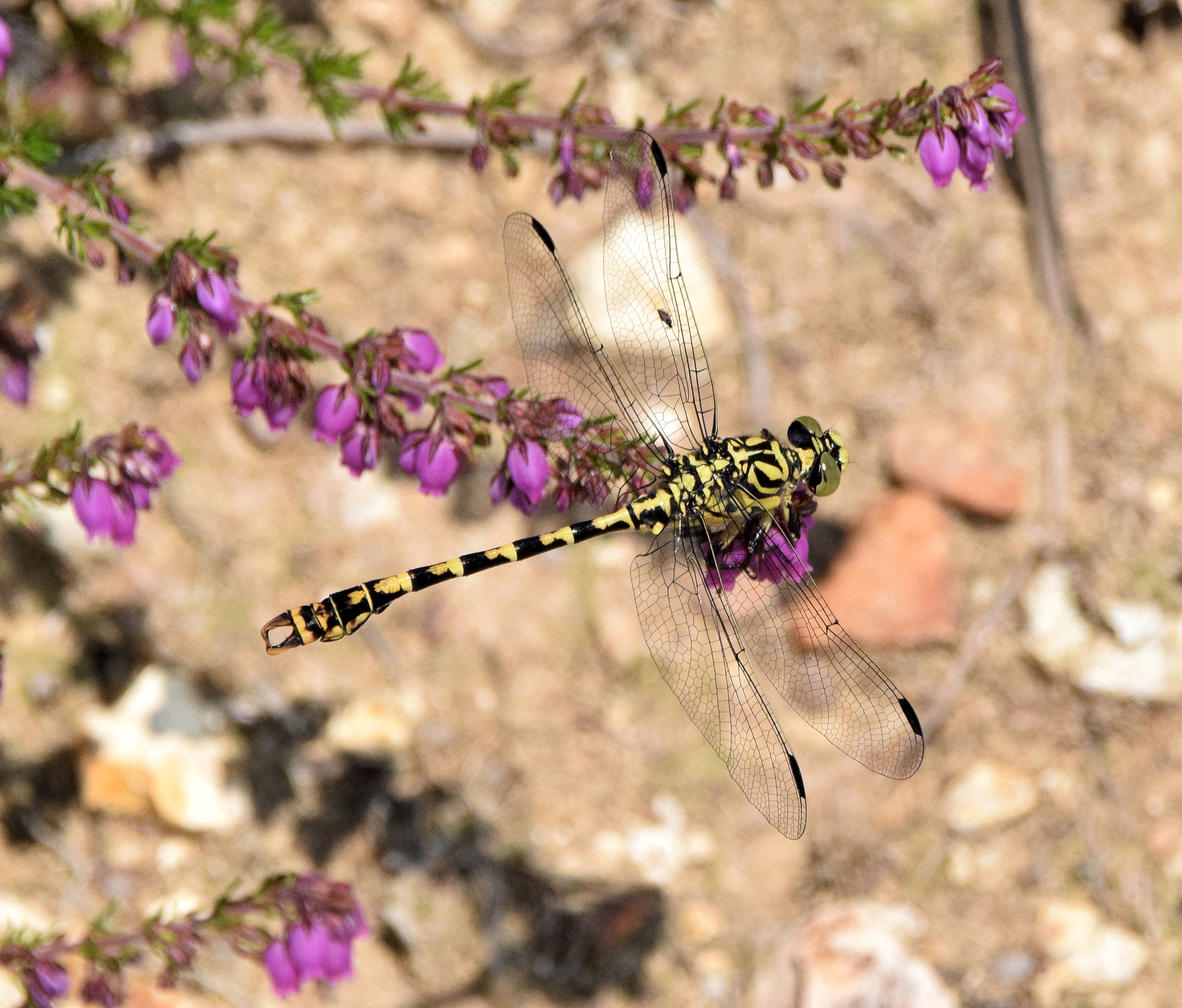
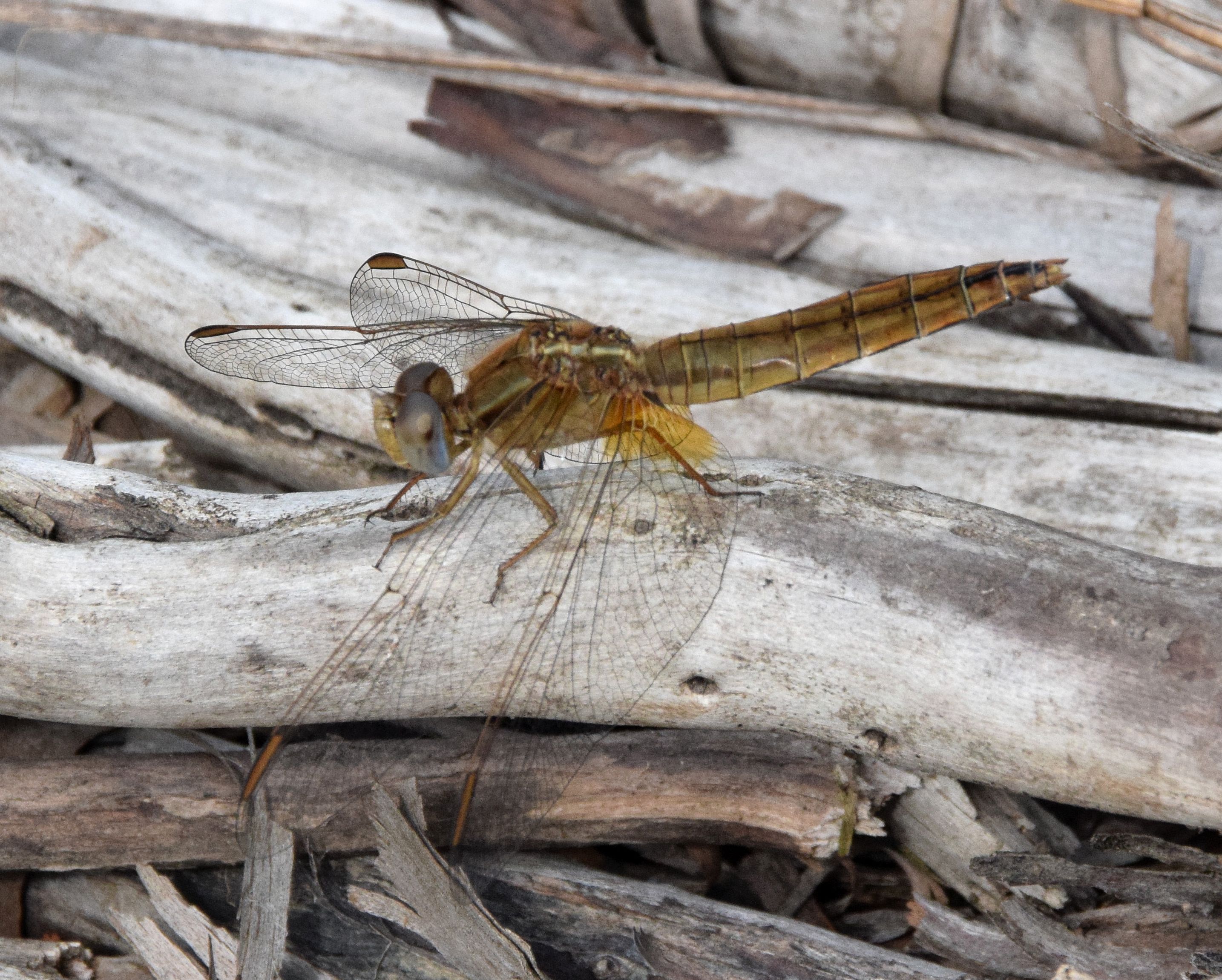
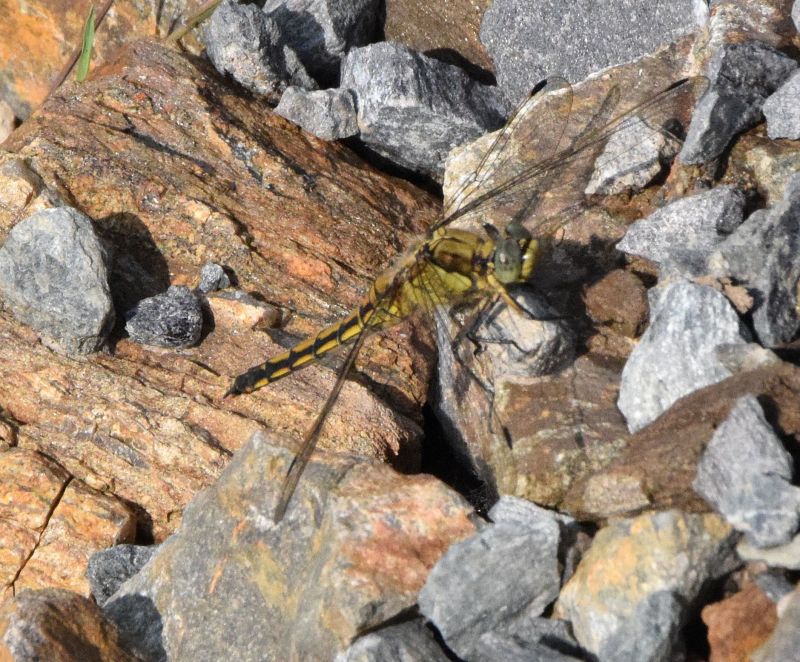
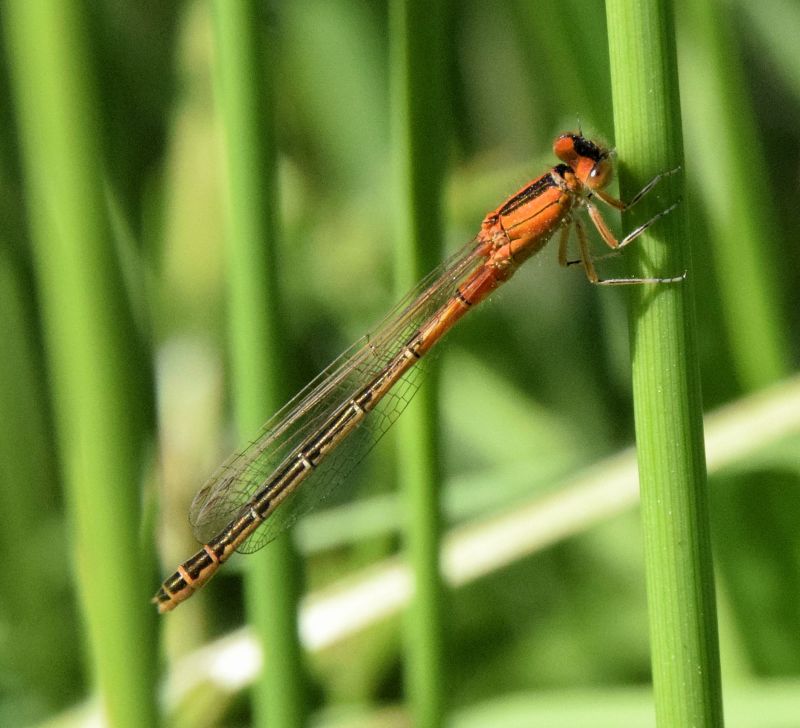
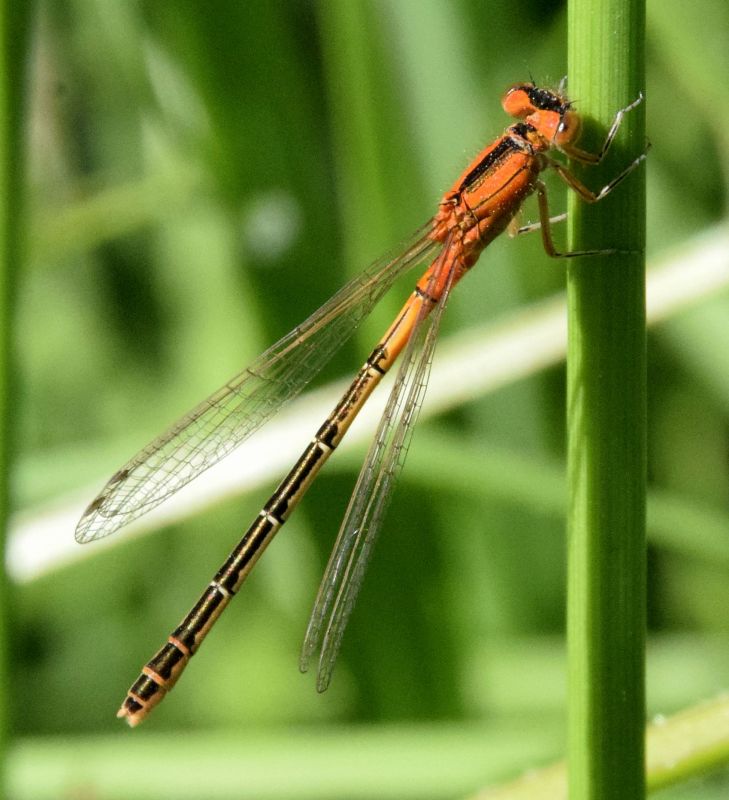
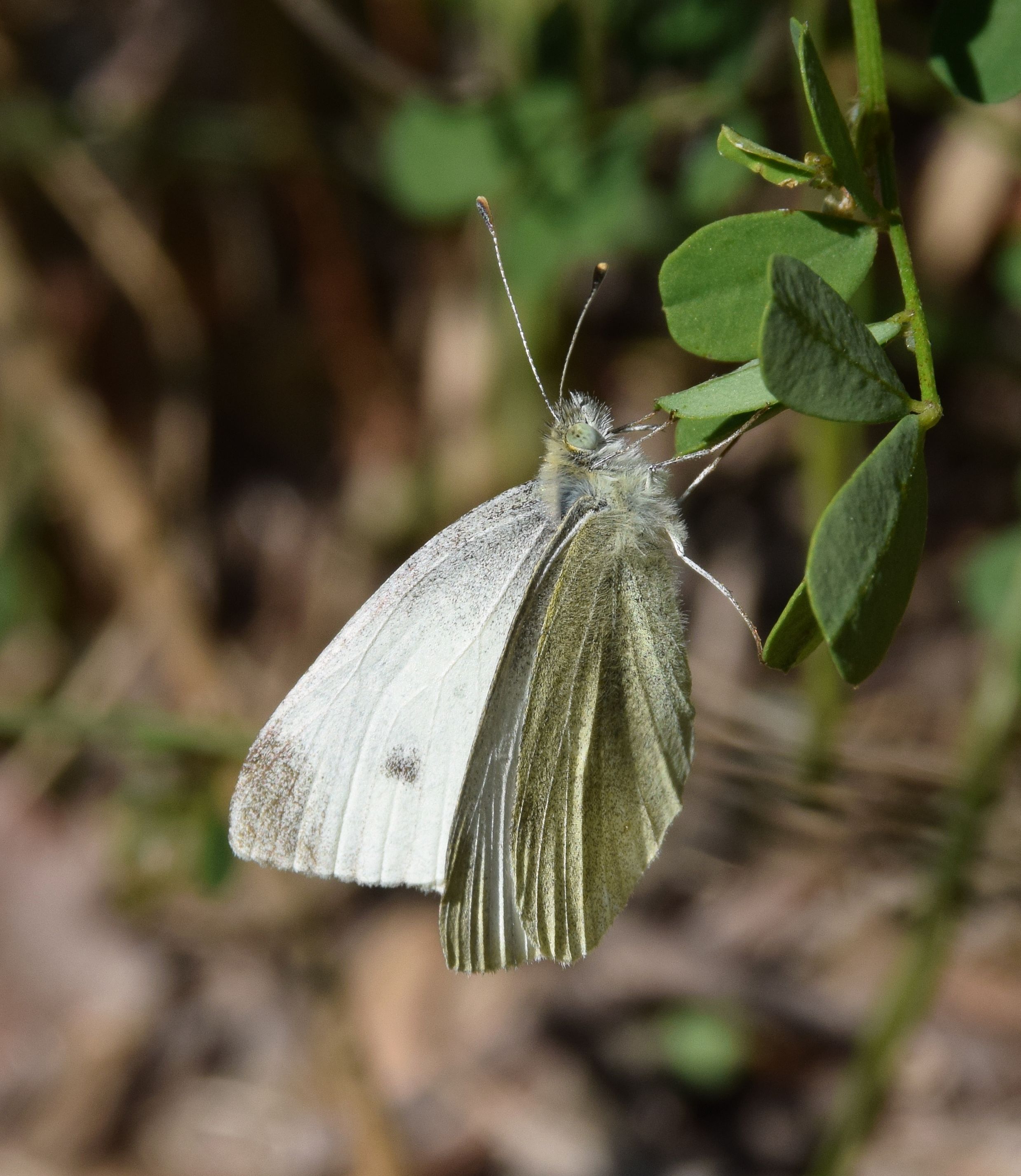
Small Pincertail (male – top right) and Broad Scarlet (female – bottom right)

I made a number of circuits of the visitor trail (marked orange then white, above left) through the day. If you come here yourself start at the second, lower parking area in the illustration. The location is favoured by outlier populations of the Whiteface dragonflies, that France hosts five species of compared to Great Britain’s one. I was prioritising twin lifers Yellow-spotted (or Large) and Lilypad Whiteface but found neither. The Naturetrek group had double-connected for the first time here in 2022.

This was outstanding Odo habitat but vast and seriously off-piste, with limited opportunity to get down amongst the bog pools without heavy duty waterproof clothing such as angling waders. So as in Nestos Gorge in Greece last month I more or less had to rely upon what might perch close to the track. Every so often something did so, a token duo of which are presented above right. Whiteface emergence times vary season upon season to complicate the equation. Ultimately one day visiting solo proved an insufficient window in which to gain the desired results.

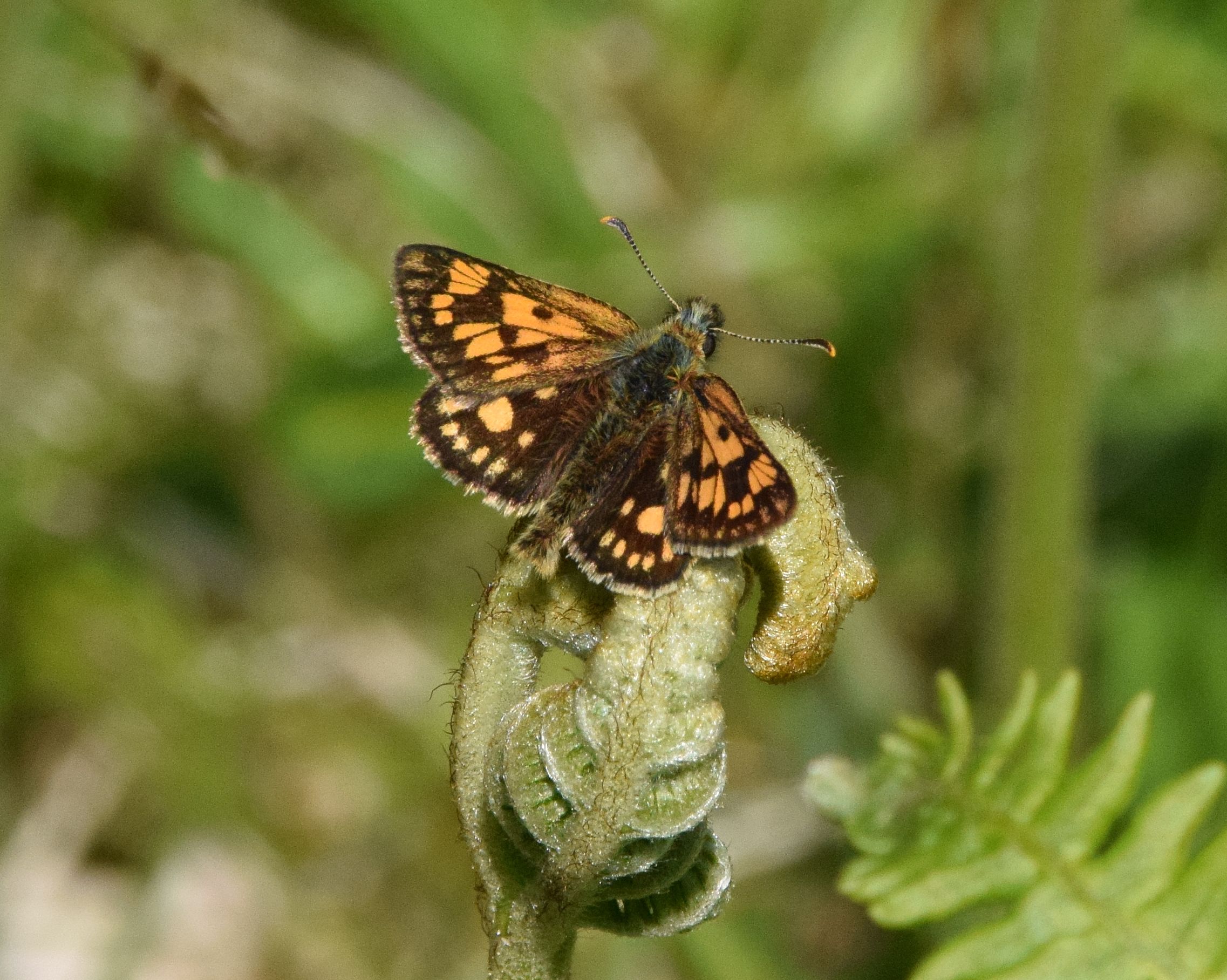
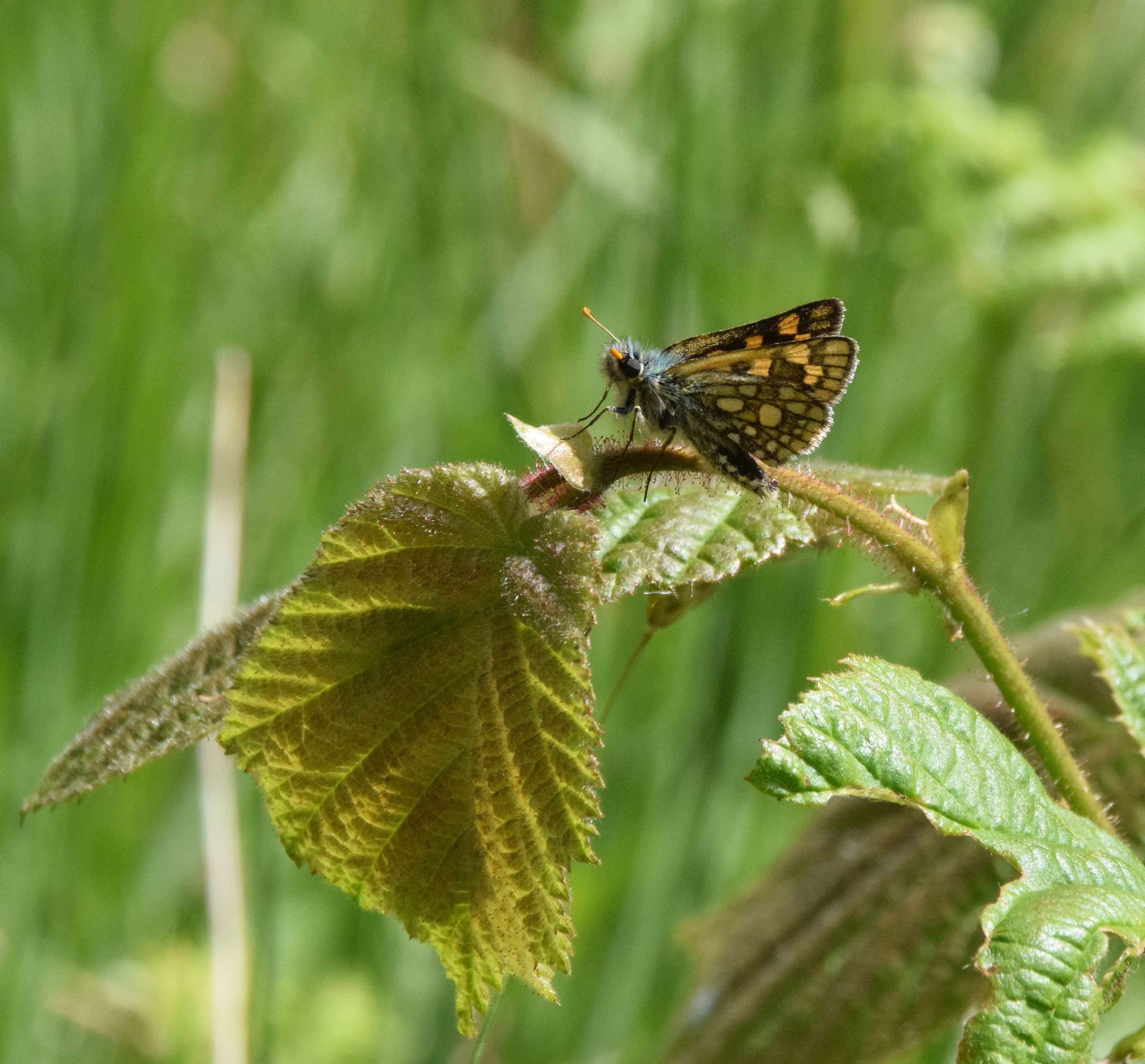
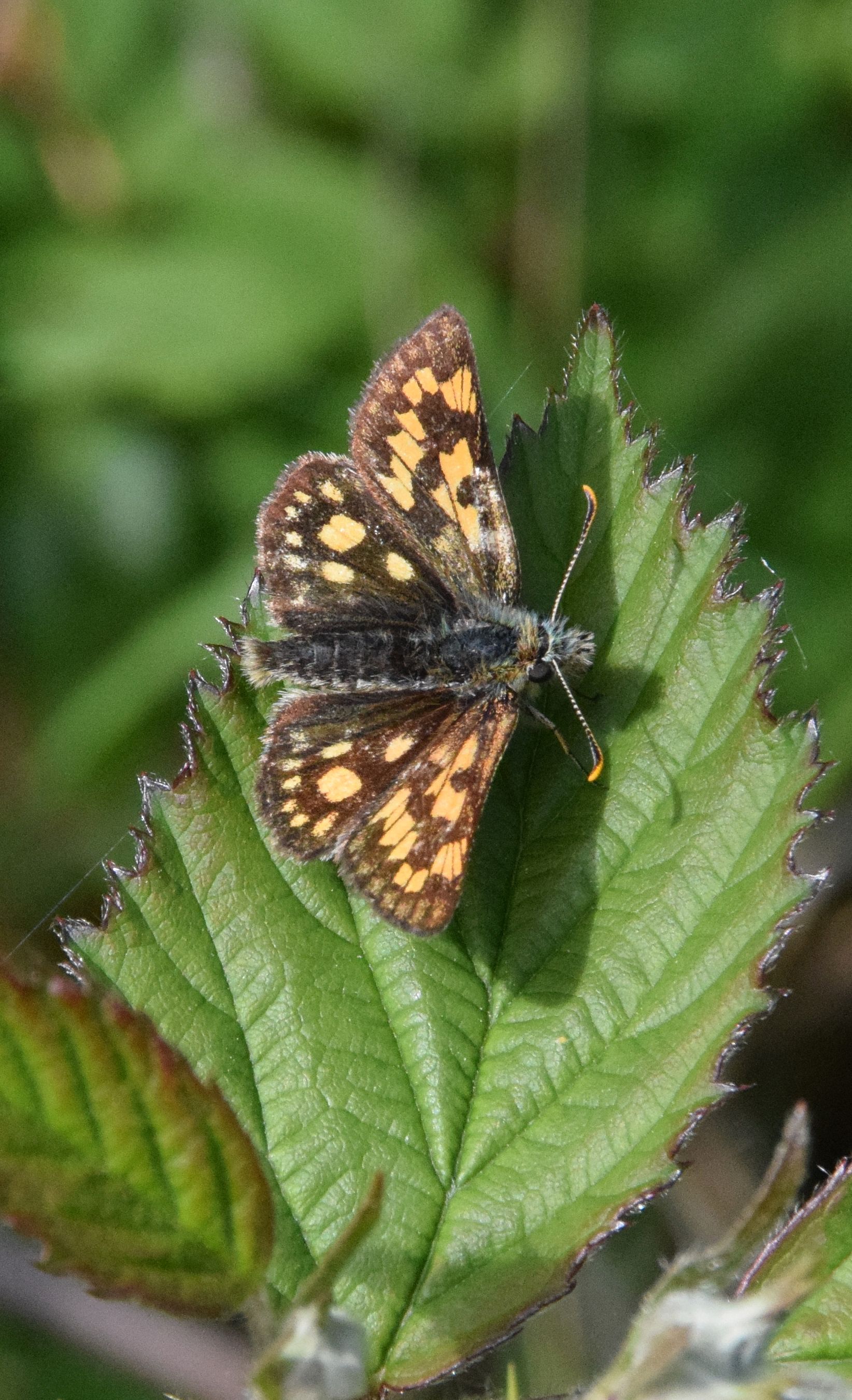
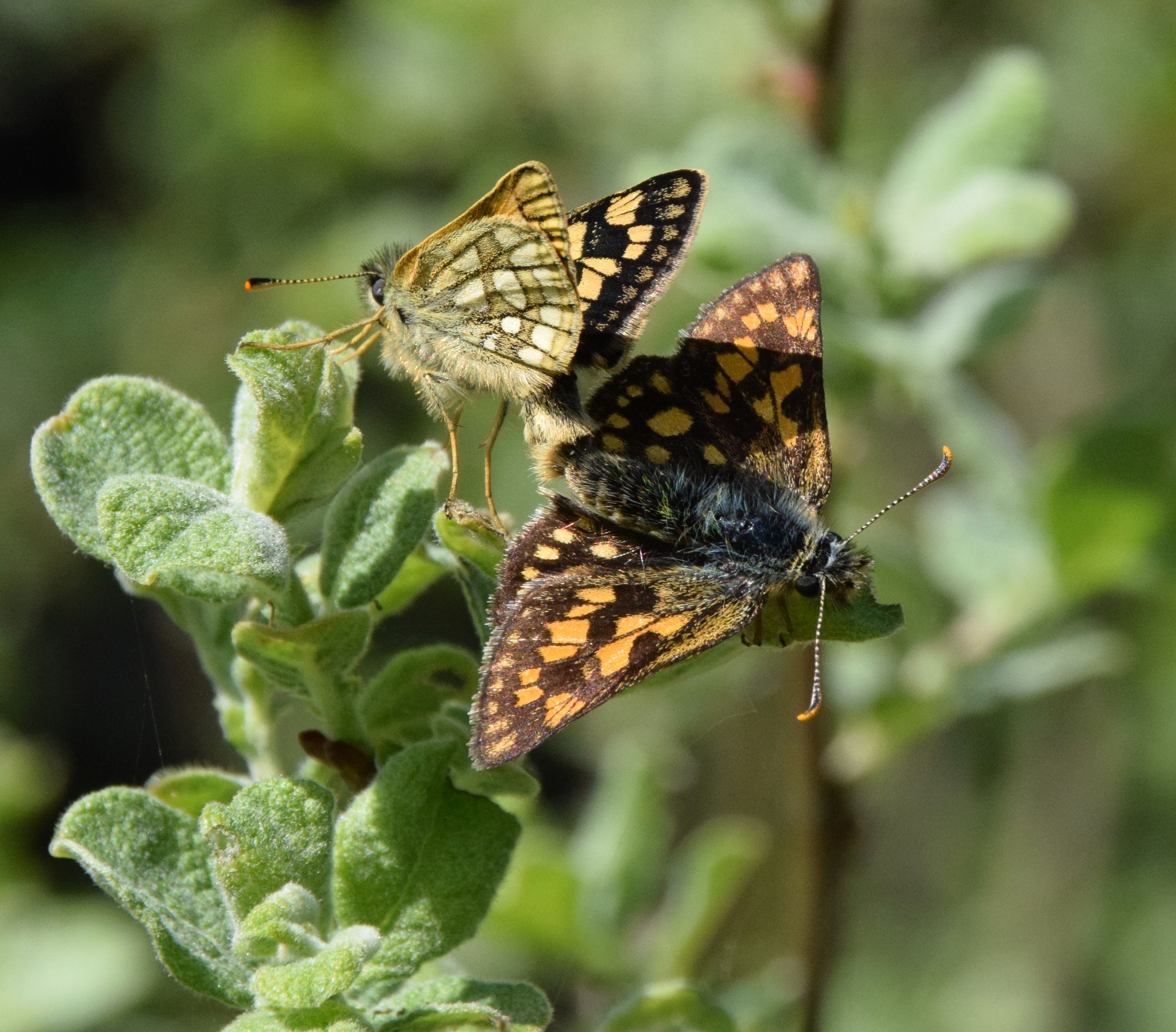
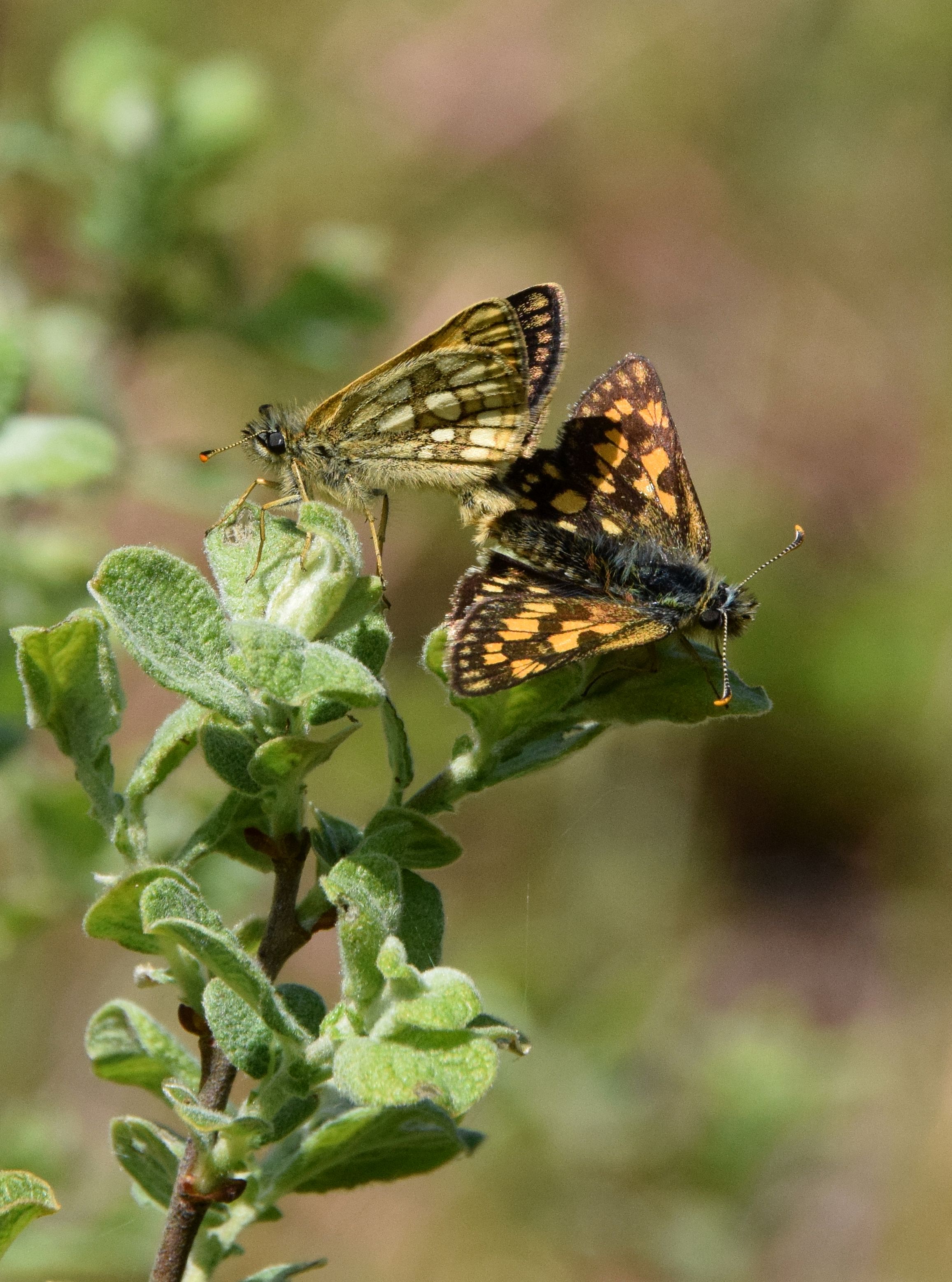
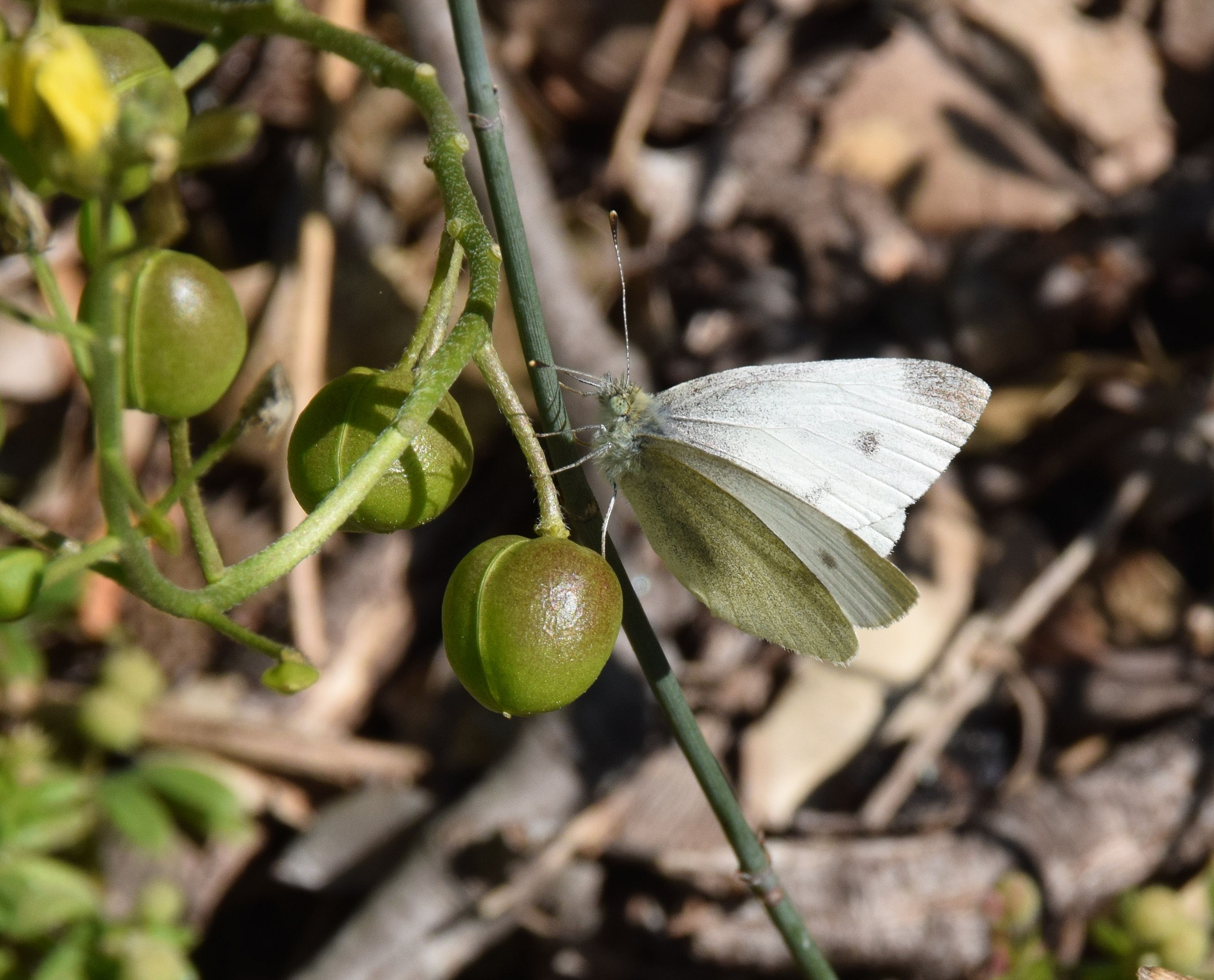
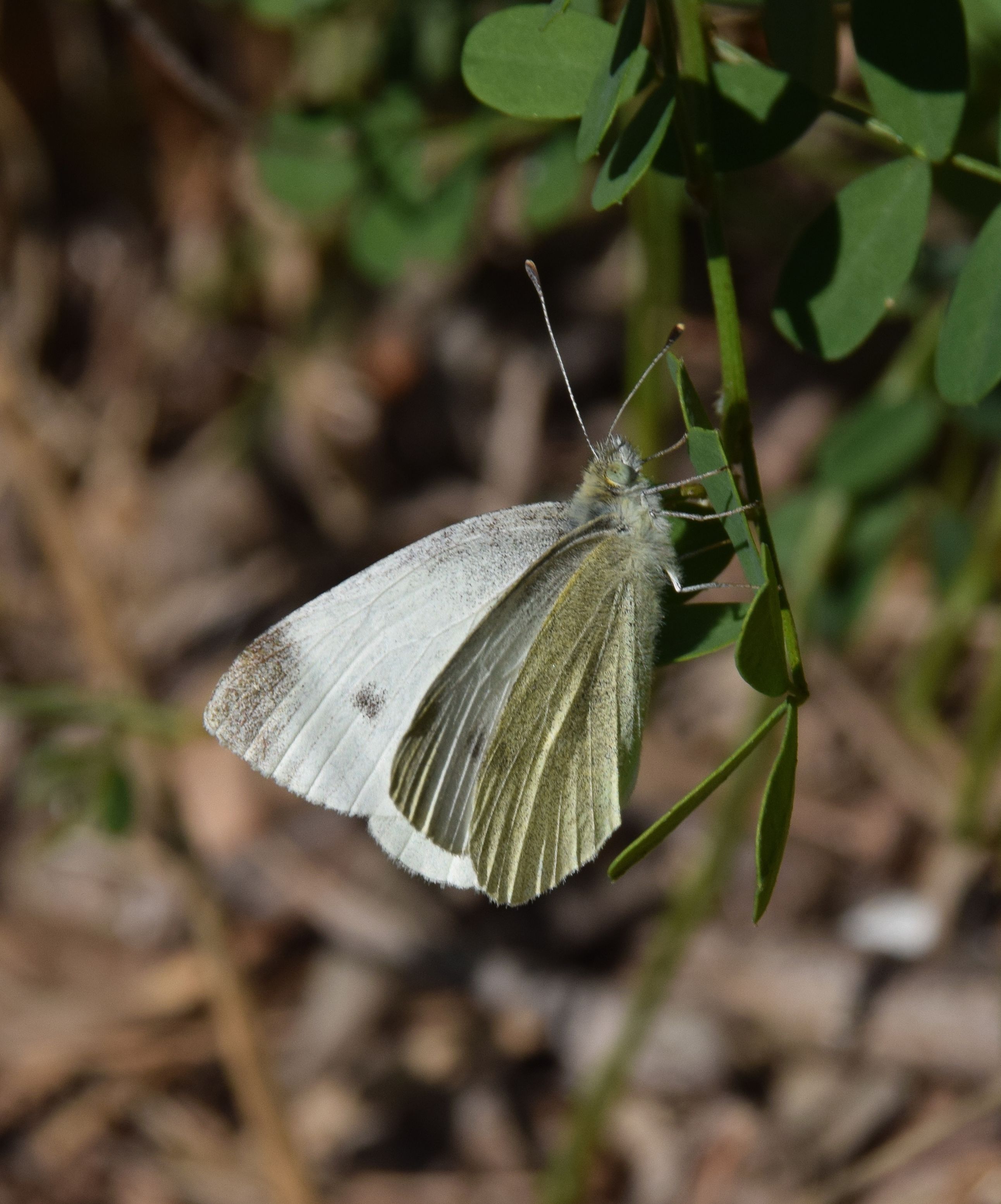
The butterfly highlight was a lifer, Large Chequered Skipper. The individual pictured below left was the only one to pose for the camera, but on reading up on the species back at home I realised I had crossed paths with several more. This insect has a highly distinctive, bouncy flight pattern which is described as resembling pogo-sticking on an invisible band of elastic, with little sense of direction. I noticed this in fly-bys over and again, but all bar one were not inclined to settle. The drab upper-side is rarely seen since LCS perches with wings closed. At rest the black-ringed, oval white under-wing spots on a yellow background identify this item unmistakeably; giving it the name le Mirroir in France from the suggestion of beads of condensation on a looking glass.
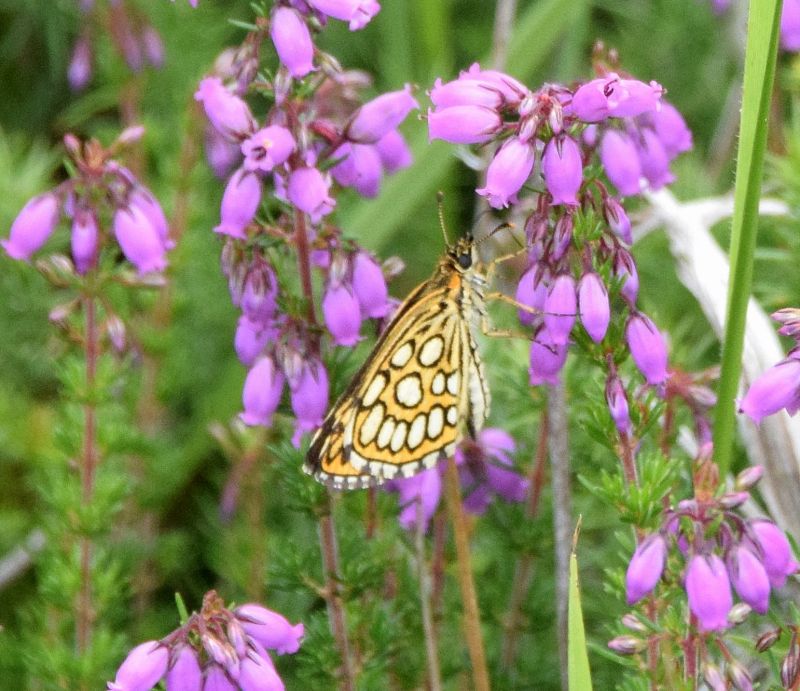
This most remarkable Skipper occurs across much of central and eastern Europe, though is absent from large areas and often localised. There are outlier populations elsewhere, including south-west France. The food plants are various grasses, on which the larvae feed then hibernate in a tube made from a folded blade. Adults fly in a single generation in late June and July. LCS mostly inhabits damp woodland clearings or sheltered hillsides, but is also a Pinail speciality. So having read that before visiting I was very glad to have come here at the right time to convert it.

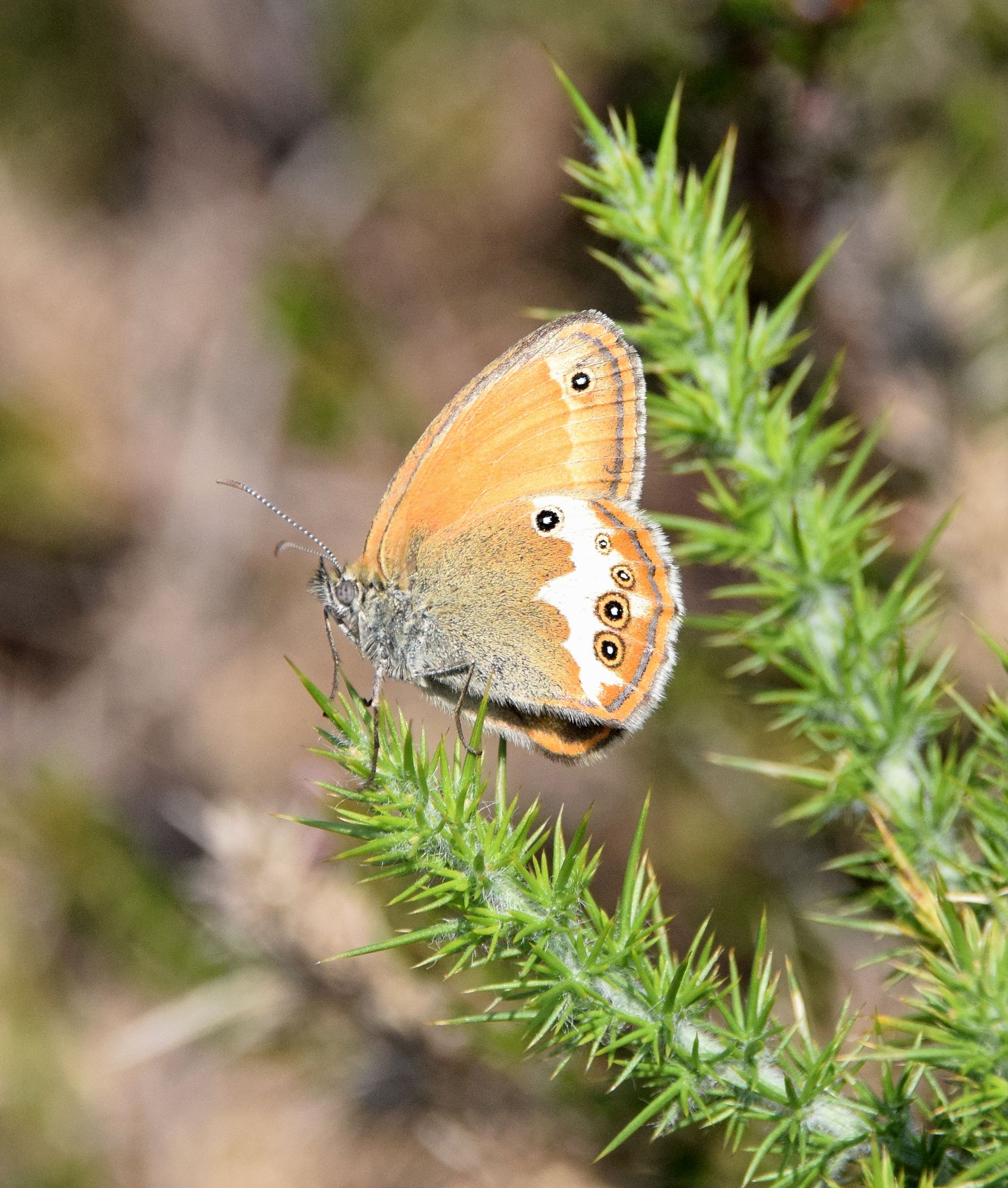
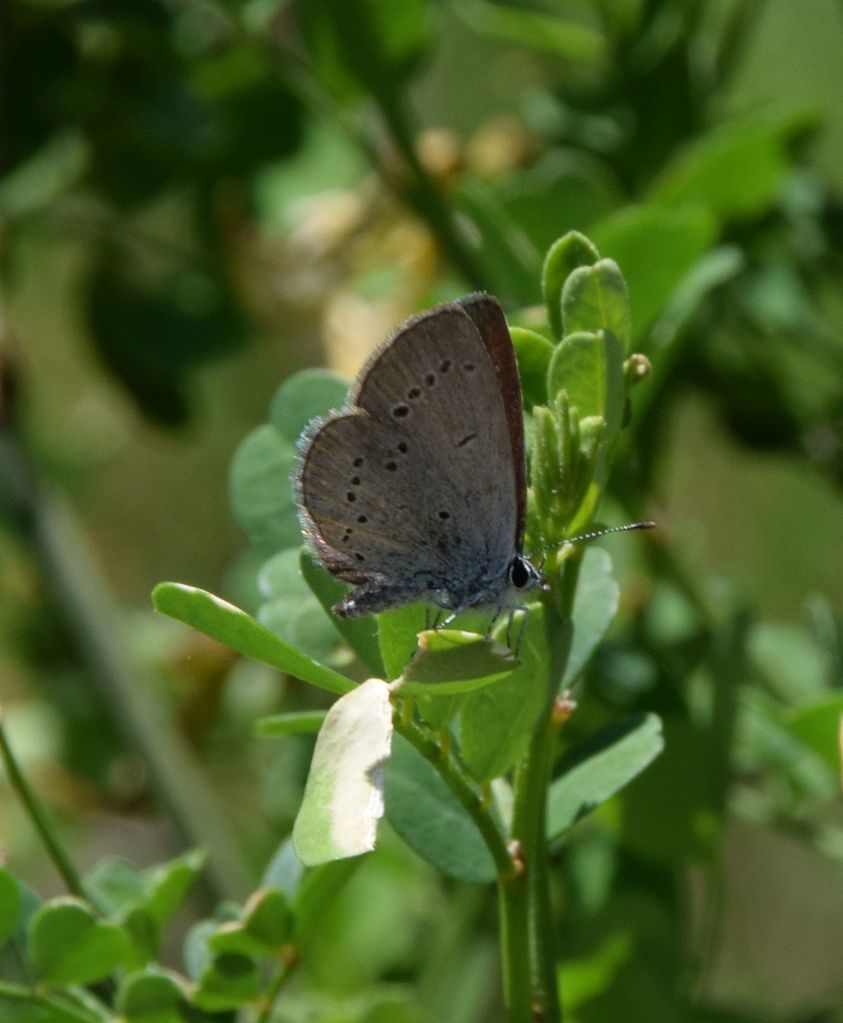
I was also pleased to gain first ever pictures of Short-tailed Blue (above, centre). Though widespread across continental Europe in two broods from late April to August, I had encountered the species far less often in the past than the Lang’s variety. The patchily distributed former frequents flowery grassland and clearings amongst bushes and trees, often flying low and inconspicuously amongst vegetation as was my experience here. By far the most frequent butterfly in this location today was Pearly Heath (above right), most of which were rather past their best.
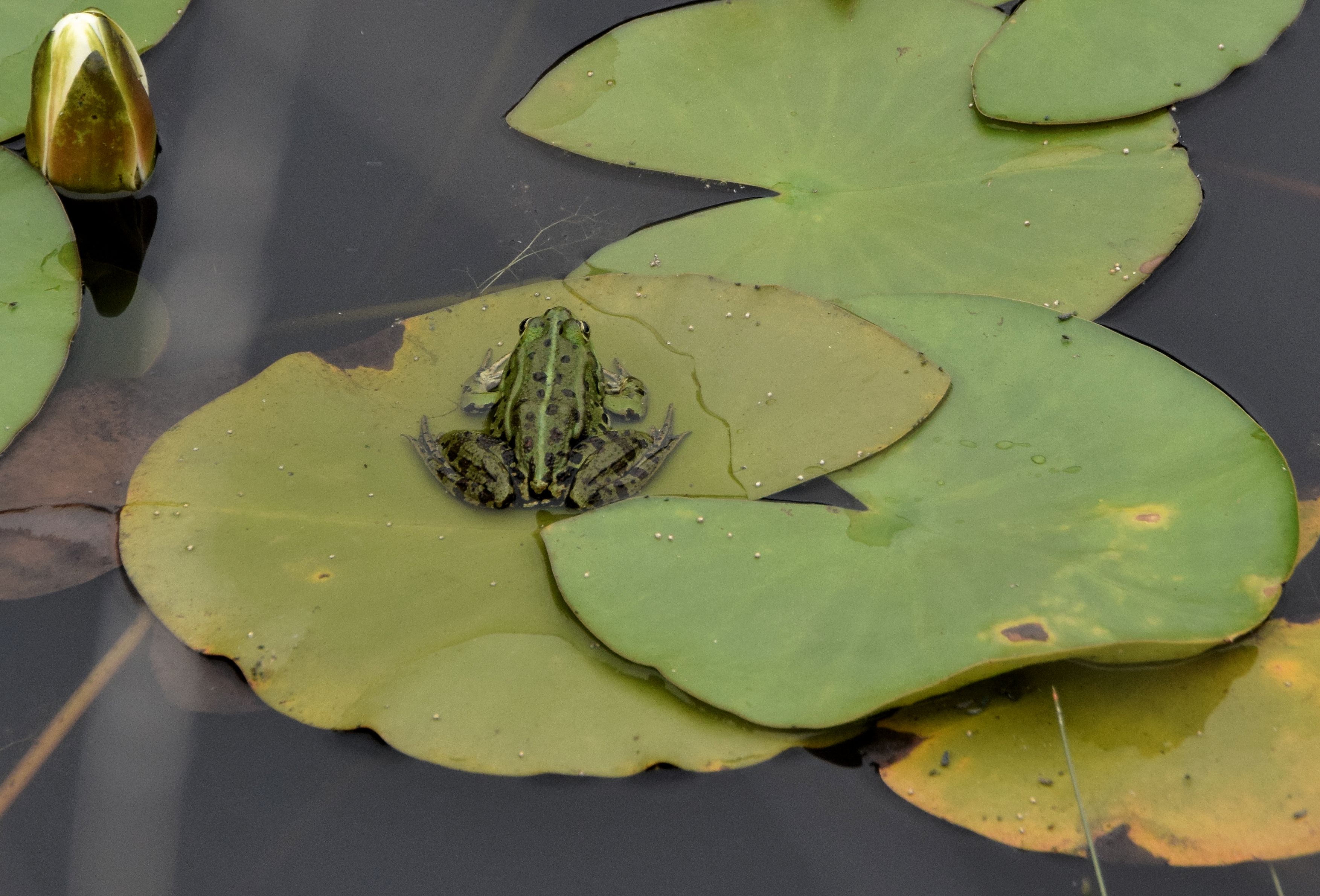
Edible Frog

Being in France I appreciated having caught up with Edible Frog (above), an amphibian I had not recorded previously. These occur across much of Europe from here to western Russia, Estonia and Sweden, and northern Italy. Like other water frogs (Marsh and Pool) these are often active by day and like to bask in the sun. Males are usually green, paler in the breeding season, with dark brown or black spotting. Despite the name, this species is not alone in being a food for humans in different regions.
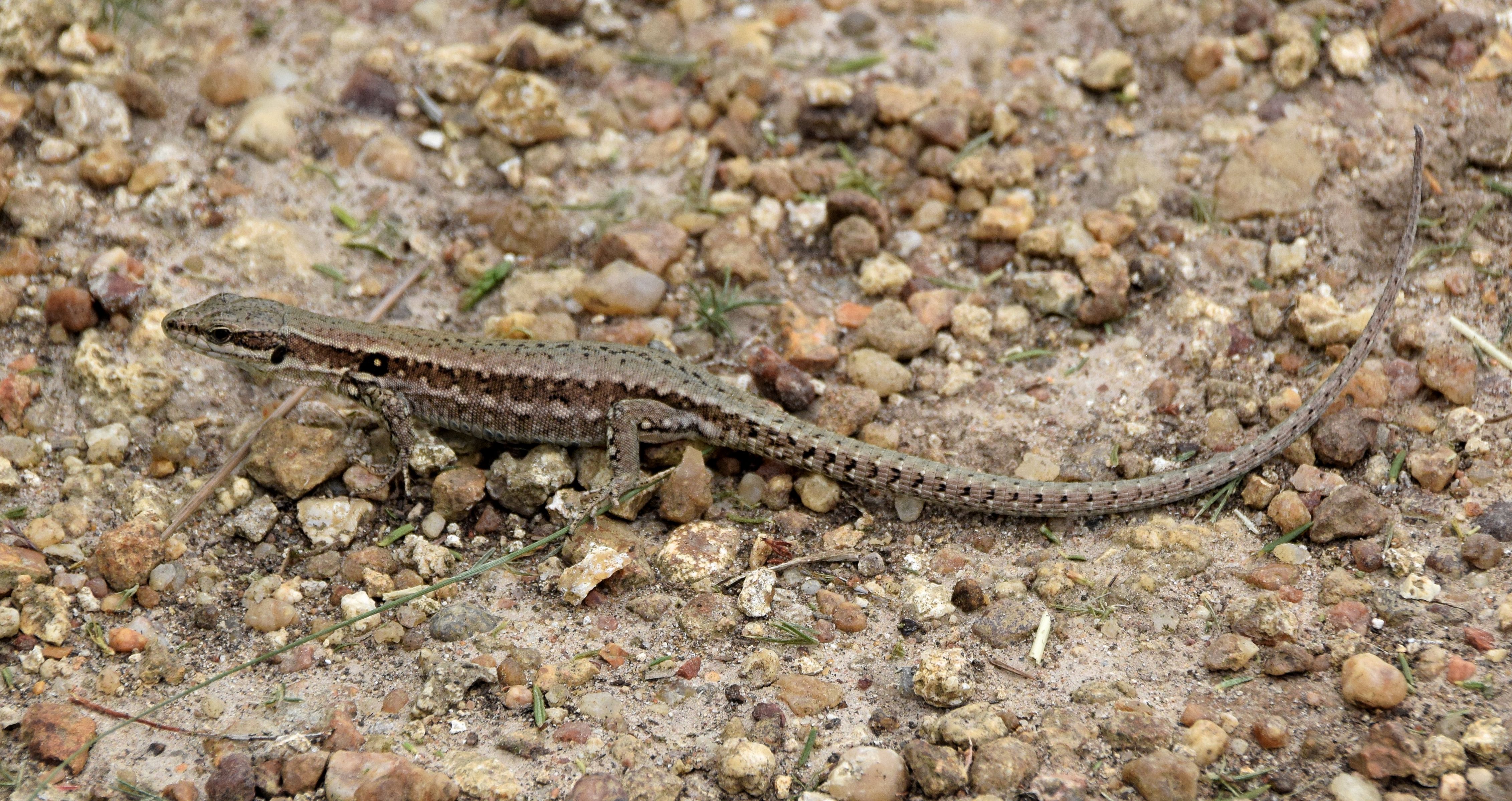
Common Wall Lizard

Common Wall Lizard (above) was a frequent encounter. There are 17 very similar, regional European species in this genus of reptiles, of which I had observed seven previously, and I assume this one is the “default”. It has a larger head and limbs than the British Viviparous (or Common) Lizard, and as with all small Lacertae exhibits very variable patterning. Most individuals are brownish or grey, often with black and white bars on the sides of the tail.

Unfortunately the next day, 22nd was washed out completely, which is always frustrating. So after calling in at visitor centres in la Brenne Parc Naturel to enquire about the best Odo locations I filled the time in any way possible. Later in the afternoon I reconnoitred a third site Étang de Plaisance that is said to host several species not found in the British Isles. But I encountered just two dragonflies there in heavily overcast conditions that persisted once the rain stopped.

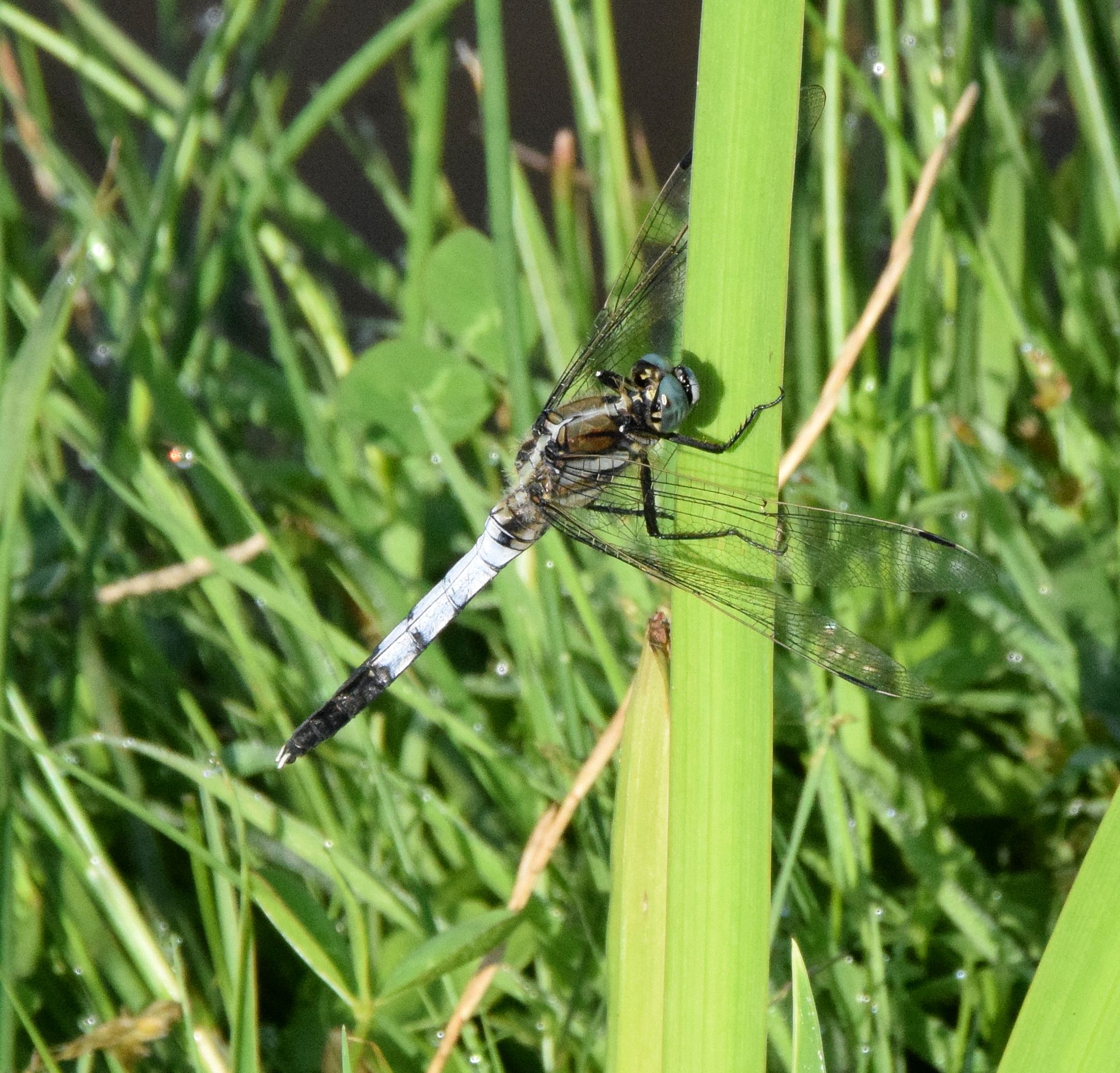
That is where I started on Friday 23rd, a humid sunny day once more. The only dragonfly on the wing, though in good numbers was White-tailed Skimmer (above) that I had observed previously at Lake Kerkini, Greece in 2017. This patchily distributed species gets the name from its white anal appendages that stand out very clearly in flight. It has a generally sleeker build and jizz than the familiar Black-tailed Skimmers at home. From this region of France WTS ranges across much of south-eastern and central Europe then onward as far as China and Japan.

I had expected this location to be much wilder, but it was actually recreational in character and populated by not very welcoming anglers. It would probably have repaid more thorough inspection but I didn’t want to remain for too long before making the hour’s drive north to the Parc naturel régional de la Brenne. The vast 166,000 ha (410,195 acre),1672 sq km complex of marshland, reed beds, moors, prairies and woods contains 47 separate communes, more NNRs and over 2000 lakes and ponds
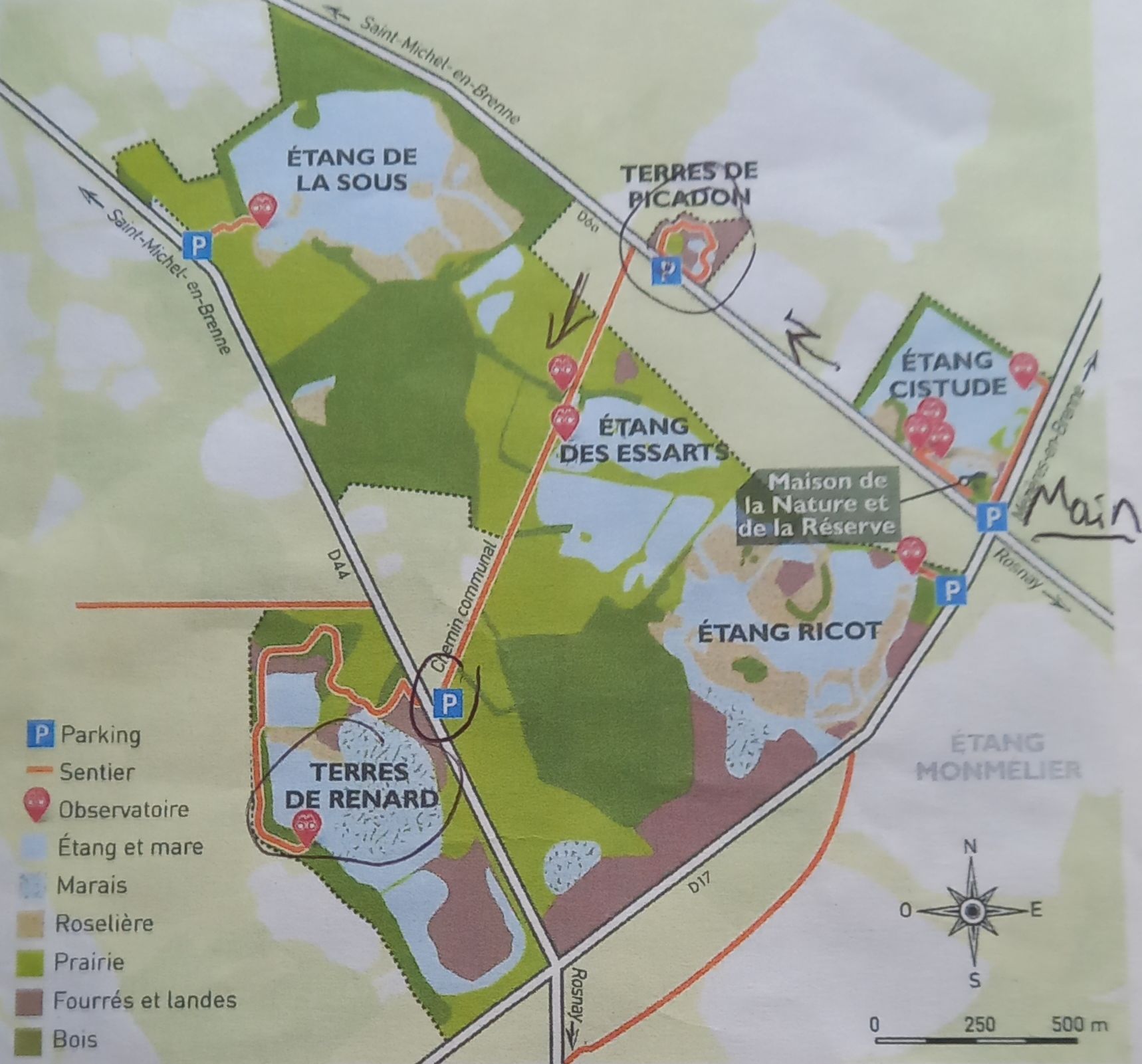
Arriving in the late morning I set about exploring the places recommended a day earlier. The first was an area designated la Réserve naturelle nationale de Chérine (above). This contains a 3 ha (7.4 acre) prime odonata site Terres de Picadon where I spent an hour making two circuits of the visitor trail which leads through several small to medium ponds, some specially created and each with a character of its own. As at Pinail actually walking around the water’s edge was not possible, and from the fenced-off access points no species of note were encountered. But my attention was caught by very fresh Great Banded Grayling (pictured below), that like all of their genus had a penchant for perching prominently on posts.
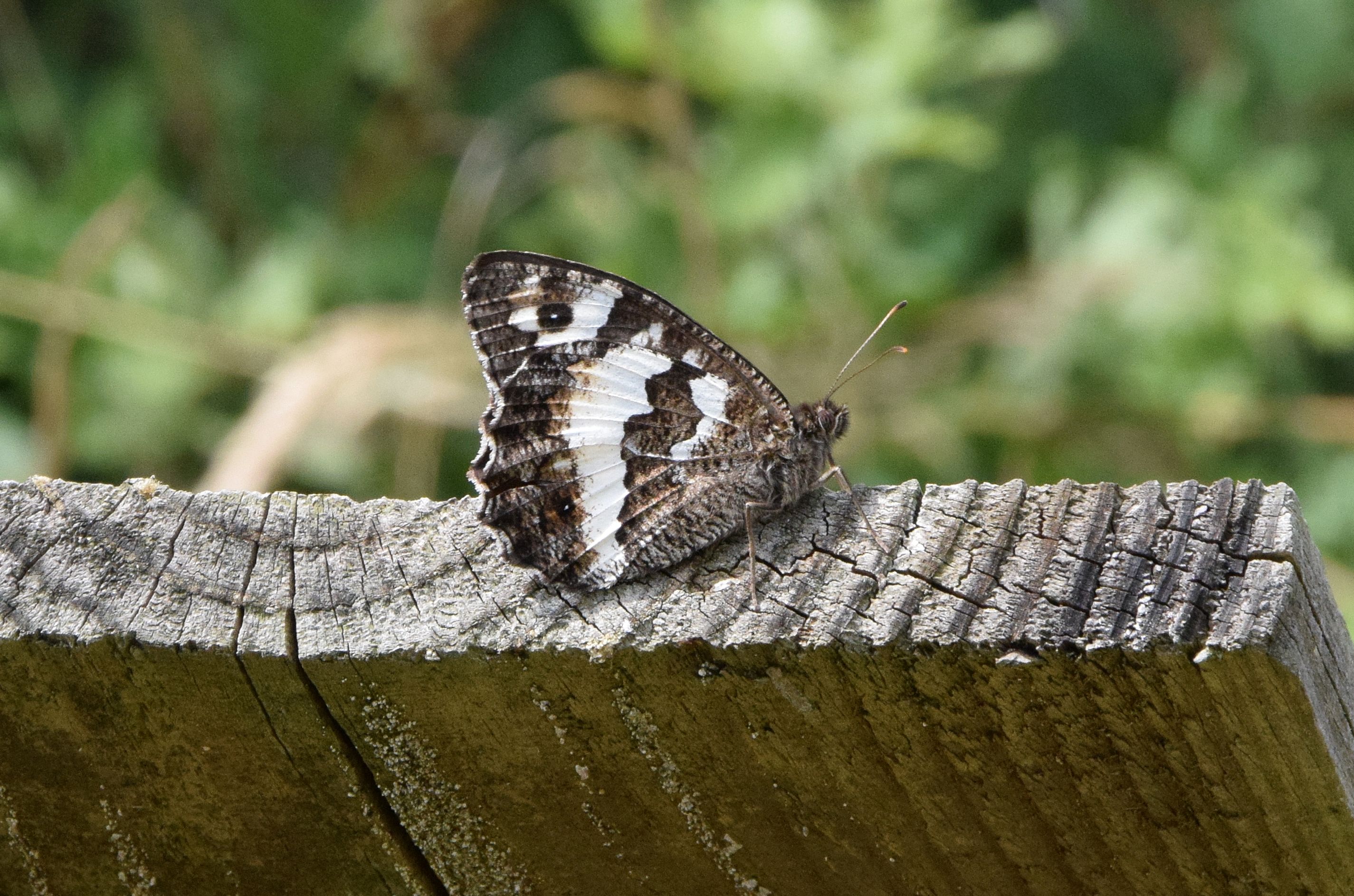
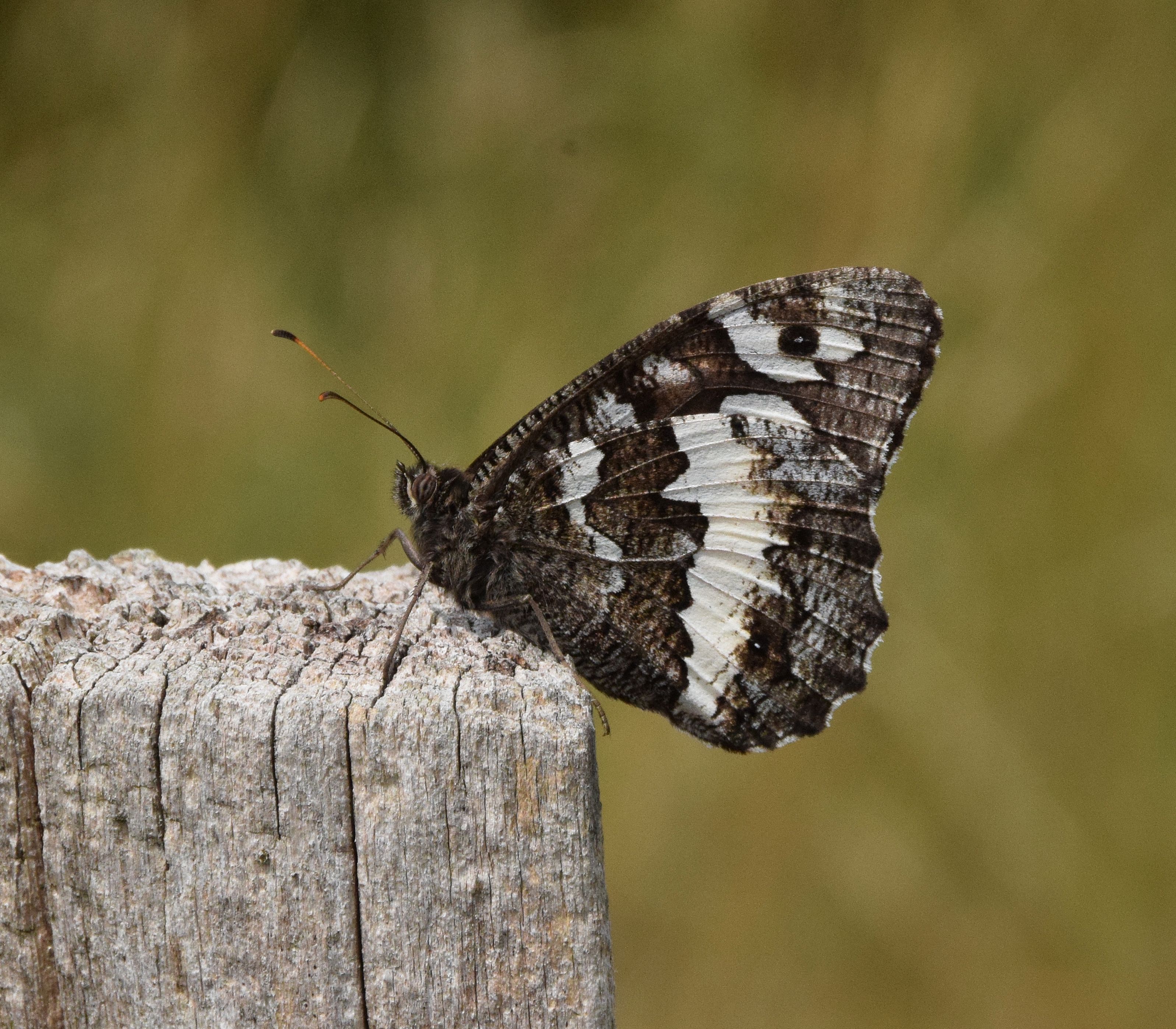
Great Banded Grayling

Next I moved on to Terres de Renard, a large étang around two sides of which runs a visitor trail that seemed to go on for ever. Once again I felt dependent on what might actually show itself close by the path and there was an array of common butterflies and other insects, but no real opportunity to observe dragonflies at close quarters. I kept hoping for Orange-spotted Emerald suspended within the track-side vegetation, or the enigmatic Western Spectre, but was not successful. Then after turning back things became a little bizarre.

I have never come face to face with a Crayfish before, but now a strange creature almost erupted out of the ground in the middle of the track as I walked. It seemed to display a similar lack of cohesion to the aforementioned Large Chequered Skippers, twisting round and round with limbs flailing in all directions. This was not just any but a north American Red Swamp Crayfish, which is classed as an invasive alien pest. Clearly they are well established here, as I had already noted a carcass, several severed claws and a cut in two Slow Worm along the trail; evidence I expect of their predatory habits.
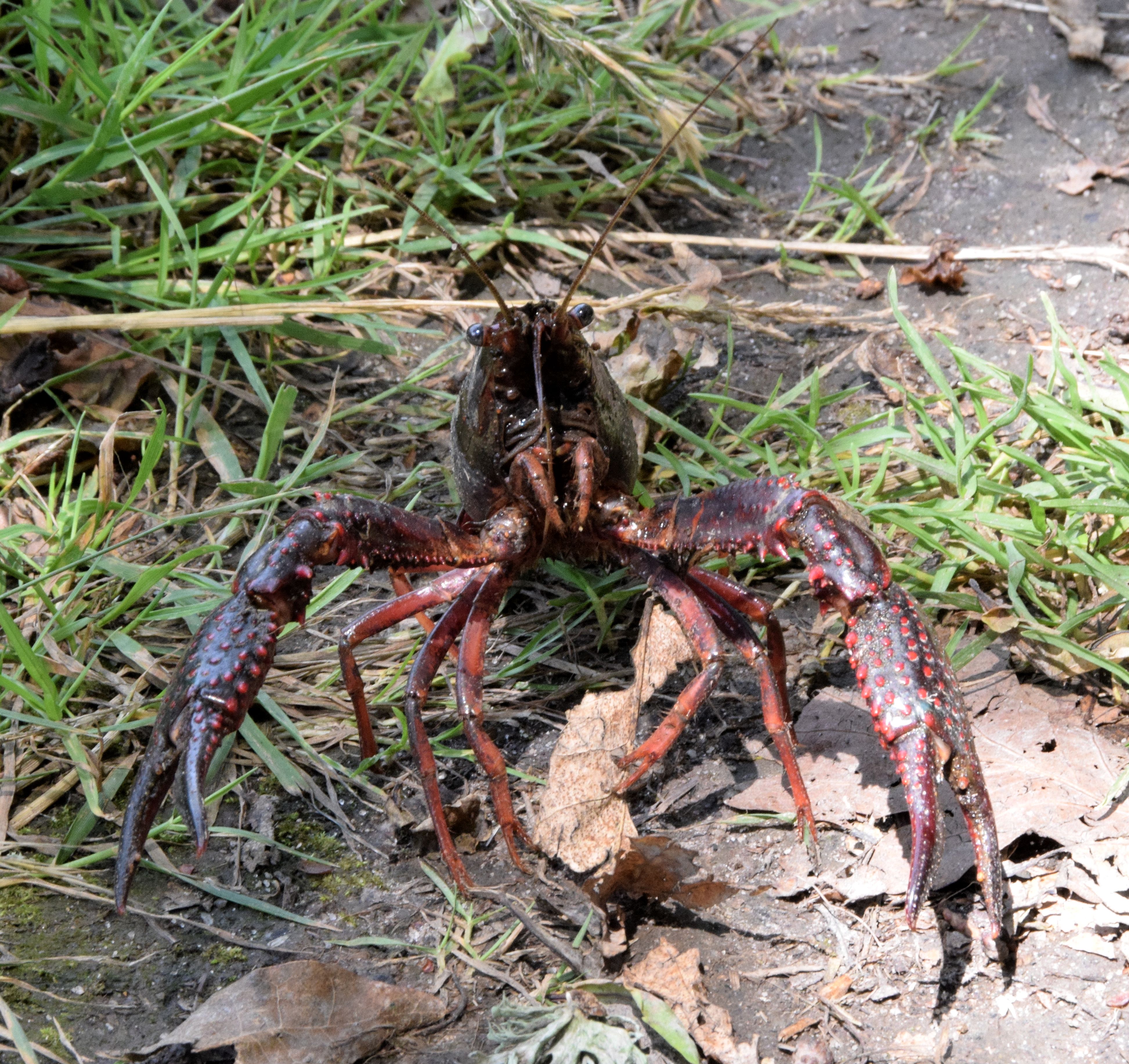
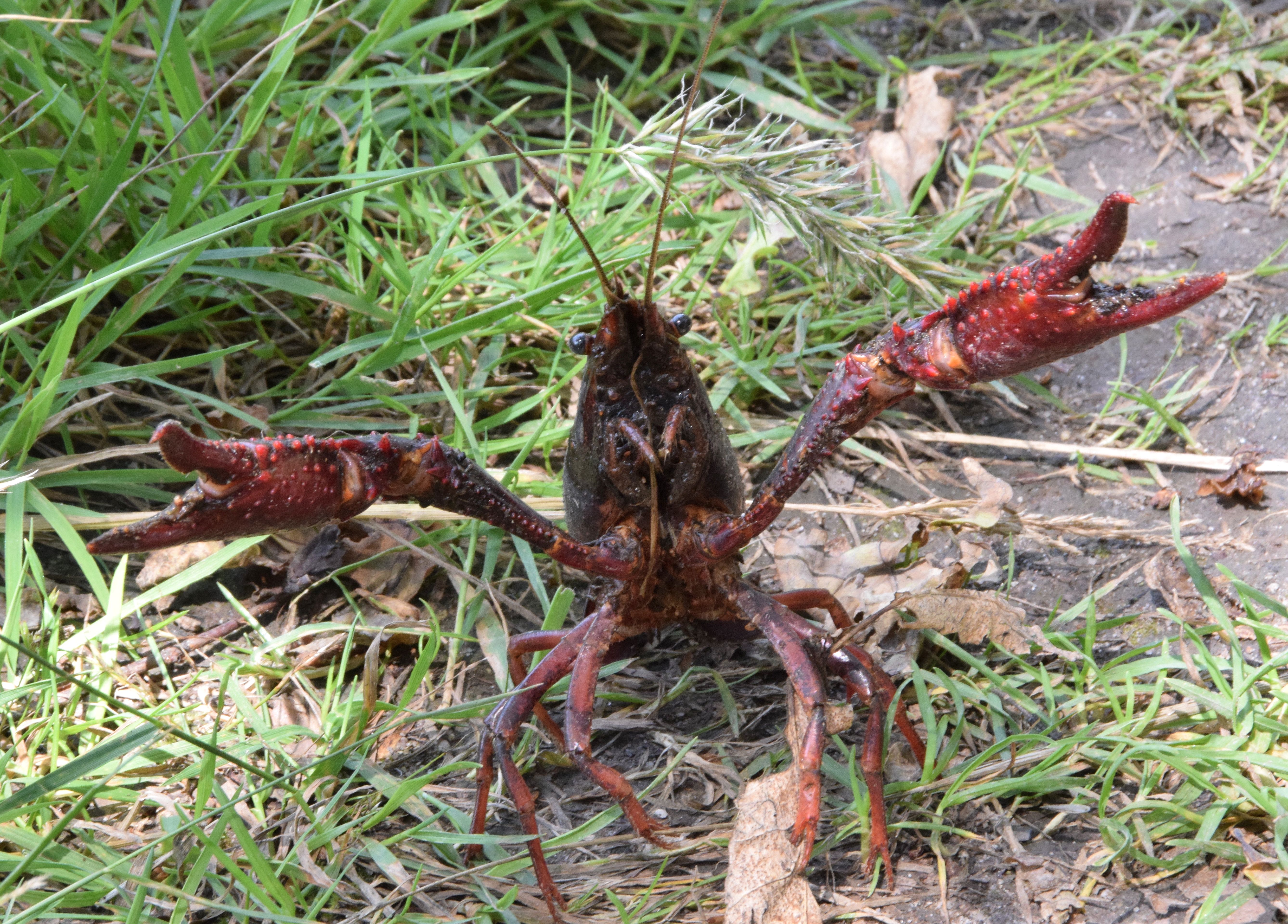
A close encounter of the Crayfish kind

Wondering if my assailant’s odd posture was due to being half out of a burrow I gave it a little encouragement with a stick. Back at home I learned these crustaceans are indeed great burrowers. Now it rose up to face me head on and upon training the camera on it I could feel the dark, sharp little eyes glaring straight back at me. I am not sure if this (above right) is the threat posture or whether the Crayfish just liked having its picture taken.
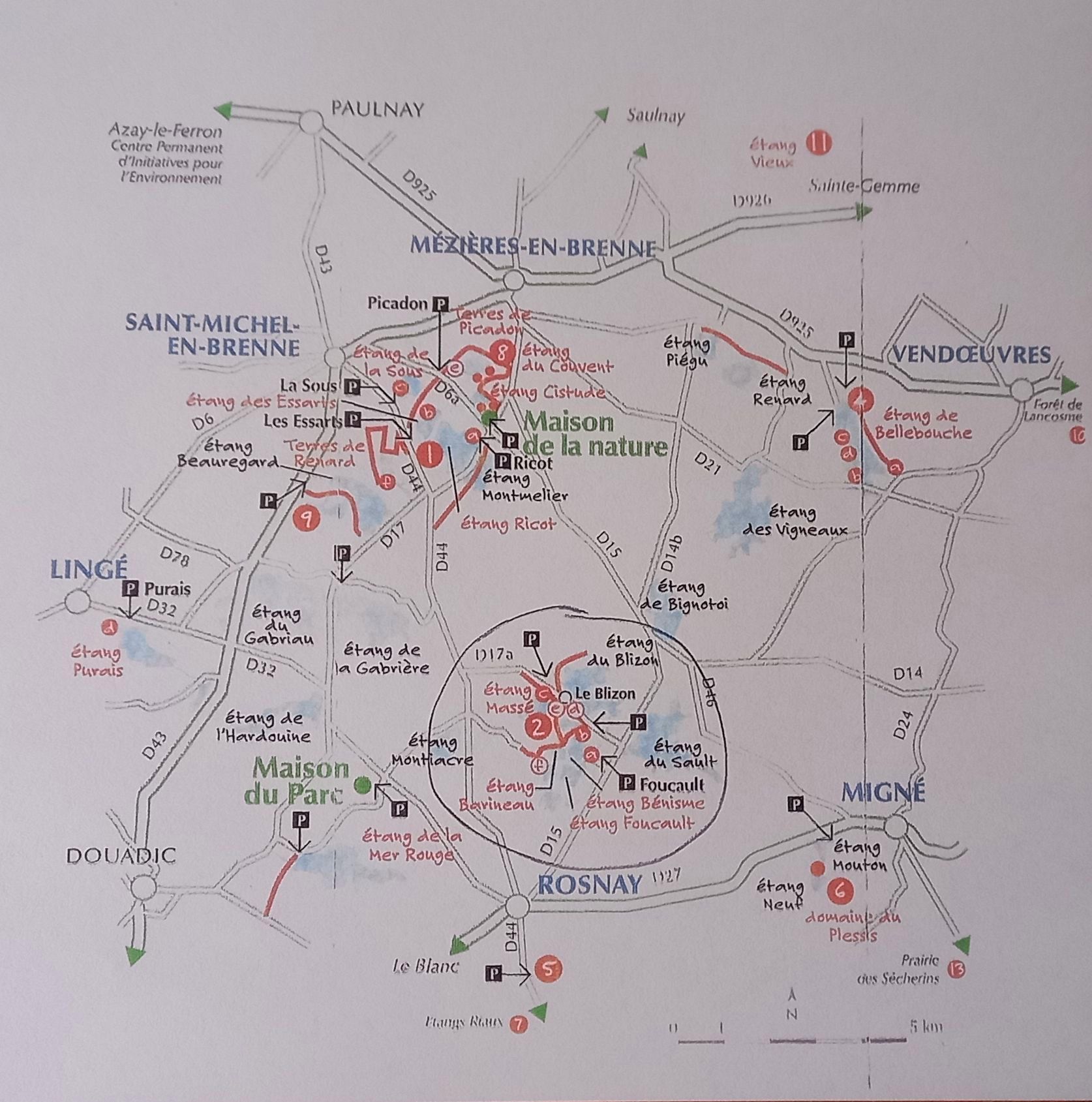
At the parking area I had time for one more site visit before another hour’s drive back to Poitiers and the airport, and so transferred a short distance to Massé-Foucalt (no 2 on the map above). Parking in le Blizon I walked an interesting trail through more étangs and it was here that I at last gained two tripette odo lifers. Common Winter Damselfly (pictured below) as the name suggests is widespread throughout continental Europe south of the Baltic and has a season-long flight period. They occur around all kinds of well-vegetated standing waters. But we don’t have them in Blighty, and upon realising when compiling this post I had indeed self-found something new my little heart leaped.
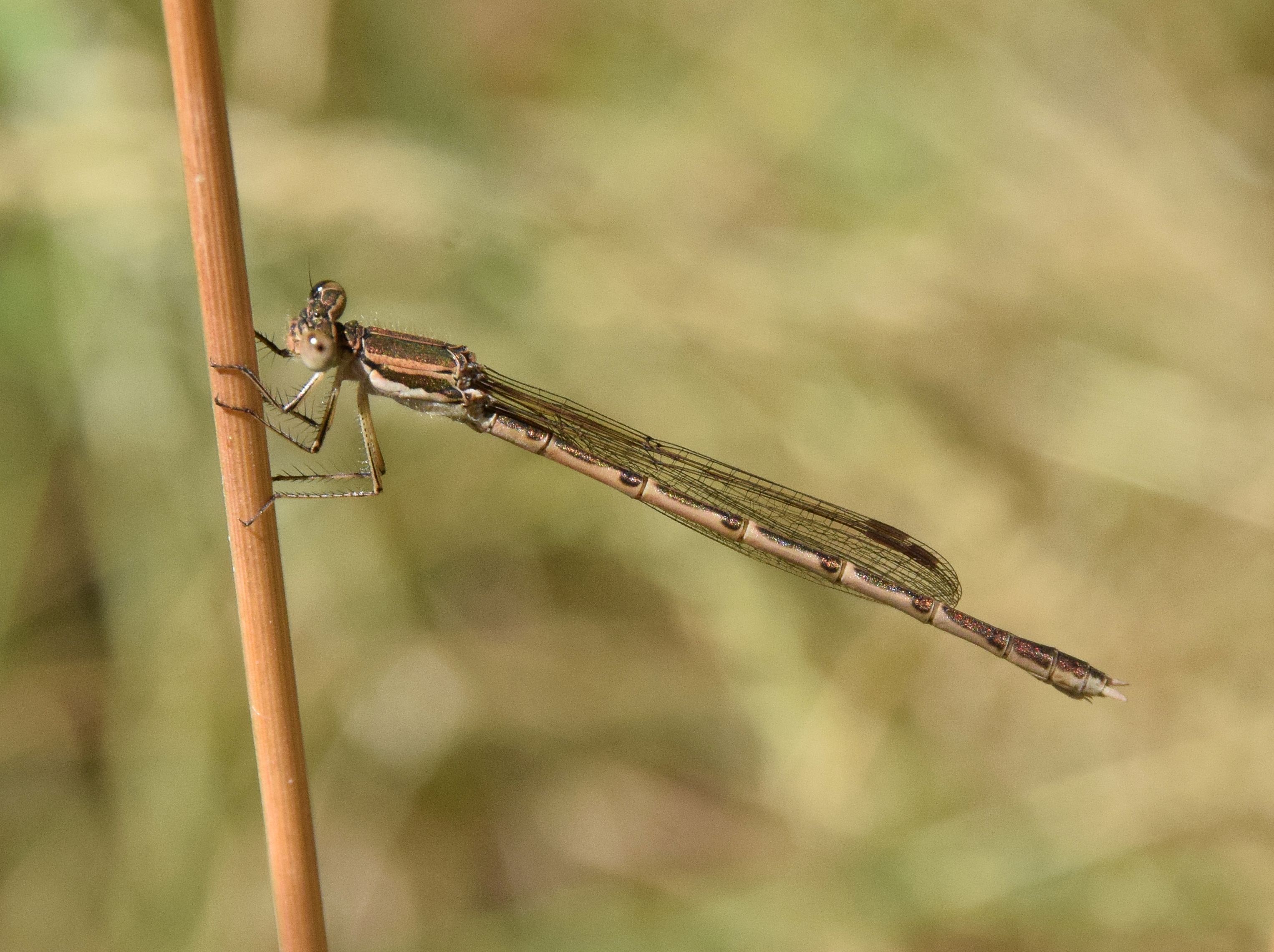
Common Winter Damselfly

That sense of satisfaction grew when I matched the item below to female Small Spreadwing (or Emerald). This is the most delicate of the European Spreadwings of which I have now observed all but one. For me the clearest diagnostics are the whitish sides to the brown ptreostigma (wing tags), and yellow back of head that just about shows in the image. Like CWD the species also has a wide continental distribution, and flies from April to November, its exact season varying from region to region. Neither of the two damselflies featured here were trip targets, I just self-found them at random which is what these off-beat, wandering exercises are all about.

Small Spreadwing

In the time I had allowed and with the lost rain day it was possible only to carry out an interesting if not over-productive reconnoitre in the “Land of a Thousand Lakes” as La Brenne is known. But this pleasant, unhurried region of rural France passed the always tricky test of what works or not in solo travel. There is huge potential for future visits here, especially given the convenient and affordable flights to Poitiers, and I now have an evolved alternative to re-working the British insect lists each summer if I wish.
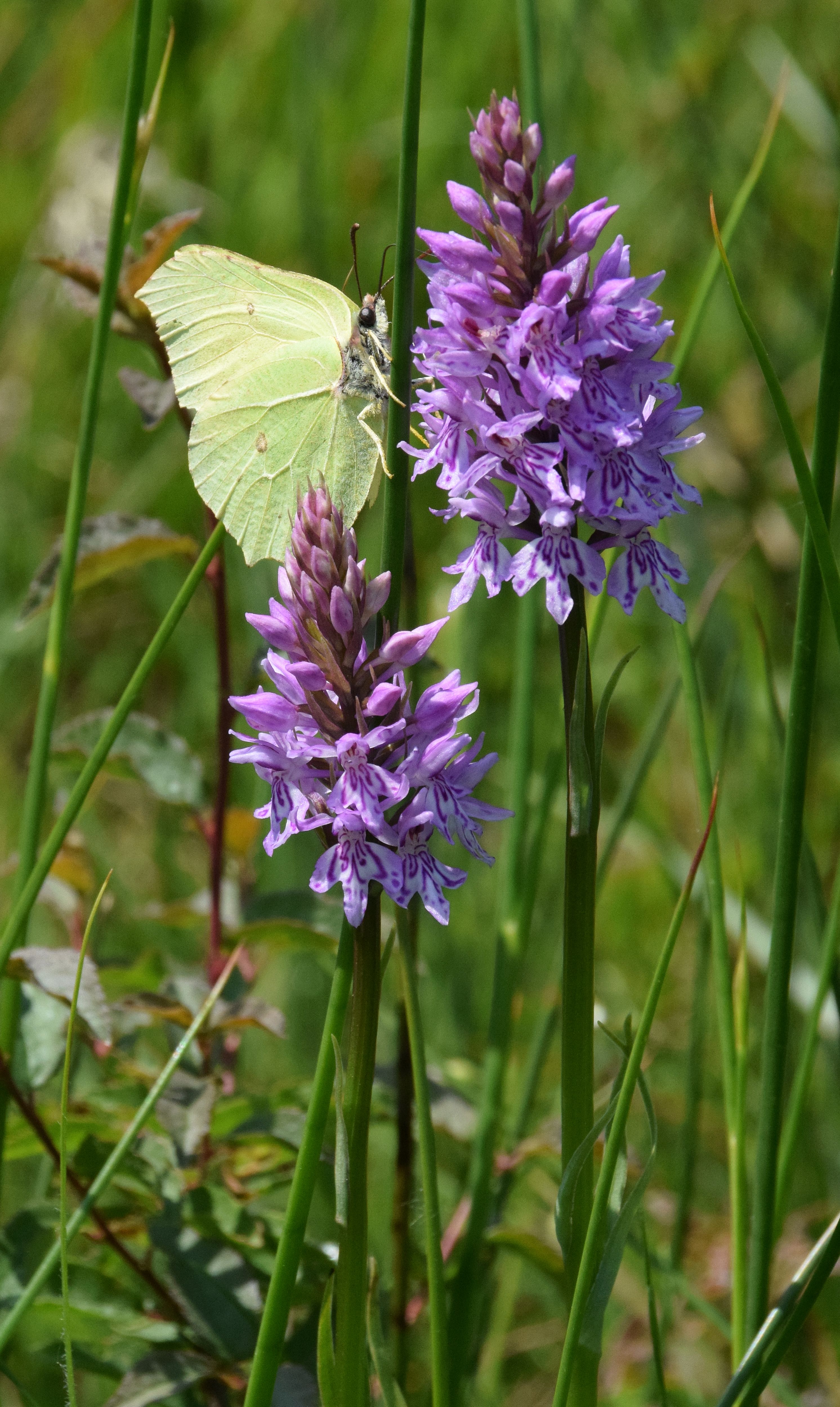
A four hour search for Burnt Orchid at Clattinger Farm, Wilts + Southern Marsh Orchids: 7 – 12th June

The first part of this was the proverbial needle in a haystack. In planning my current wild Orchid agenda I especially wanted to experience the highly attractive Burnt (or Burnt-tip) rarity. In my home area it occurs only in a few non-disclosed locations on the South Oxon Downs, so this would entail a day tripette to the Cotswold Water Park in neighbouring Wilts.

Clattinger Farm (SN16 9TW – SU014932) is part of Wiltshire Wildlife Trust’s Lower Moor (see here) complex of farms managed by traditional practices. Historical records show that its SSSI-designated hay meadows have never been subjected to artificial fertilisers and agricultural chemicals, the only such lowland farm in Great Britain. Hence it is considered the country’s finest remaining example of enclosed lowland grassland, and of international importance for wild flowers. 

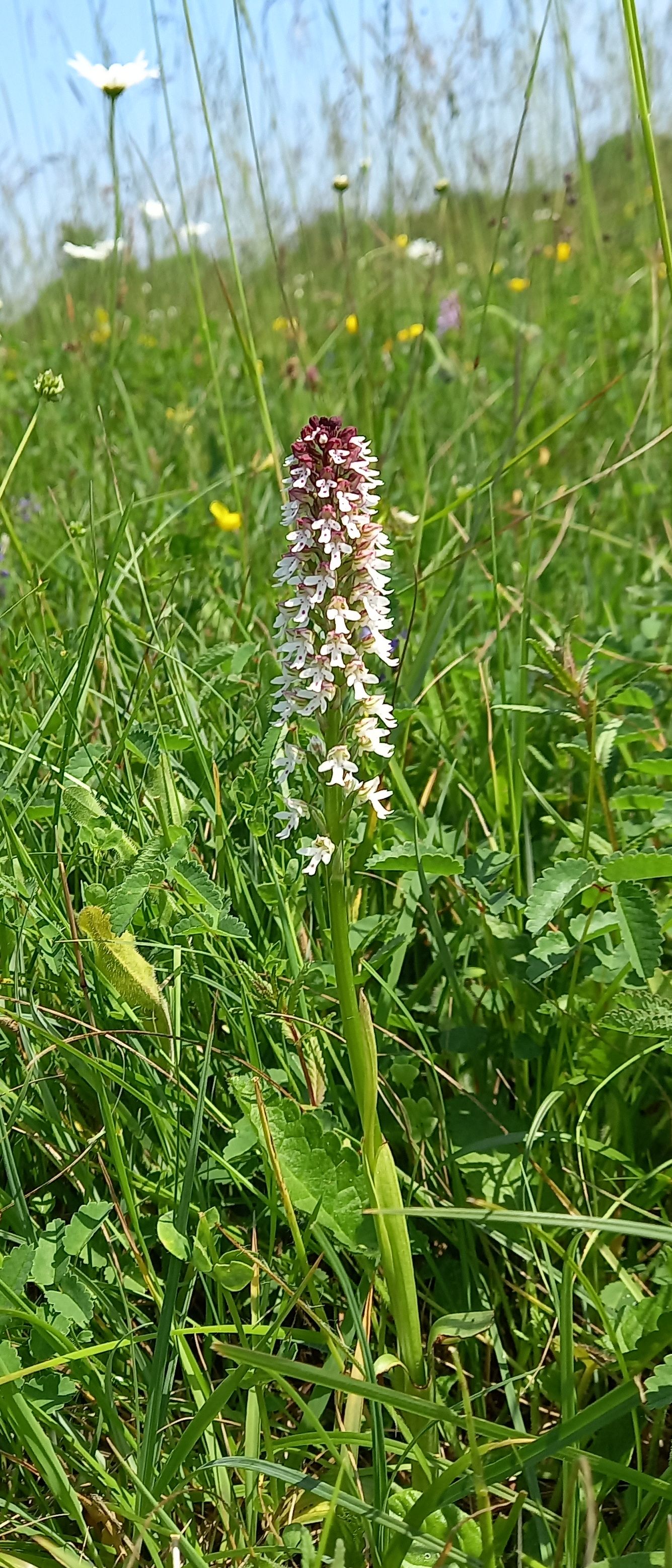
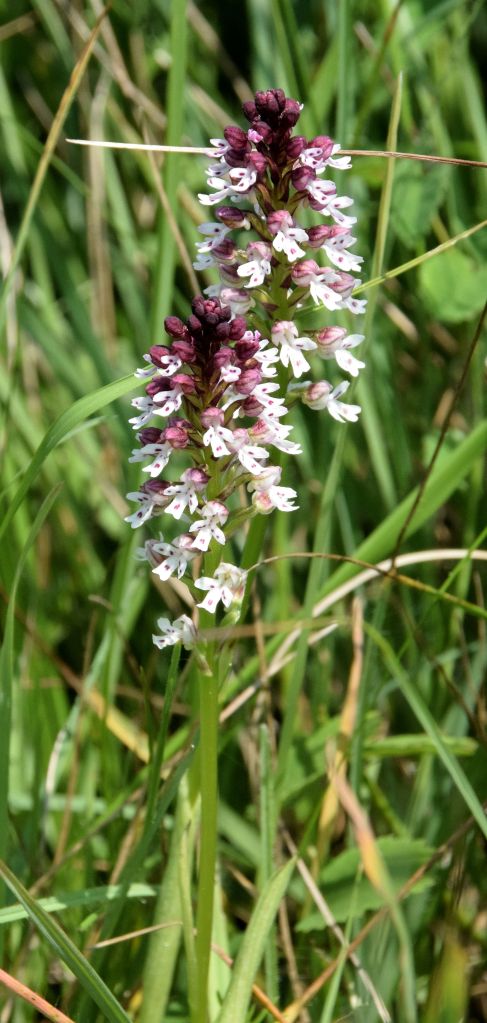
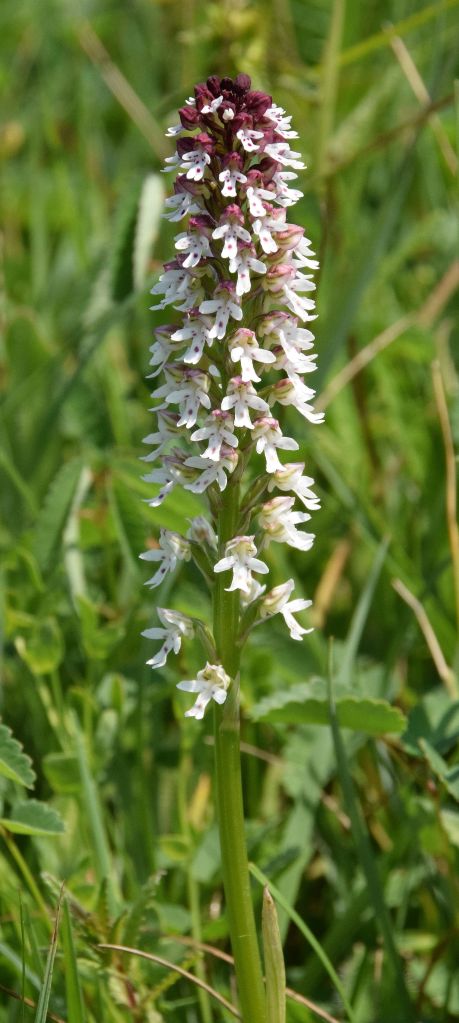
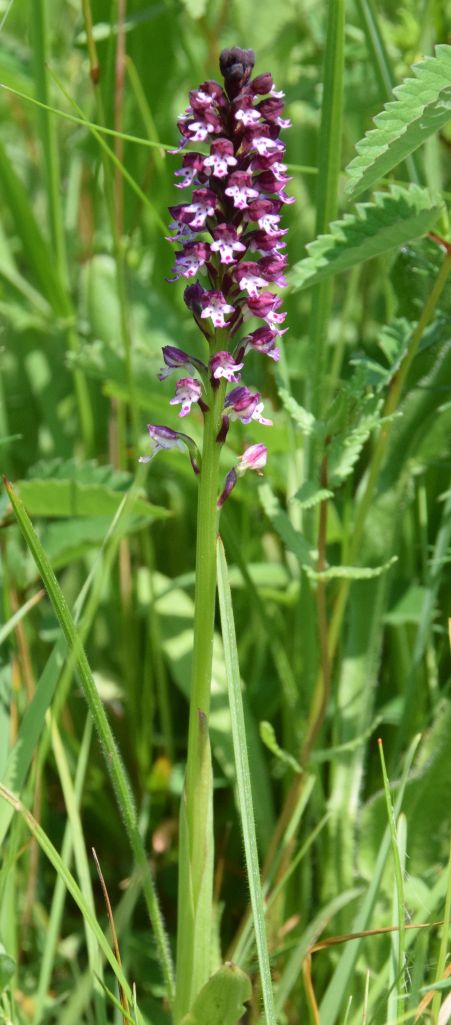
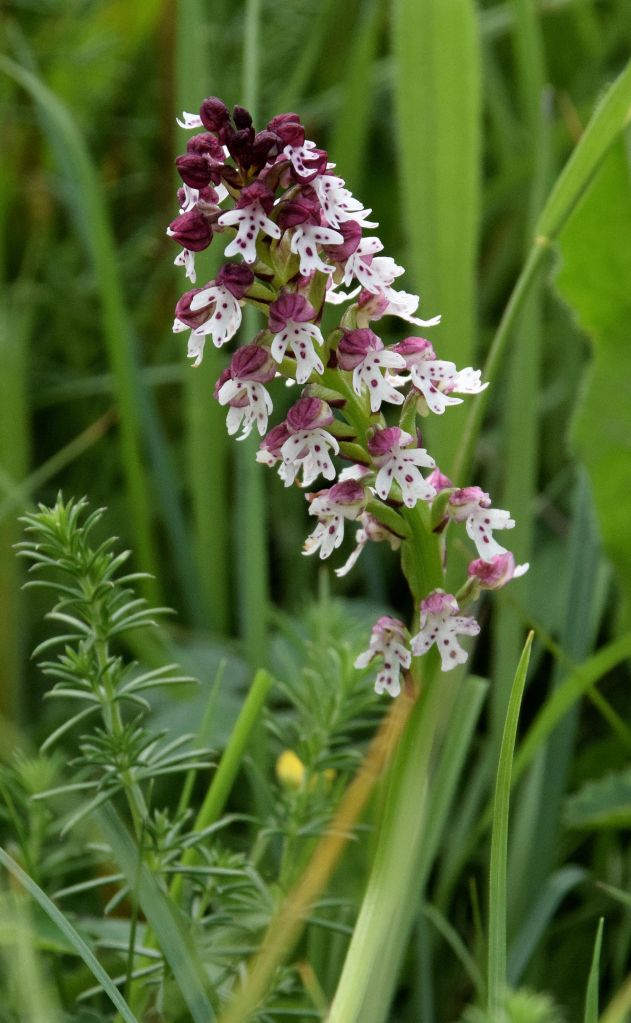
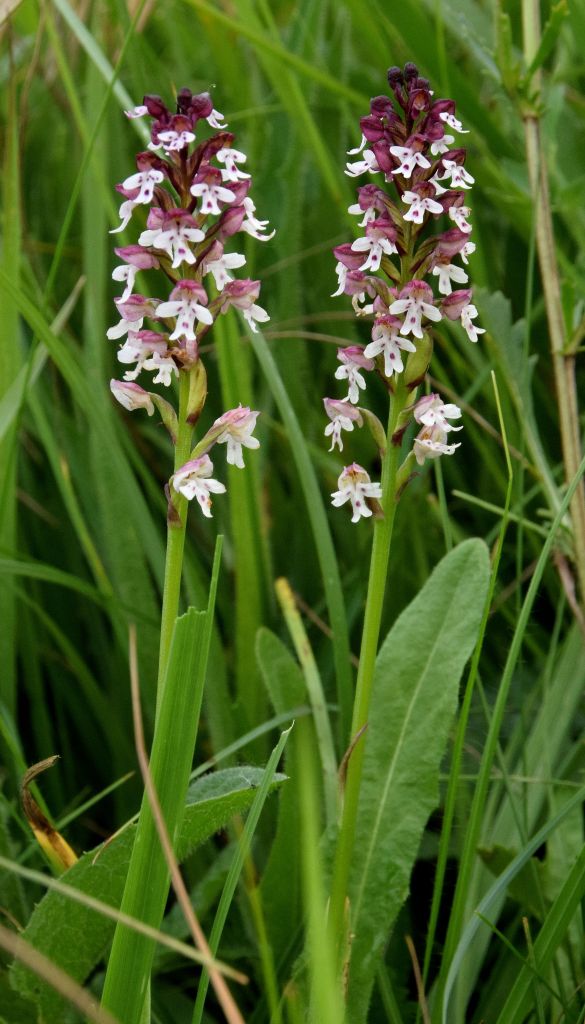
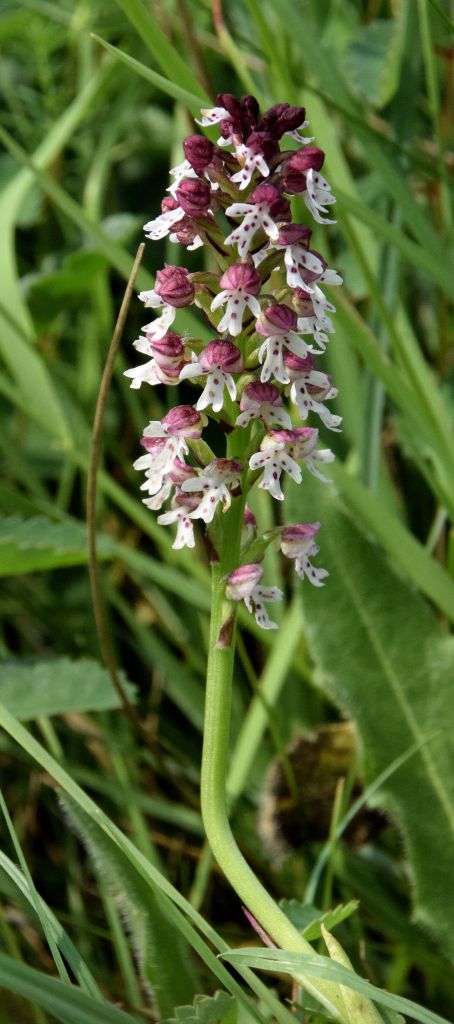
Burnt Orchid (left and right) and Southern Marsh X Common Spotted Orchids with guest

The question was exactly where to look. There was no specific information at the visitor centre and none of the volunteers could tell me either, so I set off to search at random. Prior to visiting I had no idea of just how large this 60 ha (150 acre) site is, there being 14 separate meadows in which I lost my sense of direction easily and a number of times. No other people I met walking around were serious Orchid hunters, which seemed surprising when this is an oft-cited location for the much-sought Burnt Orchid. Eventually I engaged with a local frequent visitor who gave me some vague directions, but still I drew blank.

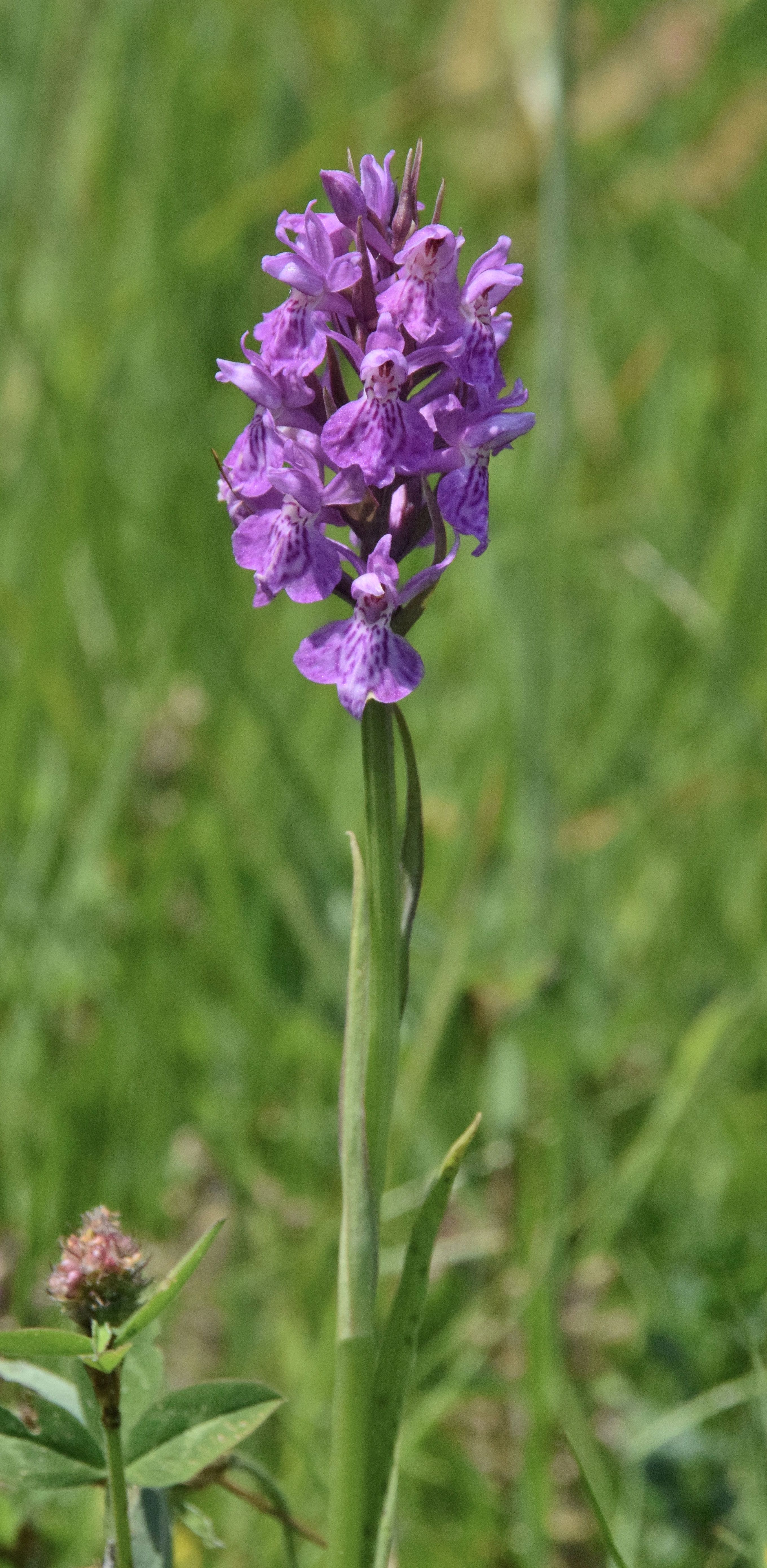
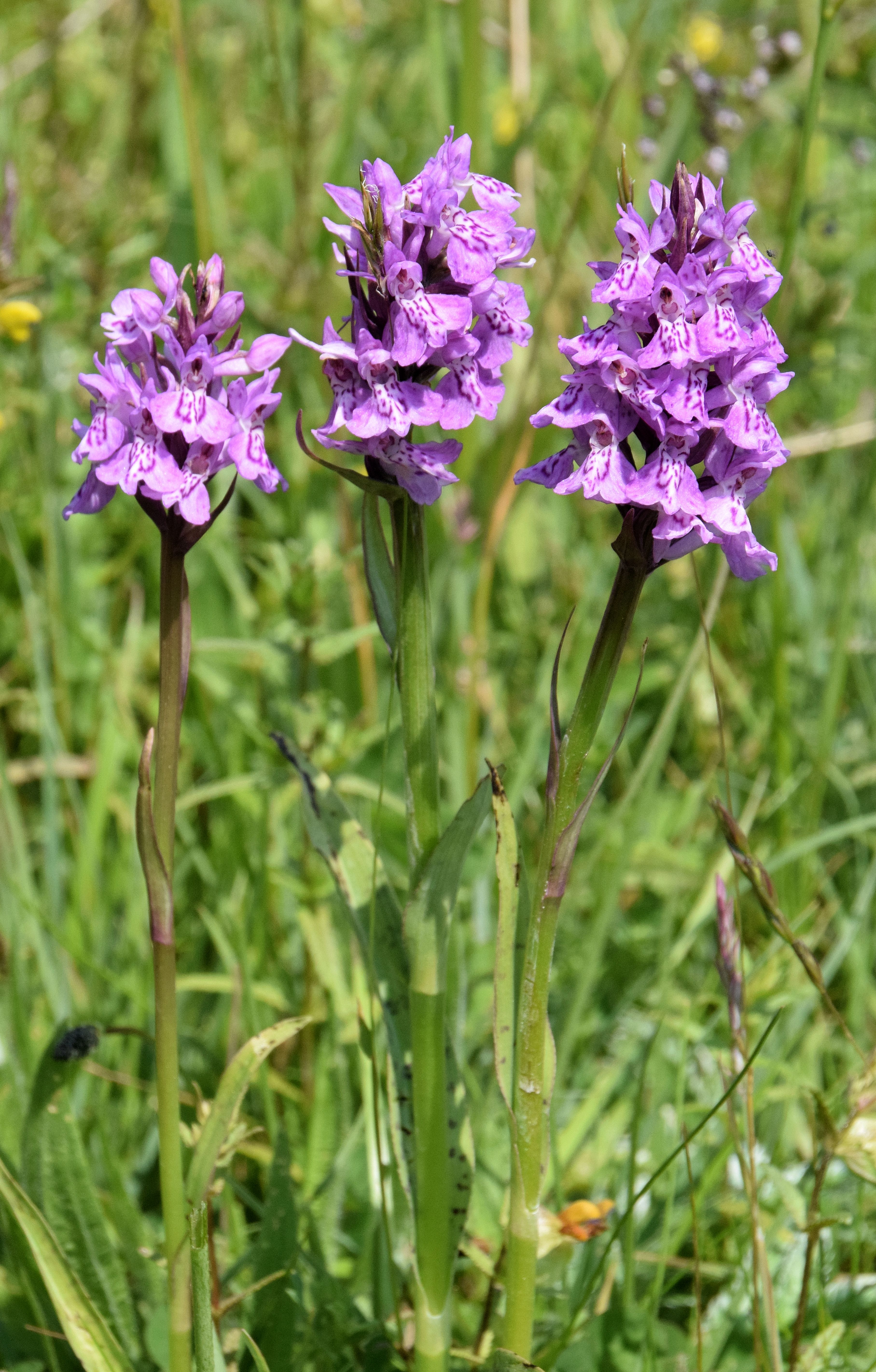
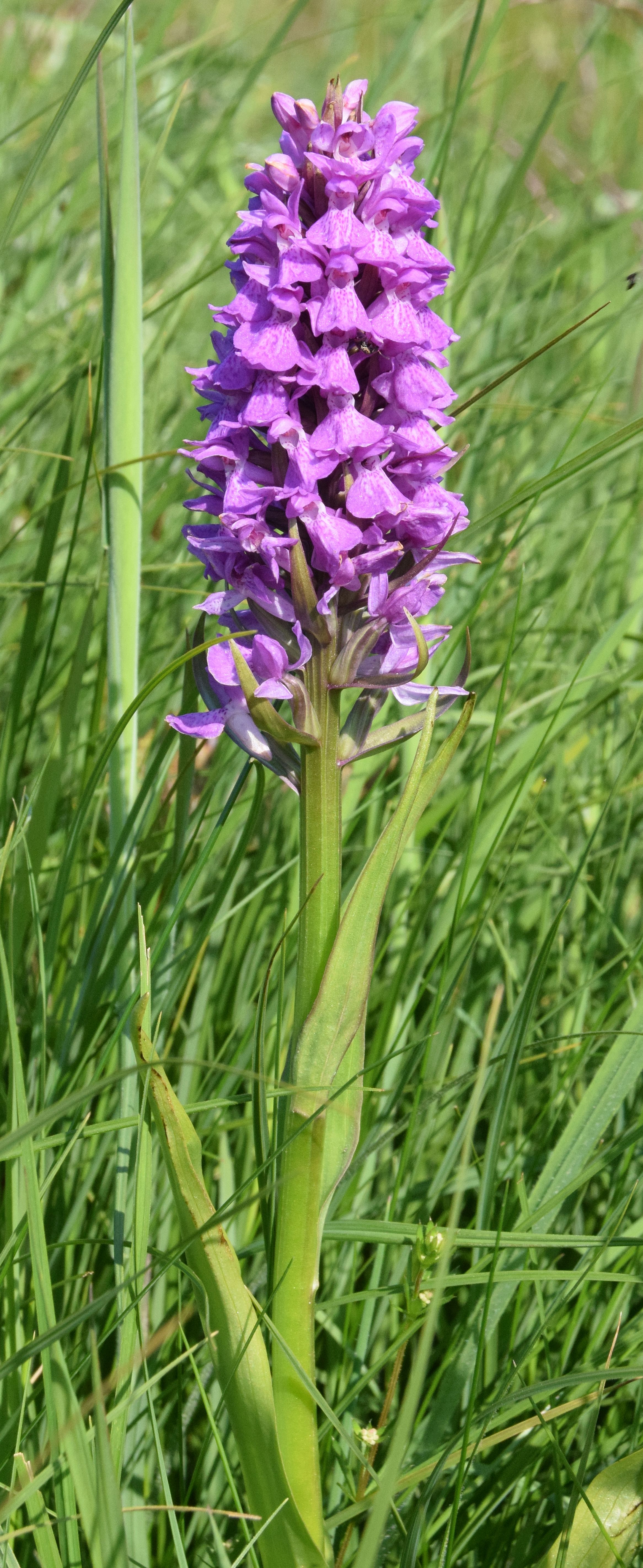
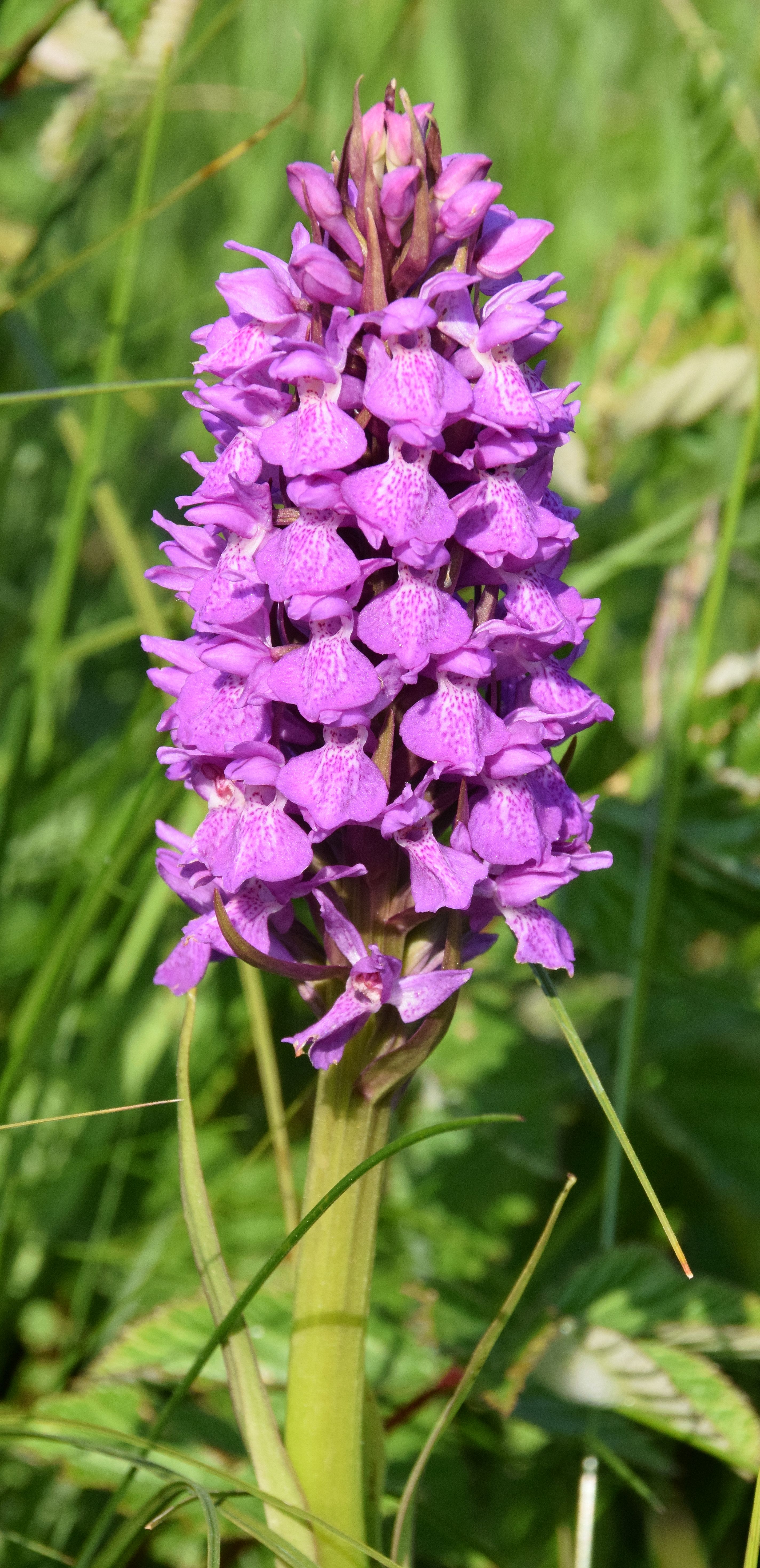
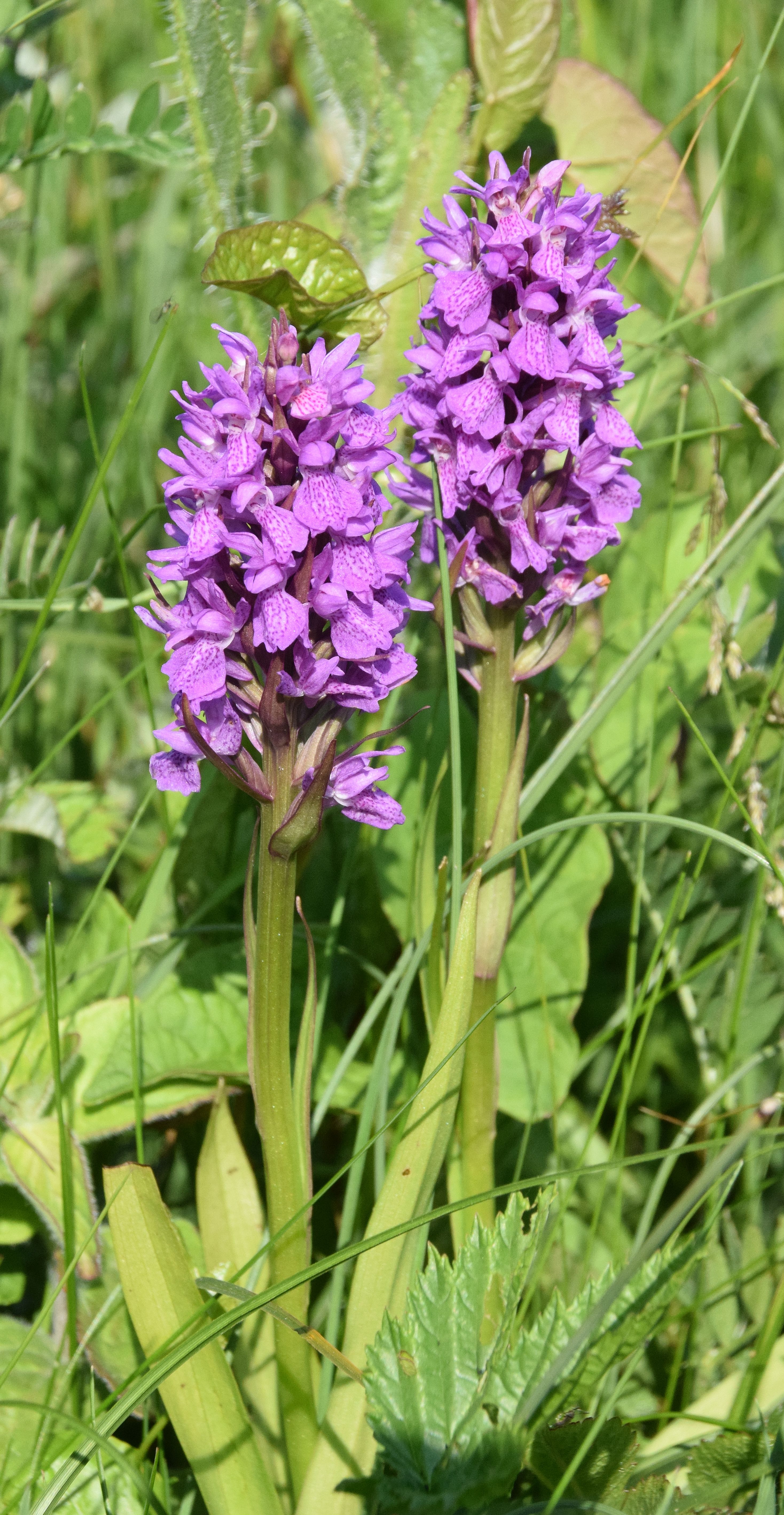
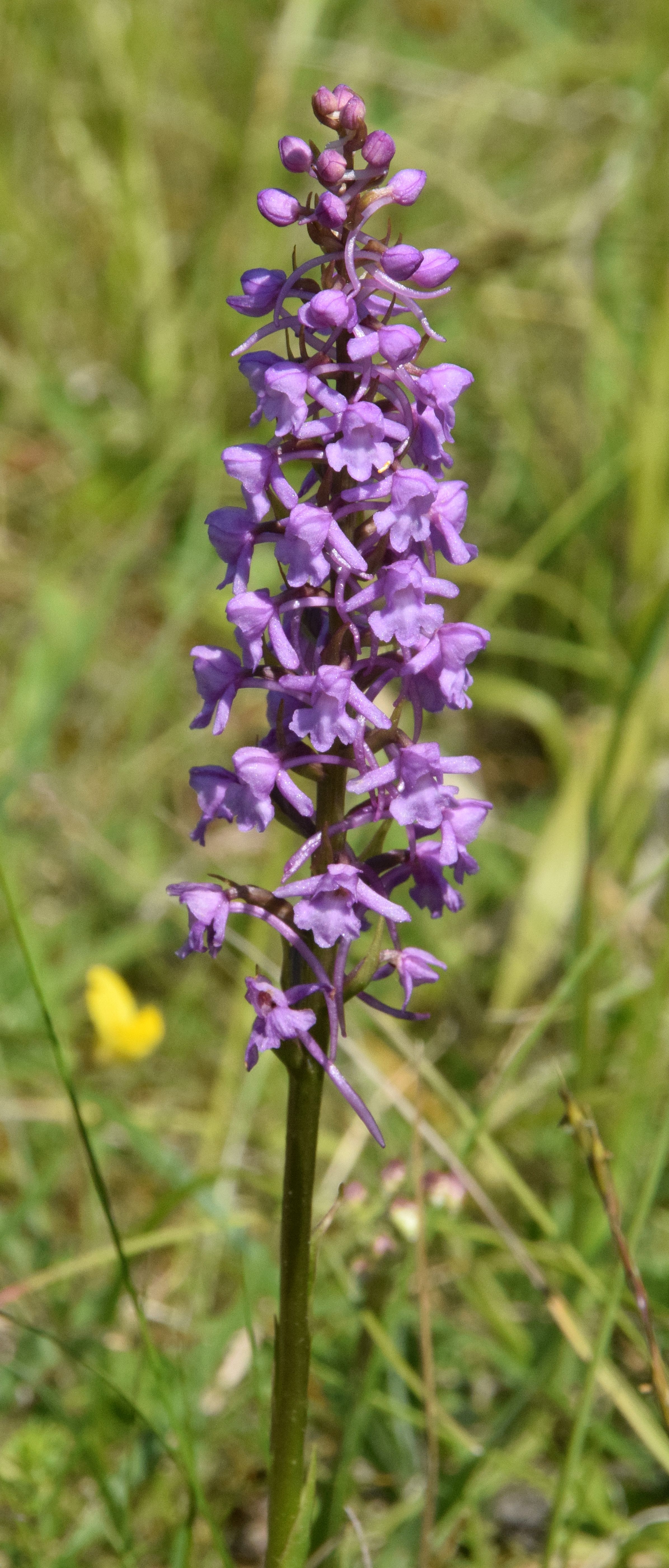
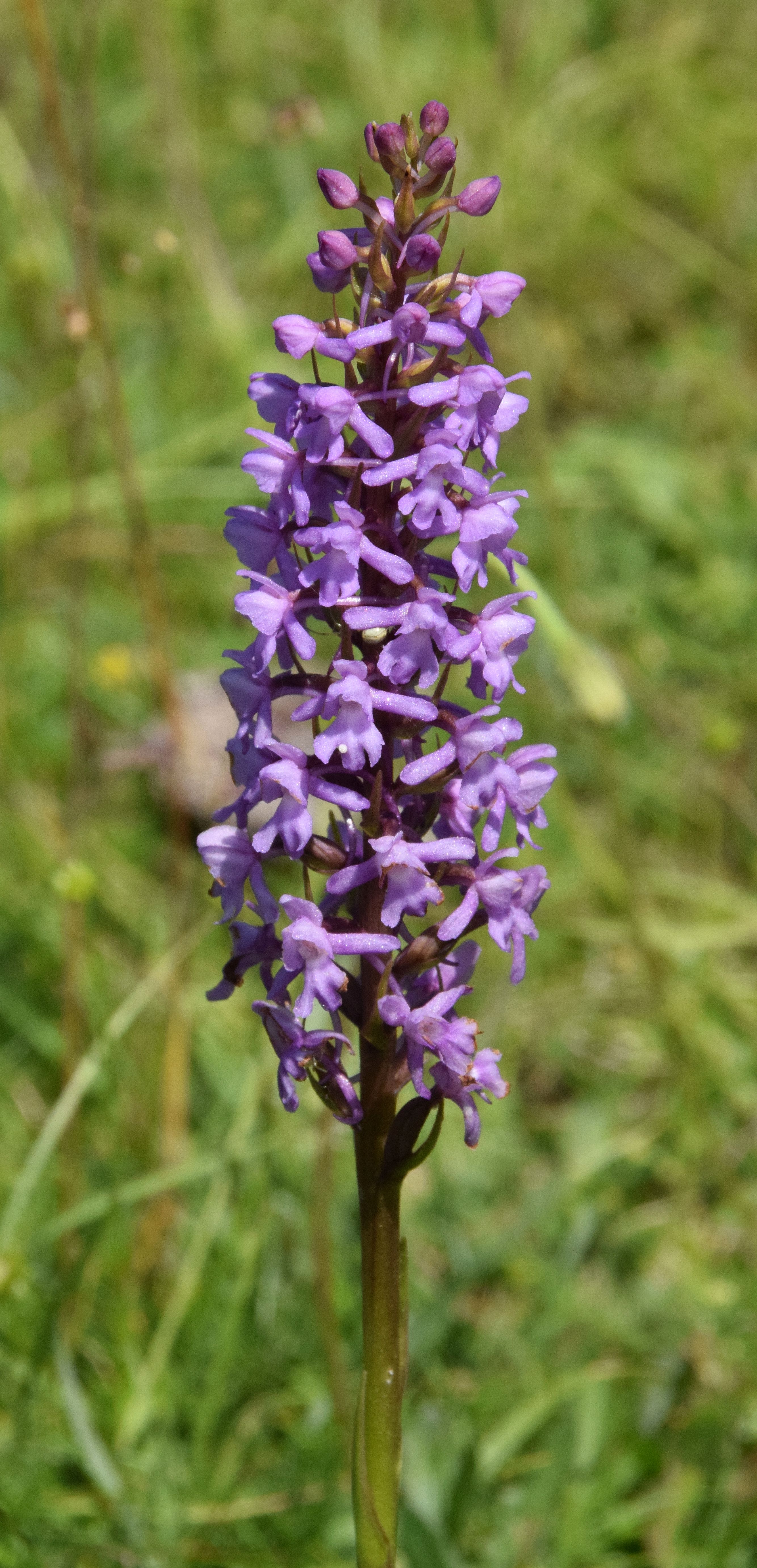
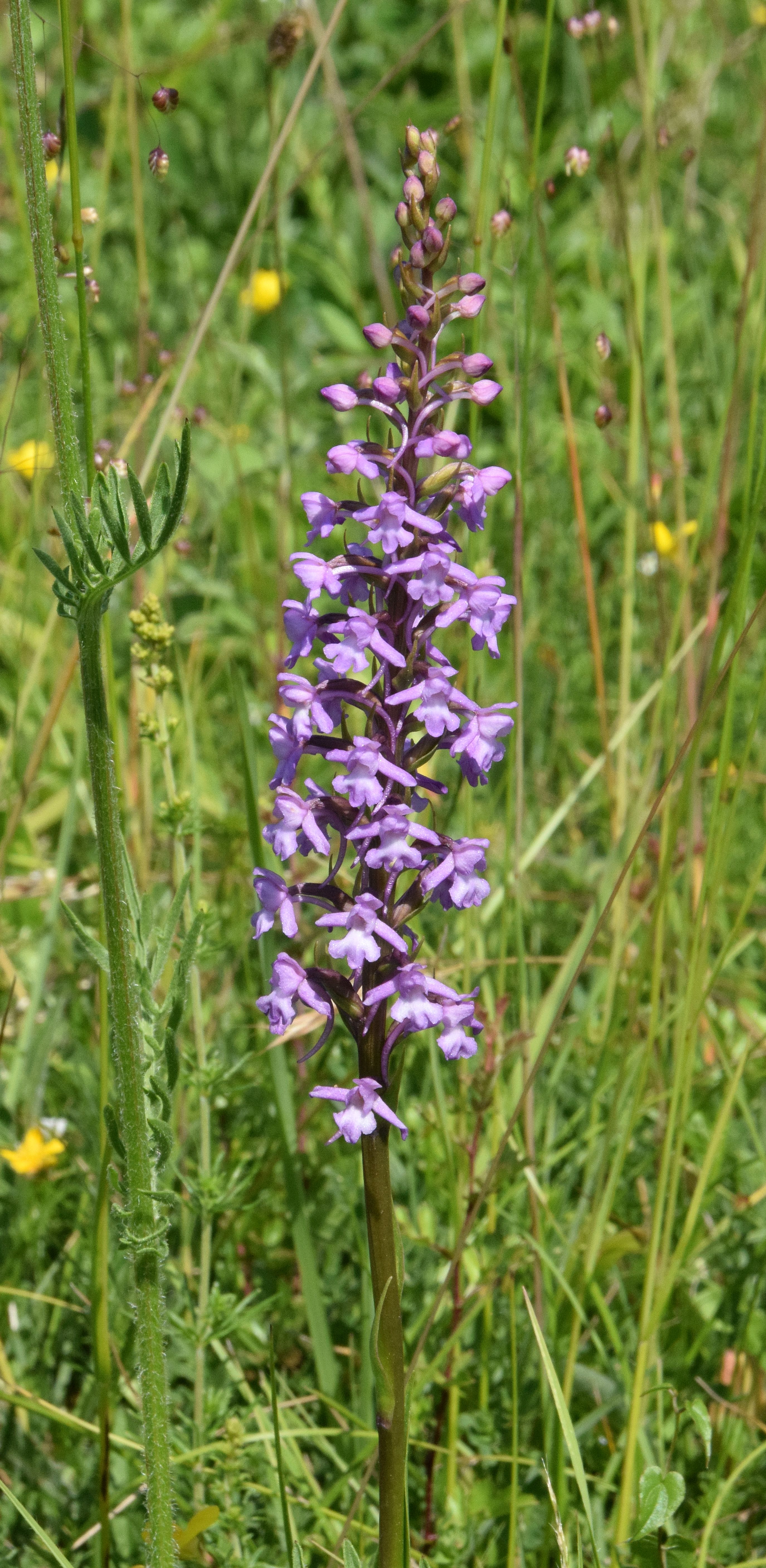
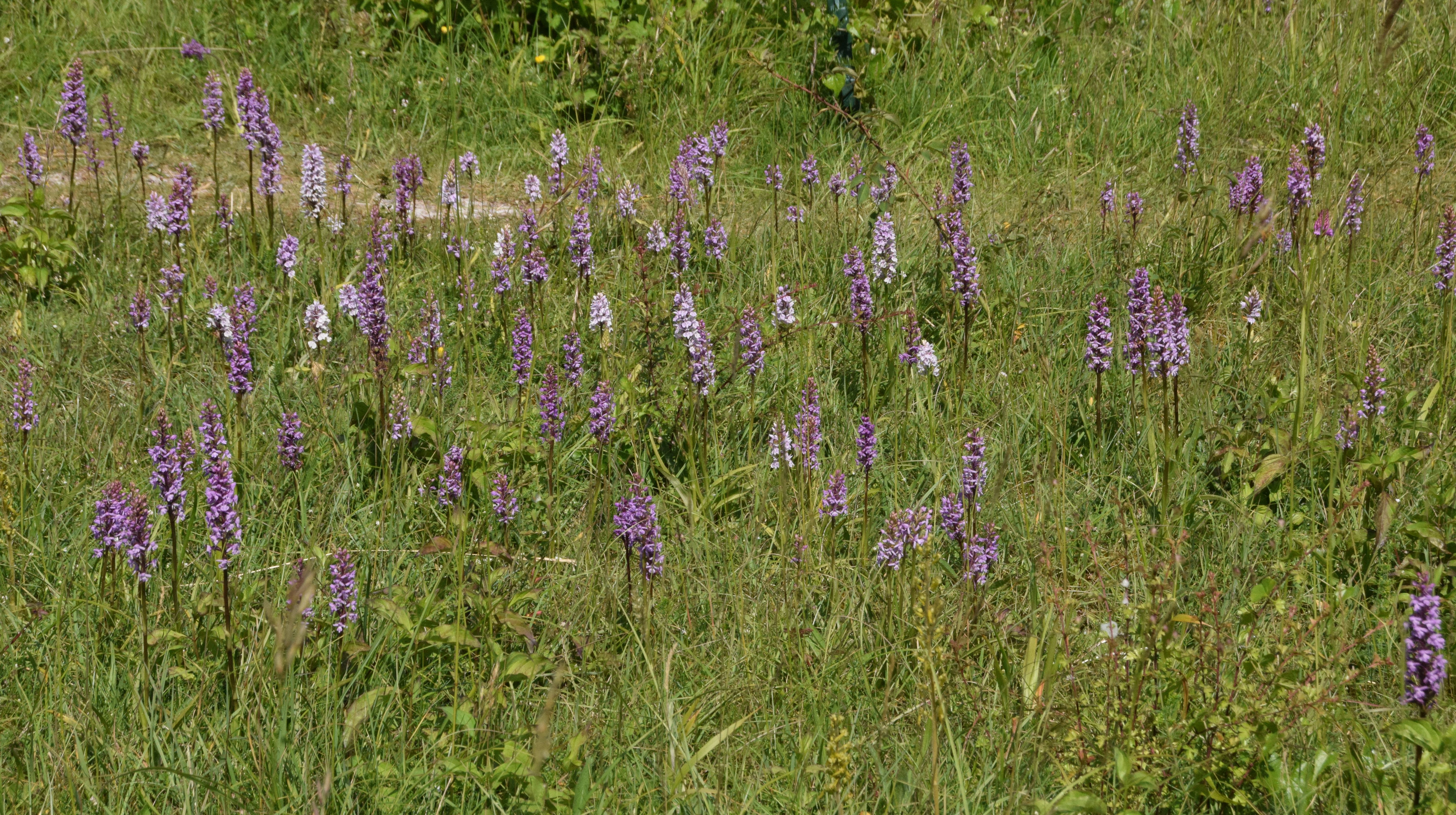
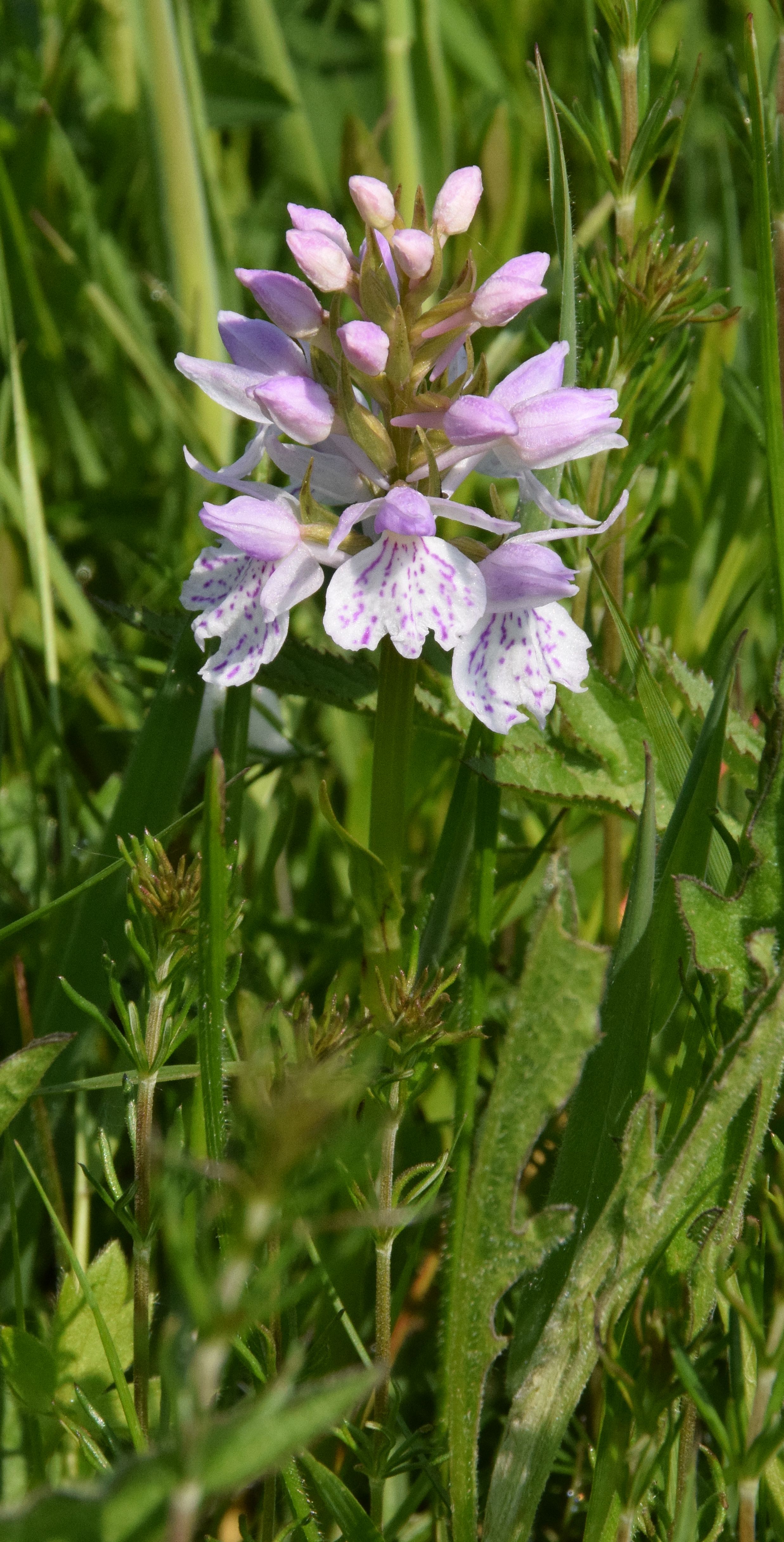
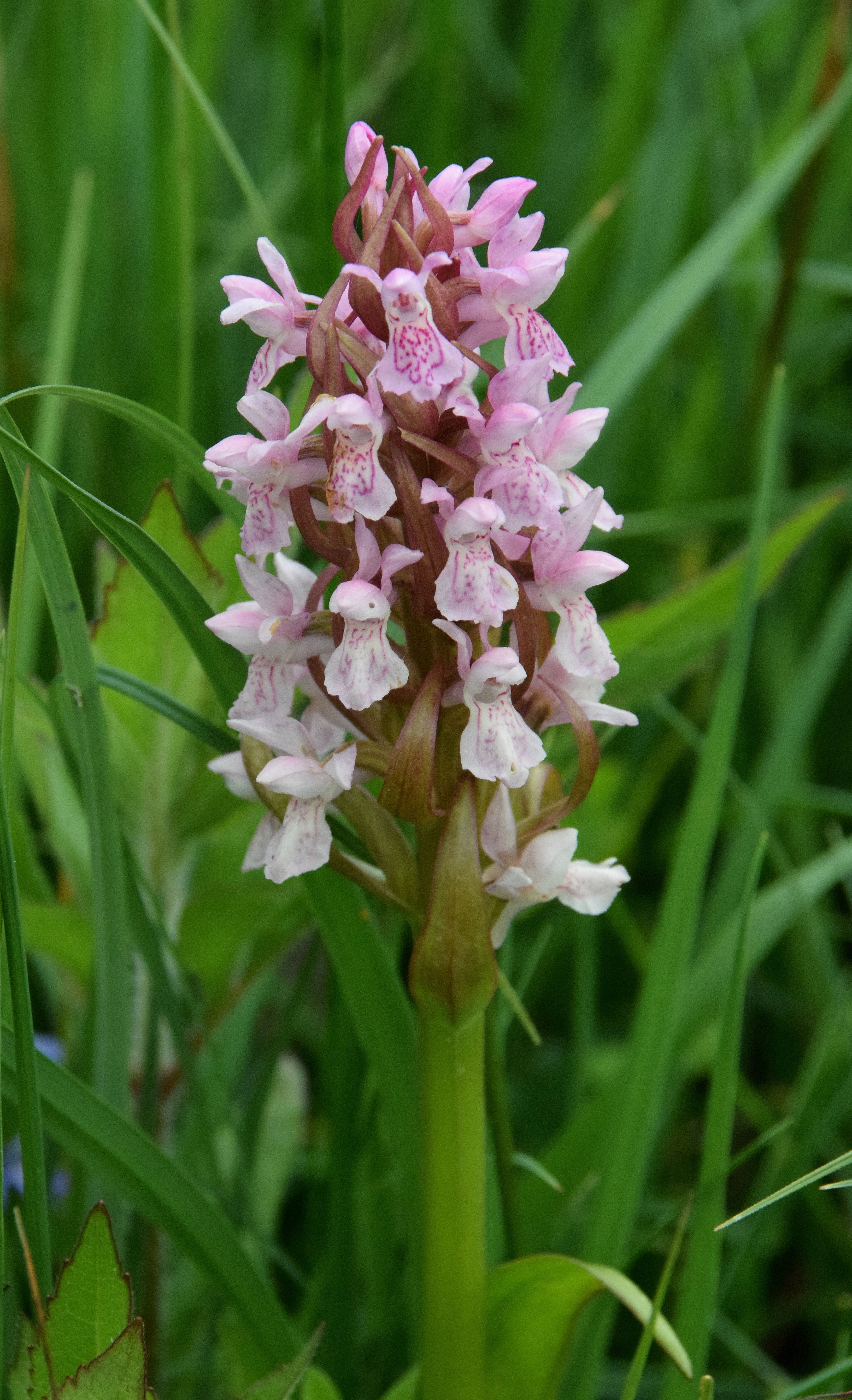
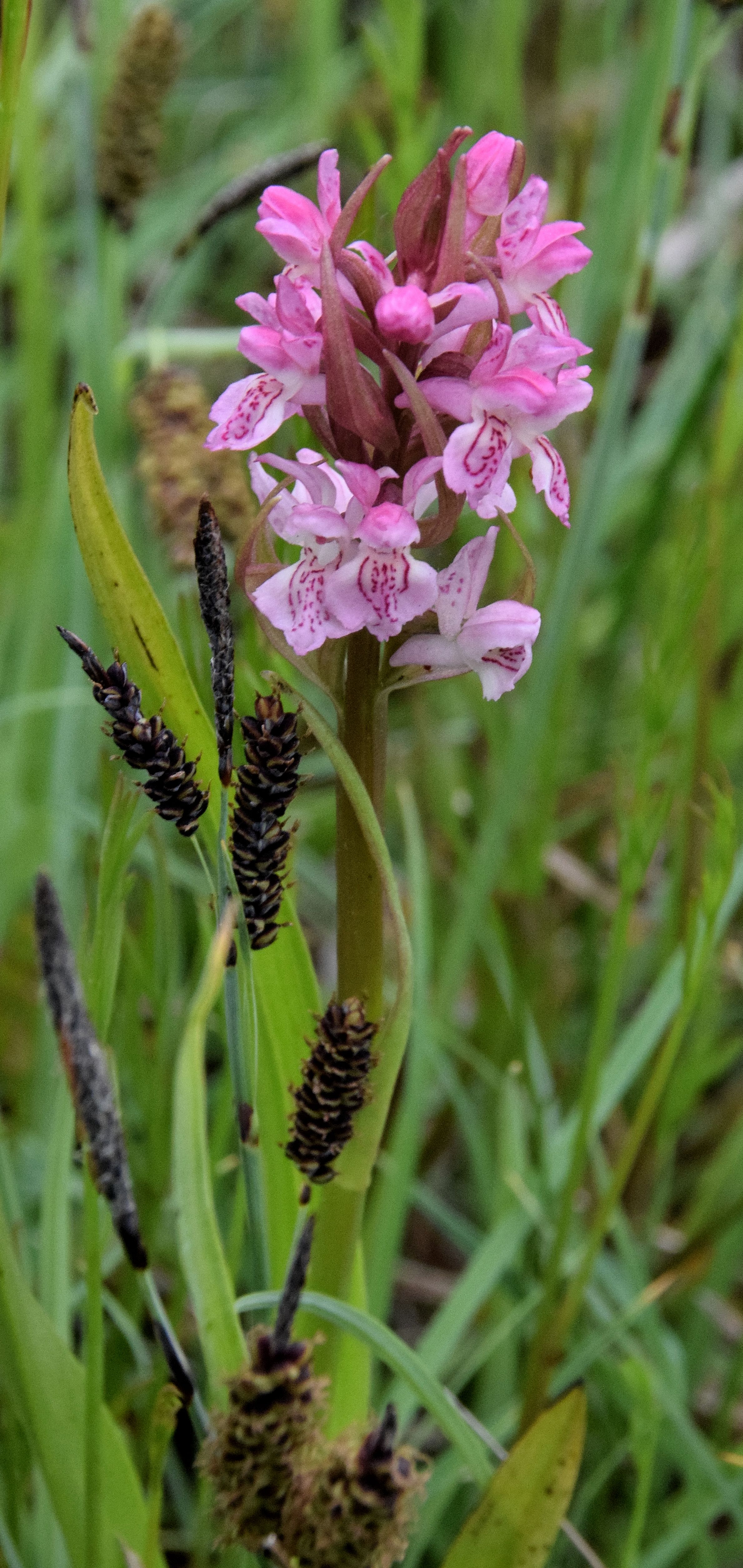
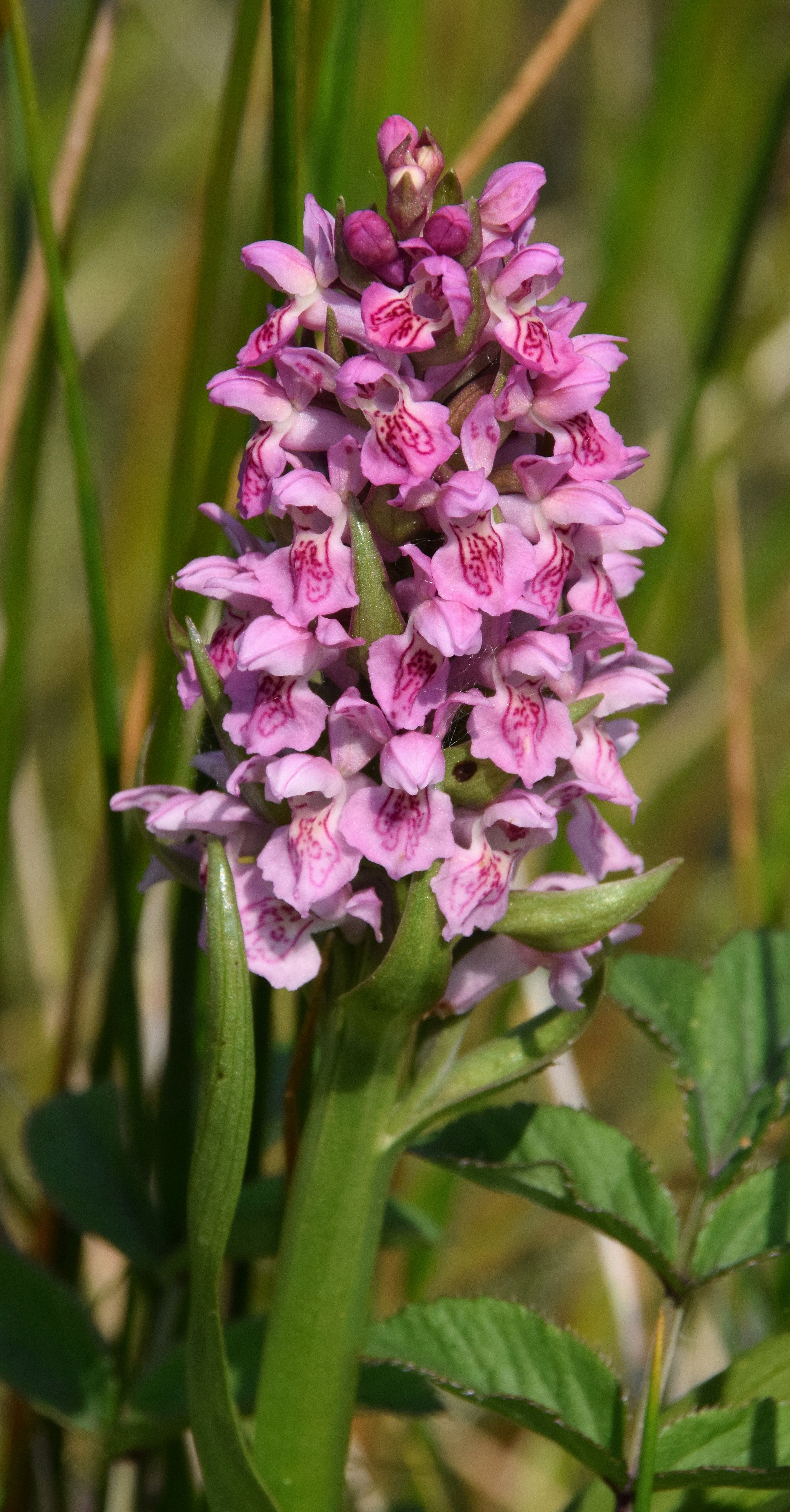
As Bernwood Meadows, Asham and Wendover Meads were for Green-winged Orchid in May, so this site is for Southern Marsh Orchid. There are thousands of them here, a significant portion of which must be hybrids with Common Spotted Orchid. In amongst them were the fading forms of many gone over Green-winged Orchid. The first of those three varies considerably both in colour tone and the speckle and dash markings on its petals, all of which makes accurate identification of the species difficult. Preferring as I do to minimise scientific detail in this journal I will merely present the following sequence of purer and possibly more hybridised plants.

Southern Marsh Orchids or hybrids at Clattinger Farm

Round and round I trudged, always keeping to trodden paths and enjoying as at those local sites another “time capsule” from bygone years in which wild plants abound. The Burnt Orchids could be anywhere. Tiring by mid-afternoon, I decided to check-out that earlier advice again then leave, and this time walked on a little further. Now, in the far south-eastern meadow named Bridge Field on the reserve plan, that is considered the reserve’s best for wild flowers, I noticed a well trampled patch to one side of a trodden path … and there was my quest! It had taken four hours to locate them, cue celebratory WhatsApps to contacts who “keep me company” in the field.

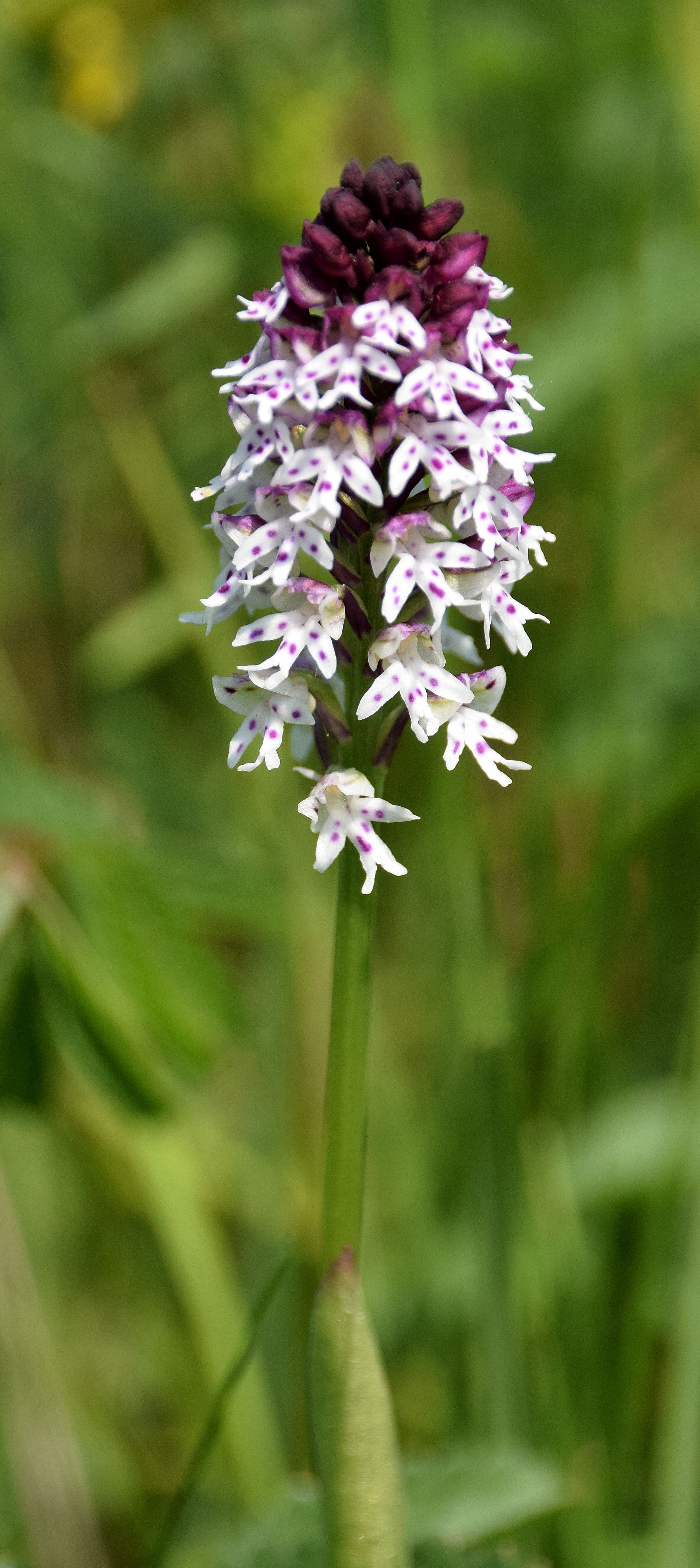
Burnt Orchid (above) has 5 – 10 broad, erect leaves at the base of 10 – 50 cm tall stems. The initially dense inflorescence gets looser as the flowers open. The buds are dark red and as blooming advances the oval spike becomes bi-coloured – white at the bottom and dark red at the top – giving the whole a scorched appearance, hence the name. The species grows more usually on short turf and alkaline chalk or limestone soils, but much more rarely in meadows such as here.

Counting eight specimens at this spot, some of which looked emergent, I resolved to return in the hope of finding more. Later at home I matched this day’s wanderings to Google Earth and picked out the exact location of my success. The trampled patch is even visible in the aerial picture. The bottom line here is I achieved this largely unassisted, and the self-found things are always the best.

I re-visited five days later on Monday 13th in company with Ewan, this time taking the short route out and re-locating the Burnt Orchids straight away. Some of the previously featured specimens were already going over but there were now a total of 13 in the cluster. From what my more experienced companion and two other observers who joined us said these were all rather petite plants compared to what might be found here and elsewhere. Those pictured above were the more photogenic new ones. I was notified on Sunday 18th that six more good specimens had been found in “11 acres field” immediately to the west of where we had been successful.

Heading home on 7th I visited Tuckmill Meadow in Shrivenham, Oxon (SN6 8TB – SU240900) that has a colony of around 80 Southern Marsh Orchid. This gem of a LNR (see here) is managed by VoWH District Council and BBOWT in conjunction with volunteers, one of whom met me in the parking area and directed me to the plants. These were in the boggy bottom of the damp grassland site’s stream valley. They were much larger and more robust than the younger ones around Clattinger Farm, and all of the pure form (below).

Pure Southern Marsh Orchids at Tuckmill Meadow LNR

This Orchid is widely distributed in southern England, occurring in wet alkaline marsh and meadows especially on chalk soils, at road and river sides and also in former quarries and coastal dune systems. It flowers from late May to the end of July, with crowded cylindrical spikes on strong stems from 30 to 50 but sometimes up to 70cm. But the species is now lost from 20 per cent of its historic range due to drainage, ploughing and development.

Research had suggested I was in the best Oxon place to observe them, in preference to the frequently mentioned Parsonage Moor, and I wasn’t disappointed. Two days later on 9th I checked out that site and Oxford’s Lye Valley LNR, finding just five pure specimens between them and more hybrids at the latter.

Early summer Orchids around the Chilterns AONB: 29th May – 14th June

Things begin to get serious at this stage of the season as more sought after wild Orchids enter the mix. The species experienced in Oxon so far are pretty widespread, but on the other side of the Chiltern escarpment to the east lie sites of renown offering specialities that draw enthusiasts each year in numbers, and those I now set out to explore.

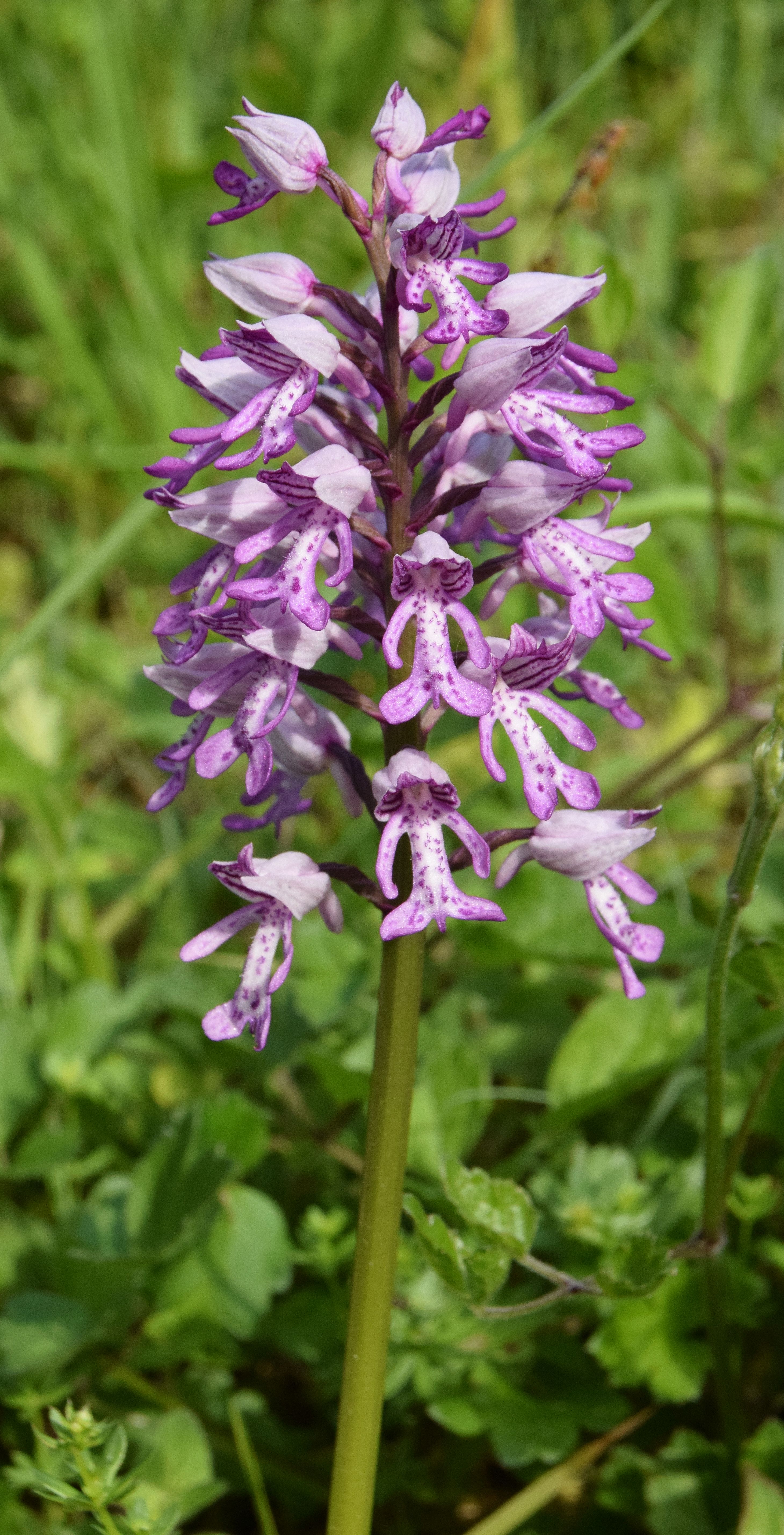
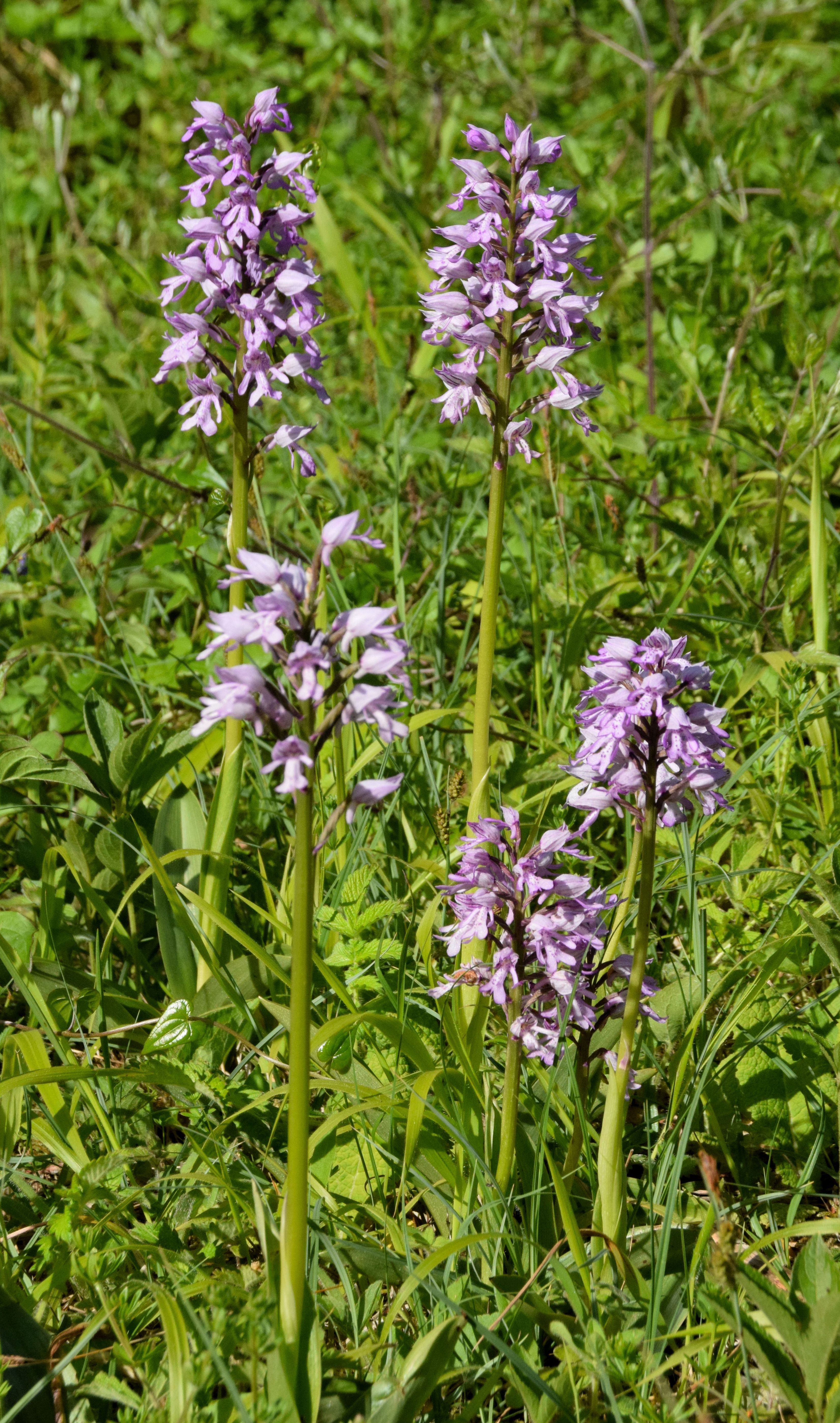
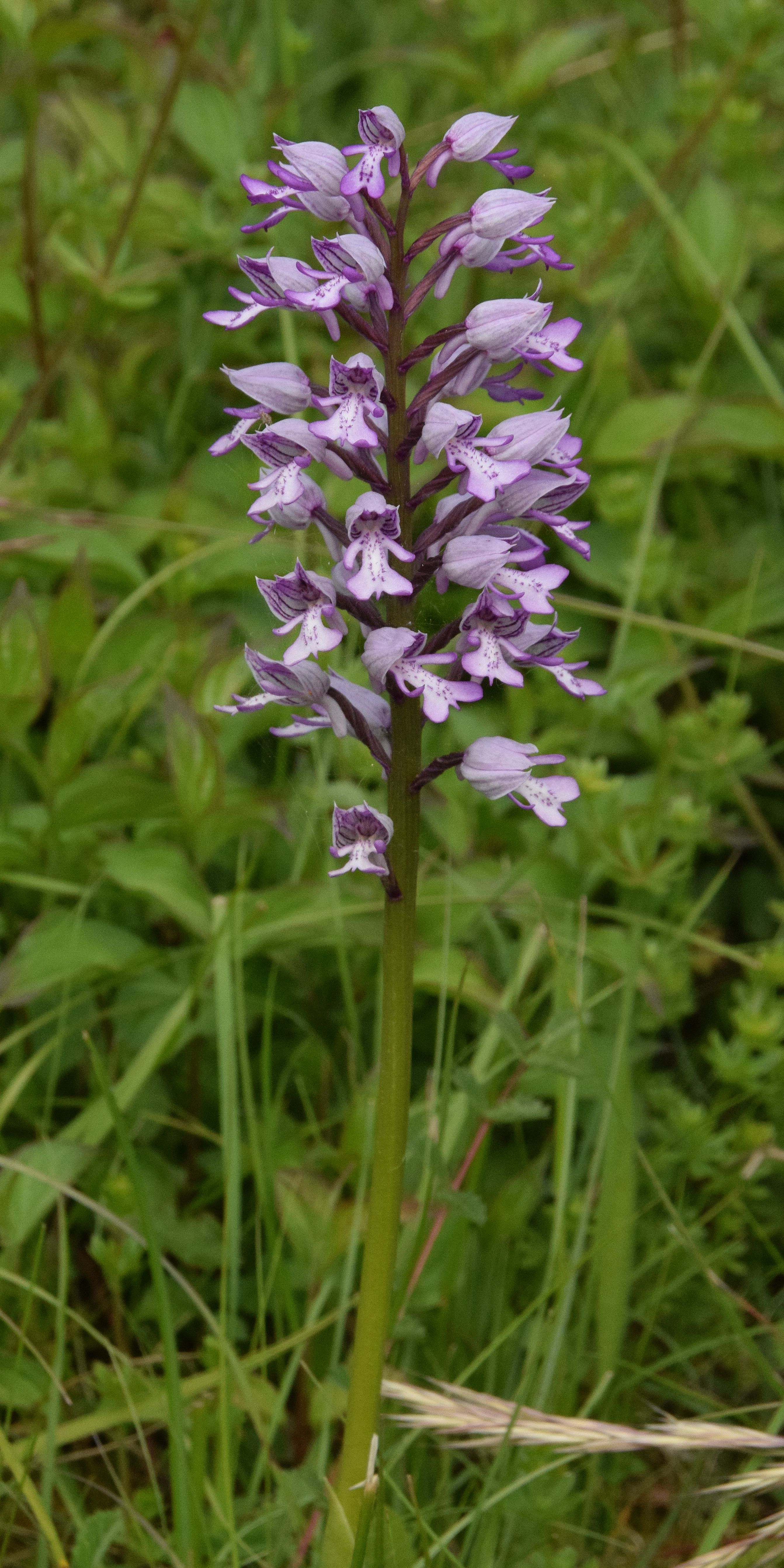
I began at Homefield Wood (SL7 2HL – SU814867) early on a bank holiday Monday (29th), having been briefed that the Orchid season was well under way there. The site is renowned as one of only three nationally to host Military Orchid, and they certainly thrive here on today’s evidence. There are around 500 plants, some across a south-facing slope just inside the BBOWT reserve entrance, but mainly in an enclosed meadow away to the left that may or may not be publically accessible at the Trust’s discretion.

This mid-May to mid-June flowering species (pictured above) is well-distributed around central and northern Europe but one of Great Britain’s rarest. The flowers, clustered in a conical spike on a robust stem up to 60 cm tall, resemble human figures with outstretched arms, big feet and wearing a soldier’s dress helmet. The name also arises from vertical lines of dots on the petal below that hood which suggest buttons on a military tunic. This item grows on chalk grassland in the shelter of broad-leaved woods, and thrives especially in shaded old pasture with light scrub such as the enclosure here.

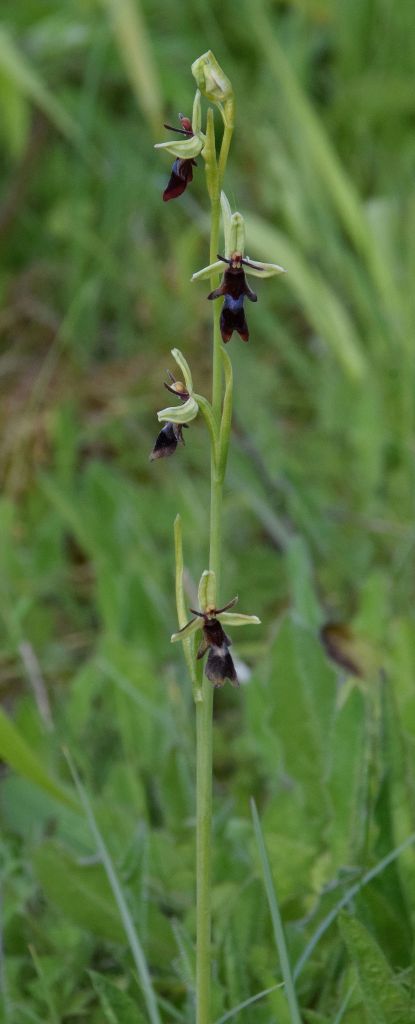
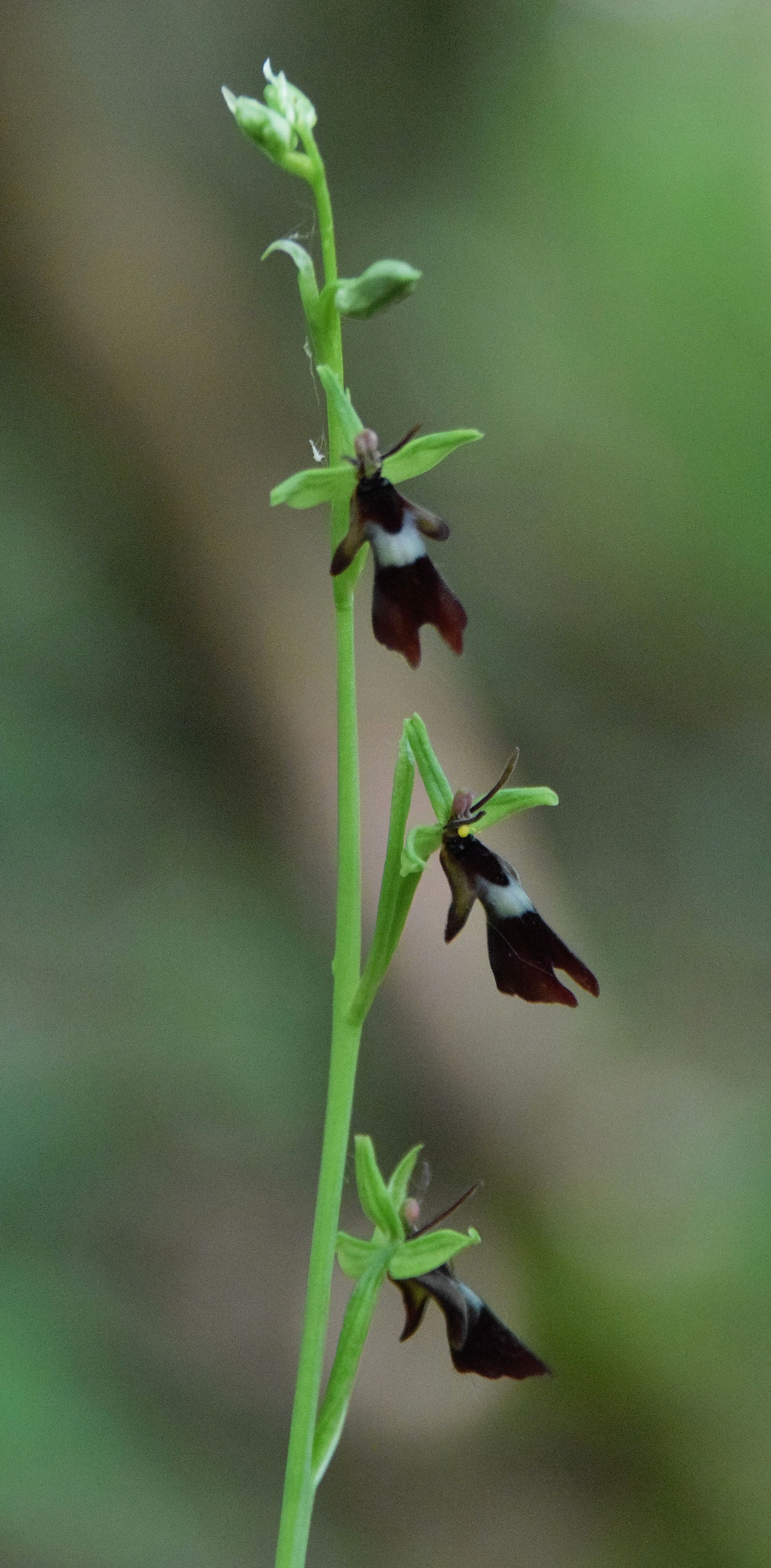
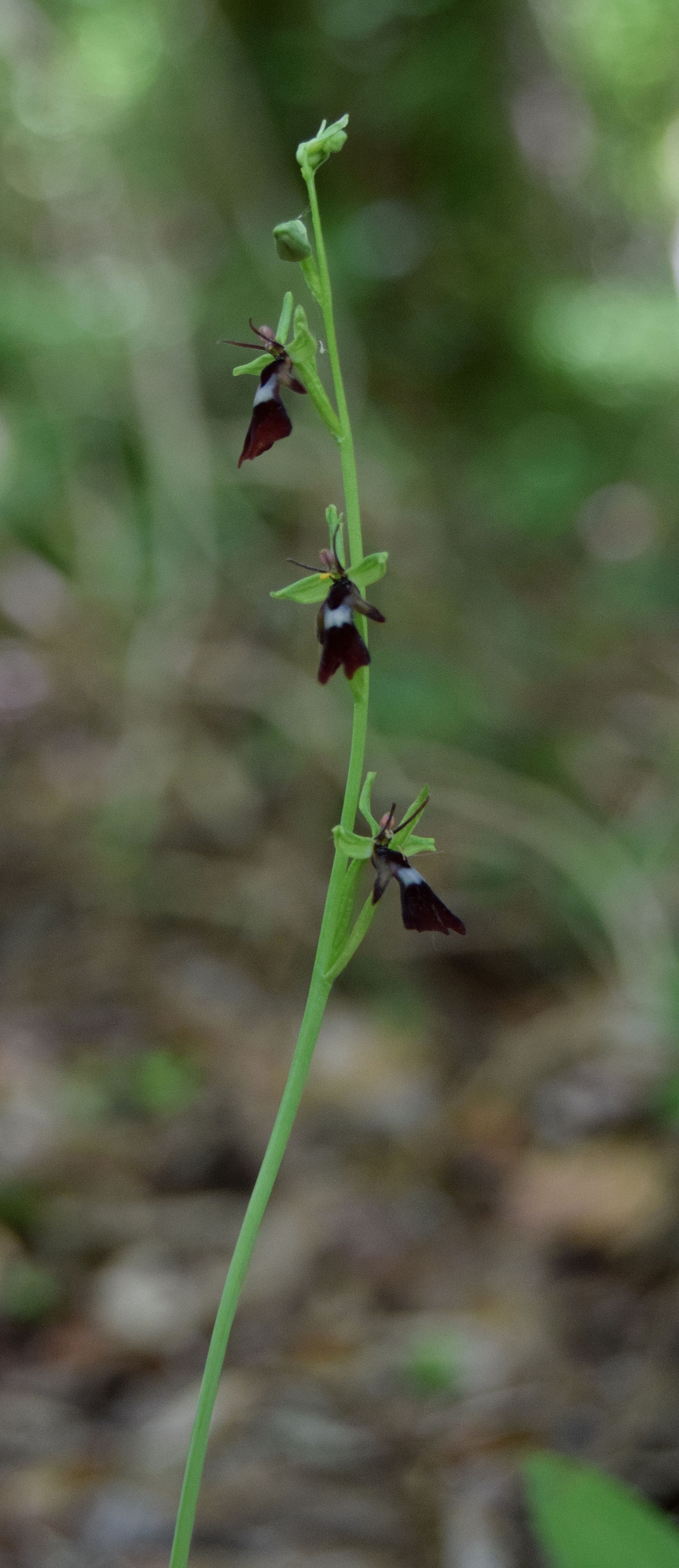
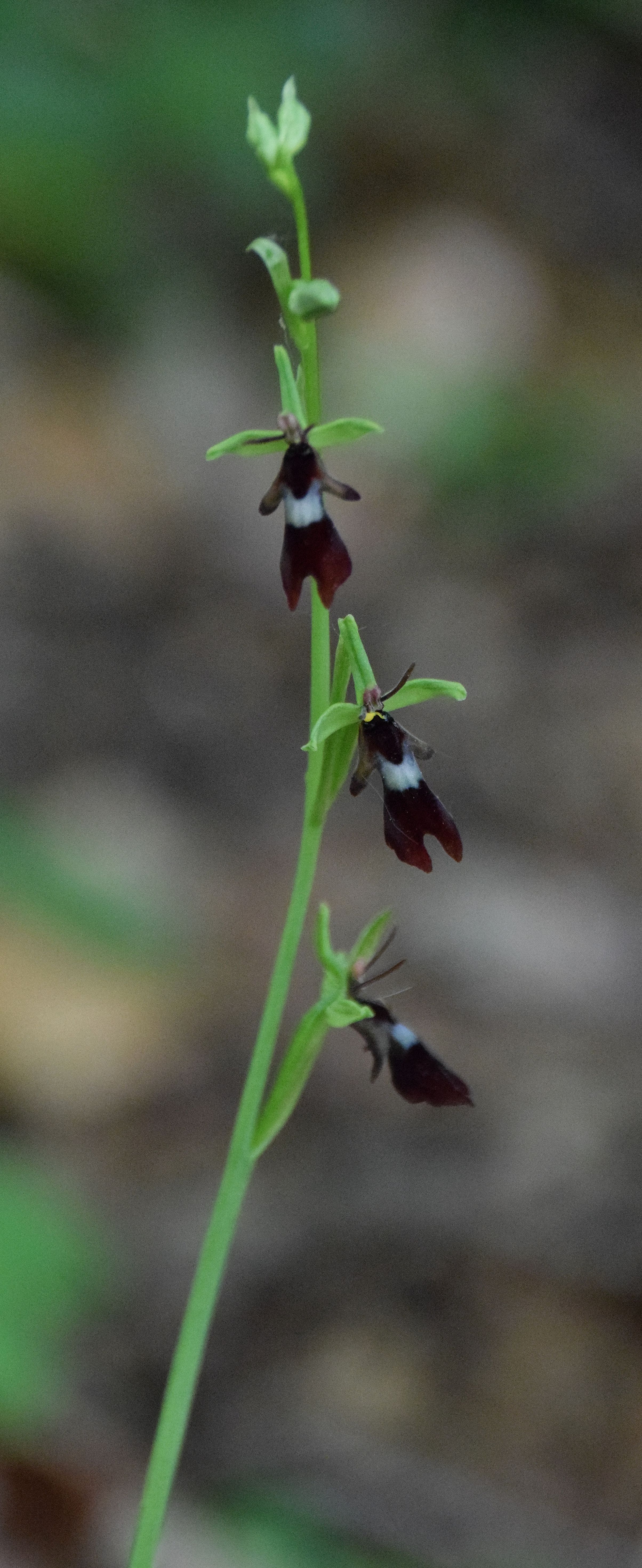
A second site stand-out was the rather intriguing Fly Orchid that offers a prime example of insect mimicry in plants to assist pollination. The well-spaced flowers on slender spikes resemble perched flies, complete with eyes and antennae. The cleverest bit is this Orchid does not produce nectar but a scent of female Digger Wasps’ sexual pheromones, so what would any passing male do? And thus the plant is pollinated. Uncommon in the Chilterns, these are plants of Beech wood edges and scrub on chalk and limestone soils.

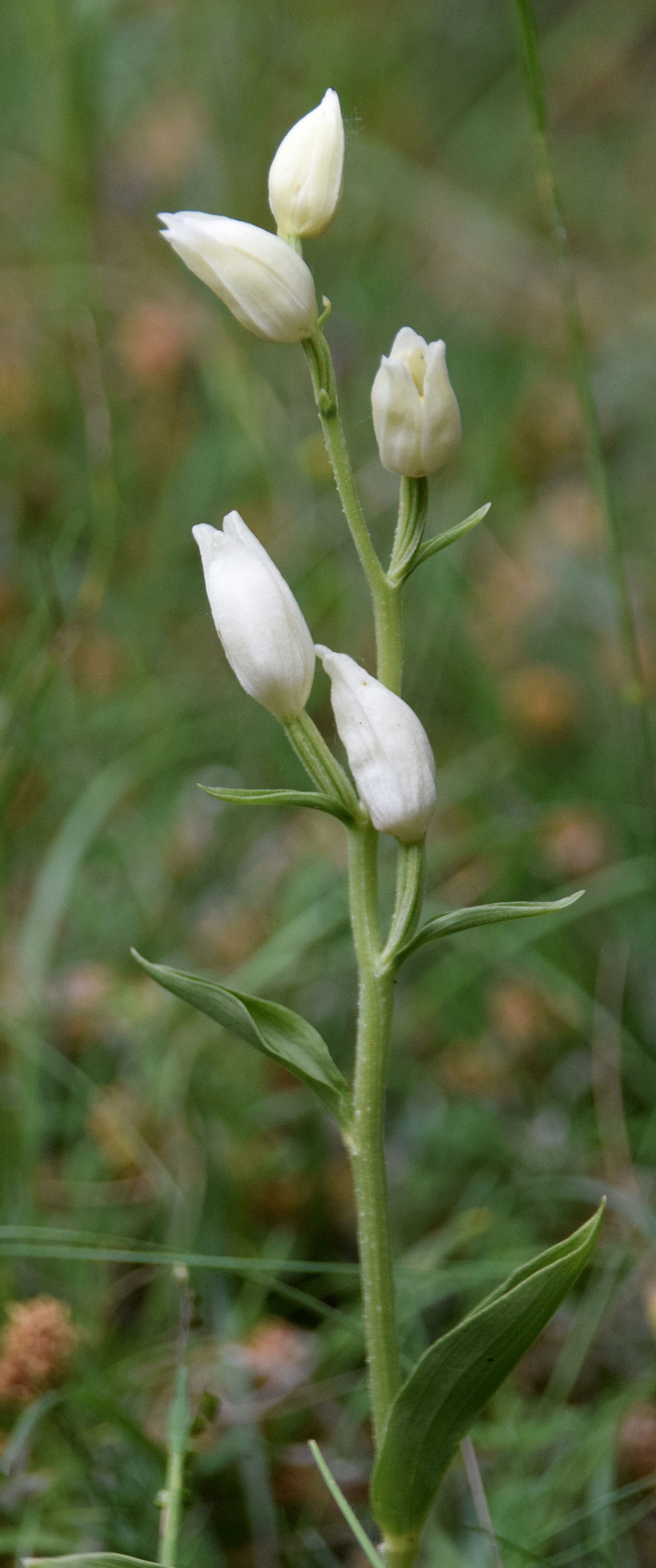
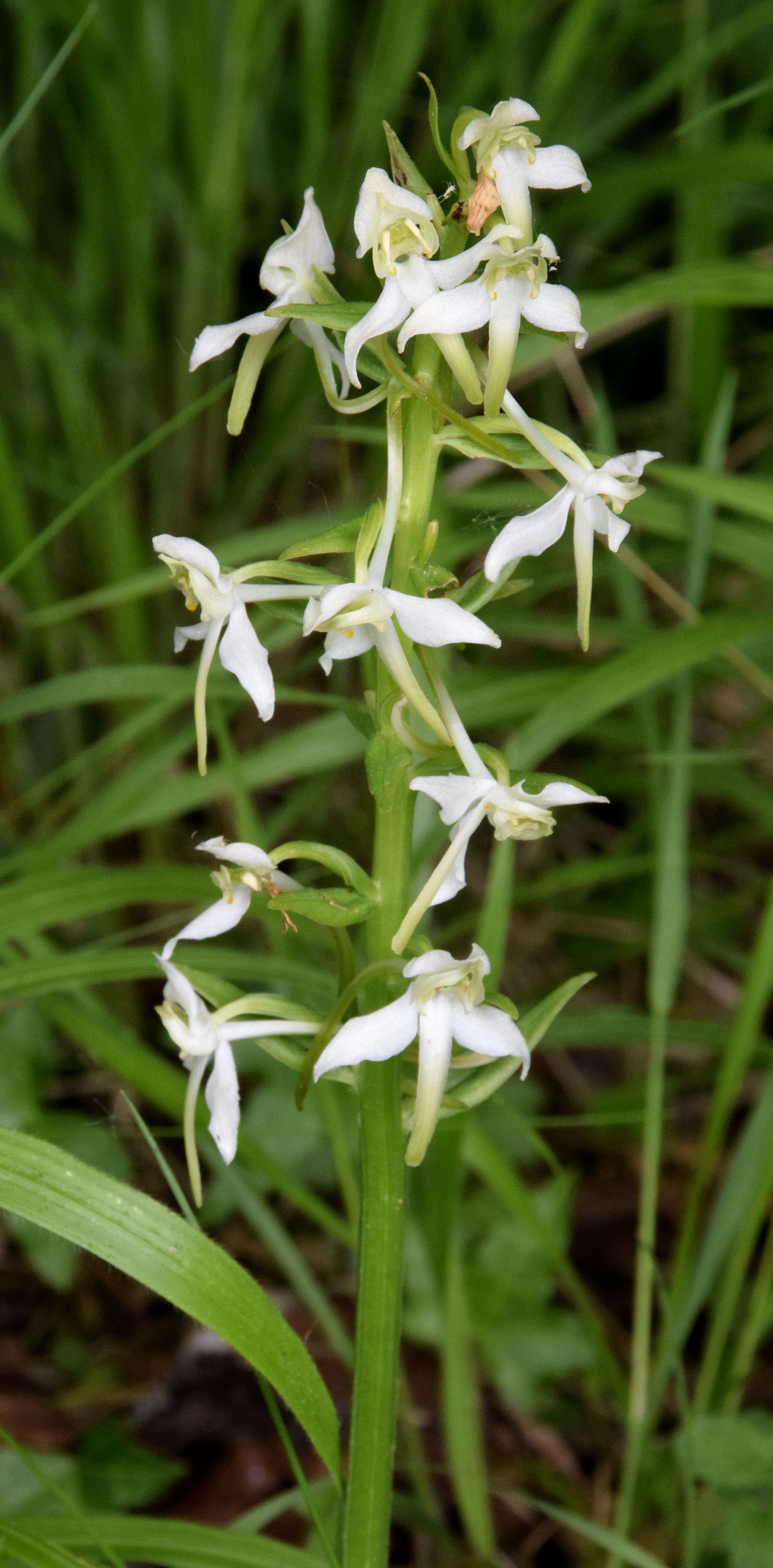
I will admit to feeling a little underwhelmed by these seriously skinny items, that due to the minuteness of the flowers were difficult to gain sharp images of, but the left and centre ones in this sequence were the best I could manage (click to enlarge). Other new (for me) Orchids encountered on the day were two of the shade-loving White Helleborine (right, above), and a good-sized clump of Common Twayblade.

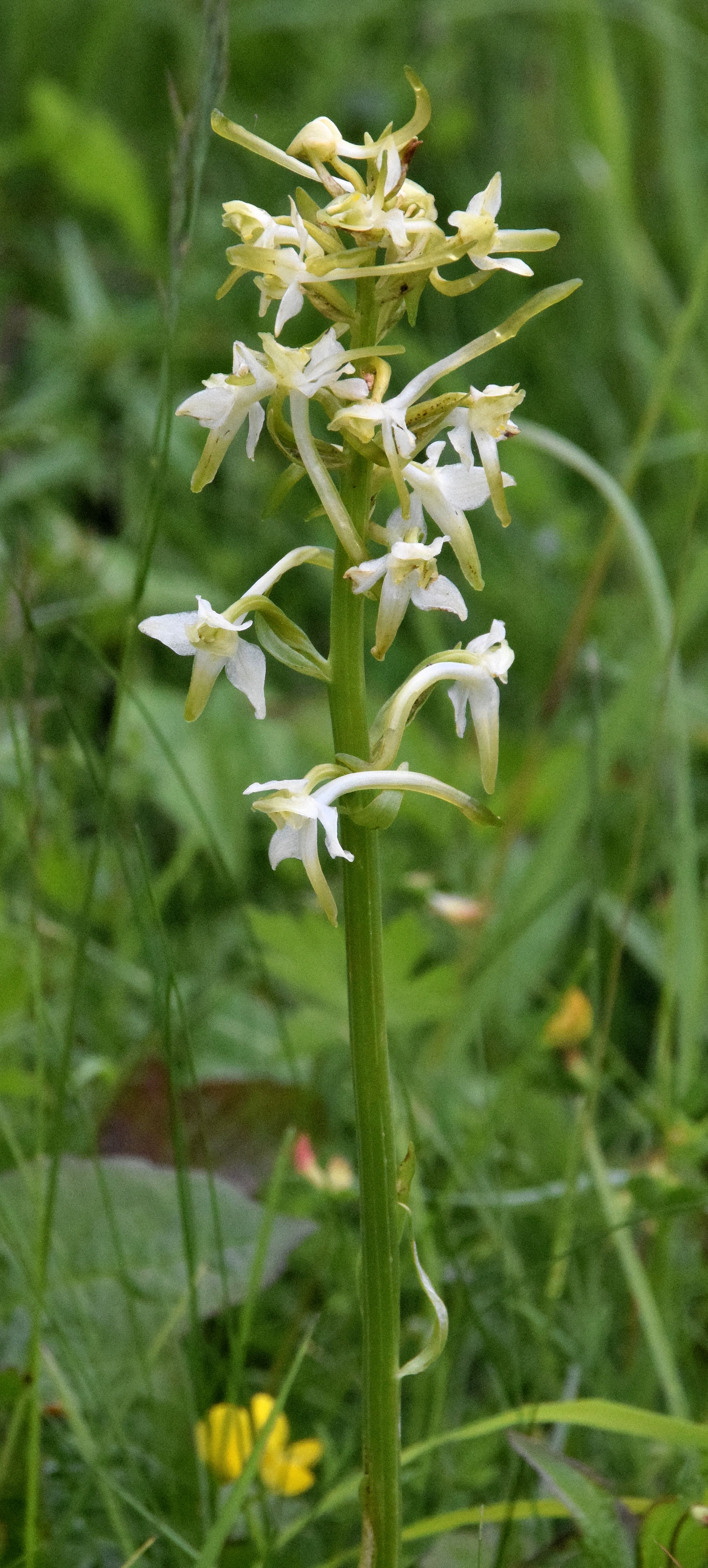
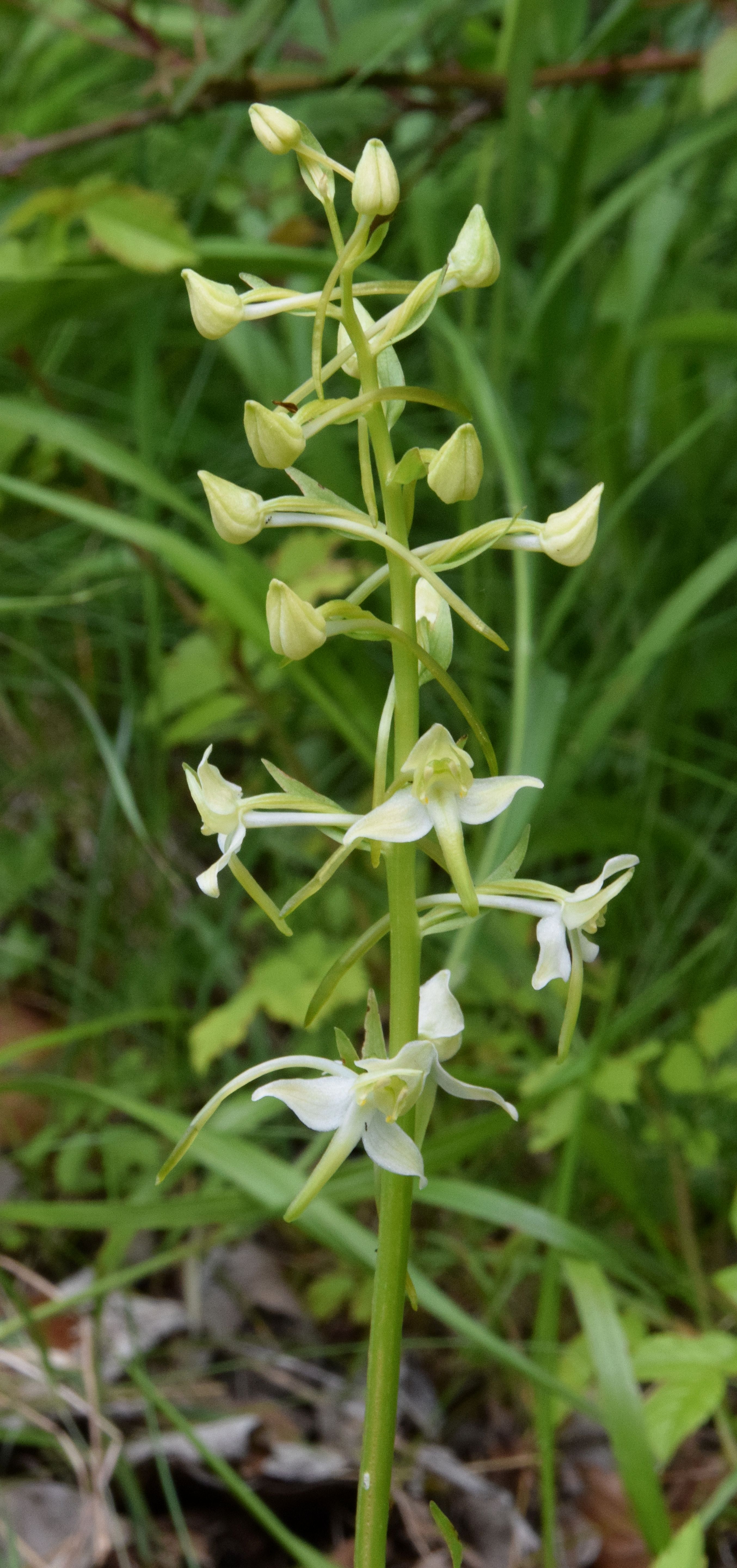
I encountered more White Helleborine three days later (1st) on a first visit to BBOWT Grangelands (HP27 0NB – SP828050) where good numbers grow along the edge of neighbouring Pulpit Wood (pictured below). One of the commoner of the Helleborine group of Orchids, this is a Beech wood specialist that occurs on calcareous soils through May and June, growing to 60cm in height. Since this plant is self-pollinating the creamy-white, egg-shaped blooms rarely open fully, so the specimen in the right hand picture was a bit of a find. Only common in southern English chalk and limestone regions, they take around 10 years to develop fully from seed. So I assume the larger items in these pictures were the more mature amongst my haul. Most at all four of this post’s sites had between three to six flowers at the top of the stem. I rather like them and enjoyed their elegance and simplicity.

Aston Clinton Ragpits

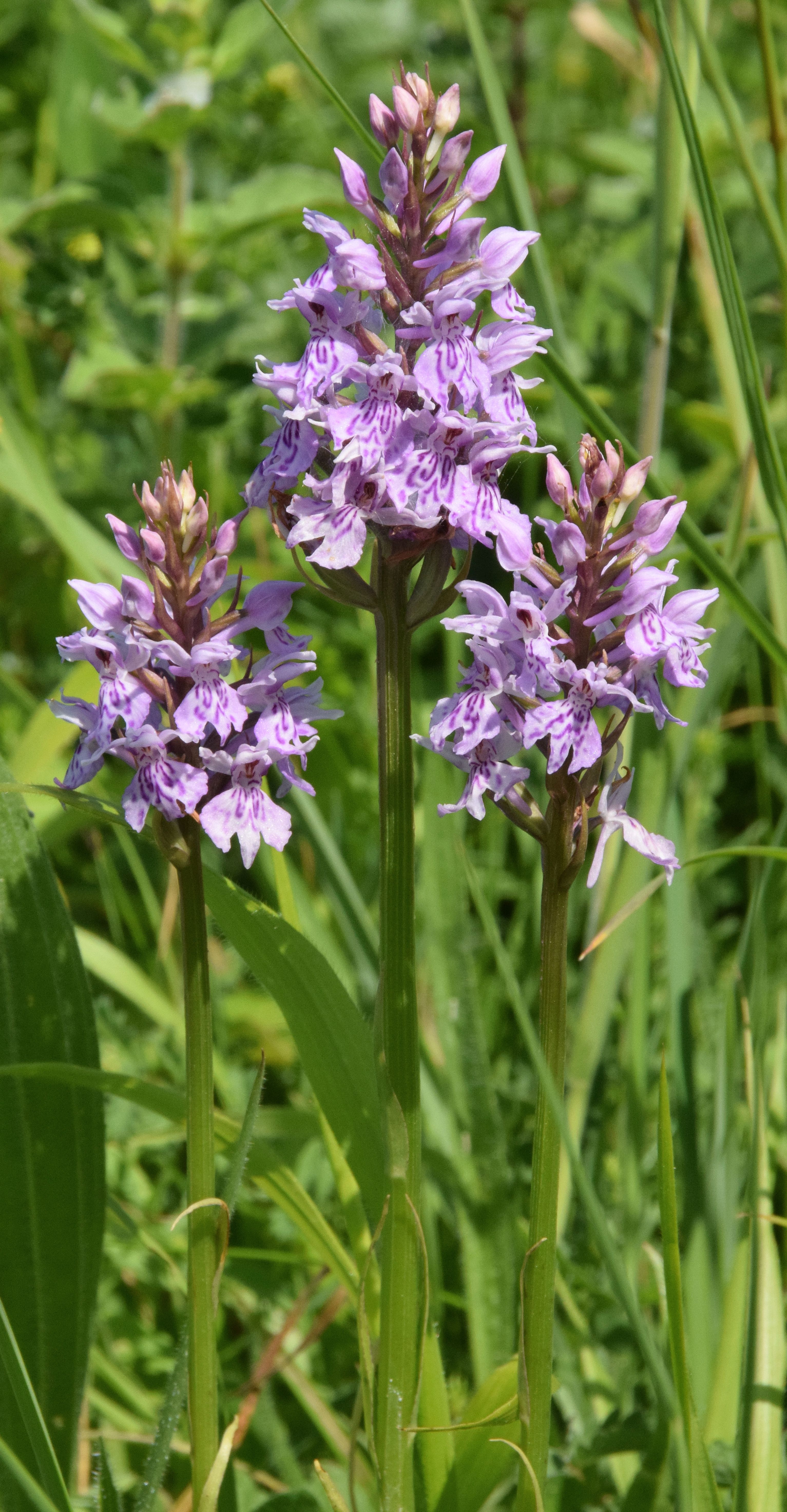
Masses of Common Spotted Orchid were getting going here, but it seemed too early for Chalk Fragrant. I nonetheless moved on seven miles to BBOWT Aston Clinton Ragpits (HP22 5NF – SP888107) which is renowned for a profusion of the latter. There young Chalk Fragrant Orchid were indeed erupting from the ground in abundance, together with Common Spotted across the former quarry site.

The first-named is the more delicate looking of the two and occurs from mid-May to July in dry and open chalk and limestone grassland such as this. The 20 – 50 flowers on densely packed, cylindrical spikes may range in tone from pink through mauve to reddish-purple, and occasionally white. They typically grow to 30 cm tall but can reach 50 cm or more. As the name suggests a quite intense sweet perfume is emitted, especially at dusk to attract butterfly and moth pollinators.

Young Chalk Fragrant Orchids

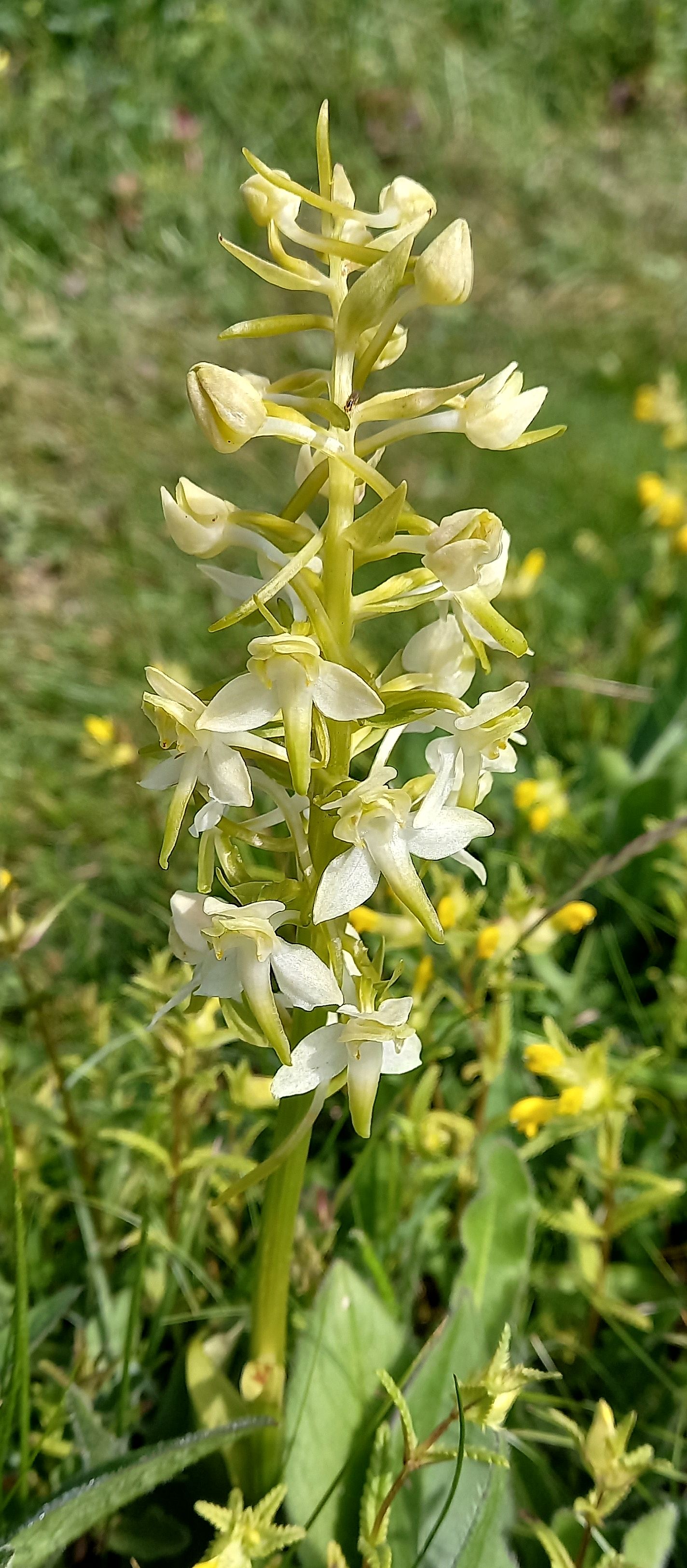
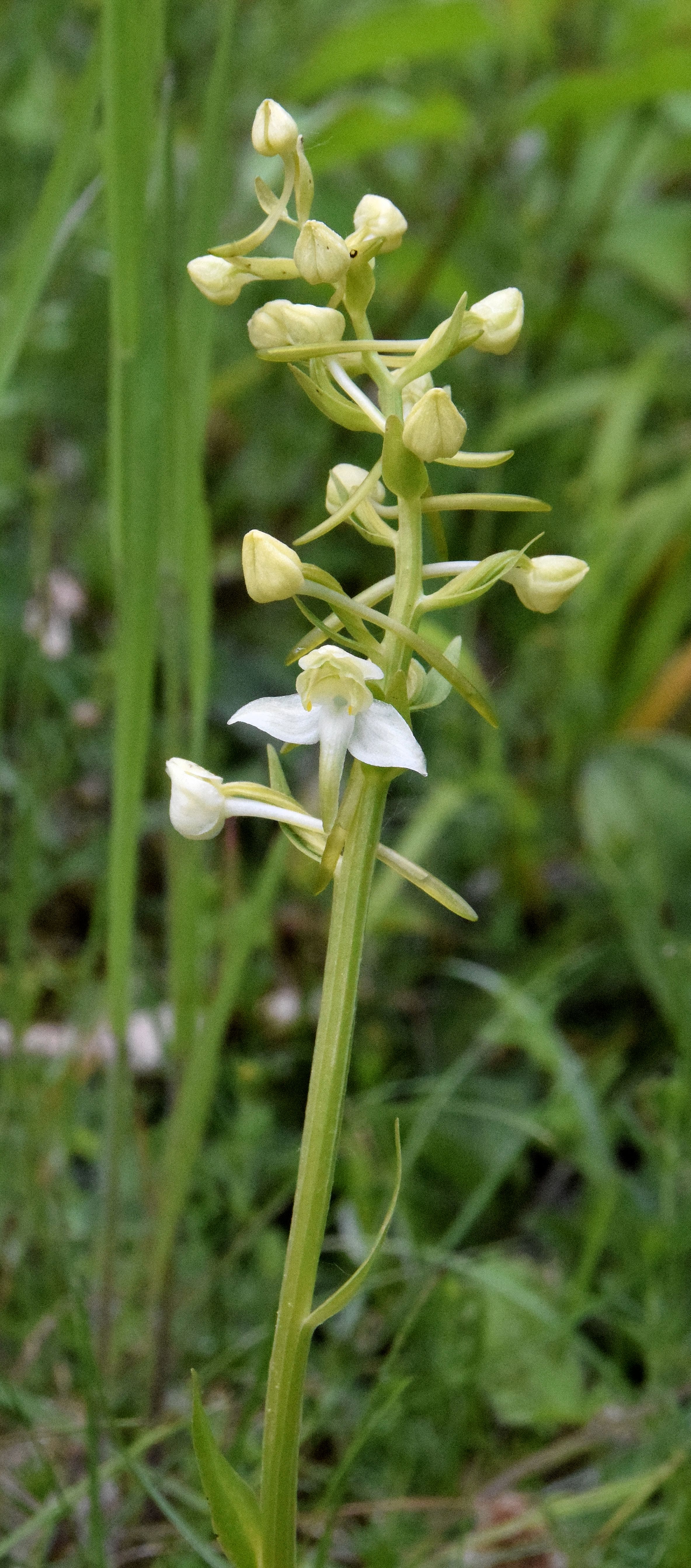
For me the stand-out in this location was numbers of Greater Butterfly Orchid (pictured below). I had observed these twice before in the region but enclosed in protective wire cages. Not so here and in an unfettered state I could appreciate properly their subtle and delicate beauty. This plant prefers light shade and is often found along woodland edges or in clearings, but it also occurs on chalk grassland. The greenish-white, rather waxy-looking flowers are loosely clustered on pale stems to 40 cm. As the name suggests they resemble hovering butterflies. At night a sweet scent of vanilla is omitted to attract the Hawkmoth pollinators that have suitably long probosci to enter the particular structure of the flowers.

An irony here was how after habitual frustration at grey conditions while butterflying I was now cursing the afternoon sun for making things too bright and glary for taking pictures of wild plants. So on 2nd I returned early in the morning to attempt images in a more suitable light. It should be apparent which of the above sequence were gained on each day. The duller light was more suitable for gaining adequate studies of Common Twayblade that grows in profusion across the Ragpits.

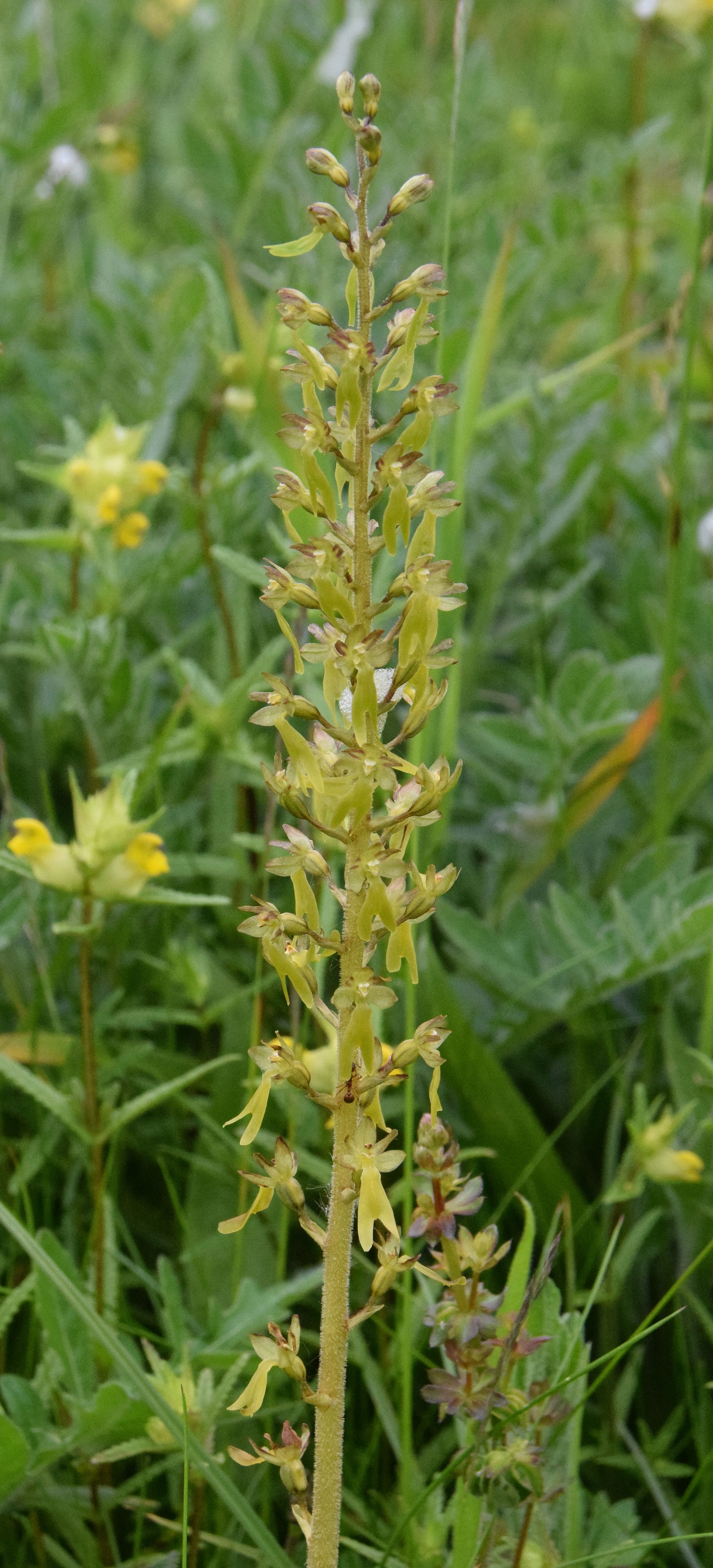
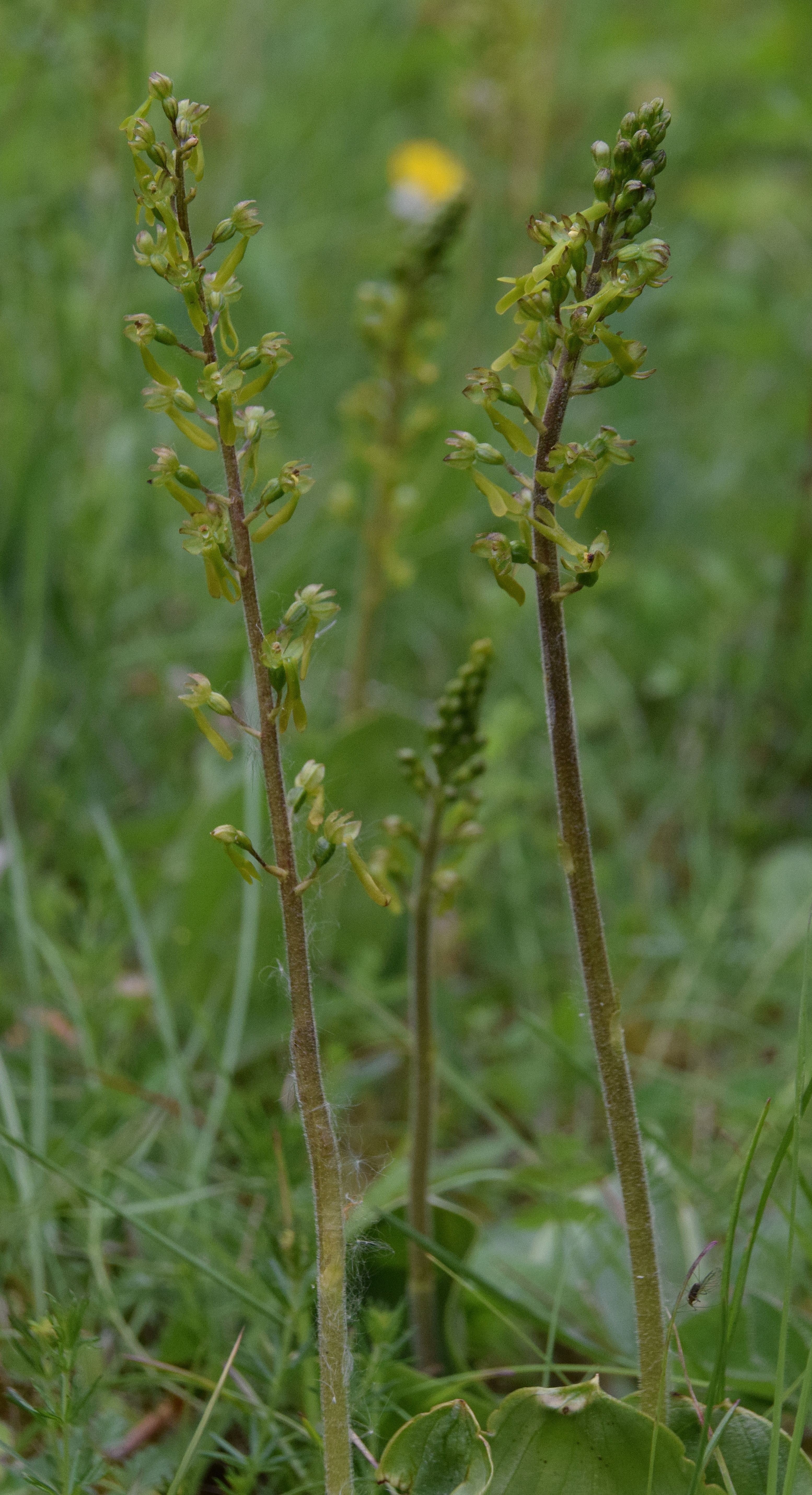
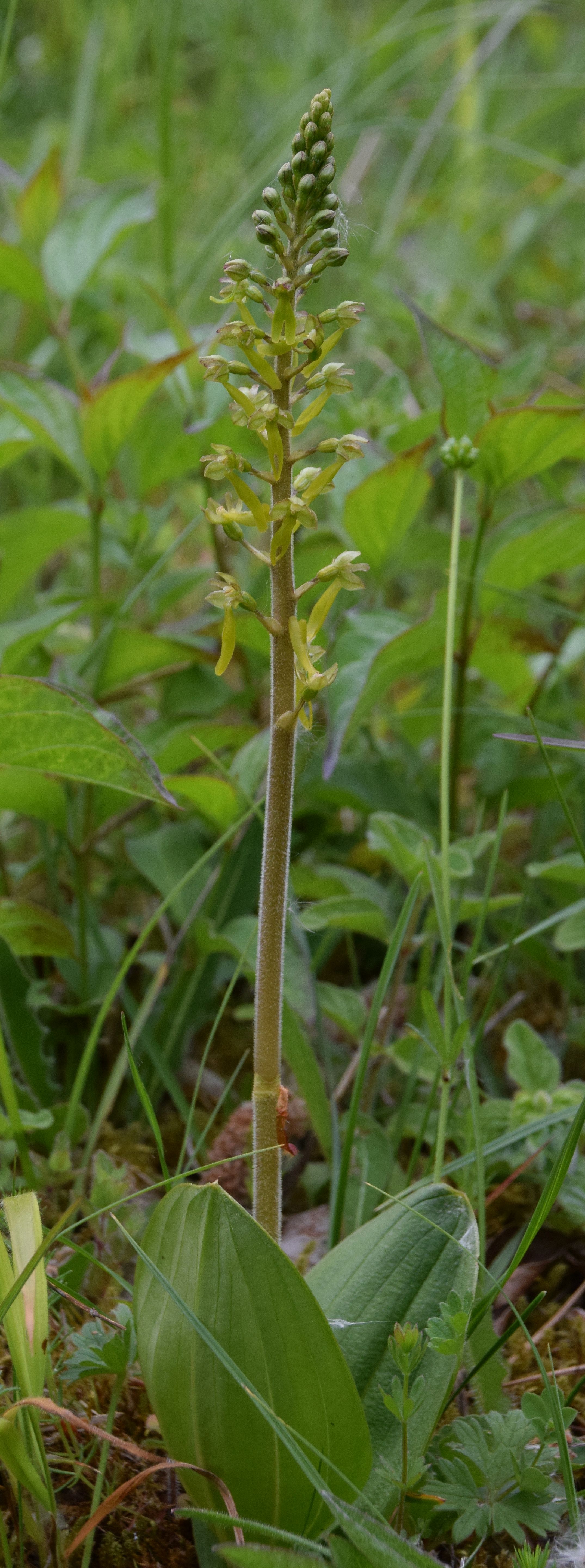
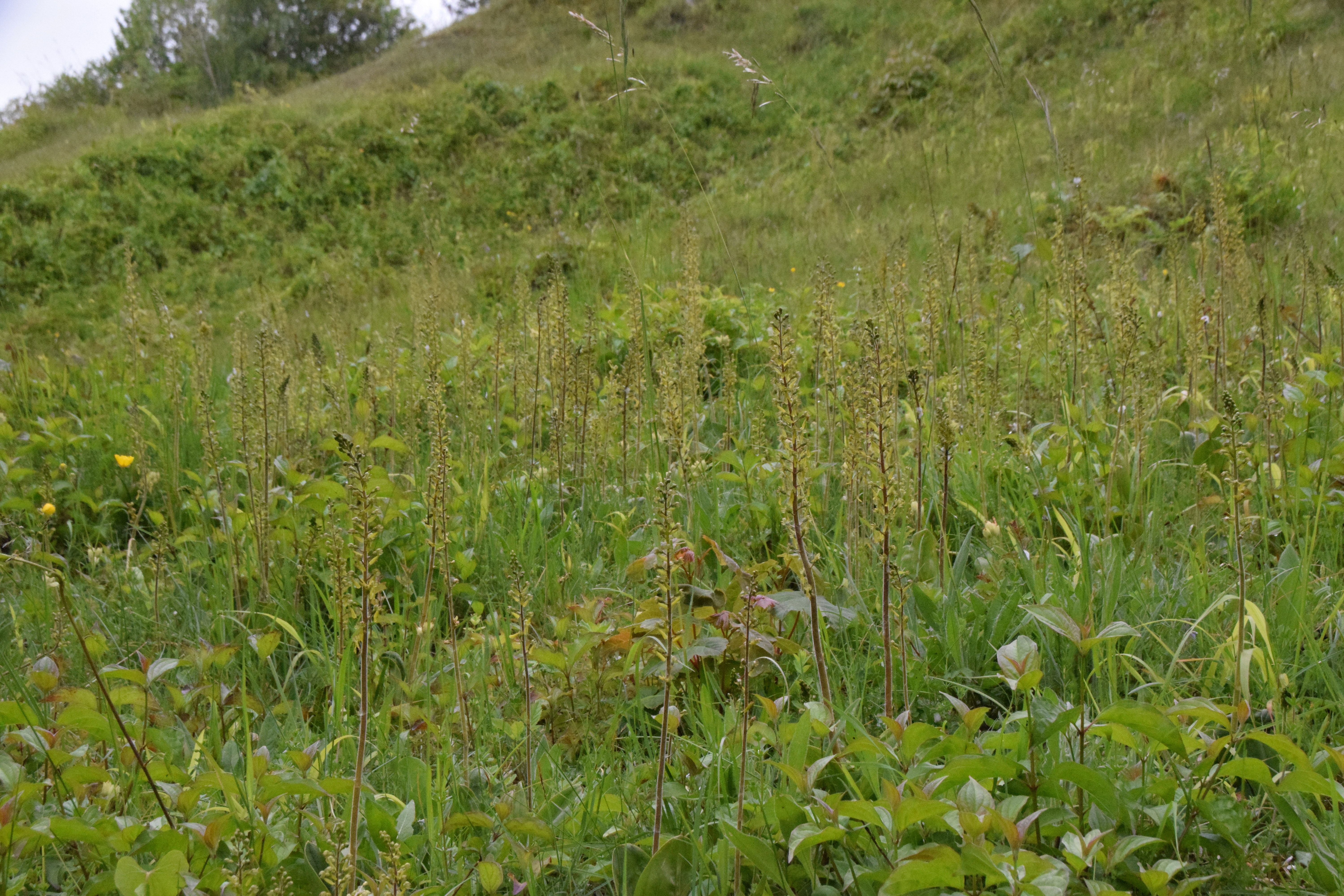
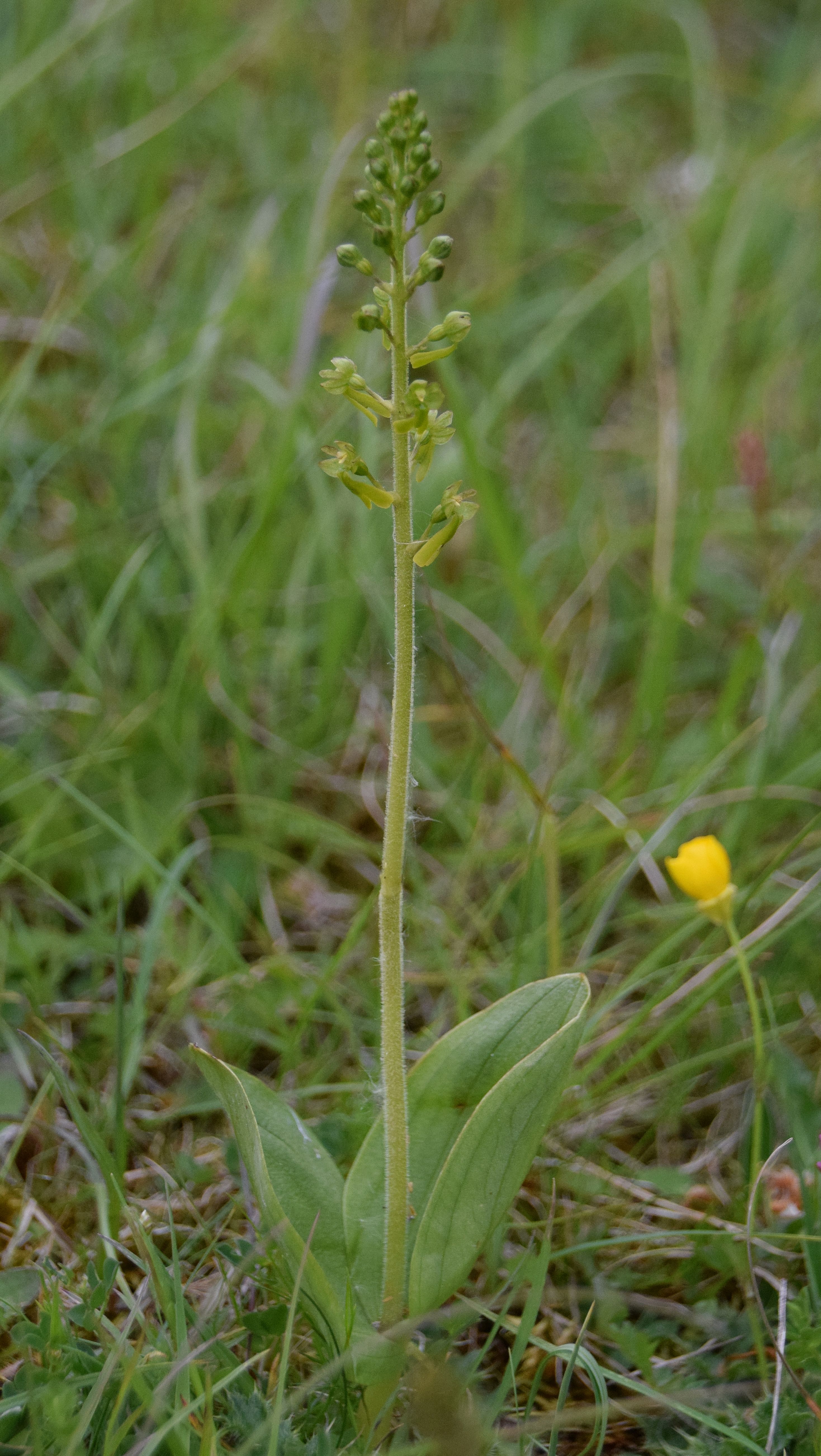
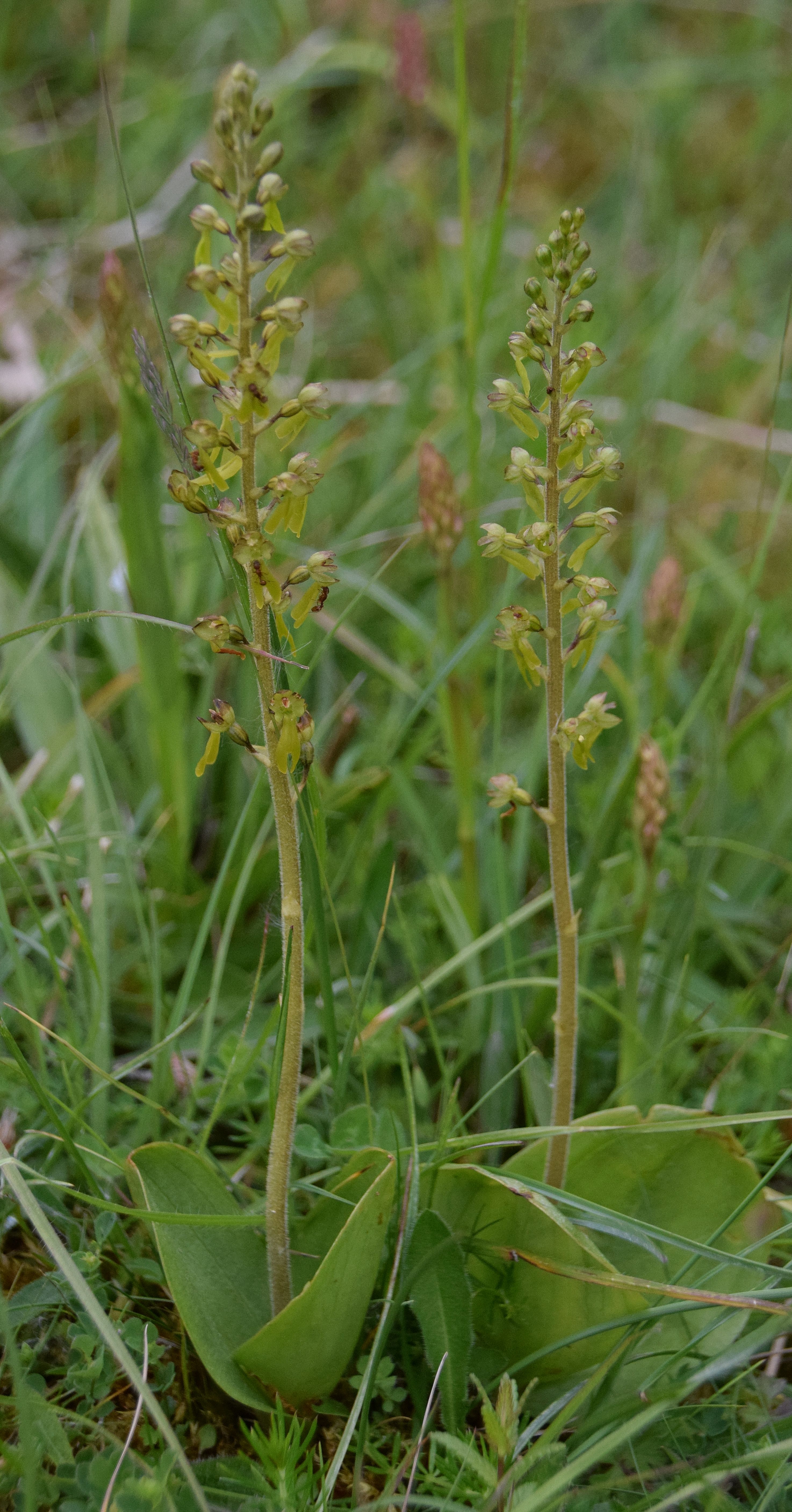
This inconspicuous plant is widespread though localised from May to July in a wide range of habitats: chalk downland, open woodland, fens, quarries; along disused railway lines and at arable field edges. It emits a musk-like odour to attract insect pollinators. The name refers to the pair of broad oval leaves at the base of the stem. The minuteness of the yellow-green flowers on long and wispy stems (pictured below) makes them difficult to capture detailed pictures of, but the following are my better results. Shorter specimens best conveyed their blooms’ resemblance to clusters of tiny people, but the great majority were much taller and often in extensive clumps.

Common Twayblade

On Monday 5th I visited the Warburg Reserve near Henley (see here) that is said to boast BBOWT’s richest array of Orchids, comprising 15 species. My impression from this day was apart from the more frequent wild flower meadow varieties these may take a bit of searching out. Fortunately there is a visitor centre at the main entrance (RG9 6BJ – SU721 878) to assist, where sightings are posted on a poster-sized site plan, and I was also briefed by the warden.

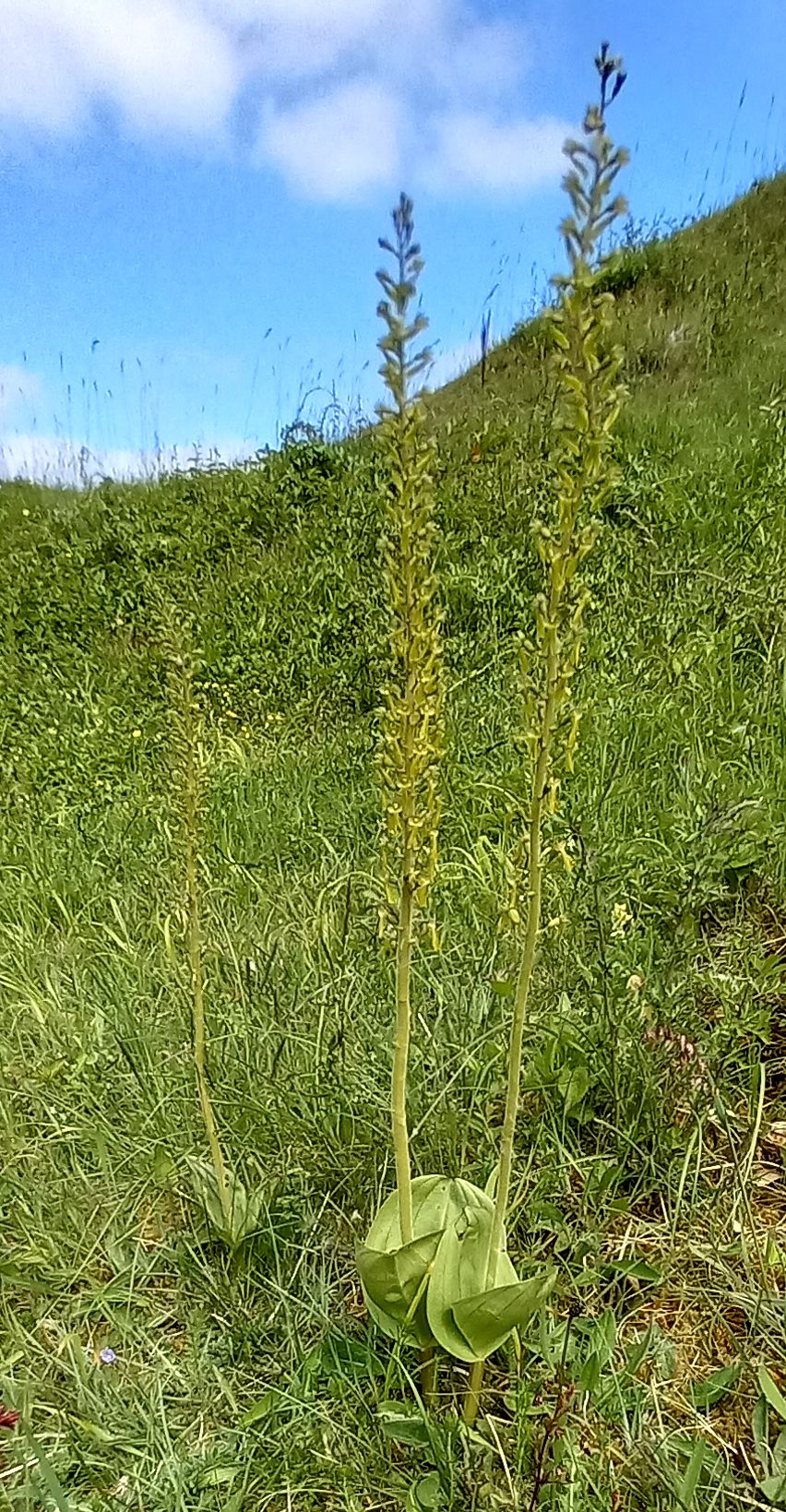
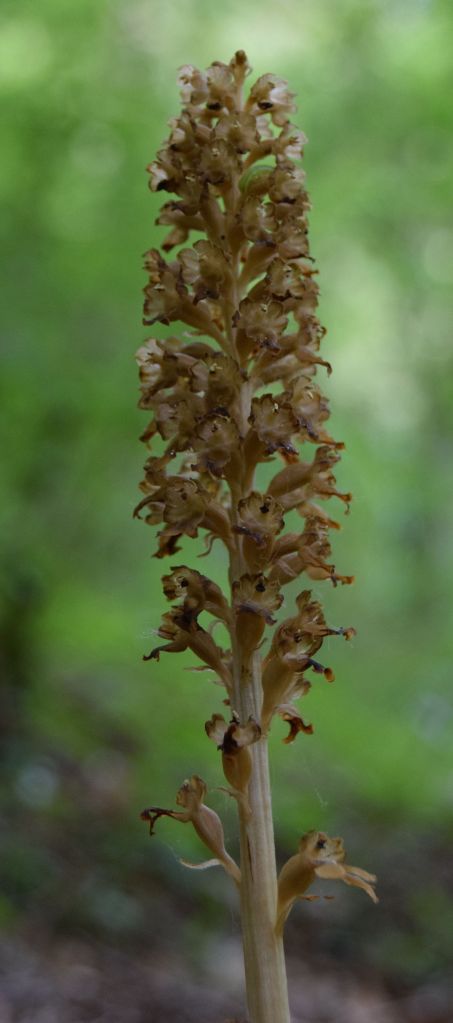
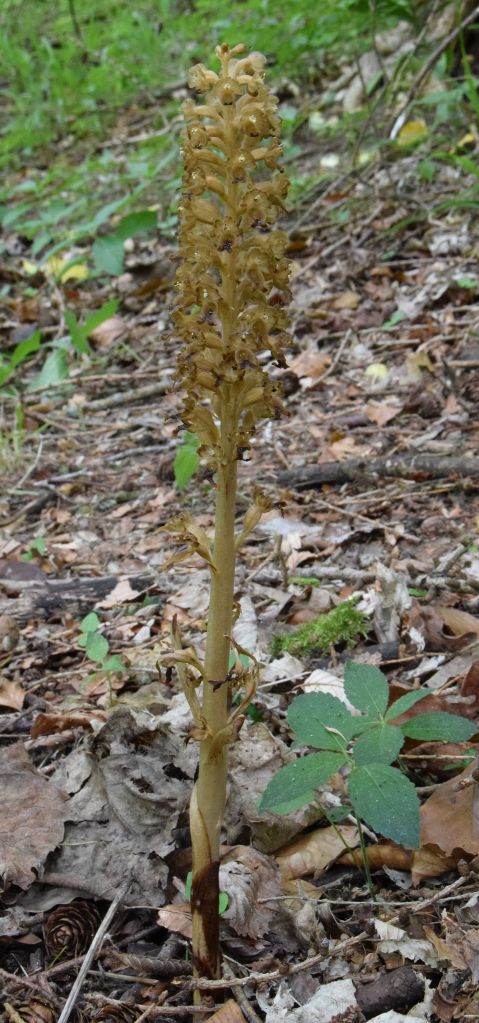
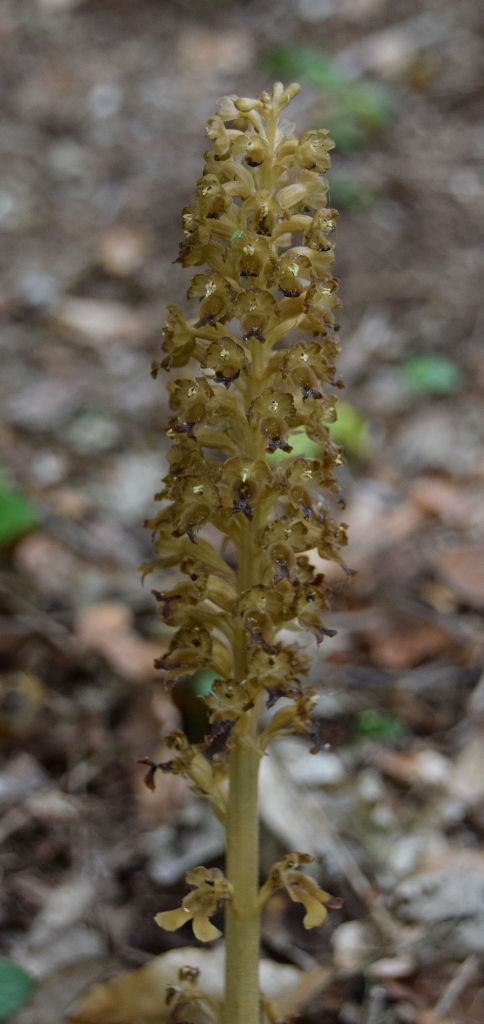
I especially wanted to experience the yet to be seen Bird’s-nest Orchid, a honey-coloured shade lover of Beech woods on limestone soils. These are said to be quite widespread in such habitat, but I located just one today (pictured below). It displayed the species’ special feature of the flowers being clustered towards the top of the stem with just a few spaced more widely lower down. I thought it looked a little past its best but now read this plant typically resembles withered stems from the previous season.

Nearby I also found a single Fly Orchid (above) in the area I was advised to look in, before moving on to seek out more Greater Butterfly Orchid (below) at a field edge to one side of the reserve’s northern access point from Maidensgrove. In between the two locations I walked through some of Warburg’s wild flower meadows, where as at Grangelands young Common Spotted and no doubt other frequent Orchids were emerging from the ground ahead of their annual grand displays.

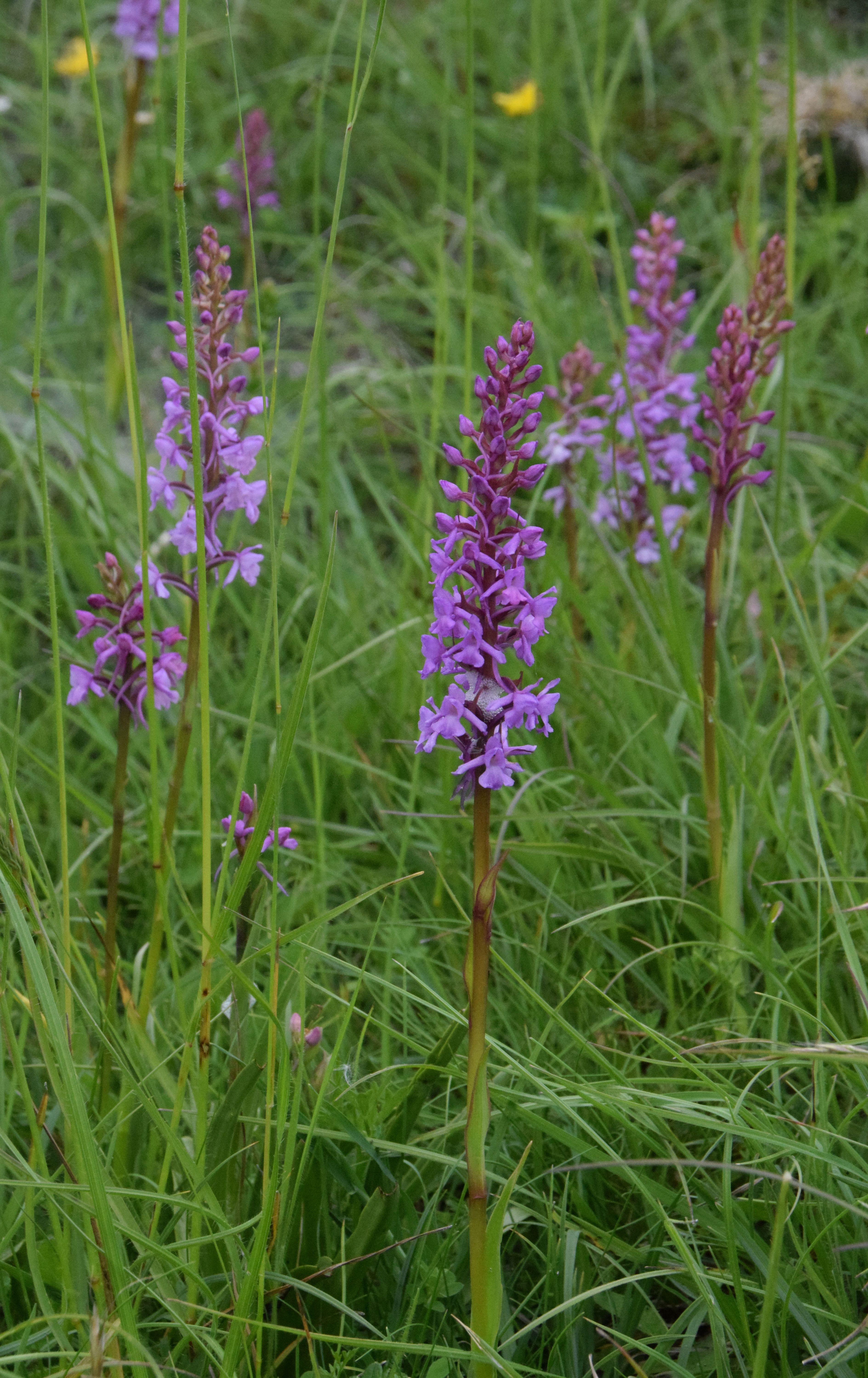
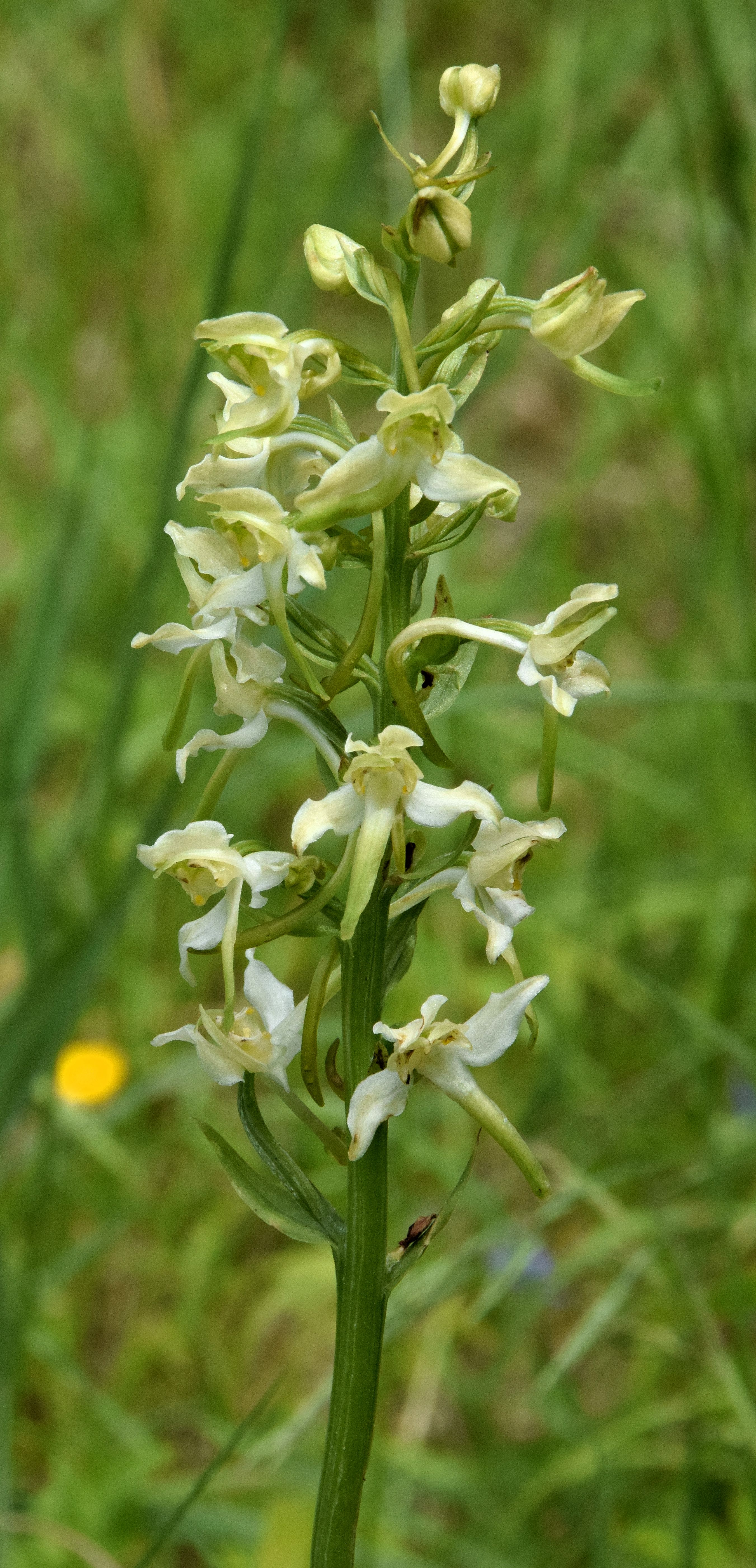
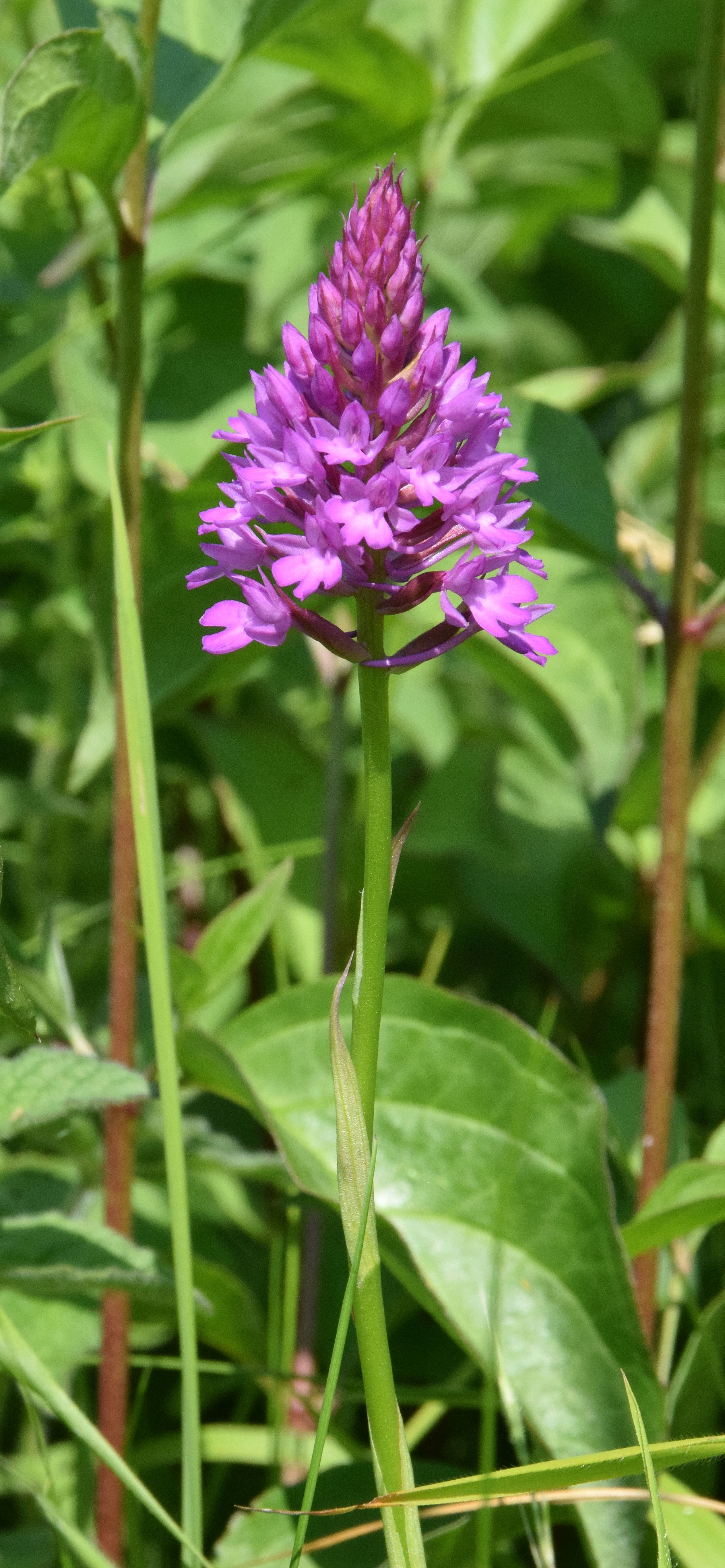
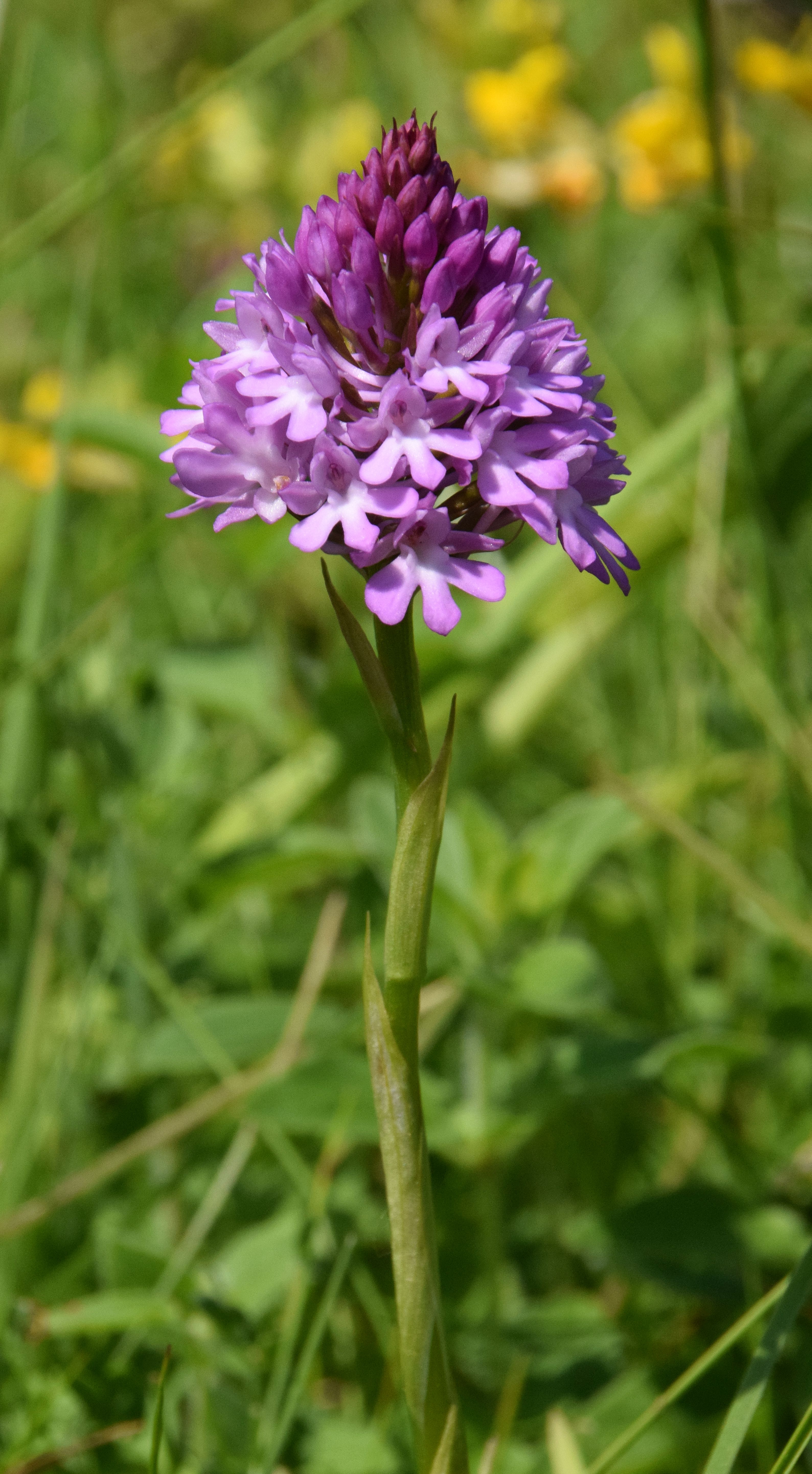
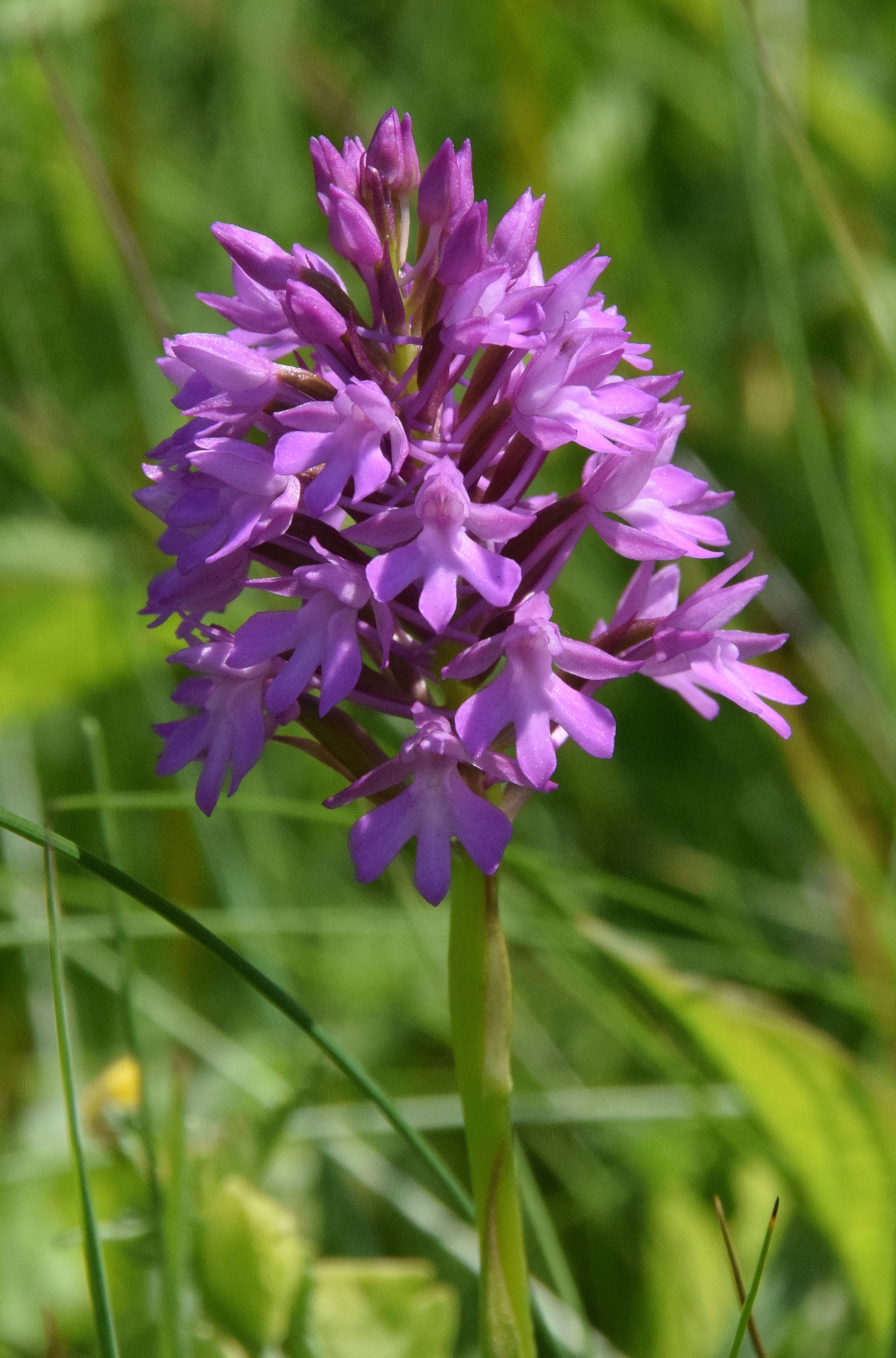
On 14th I paid another visit to Grangelands to experience the Chalk Fragrant and Common Spotted Orchids in full cry. In amongst them, here and there rather more vivid Pyramidal Orchid (pictured below, left) had now entered the mix. One of the more familiar encounters from my casual interest of the past, this is a widespread species of calcareous grassland, flowering from June to August. The clean, bright blooms vary from deep cerise to violet or purple, and as they open the spikes’ shape changes from pyramid to globe. They are pollinated by butterflies, day and night flying moths and become strongly scented in the evening to attract the last of those.

I had been told on the earlier visits here where to locate both Musk and Bird’s-nest Orchid. Though there had been a thundery breakdown in the current heat-wave over the weekend, the former had still not emerged. But I did find one of the latter on a steep Beech wood slope below Pulpit Hill fort and above the reserve’s Rifle Range area. It was much smaller and had an even more gone over look to it (above right) than that earlier Warburg item.

Aston Clinton Ragpits

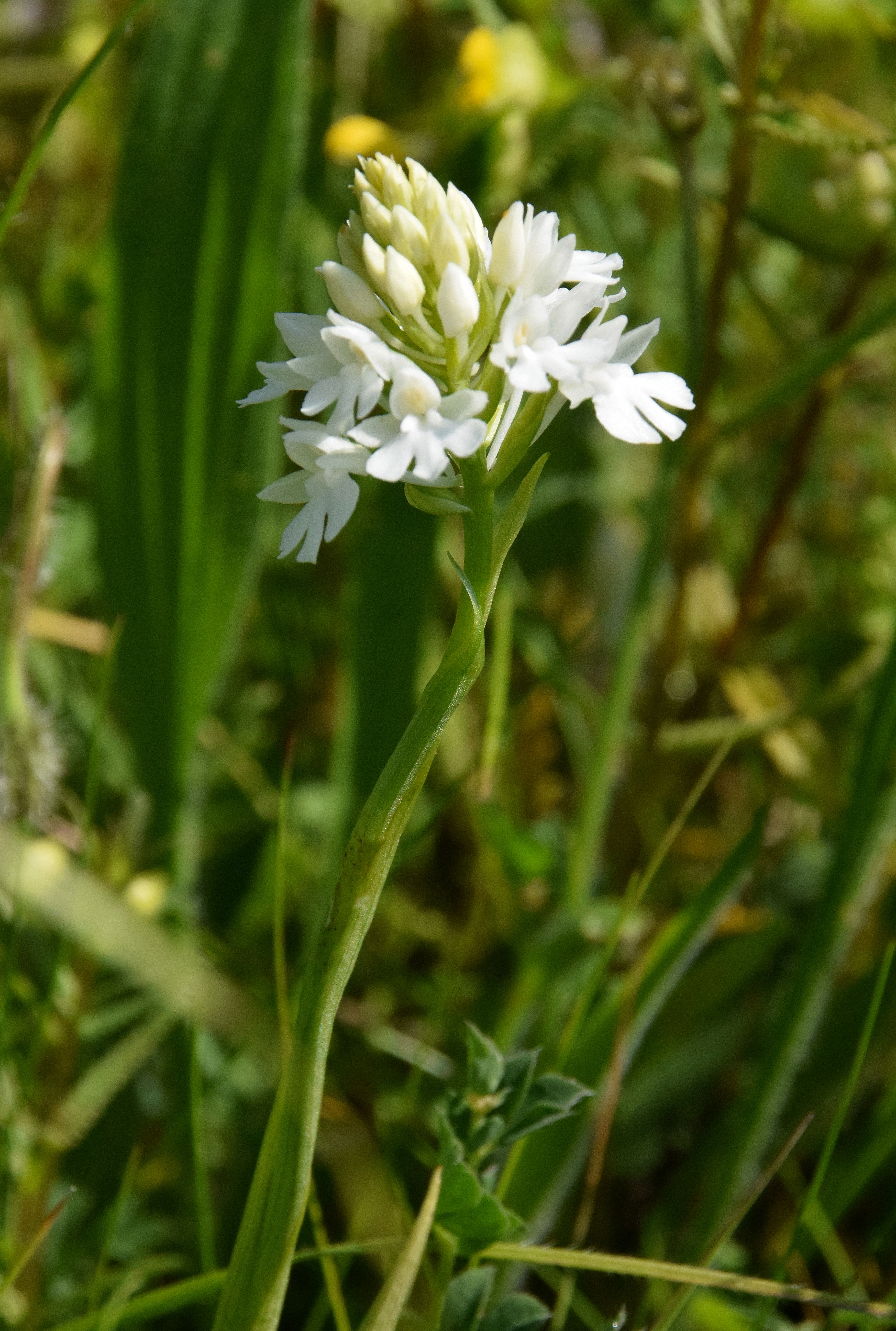
The display of Chalk Fragrant, Common Spotted and other Orchids at Aston Clinton Ragpits on this day was simply incredible, though difficult to capture adequately in pictures in the glaring sunlight. Of all the sites I have visited in 2023 this is undoubtedly the richest. But I noticed plants were going over quickly in the continued hot, dry conditions of this post. Amongst the Pyramidal Orchids (pictured below) I was pleased to locate a few of the white variant. This is a scarcity in Great Britain but has established some stable colonies, and enquiry revealed it is regular here.

Footnote: Through the second half of June, Pyramidal Orchid was the stand-out interest as I re-visited various Oxon and Bucks sites. It was a very hot weather month that served to cause the big displays of Common Spotted and Chalk Fragrant Orchids to go over quite quickly while the first-named of these three frequent species thrived. Those weather conditions did not suit the Grangelands Musk Orchids that I sought a number of times, eventually finding just three plants that had already gone over soon after my previous attempt. It now remained to cover some late summer Orchids, particularly Helleborines and hence my attention turned elsewhere.

Aurantiacae around Oxfordshire: Scarce Blue-tailed Damselfly expands it’s range – June 2023

Since it was recorded in my home county for the first time this century at Banbury in 2020 (see here and here), Oxon Odo enthusiasts have uncovered more Scarce Blue-tail colonies at new housing developments in Didcot and Grove. This damselfly tends to occur in the transient habitat of “storm water ponds” and flooded ditches that recent and active building sites provide, and this year I decided to get around all the locations as they are reported. The prize is the orange teneral female form Aurantiaca that holds a special fascination for me. Why go to the New Forest (see here) when I can now observe them locally?

My Oxon Aurantiaca for this season

This year’s first sighting came from Didcot on 27th May, and after being briefed by the finder Ian Lewington I went to take a look six days later. What awaited me on the sunny Friday afternoon of 2nd was a superb wildlife eco-system in the form of twin, reed-filled storm water ponds on the edge of Dida Gardens new homes (SU509910). I was about to learn that many such developments have these features, to collect surplus rainwater run-off and prevent flooding, and they are quickly colonised by odonata and other invertebrates. This one has been here for just three years.

I made two circuits of one small pond, picking out a male Scarce Blue-tailed Damselfly amongst plenty of other blue damselflies and several Large Reds. Some Dragonflies were also on the wing: Hairy Hawker, Four-Spotted Chaser and Black-tailed Skimmer. Then, retrieving my hiking pole from the car I checked out the larger second pond that was a little more off-piste.

On my re-emerging from that enclosure Ian, who lives nearby was walking towards me. So I was able to exercise a preferred option of letting him do the work in finding an Aurantiaca. It didn’t take long until he located one at the edge of the small pond which then drifted out to surrounding marginal vegetation. That made the young lady easier to get close to and she was very co-operative, perching in long grass (pictured above) and not moving too far when disturbed. After I left Ian amassed a total of eight male and two immature females at this site today.

Today’s Aurantiaca © and courtesy of Ian Lewington

So this was a successful start to my year’s Aurantiaca quest, but by my next tripette abroad on 20th there had been no further Oxon sightings elsewhere. Male and mature female SBTD were in that time recorded at all three sites of recent years. If there is new build housing near you, and where isn’t there in southern England (?), go and check it out for less frequent damselflies like this one and Small Red-eyed. To me the storm water ponds’ presence is a win win situation, but I cannot help wondering how many home buyers might appreciate those treasures on their doorstep.

Proper Scottish Chequered Skipper at Allt Mhuic reserve, then Glasdrum Wood NNR – 24 & 25th May

For the last few years the plan (Covid restrictions allowing) if I did this has always been to go on the spur of the moment if I knew the weather would be right. With two regular Oxon wildlife colleagues holidaying in the Cairngorms this week I now learned conditions were indeed favourable. So I jumped on a plane and went.

Chequered Skipper

After a 70-minute morning flight from Luton to Inverness, the drive through the Great Glen was in the expected sunshine denied to me through a week up here last July. So Loch’s Ness, Oich and Lochy and the surrounding mountain scenery were all beheld as they should be. Then after reaching Allt Mhuic butterfly reserve (see here) around 3pm, I quickly found what had brought me. Remembering a spot that the 2022 tour guide had cited as good for my quest, I started seeing them as soon as I reached it.

This is a classic site for Chequered Skipper, sitting above the north shore of Loch Arkaig (PH34 4EJ – NN121912). But pre-booking group tours to observe them is always a risk and many people just do not get the required weather, including myself last summer. Now I watched these tiny, hyperactive Skippers along a winding track through bracken on the steep hillside for the next two hours. They were tricky little things to get pictures of, rarely settling in a full-on way. Easily spooked, they would then dart some distance away like the Chiltern Silver-spotted Skippers at home. These (below) were my better pictures.

Chequered Skippers at Allt Mhuic butterfly reserve

The butterfly ranges across much of northern, central and eastern Europe but in the British Isles is now restricted to the area of Scotland I was visiting, where it is locally common. It became extinct in England from1975 until the recent re-introduction in Northants (see here). The fiercely territorial males perch on prominent vegetation such as sapling leaves with wings draped back and open, to dart out and buzz any passing intruder, such as I witnessed here. And I also noticed how they were especially fond of settling on Bluebells, that are acknowledged as a favourite nectar source together with Bugle.

On Thursday (25th) I spent three hours from 1pm at Glasdrum Wood NNR (PA38 4BQ – NN006460) that is said to be better for CS than Allt Mhuic, and they fly earlier here. The prime area is a strip of open bracken habitat beneath power cables at the foot of the steeply sloping site, access to which is just a stone’s throw from the car park. I was directed there by a couple who were leaving as I arrived, so once again the connect was almost immediate. But these Chequered Skipper seemed disinclined to settle so I set off to explore the entire reserve and see what other hot spots might be available.

The ancient woodland site is a prime example of temperate rainforest produced by the Scottish west coast’s mild, wet Atlantic climate. Nationally important ranges of many lichen species thrive here, coating the trees below which as significant collections of ferns and mosses abound. This all supports a hugely diverse invertebrate fauna including 20 different butterflies that benefit from the south-facing aspect’s small glades and larger areas of open ground that act as sun traps. But the habitat is all very dense and steep, striking me as seriously off-piste to seek out more CS in. I found one or two here and there but opted for the easier alternative of concentrating upon the place where I had started.

The Chequered Skipper hot spot at Glasdrum Wood NNR

This time I walked much further along the corridor below the power lines (pictured above), crossing paths with more and more Skippers as I progressed. But I was walking into the sun, so most of the subjects I encountered would settle looking away from me and needing to be got around which was highly unlikely. Not so on the way back when as anticipated I found the same butterflies posing head-on and being generally more approachable, with these agreeable results (below). It was amusing to see the miniscule entities sometimes aggressively challenge passing Small Pearl-bordered Fritillaries that also fly here.

Chequered Skippers at Glasdrum Wood NNR

And to round things off there was this

It was now time to start thinking about getting back to the airport and heading home. The re-introduced colony in Northants just didn’t do it properly for me a year ago. By contrast I left site today feeling completely satisfied with the outcome of these impromptu two days in Scotland: relieved to have experienced the real kosher deal at last, and secure in the knowledge that this so tricky British straggler had been put to bed properly. Now I need not think about travelling to observe them ever again.

Spring Orchids in seven locations around Oxford: 11th – 22nd May

Others have trod this path before me. When the better stuff seems like too much trouble but every so often I go out and add a few anyway to an at best half-hearted year list, it is possibly time (county ticks such as Black-winged Stilt aside) to give annual Oxon birding a rest. Likewise I have felt little inclination to re-work the English insect portfolios yet again this year. So as an alternative new season pursuit I have elected to seek out up to 30 of the 53 native British Orchids that can be found in my home county and neighbouring Bucks. The earliest occurring species can all be found at sites close to home, so that is where I started. Those covered in this post (in order of observation) are:

  • Early Purple Orchid @ Sydlings Copse
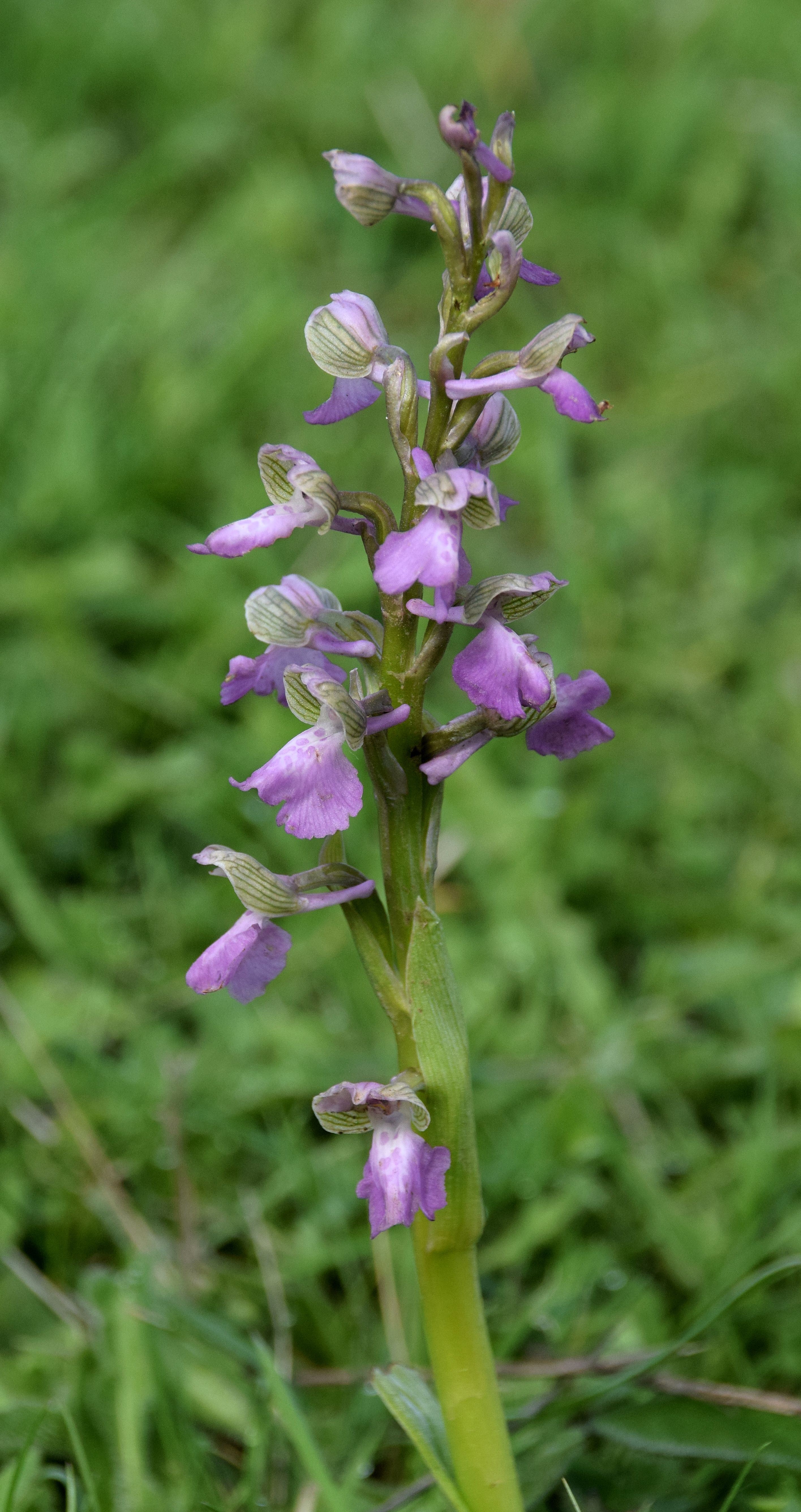
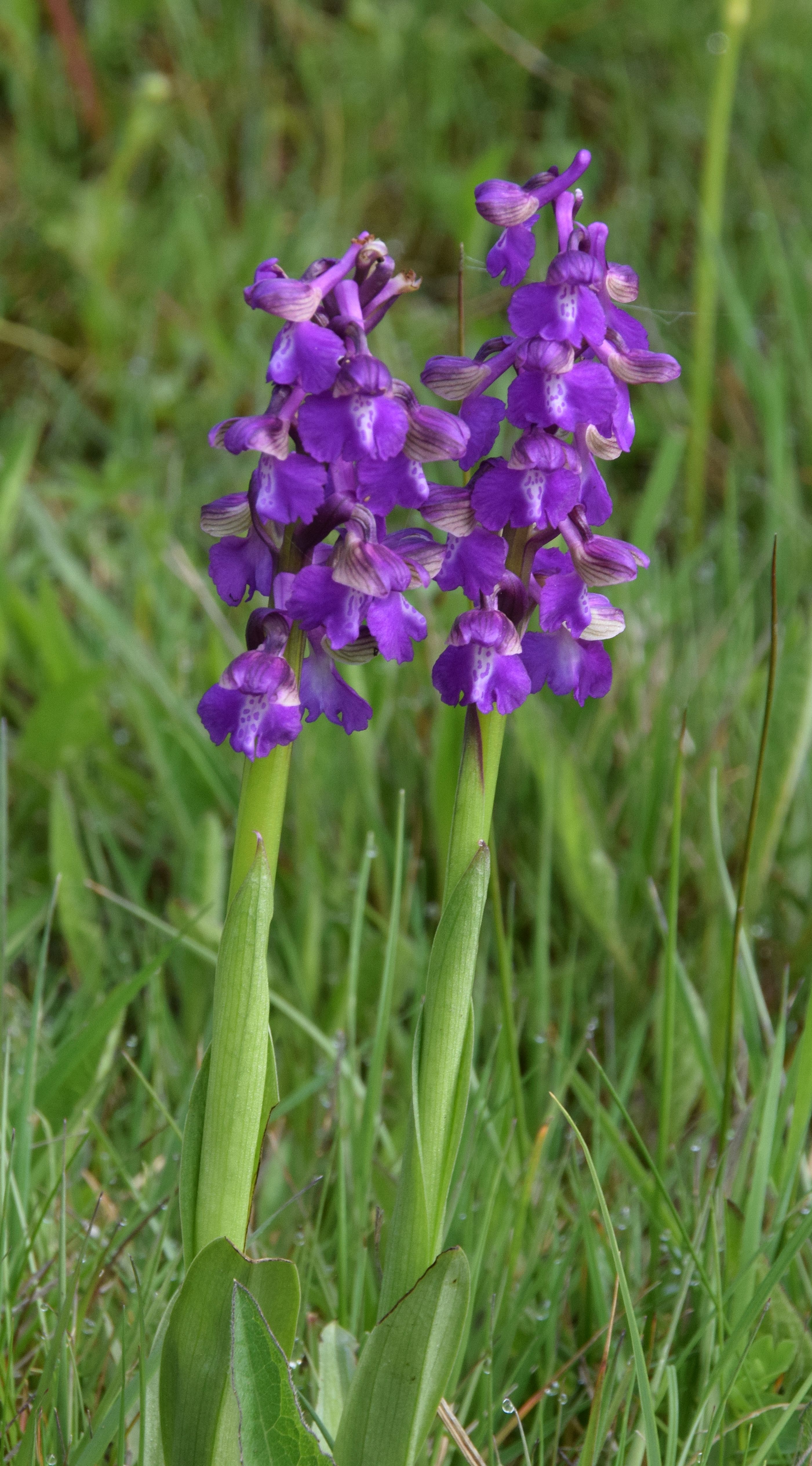
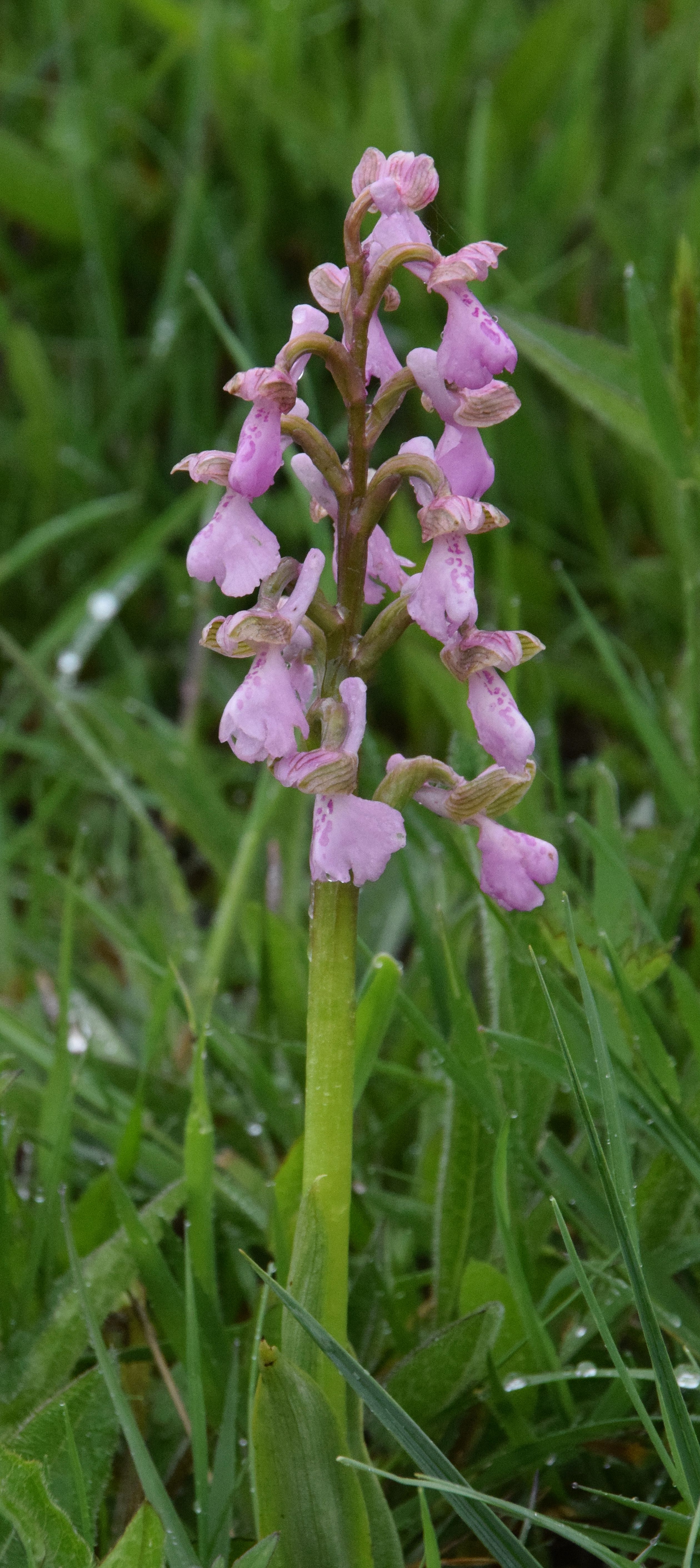
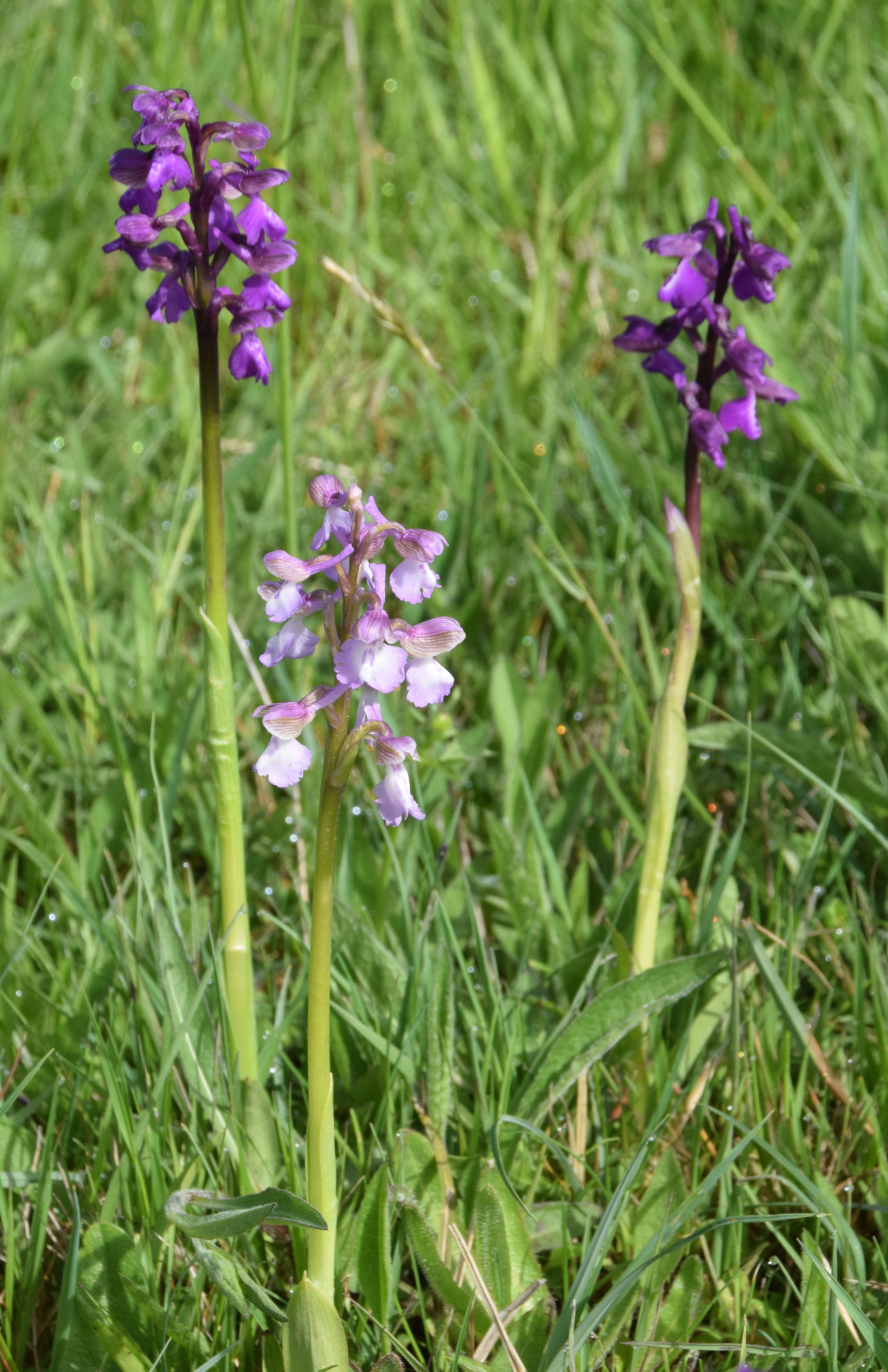
  • Green-winged Orchid @ Bernwood Meadows, Asham and Wendlebury Meads
  • Heath Spotted Orchid @ Woodside Meadows
  • Early Marsh Orchid @ Lye Valley and Parsonage Moor

Sydlings Copse, OX3 9TYSP 559096

BBOWT reserve (see here) to the north-east of Oxford and just south of RSPB Otmoor, accessed on foot (600 metres) from a small lay-by on the B4027 road or by bridleway from Barton.

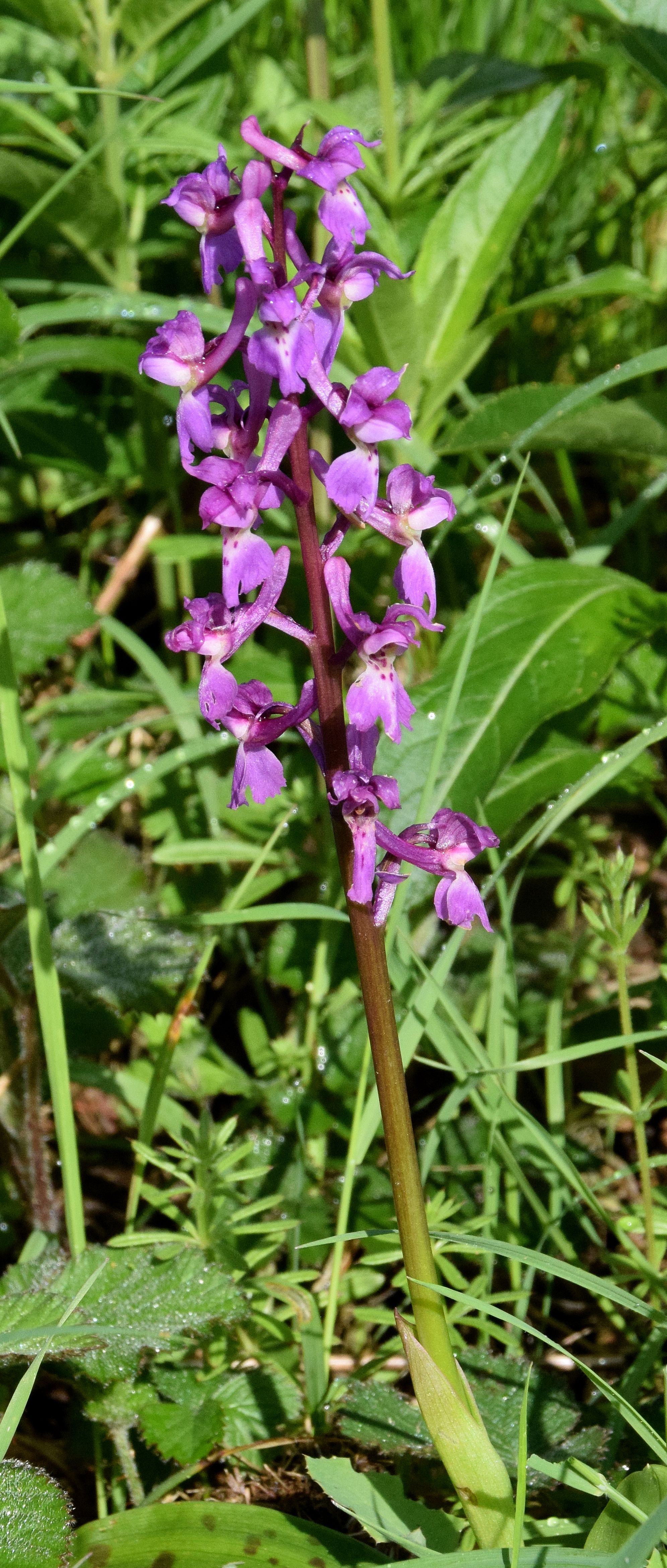
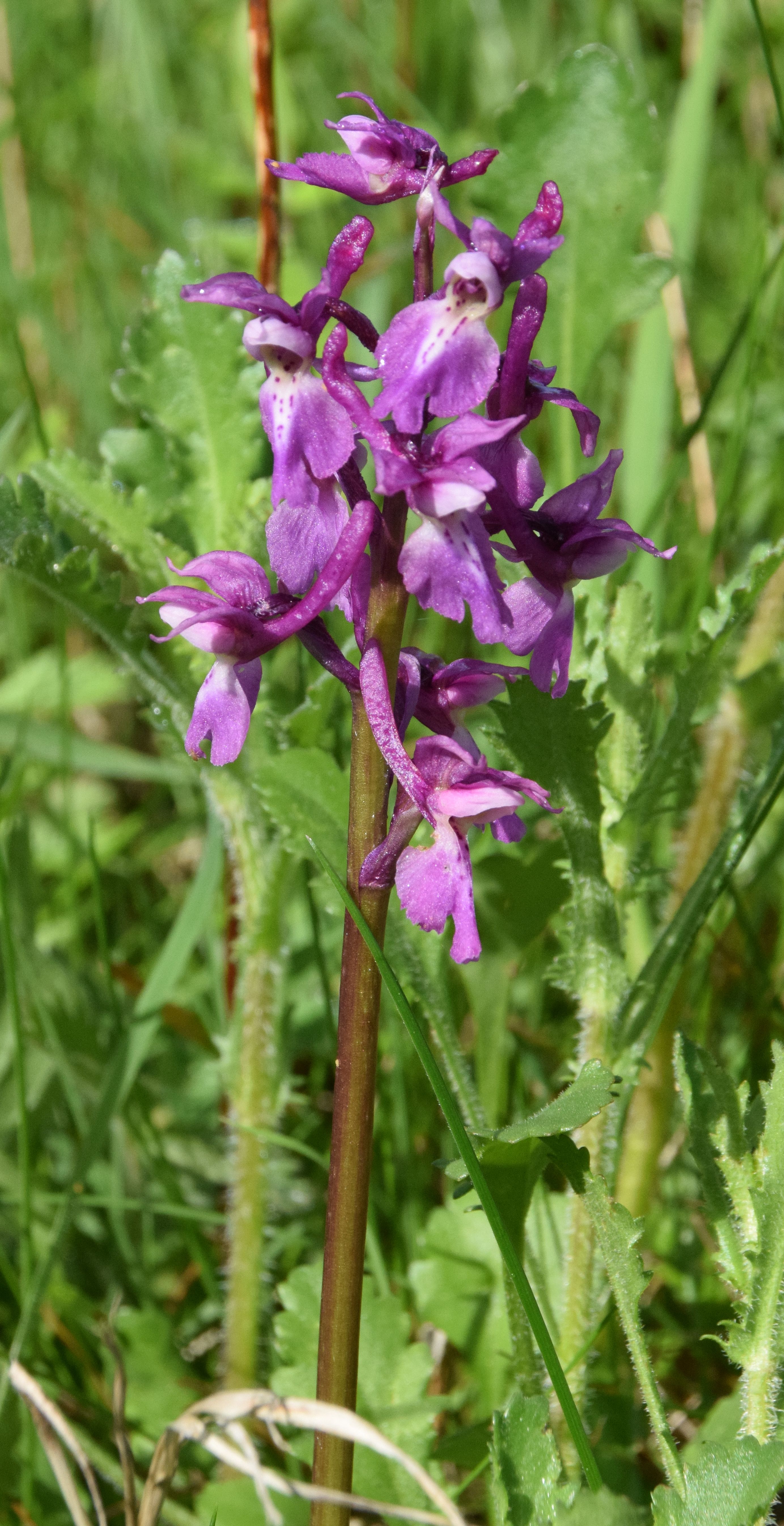
An unusual mix of habitats at this very diverse and fascinating site comprises ancient broad-leaved woodland, limestone grassland, reed bed, fen and rare Oxfordshire heathland; that between them support more than 400 plant species. After an earlier reconnoitre I visited here on 11th May to view Early Purple Orchid. Taking the right hand fork from the reserve entrance I found 50-something plants, mostly characterised by tall, slim flower spikes in shades of purple, through a gate at the end of that track.

This is the third most widespread British species and as the name suggests is an annual vanguard. Generally common, it may be found growing amongst Bluebells, Cowslips and Wood Anemones in coppiced woodland; as well as on rough pasture, open downland, meadows, roadsides and railway embankments. Each open and irregular-shaped bloom has 10 – 50 flowers that emit a strong smell of urine to attract pollinators but do not produce nectar.

Early Purple Orchids

Bernwood Meadows HP18 9URSP 606111

BBOWT reserve (see here) on the border between the two counties, north of Stanton St John and east of Horton-cum-Studley, with a small parking area (max four spaces).

There are three traditional hay meadows here that are managed to support over100 different wild plants, and host England’s largest and most well-known profusion of Green-winged Orchid. Having sought out earliest specimens through April (see here) to familiarise myself with the species, I came back on 11th May to take in the full, many-thousand strong spectacle of peak season (pictured below) that did not disappoint.

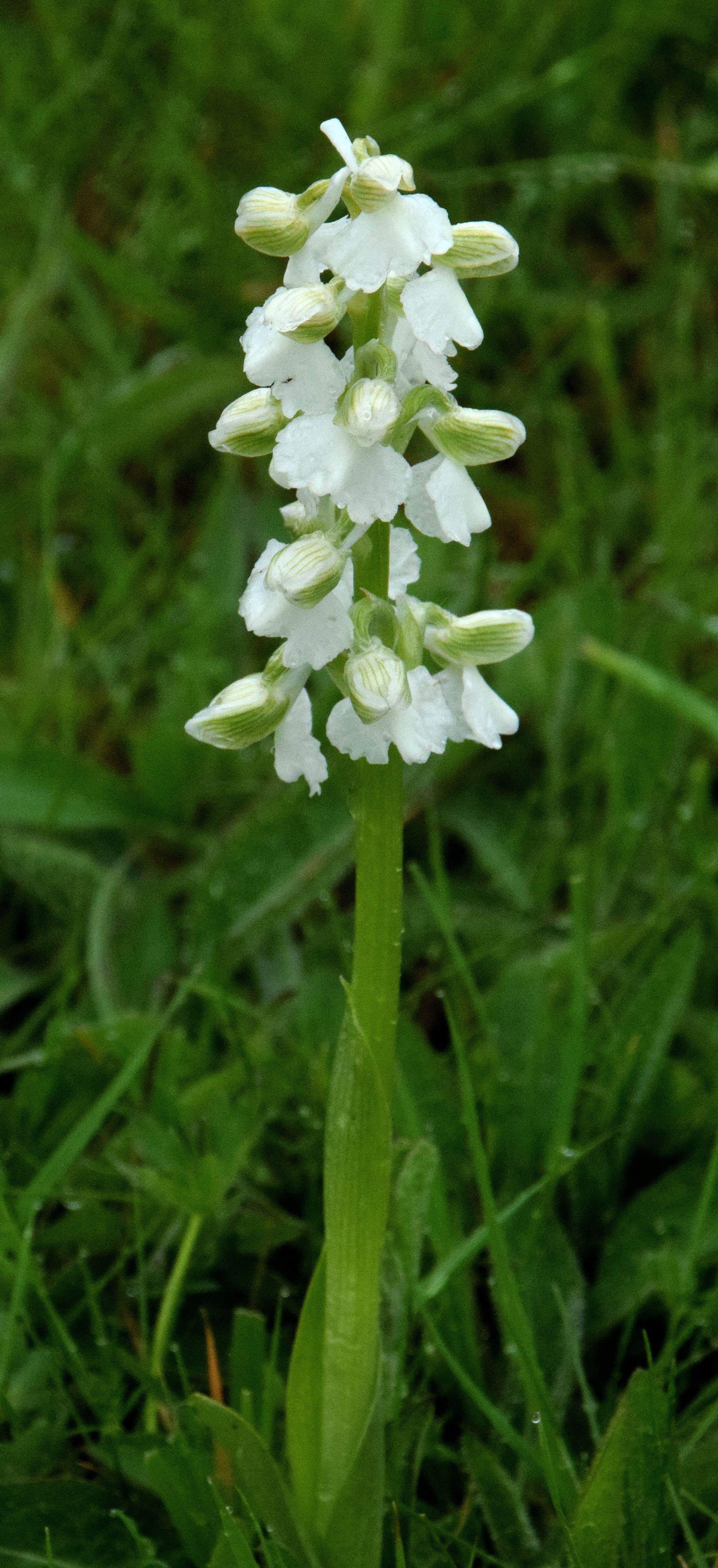
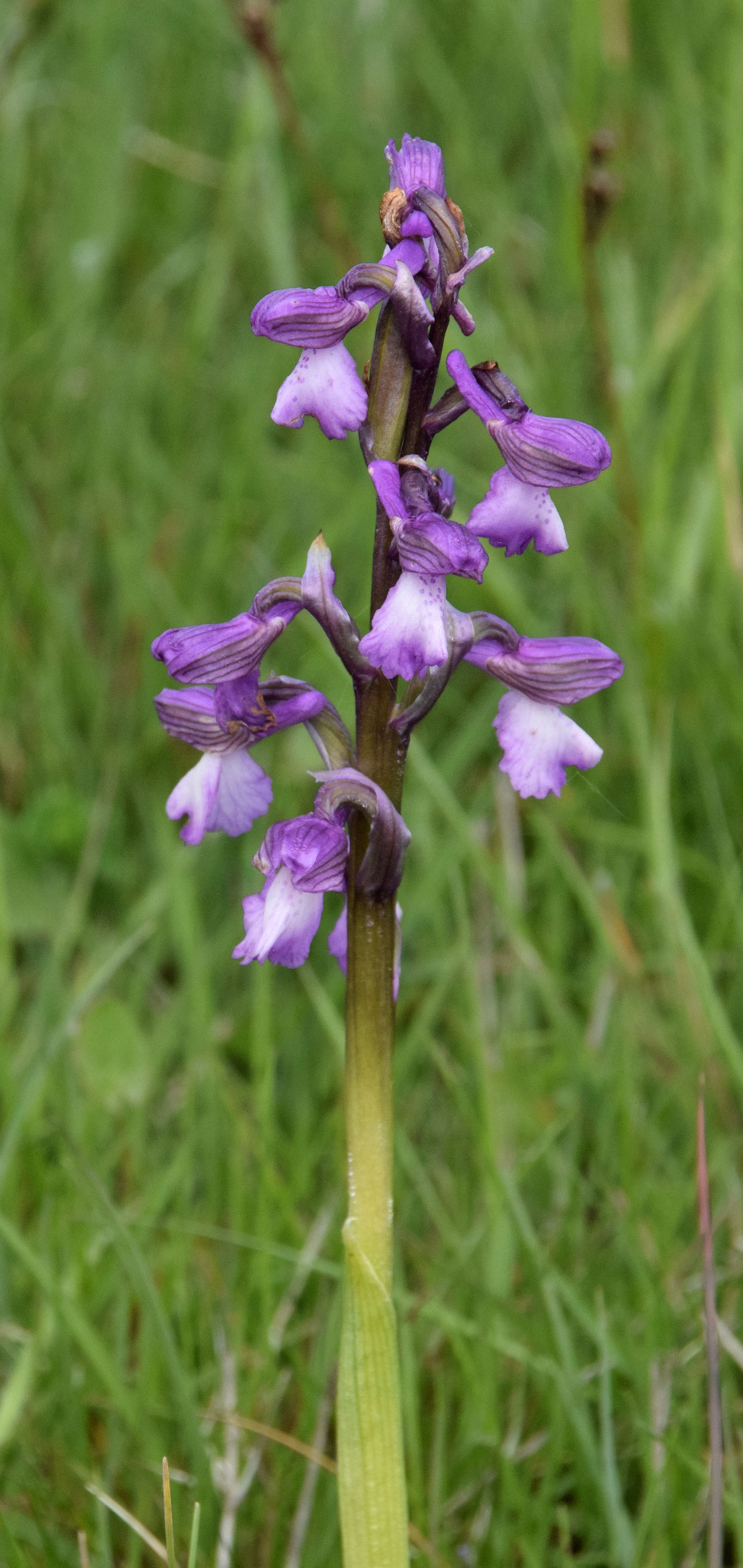
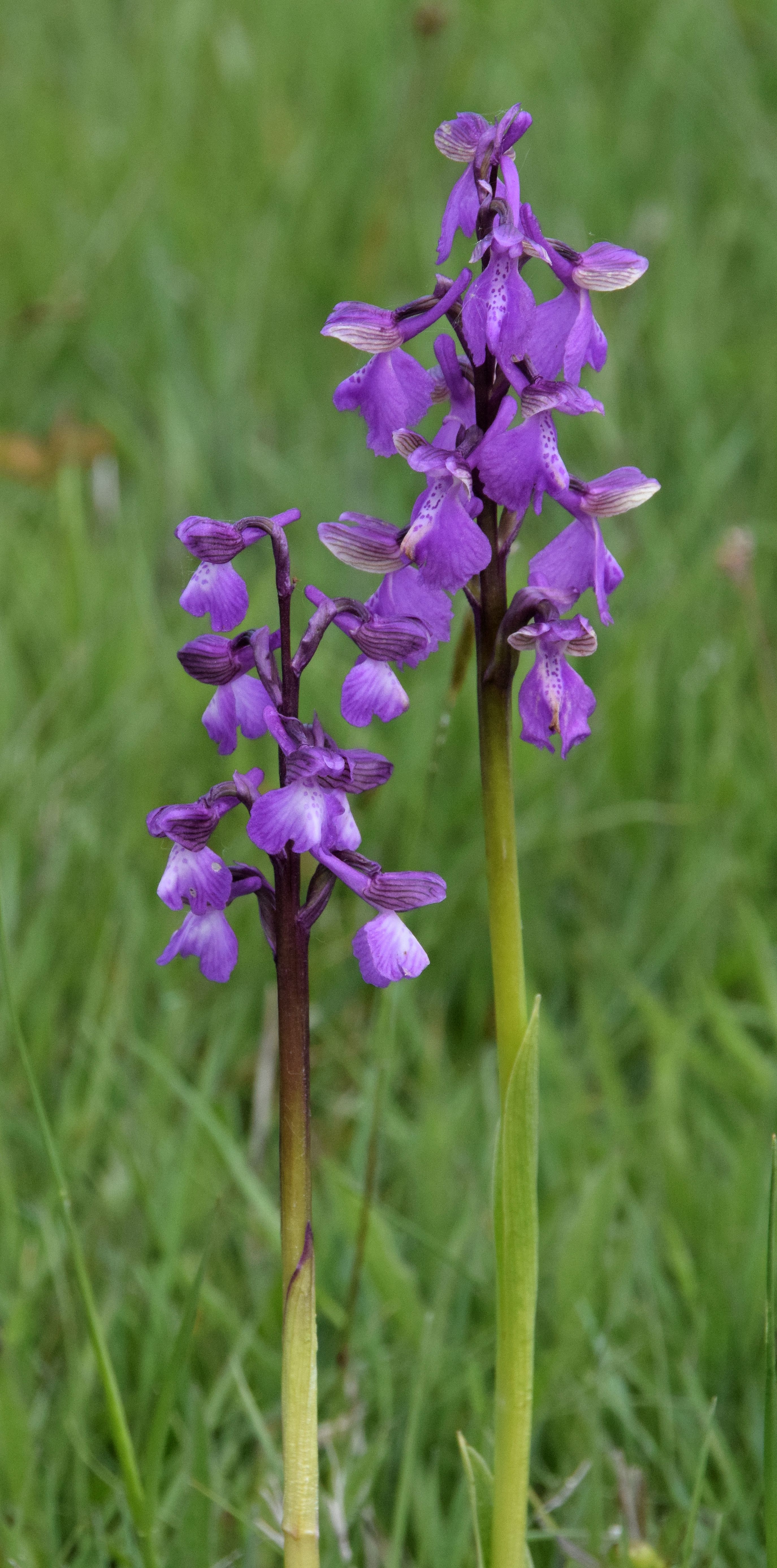
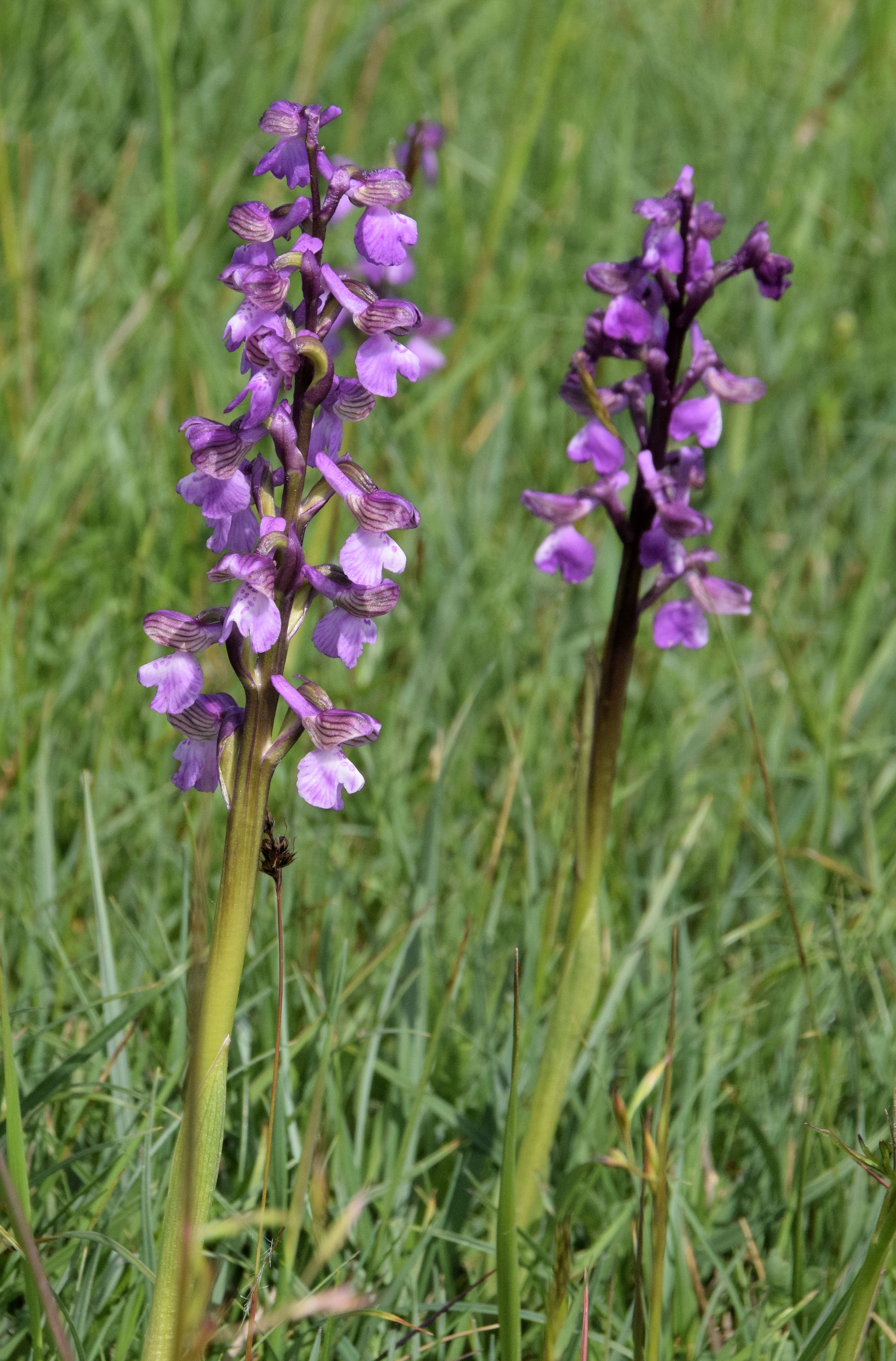
This “petite” (5 – 15 cm) Orchid of unimproved grasslands was once commonplace but its range has halved with agricultural intensification. It is now one of the most rapidly declining British species away from sympathetically managed habitat where it tends to grow in large colonies, such as here. The name comes from green or bronze parallel veins in the hood of up to 25 helmet-shaped flowers that grow in a loose, linear bunch at the top of the single stalk. The inflorescence may be of various shades, mainly purple but ranging from pale pink, through mauve to white. On this visit I concentrated on pictorial records of the less frequent colour forms (pictured below).

Green-winged Orchids

Asham Meads, OX5 2RFSP 590143

BBOWT reserve (see here) accessed by bridleways from a minor road between Murcott and Boarstall (with unfriendly signage), or from Horton-cum-Studley (welly boots essential).

Three damp meadows here support scarce communities of marsh-loving plants including huge numbers of Green-winged Orchid in spring. I visited on 16th May, choosing the less hostile southern route in, and though spotted twice by resident farmers was not seen off. Getting there through wet, muddy ground was something of a challenge though after recent prolonged foul weather, but what eventually awaited me was well worth the effort. It was indeed a second spectacle to rival Bernwood Meadows (pictured below), and the site’s remoteness added a certain extra evocative quality and atmosphere to proceedings.

It is impossible to move around Asham Meads without trampling habitat so I limited myself to the near end of the Lower Marsh, luxuriating in a sense of peaceful solitude all the while. These (below) are a few of the plants that caught my eye on this occasion.

Green-winged Orchids

Woodsides Meadow, OX25 2PT SP 556177

BBOWT reserve (see here) accessed by bridleway from a minor road south-west of Wendlebury.

This three-field site is managed as traditional hay meadows characterised by medieval “ridge and furrow” plough marks. It is part of the SSSI-classed Wendlebury Meads complex of remnant calcareous pasture, and supports more than 100 different wild plants. I moved on from Asham Meads to what is a further secluded gem on 16th May. Having read that Green-winged Orchid occurs here too, in scanning for those tall, slim forms I at first failed to notice the large numbers of young and far more petite, site-speciality Heath Spotted Orchid that were looking straight back at me. But once I got my eye in I kept on finding more and more of the latter, which I had observed just once before in Scotland last year.

This is as far as I know the only Oxon location for this Orchid, that is also found at four heathland sites in neighbouring Berks. My research reveals the species occurs extensively on acidic soils across most of its range but will also colonise calcareous pasture where it still survives, such as here. To my unpractised eye today’s plants all had a “miniature” and less robust quality than the closely related Common Spotted Orchid that is more typical of non-acidic habitat. I initially took that as the diagnostic rather than subtleties in the blooms.

Heath Spotted Orchids

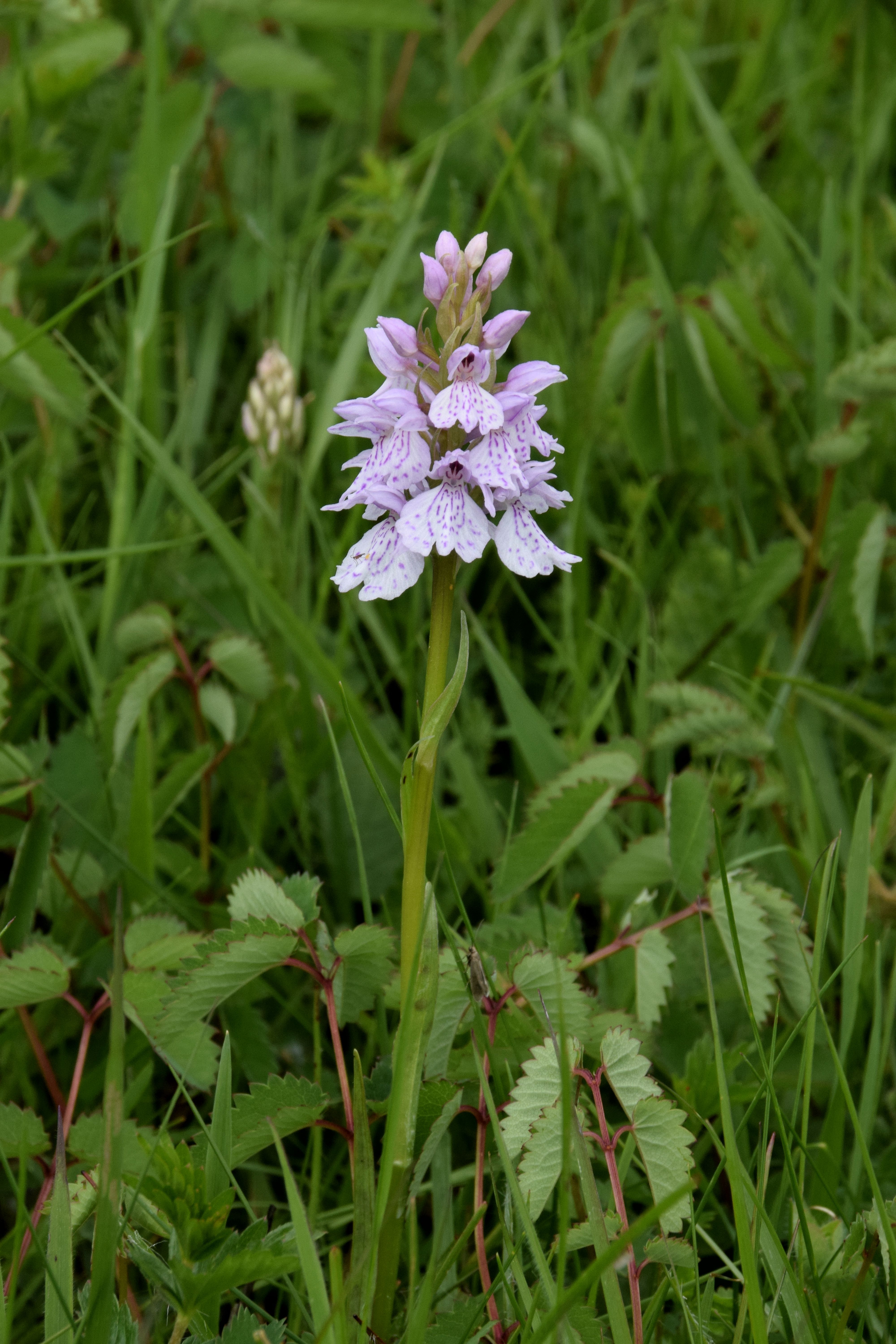
Reading into the latter, I found the description (see here) of HSO flowers as “being washed with a pale pink and having many purple marks and discontinuous lines upon them that do not form the well defined loops of CSO”, to be the clearest indicator. The above sequence I believe clearly shows this, but I am not so sure about the outer plants below that my Seek app also identified as HSO but possibly look more like the bolder CSO. As always I am open to informed guidance here.

There is clearly a lot of variation in flowers of both species. Most sources agree that the faintly scented HSO spikes are shorter than CSO, usually between 10 and 20cm high, and tend to be conical. In the south of England HSO is said to bloom two weeks earlier, and vice-versa in the north continuing through July. To complicate matters, the two species readily hybridise, as HSO does with other marsh orchids. The “spotted” in the names refers to spots on the leaves rather than on the flowers themselves.

I came back here two days later on 18th finding many more plants (pictured below) erupting in clusters from the damp plough and furrows, and having read up on all this earlier in the morning became convinced that what I was finding was indeed HSO in a rather special location. After checking things out with trusted sources HSO’s historical presence was confirmed, though possibly not too many people visit here for the purpose. In my first serious Orchid season I feel very glad to have done so

Heath Spotted Orchids

Wendlebury Meads, OxonSP 563173

An area of traditional calcareous pastures, accessed on foot to the north-east of Charlton-on-Otmoor, lying on private land but crossed by a public right of way that there is nothing to stop anyone wandering from.

Visiting on 18th May, the first meadow I reached contained a third Green-winged Orchid spectacle (pictured below) to rival Bernwood Meadows and Asham Meads. Once again the soothing sense of solitude here appealed to my non-preferred option of doing these things alone, and I rejoiced in the awareness that such out of the way places still exist in our frenetic world, not to mention so close to home. These fields, still showing evidence of medieval ridge and furrow ploughing, for whatever reason have never been “improved” or farmed by modern methods. Such calcareous pasture was commonplace in southern England up to the early 20th century but very little now survives, so today’s location offers an appealing experience of ecosystems from largely lost times gone by.

After that first field the path continued across three more in which any Orchid interest if present was well hidden, until I reached the hard access track to Woodsides Meadow that I re-visited. The onward route eventually skirted a further part of this intriguing complex known as Mansmoor Closes, a series of enclosures on private land with no access that are managed in the same way, though some were being grazed by cattle or horses. More large concentrations of what must have been GWO were visible in the middle distance from the private concrete road along which the bridleway back to Charlton-on-Otmoor ran.

This morning was another thoroughly stimulating and spirit-cleansing diversion, such as this entire exercise is so effectively offering, and I am only up to three Orchids so far. It’s difficult to imagine for instance how many hundreds of GWO I must have scrutinised for most attractive items. Just being in the “lost places” they still thrive in has been more rewarding than I could have imagined. Much more will be added to this from here on in.

Lye Valley, Oxford OX3 7HP – SP547058

A local nature reserve (see here) administered by Oxford City Council in partnership with BBOWT and volunteer groups, accessed on foot from surrounding residential streets.

In the fourth week of May my attention turned to Marsh Orchids, Early and Southern of which as the name suggests the former goes first. Oxford and its environs has two remnant areas of nationally rare calcareous fen habitat that support both items. On the morning of 22nd I visited one of those that is close to my favoured supermarket. It didn’t take long to find what I was looking for, there being in excess of 50 Early Marsh Orchid in full bloom in one portion of the valley.

This species was found historically in wet grassland areas including marshes, floodplains and wet meadows such as Iffley and Bernwood; but is now lost from around 40 per cent of it’s former range due to land drainage and (like GWO) modern agricultural practice. Where it survives EMO is said to occur mainly in small numbers so this must be a good site. The flowering period is from late May to early July.

Having thus gained a personal first sighting I was expecting the flower size to be larger. As with plumage topography in birds, I do not intend to go into petals, sepals, lips and hoods too much herein; being content to let my pictures distinguish the plants presented. EMO in Oxon and Bucks are all of the same sub-species, and there are four more with interesting colour variation in different parts of Great Britain. Hybridisation with Southern Marsh, Common and Heath Spotted is also a factor, producing many intermediate forms.

Early Marsh Orchids

The final picture in the sequence above was taken later on the same day at BBOWT Parsonage Moor (SU461997), part of the Cothill Fen complex to the west of the city. This has been the classic Oxon Marsh Orchid site over the years but my understanding is they occur there only in small numbers. On this occasion I located just two specimens, so Lye Valley not for the first time in recent memory provided the superior experience.

Butterflies in the Askion Mountains above Siatista, northern Greece – 5 & 6th May

My wish list for this trip was compiled from missed trip targets on the 2019 Greenwings Clouded Apollo tour. In attempting to research where to find them I consulted what trip reports from wildlife tour operators I could find online, but those understandably do not give away precise site locations. But the town of Siatista is a centre for some tours and above it is a range comprising Mounts Stalos, Askio, Pyrgos, Sideras and Skopia, the last of which is cited as a location for some species I was seeking this time. So that is where I decided to concentrate my search.
Just outside Siatista on the road to Galatini a right turn goes up into those mountains along an unmade road that is perfectly passable without a 4WD. I had imagined this led into the foothills but it is actually a service road to a wind farm and so runs along the heights to where the turbines are located. Cloud of course sits on mountain tops, colder winds blow up there than below and weather patterns can change very quickly, none of which is especially butterfly friendly; so this was going to be another challenge.
The wet weather finally relented on Friday (5th), but cloud still prevailed and I was expecting nothing more than a typical butterflying day (such as at home) of waiting for sunny interludes. After exploring the length of the route in mainly misty conditions I decided to come back later, but on the descent noticed butterflies for the first time in a sheltered gully above the road. Stopping to investigate, both Eastern Wood White and Grüner’s Orange Tip were immediately apparent on the wing. Some mysterious, larger, dark butterflies were also flying fast further up the slope but I couldn’t get close to them. Peacock perhaps or could they be the trip target Dalmatian Ringlet?

Eastern Wood White (first brood)

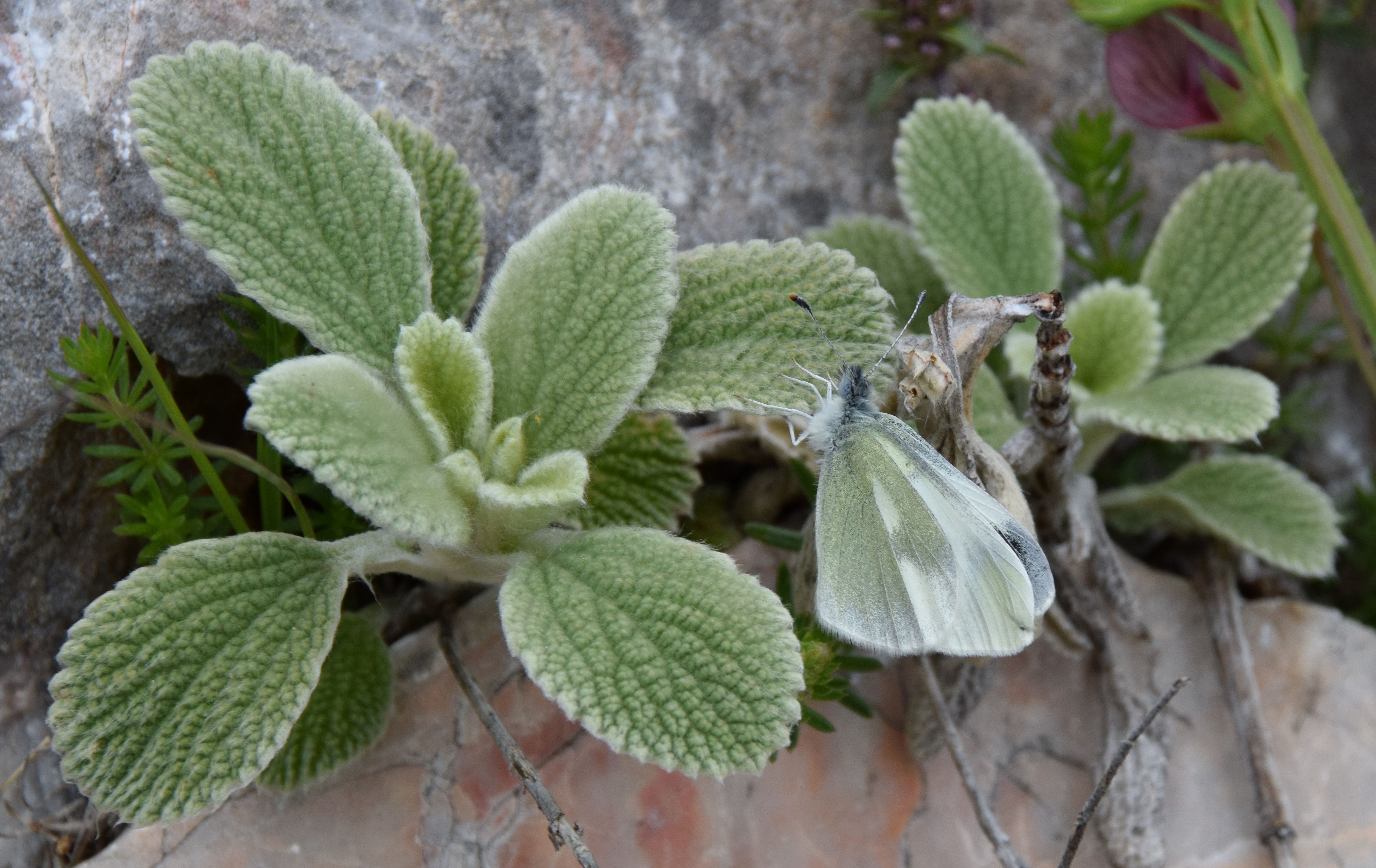
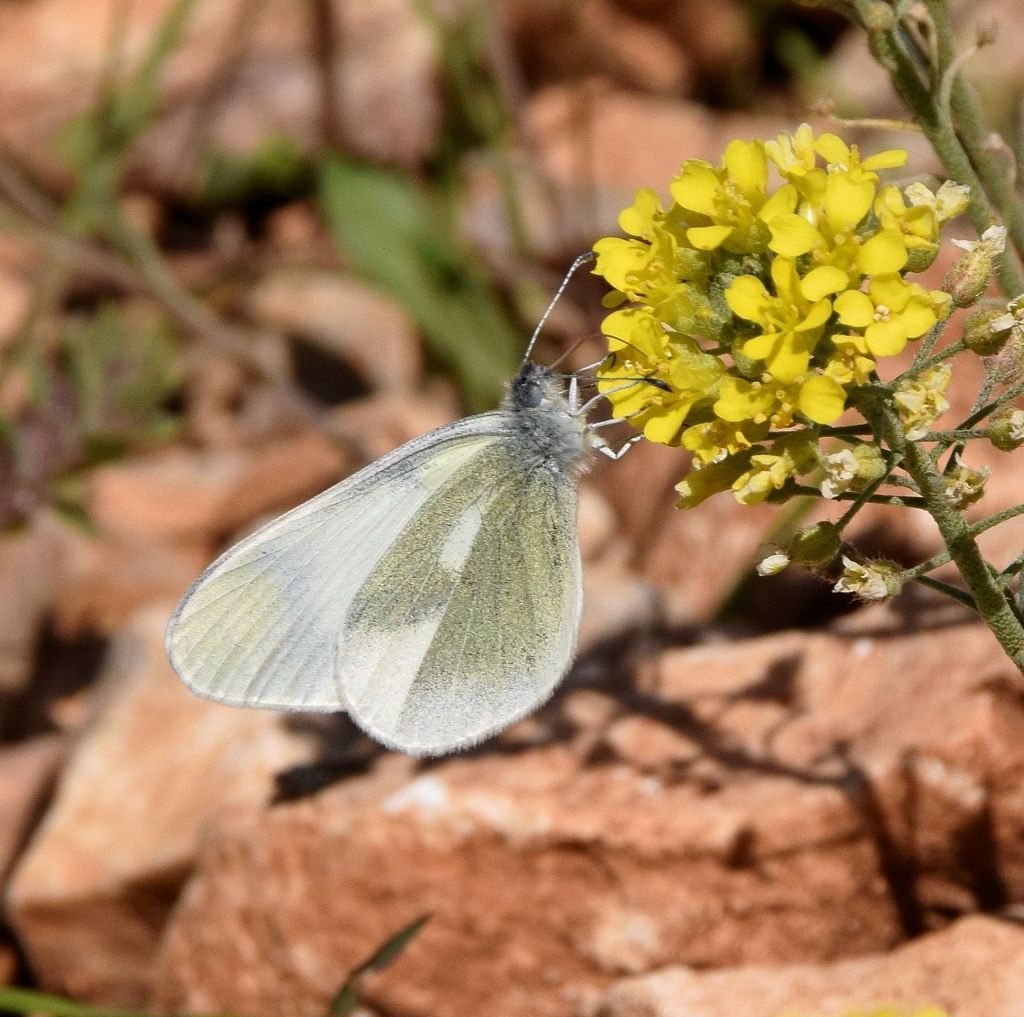
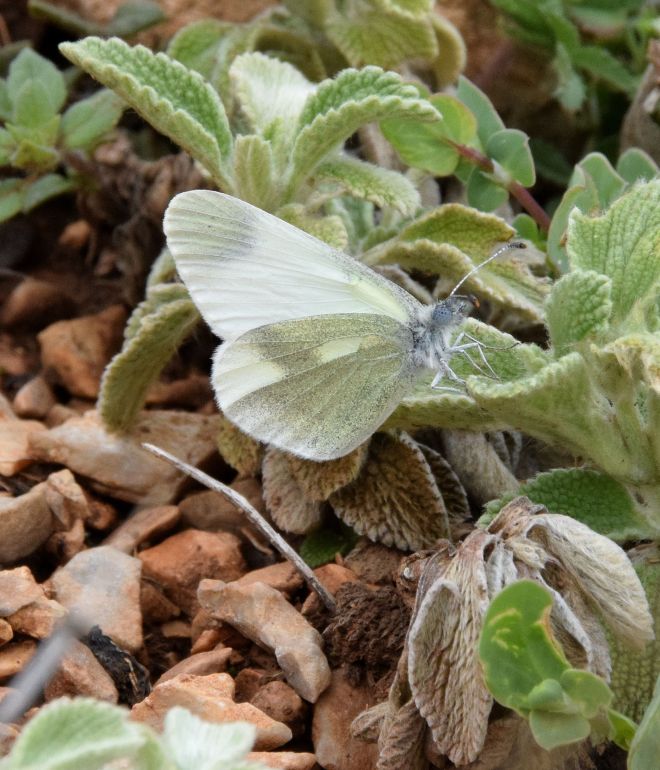
The first of those (Leptidea duponicheli)see here), which I had observed twice previously in northern Greece, from where its range extends through the Balkan region, occurs in a range of habitats including open scrub such as here. But on receiving an accurate ID for my observation I was surprised to have encountered a Wood White sp at such altitude. Eastern Wood White is easier to identify in the first than its two subsequent broods, the unh markings being green when fresh, fading to grey with wear. A detailed guide to separating it from Wood White (Leptidea sinapis) may be found here. I believe the rectangular white marking on the unh wing that these pictures show is one diagnostic.

The Grüner’s (pictured inconclusively below, top left) seemed paler-toned than those I had observed in Greece’s Rodopi Mountains in April 2019 (see here), and like all Orange Tips were difficult to gain adequate pictures of. But the yellowish ground colour of this localised species was more apparent in the field than in sub-standard images that I managed. Other butterflies seen in this post’s location over the two days were Dingy and Grizzled Skipper, Green Hairstreak, Green-veined White, Small Copper, Common Blue, Small Heath, Wall Brown and a solitary Spotted Fritillary.

Three Southern Festoon (below right) in the gully described above added a little more of a regional flavour to the list, which as at this trip’s first centre could only be described as very modest. And then there were those elusive, dark, fast flying numbers … what were they?

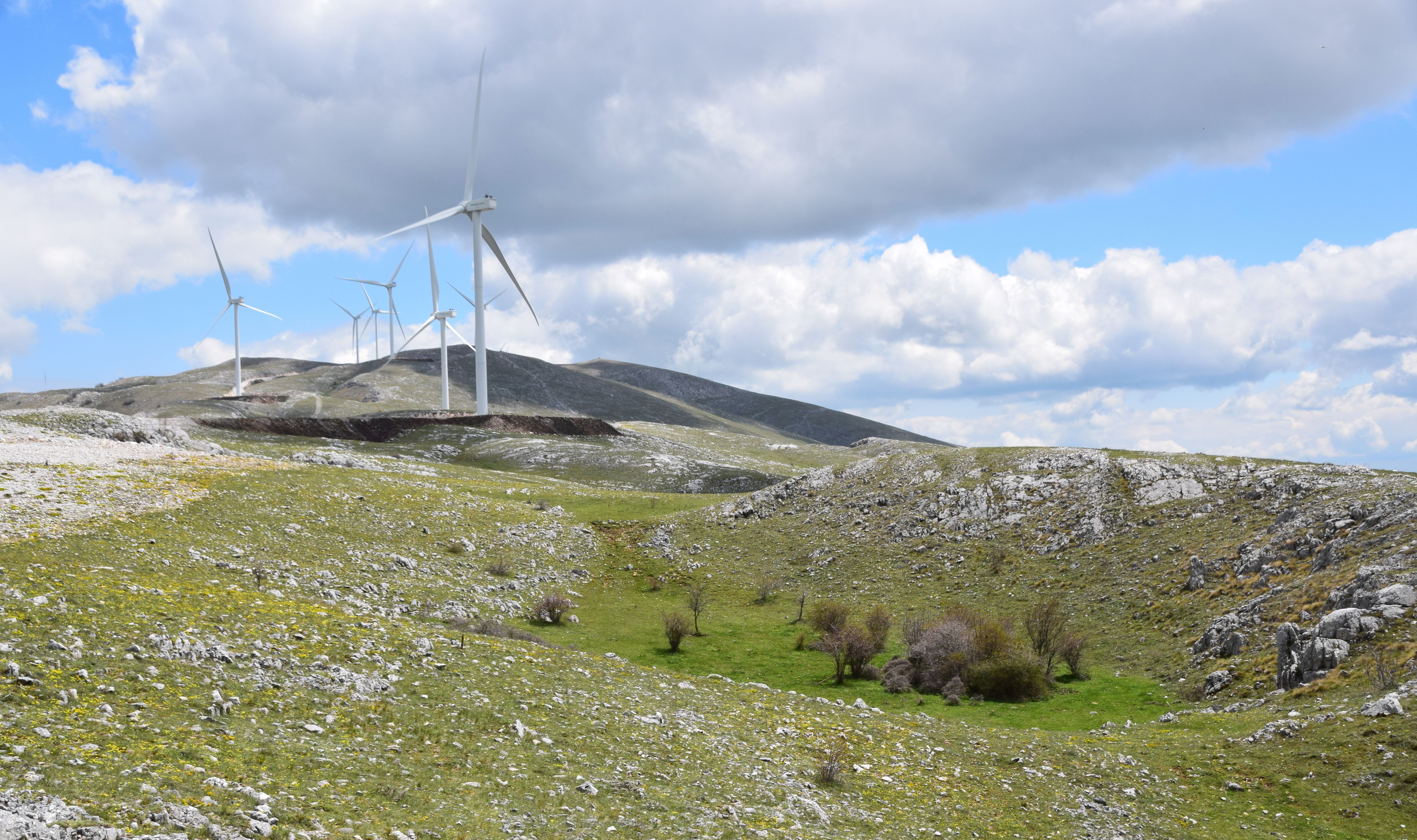
My final day in Siatista, Saturday 6th was to begin with the sunniest of the four. After checking out the same gully again without better results than a day earlier, I went all the way up to the aforementioned Mt Skopia but the wind was just too strong and cold up there for butterflies to be active. Hence I moved back down again systematically checking out the more sheltered hollows and gullies noted on the ascent. Still just one Grüner’s was the only butterfly encountered until in the spot featured in this post’s lead image one of those dark fast flyers landed on the ground close by. Conditions being momentarily overcast this item kept still and was indeed Dalmatian Ringlet (pictured below), of which several were active in the same hollow.

Dalmatian Ringlet

A huge wave of relief swept through me as I acquired unsatisfactory pictures of the third trip lifer. It is the only Ringlet to fly here in late April through May, and was bigger than I had expected. A distinctive member of the extensive Ringlet genus, it occurs only in a small area of north-west Greece as well as along the Croatian coast; and though very localised can be quite numerous where it is found. This butterfly favours warm, dry, grassy, rocky slopes, on which it flies just above ground level with an undulating jizz. As I had experienced over these two days their large, black forms are highly visible from quite a distance.

It was now the sunniest part of the day but I was very hungry, so with the journey back to the airport for a late departure ahead of me I went back to Siatista for a sandwich break. On the descent the tell tale presence of Krueper’s Small White and Dalmatian Ringlet were visible in more roadside gullies similar to the one I had spent time in. Then below that favourite spot I noted several Dalmatian Ringlet at the roadside that had dispersed when I reached them with the camera. The rocky slope above was alive with their dark, hyperactive forms. There are certainly a lot of this local speciality in these mountains.

Alas, when I came back with food the grey stuff had returned with me and the rest of the afternoon was far less productive than the morning. Butterflying, being so weather dependent is rarely easy and I had gained just three of my 15 mostly difficult trip targets on only one fully and three partially suitable days out of six. I had already decided to do Orchids at home for the first time as a project this coming season, which is perhaps just as well with the weather outlook for Blighty looking little better than in Greece. But unlike 2023’s earlier trip abroad to Fuerteventura, this first solo exercise in a country I like very much had on the balance of things been worthwhile.

A rain break visit to the Pelicans of Prespa Lakes in the far north-west of Greece – 4th May

So what does one do if a Greek butterfly trip is washed out AGAIN? Well, in this instance going to what until recently was the world’s largest Dalmatian Pelican breeding colony just 70 miles (111 km) away seemed like a welcome opportunity. Prespa Lakes, which straddle the borders between Greece, Albania and FYR Macedonia is also one of just two European sites where Dalmatian and White Pelican both breed; and there is a huge diversity of bird life across the immediate area.

There are two lakes here separated by a narrow strip of land. Megali Prespa to the north is by far the larger, while Mikri Prespa being shallower and having extensive reed beds is the focus for bird life. 1300 – 1400 pairs of Dalmatian and 350 of White Pelican have historically reproduced in the reed beds, while taking advantage of the larger lake for feeding. There are also important breeding populations of Pygmy Cormorant (700 pairs), Black-crowned Night Heron, Ferruginous Duck and most recently Glossy Ibis.

Mikri Prespa on a very grey day (with colour enhancement)

For the second stage of this trip I relocated to Siatista in the Askion Mountains, 90 miles (144 km) to the south-west of Thessaloniki. Having stopped half way back from Xanthi overnight, I drove here on Wednesday morning (3rd) through at times absolutely foul conditions. Things relented upon arrival for long enough to explore the local amenities and access point to the area I intended to search for butterflies, then from mid-afternoon onward it rained continuously.

Butterflies of course only come out with the golden orb, and seasonal weather patterns can vary their emergence times by two to three weeks. So planning any trip abroad is an imprecise art. Just driving around on 3rd it was all too apparent what a suitable location for my purpose I was in, if only the rain would stop and sunshine be given a chance.

Hence this morning it was with some excitement that I set off north-west from my base to experience a national park I had read about but didn’t think I would ever visit. By now my motivation in any case lay more in doing that than hanging around in the mountains above Siatista waiting for any breaks in the grey and wet stuff. For much of the time on both the outward and return journeys I was the only vehicle on the road.

I set Google Maps to “Prespa Lakes National Park” and the route ended at a point on the western shore of Mikri Prespa. If you too are coming here for the first time be warned the cited NP entrance is a very remote location accessed by a long rough road. After yesterday’s prolonged heavy rain I eventually considered it to be impassable. So not wanting to get my hire car stuck in mud with virtually no chance of rescue I left it on firm ground and walked the final stretch.
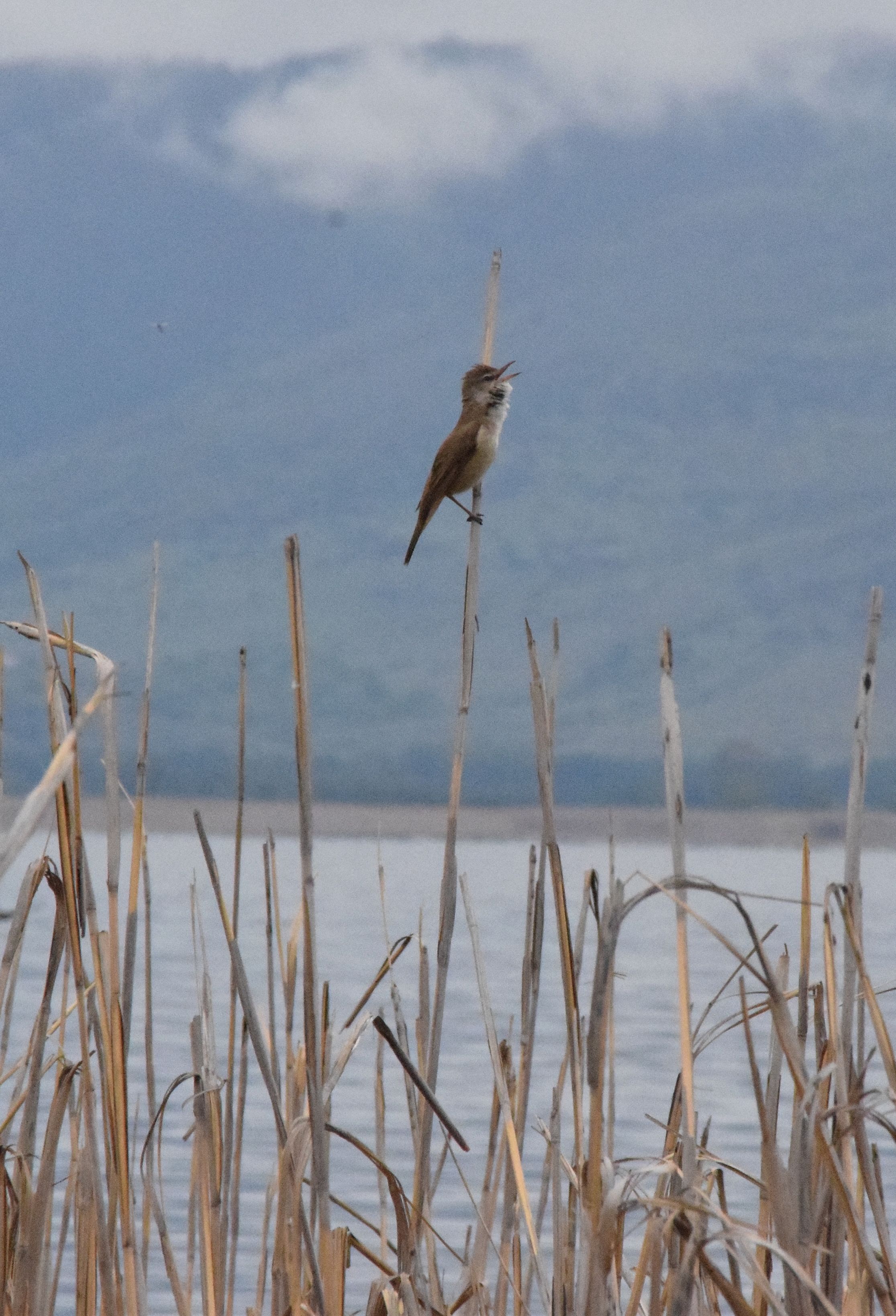
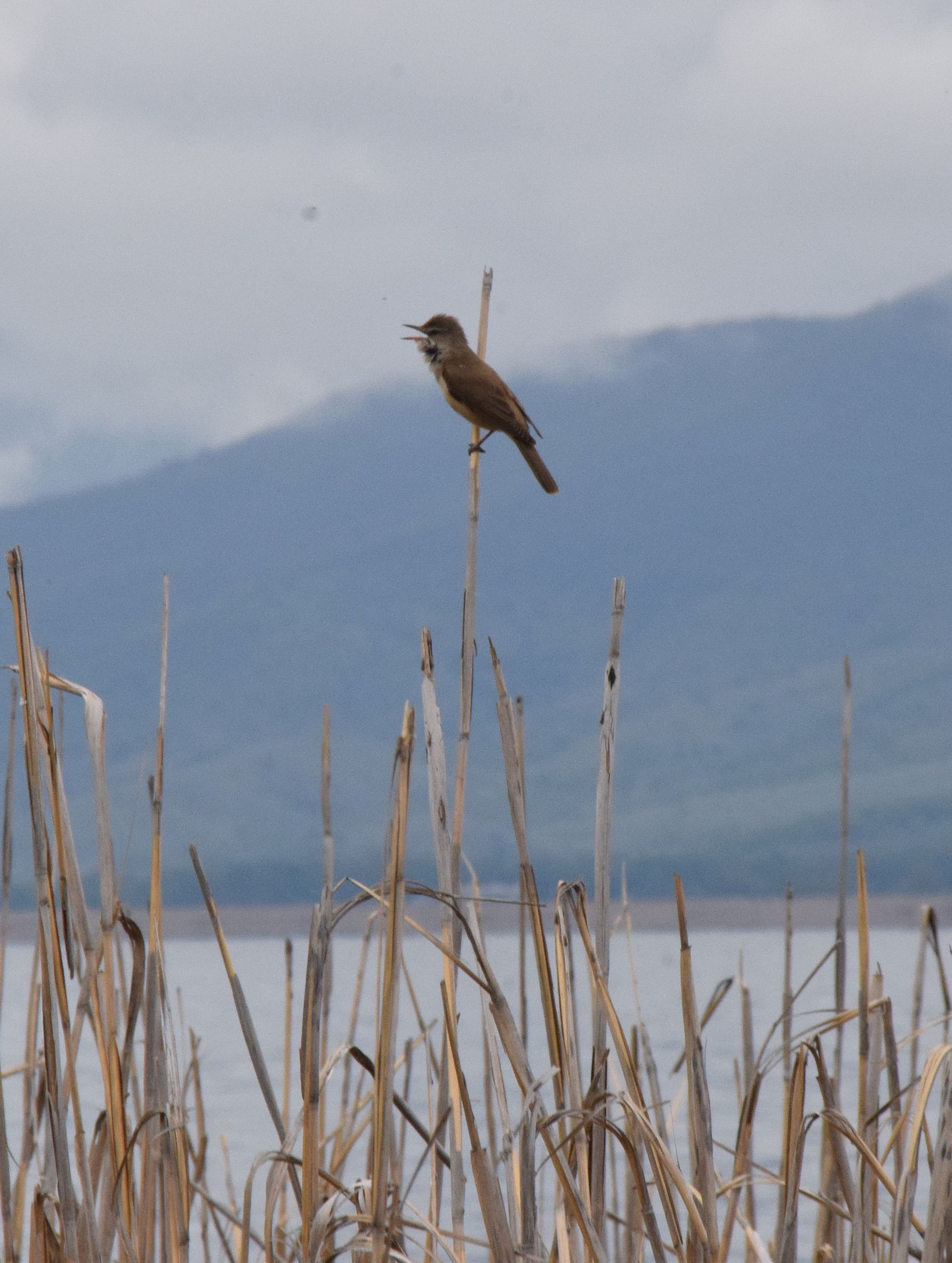
Below this access track stretched extensive reed beds from which the jangling calls of many Great Reed Warbler (pictured above) rang forth all the way along. Little and occasional Great White Egret were loafing here and there, while minor congregations of Pygmy Cormorant appearing as if almost suspended in the reeds stood out at intervals. On the landward side the sound of numbers of singing Nightingale and calls of Golden Oriole and Hoopoe filled the air.

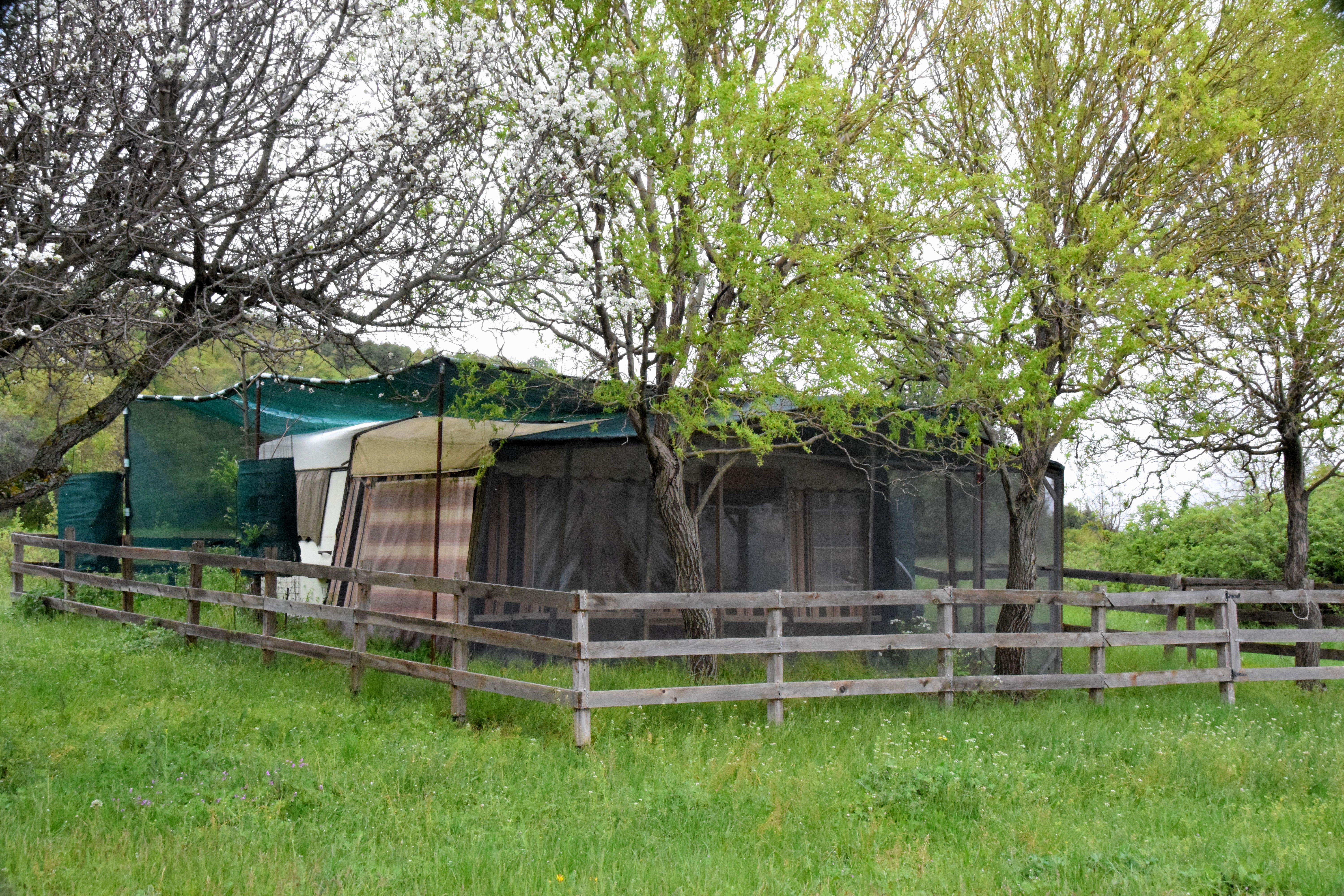
At my destination lay this (above). I had wondered if the national park would have any kind of visitor centre, but a makeshift field station was all there is. I couldn’t detect anything remarkable about the stretch of shoreline at the end of the track and felt glad to have been prevented from taking the car down there. Then gladder still to drive it safely away.

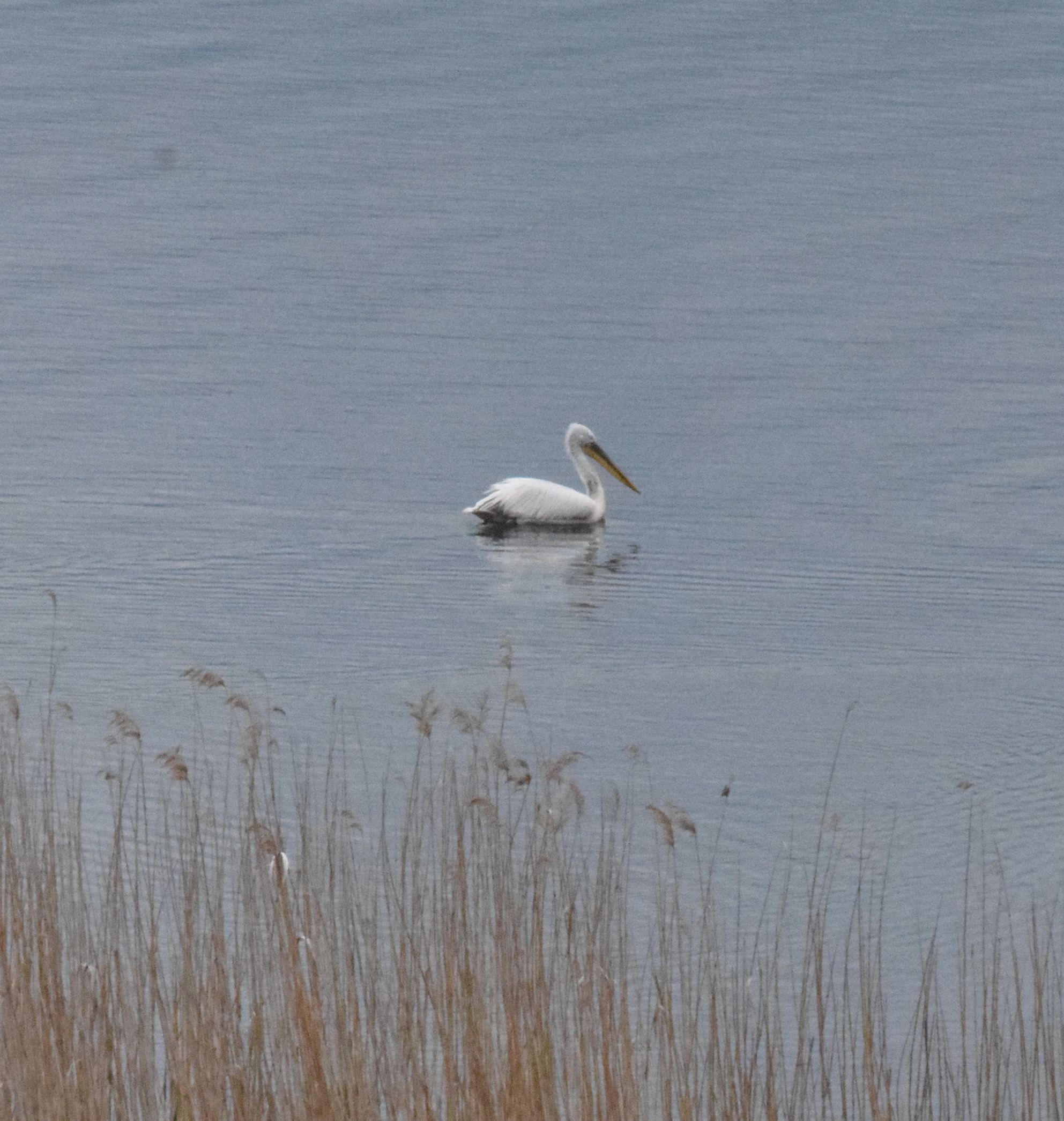
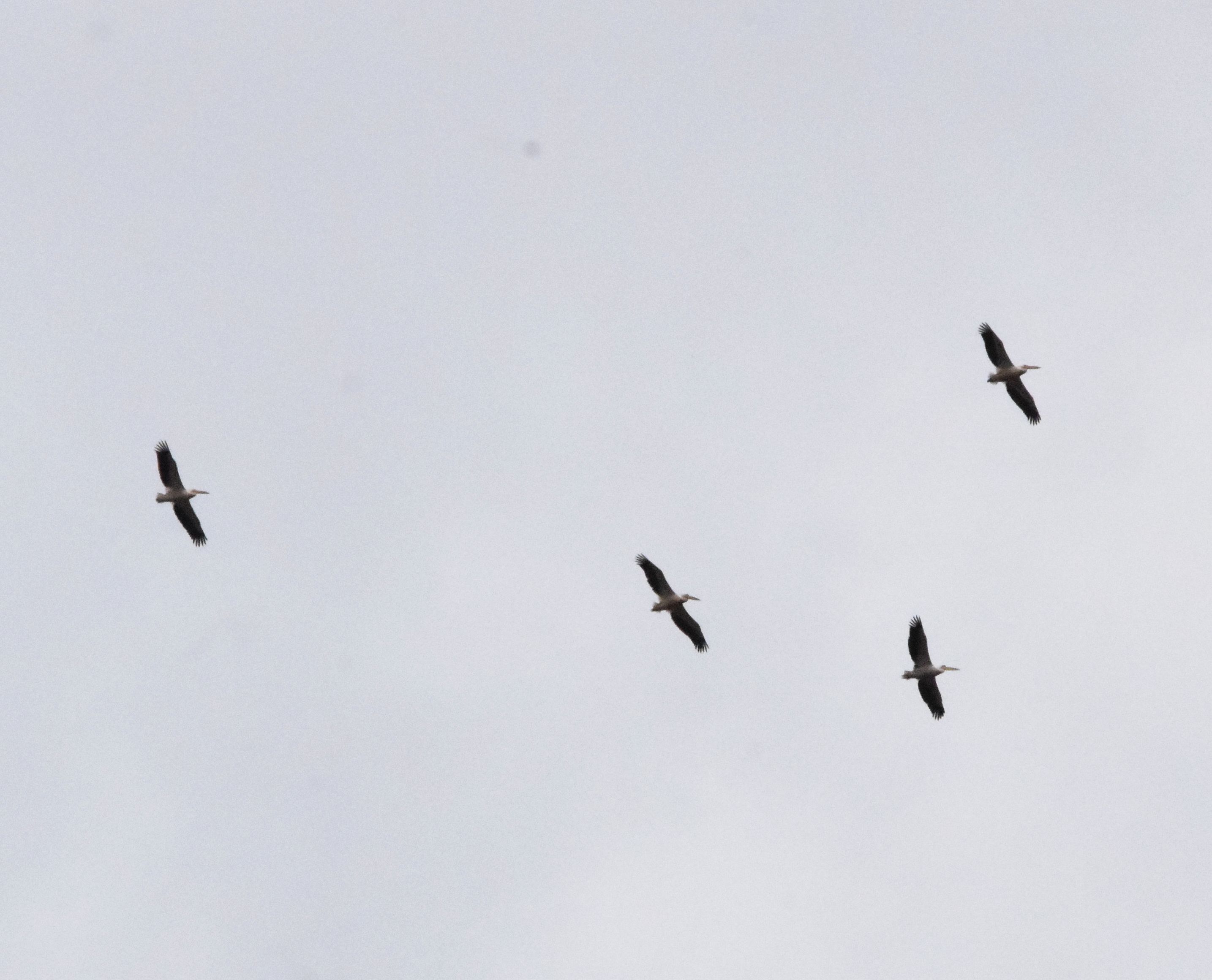
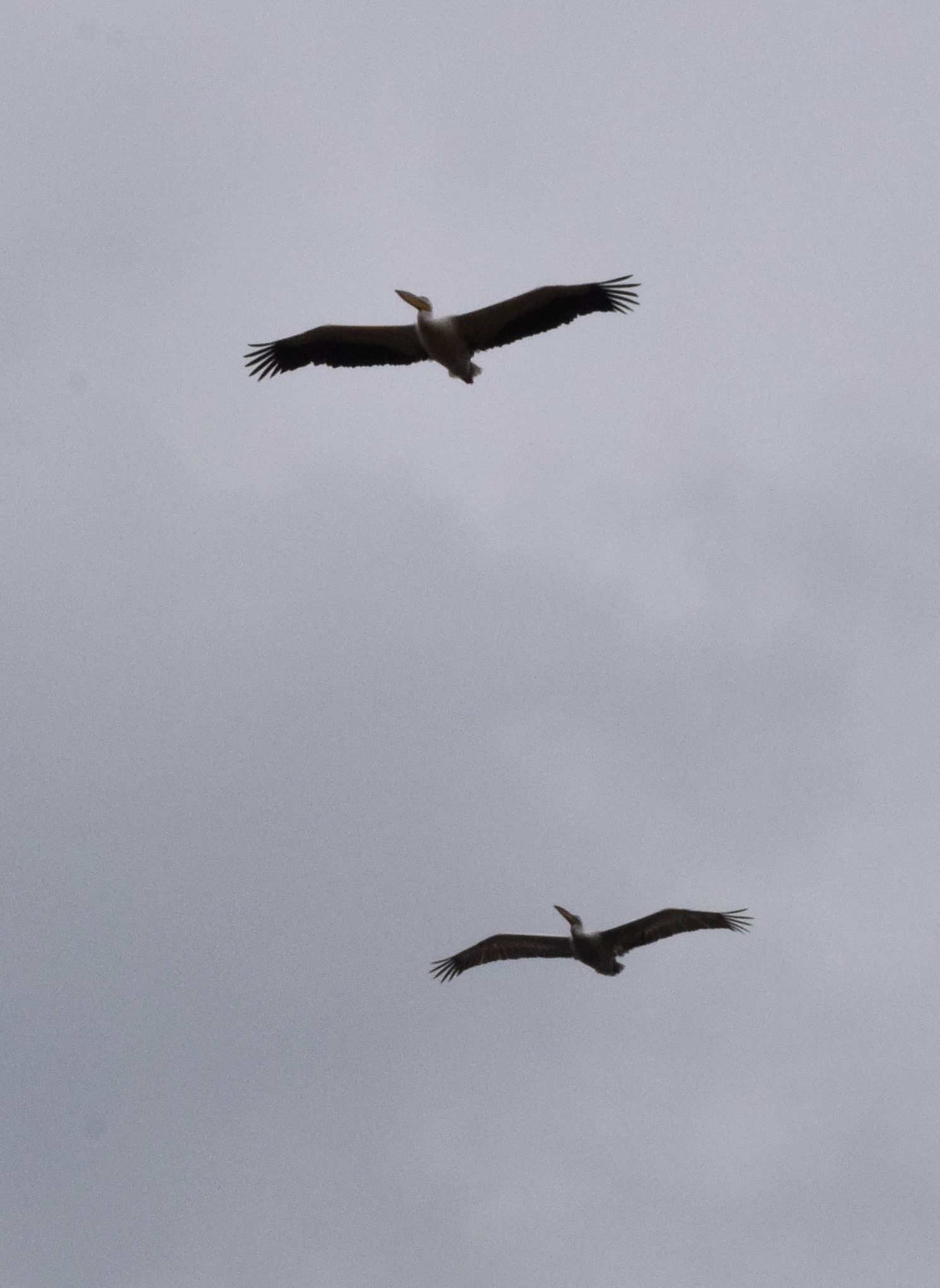
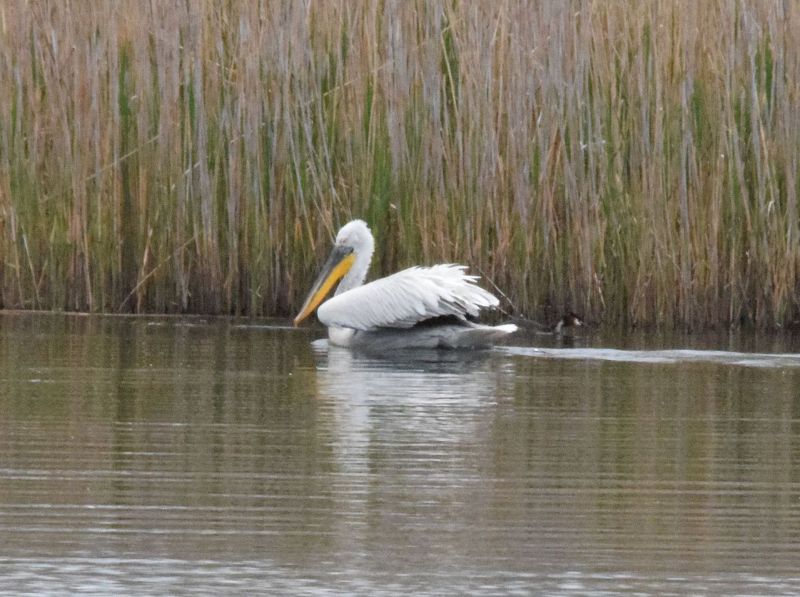
The best place to observe Pelicans was from the road that runs along the lake’s reed fringed north-west shore. There are two viewing platforms there beside an empty building, and a floating footbridge that crosses the lake to an island Agios Achillios. I viewed upwards of 30 Dalmatian Pelican (pictured below) today, either on the water or in flight, and at one point 17 were spiralling in the air like the Oxon Red Kites at home.

I at first assumed given these numbers the breeding season must not yet be in full swing. But writing this up I learned that in 2022 bird flu (see here) wiped out 60 per cent of the Dalmatian Pelicans here. The malaise broke out very early in the season, so after carcasses were removed and incinerated the later returning White Pelicans were mostly saved. The event has been described as the worst ecological tragedy ever to hit Greek wildlife. When the outbreak was over just 100 Dalmatian pairs raised 90 young. Nature is resilient and now has a task in hand to restore this colony to its former status.

There was no rain throughout my time here today but conditions remained steadfastly overcast so I did not experience the site at it’s best. I feel pleased to have now been to both of Greece’s major Pelican breeding sites after Lake Kerkini in May 2017 (see here). This post’s record shots gained in poor light reflect how it was not possible to get close to the birds. At Kerkini visitors are taken out to within a safe distance by boat. The more remote and probably less visited Prespa lacks the facilities and pazazz of Kerkini but was still good value on this alternative day out.

Seeking out Mountain and Krüeper’s Small Whites in Nestos Gorge, Thrace, northern Greece – 1st & 2nd May

I had first planned a solo expedition to this region in the Covid spring of 2020, prompted by the large-part failure through foul weather of the previous year’s Greenwings False Apollo tour (see here and here). Back then I had opted to forgo the convenience company, cramped minibuses and end of day sit down meals of group tours in favour of attempting to self-find up to 15 more butterfly lifers. This year that challenge still appealed though after three intervening seasons of enforced British list re-working I reasoned just being out in the mountainous wild again amongst southern European butterflies could be sufficiently rewarding even if the more specific trip agenda is not achieved.

Such a compromise approach seemed sensible given the difficulty of most of the species on my wish list. Three tricky ones are Southern, Mountain and Krüeper’s Small Whites that may all be found in Nestos Gorge, which had been the most spectacularly washed out location of all on that 2019 tour. The next Greenwings group in 2022 logged 37 species in near perfect weather conditions. Hence I elected to give things two full days there, anticipating a lot of careful scrutiny of on the wing subjects should the weather oblige.

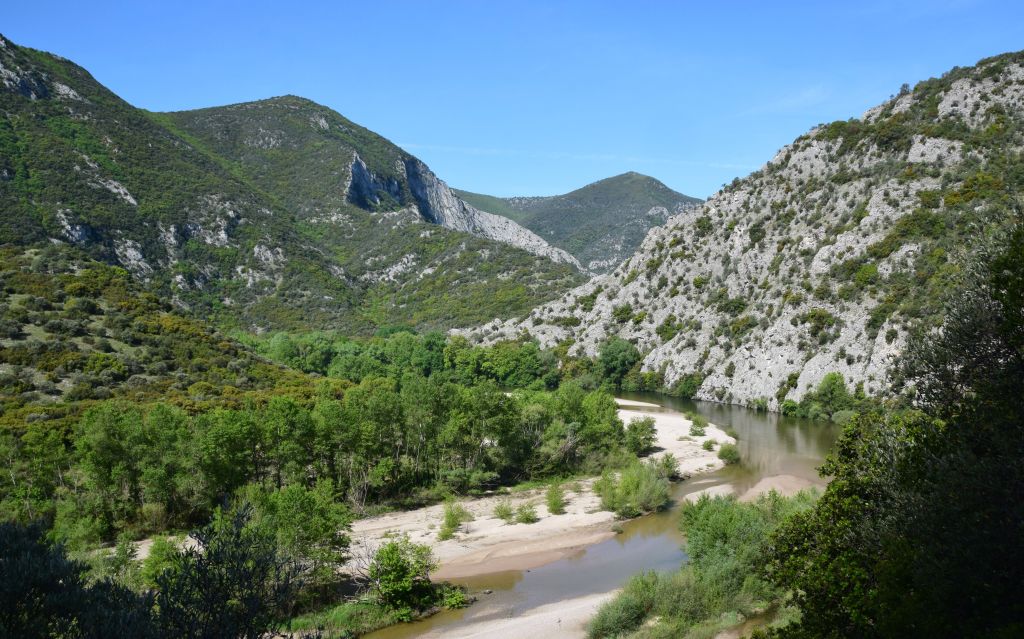
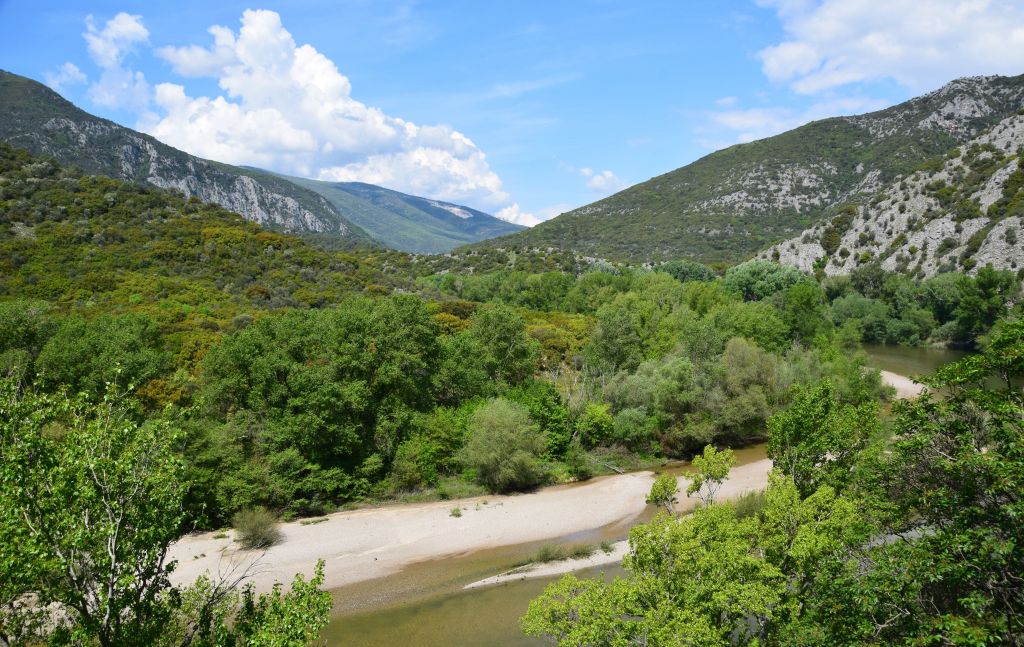
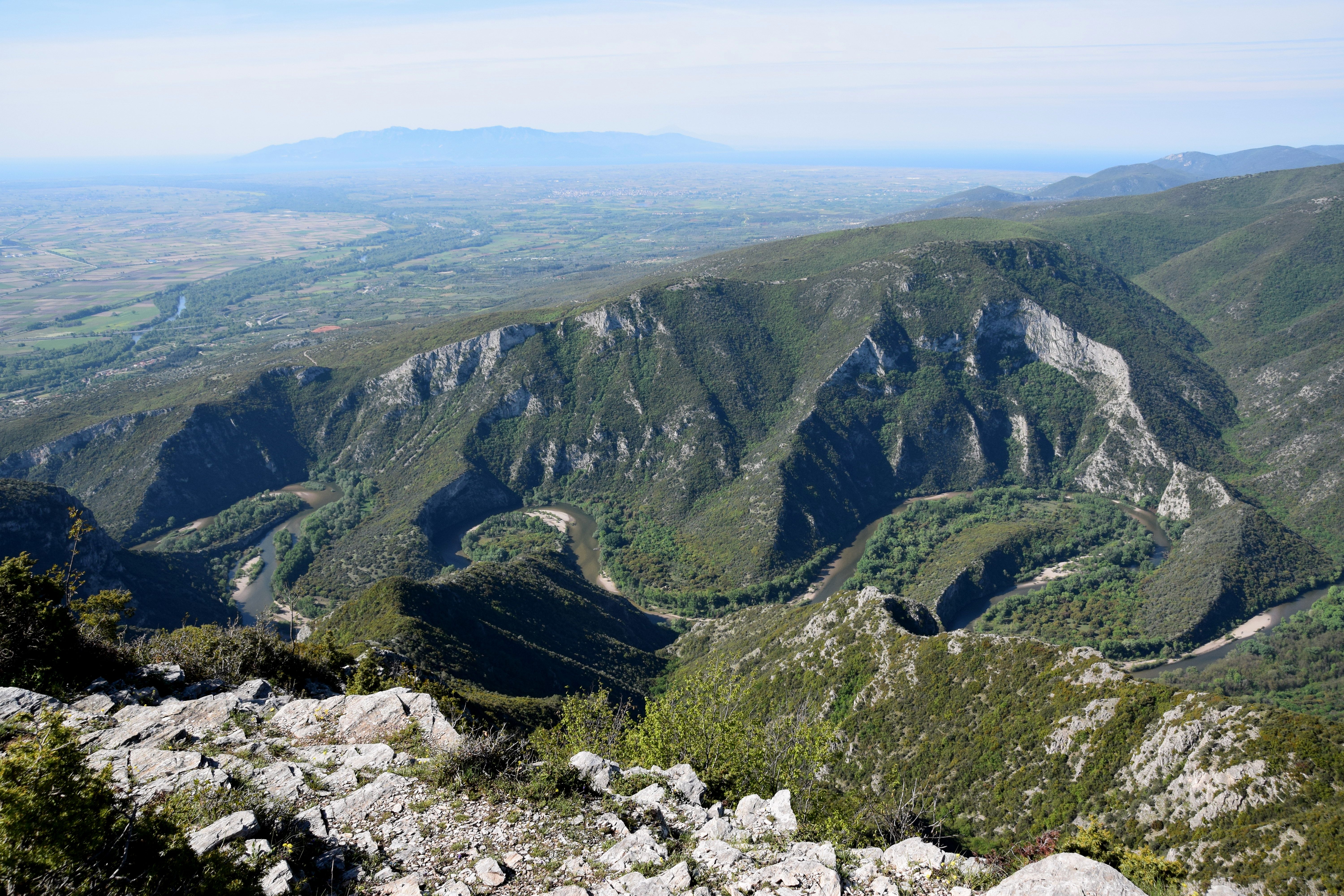
Nestos Gorge

For my base I chose the nearby town of Xanthi, where upon arriving in the early afternoon of 30th April conditions turned showery, so I opted for a half-day of acclimatising after two days of travel. Nestos Gorge is accessed via an adventure park so I was mindful of that on a Sunday before embarking upon the serious wildlife agenda a day later. Monday morning (1st) was gloriously sunny but still cool as I walked out along 10 km of what is described as one of the most scenic and environmentally rich hiking trails in northern Greece (pictured above). When the sun rose above the cliff behind me as I approached a butterfly-friendly looking stretch they began to appear. Then the first Small White to cross my path was at once recognisable as a trip target.

Mountain Small White (pictured below) is not as big as the regular variety and my first sighting had a delicate, bouncy flight style more reminiscent of Wood White. When this butterfly settled the diagnostic pale, square forewing tips were apparent at once. First brood males such as this also have much fainter black dots on the forewings.

Mountain Small White (all images)

This Mediterranean and Middle Eastern species flies in a series of broods from April to August, favouring dry, open, stony places. Of the Small Whites encountered further along the trail I thought most were probably more of the same on jizz. There were two candidates for Southern SW, but each time other walkers passed at the moment when the butterflies allowed me to get close with the camera.

Nestos Gorge is a spectacular location and after the wash out of 2019 I was so pleased to be experiencing it in all its stunning glory (above). At around 12:30 I turned back to concentrate on finding the other two Small Whites in the better butterfly habitat. But my app had forecast early afternoon showers and a thundery build-up began right on cue. My luck held as I reached the adventure park just before it rained to be met by a sea of humanity, then I got out of there just in time. A huge May Day holiday event was in progress and with no marshalls the car park looked about to become gridlocked.

From the start of the entrance road to the Gorge runs a high road that winds its way up for 10km to a viewpoint from where it is possible to see as far as Bulgaria and Turkey on clear days. The Greenwings group had been there and the rain having soon passed I now went up. The habitat looked good for ground flying butterflies, so I sat in the car and waited for my app’s renewed sunshine.

The most frequently encountered mountain bird of this week

But conditions remained largely cloudy and cool, so after an hour I resolved to come back in the morning and left. My Tuesday forecast was for wall to wall sunshine and the adventure park would be closed. Hence I could spend the rest of the day in the gorge and major on Southern and Krüeper’s Small Whites. Unexciting as those species might seem to others I would surely not have a better chance of finding them than here.

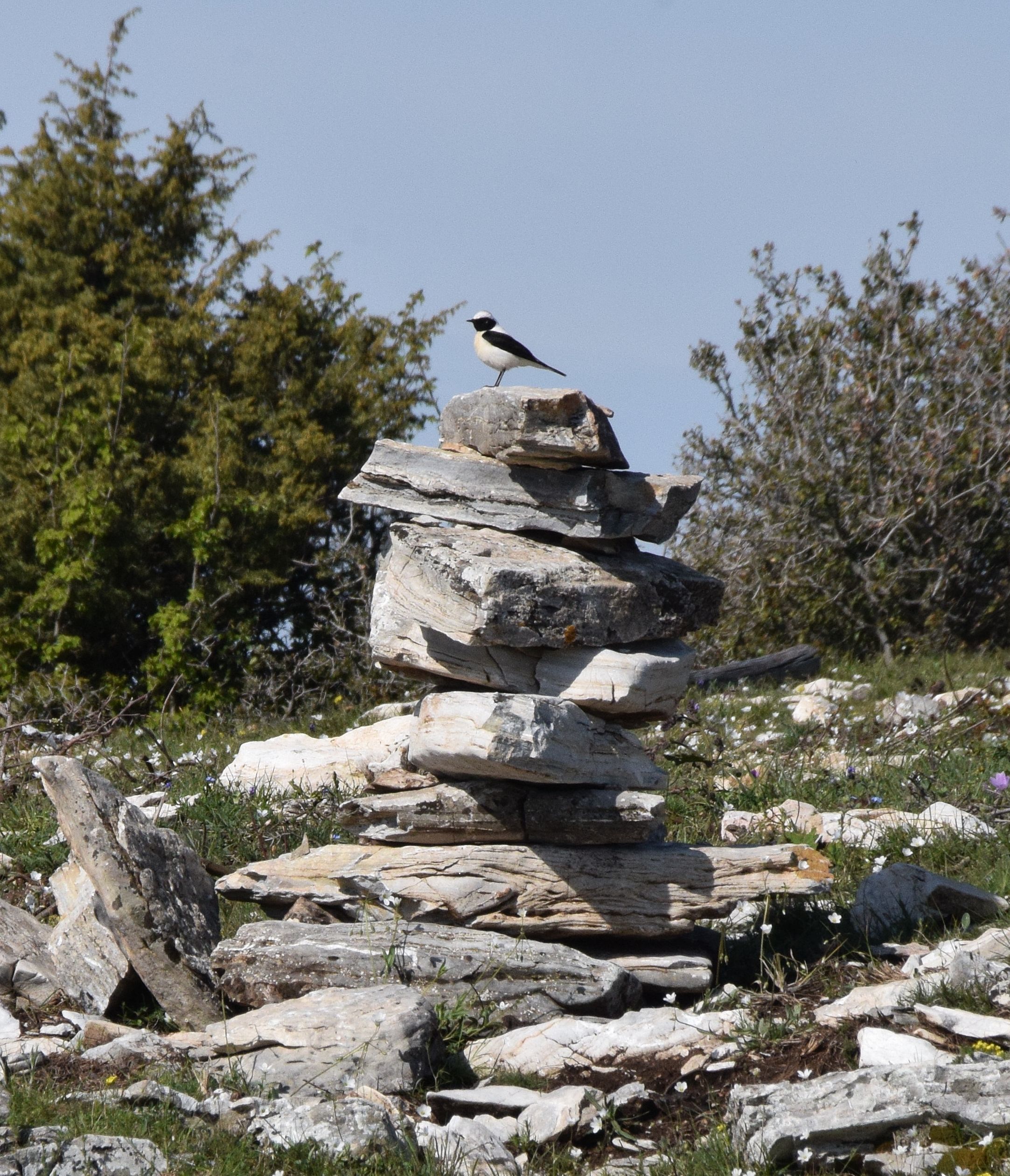
In my first hour on 2nd the sum total of butterflies seen at the high viewpoint was one Orange Tip. What looked like a resident pair of Black-eared Wheatear enlivened my search, while Dartford Warblers rattled away in the bushes and the lilting song of Woodlarks drifted through proceedings from the middle distance. Below to the west the grand scale of the complete route I had walked on Monday (pictured below) was viewable almost in miniature from where I was now standing.

Nestos Gorge from above

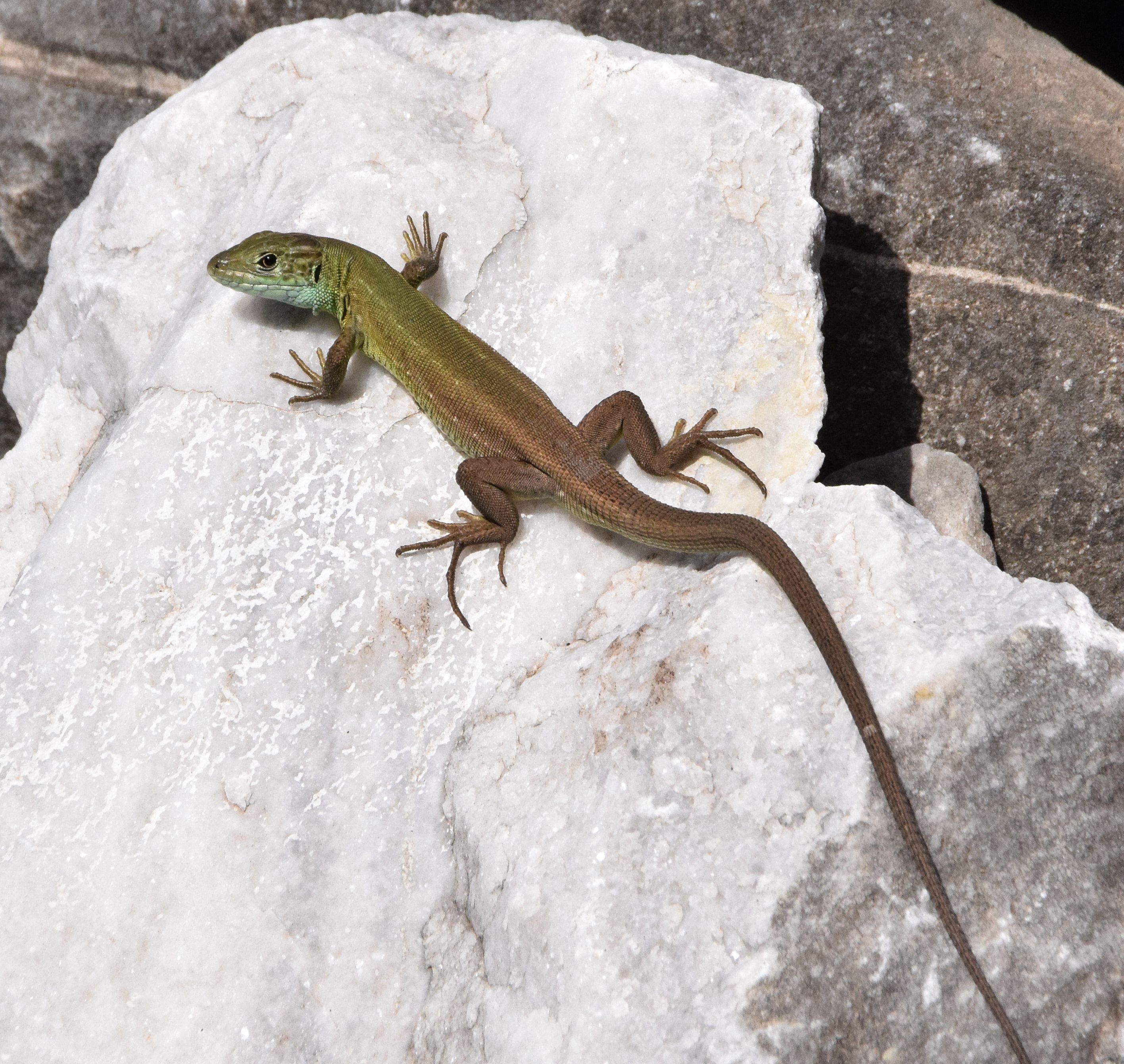
When I went back down there appeared to be a similar lack of butterflies along the hiking trail. Eventually while I was watching this Balkan Wall Lizard (below left) a Krüeper’s Small White flew over my shoulder and landed right in front of me. But having confirmed the ID I was too slow with the camera and off it went again down the slope.

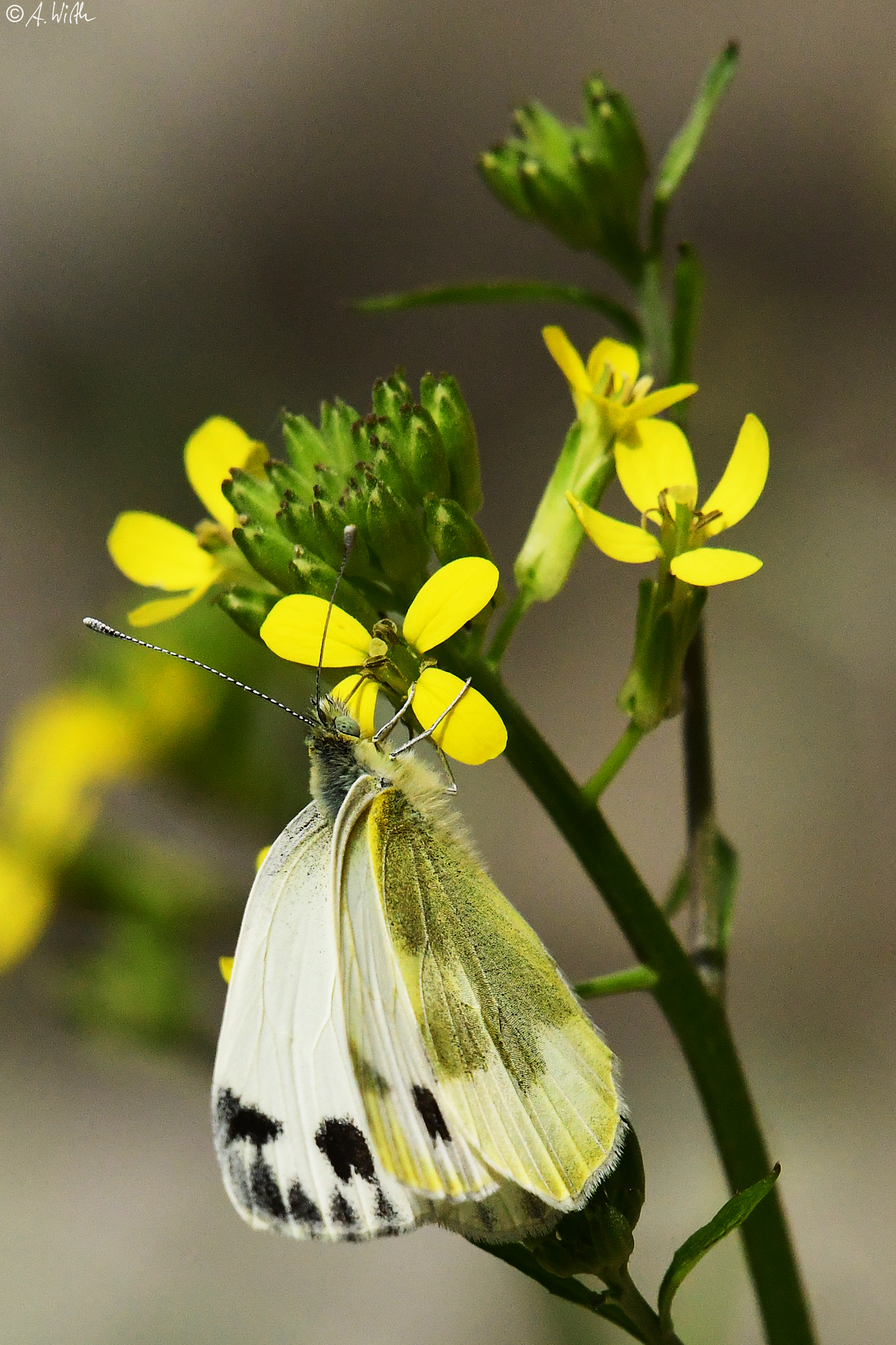
Balkan Wall Lizard (left) and Krüeper’s Small White (right) © and courtesy of Alex Wirth

Like the previous day’s lifer this butterfly was instantly recognisable, this time by the blotchy green underside hind-wing markings and the chequered topside wing tips. The first of those diagnostics is darker in the first brood and less pronounced than in Bath White. This multi-brooded species flies from March to August, in the southern Balkans and Greece where it is very localised and occurs in small numbers. The range extends through Anatolia and the Middle East to the northern Indian sub-continent.

When the butterfly did not return I walked on, but a German group I had passed on the trail caught me up and they had seen the Krüeper’s as well. Their leader showed me his own picture (above right) and confirmed that spring is late in Greece this year. Hence the paucity of butterflies being encountered by me, compared with last year’s Greenwings group.

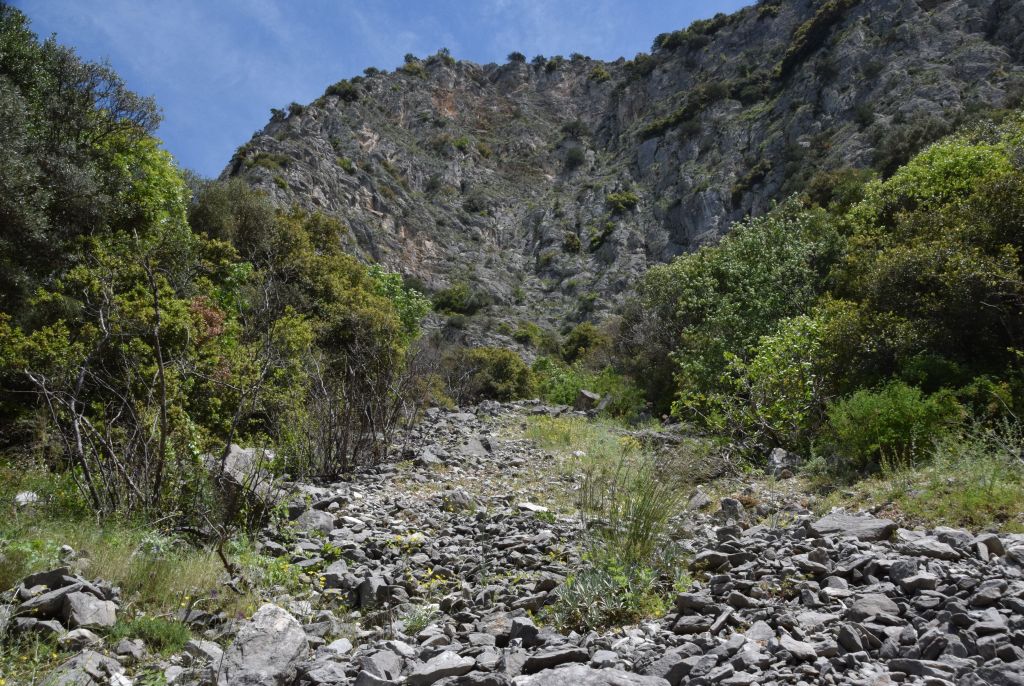
I then went back to what I dubbed “Krüeper’s corner” to re-try for my own pictures. Two small rival males and what appeared to be a larger one were now patrolling up and down the steep, rocky slopes above and below the trail (pictured above). The species is said to exploit air currents over hot, bare slopes such as this, as males search for females and the latter look for egg laying sites.

Two Mountain SW, one very worn were also in the mix and those were the only ones to co-operate for the camera. I returned here more times through the afternoon but the Krüeper’s though plain to pick out were just not inclined to settle. For the rest of the time I walked up and down the trail seeing what else I could find and being distracted by new (for me) Mediterranean Orchids (pictured below).

Nestos Gorge is not an easy place to butterfly given the steepness of the terrain that is impossible to move around without risk of serious mishap. So non-mountain goats such as myself are restricted to what can be observed along the trail path. And I couldn’t imagine being in such limited space with a wildlife group all jostling for pictures. When the lateness of this current season is added into the mix the task I had set myself here turned out to be quite difficult.

Apart from the two featured lifers there were meagre pickings through these two days. The only tiny Blues, rival males eventually revealed themselves to be nothing more than Small Blue (above left). Otherwise it was a limited selection of early season species: Wall Brown, Orange Tip, Clouded Yellow, Speckled Wood, Brimstone, Green-veined White, Painted Lady and Southern Festoon. But there could have been no better location in which to enjoy a little soul cleansing at the start of another butterfly season than Nestos Gorge.

2023 Helicos at the University Botanic Garden, Oxford: 13th April – 11th May

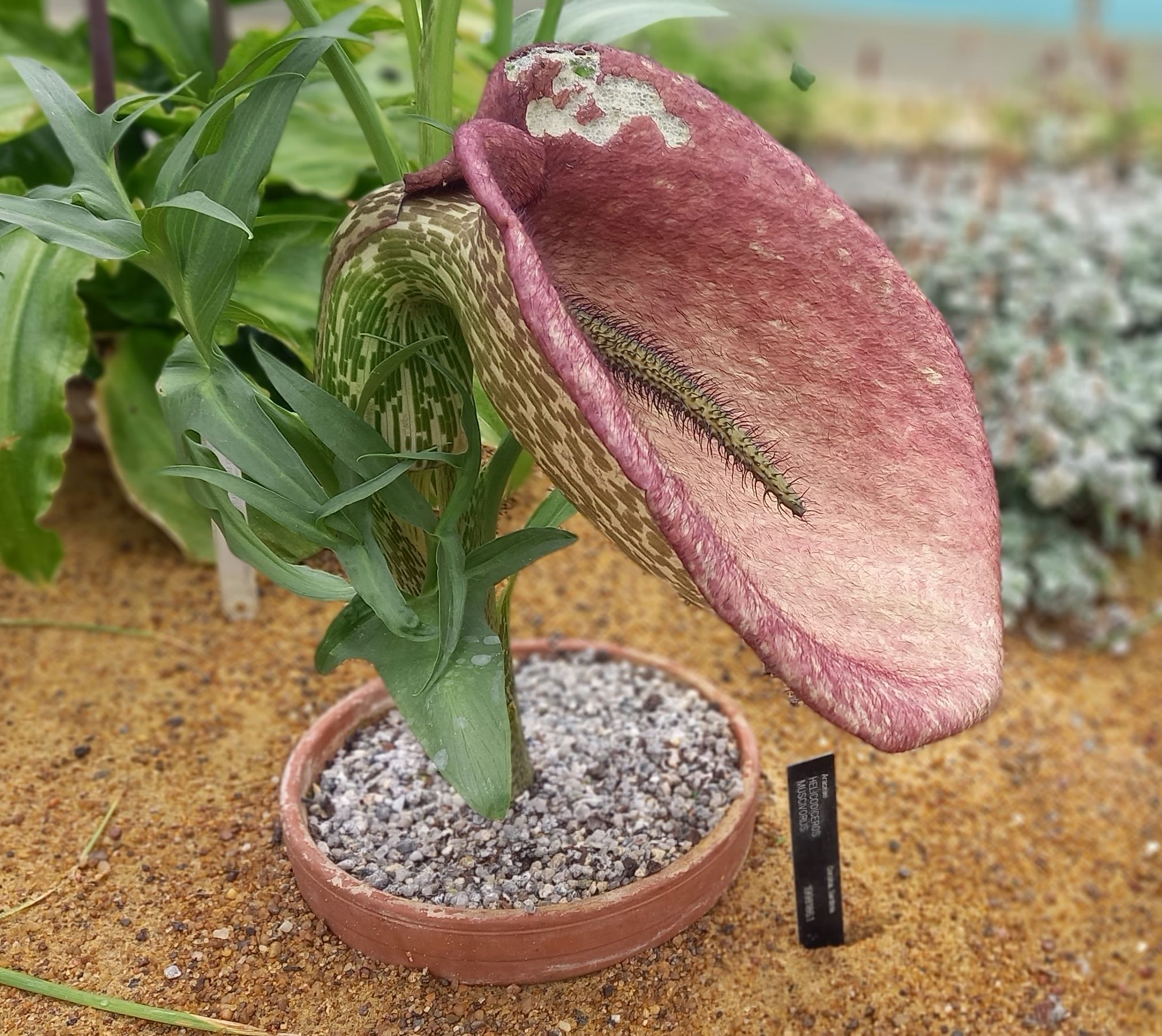
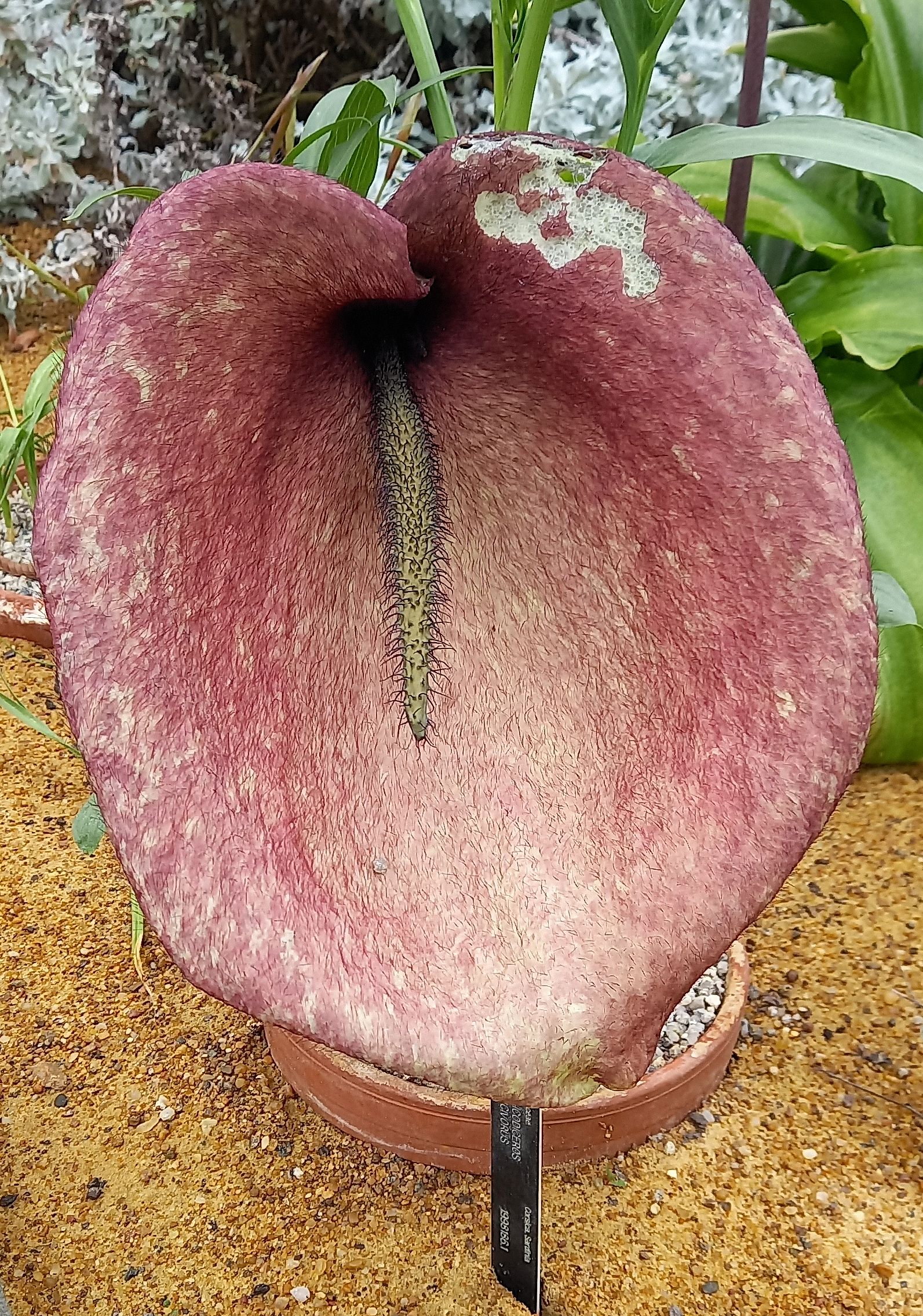
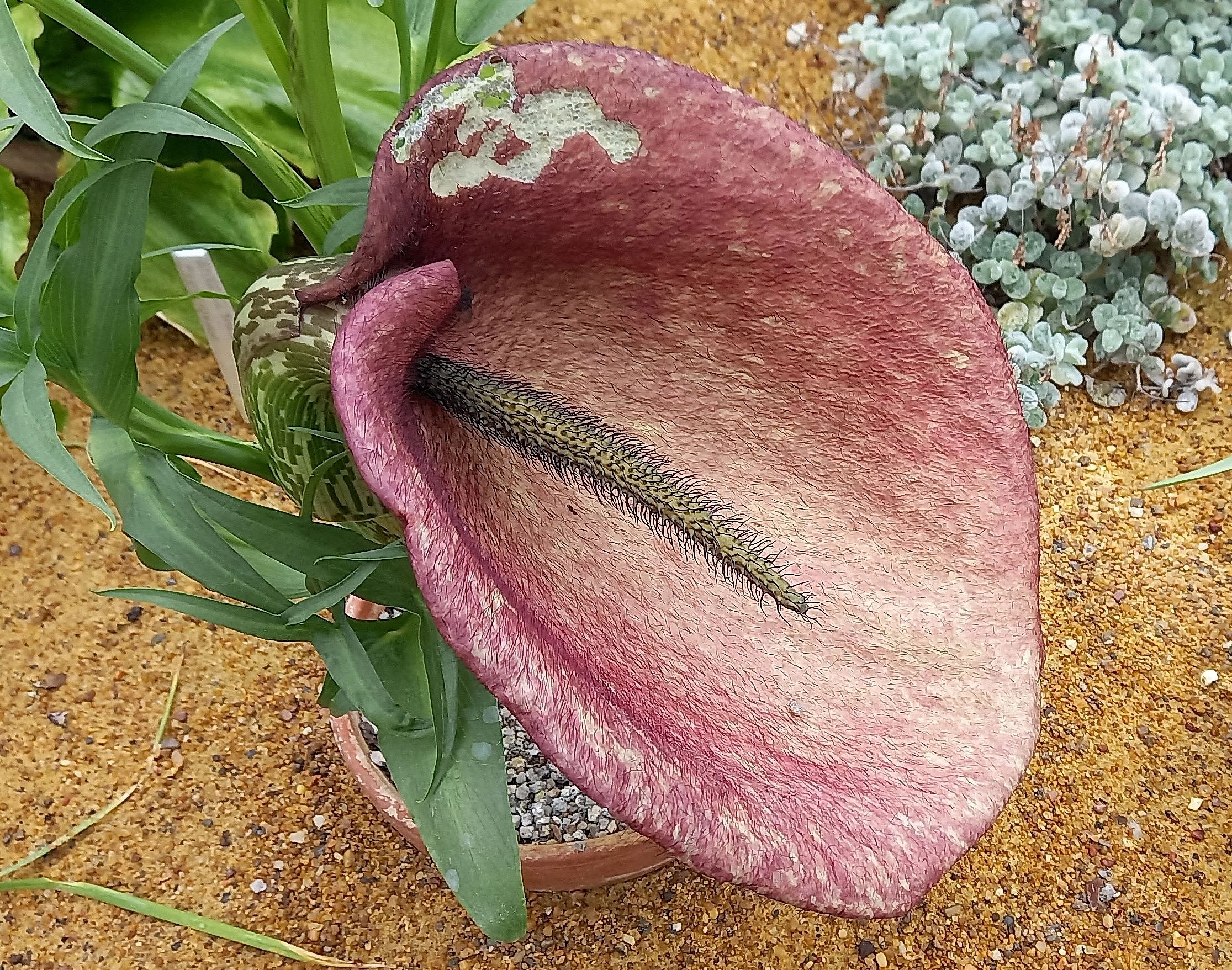
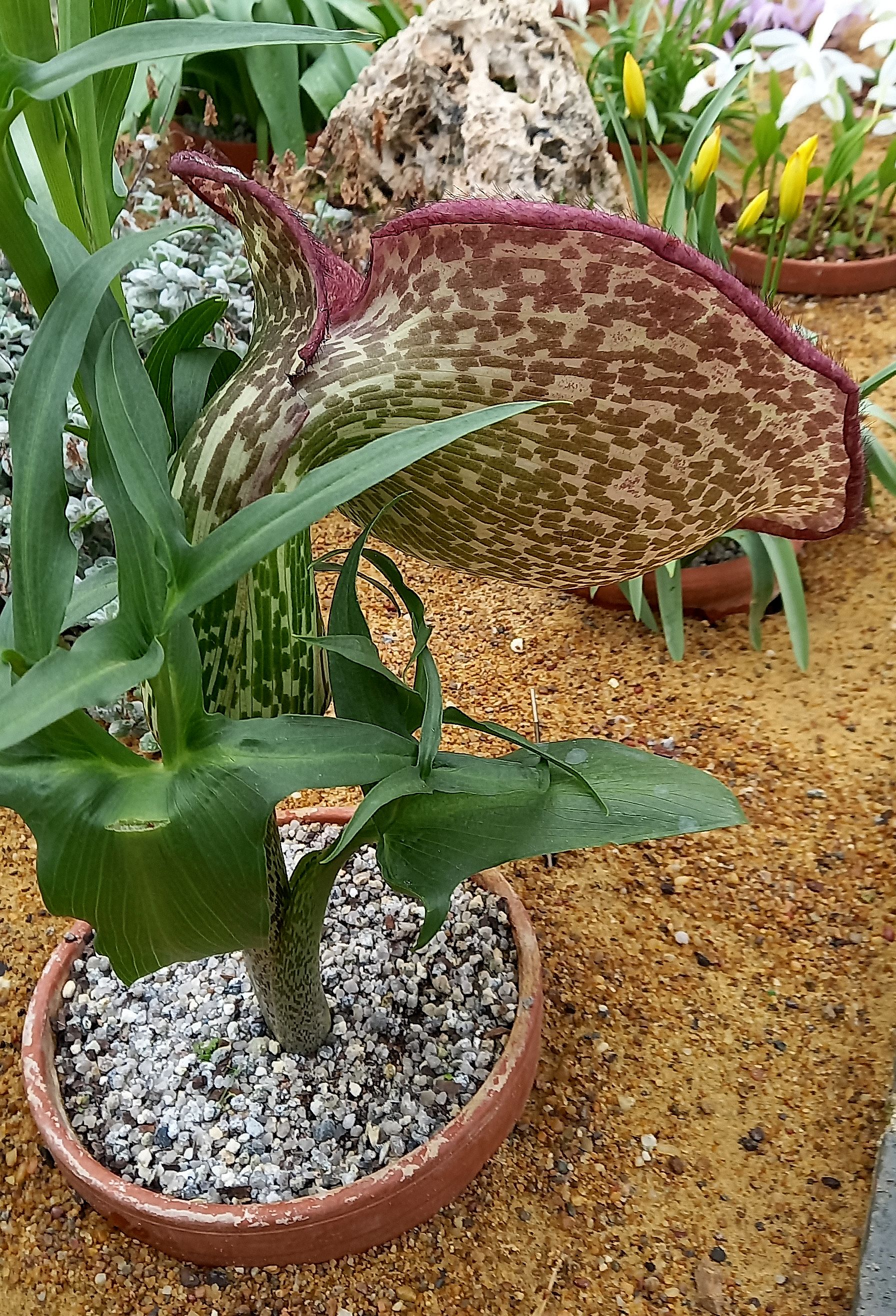
I will admit to a peculiar fascination with Helicodiceros muscivorus and apparently am not alone in that. The review article herein (see here) published upon the acquisition in 2020 of a “two-year from flowering” tuber for my own Aroid collection has now passed 500 referrals to reach the top 20 most popular Rn’S posts. But disappointingly that item did not bloom on schedule last season and has yet to make any growth this time around. If at all the tuber is shrinking rather than putting on bulk.

Hence my concern to check out the plants at UOBG again this year. When I first viewed these a little under 12 months ago (see here) the most mature specimen was past its best and two smaller ones had already gone over, so this year I timed things a little earlier in April than then. Great Britain’s longest established scientific gardens lie just across the road from Magdalen College, so on 13th I combined the post before last’s visit there with this.

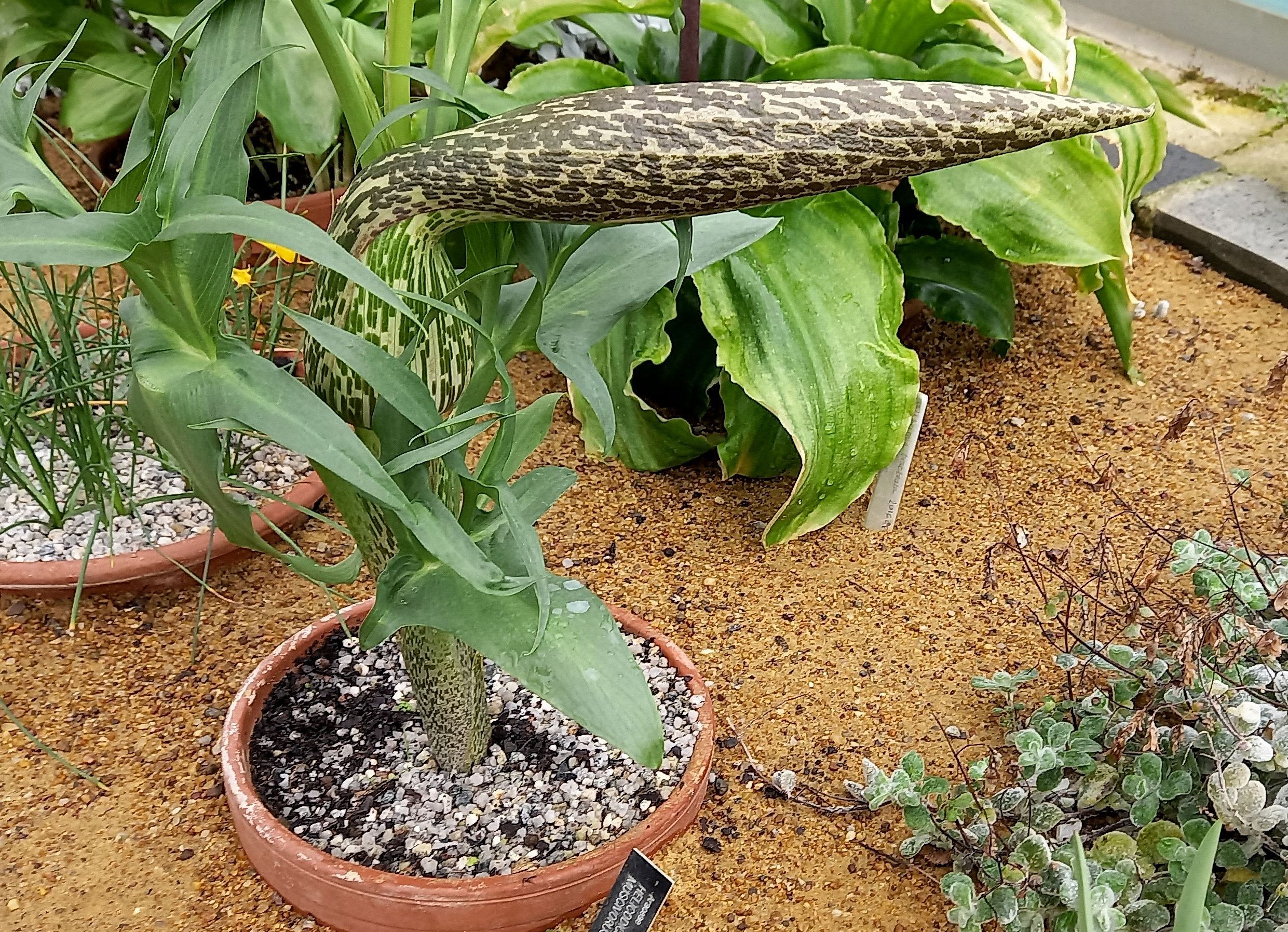
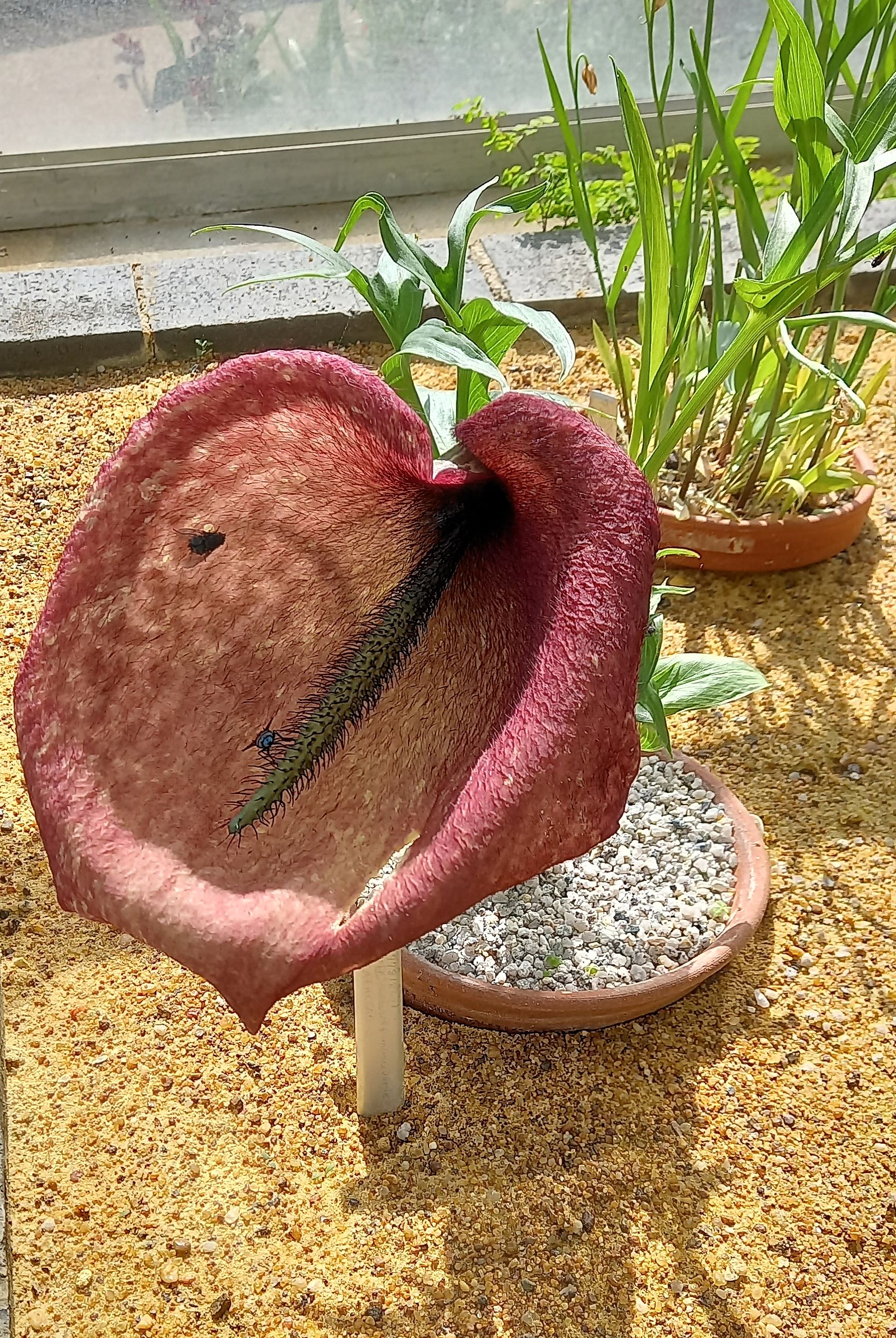
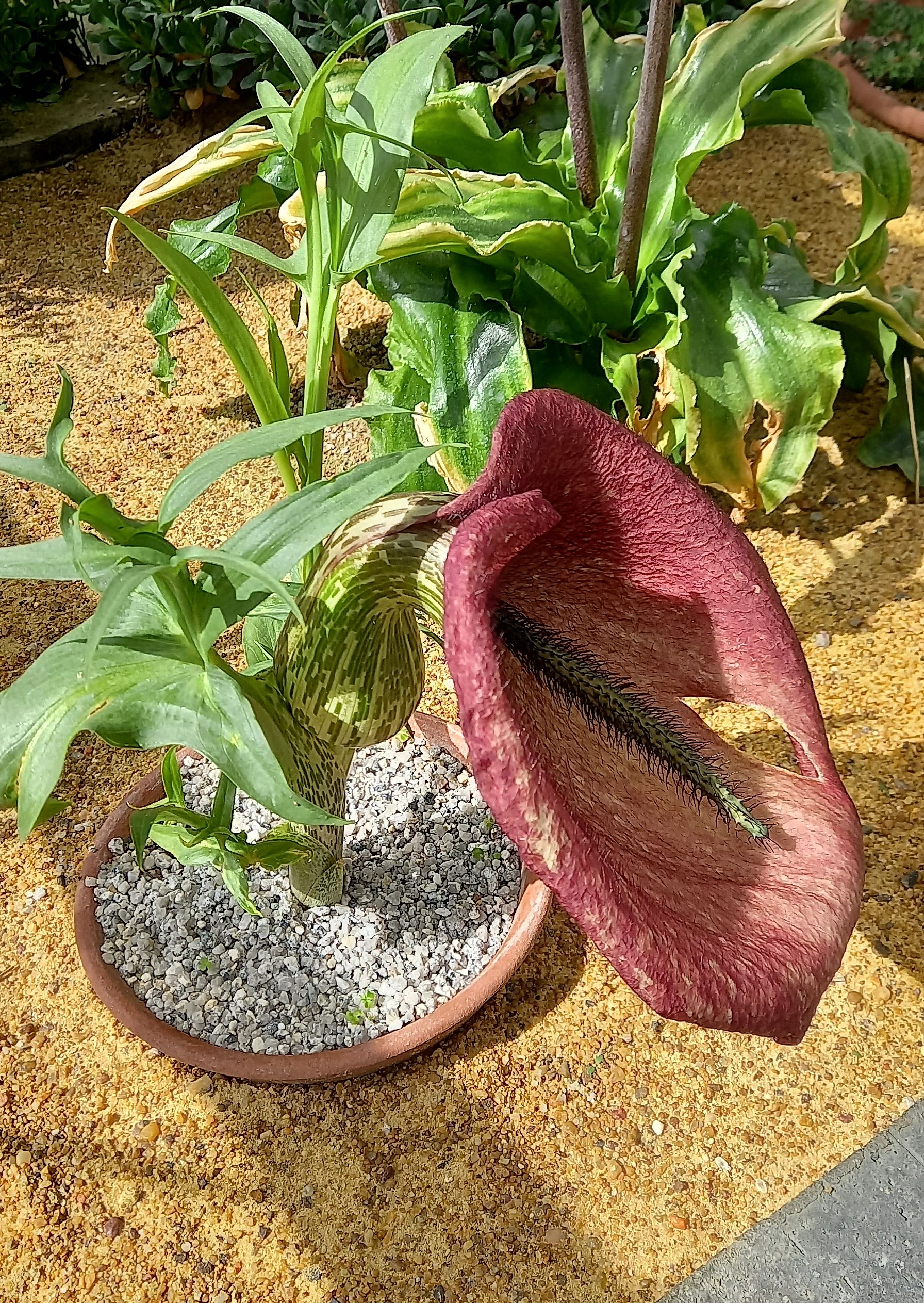
Heliodiceros muscivorous, the “Dead Horse Arum”

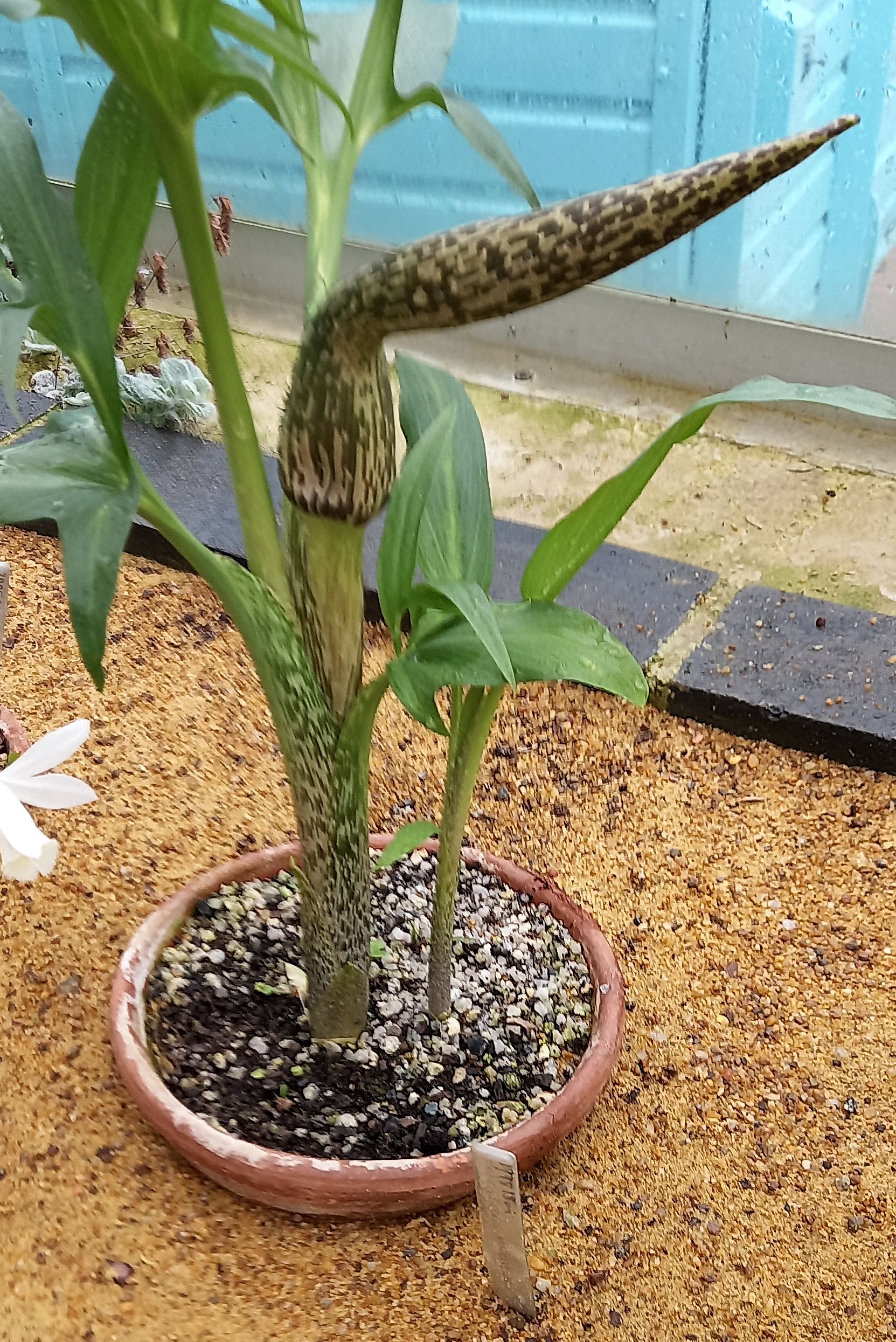
In the same glasshouse where I saw the Helicos last year there were two developing specimens. Just look at that bulging, ripe inflorescence (above left) and feel the sense of anticipation mingled with imminent danger as it prepares to unleash its magnificence and malodour upon the world. I had clearly timed things better this season and the plant could not be far from blooming. So it was now a matter of coming back on each available day until the event could be witnessed.

This took several more visits to achieve. Through four checks in five days the following week the inflorescence grew ever more plump and expectant looking but appeared to be in no hurry. By Friday (21st) the spadix was beginning to unfurl (below right), while a third plant had been put out in the glasshouse (left). Would sod’s law dictate that the blooming event I was tracking so patiently might materialise over my working weekend?

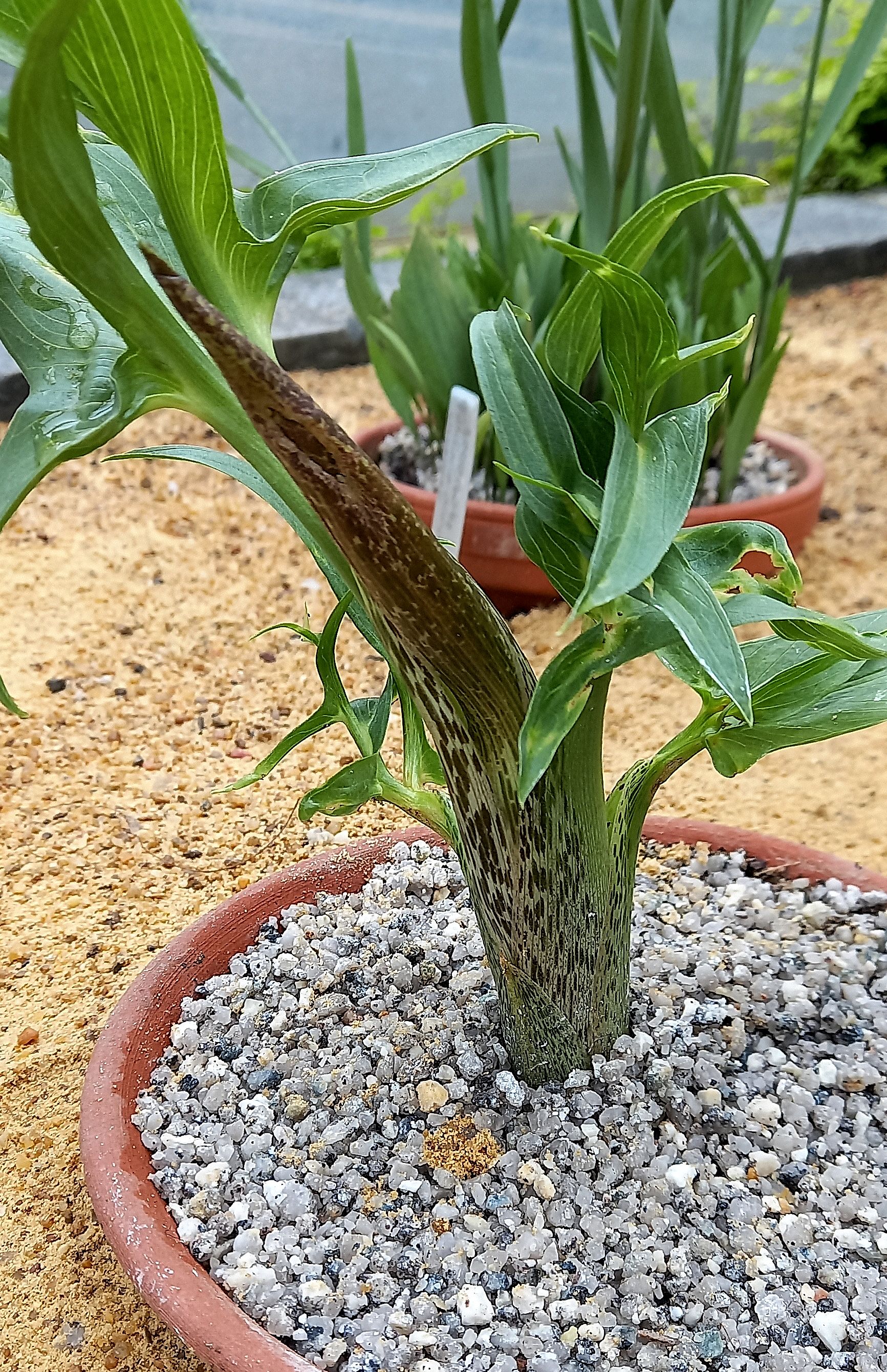
Today (Monday 24th) I hoped the wait would be over. Walking across Magdalen Bridge one more time I looked to see if the door to the glasshouse was open, suggesting there might be a bit of a pong inside? The object of my dedicated attention is of course reputed to be one of the world’s 10 foulest smelling plants. But the door was closed and within the largest Helico (pictured below) was beyond the pristine state in which I had hoped to record it. The spadix must indeed have opened over the weekend, probably on Saturday morning (22nd) as there was some damage to it and the infamous “Dead Horse Arum” odour was barely detectable. But a mission of 12 days had now been accomplished.

What’s been nibbling at and spoiling this then? There were two more plants here to attempt to connect with on their first day of flowering, so I went back on Thursday 11th May after my week in Greece (see next three posts). The smaller plant was in full bloom though the spadix had also suffered damage (below left), and an odour was detectable. To me this was no more intense than from other Aroids I have grown at home, but the flies were loving it. The larger plant (right) appeared to have gone over, the closed spadix becoming even more suggestive looking in the process.

So the Helico blooming season at UOBG had now almost run its course. When I got home I checked my own 2020 FS2 purchase that prompted this series herein, and the tuber was still firm but doing very little. The pictures in this post were all taken with my phone, which proved a better solution inside a glasshouse and often against the light.