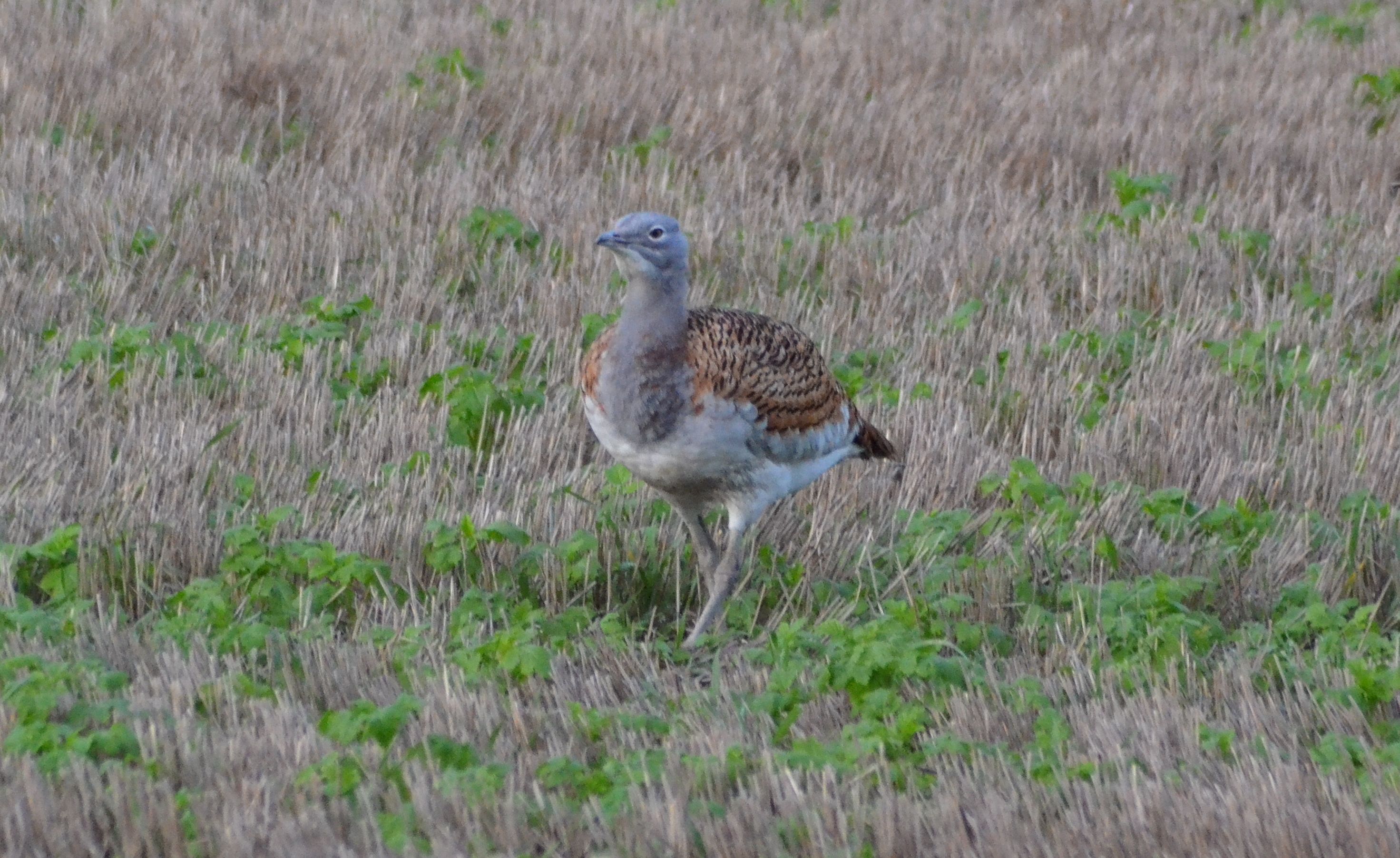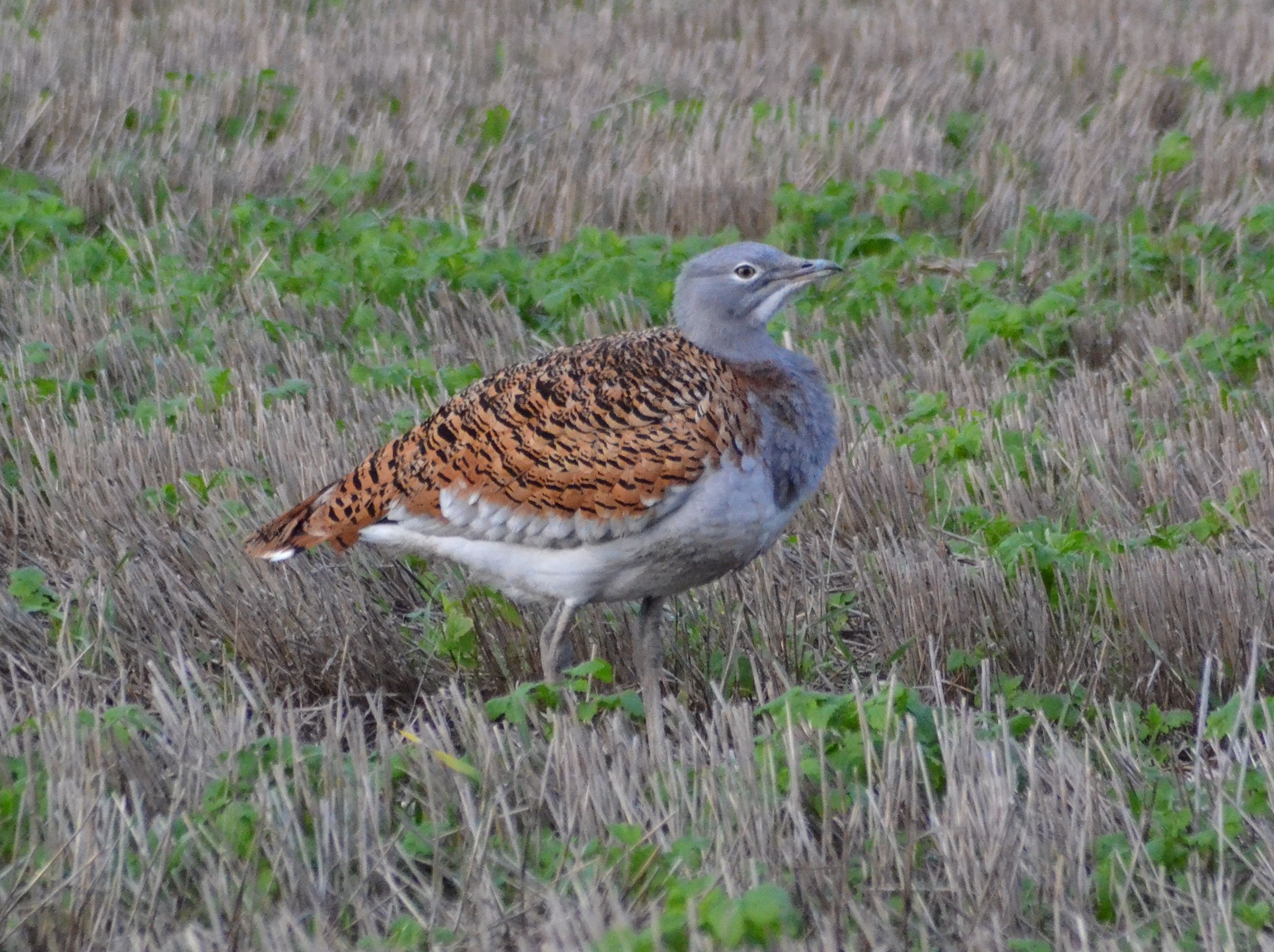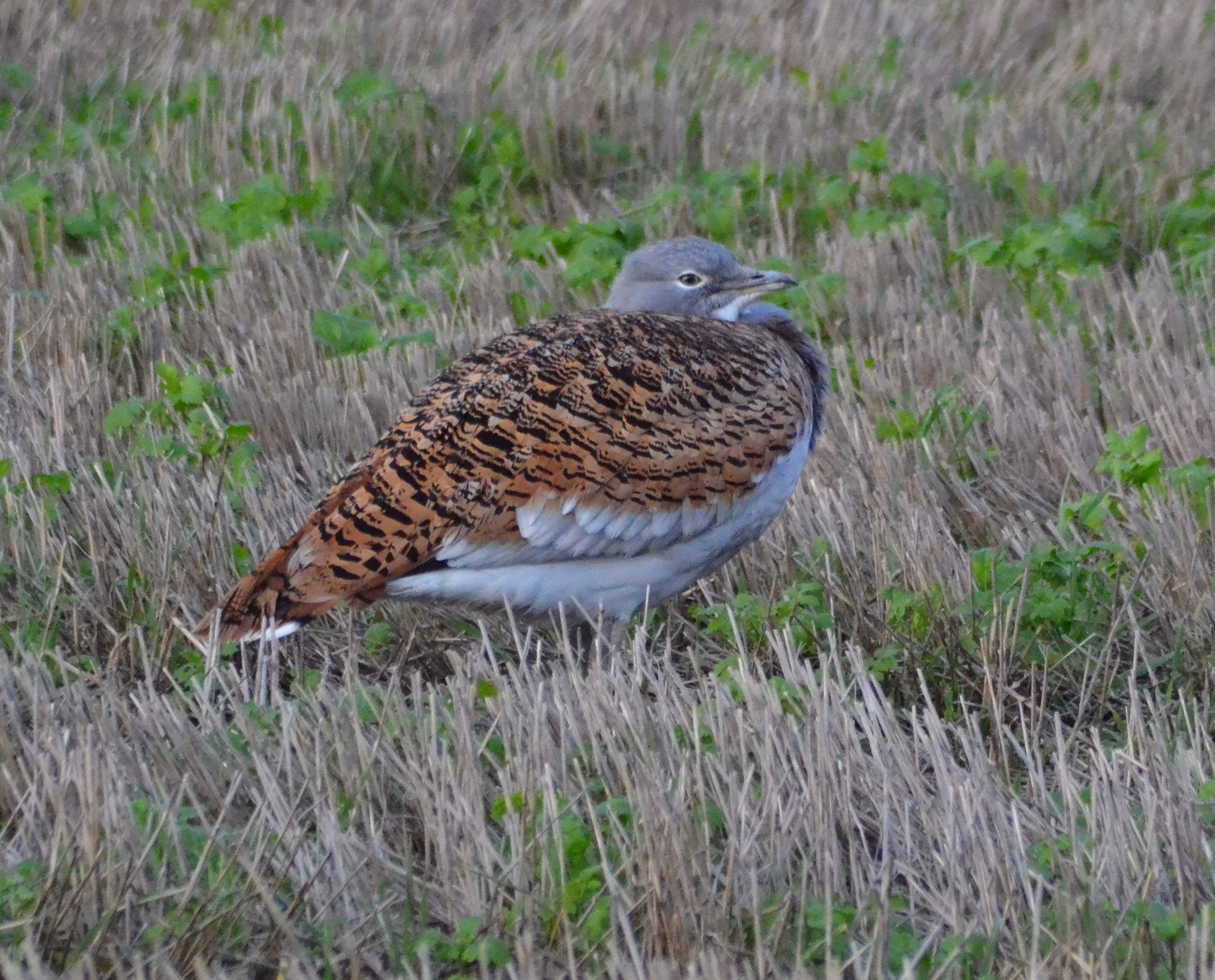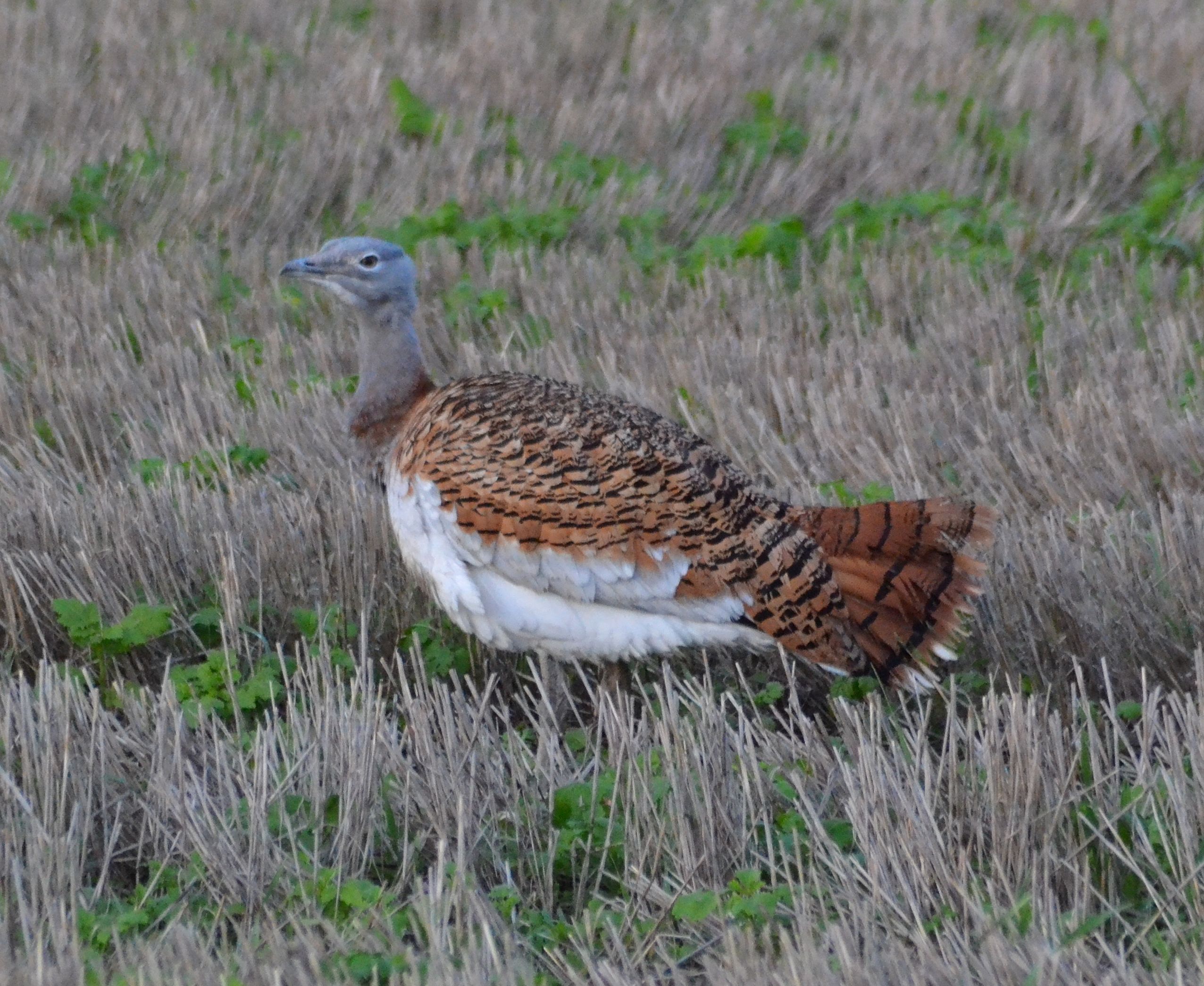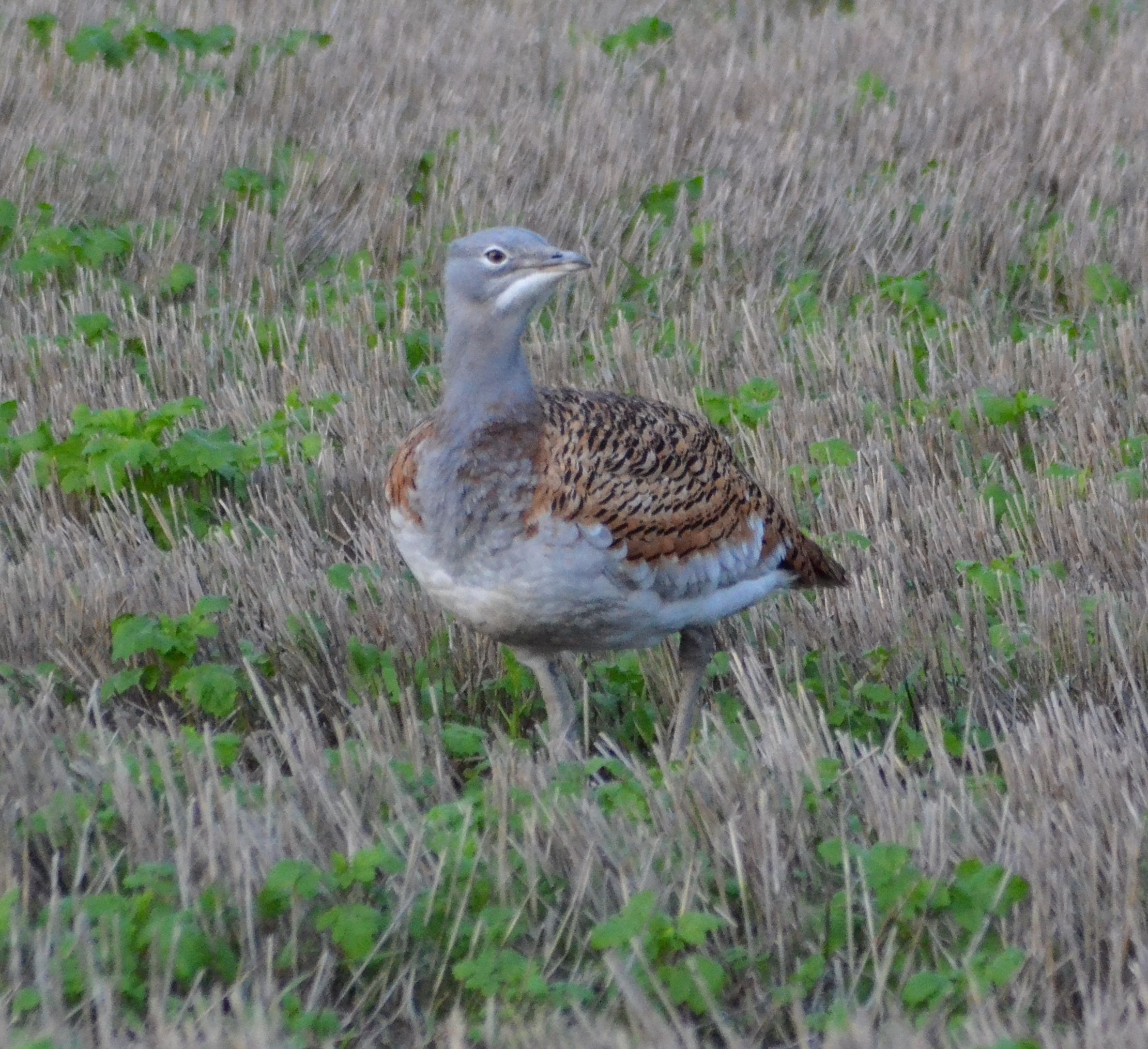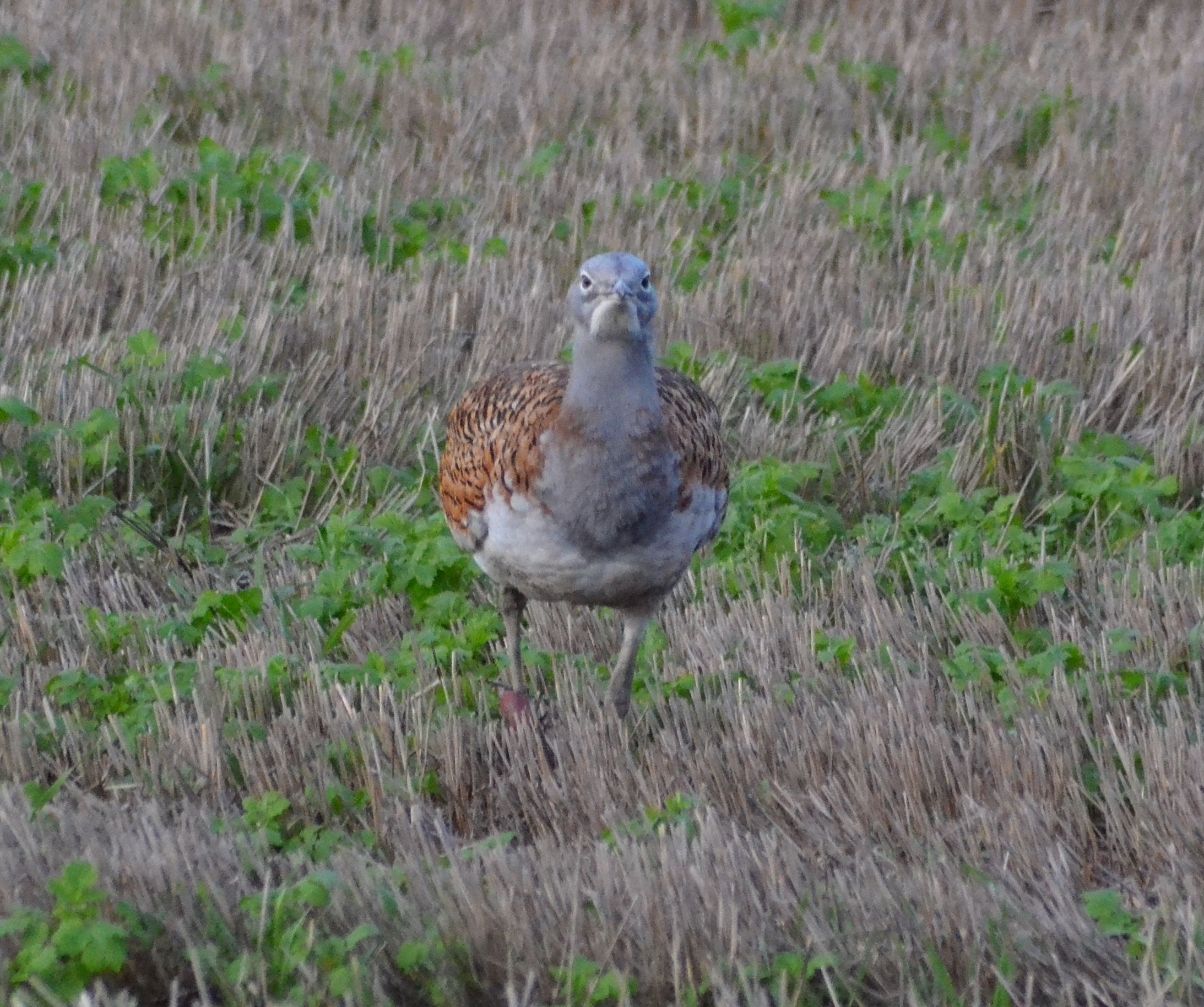
A Great Bustard in south Oxon at Letcombe Regis – 8th Dec

All this week a Great Bustard originating from the re-introduction project on Salisbury Plain, Wilts has been drawing observers to the village of Letcombe Regis (OX12 9JG – SU386869) near Wantage in south Oxfordshire. This first winter male is the most recent of several individuals to stray from the same scheme to my home county over the past 11 years and is thought to have been in the wider south Oxon downland area for some months.

I last experienced what is the world’s heaviest flying bird locally near Oddington, in the Otmoor basin to the north-east of Oxford in April 2010. So given the ease with which the latest was being recorded pictorially I visited on Tuesday afternoon (8th) where upon my arrival at the most frequent viewing location a number of people were walking back along a metalled farmland path to the east of the village.

Great Bustard at Letcombe Regis

After around 300 metres there it was and what a handsome sight (pictured above), grazing about half way across a rough fallow field. In time it walked to within 25 metres of me, pausing at intervals between feeding and looking all around itself, an uplifting opportunity to observe a large species in prime condition. Though known for being wary in the truly wild state, this one must have been both fully aware of and unconcerned by its audience so long as sudden or intrusive movements were avoided, and I indeed wondered if it was only too pleased to oblige.

Talking to passing dog walkers here suggested the presence of this “escaped” bird is arousing some interest locally. So, not having published anything in this journal for more than five weeks I have researched how it came to be there. What follows does not present anything that will not be known already to seasoned bird enthusiasts, but I hope it may be informative to anyone who having shared this experience might have web-searched the topic to learn more.

Wild Great Bustard populations occur across the Eurasian land mass from the Iberian peninsula to China. Those are both migratory in the east and resident or dispersive elsewhere, while overall distribution is highly fragmented. They are gregarious grazing birds but also very wary by nature. The total population, variously estimated at between 44,000 and 57,000, has undergone a long-term decline over the past 200 years that has been arrested more recently by conservation action in different countries. As a result the European population has increased over the last 20 years and pan-Eurasian figures have stabilised.

In Great Britain the species, that in former times ranged over southern chalk downland and the East Anglian Brecks, was hunted to extinction by the early 1830s. The “Salisbury Plain release project” is operated by the Great Bustard Group, a registered charity working to re-establish and promote the species nationally. A now 100 strong population of free flying adult birds on rented, MoD military training land is said to be the largest introduced one anywhere. A major part of the project’s funding comes from pre-arranged and supervised public visits to the otherwise inaccessible site.

An initial 10 year trial re-introduction began in 2004 using eggs and chicks rescued from agricultural operations in the Trans-Volga region of southern Russia. There the ground nesting Bustards’ breeding season coincides with large-scale cereal cultivation. Sitting females are said to be “reluctant to fly” from approaching farm machinery and hence difficult to spot in time despite their size, so destruction of nests is widespread in Europe’s second highest breeding population of around 8000 birds.

But this Russian stock from what is a Bustard summering ground was ultimately deemed to have rather too strong “migratory tendencies”, presumably meaning the birds are prone to scarpering and / or perishing in the process. Perhaps that’s true of charitable re-introduction programmes in general, more recently the White-tailed Eagles in the Isle of Wight, one of which also deemed to spend time in Oxfordshire where many more “kosher” scarcities seemingly fear to touch down.

So from 2013 the emphasis turned to sourcing stock from the world’s largest resident Great Bustard concentration of 29 – 35k breeding birds in Spain. Studies had revealed this was closer genetically to the extinct British population and also Europe’s least prone to wander, which after all must be an important consideration for a wildlife visitor attraction. There had in any case been long standing concerns over the impact on the Russian donor population, and regulatory issues surrounding importing and releasing birds from there had been problematic.

This, as presented here is a great simplification of the various factors that are explained in detail on the GBG web site. Progress in achieving the project’s key objective of establishing a self-sustaining population has been slow, with a recurring mix of successes and setbacks. Though breeding took place every year between 2007 and 2013 none of the juveniles reached adulthood due to the substantial death rate arising from their dispersal. I have not been able to locate more recent data on breeding performance, but hand reared birds from imported eggs that have reached maturity at the project site now number around 100.

Natural mortality in the wild is in any case more than 80% in the first year. As ground nesting birds with a reluctance to fly they are vulnerable to predation when feeding, nesting and roosting. Many eggs and chicks are taken by both mammalian and avian predators, though young birds grow very quickly and adults are more than capable of defending themselves. Those that survive their first year typically live on for between 15 and 20 more.

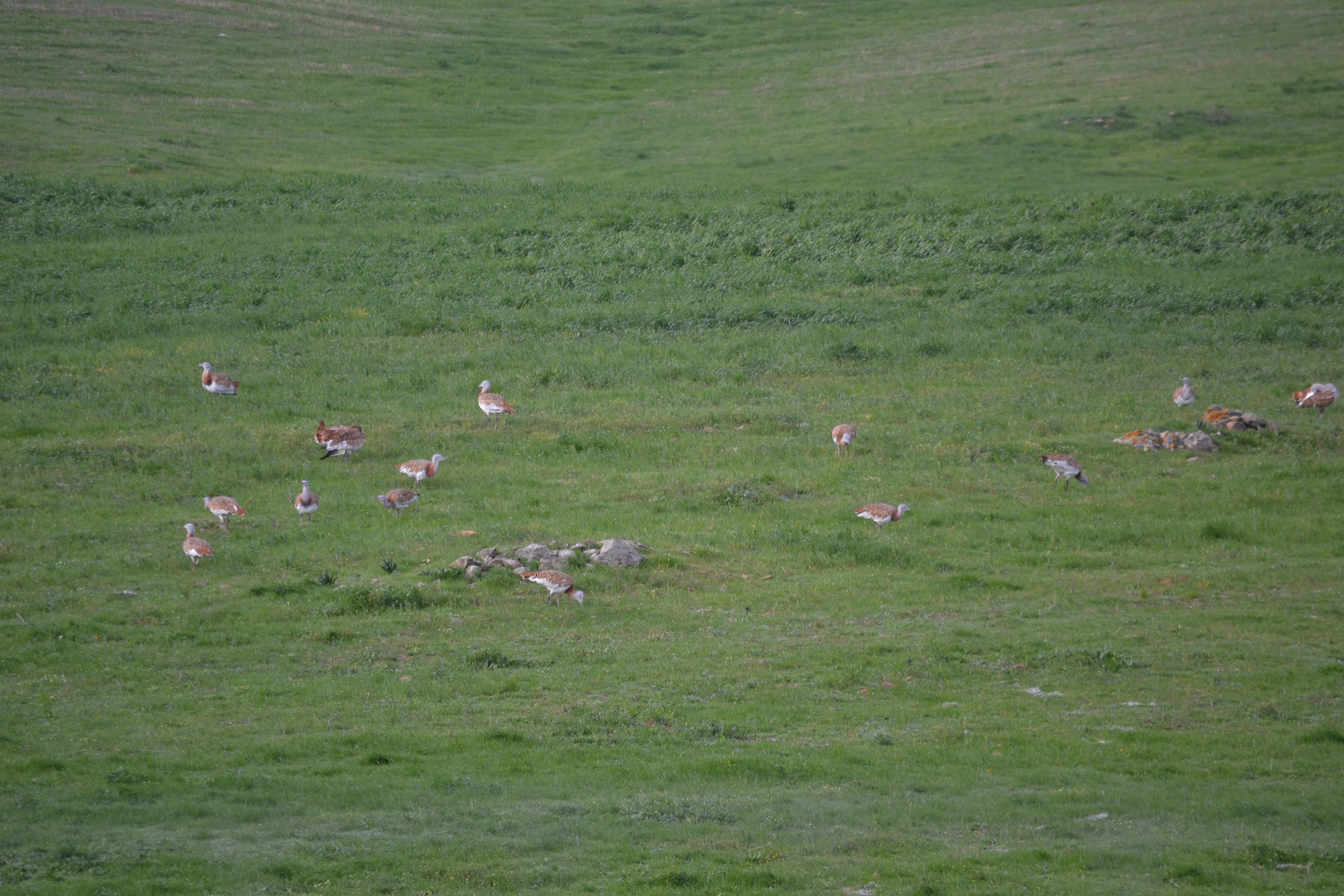
Great Bustard drove in Portugal, 2014

My personal experience of Great Bustards in between the two Oxon ones was all of a resident wild population in the Baixo Alentego region of southern Portugal in 2013 / 14 (pictured above). There it was possible to drive around the steppe grassland for hours on end without seeing any, then all of a sudden come across grazing “droves” as their social flocks are termed in the middle distance. I enjoyed a number of self-found encounters but was never able to observe them at such close range as this week’s bird. Doing so now, whatever it’s “plasticity” in birding parlance, was a most enjoyable event.

The four day fruiting cycle of the Magpie Inkcap mushroom in the Oxon Chilterns: 25 – 30th Oct

Over successive days this week I have taken the opportunity to track and record the fruiting cycle of an uncommon English mushroom, the enigmatic and tantalisingly attractive Magpie Inkcap (Coprinopsis picacaea), in Beech woodland in the Oxon Chilterns.

This began when choosing somewhere to go on Sunday (25th), a sunny first day of the detested dark season, I opted for a location near Nettlebed where Firecrests (the bird) might be found. After wandering around for a bit I met an enthusiast who was photographing something in the leaf litter with quite sophisticated paraphernalia. Guessing that must be fungi I engaged with him and he pointed out first some red Sickener mushrooms and then Magpie Inkcap (pictured below) growing from beneath a fallen log.

My researches now suggest it is quite unusual to find such a group since fruit of the latter fungus most usually occur singly or are at least well spaced. Having been introduced to this interest myself recently I soon forgot about the initial purpose giver for being there, and why not? The insect season is over for another year and the national birding action, though exceptional continues to occur mostly in the remotest outposts of the British Isles, way beyond both my preferred distance range and means. To put things another way I was in an apt frame of mind to be receptive to some late autumn fungi.

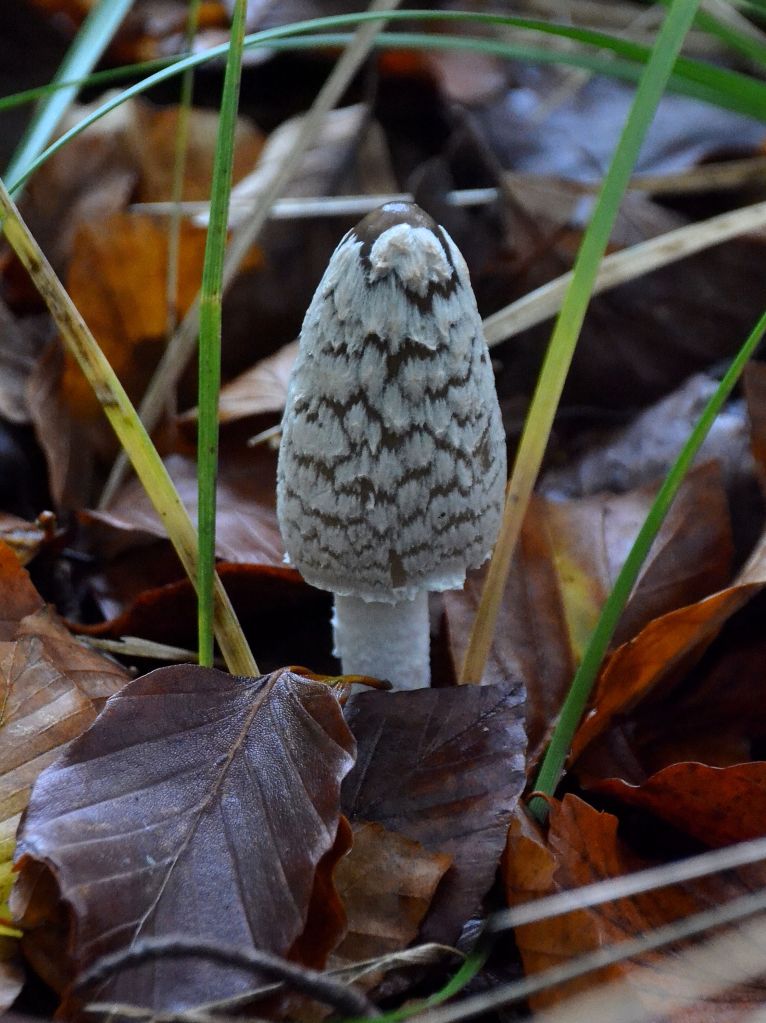
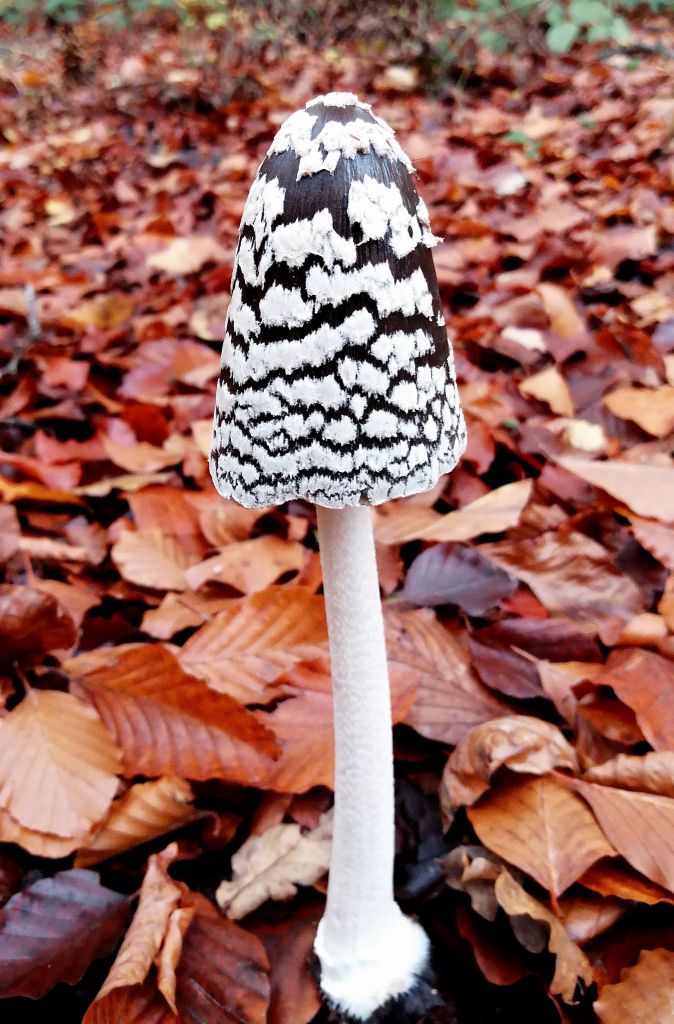
I had first come across Magpie Inkcap in another nearby Beech wood two years ago (pictured below). This thing of dark and delicate beauty occurs infrequently in much of the British Isles, but is found throughout continental Europe most usually in areas with alkaline soil and especially Beech woods, as well as in parts of North America; not to mention in the Chilterns.

2018 Magpie Inkcap in Padnell’s Wood, Oxon

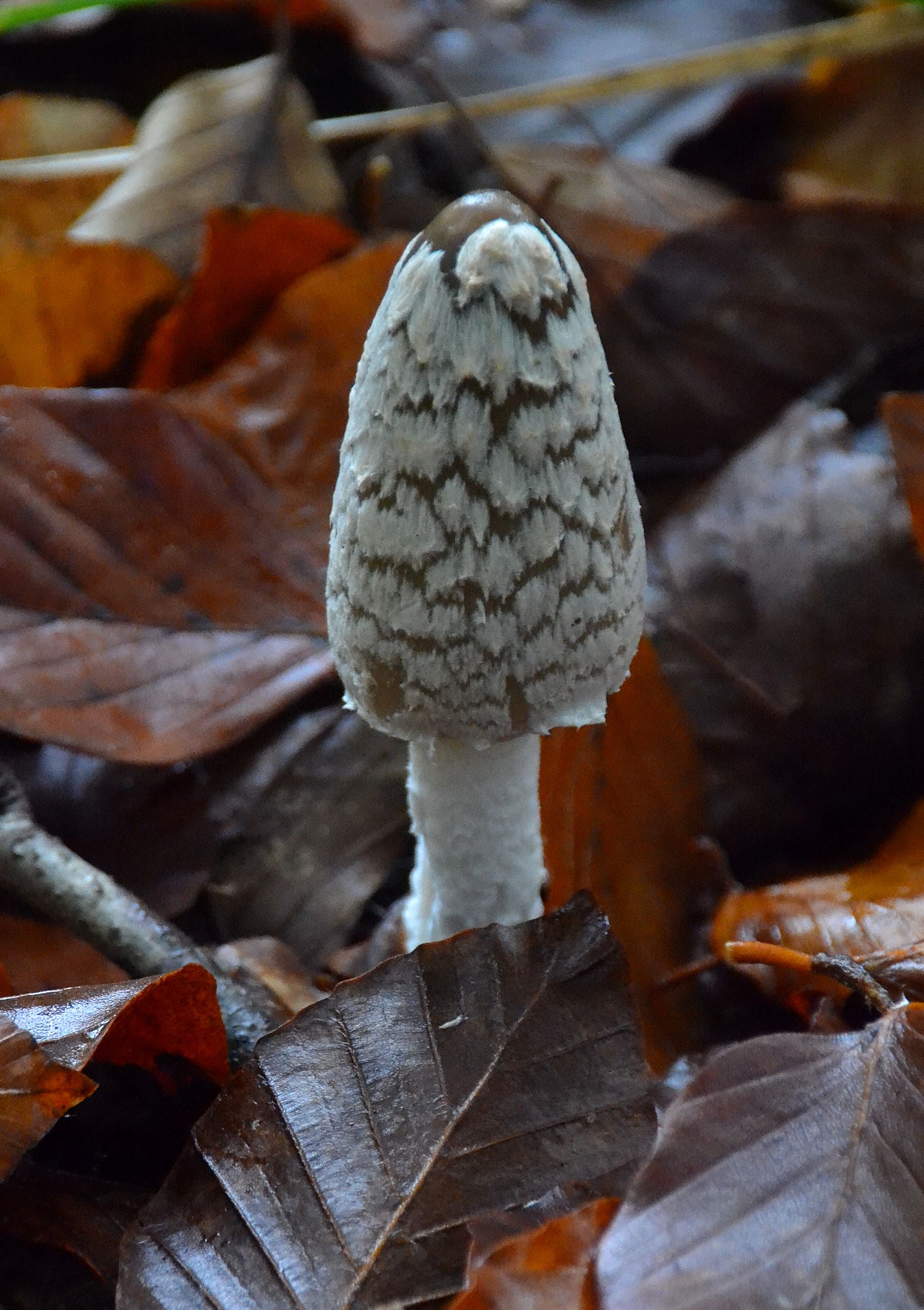
Monday (26th) was the only forecast sunny day of the week ahead and so I returned to the same place. Exploring a little further I became amazed and captivated in equal measure by the sheer quantity and variety of colourful, alluring and photogenic fungi all around the forest floor. Things soon felt similar to being back in Portugal or the south of France seeking out and taking pictures of insects. The Inkcap group of the previous day had evolved into the large bell shapes (pictured below) and my curiosity was suitably piqued.

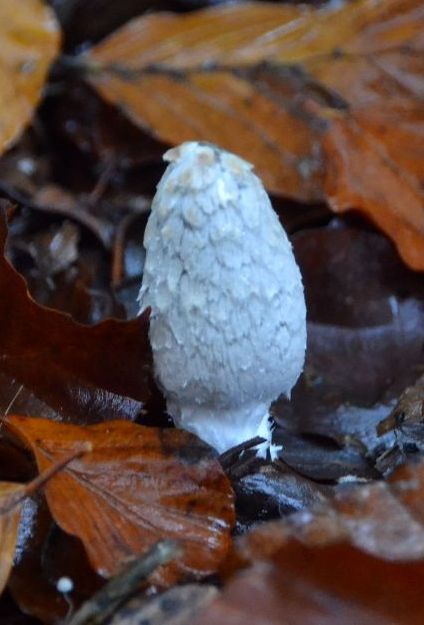
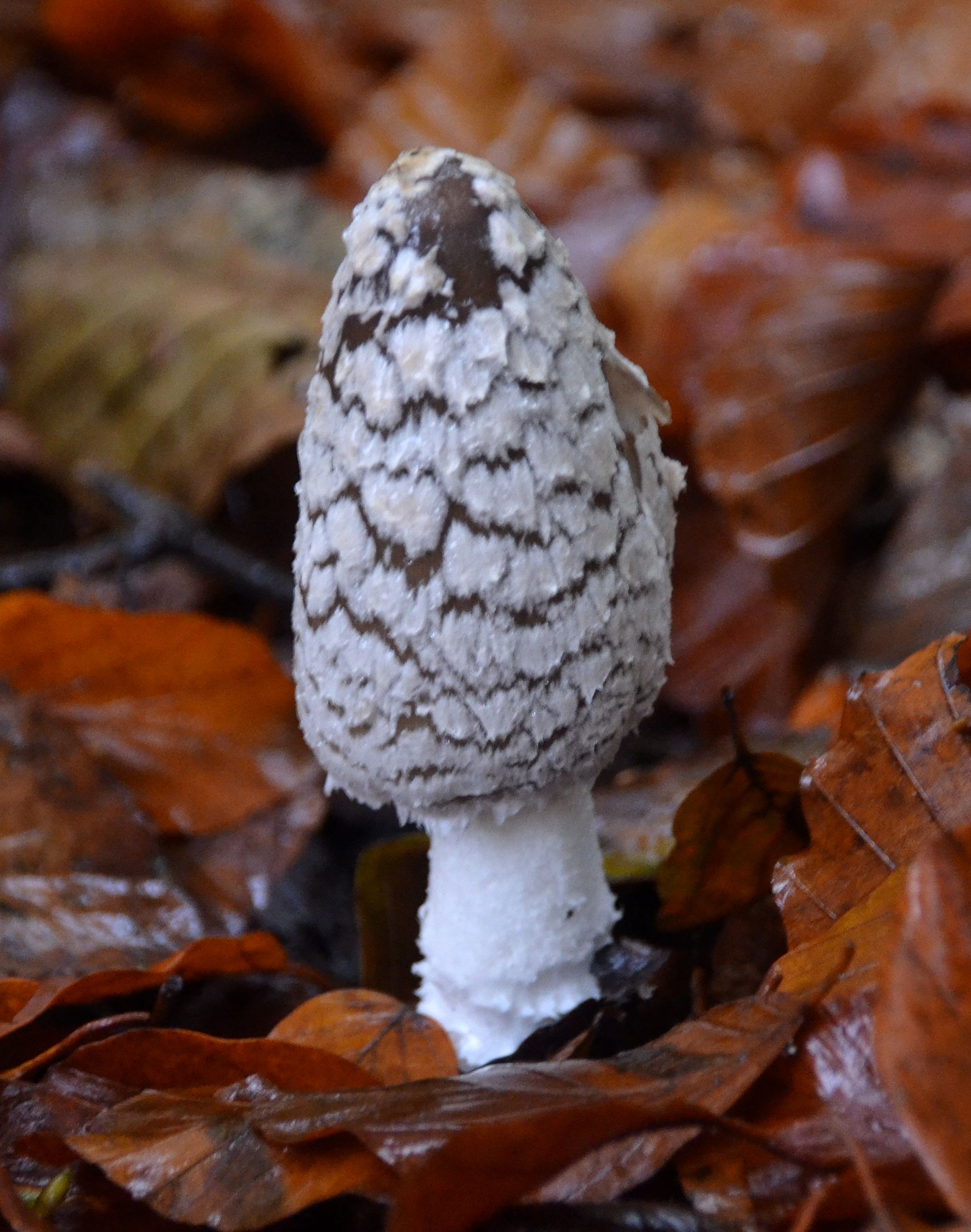
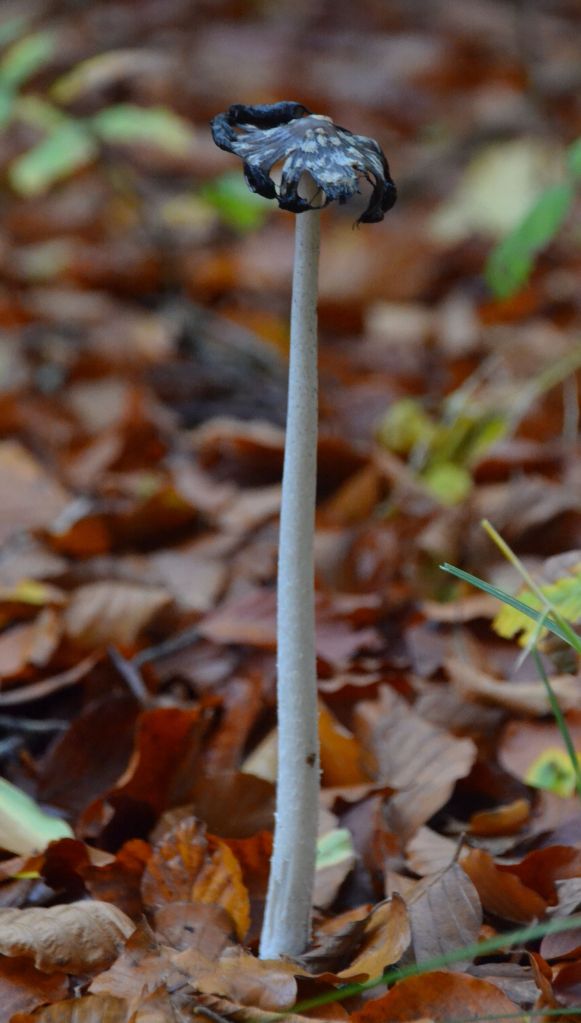
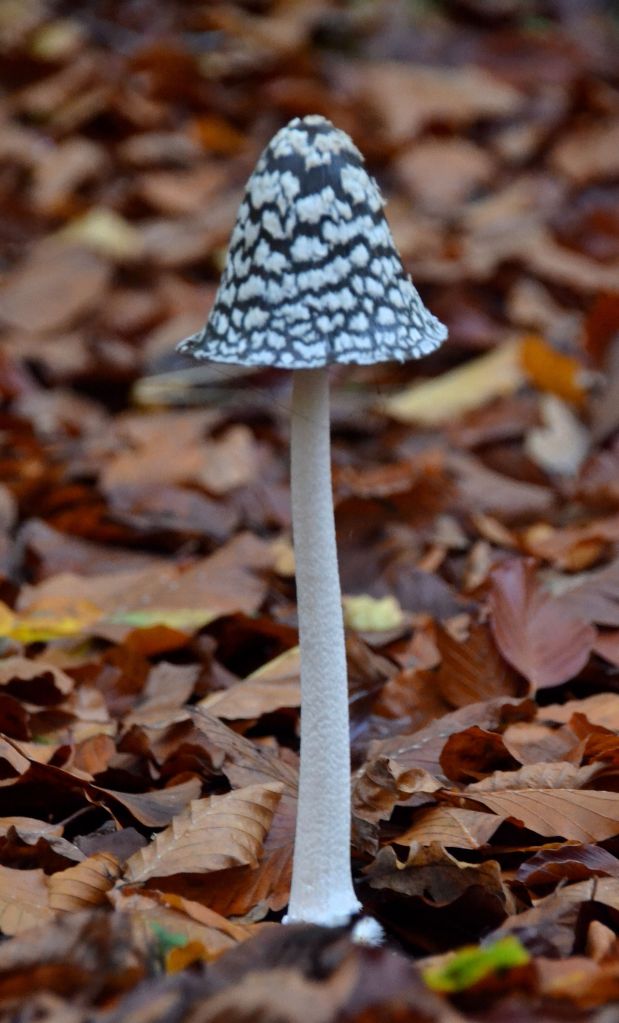
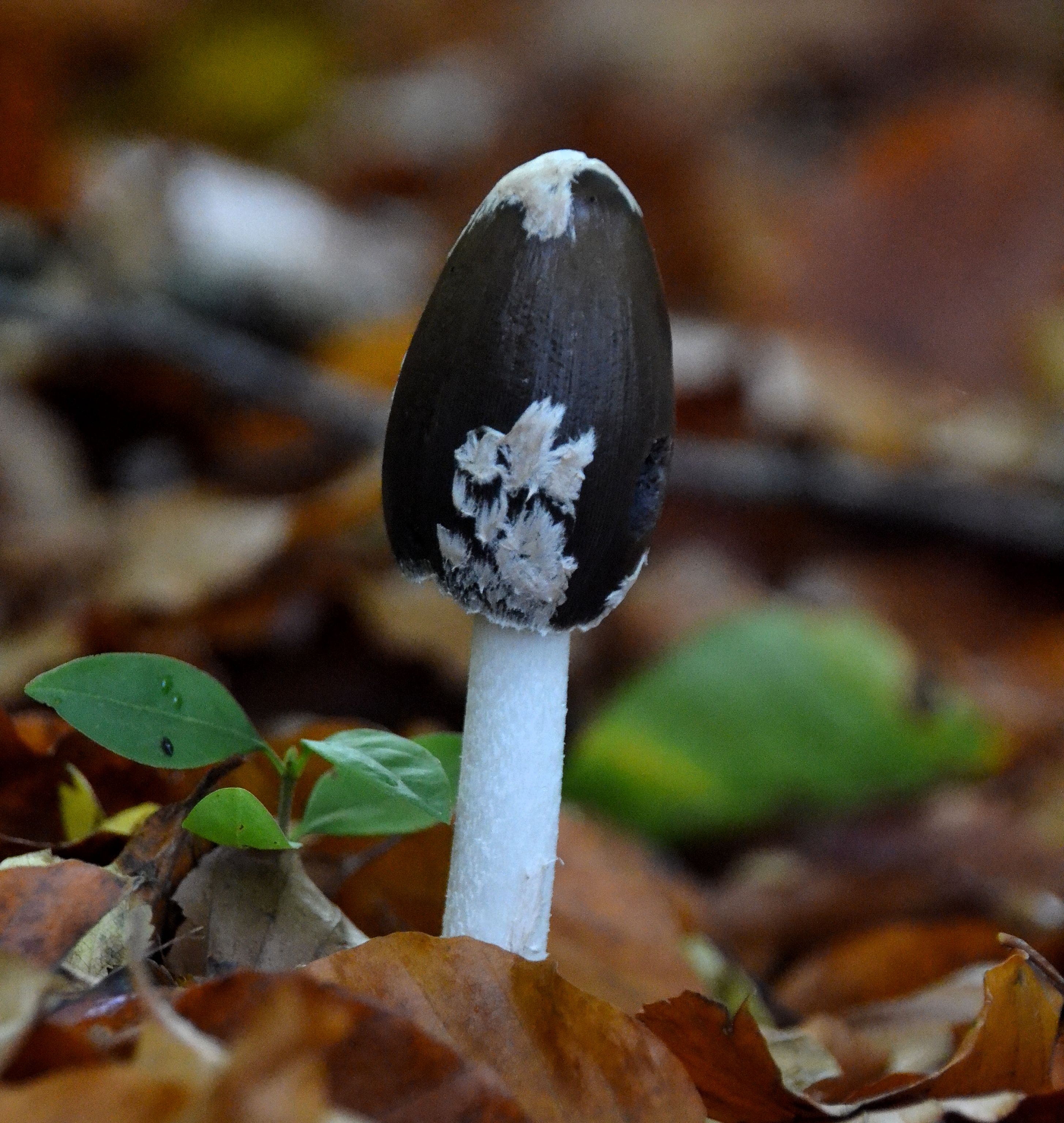
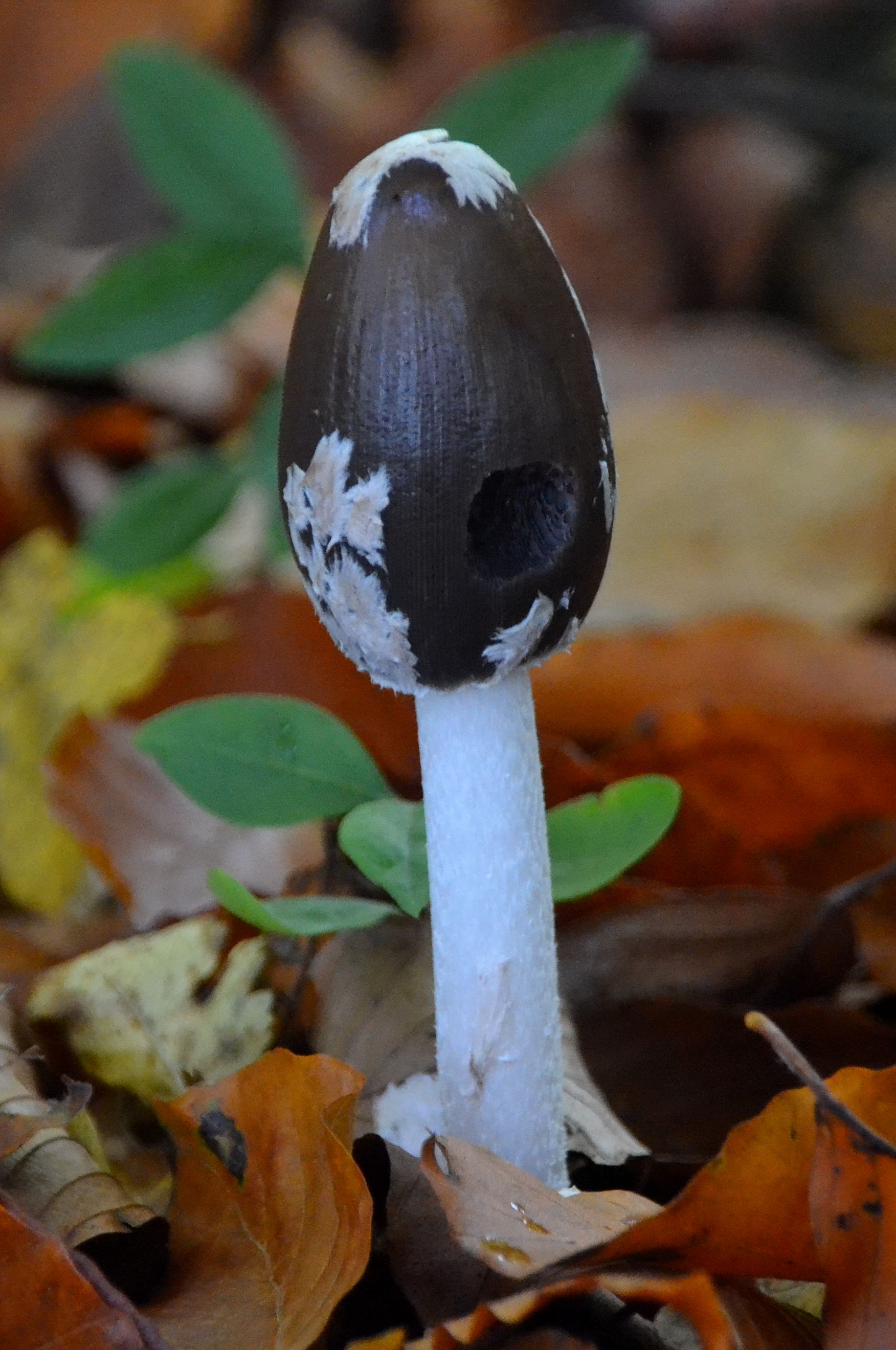
Reading up on things when I got home, I learned the poisonous Magpie Inkcap fruit bodies evolve through a sequence of shapes – egg to gherkin, then opening up to bell-like – through their short lived emergence. The patterning of white or silvery grey breaks into separate patches to reveal the glossy dark brown background as the reproductive cycle of spore dispersal progresses. The stalk is white, hollow and not very stable, slightly tapered towards the top and covered with scales. Eventually, at around day four by my observations the brim of the cap rolls up and dissolves, then the cycle is complete and the stalks collapse. 

Over the six days covered by this post I observed that sequence in three different specimens near by that initial group at Highmoor Common Wood (SU704856). This is presented in the mixed sequence above, captured wearing waterproofs and with the aid of a garden kneeler as I performed contortions in the leaf litter on the damp forest floor. At one point a passer by just had to call out: “Are you all right?” and yes thank you I was.

The following individual sequences show the daily progress of two of the Magpie Inkcap I tracked. At least in this study period, which was punctuated by heavy showers and spells of prolonged rain, there appeared to be a four day fruiting cycle that possibly shortened as the wet conditions persisted. I have used simplified language in discussing all this. For a more scientific treatment see here.

The second sequence (above) illustrates perfectly the four part cycle observed in each specimen, through egg to gherkin then into bell shape before the fruit begins to dissolve and collapse. But this further example #4 (below) was perhaps the finest of them all. One after another through six days I witnessed these emerging through the leaf littler from the underground network of threads that forms the main structure of this group of fungi, to put on the superb show recorded here. I felt glad indeed to have experienced something truly new and different in nature as winter commences.

On Wednesday (28th) I also checked out another woodland, Icknieldbank Plantation (SU668915) on the Chiltern Ridgeway below Swyncombe Down, finding another cluster. The only fruit here not to have gone over was a partially scale free specimen (pictured below) that I revisited the following day but did not track through the full cycle.

In my limited experience of fungi, the Magpie Inkcap of this post is definitely my favourite to date. But the Highmoor Common site was populated by an array of other highly attractive, weird and wonderful items. This has been a very welcome diversion and project through the first week of winter, and something I will definitely take more interest in come the autumn of 2021.

Some musings on Helicodiceros muscivorus, the “Dead Horse Arum” – 16th Oct

As of today Kings Copse Park Botanical Gardens (KCP BG) is the proud custodian of a good-sized Helicodiceros muscivorus tuber. This seriously weird Aroid is a must have for collectors, involving as it does scope for imagination above the median and a reputation for producing amongst the world’s top 10 foulest smelling flowers. If planted in autumn tubers make foliage through the winter months before blooming in spring. Then the foliage wilts and the plant goes into semi-dormancy until the cycle begins again.

Not surprisingly yours truly wanted one too upon seeing pictures when I first started collecting Aroids in the spring of 2018. So on finding the plant offered for sale a few months later by Adventurous Plants at what seemed a very low price of £4.50 I took the plunge. Though described as being a few years from flowering size that tuber was puny and did not put on any bulk at all in its first two seasons, but I nonetheless resolved to make cultivating and bringing it to bloom a life’s ambition.

Helicodiceros muscivorus – all outsourced images herein are © rights of owner reserved

All that changed earlier this month when on resolving to join the wait list at RarePlants.co.uk I found rather more substantial H muscivorus actually available for sale, this time for £21.50. Imagine the thrill when on snapping one up the wait list was immediately re-instated and the plant again became listed as out of stock. To put things another way I must have got the last un-reserved one. A number of other suppliers have similar waiting lists. Obtaining one is not easy as they are such a sought after item.

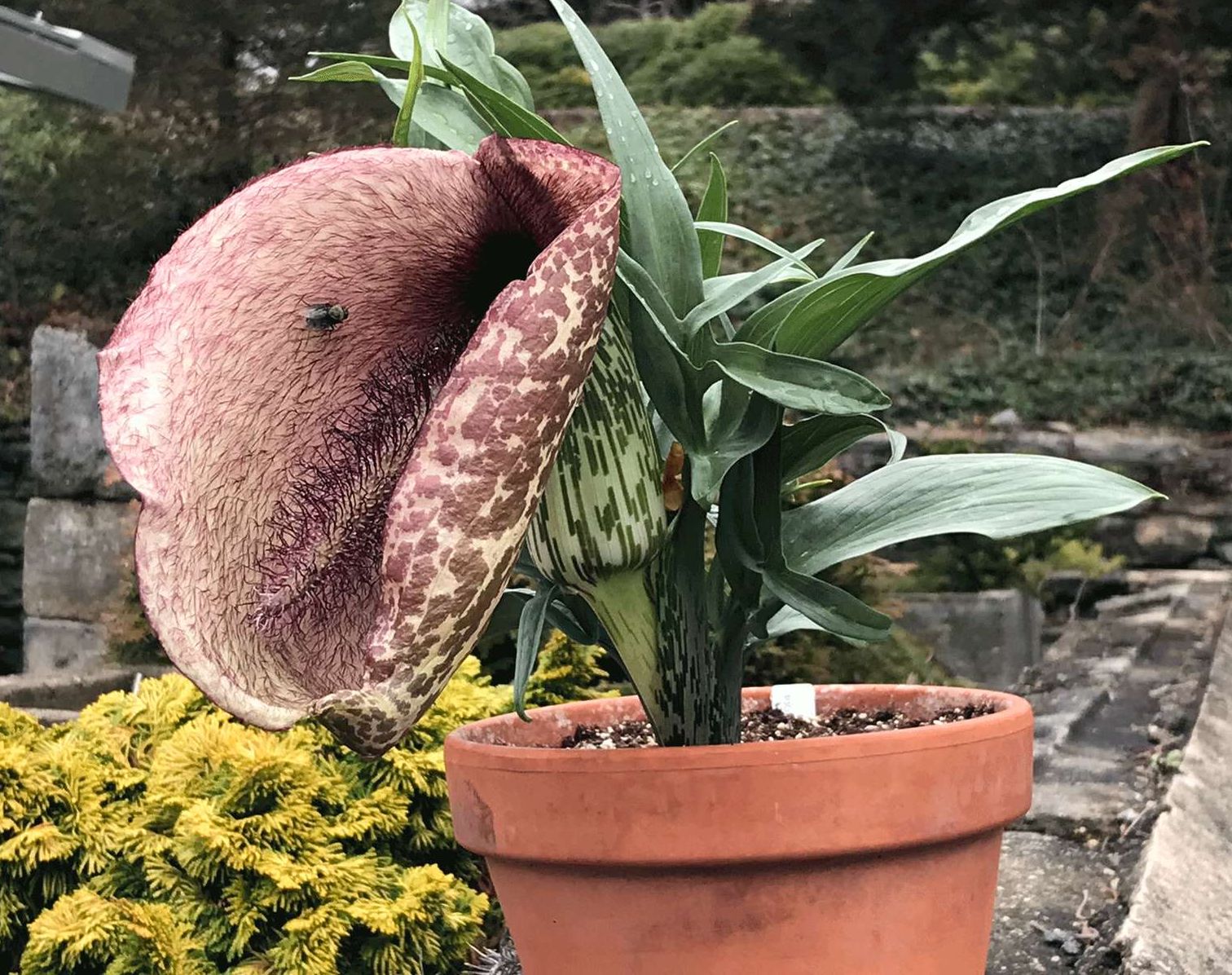
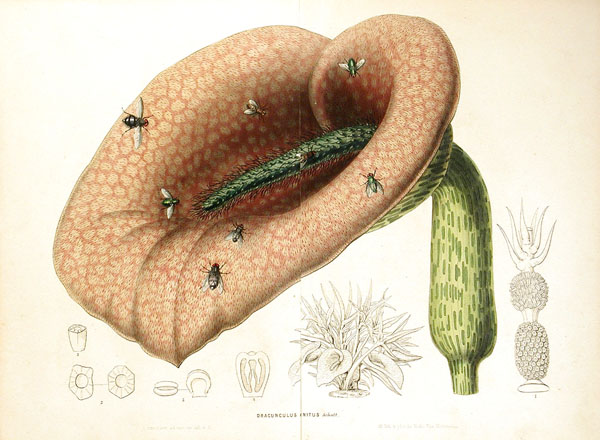
This is the only plant of the Helicodiceros genus, known colloquially as the “Dead Horse Arum” and also “Pig Butt Arum” or “Ass Plant” on the other side of the Atlantic. Those anal American associations no doubt arise from the way it looks as much as the infamous smell. The foliage is a pale matt-green and in my view the remarkable inflorescence, perhaps depending on the angle from which it is viewed, has a beguiling suggestiveness some way beyond animal rear ends: large, flesh coloured and covered in hairs.

The above 19th century illustration possibly conveys that observation more than published pictures. My own supplier prefers a rather more polite resemblance to an Aardvark’s ear “in shades of flesh-pink and jade-green blotched all over with purple and emerald”. Take your pick. “Dragon’s Mouth” is another, less well used common name.

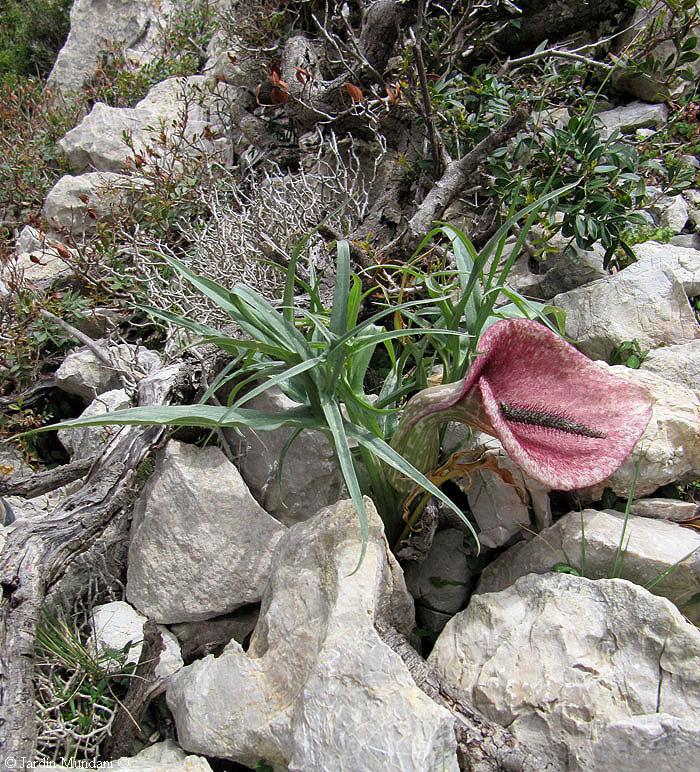
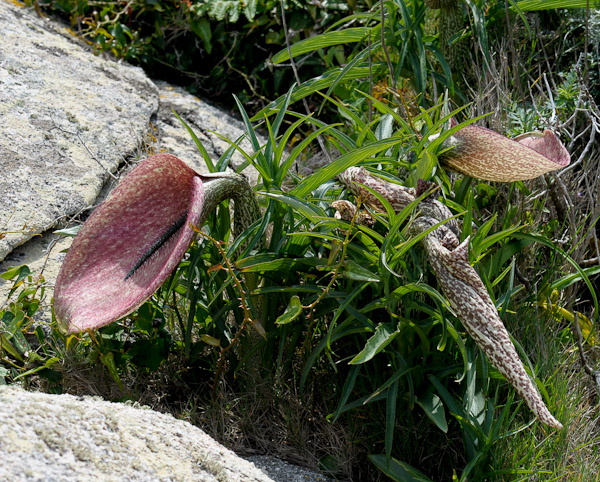
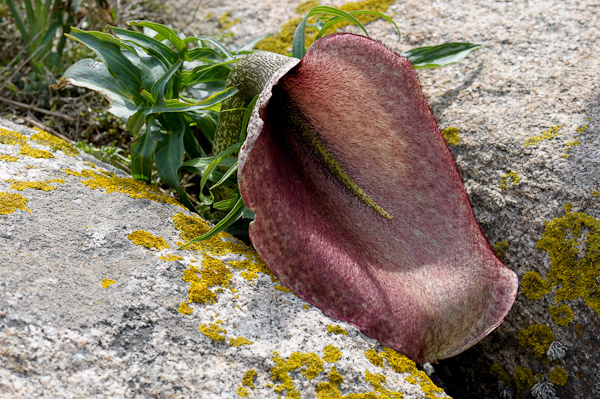
In the wild this Aroid grows only on rocky, coastal cliff tops in the Tyrrhenian and Balearic Islands of the Mediterranean (pictured below). But responsible suppliers such as I have sourced mine from grow their own from cultivated stock, and judging by the number of pictures on-line there are plenty of Helicos in circulation both in Europe and the USA.

This is one of a rare group of plants with the ability to raise their own temperature above that of the surrounding air through thermogenesis. This simulates the warmth given off by the biological functions involved in decomposition, while emitting a strong putrid odour of rotting meat to lure pollinating flies into the inflorescence. The spathe waits for a warm and sunny day before unrolling so the smell spreads far and wide, but blooming is short lived since the pollination process lasts for just two days.

The flesh-toned bloom’s resemblance to a natural animal orifice also assists in pollination as blow flies are drawn right into the floral chamber where they become trapped and in trying to escape transfer pollen between the male and female flowers. On the first day only the female flowers are receptive, peaking at around midday in tandem with the odour. The pollinators remain trapped until the following day when the male flowers become fertile. Then the plant loosens its constriction allowing the flies, well dusted with pollen, to escape only to be trapped again in another plant, ensuring cross-pollination.

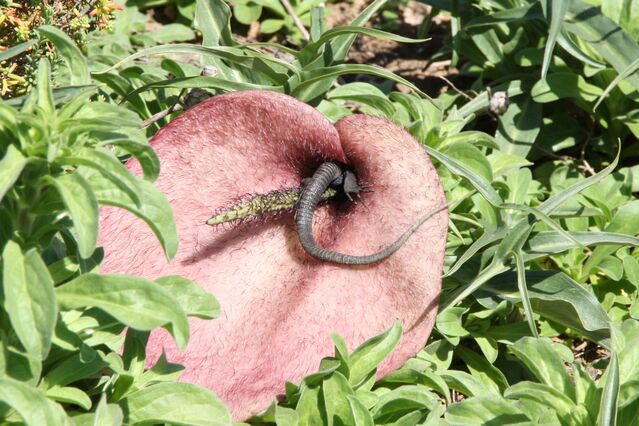
But it is not only insects that assist in the propagation of H muscivorus. In the Balearics this most curious plant has developed a specialised relationship with an endemic reptile. Liford’s Wall Lizard (Podarcis lilfordi) is known to be attracted to the odour of rotting meat and also for exploring any potential source of its small invertebrate, plant matter and carrion diet.

Once drawn by the Dead Horse Arum’s stench they enjoy basking on the warm spathes (above left) while taking advantage of the abundance of flies. And attracted by the amplified buzz of trapped flies from within they will actually enter the floral chamber (above right) to catch them. In doing so this lizard has learned to also eat the plant’s berries (pictured below), and hence it has become a major seed disperser. Studies indicate that seeds which pass through the reptile’s digestive system are twice as likely to germinate.

Helicodiceros muscivorus fruit

My article earlier this year on the English Cuckoo Pint (see here) has been well referred to in this journal. So I have also searched for anecdotes and folklore concerning their exotic Mediterranean cousin of this post, but without success. Likewise I have uncovered no Helico medicinal or culinary uses. But the “Dead Horse Arum” appears to have been quite a focus for scientific study, particularly concerning mimicry in plants to attract pollinators, which is true of many Aroids. And in all the published material it is difficult to get away from THAT smell.

Anyway I now have one, the most costly and perhaps challenging Aroid acquired here to date. My new acquisition is supplied as being two years from flowering size (FS2). I shall cherish and nurture this latest addition to my currently 29 species strong collection indoors through the coming winter and beyond until such time as it HAS to go outside.

A day on the Sussex coast, featuring Red-throated Diver and a lesson concerning Purple Sandpipers – 12th Oct

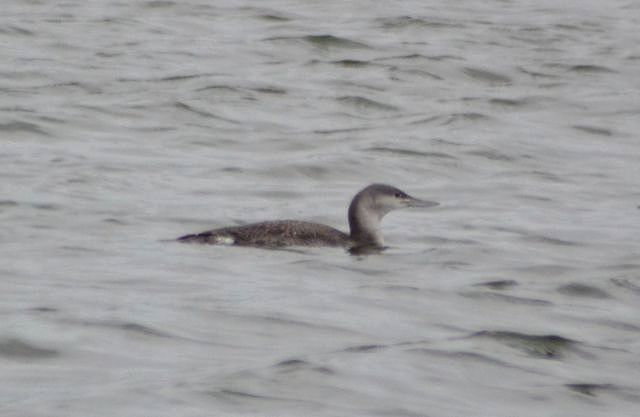
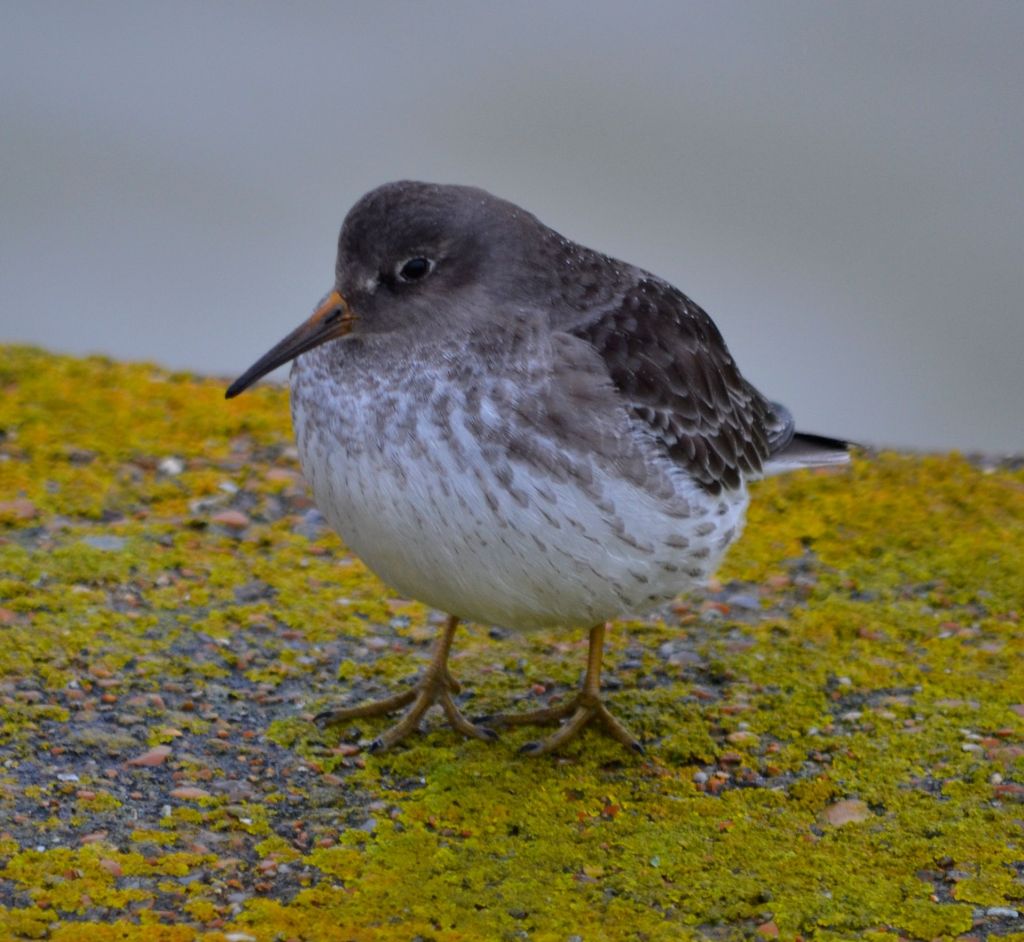
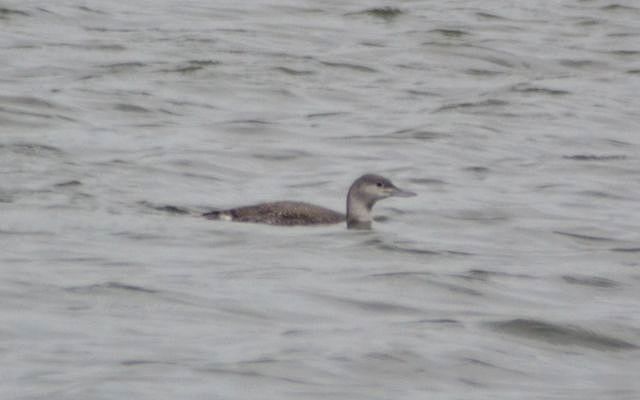
The re-found wanderlust that had seized me in recent days didn’t end with the events of the previous post, as after Ewan called on Sunday to enquire whether I fancied going birding I found myself heading off again for the third time in five days. The options offered were the Hants Wilson’s Phalarope or a Radde’s Warbler in Sussex. As I had already done the first we agreed on the latter of those that might have been a second ever record for both of us. But the excursion’s outcome was eventually something quite different (pictured below).

Red-throated Diver (1w) at Pagham Lagoon

Mid-Monday morning saw us arrive at Seaford Head (TV499979), where from the public parking area we walked out to a scrubby area in the centre of a golf course. There we found five other birders some of whom had been in place since dawn without re-finding the Radde’s. As in Cambs five days before, another typical Warbler twitch was in progress involving scanning a large area of habitat in the hope of glimpsing a small skulking bird.

It made sense to stick around for a while having come all the way here. There had been a spate of sightings around England of this Siberian breeding drift migrant through the week just passed, but as we waited and checked news from elsewhere it became plain those birds still present on Sunday had mostly moved on. After an hour we gave up on things here too, most of our fellow birders by then having also gone on their way.

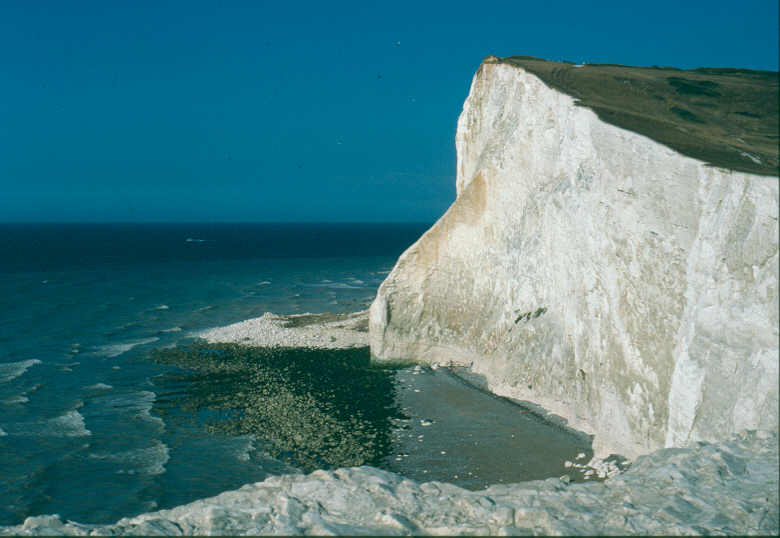
Seaford Head is an impressive sight from distance (pictured above left). I was glad we didn’t need to go near the cliff edge, since vertigo has affected me at other less lofty coastal locations often enough in the past. I also wondered exactly what the rules might be when golf balls are driven over the edge. To the east, the Seven Sisters (above right) stretched away towards the distant Beachy Head along this section of Sussex coastline. Both outsourced pictures are © rights of owner reserved.

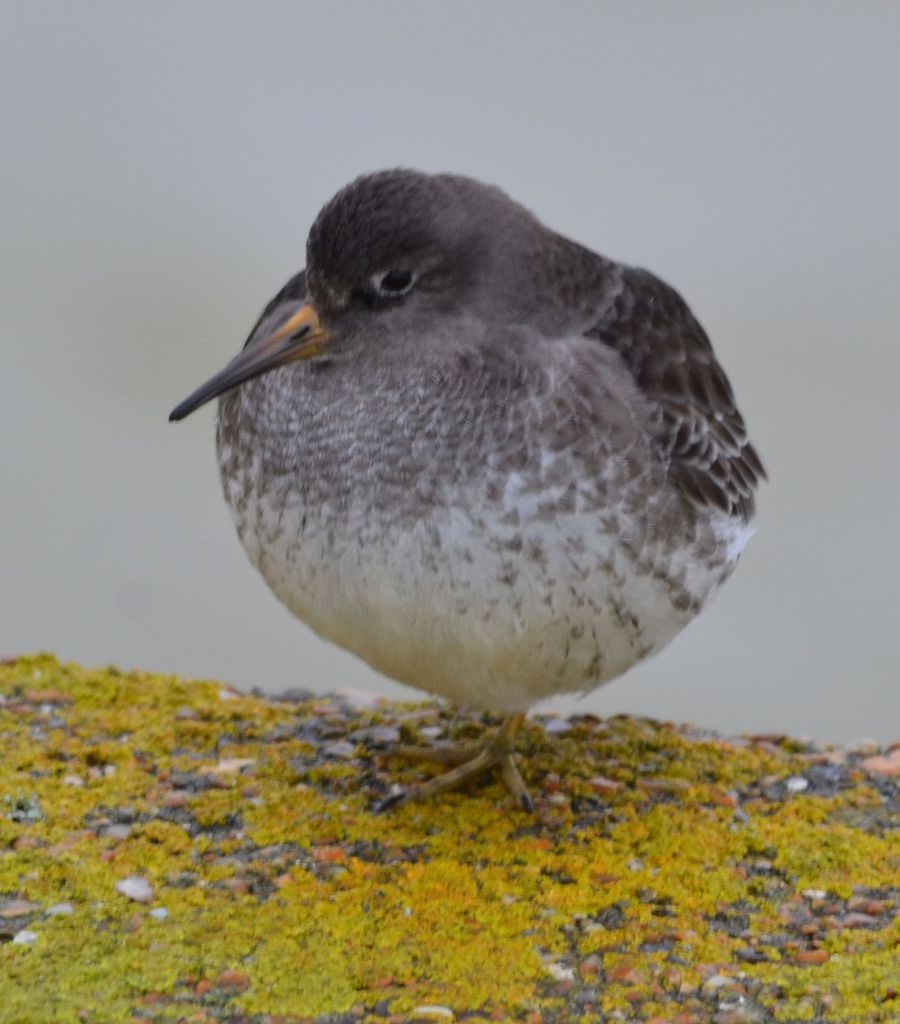
The question now was what to do next. Ewan lived in Sussex for some years in the past and has detailed knowledge and long experience of the county’s prime birding locations. I was interested to encounter again the Purple Sandpipers that roost at high tide, and which I observed previously in February 2017, on the east pier of nearby Newhaven’s port area (TQ451000). And though it is early in the PS season and not knowing the present state of the tide we opted to go there and take a look.

Newhaven east pier © and courtesy of Robin Webster

As we approached I commented the tide looked in but my colleague explained that at high tide the water level is much nearer the top of the rather unusual structure (pictured above, top as we found it). We still walked out to the end of the pier looking down towards the sea level piling all the while, but found only Turnstones. We had now drawn blank twice, so where to next? I was not keen to go to Pennington again but likewise appreciate it is unwise to try to dissuade my companion from doing anything he sets his mind on, and he was driving today.

Fortunately Ewan now found on the Sussex grapevine a Red-throated Diver at Pagham Lagoon to the west near Bognor Regis, so we set off for there. This is not of course an especially scarce sighting on the south coast in winter, though most are viewed some way offshore. But I myself had seen well only two previously, and opportunities to observe one on an inland water body are quite unusual, so I felt pleased to have this chance now.

Though I have been to neighbouring Pagham Harbour on numerous occasions, I was unaware of Pagham Lagoon (SZ 883969) until this visit. On parking in Lagoon Road we were at once approached a little anxiously by a local resident, who when she realised we were birders soon warmed to our presence. This lady explained that like many places in the current Covid climate the neighbourhood and its nature reserve is experiencing pressure from general public that arrives in numbers to engage in variously intrusive activities.

Red-throated Diver (1w) at Pagham Lagoon

We then, with our newly found host’s blessing, walked out to and around the lagoon and soon found the first winter Red-throated Diver (pictured above) quite close in to the shore. For the next hour we watched the bird moving around the water before us, diving all the while, and at times it would do a disappearing act for quite long intervals. My colleague being more experienced with the species now explained the diagnostics of spotted upperparts, a reddish patch on the throat and the upturned lower mandible of the bill.

I could see this bird was quite distinct in its appearance from the other two wintering British Diver species I have observed as closely in the past, and am pleased to have now taken pictures of a kind (see here) of all three at inland locations. I was surprised to find upon checking that there are only two previous RTD in my life lists, but dare say more have been pointed out to me some distance out to sea that I didn’t bother to include in my records.

It was now 15:00 pm and the weather was deteriorating. So my day’s driver felt no inclination to brave a wet and windy Pennington Marsh, and instead we repaired to a nearby bakery for sustenance before heading home. It had been a decent enough outing for me despite having connected with just one bird target out of the three attempted.

A Wilson’s Phalarope at Pennington Marsh, Hants – 10th Oct

The presence of a seemingly settled Nearctic wader on the Hampshire coast was a sufficient draw to tempt me out for a second time in three days. A restlessness had settled on my spirit after a day on the road on Thursday, and this shorter distance twitch (87 miles) would fill the day ahead quite nicely.

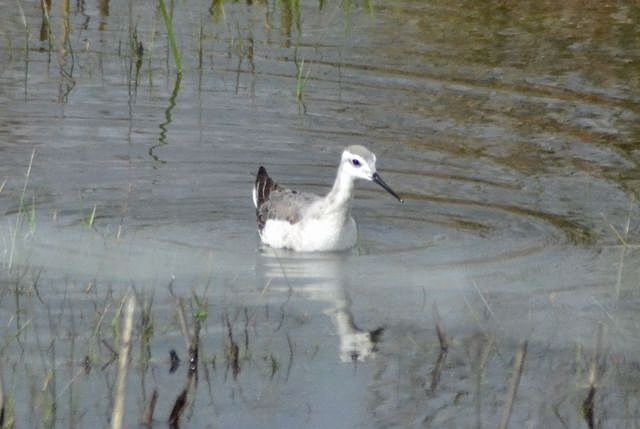
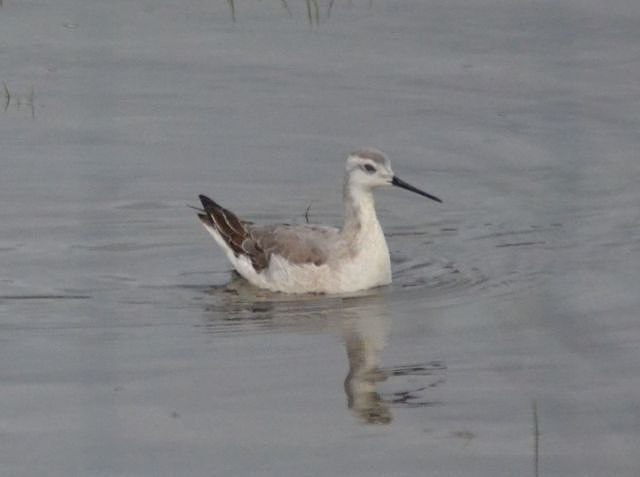
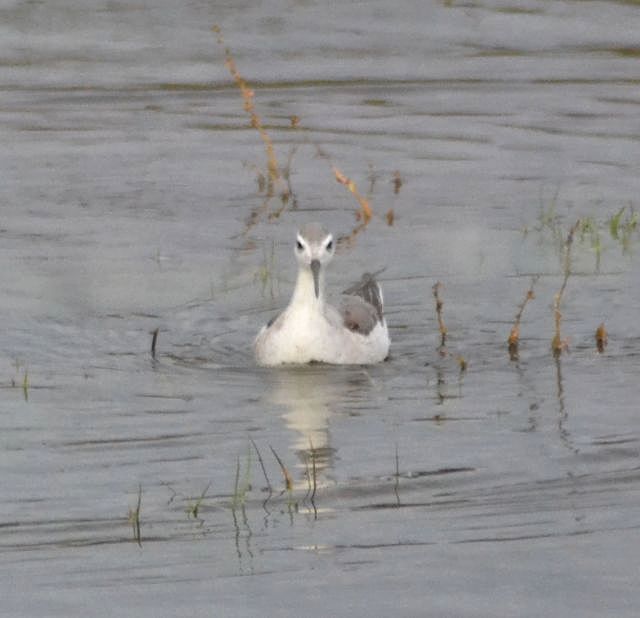
Wilson’s Phalarope is an annual vagrant to the British Isles, with most records being of juvenile birds such as this one in autumn. I had seen two previously at Staines Reservoir, Surrey in 1997 and Vange Marsh, Essex in September 2015 (see here). But those sightings had both been distant so the attraction now was the exceptionally close views the Hants bird was said to be offering, and hopefully the opportunity to take my first pictures of the species (below).

Today’s Wilson’s Phalarope (juv)

I arrived on site at Pennington Marsh just before midday, using the small parking area at the end of Lower Pennington Lane from Lymington SO41 8FU (SZ318927). This area of the 1200 hectare Lymington & Keyhaven Marshes LNR, administered by Hampshire County Council and the Hants and IoW Wildlife Trust (see here), regularly attracts scarcer passage waders. My own past records here are Pectoral Sandpiper (Aug 1997), Semipalmated Sandpiper (Sep 2013) and Long-billed Dowitcher (Sep 2016 – see here).

According to RBA the Phalarope was frequenting the south-eastern end of Fishtail Lagoon, one of the several saline water bodies that lie behind the sea wall. I remembered the location from previous visits here but still checked with birders walking the other way to be sure. A small crowd of possibly 20 observers was pointed out in the distance, but on my arrival they were dispersing as apparently my quest had flown.

At first I walked back along the sea wall to scan for the bird but soon reasoned it would be better to re-join the remains of the group and see what transpired. When I got back there was the Wilson’s Phalarope just inside the wire fence at the water’s edge, but it at once took off again to land on a muddy spit further out. There I watched it partially obscured for some minutes before it flew off again.

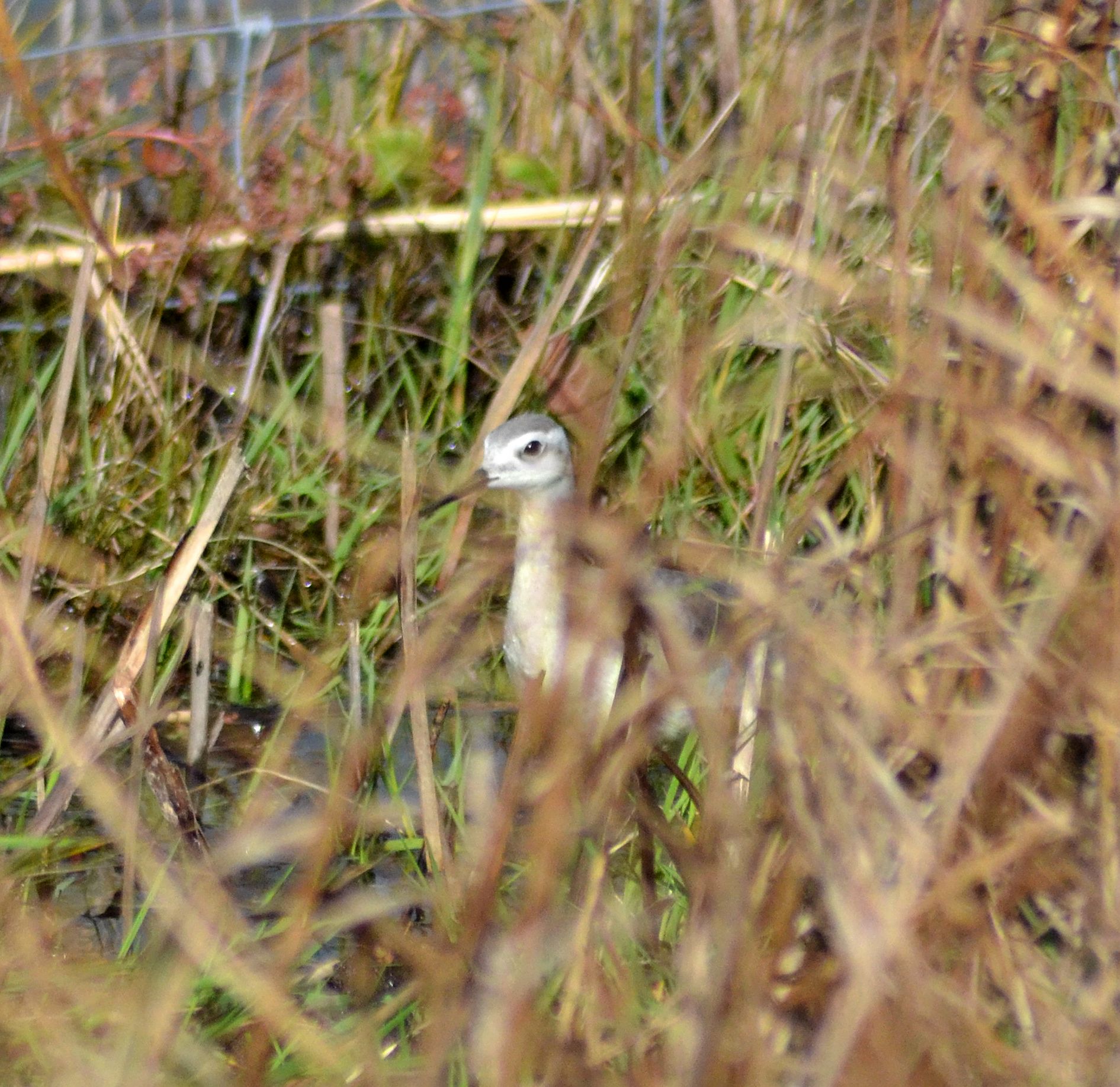
The first priority of seeing the bird had thus been attained and it now remained to try to get some pictures. Being told by some people around me that the WP favoured this spot and would keep coming back, I elected to stay there and wait rather than chase it up and down the lagoon. Eventually it was called approaching again, then one of my companions said it was moving through the long vegetation on our side of the fence. Cue the unusual study below.
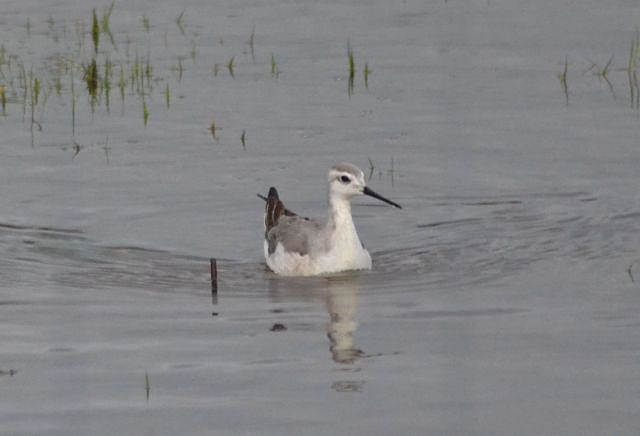
Once it had moved through the fence and onto the water the WP proceeded to put on quite a show as apparently it had been doing all morning. The behaviour of this largest and longest billed of the Phalaropes is very different from its more common Red-necked and Grey cousins. The latter two both swim hyperactively while spinning and pecking at the water’s surface for food. Wilson’s wades much more, swimming far less persistently and it is more at home on land. Today’s bird demonstrated all this to good effect as I watched it on and off for more than an hour, sometimes down to less than 10 metres. The issue at closer range was the fence that spoiled any pictures taken, but when it moved further away I managed some reasonable images (below).

While all this was going on I received news of the huge dawn twitch that had taken place just within Cambridgeshire where the Lammergeier had catered for a further county’s listers by roosting overnight at a farm beside an open road. Now it had been wished “Rise today … and all that” by more than 100 birders, whose parked cars must have pleased the farmer no end. I myself have participated in enough such events over the years but it is not a scenario I especially enjoy. I felt glad to have done these two twitches of my own in the order that I did.

At 14:00 pm the Phalarope suddenly flew high then departed south towards the Isle of Wight, so I decided to head home feeling more than pleased with the day’s outcome. The bird returned around 90 minutes later and was reported again in the same location through several more days. Two Grey Phalarope were also present in the period covered by this post, but I didn’t see them myself.

THAT Lammergeier at Cowbit near Spalding, Lincs – 8th Oct

This day’s events demonstrated again how despite my lack of birding in 2020 I will still get up and go quickly enough if there is something to see at reasonable distance and with a purpose. One of the most newsworthy and popular rarities around England this summer and autumn has been a roaming first summer Lammergeier (or Bearded Vulture) that has strayed from a re-introduced Alpine population. So when that bird turned up in an easily accessible location just 110 miles or something over two hours from home … well, I got up and went.

My adventure began mid-morning with a message from the county birding colleague who, quite by chance on 21st September while hanging out the washing in her mother’s back garden, had seen this bird pass over her village to the west of Oxford. I now learned that “her bird” was in Lincs and she was concerned that it might not be very well. Checking RBA I found the vulture had been present since early morning in a tree beside a school in the village of Moulton Chapel just to the south-east of Spalding, having roosted overnight.

The Lammergeier today at Ashtree Nursery, Cowbit (record shot)

A Radde’s Warbler had also been reported for a second day 10 miles away so the prospect of twitching both birds made the journey seem worthwhile. It felt good to be on the road again, as usual on these occasions, and as I drove a familiar route past Northampton, Wellingboro’ and Oundle I felt a distinct cleansing of the system after so much time spent at home recently.

At the Radde’s site just north of Peterborough that other bird had not been re-found since the earlier report, none of the 10 birders present had any idea where it was and there was a huge amount of habitat in which it might be. The time was now 14:30 pm and a typical warbler twitch was clearly in progress, so it made sense to prioritise the Lammergeier, it being a lifer. I had a RW once before in Norfolk in October 2016 (see here). Today’s was not seen again.

After moving on the short distance northward, the issue was where exactly to go. The vulture had flown west later in the morning and the most recent report cited: “in field just E of the A16 from Queen’s Bank”. So often directions put out by birders are in this kind of rather localised shorthand that only people living nearby are likely to understand. What was Queen’s Bank? A road, a flood defence, a sports centre … no as far as I was able to learn a farm. There was no post code, grid reference, access instructions or anything that might assist first time visitors to the area.

So I drove north along the A16 taking each eastward turn in search of parked cars and birders. Eventually I reached a road called Drain Bank N at the end of which a rough track ran south-eastward parallel to the trunk road. Following that I caught sight of what looked like a large raptor flying in the middle distance then from the end of the track at TF 25954 19089 there was a second sighting. But I could not be sure whether either had been of my quest, and both soon dropped below the tree line.

I now called RBA to seek clearer guidance that was indeed forthcoming. The vulture had last been reported flying towards the next village of Cowbit, that was recognised by both my SatNav and Google maps so I knew I was not too far away. Driving back along the track to a more open area I stopped the car and at once saw a raptor drifting west to east above the tree line that was so big it had to be the Lammergeier.

Lammergeiers in all plumages © rights of owner reserved

This is a jinx bird that had eluded me in a number of locations abroad. So I felt pleased my first experience of it was now self found. I set up my scope and waited but it did not re-appear. At 15:40 pm I checked RBA again and the bird had just landed in a tree in Cowbit. This time there was both a street name and post code, and I headed straight there. All doubt, as I like to feel was about to be removed.

When I arrived on site along a road Barrier Bank the parked cars and assembled birders could not be missed. The Lammergeier was indeed perched in a Willow tree at around 200 metres, behind the roofs of Ashtree Nursery PE12 6AQ (TF256181). I gasped out loud on first beholding this bird’s huge, dark, brooding presence as it turned it’s head slowly from side to side, then continued watching it for maybe 20 minutes.

Unfortunately and as so often happens, a few people just had to try to get closer and walked around to the far side of the nursery, flushing the bird. It then flew off to land in the top of the tallest tree on the horizon, to be instantly mobbed by the local corvids but the interloper seemed unconcerned by their attentions. It was still readily viewable from the road at that distance and remained there after my own departure until dusk, roosting overnight.

The movements around England of this extraordinary visitor have been well documented. But to recap it was first seen over a West Midlands garden on 26th June, then settled in the Peak District of Derbyshire, initially in the north-east of the National Park to the west of Sheffield, and later in the north-west near Glossop above Manchester. There were fears for the young bird’s safety in this adopted home, being prime grouse shooting country in which illegal raptor persecution is prevalent. But the level of publicity surrounding the star visitor by all accounts contributed to dissuading gamekeepers from blasting a carrion feeding vulture from the skies.

The same bird in the Peak District in July © and courtesy of Ewan Urquhart

Anxiety nonetheless grew when reports ceased in early September, but it was viewed again on 20th heading south over Leics, and a day later came the Oxon sighting. It was then expected to return to the European mainland but instead diverted to Norfolk around which it was seen a number of times towards month’s end. Current concerns over the bird’s health arise from the possible unsuitability of the flat expanses of agricultural land it now chooses to remain in, where there may not be enough carrion for it to feed on.

The British Ornithologist’s Union Records Committee (BOURC) does not recognise the bird, deeming it as coming from a population that is not in their interpretation self sustaining. But this is a matter of contention amongst many of the British birders who have taken the opportunity to connect with what is only the second Lammergeier to occur nationally.

I myself felt reluctant to travel the required distance earlier in the year, given this vulture’s cited lack of provenance, rather ragged appearance until more recently, and the wildness of its frequented locations. But it was one of only four regularly occurring species in south-west Europe I still needed for my life list. So I am making that addition now until such time as I might encounter a fully kosher item abroad, and what a magnificent sight it was. This is also my 360th British bird, none of which were recorded in Scotland or the Scillies.

Footnotes:

  1. By lunch time on 9th, after much searching of online mapping resources, I found that Queen’s Bank and the farm of the same name are actually to the south of both Moulton Chapel and Cowbit, there is no direct access from the A16, and that finding it must require a familiarity with local minor roads. So given the vagueness of the directions that actually went out I feel even more satisfied to have self found my first ever Lammergeier in a different location, ahead of all doubt eventually being removed.
  2. On 13th October the results were published of genetic research into this bird’s origins (see here). This shows it is indeed a first summer female that hatched in a wild nest in a re-introduced population in the French Alps. The hugely popular bird departed these shores near Beachy Head in Sussex at 14:00 pm on Thursday 15th.

Short-toed Lark at Shackleford, Surrey – 19th Sep

This is the kind of British list addition for which I scan the bird information services several times each day in the hope of something being reachable within my preferred distance range. I have observed (Greater) Short-toed Lark often enough on my past travels around southern Europe, but nationally they mostly turn up on passage in those far flung offshore outposts of the British Isles that I do not cover. So when news broke on RBA early today of one on farmland just 70 miles from home it was too good an opportunity to miss.

Distant (Greater) Short-toed Lark today

Such a record doesn’t occur too often after all and so offered just the sort of shorter-range twitchette that could boost a sense of wildlife motivation that had run a little dry towards the end of the preceding week. I duly arrived late morning in the Surrey village of Shackleford, between Farnham and Godalming. The said bird had been found in a ploughed field to its north-east (SU 93960 46691), and upon enquiring of a horse rider if she had seen any birders the lady replied a couple of dozen and told me where.

That suggested my quest must still be present and I would most likely convert it. Then after setting out on the mile or so walk along public rights of way, one of the first returning birders announced: “Still there and showing well.” On reaching the exact spot it took me some time to get onto this Short-toed Lark from other birder’s directions. But once identified it really stood out from the Skylarks, Meadow Pipits and Pied Wagtail it was associating with by its paleness and attractive patterning. It was noticeably smaller (actually 2cm in length) than the bulkier Skylarks, and just a little bigger than the buffer-toned Pipits.

(Greater) Short-toed Lark illustration

Thereafter having got my eye in and become more relaxed, as so often I found myself relocating the bird time and again without difficulty. It moved constantly around the dry, bare earth expanse before us as it foraged throughout my stay of around an hour on site. So I knew it would be both difficult to attain and frustrating to attempt digiscoped images. Blurry, distant record shots were all I risked with my equipment today, but these (below) show how this bird was experienced. For quality images published on BirdGuides see here and here.

This small, pale lark breeds across southern Europe, north-west Africa then westward through Turkey and southern Russia to Mongolia. There are eight recognised sub-species across that range. These are fairly common birds of dry open country and arable land where they feed on seeds and insects and nest on the ground. All but some southern populations are migratory, wintering in sub-Saharan Africa and India, but GSTL is a regular annual vagrant to north and west Europe in spring and autumn.

Another record shot of today’s bird

Eventually most of today’s assembly moved on, leaving just myself and a Surrey birder I have met on other twitches, then when the bird suddenly flew we too left. Rather than greeting people walking out from the village with: “you should have been here five minutes ago” we preferred: “You’ll have to re-find it but it’ll be out there somewhere”. And the STL indeed continued to be reported on RBA throughout the afternoon and early evening.

I suppose this all reflects what might be found if mixed passerine flocks on farmland are searched diligently enough. But I as always prefer to let others do the hard work and am grateful for a latest “within range” opportunity to merge an item from my European and West-Pal lists with my British one as well. They continue to arise if I am patient enough, and on this occasion as always gave that special sense of purpose to a day that hitting the road to see a bird creates. And the warm glow of a successful twitch, a feeling I have enjoyed too rarely so far this year, is still with me as I click the publish button now.

Footnote: As an added extra for the tripette, on my walk back to the car this very worn female Brown Hairstreak (above) landed in a Hawthorn hedge right beside me at the top of Chalk Lane in Shackleford where I had parked (SU 93559 45738). It was quite a surprise.

My first dealings with Amorphophallus Aroids, and some musings on the genus (especially A titanum) – 18th Sep

A late event in the King’s Copse Park Botanical Gardens has been long anticipated in the season now drawing to its close. Back in February I acquired what I thought were four Amorphophallus bulbifer tubers from different sources. Of those one turned out to be something else, another rotted and a third has produced only foliage in it’s first season. Now this one (pictured below) has belatedly lived up to its name.

Amo bulbifer (above and below)

The successes were both sourced from Himalayan Gardens of Forfar. A bulbifer is native to north-east India and the Himalayan region. It is described as amongst the hardiest of its genus, and also as being one of the easiest to grow. The bloom is said to reach around 40cm (16 inches) in height, and is followed by foliage up to a metre tall. It has been an ambition to cultivate this Aroid and bring one to bloom for some time and I’m pleased to have done so now. The flies it attracted (pictured below) seemed quite happy about that too, if a little confused about where the smell was coming from.
The mystery tuber referred to above, that came from a large Oxon garden centre, eventually revealed itself as Amo nepalensis (pictured below), a scarcer form in cultivation. This one is endemic to the eastern Himalayan region where it occurs at high altitude in India, Nepal, Bhutan and Bangladesh. Quite by chance given its accidental acquisition it became my Aroid of the year for 2020 in July … what an absolute stunner!

Amo nepalensis at King’s Copse Park BG (formerly known as Garsington’s shanty town)

Unfortunately when I un-potted the tuber later in the season it had partially rotted, having borne a fork scar on purchase but I took a chance with it anyway. I have read that Aroid tubers imported from Indian wholesalers can be of “mixed and unpredictable quality”, mainly due to bruising in transit. My experience so far of garden centre-sourced Amo and other Aroid tubers reflects this.

Amorphophallus (from the ancient Greek Amorphos “without form, misshapen”) is a genus of more than 230 tuberous Aroids, most of which are native to the tropical and sub-tropical zone of Asia. In these regions the plants are typically found in lowland forest margins and disturbed ground in clearings, but also in savannah grasslands. Several species occur in Africa, and a few more in Australia and some Polynesian islands, but “Amos” as I like to call them are not found in the Americas. Most species are endemic and many remain poorly understood and rarely cultivated despite their spectacular blooms.

Given the fleeting successes described above I looked into what else may be sourced from British suppliers. Amo konjak appears to be fairly popular amongst fellow Aroid freaks. Native to the south-east Asian and Far East region, this too is said to be one of the easier Amos to cultivate in British conditions and fully hardy. There are a number of videos on YouTube and I suspect the enthusiasts concerned must have grown their specimens from seed for several years for the sake of the brief flowering event, which does not especially appeal to me. The featured plants, also known as “Devil’s Tongue”, somehow looked less attractive than in these better pictures (below) I have seen.

Amo konjac (all images)

From sufficiently large tubers the tall dark-maroon inflorescence rises usually in spring, having a similarly toned erect spadix and strong foetid odour. The foliage emerges in early summer and grows rapidly. The stalk is mottled with pale pink and grey or olive-green and brownish spots, and is divided at the top to form a classic Amo structure resembling a canopy from which the leaves hang.

I acquired a growing plant on 19th August 2020 from Tropical Britain, and it was quite impressive to receive such a thing expertly packed and undamaged by mail order. According to the supplier’s information this should be watered and fed well until autumn then kept dry until November. When the foliage withers it is best to lift the tuber to avoid winter rot.

I am very pleased to have this plant that sold out within two days of my noticing stock had been released. Now months of gaining experience in cultivating the fascinating Aroids featured above lie ahead. These are long term projects, not instant gardening and that is what motivates me.

African and more SE Asian Amorphophalli 

These seven Amos (below) that are native to the African continent have especially caught my eye during this research. None of them appear to be available for private purchase in Europe at the present time, even if they might be cultivated here, but are they spectacular or what?

Amos (from top and left to right) abyssinicus, baumannii, consimilis, elliotii, johnsonii, dracontioides and aphyllus

Since I can’t get enough of all this here (below) are a few more from around the south-east Asian region. From left to right these are Amos dunnii (China, North Vietnam and Thailand), henryii (Taiwan) and prainii (Laos, Malaysia and Indonesia). If it was possible to acquire any of them for private cultivation I would leap at the chance.

The tubers of as many as 13 Amo species are said to be edible if prepared correctly and some are raised as cash crops within their home range. The aforementioned A konjac has long been used in China, Japan and south-east Asia as a food source and also as a traditional medicine. Low calorie, high fibre flour extracted from the corm is widely used to make noodles, tofu and snacks. Konjac noodles are known for an ability to suppress appetite since they cause the stomach to swell to create the feeling of being full.

A paeoniifolius or Elephant Foot Yam (pictured above) has been harvested in tropical Asia for centuries. Usually the tuber is cooked and eaten as a vegetable, and is often smashed with salt and eaten with rice. It is used widely in curries and also to make chutneys and other sweet dishes, and can be fried into chips. The young unopened leaves and young leaf stalks are also edible when cooked and are frequently served with fish.

Elephant Foot Yam under cultivation in India

In Indonesia these Yam tubers are the third most important carbohydrate source after rice and maize. They are also consumed widely in India and Sri Lanka, though elsewhere are regarded as a famine crop to be used when more popular crops such as rice are in short supply. 

Amorphophallus titanum

Last but by no means least herein is the world-famous phenomenon that is Amo titanum. Native to the Sumatran rain forest of Indonesia, this true giant amongst Amos is cited as boasting the plant kingdom’s bulkiest un-branched inflorescence, ranging from one to more than three metres in height and up to three metres in circumference. It has been in western cultivation since at least 1889 when one flowered at the UK’s Royal Botanic Gardens, Kew. Since then just over 570 more have been brought to bloom in cultivation around the world.
Blooming is infrequent and unpredictable and the foul-smelling inflorescence lasts for up to just 48 hours. It rises from a spherical tuber that is reputed to be the plant kingdom’s largest, weighing 70 kg or more. The spathe is the shape of an upturned bell with ribbed sides and a frilled edge, green speckled with cream on the outside and rich crimson on the inside.

Amo titanum at the US Botanical Gardens, Washington DC

The flowers are carried on the lower end of the greyish-yellow spadix. At the base, within the protective chamber formed by the spathe, is a band of cream male flowers above a ring of the larger pink female ones. When these are ready for pollination the spadix heats up and emits a stench that has given rise to the name ‘corpse flower’. The seed stalk (pictured below), that can reach up to two metres tall and holds large red berries, is equally impressive.

After the inflorescence dies back a single leaf emerges in its place, reaching the size of a small tree up to 7 metres tall and across. The leaf consists of a sturdy glossy green stalk mottled with cream, which divides into three at its apex and bears numerous leaflets. Each year, the leaf withers before a new one develops, using the tuber’s energy stores. When the plant is ready to flower again, the tuber becomes dormant for up to four months before another inflorescence emerges, growing upwards at a rate of some 10 cm per day.

Fruting Amo titanum at RBG Kew

This giant Aroid has proved very difficult to cultivate historically and there are only limited places in the world that do so. That is because it is prone to rotting, does not reliably increase in size and fails to produce seeds or offsets as easily as other Amo species. The plants rarely set seed because the female flowers open first and may no longer be receptive by the time the male florets are producing pollen. Even in the wild (pictured below) it is difficult because there must be an another similarly timed pollen producing inflorescence nearby. In addition, flowering can occur at any time of the year so chances are stacked against pollination.

Amo titanum in the wild in Indonesia

At RBG Kew titanum is catered for under high temperature and humidity in a tropical glasshouse, and kept in the shade. Even given optimum conditions the plant takes about six years to flower from seed. The first seed to reach Europe was returned from Indonesia to Italy in 1878. One of the young plants that germinated from them was subsequently dispatched to Kew, where it flowered in 1889, exciting great public interest. It next bloomed in 1901, and in 1926 the crowds attracted were so large that police were called to control them.

Kew now has multiple specimens, one or more of which can almost always be seen in leaf in the Princess of Wales Conservatory. But such is the unpredictable nature of the plant that the RBG cannot tell whether it will be months, years or even decades before a Titan Arum will next perform. But due to their burgeoning stock, more than three times as many have flowered there in recent years than over the previous century or more.

In 1996 one bloomed for the first time in many decades. Six years later there were an unprecedented three such events in as many months, the first evidence that Kew’s horticulturists had finally cracked the secrets of cultivating the plant. So between 2005 and 2009 there were up to three more flowerings each year, with the third of 2009’s being the largest ever measuring 2.48 metres. The most recent was in July 2019.

Amo titanum at (from left) Adelaide, Edinburgh and Rhode Island BGs

That increased success is being reflected at various other botanic facilities. Prior to the present millennium there were only 52 recorded flowerings worldwide, but the most recent published figure is just over 570. In the USA Juniper Level Botanic Gardens, NC which brought its first one to bloom on site in 2018, publishes a table of all known such events to date (see here).

Their retail nursery Plant Delights Inc claims to have sold over 1100 nursery propagated plants around the world and publishes a growing guide for private gardeners (see here). But this supplier counsels not to order them “unless you are a passionate and very serious Aroid nut”. Closer to home seed is available from a Dutch supplier (see here) who claims they are easy to germinate in perlite on a window sill. It would be interesting to know how many private collectors have succeeded with the Titan Arum, but I myself will give this one a miss!

All outsourced images in this post are © rights of owner reserved

Useful links 

In Europe the largest Amo collection of more than 150 species is maintained by Rareplants.eu, that offers seed of mostly dwarf species for sale. The same source also publishes a cultivation guide (see here).

Willow Emerald Damselfly expands its range into Oxfordshire: 13 – 17th Sep

I enjoyed a little local excitement at the start of this week upon realising my top Odo aim for the year of self-finding a Willow Emerald Damselfly in my home county of Oxfordshire. For me the most difficult part of the day motivationally in retirement is mid-afternoon, when a sense of restlessness and boredom invariably strikes no matter how well I might have filled the time up until then. Sunday (13th) had become a lovely sunny autumn day and I could not face sitting it out in the garden.

Willow Emerald (fem) or Western Willow Spreadwing

With the butterfly season largely fizzling out and no notable new bird sightings locally to go after I opted for taking pictures of dragonflies, then tried to think of a venue that would not be crowded with general public. And so I decided on the Otmoor basin bridleway between Noke and Oddington where Blue-eyed (or Southern Migrant) Hawker were first discovered earlier this year (see here). This location I reasoned might offer a better chance of finding something unusual, and the spur of the moment aspect might increase the chances of Willow Emerald.

Parking in the village of Noke I duly trod the bridleway out to the old River Ray weir near Oddington where all that BE / SMH interest had played out. Regular Migrant Hawker, Ruddy and Common Darter were all plentiful but nothing of greater interest. All the while I scanned the track-side vegetation as best I could in search of the slim, metallic profile I was seeking. Then almost back at the route’s entry point (SP552131), suddenly there it was (pictured below) right in front of me.

Willow Emerald Damselfly (fem)

The above female Willow Emerald Damselfly (Lestes viridis) was behaving in exactly the same way as had been described to me by one of the colleagues who had recorded another one during August prior to my then arrival. After relocating slightly due to my presence she hung in characteristic fashion from a dried bramble stem to which she would return over and again after flying out and back at intervals. I Googled the species on my phone then checked off the diagnostics. This was indeed my afternoon’s quest, and the self-found things are always the most satisfying.

The enlargement below shows the diagnostic detail to look for in the thorax. This is the largest and longest-bodied of the Lestes Spreadwing group at 39m- 48mm. Colouration is a relatively bright metallic green on the upper-parts and brown below, and the large pterostigma (wing tags) are pale brown with a cream centre.

A unique trait of Willow Emerald is that females oviposit into thin branches that overhang water. There the eggs overwinter before larvae hatch and drop down in the spring. They emerge as adults from about mid-July, with a peak in August and September. Egg laying involves scratching a small groove in the twig or host plant, creating distinctive marks in the form of “scars”. The process makes it easy to plot the presence of this species in winter and forms the basis of survey work currently being co-ordinated by the British Dragonfly Society.

Willow Emerald Damselfly (or Western Willow Spreadwing) has enjoyed a rapid and dramatic national range expansion over recent years. Though common and widespread across western and central Europe the late summer and autumn flying species was inexplicably absent in the British Isles through the 20th century. Despite an abundance of suitable habitat it was recorded reliably just twice in 1979 and 1992. More recently another was recorded in south-east Suffolk during 2007, before things took off in 2009 with a marked and sudden boom of 400 records from that area and north-east Essex.

From that time the damselfly has gained footholds in new south-east English counties north to Lincolnshire on a yearly basis. It is said to benefit from urbanisation, favouring garden ponds and park water features. But almost any kind of standing or slow-moving water with adjacent trees and shrubs may be favoured. I myself had observed WED just once before, at Maldon in Essex in September 2014, and I recall other Oxon wildlife colleagues going further into East Anglia to add it to their own lists.

The first record for Oxfordshire occurred in Wytham Wood to the immediate west of Oxford in summer 2019, and Willow Emerald was widely tipped to colonise the county further in the present season. The second record and first picture, a male came from Orchard Lake, Radley (SU519970) on 11th August. Another male was reported on that date at RSPB Otmoor, soon to be followed by a female along the Roman Road bridleway of Brown Hairstreak butterfly repute. Then from 7th September several records of both genders have issued from the Trap Grounds, adjacent to Port Meadow beside the north Oxford canal.

Male Willow Emerald at Radley Lakes © and courtesy of Ian Lewington
Female Willow Emerald at Roman Road, Otmoor © and courtesy of Steve Burch

I myself had followed up on both those Radley and Roman Road sightings that are pictured above, but without connecting with either individual. With sunny weather forecast to persist through the week ahead I next elected to seek out more Willow Emerald locally, starting with the north Oxford site from where pictures had been published almost daily over the preceding seven days.

The Trap Grounds local wildlife area immediately south of the Frenchay Road canal bridge (OX2 6TF) comprises three acres of reed bed and seven acres of woodland, grassland, stream and ponds. The open access site is owned by Oxford City Council and managed for conservation, recreation, and education by a local volunteer group (see here). On Monday morning (14th) I found the cited main observation area in shade and it was plain that WED would most likely be viewable later in the day when it would only be possible to capture them pictorially into the sun, which was true of most of the published images from here. So I left this wonderfully well managed piece of habitat to its patch workers and volunteers and attempted further sightings of my own elsewhere.

Male Willow Emerald Damselflies at the Trap Grounds, Oxford

Over the next two and a half days I surveyed some other sites to the south of Oxford that I thought might be suitable, but without recording any more of the newest addition to Oxon’s Odo-fauna. Then on Thursday (17th) I returned to the Trap Grounds at what Adam had confirmed was the optimum time from midday into early afternoon. And with the benefit of guidance from and the practiced eye of patch worker Nicola, and also in company with Adam himself, I belatedly gained my own into the light studies of the resident males (pictured above). I now suspect that my insect agenda for 2020 may be closed.

For recent dragonfly and damselfly sightings in Oxfordshire visit our county recorder’s excellent Oxon Dragonflies website.

Long-tailed Blue butterflies in Brighton, Sussex – 8th Sep

On being offered an opportunity to experience one of the newer migrant butterflies that reach Sussex in most seasons I quickly accepted the invitation. Long-tailed Blue has been recorded at a site beside Brighton’s horse racing track since 2015. Ewan learned from a local friend that a transect walker had come across them again on Sunday 6th and asked me to accompany him on what would be a welcome day out.

Long-tailed Blue (male) in Brighton today

Long-tailed Blue is a common and widespread butterfly across temperate zones worldwide, but in Europe resides permanently only in the Mediterranean region. It has traditionally been a very rare vagrant to the British Isles, but there has been an upward trend since the late 20th century. A mere 39 sightings were recorded prior to 1939, and another 85 up to 1988. A notable recent irruption came in 2013 when the butterfly was recorded in nine southern English counties and breeding was confirmed for the first time. A further significant influx occurred two years later when the migrants penetrated further inland as far as Surrey.

Since then LTB has been a regular continental migrant to coastal Sussex. More than 50 adults and hundreds of eggs were recorded across southern England in the summer of 2019, resulting in the largest ever national emergence that autumn. But this multi-brooded species cannot survive the English winter in any of its life stages. The cluster in Brighton are late brood butterflies from eggs laid by migrants reaching these shores in summer.

Long-tailed Blue (male)

Arriving on site in mid-morning, we walked from the public car park at the racing grandstand back round to the location my colleague had been given. Two dog walkers, guessing our intent then directed us to the exact spot in a meadow beside a radio mast. There we found two other observers squatting and pointing their cameras beside some Sweet Peas that the butterflies are said to favour here. So it was an immediate connect.

More people joined us straight away and things inevitably became a bit of a scrum. This is the butterflying scenario I most dislike, with several people all surrounding one settled insect and jostling for camera space. Then when more specimens began to fly the gathering chased them around, calling every movement. But this was no more than I expected since the sighting had been all over social media in the previous 24 hours, as well as on RBA. So it was necessary in order to add this butterfly to my British list.

The inevitable scrum of a butterfly twitch

That first Long-tailed Blue was a rather worn individual and was also the most prone to settling throughout our two hours at the site. Others were seen in flight over the meadow and adjacent allotments that would perch and offer picture opportunities occasionally. These are rapid, jerky flyers more reminiscent in jizz of a Hairstreak than other Blues. There was no consensus as to numbers but it was agreed that all the butterflies active here were males.

The butterfly owes its name to wispy ‘tails’ on the trailing edge of each hind-wing. Since these wave in the wind above eye spots where each adjoin the wing, the twin effect is to confuse birds into thinking this is the head of their prey. That may serve to reduce fatal attacks but also results in frequent damage to the above cited features. Males are a striking violet-blue in colouration, while females are a variable mix of duller blue and brown. The underside of both genders is a sandy brown colour crossed by numerous white, wavy lines.

All the usual characters were present amongst today’s assembly: the local guide, the over eager and the non-stop talkers. For myself I will welcome a return to butterflying either alone or in select company as I prefer. But by any measure this was a worthwhile added item on my national butterfly agenda for what has been a rather remarkable 2020.