Oslo re-visited for Great Grey and northern Hawk Owls + Pine Grosbeak again – 5 & 6th Feb

Since mid-December the Norwegian capital city of Oslo has held a second outstanding opportunity for pan-European and western palearctic bird listers. In that time local guide Simon Rix (see here) has been tracking up to five Great Grey Owls just outside the city and more recently two northern Hawk Owl as well. Ewan has followed the situation with interest since the first of those is a very much desired lifer for him, so when he told me he was going this week I opted to join him.

The Great Grey Owls are wintering in the forested Maridalen area to the immediate north-west of greater Oslo. They favour partially felled clearings in which their small furry mammal prey is most numerous. It is a return to such a mode of forestry in recent years, instead of the more industrial scale logging of times past, that has led to a recovery of the GGO population in southern Scandinavia; along with greater provision of nesting platforms. The food source in this habitat reaches its peak around 12 months after felling, then the Owls just arrive and find it – no-one really understands quite how.

DSC_0312

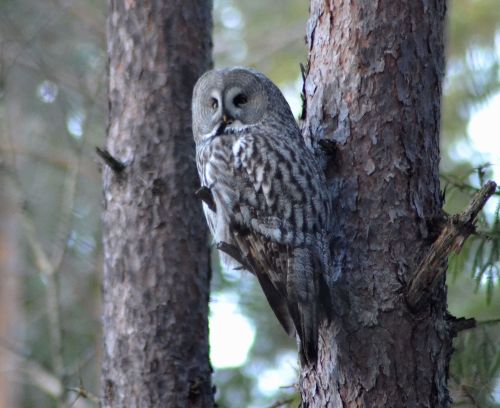
Great Grey Owl (adult female)

Great Grey Owl’s core Westpal range is northern Fennoscandia eastward through Siberia, in which they are year round residents. But two sub-species, attributed with being the world’s largest in length though of lighter weight than Eurasian Eagle Owl, also occur throughout the taiga zone of the northern hemisphere. Actual size can be deceptive, since GG’s feather mass, large head and long tail belie a body that is lighter than other large Owls. Breeding habitat, in which they mostly re-use old raptor nests or broken-topped trees, is dense coniferous forest with some deciduous tree content mixed in.

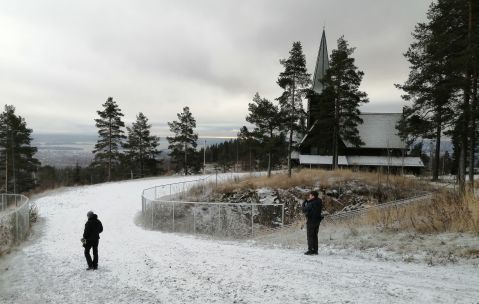
As in December, our guide met us from the 9:30 am Ryanair arrival from London Stansted. Like Short-eared and Barn Owls at home the GGs are a very popular draw with photographers, and some Maridalen locations have been staked out daily since 15th December when the first Owl was discovered here. Simon has since found more locations to which he takes his clients and we now searched habitat such as this (below) in a number of those.

This slideshow requires JavaScript.

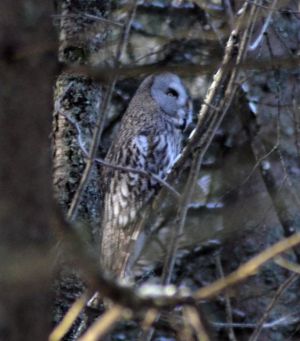
Late morning is potentially the least productive time of day for encountering hunting birds, however and so it now proved. The surroundings were nonetheless stimulating in the cold, clear winter light with a moderate snow cover. Eventually we came across some toggers who had found a Great Grey Owl that was partially concealed within fairly deep cover due to being harassed by Ravens. This (below) was my best result from an initial picture session.

DSC_0015_01

Step one: see the bird, get any kind of picture

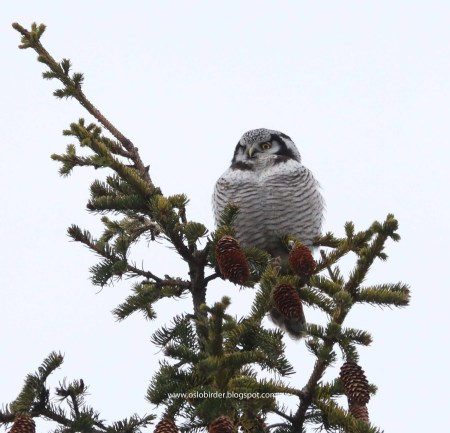
We then decided it would be best to come back later in the day when GGs should be more active again, and so went to seek the second trip target. In recent weeks a pair of northern Hawk Owl have taken up residence in an agricultural area about 30 minutes drive from Maridalen. Upon our arrival there one of these birds was atop a Spruce tree at some distance. On our reaching that spot the Owl remained steadfastly on its perch as we attempted to capture it pictorially from below. Now both my own sought lifers for this tripette had been secured, the only regularly occurring European Owl I still require is Tengmalm’s, and my wish-list of northern birds otherwise continues to shrink.

Northern Hawk Owl occupies a similar geographic range to Great Grey, with which it shares and breeds in taiga forest habitat, but is active only during daylight. This generally low density species is non-migratory though there can be southward irruptions in some years. It actually is quite hawk like in appearance and jizz, flying in a similar way to Sparrowhawk for instance but with a noticeably larger head. Today’s bird has been known to offer close, lower level views at this site, but we saw it only in the tree tops.

hawk owl IMG_9939 copy

Today’s northern Hawk Owl © and courtesy of Simon Rix

Later in the afternoon we returned to Maridalen to resume our quest for Great Grey Owl. Once more they were just not playing ball in the places where Simon would have preferred us to see them. Then he received a call to say one had been located at the rear of a clearing back by the road. On our reaching that spot various of the toggers were there ahead of us but the rules of engagement were very orderly.

Out in the middle distance was the stately, brooding shape of the large northern Owl that had brought me back to Oslo. For the next hour or so the bird just sat on its perch in classic pose, surveying the area before it from that magnificent radar dish of a face, swivelling it’s head from side to side or looking straight in front but not actually taking flight to catch prey. This one’s large size suggested it was an adult female, since males can be somewhat smaller.

oslo.2005 maridalen

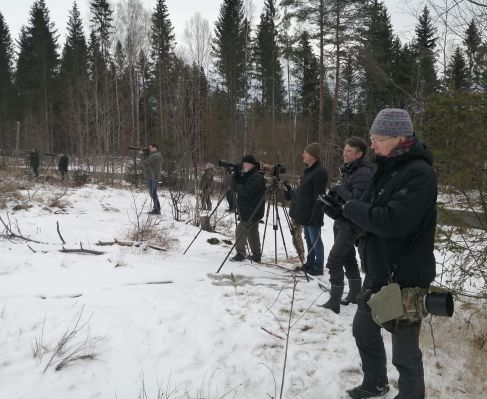
We join local birders and photographers to watch the top row GGO

More cars and their occupants arrived, everybody knew one another and the gathering was all quite good natured. It had been a most successful first day. We stayed overnight at the very reasonably priced Anker Hotel in central Oslo where I slept soundly after a long day. Breakfast was once again superb, as all Norwegian hotels pride themselves upon. Having observed and taken pictures of a kind of both trip targets, the objective for day two would be to secure a close encounter with Great Grey Owl and gain more acceptable studies … and that was just how things turned out.

In the morning we returned to Maridalen at 8:30am where two local birders who were already on site had relocated the large female. She was now actively hunting in roughly the same area (pictured below) where she was perched the previous afternoon. When she landed atop a sawn off Silver Birch, we thus encountered this desired pose for the the first time. Eventually she flew off deeper into the forest and Simon had a good idea to which spot she was heading. We followed him there and so the end game came to be enjoyed.

The pictures in this post so far are not intended for judging as “photographs”, but included to illustrate how my experience here unfolded over time. Now the sought after close encounter and culmination of why we had travelled here arrived and what an event it was. There before our most appreciative eyes sat an impressive Owl indeed, more normally viewable in the taiga wastes many hundreds of miles further north. Ewan was purring, describing the bird before us as one of his career greatest must-sees that he didn’t expect ever to observe quite like this. Me? … Well I just ticked it … or such perhaps is my reputation back home in Oxfordshire.

These half-decent sequences were captured over the ensuing 90 minutes of highest quality communion, indeed delight for both of us. There she sat turning her large and lovely head from side to side, alternately looking away from, then towards us always unconcerned by our raising camera lenses as soon as she did so. Each time she would cast her attention in the opposite direction again, almost disdainfully as if to say: “More toggers, is there ever a day here without them?”

It was noticeable how our quest had a kind of squint in the left hand eye. But the striking, bright yellow colouration of both eyes is discernible in some of the pictures. Simon described how GGOs can be even more confiding than this and that he has actually stood right beneath such a tree containing one. But we elected to keep a safe distance, and so thankfully did all the other local birders and camera toters who came and went. It is difficult to keep a secret where GGO is concerned in Oslo.

Like many Owls this one could rotate her neck almost through 360 degrees but without of course going full circle. The above left picture shows this. Sometimes she would look upwards if a raptor caught her eye or she heard a Raven that are prone to harassing Owls. All of this was interspersed with occasional bouts of preening and there she remained in all her grandeur conveying an aura of primeval isolation and mystique, despite the presence of her adoring human audience.

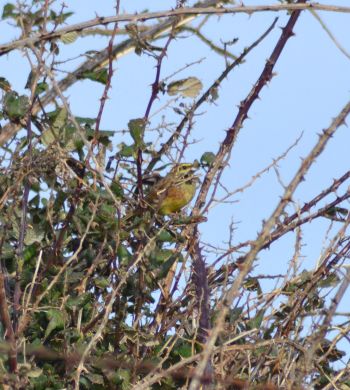
When this bird eventually departed we went for the Hawk Owl again, but the connect was much the same as a day earlier with tree top views only. Then on our way back to the airport we stopped at the last location in urban Oslo where Pine Grosbeak are still being reported regularly. The streets of this suburb are lined with berry bearing Whitebeam trees that have been catering for the sustenance of a flock of 15 “Grozzers” for the past few weeks.

How good it was to re-acquaint ourselves with these superlative Arctic finches and thus complete a tripette triple that are so rarely seen this far south and certainly not in a single day. The party of four we recorded just in front of an apartment block contained one adult male that allowed me to add to my picture portfolio from last autumn when the red-toned stunners had been quite difficult to capture well. Also very pleasing was a young male moulting into adult plumage (below, left and right) that had not been available on that early November visit.

I look upon having negotiated this current dark season, and especially January without either seasonal adjustment issues or the remedy of a mid-winter break, as a real positive. Since my circumstances allow it, the contribution to well being that new and different wildlife to find and see makes, either in company or by my own devices remains as potent as ever. There has not been too much scope for that in recent months but fortunately, what might have been a dour February has now been thus enriched.

In a related sense, not much for me is more motivating than jumping on a plane and going somewhere. I have been surprised by just how few British birders followed myself and Ewan’s lead in visiting Oslo to experience Pine Grosbeak (see here) this winter. Now as exceptional encounters with the northern Owls of this post are available there. The walk-on air fare from London Stansted to Oslo can be as low as £10 each way. All I can say to anyone with an interest who can is get out of the door and G GO (see here).

A double dip day produces Eastern Yellow Wagtail at Sedgeford, Norfolk – 10th Jan

After I left it a little too late to connect with East Anglia’s previous long staying Eastern Yellow Wagtail last November, I expected it would not be too long before I recorded this new species. In the event the opportunity came quite soon when another individual arrived on farmland near Snettisham just before Christmas, but again I waited until there could be two or more targets for any day trip I might make.

_MG_5471

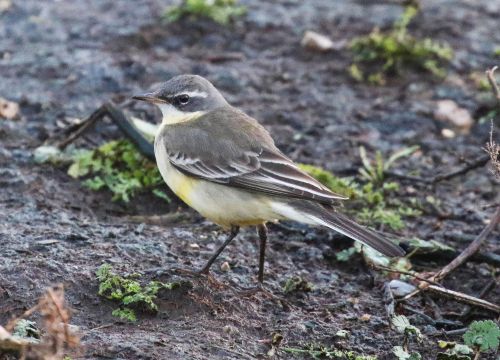
Blue-headed Eastern Yellow Wagtail © and courtesy of Ewan Urquhart

The bird I most want to see in Norfolk this winter is a Lesser White-Fronted Goose that was first reported on 21st November and has ranged widely whilst remaining elusive ever since. Only twice has that huge potential lifer been observed for longer in one place than it would take to drive there. The first time it was flushed before dusk but two days ago on 9th January it was still present at nightfall at a location to the west of King’s Lynn (see here).

Things at last seemed right to make a dawn start at the Goose site on my way to trying for the EYW. And so it was that at just after 8:00 am I arrived at what looked to be a rather muddy and unpromising field near the village of Walpole St Andrew. Just five birders were staking things out but there were no Geese on the ground. Over the next 30 minutes several skeins of Pink-footed Geese flew in, circled around and moved on. The consensus amongst the other birders was that with overnight rain the preferred grazing site of a day earlier was now too wet for the possible LWFG carrier flocks’ liking.

After those birders all gave up and left I too moved on to rendezvous with Ewan at the EYW site. The individual is of a sub-species within the new taxon (nominate form tschutchenshis) that is variously referred to as Blue-headed or Alaskan Eastern Yellow Wagtail. The preceding sentence possibly indicates just how complex the entire Yellow Wagtail taxon has now become (see here). Today’s bird, a first year male has remained faithful to some manure piles along a farm track at TF714380.

Ewan had been there since first light (see here) and already observed the bird very well. But it had not been seen since for over an hour and between 20 and 30 birders were now waiting patiently for it’s re-appearance. After another 30 minutes or so our quest flew in again to a muddy field across the track from the manure piles (pictured above) and all of us were soon satisfied. The EYW then relocated to it’s more usual spot and many more pictures were taken, but in the poor light my own efforts (below) might best be termed record shots. This was certainly a rather striking looking bird. My thanks are due to Ewan for kindly allowing me to use his pictures in this post.

After a late breakfast at a beach café in nearby Heacham we went our separate ways. The LWF Goose not having been relocated, I tried for and dipped eight Smew at the developing RSPB / Hanson Ouse Fen NR (see here) near St Ives, while Ewan had priorities of his own. When complete, the very impressive Ouse Fen will be the largest reed bed anywhere in the UK, if presently very difficult to locate Smew in. Exploring the place today I appreciated the massive potential it has, and once again what incredible habitat creation work the RSPB carries out with projects such as this and Wallasea Island. But as ever I baulk at the mass market populism that is deemed necessary to sustain it all.

Mild winters such as we are presently experiencing mean Smew are less likely to occupy the far western reaches of their winter range that the British Isles represent. This has so far been a poor season for the iconic Sawbill that I devoted some time and effort to a year ago, and unless there is a cold snap that looks set to continue. For an interesting assessment of the current national status of wintering Smew see here. Meanwhile a latest national photographic competition over one bird continues to emanate from Whipsnade Zoo, and my own previous post is one of the quickest ever to pass 100 referrals.

This is just a brief treatment of today’s EYW, since many birders have seen and blogged it already and I prefer if possible to add something  to what has been published already on the wildlife presented in this journal. But Eastern Yellow Wagtail is my second bird lists addition of the new year, following last week’s announcement that Hudsonian Whimbrel has been reinstated as a full species by the International Ornithological Congress (IOC) and hence the BOURC (see here). So my British list now stands at 354 and my WestPal list 496.

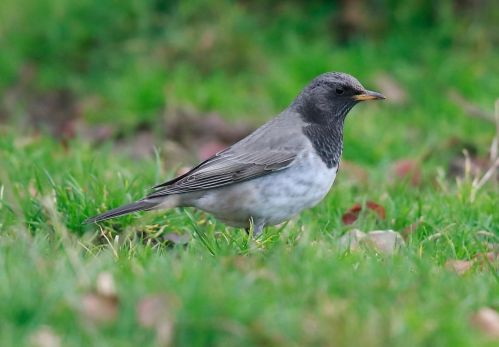
Black-throated Thrush at Whipsnade Zoo, Beds – 14th Dec

It took a little effort to warm to the idea of twitching a very attractive lifer in a public zoo, and beside a children’s play area just before Christmas, but after a couple of hours’ deliberation I opted to go. The location was only 36 miles from home, and the entry cost would most likely be less than that of reaching any alternative future occurrence.

A Black-throated Thrush had first been reported here on RBA three days earlier. Though not re-found on Thursday (12th) on which I kept an eye open, it had “shown well” on and off a day later when I wasn’t paying attention. This was a first record for Bedfordshire, yet another instance of an autumn or winter scarcity from a nearby county that seemingly in Oxon fears to tread. So on rising today the more usual Saturday morning option of checking out Farmoor Reservoir slipped down my to do list.

thumbnail (1)

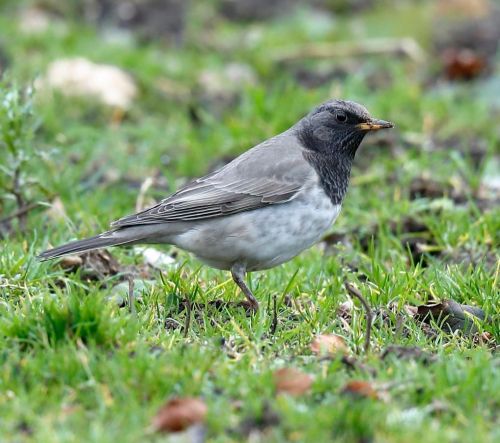
The Whipsnade Black-throated Thrush © and courtesy of Mark Rayment

The first RBA pictures (see here) were persuasive in reaching that decision. This one (above) taken on 13th is rather better, and I believe has since won BirdGuides photo of the week. The taiga breeding Black-throated Thrush inhabits coniferous forests across European Russia eastward through central Siberia and towards north-western Mongolia. Further non-breeding populations occur from the Middle East through central Asia to western China. They may winter between and around those core ranges and when vagrants stray to western Europe it is usually in carrier flocks of Redwing and Fieldfare.

BTT is one of a closely related group of Asian thrushes including Naumann’s, Red-throated and Dusky (see here) Thrushes in which inter-breeding commonly occurs. This can complicate identification of individuals and especially first winter birds that might turn up further afield. But no such issues were likely with today’s quest, an adult male and that made connecting with it an even more exceptional opportunity. All ways up this was a must see.

I contacted Ewan who as it happened was just setting off himself and so he collected me from home. We arrived at Whipsnade ZSL Park at 9:30am in heavy rain and most of the vehicles in the car park looked like they contained birders. There had been just several observers on site a day earlier but there was now clearly going to be quite a crowd. A lot of those present headed inside at the opening time of 10am but electing to avoid a drenching ourselves we chose to wait for news to go out. That took just 20 minutes by which time the rain was already easing.

It transpired that first sighting had come from Friday’s location, upon our arrival at which the conditions had turned sunny and cold. Before too long a mass movement occurred to another place but when we got there it was clear nobody knew where the bird might actually be. So we retraced our steps then a friend of Ewan’s, who has very kindly allowed me to use the pictures in this post, arrived and they decided to stake out that spot where a Rowan tree would offer further good opportunities. But then most people present rushed off again.

thumbnail (2)

Something like how I saw the bird today © and courtesy of Adrian Webb

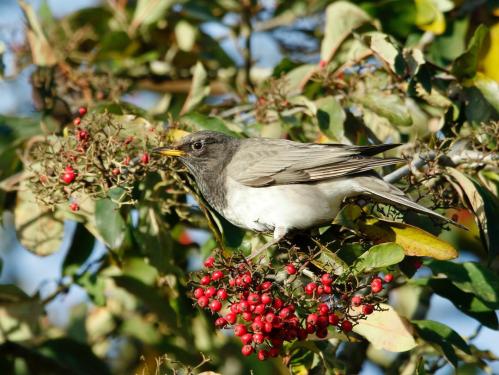
I eventually decided to follow and this time it was plain the crowd was on their target. Before too long I was directed to a “very pale shape” in some more berry bearing trees in the middle distance, and that indeed was the Black-throated Thrush. Having thus gained acceptable views I called Ewan and when he arrived the bird was showing better still if some way off. I was surprised by just how well it stood out amongst the Redwings feeding on the berries there.

An adult male such as today’s bird is unmistakable, with a grey back, white belly, and a pitch-black throat and chest. The contrast between that black and the relatively unmarked underparts was very noticeable at the range I observed today’s bird. And there it perched for long periods amongst the more hyperactive Redwings, serenely surveying the space before it. Occasionally it dropped down to ground level amongst some miniature railway sidings before being lost to view again.

thumbnail

Adult male Black-throated Thrush © and courtesy of Mark Rayment

In the circumstances things not unnaturally became a little fraught at times. Two things that I can do without on twitches are individuals who must not have their line of sight obstructed however accidentally, and others who wish to steward and judge their less well positioned birders’ behaviour. I myself neither intentionally block others or reproach people who might get in my way, nor see why non-birders should not be inconvenienced briefly at the crucial moments. At one point it became necessary to stand up for myself against the self-righteous puritans. All that’s ever needed is a polite request.

By early afternoon most of the birders at the railway sidings had moved on, presumably satisfied with their views. But conditions were now bitterly cold with a biting wind. So we returned to the first location where Ewan’s friend and some other photographers were still staking out its favourably lit Rowan in the hope of gaining some good shots. But the BTT had not returned there, so we repaired to the warmth of the nearest cafeteria then the tropical butterfly house, before heading on home.

This was another immensely satisfying day, producing as it did my fourth bird life list addition of early winter. November and December so far have been quite a contrast to what was a frustrating autumn and hence I keep on chipping away. Black-throated Thrush is not a lifer I could have imagined gaining before this particular one materialised so close to home, but it will do nicely thank you. After all, one never knows what the next bird might be and hence I continue to evolve and progress.

A visit to Donna Nook Grey Seal colony, Lincs for my first Pomarine Skua – 29th Nov

When Wednesday’s BirdGuides review of the week told of this bird making an extended stay within an Atlantic Grey Seal colony on the north Lincs coast it seemed like an unmissable opportunity to connect with the only British Skua I had not observed previously. Settled ones on land do not occur too often, so though 180 miles from home is further than my preferred driving distance I at once resolved to go. Like my first Little Auk in Oslo earlier this month, making the trip would be greatly preferable to trying to sea watch fly-bys somewhere.

Personal records of the three other Skua species had all come locally from Oxford’s Farmoor Reservoir: Great in October 2017 (see here), Arctic (Nov 2013) and Long-tailed (Sep 1995). But it would be very unusual for a “Pom” to turn up at such an inland location, and thus lingered a rather glaring omission from my national and life lists. Earlier this autumn another land-bound individual was found early in the day at Langstone Harbour in Sussex, but when I arrived there it had flown off not to be seen again.

pomarine skua.1901 donna nook

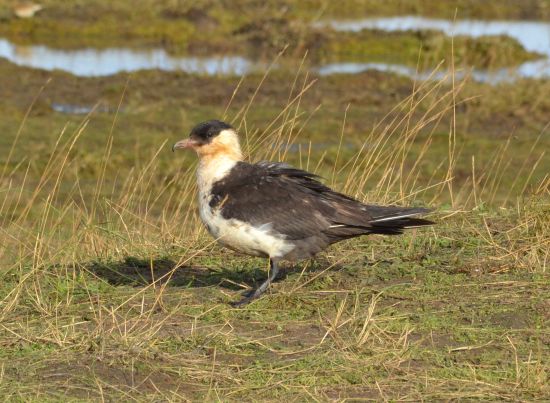
Today’s Pomarine Skua (adult)

The weather was due to change for the better on Friday and so at around 9:30am I arrived at Donna Nook NNR in cold and clear conditions. One of the car park volunteers said the bird was still present, and on enquiring of a departing birder I was pointed towards a spot where the presence of green clad optics carriers indicated where my quest must be. And there, sitting out on the salt marsh alternately dozing and preening, was my first ever Pomarine Skua – things this time were as simple as that.

Numbers of these seabirds are seen on migration around British coasts in both spring, when I understand a particular wind direction is needed to encounter them, and autumn. This one has possibly reasoned that the all day, as much as it likes buffet offered here by the plentiful placentae that litter such a large breeding seal colony is preferable to moving on. But rather worryingly it is also said to have an injured leg and so may just have been left behind.

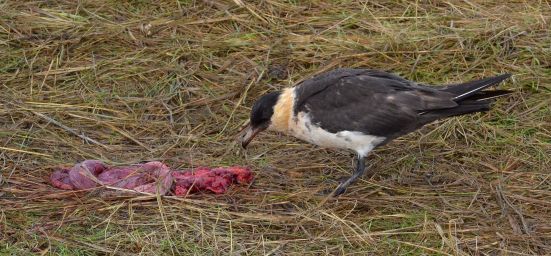
Before long the Pom took to the air then landed besides a placenta a few metres within the viewing area boundary fence, a brute of a bird. This was a picture opportunity such as all the birders present craved, and the object of our attention set about tearing at its meal with typical Skua-like relish. A lady standing next to me said if she photo-shopped out the after birth she would then have a nice picture. I have since seen the same view expressed on another Oxon blog and must confess to not seeing what the sensitivity is here.

DSC_0173

Were I a photographer these are definitely the “shots” I would want. The food source is after all why the bird was here offering such exceptional views of itself. I am also not either a doctor or biologist and so open to correction, but were we not all once followed into the world by one of these perfectly natural items that nourished and allowed us to breathe in the womb? No … there’s nothing wrong with a nice bit of placenta, as this Pom clearly agrees.

Having gained such acceptable studies of this latest life list addition, I next turned my attention to its hosts. The seals were possibly the most awe inspiring wildlife spectacle involving large animals I have enjoyed since experiencing Florida’s Alligators in January 2018. An information board today announced a recent count of 469 bulls and 1629 cows on site, while 1554 pups have been born so far in the current season.

Donna Nook NNR is one of four Atlantic Grey Seal colonies on the English east coast, the others being Blakeney and Horsey in Norfolk, and the Farne Islands. The Lincs Wildlife Trust administered site covers around 10 km of coastline and consists of dunes, slacks and inter-tidal areas. Deposition of material from the River Humber has resulted in mud flats offshore, and the advancing dunes have trapped areas of salt marsh behind them. Every November and December large numbers of seal cows come ashore to give birth, before being mated again by the waiting bulls.

This slideshow requires JavaScript.

The first pups are born in early November, with numbers peaking around the time of my visit. How rapidly these grow was all too apparent today, and after 18 days the young seals are weaned and the cows return to sea. After moulting into their first adult coat the juveniles follow and by January the beach is empty again. Lesser numbers of the smaller Common Seal also breed at Donna Nook.

The uniformly dark-toned bulls are impressive beasts indeed, up to 2.2 metres in length and weighing up to 300 kg. Here and there I observed them halfheartedly sparring or attempting to mate, but mostly they just slumbered their time away. Some bore the kind of battle scars I have grimaced at in many a wildlife documentary. There seemed to be a concentration of very large bulls out on the tide-line. Cows are pale with darker patches, growing to 1.8 metres long and weighing up to 150kg, and mostly give birth to a single pup each season.

It was of course the pups (pictured above) that stole the show. Like many of the adults they seemed to prefer lying on their backs in variously comical poses, and would roll around, smile and chuckle just like human babies. Their “cute factor” is understandably what brings large numbers of visitors to this NNR, necessitating a one-way system through lanes out from the nearest village of North Somercotes and back. Parking on site is £4 / vehicle and must be a very welcome source for funding reserve management.

Around midday I returned to my car for a sandwich and to retrieve money for the donations box. Many more general public were now arriving and I was amused by the perfectly white pumps heading in the other direction into a muddy area behind the sea wall that had been flooded just a day earlier. A few ladies were attired straight from the high street or possibly somewhere more exclusive, and two fellow multi-layered welly wearers I joked with said they had seen a man dressed in running shorts in the very chill wind.

Returning to the viewing area I sought out the Pomarine Skua again and soon relocated it. The light had improved somewhat and it was now that the lead image in this post and those immediately above were gained. Then at around 1 pm I headed for home, completing the four-hour return journey without even a loo stop or batting an eyelid. Maybe I should go beyond range more often, and this had certainly been an uplifting day out.

A mini-celebration of Snow Bunting from Walberswick, Suffolk – 20th Nov

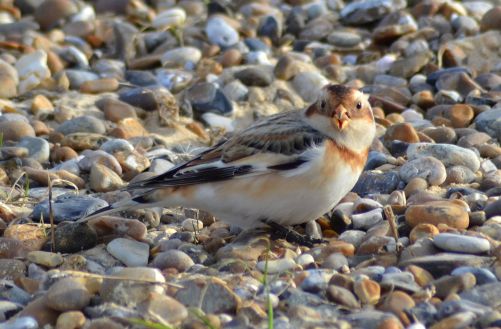
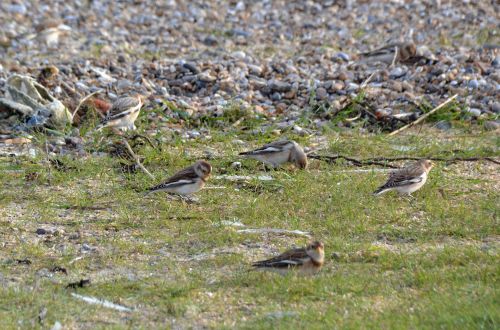
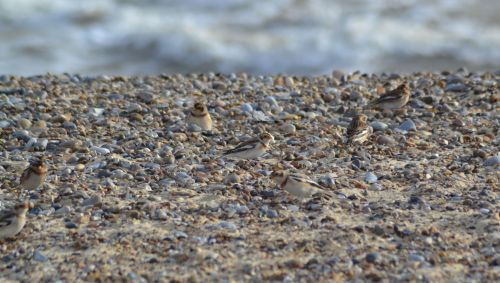
Today I gained my best ever experience and pictures of one of the regular wintering passerines that occur around the East Anglian coast. Whilst staying with friends in Suffolk for a couple of days, my birding time out at this site was to try a little late for what by now was a long staying Eastern Yellow Wagtail. That bird wasn’t seen but an attractive flock of Snow Bunting coming and going continuously during my 4½ hours on site was a pleasing diversion.

snow bunting.1907 winter male walberswick

Winter male Snow Bunting

The 20-something Buntings were particularly attracted to a patch of grass on the shingle beach (pictured below) where seed must have been put down for them by birders twitching the EYW on previous days. Some of my pictures indeed show them eating what doesn’t look like a natural food source.

snow bunting.1923 walberswick

These birds tolerated a very close approach and I was able to get within feet of them at times without causing them to scatter. I hope I have identified  the various individuals correctly as to gender and age (below), but if not am open to correction.

Last winter I had twice observed a Snow Bunting flock in very windy conditions on the north Norfolk coast at Holkham Bay (see here). Due to the closeness of today’s encounter I enjoyed it that bit more. Other past personal records were from Reculver in Kent (Nov 2014), Cley in Norfolk (Oct 2014), locally at Farmoor Reservoir  (Feb 2012), Walberswick again (Feb 1986); and twice as a teenager in the family home back garden in eastern Greater London – yes really!

snow bunting.1922 walberswick

Today’s Snow Bunting flock at Walberswick

Where the Eastern Yellow Wagtail was concerned, I agree with the day’s only post from the site that it was not seen. But others amongst the observers present kept calling it confidently from the briefest of glimpses, something that not being a proper birder myself I am always dubious about. Some trusted Oxon birding colleagues had been here before me so I knew exactly what to look for (see here), and also came armed with a printed picture. It is mostly only possible to make subjective judgements about how knowledgeable people I meet in the field are, but some of the things being said here just did not tally. And when the bird being called eventually showed itself clearly mid-afternoon it was a first winter regular Yellow Wagtail (pictured below). Neither bird was reported on the following day (21st).

I am not greatly enthused by new splits that might only be distinguishable on call or by DNA analysis of faecal samples. But these are “tickable” and so in my current low state of national birding motivation this one seemed worth a look. The Eastern Yellow Wagtail had been present at Walberswick Corporation Marshes on the Suffolk coast since 28th October, and was confirmed as such from a sound recording on 9th November.

I expect there will be more opportunities since, as familiarity with the new species grows, proper birders are likely to identify others. That will have to wait, but here and now the wintering Snow Buntings at this site had made for a worthwhile visit. I nonetheless returned home thinking it may have to be something a bit special to tempt me out again nationally this winter.

A short visit to Oslo to experience a Pine Grosbeak irruption – 6 & 7th Nov

When I read about this on BirdGuides it was something I just had to do. Late October had seen the largest south-westward movement of Pine Grosbeak since 1976. This had already eclipsed an irruption in 2012 when one bird reached Shetland, and numbers were expected to multiply further in southern Scandinavia through early winter (see here). With 60-something regularly occurring species still required for my pan-European bird list, a spring trip to Sweden is on my next-up agenda. But the iconic far-northern Finches are not on the target list for the tour I am considering, so this at once seemed my best chance of recording them.

There is some anticipation amongst British birders presently as to whether PG will arrive on these shores again in the near future. But after such a dull autumn within my range at home I felt that getting to southern Norway from London Stansted airport would be rather easier and more affordable than reaching such far flung locations as offered the British Isles’ hardcore birding interest through October. So thus it was that on Wednesday (6th) Ewan and myself stepped off a 9:30am Ryanair at Oslo’s Gardermoen Airport to meet our guide Simon Rix then go in search of PG and some other rather special regional birds.

DSC_0489

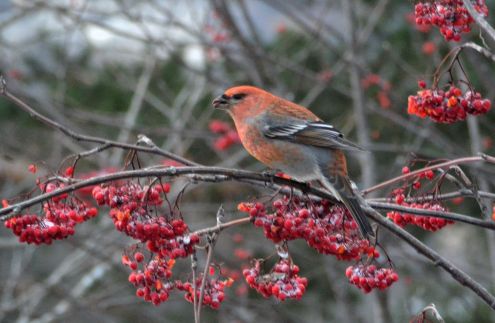
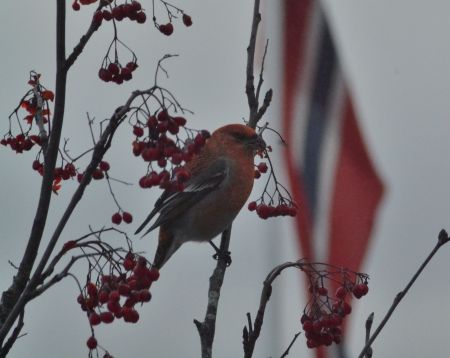
Pine Grosbeak (adult male)

Simon cited two hill-top locations on the northern edge of suburban Oslo at which he had observed groups of Pine Grosbeak in recent days. At the first, Grefsenkollen he had been interviewed at first light on national radio, such is the interest that thousands of these birds moving through Norway each day is generating. When we arrived there a number of his local birding colleagues were staking out the site, but no “Grozzers” had been seen again since 8am. So after a brief look around ourselves we moved on.

Now we went to the area around Holmenkollen ski jump, an up-market residential district that commands panoramic views over the city and Oslo Fjord. It was a cold, clear and crisp early winter’s day and we drove around checking the stands of berry bearing mountain ash or Rowan (sp) trees that grow here. These provide a ready food source for the taiga breeding avian visitors in what is an exceptional berry year, and the birds are likely to start high up then work their way down to lower areas of the city as the fruit is stripped.

Before too long our quest was located in good light, a flock of seven then 17 more flew over. The first group contained just one red-toned adult male, whilst females and first winter birds are difficult to tell apart. These are Redwing-sized and often extend their necks downward into elongated postures when feeding, before stripping the berries of their skins and digesting the pulp within. In doing so their acrobatic jizz is reminiscent of Waxwings, but my favourite trait is when they shimmy sideways on their twig and branch perches to re-position themselves. What absolutely stunning beauties they are … words such as captivate, enthral and allure, or derivations thereof, barely do them justice!

These birds alternated between feeding on the Rowan berries and the buds of Spruce trees, moving regularly between the two food sources. When in the berry trees the PG were quite fearless of human presence, allowing us to approach very closely. But they were much more sensitive to the threat from above and with Sparrowhawk active at the site would scatter at intervals. At one point a Pygmy Owl even flew through fast, though only Simon noticed it.

We stayed here taking pictures for around two hours. Rather noisy machines were busily creating snow cover for cross country ski tracks just below us, causing a constant fine spray to drift through proceedings. This served to interfere with camera settings and lowered the air temperature that would naturally have been a couple of degrees below zero. Eventually something spooked the Grosbeaks and they all flew off, but after a brief drive around checking other locations we returned to find a new flock of a further 10 birds. Now the quality of picture on offer took a turn for the better, including most of those that appear above and below.

Pine Grosbeak’s breeding range is in the mature, undisturbed taiga forests of northern Fennoscandia and Russia. There in contrast to their bold behaviour when feeding in winter they are unobtrusive and retiring. This present irruption is somewhat earlier than is typical and unusually high numbers have also penetrated Denmark. But they are not known for making long sea crossings, so multiple arrivals in Great Britain would be truly exceptional.

guiding IMG_0120 copy

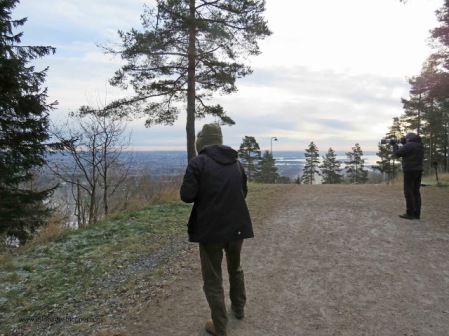
Myself and Ewan (right) at Holmenkollen, courtesy of Simon Rix

In the early afternoon we relocated to Forneba, another exclusive residential district on the shore of Oslo Fjord, to seek out Little Auk. Recent weeks have seen numbers of them moving down eastern British coasts, as is usual in any autumn when birds from huge Arctic breeding colonies migrate to their north Atlantic wintering grounds. Some southward bound Auks stray into Oslo Fjord especially after squalls at sea. So as with the main target, being guided to this second lifer for the trip in Norway seemed like a safer option than trying to guess a good sea watching point then hoping they pass by at home.

As things turned out it was myself who called the single individual we found here (below left), which proceeded to offer exceptional views as it made long dives close in along the shoreline. This experience was greatly preferable to trying to sea watch one in England, a type of birding that has never appealed to me given the distance at which passing birds are mostly seen. We also observed three Guillemot (below right) at Forneba, which upon checking I find was my first sighting anywhere since 1991; but I haven’t been looking.

We ended the daylight hours by trying for a Great Grey Owl that had been reported along a forested road near the airport. But now our luck on what had been a superb day in Oslo ran out, then we did not find the long shot again on the morning and late afternoon of 7th. It could have been a lifer for both Ewan and myself, but not this time.

Overnight we stayed at the excellent Thon Hotel Gardermoen four miles from the airport, that itself is a 40-minute drive from Oslo. Here an adequate evening meal and superb breakfast were both included in the room rate, being real value in a country I concluded is prohibitively expensive due to its very high economic level. For that reason I feel disinclined to bird in Norway again, other than on one or two day trips such as this.

oslo.1907 holmenkollen snowscape

Holmenkollen on day two

Thursday (7th) fell a little flat by comparison with our superlative first day. In the morning we visited the forest park of Lindenkollen from where Simon had recently published video of a Hazel Grouse on his blog (see here). I particularly wanted to see this species as it was an only trip target not gained on the April 2017 tour I joined in Estonia. Our guide re-located the bird and heard it calling several times but it just would not show itself, possibly because it was watching the three of us and so was very wary. This was a repeat of my experience in Estonia with the guide knowing a bird was present nearby that I didn’t see.

Whilst in that forest we also observed three Nutcracker and parties of Parrot Crossbill and Willow Tit (record shots above). But we all wanted some more Pine Grosbeak action and so returned to Holmenkollen in the afternoon. Now the weather had deteriorated and light conditions were poor. The snow machines had also succeeded in covering the area with a light dusting. And once again we came across another PG flock of 18 birds that this time contained three adult males.

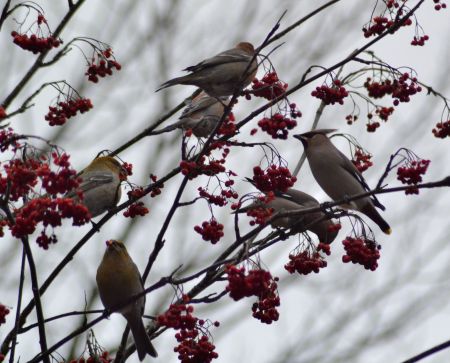
We thus estimated having seen 34 of the main trip target at this site over the two days. The latest contingent proceeded to entertain us just like the previous day’s birds. At one point a similar number of Waxwing flew in and the two species fed communally in the same Rowan trees, which was quite a novel experience.

DSC_0535

Pine Grosbeaks and Waxwings

Ultimately it was disappointing to have converted just two of the four trip targets, but the Pine Grosbeaks of our main intent were absolutely superb value. They have some competition to be my birds of the year – including Allen’s Gallinule and Dwarf Bittern in Fuerteventura, the Cape Rhir Bald Ibis flock again in Morocco, and everything I saw on June’s Wildwings tour of Turkey – but I think these Scandinavian stunners probably make it. Very important is the trail blazing aspect of this visit to “Groslo” since myself and Ewan are the first British birders to undertake it. So all in all it was a highly worthwhile and unforgettable exercise. Cue a fade out …

DSC_0501

For Simon Rix’s own account of these two days see here

American Black Tern at Longham Lakes, Dorset – 8th Oct

This in birding parlance is what is known as an “insurance tick”, recording a sub-species that could be split in the future. Going for it today aptly demonstrated how difficult it has been to locate new birds within my preferred range this autumn. But with the Siberian drift migrants I need all occurring way too far north for my liking in the present Atlantic weather pattern, a 93-mile excursion to the outskirts of Bournemouth offered the best alternative for a day out.

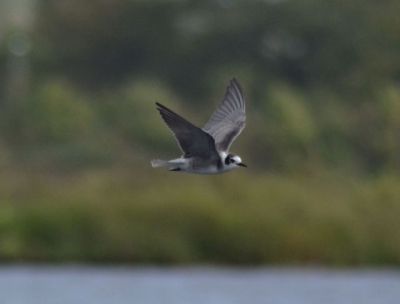
american black tern,1901_01 longham lakes

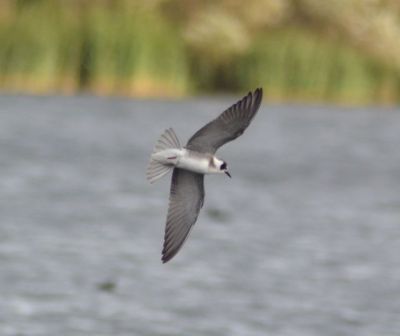
Today’s American Black Tern

American Black Tern Ssp surinamensis is said to be distinguishable from its European counterpart Chlidonias niger in all plumages. For an informative guide to separating the two races see here. I arrived on site late morning, parking at the top of Green Lane (SZ 06551 98272) where there is no restriction, then walking around the northern of two lakes and south to where several observers had my quest in view on the second one.

The former reservoir of Longham Lakes is managed as a recreational facility by Bournemouth Water Leisure, primarily for angling but also for walking, and is a well known birding site in the area. I had visited twice before, to see a Hoopoe (Dec 2010) and my only White-rumped Sandpiper (Dec 2012). Today I was expecting to watch something quite distantly and left my camera in the car. But the ABT was actually very co-operative, making several close passes to the group I had joined. So I made the departure of taking some video on my phone instead, but this free blog plan does not support video files.

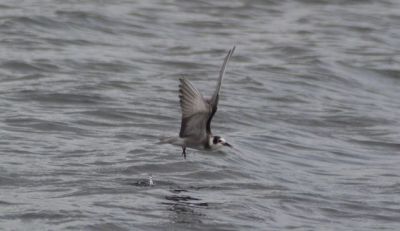
american black tern,1903_01 longham lakes

American Black Tern

Some of those around me commented on the level of energy this juvenile was putting into the amount of food it was finding. It had been here for three days and followed the same circuit over and again, mainly around the southern end of the lake but venturing up towards us at intervals. I found the jizz to be especially pleasing and so felt glad to have made the effort to experience this quite different Nearctic form of a familiar passage Tern.

After an hour I decided to retrieve my camera and attempt some flight studies, then on my return the bird naturally enough stopped playing ball. For the next hour it kept to the southern end of the lake before eventually making two more near fly pasts. As a mid-level birder who takes pictures I feel content enough with the records then gained (below and above). But I had noticed how some field companions with far more complex and expensive equipment than my own seemed dissatisfied with their own results. For the RBA gallery of this bird see here.

american black tern,1902_01 longham lakes

American Black Tern

american black tern,1904_01 longham lakes

As the detested dark season looms again I feel a little apprehensive over the brittle sense of motivation that wildlife observation brings. Whilst I admire patch watchers and local birders for remaining content to record the same things ad infinitum, for me the activity becomes pointless when done for its own sake. Punishing as it is, there must be at least something new and different in the mix, or evolved ways of going about things. This today was a thoroughly worthwhile excursion that succeeded in producing the desired warm inner glow.

Eastern Olivaceous Warbler at Farlington Marshes, Hants: my 350th British bird + a Wryneck at Church Norton, Sussex – 16th Sep

This personal birding landmark was reached courtesy of the autumn’s first twitchable new passerine migrant within my preferred 150-mile range. The warbler in question was initially reported in the early afternoon of Saturday 14th, and being of national mega status and the first ever record for Hampshire drew large crowds over the weekend. But as it was a British tick for me and not a lifer I decided to wait and see whether it stayed until today.

When an early sighting came at 7:25am it was a huge relief to be hitting the road again after a dull opening to my personal autumn birding season in recent weeks. The weekend had aptly demonstrated the paucity of local birding in my home county with a required lifer Aquatic Warbler (briefly), Bluethroat (difficultly) and a number of Wrynecks all reported in the familiar (to me) area of southern Hants and Sussex featured in this post.

farlington marshes.1901

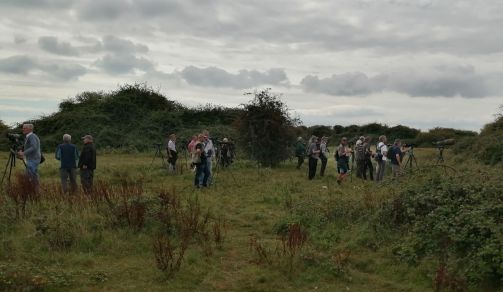
So it was that at 10:40am I arrived at Farlington Marshes Hants and IoW Wildlife Trust nature reserve (pictured above) in the north-west corner of the Langstone Harbour complex (SU 685045). The site is now rather more developed than when I used to visit fairly regularly in the late 1980s and early 1990s, with a metalled access road and two car parks, both of which were full. I joined around 50 or more birders who were staking out classic migrant landfall habitat in meadows at the reserve’s northern end.

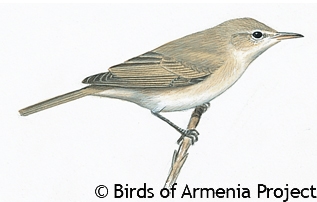
It was at once apparent this would be an as classic warbler twitch, involving staring at banks of dense vegetation for long periods in the hope of brief glimpses of a skulking bird. As these RBA gallery pictures (here) show, Eastern Olivaceous Warbler is a strikingly pale looking Hippolais, especially on the underside, totally lacking in green tones, brownish-grey above and with greyish-white beneath. Lively in jizz and prone to keeping in tree cover, the species exhibits relatively plain wings, a bland face, pale supercilium and long yellow bill. It is very rare in Great Britain, with just 21 accepted previous records mostly on the northern isles, Scillies and eastern coasts.

thumb

Eastern Olivaceous Warbler

Over my next two hours on site here, various movements and glimpses were detected but there was no consensus amongst the gathered birders as to a positive ID. RBA posted a “showing well” sighting at 11:30am but nobody I then enquired of knew anything about it. I was keeping in touch throughout with Adam who had seen the bird on Sunday, and he now prompted RBA to consult the reporter who said he had actually meant 10:30 just before my arrival. That was the second time in the morning that a posting was quoted as “erroneous”.

It did seem a few birders considered they had seen the EOW at that time, but others felt they could easily have been mistaken. Shortly before 1pm I was joined by Ewan who had set off on the spur of the moment after an appointment at home. On realising that our quarry was being far more difficult to locate than a day earlier, we decided to move along the coast eastward to Church Norton near Bognor Regis to try for a Wryneck, and then return later.

Ewan said he knew the exact location for the second bird, the only one still present in the area from a day earlier, which was a part of the Pagham Harbour complex I was not familiar with. When we reached the “Severals”, an area of pools just to the harbour’s south-west (SZ 873950), six other birders were already scanning the location. Fairly soon one of them called that he had located the Wryneck in a bush close by.

We gained a good first view of this cryptically plumaged, regular autumn migrant on the ground, before walking around to the far end of the path concerned to try for a better one. The Wryneck then moved high into the same bush again and perched for a while surveying its surroundings (pictured above, left). Ironically the people we left probably had the best views at this time, amongst whom one lady got some rather better looking images on her phone.

Eventually this bird flew back towards the harbour, landing in some Gorse, and when they could not re-find it the other birders all left. But Ewan suggested we search for it again and we gained further views of the Wryneck in more open places. We had been joined by a local birder who had looked for it on each of the previous two days, and he was now especially pleased to see his quest. This success in relocating a personal fourth record at what is a regular passage site for the species was all due to my vastly experienced companion’s own field craft.

While we were at Church Norton there were more postings on RBA of the Eastern Olivaceous Warbler, accompanied by the birding notation “tho elusive”. Returning to Farlington Marshes we resolved to see out the local rush hour on-site while trying for that quest again. The earlier crowd had all moved on and up to 20 different birders now surrounded a particular thicket where presumably the bird had last been seen. As dusk drew in there were at length some positive if very fleeting observations.

EOW

Today’s bird a day earlier © and courtesy of Adam Hartley

I saw just enough to tick this bird, previously experienced in Greece and Turkey, for Blighty but at this point the sentiment from gaining my 350th British record was very flat. It was in there somewhere and kept being glimpsed near the top of the thicket. Would I get a better view as conditions continued to dim and became drizzly? It was difficult to know whether to stay in one place or walk around the other side as animation here or there on the part of some observers suggested the bird might be in view.

I did a circuit to find the EOW had popped it’s head out low down at the spot I had departed, making the diagnostic tongue clicking call, and my frustration grew. But finally in the failing light at around 18:45 I fixed my binoculars on a pale looking warbler that emerged in the top of some Elder and showed itself very well side on. A particular behavioural trait of this bird is to dip its tail downward when feeding, and having been noted earlier by some people around me was again apparent now.

“That’s it,” said Ewan to one side, and the sense of satisfaction that welled within me was altogether different. Not only had mission been truly accomplished but I could make a proper story of it for this journal too. “Well done. You’ve worked hard for that,” came Adam’s reply to my celebratory WhatsApp as I headed for home.

DSC_0008

Footnote: A day later (17th), having been tasked for a while with locating a first Wryneck for another Oxon birding friend, Sally we returned to the Church Norton site. In bright, sunny conditions and in company with several other birders we watched the bird (above) on and off for a couple of hours. Over at Farlington the Eastern Olivaceous Warbler was said to have showed well for around 90 minutes, confirming that myself and Ewan had chosen a difficult day on which to experience that bird. The EOW was as showy a day later (18th) when Ewan re-visited (see here), and continued to be reported until 22nd though it’s actual departure date was cited as “unclear”.

Scotch Argus butterflies at Smardale Gill NNR, Cumbria but not Arnside Knott – 25th Aug

This bank holiday weekend offered a suitably fine weather window to experience one of the three remaining British butterflies I had not observed previously. Having been on stand-by all through August after Ewan declared his intention to make the long drive north if conditions were right, the go ahead now came. So after a 3am start at home I met him at his house in west Oxfordshire two hours later and off we set.

Scotch Argus (pictured below) occurs at just two sites in England, both of them in Cumbria, but is much more common further north where it is known as the “Scottish Meadow Brown”. This is one of the last butterflies to emerge in late July each year, flying throughout August though rarely into September, and so usually requires a separate trip from other northern specialities to encounter. The issue as always with insects if a wasted journey is to be avoided is sufficient sunshine for them to be active, and this butterfly is a true sun lover.

We arrived at the second site, Smardale Gill NNR (NY740083) in the late morning. This very beautiful reserve in the upper Eden valley, administered by Cumbria Wildlife Trust (see here) follows the course of a former railway line for a mile and a half (2.6 km) along a steep hillside of ancient woodland above the intriguingly named Scandal Beck. After a while the track-side habitat becomes very wild flower rich with masses of Knapweed and Scabious that simply teemed with butterflies, mostly late summer, second brood Vanessids.

In amongst that colourful array – Red Admiral, Painted Lady, Comma and especially huge numbers of Peacock Butterfly – were the smaller, brown item of our quest that were most numerous in one hot spot around 100 metres in length. The first one we located (below) prompted a celebratory high five but it soon became apparent there were many more here. We estimated there were over 100 Scotch Argus flying today. Females of the species are known to be sedentary, not venturing further than such a distance, which could explain this concentration we came across.

Being well into their flight season a lot of the butterflies we observed today were quite faded and / or worn, but amongst all these some fresher individuals stood out. They are roughly the size of a Ringlet but with a rather weak, jerky rolling flight and a tendency to settle low down in long grass. When nectaring on flower heads they stayed constantly on the move, and so were not easy to take acceptable pictures of. This was the first serious work out for a used Nikkor telephoto lens with which I recently had to replace my as obsolete previous one, and the results are OK given the bright and glarey conditions.

Earlier in their adult life cycle Scotch Argus are a much richer chocolate brown, and like Ringlet can appear almost black when most fresh. The dusky upper wings exhibit rust brown patches adorned with black spots with intense white centres. Hence the common name of “Argus” after a giant in Greek mythology that possessed 100 eyes (per Thomas and Lewington). The under-wing ground colour is grey and deep brown, with a prominent paler band similar to that seen in Meadow Brown.

The food plant for the Cumbrian colonies is Blue Moor Grass that dominates the scrubby limestone sites these butterflies occupy. The widespread Scottish populations, that replace the Meadow Brown in higher areas, utilise a variety of habitats including damp grassland, bogs and woodland edges where the larvae feed on Purple Moor Grass. These are usually the commonest butterfly of late summer where they occur.

For an insect that inhabits some of Britain’s wettest regions, seeing Scotch Argus is dependent extraordinarily on sunlight, since they vanish deep into long grass cover as soon as any cloud appears to as quickly re-emerge in numbers when the sun comes out again. Males fly much more than females in an endless search for mates, and it was noticeable today how they would challenge and chase off the many, much larger Peacocks at this site.

Smardale Nature Reserve follows the course of the former South Durham & Lancashire Union Railway that from 1861 to 1962 transported coke for the iron and steel industry across the Pennines from Darlington to the West Cumberland area. This section is crossed overhead by the Smardale Viaduct, one of 17 along the 72-mile Settle to Carlisle main line, one of northern England’s most scenic railway routes. Further along the reserve path the as magnificent structure of the Smardale Gill Viaduct is reached, a truly uplifting, even awe inspiring location.

smardale gill viaduct.1901

Smardale Gill Viaduct

Since 1990 this impressive and dramatic structure, 30 metres high on 14 stone arches, has been owned and maintained by the most excellent Northern Viaduct Trust (see here). The story of this and more nearby industrial railway relics’ rescue from demolition, and funded restoration to become public recreational amenities, is to say the least heart warming. Walking guides to the entire complex can be downloaded from the above link.

The track bed across the viaduct’s top is nominally closed due to “safety concerns” over the very robust looking hand rails, but there is nothing to prevent walkers from continuing. Notices on the valley side further warn of “danger from falling masonry”, of which there seemed little risk. But I suppose someone is always likely to hurt themselves and then wish to sue the so well intentioned owner. We found a second cluster of Scotch Argus activity on these grassy slopes (pictured above).

smardale gill viaduct.1904

Me at Smardale Gill Viaduct

Our day in Cumbria had begun at 9:30 am with a visit to the other, coastal site Arnside Knott (SD455775). We searched the top of this hill that is said to be best for Scotch Argus in August, but the uneasy feeling from when we had failed to find High Brown Fritillary here in July 2018 quickly set in. Ewan had subsequently seen three Scotch Argus at this place on a brief visit of his own while driving south from Scotland a year ago. But today we found almost nothing of any note, except for one faded Northern Brown Argus and a Wall Brown.

This location is still cited as a classic one for both HBF and SA. But earlier this year a regular visitor I met in the field affirmed the former are now in decline there. A recent scientific paper (see here) corroborates that despite managed re-colonisation between 2004 and 2016, overall abundance of HBF in the Morecambe Bay area continued to decline with further extinctions, due in part to less host plant (Violet) for caterpillars to feed upon in a cooler micro-climate.

Today a volunteer at Smardale Gill said 2019 has been a very poor year for Scotch Argus too at the first site. There must be habitat management reasons why numbers of both former specialities have fallen so much, and the evidence is that Arnside Knott is no longer worth bothering with. By contrast our visit to Smardale Gill NNR was simply superb.

2019 Southern Emerald damselfly at Beaconsfield, Bucks: an update – 5th Aug

Not having seen or heard any reports of Southern Emerald from this site in the current season I checked things out today and found their situation to be intact. When this colony was discovered in 2018 it was only the third known population in the British Isles (see here); the other, longer established ones being in Kent and the Isle of Wight.

This site (SU 96052 88958) to the south of Beaconsfield and beside the M40 motorway is accessible only on foot along public rights of way, and there are no safe parking places on nearby roads. The path I followed skirts a large landfill site before reaching a small woodland where it becomes less distinct. I had caught up en route with a weather front that passed through Oxford earlier, and upon my arrival conditions were quite overcast. But when the sun came out I began to notice Emerald damselflies that upon close inspection were indeed my days’s target (pictured below).

The most obvious feature by which Southern Emerald may be distinguished from other related damselflies is their two-tone cream and brown pterostigma (wing tags). In around an hour on-site here I located nine individuals including a tandem pair. The regenerating habitat was wild flower rich, and I dare say it supports many more of these nationally very scarce insects had I searched for longer and more thoroughly.

A year ago I was hoping they might expand their range from this location and maybe even reach Oxfordshire, but whether that has happened or not is unclear. Another observer I met today told me reports are indeed getting out on-line again, so we will have to wait and see.